Happy New Year!

happy-new-year

Dear Readers,

Happy New Year! I hope 2017 brings you health, happiness, and many delightful books.

Rosemary & Reading Glasses has just entered its fifth year, and some changes are in the offing. In order to pursue some personal projects and goals, I’ll be cutting back on the number of posts; instead of posting twice a week, I might post three to four times a month. I’ll still be reviewing new books, but not quite so many, and I’d like to focus particularly on debut authors, poetry, and small presses. You can also expect to see books reviewed in batches, since I anticipate that reducing the amount of time I spend writing longer reviews will give me more time to, you know, read more books.

As ever, I hope these posts lead you to great books (and more poetry!), and I thank you very much for reading.


A final note:

I’m delighted to have a story in the new issue of Pulp Literature, which Canadian readers might be able to find in local bookshops; the magazine is also available for e-readers.

(Links to other work, as usual, are on carolynoliver.net.)


Another Year in Books: Best of 2016


best-of-2016Dear Readers,

Thank you so much for another wonderful year in the world of books. I wish you health and happiness in the new year, and a warm, cheery holiday season, however you celebrate.

Now, for the last Rosemary & Reading Glasses post of the year, the traditional last-minute gift guide. It would tax your patience if I were to talk about every book I’ve read this year (97 as of this writing, probably just over 100 by year’s end), so I’ve listed (with two exceptions) 2016 releases in categories constructed by my arbitrary whims. All these books are recommended.

Poetry

Ocean Vuong, Night Sky with Exit Wounds

Donika Kelly, Bestiary

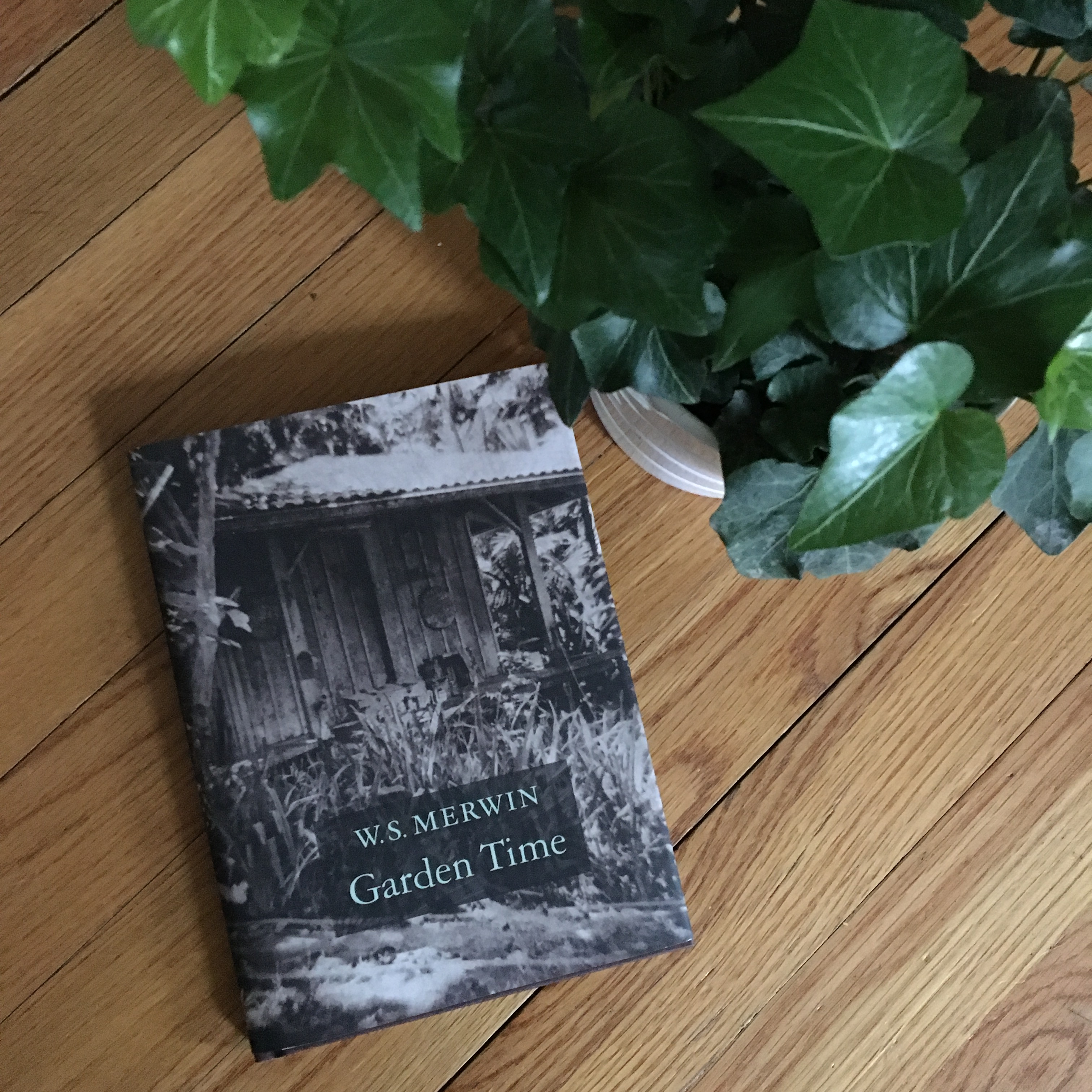
W. S. Merwin, Garden Time

Catherine Pierce, The Tornado is the World

Monica Youn, Blackacre

Honorable Mention to Ross Gay’s Catalog of Unabashed Gratitude (2015), which I couldn’t bear to leave off this list.

Short Stories

Ellen Prentiss Campbell, Contents Under Pressure

Helen Oyeyemi, What Is Not Yours Is Not Yours

Junot Díaz (editor) and Heidi Pitlor (series editor), The Best American Short Stories 2016

Clare Beams, We Show What We Have Learned

Short Novels

Kent Haruf, Our Souls at Night

Graham Swift, Mothering Sunday

Elizabeth Strout, My Name Is Lucy Barton

Idra Novey, Ways to Disappear

Longer Novels

Dominic Smith, The Last Painting of Sara de Vos

Alexander Chee, The Queen of the Night

Louise Erdrich, LaRose

Peter Ho Davies, The Fortunes

Lived Up to the Hype

Ann Patchett, Commonwealth

Brit Bennett, The Mothers

Colson Whitehead, The Underground Railroad

Jeff Zentner, The Serpent King

Books in Translation

Maylis de Kerangal, The Heart (translated by Sam Taylor)

Dulce María Loynaz, Absolute Solitude (translated by James O’Connor)

Juan Gabriel Vásquez, Reputations (translated by Anne McLean)

Nonfiction

Claire Harman, Charlotte Brontë: A Fiery Heart

Carlo Rovelli, Seven Brief Lessons on Physics

Margot Lee Shetterly, Hidden Figures

Depressing (and Very Good)

Katy Simpson Smith, Free Men

Jung Yun, Shelter

Garth Greenwell, What Belongs to You

Katie Roiphe, The Violet Hour: Great Writers at the End

Delightful (and Very Good)

Shirley Barrett, Rush Oh! 

Lindsay Faye, Jane Steele

Honorable Mention to Zen Cho’s Sorcerer to the Crown, out in paperback this year

Best for Sleuths

Elliott Chaze, Black Wings Has My Angel

Erica Wright, The Granite Moth

Best for New Parents

Jennifer Stewart Miller, A Fox Appears

Best Shakespeare Adaptation

Margaret Atwood, Hag-Seed

Best Graphic Novel/Comic

Brian K. Vaughan and Fiona Staples, Saga: Volume 6 (Start with Volume 1, though!)

Best Sui Generis

Claire-Louise Bennett, Pond


What Were Your Favorite Poems This Year?

Dear Readers,

This week I’ve read two excellent poetry collections: Yona Harvey’s illuminating, musical Hemming the Water (thanks to a recommendation from poet and friend Emily Mohn-Slate) and Simon Armitage‘s Book of Matches (unsettling turns, brilliant wordplay). I highly recommend them both, and wish I had more time to write about them now.

Though I’m not done reading for the year, I am reflecting on the year’s reading, and it’s been just a stellar year for poetry; more on that next week. In the meantime, I hope you’ll take a moment to tell me about your poetry reading this year. What was your favorite poem or collection? What was the most surprising discovery? How are you finding new poems to read?

Until next week!

A Few Short Things

self-promotion

Dear Readers,

Next week I plan on sharing some last-minute gift picks—if you’re looking for a specific recommendation, send me an email this week and I’ll do my best to oblige—but for now I hope you won’t mind if I link to a few pieces of mine that have been published recently.

Over at America: a poem, “Iphigenia Leaving Tauris” (and here’s the Wikipedia entry on Iphigenia if it’s been awhile since you picked up your Edith Hamilton).

At Tin House’s Open Bar: a short-short, “Thanksgiving,” that also aired on Oregon Public Broadcasting’s State of Wonder (so you can hear me read it in my very own voice, which naturally makes me cringe, but oh well).

And in Slush Pile Magazine (the slush pile is lit-mag slang for batches of unsolicited submissions): a story (and not exactly cheery, I must warn), “Drifting, Maybe Caught.”

Coming soon: a poem in Constellations that includes the word “zombies,” which is a first and probably a last for me.

Thanks for reading, friends! Here’s hoping that you didn’t find this post obnoxious, that you’re staying warm, and that you have a chance to curl up with a good book.

Recommended Reading: The Tornado is the World, by Catherine Pierce

the-tornado-is-the-world

Years ago, my friend A. (who has great taste) sent me a link to a poem by a friend of hers. That poem was Catherine Pierce’s “The Mother Warns the Tornado,” which is very, very good.

The Tornado Is the World photo by Carolyn OliverI’ve never forgotten it (I watched Twister quite a bit in my formative years), and so I was delighted when a copy of The Tornado Is the World*, Ms. Pierce’s new book of poems, appeared in the mailbox. It’s just as excellent as “The Mother Warns the Tornado” promises.

How do we live in a world where disaster might be just around the corner? This is the question The Tornado Is the World explores in its three sections, beginning with the poem “Disaster Work,” which asks: If you truly focused on each and every tragedy unfolding in the same moment,

How could you do the impossible work
of putting your child to bed,
saying goodnight, closing the door
on the darkness?

You couldn’t, of course; we bear the unbearable by setting it aside, considering it only briefly, or when it happens to us (and it will).

That’s why the metaphor of the book’s title works so well: you can’t predict when the world is going to come for you (“Checks / and balances, and I wait for the tally to be evened”), or how bad the damage will be. In these poems (about two dozen out of the collection, including the entire second section) the tornado is a malevolent entity, power personified. “But the tornado cannot stop. Will not. / The world cannot stop turning, and this minute / the tornado is the world,” the poet writes in “The Tornado Visits the Town.” It gathers objects and living things in a terrifying harvest, as in “The Tornado Collects the Animals”:

The tornado will wrap them tight.
It will make sure the poor things
know what it is to be held.

That’s such a powerful image, echoing the repeated image of the mother huddling over her child in a dry bathtub, trying to protect him from a force of nature, becoming a force of nature herself, maybe.

Though rage and anxiety are swift currents running through this collection, so is gratitude. Gratitude for being spared, for the ability to observe and catalogue aftermaths, but also gratitude for the beauties of this terrible, fearsome world: the hawk (“something prehistoric”) hunting in the suburbs, the “crocus-blessed” Southern winter (“an unhinged sweetheart— / all gloss and lilt, until the shift.”), beach towns and bars and dreams.

I loved this collection, and commend it to your reading.

*I received a copy of this book from the author for review consideration, which did not affect the content of my review.


If you’re looking for another poetry collection about destructive natural phenomena, I recommend Patricia Smith’s Blood Dazzler

Recommended Reading: We Show What We Have Learned by Clare Beams

we-show-what-we-have-learned

Clare Beams’s story collection We Show What We Have Learned* is gleefully good reading—and, as the cover suggests, mighty creepy too. I mean that in the best possible way. Horror isn’t my cup of tea, but suspense is another matter.  You won’t find gore in these nine stories, or monsters, really, except those we carry with us. However, each of Ms. Beams’s nine stories (some historical, some slipstream, some contemporary) offers tension so acute that I often found myself squirming in my chair.

img_2833A boarding school’s promise of “transformational education” isn’t limited to the mind in “Hourglass.” An unnamed landscape architect with a talent for making his clients’ desires to rtakes on the project of a lifetime in “World’s End,” but finds himself bewildered by the orders he’s given. A young woman decides to reclaim childhood happiness and demonstrate her own giving nature by taking her elderly grandmother back to the country cabin where they vacationed long ago, but the excursion does not have the effect on “Granna” that she expected. In the haunting “All the Keys to All the Doors,” an older woman in a small town wonders if she could have done more to prevent a horrific act of violence. In “The Saltwater Cure,” a Depression-era Plymouth health resort is the setting for a young man’s coming of age. Two sisters love the same plague doctor in “Ailments.” A teacher falls apart in “We Show What We Have Learned,” while a new bride becomes more and more concerned about her wedding dress (made from her husband’s wartime parachute) in “The Drop.” Finally, in “The Renaissance Person Tournament” we meet another teacher—this one holding herself together as she coaches a promising student.

All nine stories are affecting and beautifully written, the sentences crafted for maximum impact without calling attention to the writing in a way that would pull a reader out of the world of the story. Take just one example, from the opening of “Hourglass,” which drew me in: “With its damp-streaked stone and clinging pine trees, the school looked ideal for transformations, like a nineteenth-century invalids’ home, a place where a person could go romantically, molderingly mad.”

I love that sentence, which I read with an equal measure of delight and apprehension–exactly what I think you’ll feel once you start reading this fabulous collection, which I highly recommend.

And three cheers for small presses like Lookout, which published this book! What small press books have you loved this year?

*I received a copy of this book from the publisher for review consideration, which did not affect the content of my review.

“Would I love it this way”: W.S. Merwin’s “The Morning”

Merwin's Garden Time photo by Carolyn OliverThis week I’ve been reading W. S. Merwin’s new book, Garden Time. It’s beautiful and calm and melancholy,  just what I needed this week. Mr. Merwin is 89, and losing his eyesight; I read that these poems were dictated to his wife, Paula.

He’s one of this country’s most prolific writers; I think I first read his work when I was in high school (his translation of Neruda’s Twenty Love Poems and a Song of Despair) and then again a few years later with his introduction to a volume of selected poems by Thomas Wyatt. Mr. Merwin’s own poem “Berryman” is one of my favorites, one of my writerly touchstones.

Anyway, “The Morning,” the poem that opens Garden Time, is worth the price of admission. I love it, and its phrases have been flitting in my mind for days. I hope you’ll love it too.

What are you reading this week?

5 Reasons to Read: The Guineveres, by Sarah Domet

5-reasons-to-read-the-guineveres

IThe Guineveresn Sarah Domet’s debut novel The Guineveres*, four girls, all named Guinevere, find each other at a convent run by the Sisters of the Supreme Adoration. Abandoned by their families for various reasons, the four Guineveres (Gwen, Win, Ginny, and Vere), united by their unusual name, find strength in numbers. When a group of comatose soldiers arrives at the convent for care, the girls plot their escape into their adult lives, with unexpected consequences.

Here are five reasons to read it for yourself:

  1. It’s a bildungsroman about girls: Spare me your Holden Caulfields; give me the complex inner lives of girls, and especially girls in groups, any day.
  2. The convent isn’t Lowood, and the nuns aren’t evil: I was dreading a clichéd take on the Catholic convent school, but my fears were unfounded. Life with the Sisters of the Supreme Adoration is austere, often dull, and strictly bounded, but the nuns care about their charges, and do what they think is best to keep them safe and promote their spiritual development. In fact, I thought the nuns were interesting enough to deserve their own book.
  3. The narrative is pleasingly polyphonic: The book proceeds chronologically, with most sections keyed to events on the liturgical calendar, like feast days and holidays. Though Vere is the book’s narrator, she often slips into the first-person plural, so that the Guineveres speak together. Interspersed with the story of their fateful year are Vere’s retellings of the lives of female saints, and each girl’s account of how she came to live with the Sisters of the Supreme Adoration.
  4. Vere is a winning narrator: The shyest of the Guineveres, Vere is a careful observer of her companions’ habits and inclinations, the faithful chronicler of their lives together and human nature (“The heart is funny in that way: When it keeps on loving, and loving, and loving what isn’t there, it becomes attached to the notion that love is the wait itself, the emptiness of it.”). Personality-wise, think Elinor Dashwood meets Jo March; she also reminded me, a little, of the narrators of Rush Oh! and My Name is Lucy Barton.
  5. The writing is quite good: While I have two critiques (First, “Mass” is not capitalized as it ought to be, and second, I found the refusal to name the time period aggravating—my search for clues kept throwing me out of the world, though I think the intended effect was to render the book timeless), on the whole I found Ms. Domet’s writing smooth and often lovely. Certain images linger, like the nuns’ worn-out shoes repurposed as planters, and the idea that Ginny’s “sensitivity was like an open wound that occasionally scabbed over but never healed completely.”

What are you reading this week?

*I received a copy of this book from the publisher for review consideration, which did not affect the content of my review.

“We see you, see ourselves and know / That we must take the utmost care / And kindness in all things.”

Dear Readers,

This is the third year I’m sharing this post; today, I also recommend Joy Harjo’s “Perhaps the World Ends Here.”


I’m not a religious person, but many people I treasure are very religious, and I’m always

"Eagle silhouette" Image courtesy of Gualberto107 at FreeDigitalPhotos.net

“Eagle silhouette” Image courtesy of Gualberto107 at FreeDigitalPhotos.net

grateful for their prayers and their generosity of spirit. Joy Harjo’s “Eagle Poem” gives me a way to think about prayer that is comforting and uplifting without listing toward the dogmatic.

For that reason, I think “Eagle Poem” is the perfect poem for Thanksgiving week, when we give thanks in our own ways, both secular and spiritual, for what we have and what we have not.

“Going home / behind the curtain”: Farewell, Leonard Cohen

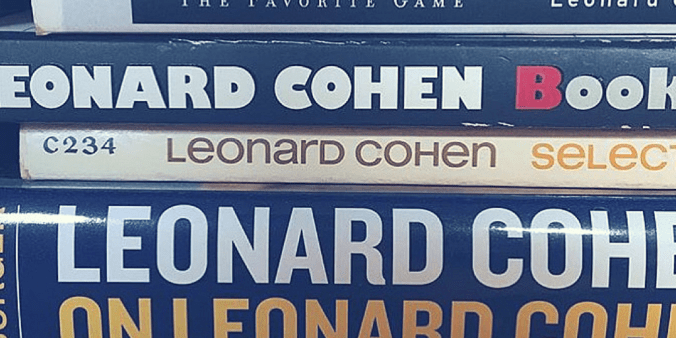
Leonard Cohen books photo by Carolyn Oliver

He wants to write a love song
An anthem of forgiving
A manual for living with defeat
from “Going Home”

If you’re a longtime reader of R&RG, you know about my devotion to Leonard Cohen. His death wasn’t public when I wrote the post quoting “Anthem” right after the election last week, but now I realize how strange it was that I used the past tense to talk about him—I almost always use the present when writing about living authors. The news of his death wasn’t shocking  (his last album, You Want It Darker, which is amazing, is also a farewell; and then there was his last letter to Marianne Ihlen, who died this summer), but it was heartbreaking nonetheless.

I can’t muster much more at the moment, except to commend his books to your reading and his albums to your listening; recommendations available upon request.

Rest well, Leonard. Endless love, see you down the road.

Here’s a 2014 review of Leonard Cohen on Leonard Cohen, edited by Jeff Burger.


I’m fairly certain that I would have spent my high school years as perpetually moody and angst-ridden as Molly Ringwald in any given John Hughes movie had it not been for Theatre (capital-T, said in your best Addison DeWitt voice).

To the Shaker Heights High School Theatre Arts Program (yes, it’s really called that) I owe a debt of gratitude: for leading me to my two best friends in high school, one of whom I met when she was tasked with teasing my nearly waist-length hair so that it would stand straight out from my head; for playwriting class; for teaching me the world “décolletage”; for the knowledge that I should never, ever wear flesh-tone spandex; for the chance to eat lunches with friends in Room 129; for the ability to recite, in perfect tandem with any other alum, “Shaker Theater events are non-smoking, non-drinking, non-drug-using, safe-driving, recycling events”; and for Leonard Cohen.

The department chair, Mr. Thornton, had a fondness for the Canadian singer-songwriter, and from the moment I heard that smoky voice singing “The Window,” I was hooked. I used my babysitting money to buy his albums, talked so much about him that my parents knew to get me Ten New Songs for my birthday, and hoped Leonard Cohen would tour someday so that I could see him live. One of the stupidest things I’ve ever done is not begging, borrowing, or stealing enough money to see him in concert in Boston in 2012.

photo 3 (5)Before he became famous, relatively late (he was in his thirties) as a singer-songwriter, Leonard Cohen was a poet and novelist whose work earned him comparisons with James Joyce, even if it didn’t pay the bills. Music did, and more than forty-five years after the release of Songs of Leonard Cohen, the dapper and impeccably polite poet is a musical legend.
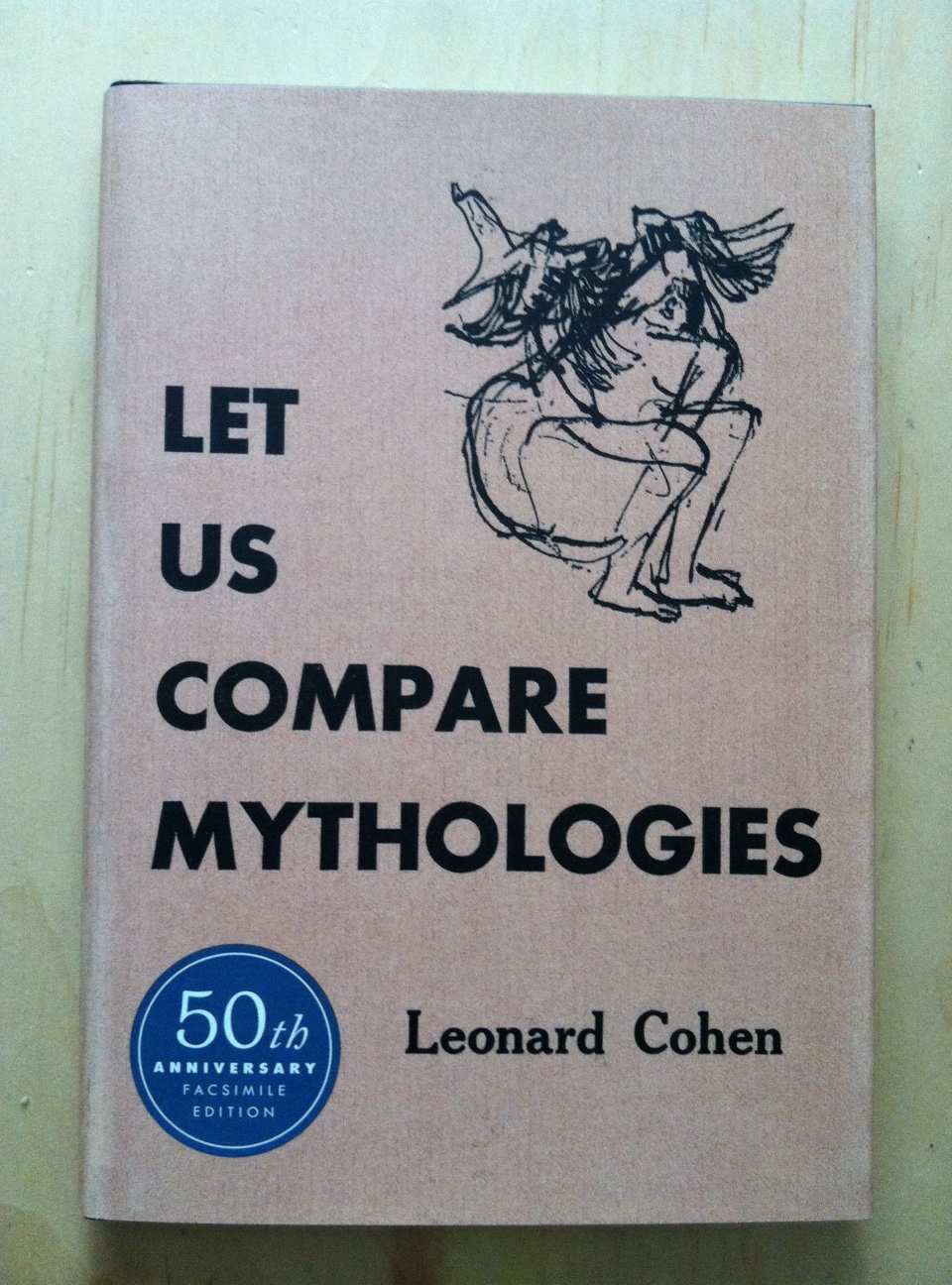
photo 2 (14)I was so entranced by his music that it wasn’t until college that I went looking for Mr. Cohen’s published poetry and fiction.  Let Us Compare Mythologies (1956) which I recently re-read, is raw and energetic, the work of a young idealist who’s afraid the world is already lost. Book of Mercy (my favorite of the collections) is often called a modern book of psalms, although in an interview Mr. Cohen characterized them as “more conversations with the absolute” (148). The prose-poems — fifty of them — are prayers of great sadness and great longing. Here’s part of my favorite (19): “O beloved speaking, O comfort whispering in the terror, unspeakable explanation of the smoke and cruelty, undo the self-conspiracy, let me dare the boldness of joy.” It’s the same voice — almost mystic, worldly, sad — from “The Window”:

Oh tangle of matter and ghost
Oh darling of angels, demons and saints
And the whole broken-hearted host
Gentle this soul

Like his poetry, Leonard Cohen’s songs are about the difficulties of love, of living, of dying; he sings about a world that’s broken and the people trying and often failing to keep the pieces together. He writes songs about betrayal, sex, faith, politics. A reviewer once famously said that it was “music to slit your wrists to,” but I’ve never found it anything but comforting, occasionally funny (see “Tower of Song”), and very, very beautiful. I’m not the only one.

photo 1 (17)Leonard Cohen on Leonard Cohen: Interviews and Encounters*, edited by Jeff Burger and recently published by Chicago Review Press, is a book meant for fans of the man who wrote not only “Suzanne” and “First We Take Manhattan” and yes, the ubiquitous “Hallelujah” (for the record, I like Leonard’s version best, followed by Jeff Buckley’s, followed by John Cale’s, then k d lang’s), but also Book of Mercy and Beautiful Losers and The Spice-Box of Earth. Judiciously selected interviews from Mr. Cohen’s four decades in the music industry trace the evolution of his public persona even as they illuminate aspects of his personal life and career that aren’t widely talked about. (Did you know he once made a signature drink for his band? I do now, and I’ll be mixing up a few batches this summer.)

What comes across in these interviews — which the interviewers themselves note in their interviews with Mr. Burger — is Leonard Cohen’s graciousness, his sense of humor, and his modesty. He unflappably fields predictable questions about his lack of commercial success in the U.S., speaks well of every woman he’s been romantically linked with, and pokes fun of himself (he riffs on his early albums’ bland (“neutral”) titles by joking that he’ll call the next one Songs in English [163].) He’s completely open about the grueling process of songwriting (he’ll write dozens and dozens of stanzas for one song, rejecting all but a few; songs often take years to complete), his difficulties with romantic relationships, and, in the later interviews, about his struggles with depression. Most longtime Leonard Cohen fans know that he spent years in relative isolation at a Zen center outside Los Angeles, but these interviews offer a fuller view of what those years were like, which I found particularly fascinating.

With more than five hundred pages of interviews (several never before translated into English, some transcribed from the raw footage of television interviews), it’s not surprising that some material is repetitive. Interviewers ask questions asked many times before, and sometimes Mr. Cohen’s answers retread ground already broken. Still, the book is a treasure trove, and worth reading just for the interviewers with specialized backgrounds who share long, knowledgable conversations with Mr. Cohen on songwriting and his Jewish background, among other subjects. Rarely did four or five pages pass without me turning down a corner to come back to an idea or a phrase; choosing favorite passages and quotes for this review proved an impossible task. But here’s a snippet from a conversation the editor had with interviewer Thom Jurek, who spoke with Leonard Cohen in 1993:

Jurek recalled asking Cohen why it had taken so long after the release of The Future for him to tour. “He explained that it was because backing vocalist Julie Christensen had borne a child; it was important to hold off on the tour to give the new family time to bond.” What about finding another singer? Cohen said he hadn’t even considered that. “The reason, he said– and I am pretty sure I remember this by heart–was: ‘She shouldn’t be punished for bringing life into the world.’

This from a man who says, “We cannot forestall the apocalypse. The bomb has already gone off. We are now living in the midst of its aftermath. The question is: how can we live with this knowledge with grace and kindness?” (507).

There is a risk in books of this kind — as in meeting a favorite author — that the subject will be demystified in some way, will appear all too human, which is not, after all, how we prefer our idols. This isn’t the case with Leonard Cohen on Leonard Cohen. For all his foibles and favored anecdotes, the man is consistently human in the best sense of the word: compassionate, invested in the welfare of others, deeply concerned with ideas. I came away admiring him, and loving his work, even more.


Related:

An Interview with Jeff Burger, Editor of Leonard Cohen on Leonard Cohen.

“Going Home”

Review of So Long, Marianne

New Yorker profile of Leonard Cohen (October 2016)

*I received a copy of this book from the publisher for review purposes, which did not affect the content of this review.