An Interview with Celeste Ng, Author of Everything I Never Told You

Recently I reviewed Celeste Ng’s luminous debut novel, Everything I Never Told You.
Ms. Ng graciously agreed to be interviewed via email. 

How would you describe the inception of Everything I Never Told You? What was the writing process like?
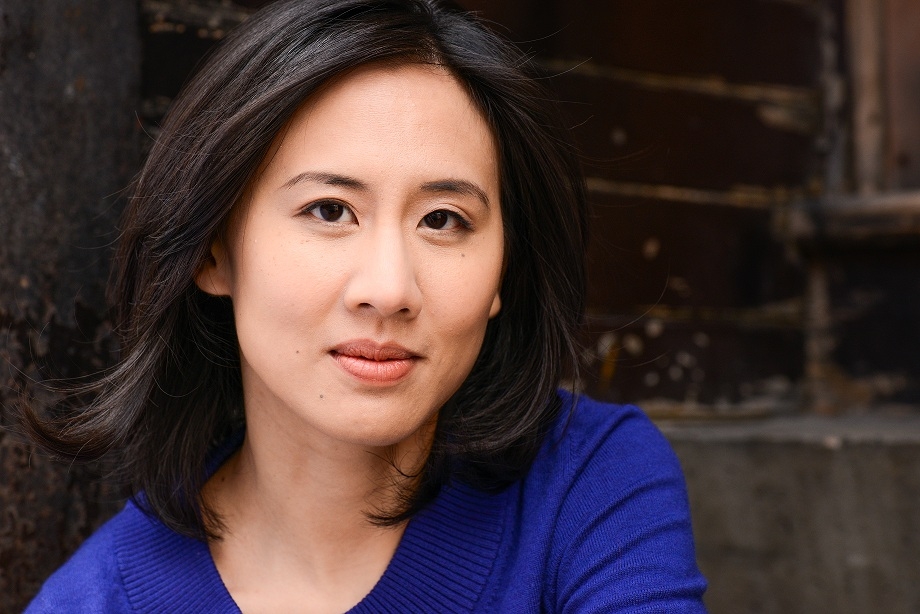
Celeste Ng Author photograph (c) Kevin Day Photography

Celeste Ng
Author photograph (c) Kevin Day Photography

CN: For me, stories almost always start with images. In this case, my husband happened to tell me that when he was a kid, he was at a friend’s house when his friend pushed his own little sister into a lake. When my husband told it, it was a funny anecdote—his parents had to come pick him up early, because wow, was his friend in trouble—but for some reason that image of a girl falling into water stuck with me. I am a terrible swimmer myself, so maybe my fear of water had something to do with it. It transformed into something quite different—in the novel, Lydia is a teenager, for one, and it’s not clear how she ended up in the water. But that was the seed that started the story.

I began the novel when I was completing my MFA at the University of Michigan, in the spring of 2006, and I wrote 4 drafts before finishing the book in 2012. So it was a long process, with a lot of changes in between: I finished school, I moved, I had a baby. I like to think that long gestation made for a better novel.

 What led you to choose to set the novel in the 1970s?

Everything I Never Told You_COliverCN: As I got to know these characters, I realized that the 1970s was a time that highlighted all of the struggles they faced. Interracial marriages have become more common now, but in the 1970s—to say nothing of the decades earlier—Marilyn and James would really have turned heads. Asians weren’t as much of a presence yet, either. And Marilyn’s dream of becoming a doctor was much more poignant in that time period—she would have been in college in the 1950s, when medicine would have been a hard path for a woman. It made my heart ache to know her daughter could have that opportunity, but that Marilyn never really would.

I also found that the 1970s allowed a bigger sense of mystery. We have a lot of ways of finding and knowing people now—we can track them by the GPS in their cell phones, or we can look at their browser history and see what websites they were looking at, or check what they posted on Twitter or Facebook for insight into their thoughts. But in the 1970s, of course, there were no cell phones, no internet, no social media. I wanted Lydia’s family to have to face that information void, to have to face a lot of unanswered questions about her life.

The structure of the novel modulates (seemingly) effortlessly between the past and present, between children and parents. How did you arrive at this structure?

CN: The structure took a lot of work. As I said earlier, I went through four drafts of this novel, and every one of them had a major structural change. I tried telling the story in parts—a few chapters when Lydia’s body is discovered, then a few chapters of Marilyn’s past, then a few chapters of James’s—but that broke up the momentum. I tried braiding the different timelines together, but it got confusing. I tried a lot of things! I ended up having to change the viewpoint as well as the structure, using an omniscient narrator to help make connections between past and present. The story itself stayed relatively constant throughout; it just took a long time to figure out how best to tell that story.

Much of the conflict in Everything I Never Told You involves longstanding miscommunication and misperceptions. What’s something you hope readers take from the novel back to their own lives?

CN: I hope readers will finish the book thinking about the ways they might misunderstand people close to them, and about the assumptions they might be making about others. We assume so much, all the time—we fill in a lot of gaps in conversation and relationships. We draw a lot of inferences about what it means when someone calls you or doesn’t, when someone gives you something or doesn’t, when someone comes to your birthday party or your brother’s funeral or your dance recital, or doesn’t. But we don’t always interpret those gestures and words correctly. It’s hard to say to someone, “Wait, what do you actually mean by that?” A lot of times it’s easier to hear things the way you want to hear them than to ask questions and listen.

On your website, you write that you grew up in a family of scientists. How did that influence your writing? When did you first think of becoming a writer?

CN: I always wanted to be a writer, but didn’t think it was an actual job you could do. So I spent most of my childhood and adolescence planning to write “on the side” while I held another job: paleontologist, astronaut, journalist, book editor. By the time I finished college, I was planning to get a Ph.D. in English, teach college literature, and write on the side, when a mentor suggested I think about an MFA instead. I had no idea such a thing even existed. And it wasn’t until years after I finished the MFA that I started thinking writing could be something I could do professionally.

I actually think that growing up in a family of scientists helped me become a better writer.  From my family, I learned a particular scientific mindset: to look closely at things that puzzle you, to find anomalies more revealing than the norms, to think about cause and effect.  Most important, I think science taught me to believe that there is a logic and a system to the universe, and that—if you try hard enough, and look closely enough—you can illuminate at least a small part of it.  All of that feeds into my fiction.  If you look at science in that way, it’s an ideal training ground for a writer.

What’s next on your writing horizon?

CN: I’m working on another novel that’s actually set in our mutual hometown of Shaker Heights, Ohio.  I won’t say too much about it yet, as I’m superstitious about such things. But as you know, Shaker Heights is an interesting place: it’s racially integrated and very well off, yet of course there are still issues of race, class, and culture that affect the city. And it has a lot of quirks, and a real concern with appearance. I always tell people about the garbage collection—how you’re not allowed to bring garbage to the curb, but you have to leave it in the back for the mini garbage-scooters to pick up and ferry to the big garbage truck, so that the front of the street never looks messy.  It’s such a fascinating place, so the new book deals—so far, anyway—with a family living in Shaker, and a mother and daughter who move there from out of town and unintentionally start to shake things up a little bit.

My thanks again to Ms. Ng for her time and thoughtful answers. You can read more about Ms. Ng, and Everything I Never Told You, on Ms. Ng’s website, www.celesteng.com. Follow Celeste Ng on Twitter: @pronounced_ing

Bostonians: You have two opportunities in July to hear Celeste Ng read from Everything I Never Told You!

July 23: BROOKLINE BOOKSMITH. 7:00 PM

279 Harvard Street
Brookline MA 02446

July 29: NEWTONVILLE BOOKS. 7:00 PM

10 Langley Road
Newton Centre
Newton, MA 02459

Recommended Reading: Emmi Itäranta’s Memory of Water

photo (107)If you’re looking for a thoughtful, surprising dystopian novel that will make you see your preferred summer body of water — ocean, lake, swimming pool — in a whole new light, look no further than Emmi Itäranta’s Memory of Water*.

Ms. Itäranta, who is Finnish and lives in England, wrote the novel in both Finnish and English (the translation of the novel’s Finnish title is The Tea Master’s Book), and readers will find both a Scandinavian setting (albeit much different from today’s region) and lyrical prose, setting Memory of Water apart from what has now become rather standard dystopian fare.

What also sets the novel apart is Ms. Itäranta’s use of conventional dystopian tropes — a world changed after environmental disaster, an authoritarian government wielding violent power, scarcity of basic resources — without following standard plot-lines. Noria Kaito lives in a far-flung village of the Scandinavian Union, which is ruled by New Qian. Her mother is a scientist, and her father is a tea master, performing the traditional tea ceremony that has been handed down for generations; Noria is his apprentice. One day, her father shows her a dangerous secret: a hidden spring that only the tea master’s family knows about. With fresh water scarce — the rest of the village drinks desalinated seawater — this knowledge is illegal, and before long, a commander from New Qian arrives in town, suspecting the tea master’s secret.

When her father dies, Noria becomes the tea master — unprecedented, since she is a woman — and must decide what to do with her knowledge. At the same time, she’s navigating her friendship with Sanja and exploring old technology that they found together in the “plastic grave” near the town, technology that leads the pair to yet another dangerous secret. The military’s hold on the town becomes more brutal, and Noria is faced with extremely difficult choices about what’s best for her, for Sanja, for their village, for the world.

I loved Memory of Water for its musicality, its lyric attention to water, its innate feminism, its conjuring of a world very different from our own, but shaped with its ghostly imprint. I loved Ms. Itäranta’s refusal to grant the reader a happy ending (reaching instead for realism) without diminishing the power of hope. Highly recommended reading.

*I received a copy of this book from the publisher for review purposes, which does not affect the content of my review.

Recommended Reading: David Gilbert’s & Sons

Herewith, Dear Readers, a list.

Types of Contemporary Novels Carolyn Does Not Tend To Enjoy 

  1. books in which all the major characters are male
  2. books in whole or in part written from the perspective of teenage boys
  3. books about writers
  4. books about rich people
  5. books about New York City

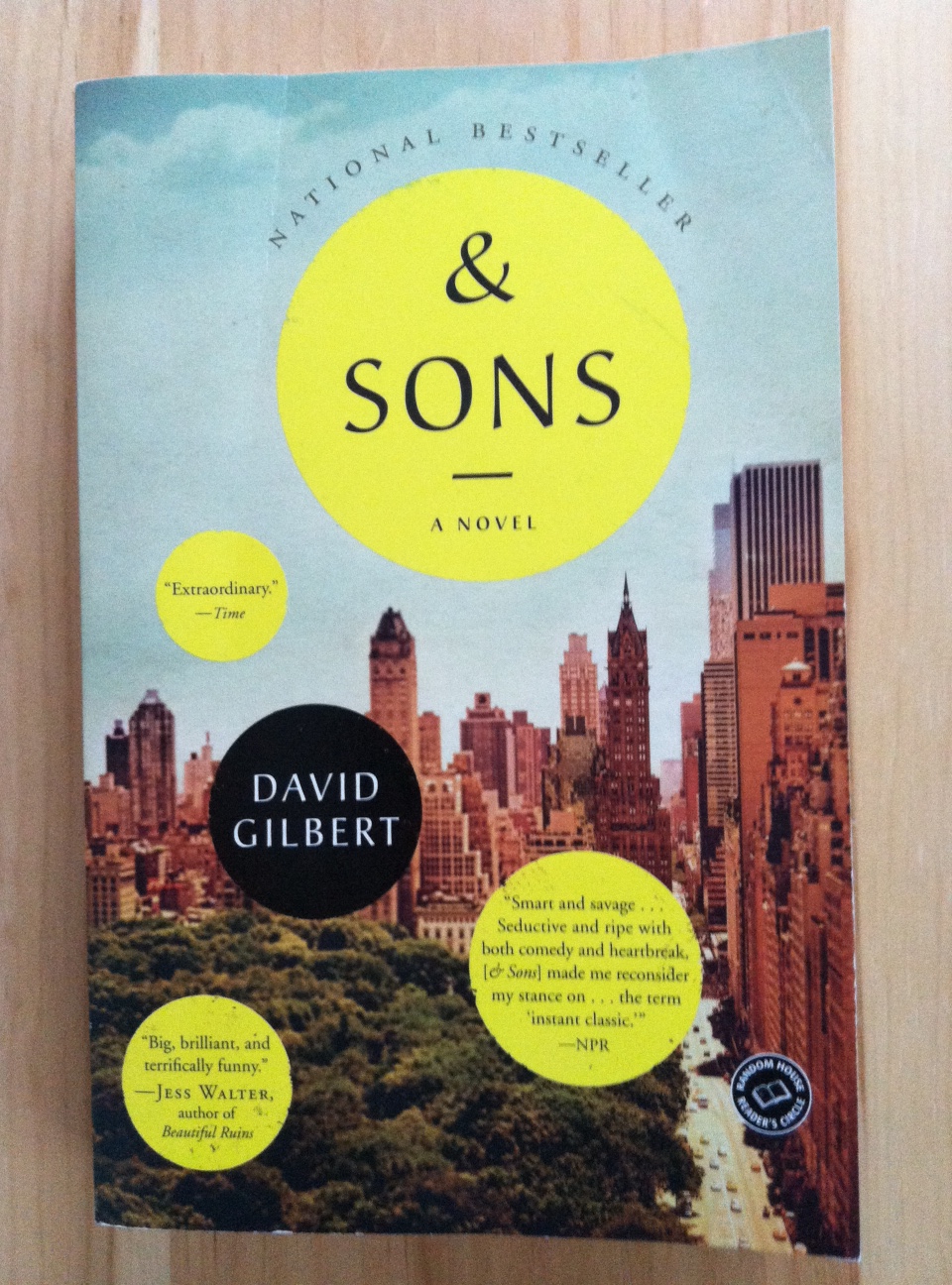
photo (105)David Gilbert’s & Sons* is a book in which all the major characters are male, one of whom is a teenage boy, two of whom are writers, all of whom are wealthy, that takes place in New York City.

And I loved it.

[This was perhaps not entirely surprising, given the general acclaim that followed the novel’s publication last year (it’s now out in paperback).]

& Sons is a big, sprawling, very literary sort of novel, helmed by a somewhat unreliable and undeniably removed narrator (think Nick Carraway**) and populated with flawed and fascinating characters.

The novel’s four main characters are acclaimed novelist A. N. Dyer, a writer whose first book achieved Catcher In the Rye***-type status, sent him into Salinger-style reclusiveness and whose subsequent output seems to match Philip Roth’s; his estranged eldest sons Richard (a recovering addict with anger issues and hoped-for screenwriting career) and Jamie (an avant-garde filmmaker with commitment issues, and many other issues; and the novelist’s youngest son, Richard and Jamie’s half-brother Andy, whose birth seventeen years earlier led to A. N. Dyer’s divorce.

The death of Andrew Dyer’s best friend, Charles Topping (whose son Philip is our narrator) seems to signal the coming end for the writer; at the funeral, says Philip, “[h]is posture reminded me of a comma, its intent not yet determined” (10). He calls all his sons together, and in a few days of frenetic activity, we meet the family, and it’s not exactly a Royal Tenenbaums collection of quirky types, though there’s a showstopping twist about halfway through the novel.

As I noted above, this is a book about men; fathers and sons and brothers, especially, but a certain type of men, who grew up wealthy in New York City, were shipped off to Philips Exeter, and have all the neuroses to prove it. They sound insufferable, but in Mr. Gilbert’s excellent prose — perfect comedic timing, graceful shifts in tone and form, masterful pacing — these men become interesting, then compelling, and finally, weirdly, moving.

A note on this paperback edition: I don’t have the hardcover to compare, but offered here along with the novel is a conversation between Mr. Gilbert and Curtis Sittenfeld (author of American Wife), which is just delightful reading, as well as a series of questions posed to the reader by Mr. Gilbert, a revelatory take on the usual Reader’s Guide.

*I received a copy of this book from the publisher for review purposes, which did not affect the content of my review.

** Confession 1: I do not care for The Great Gatsby.

*** Confession 2: I loathe The Catcher in the Rye.

Maryann Corbett’s “Finding the Lego”

I promise that the Poetry Concierge feature here on Rosemary & Reading Glasses will return. Really. And if you’d like a poetry recommendation, please do write in!

With thanks to my husband,  whose Lego Ghostbusters car I photographed.

With thanks to my husband, whose Lego Ghostbusters car I photographed.

Today, however, I must point you to Maryann Corbett’s “Finding the Lego” — featured this week as part of Ted Kooser’s American Life in Poetry series, because the title alone is fabulous. Please consider this poem my shout-out to friends and fellow bloggers who are also parents (and grandparents, and aunts and uncles). And if anyone knows of a funny poem involving Legos and parenthood (Ms. Corbett’s is on the serious side), I’d love to read it.

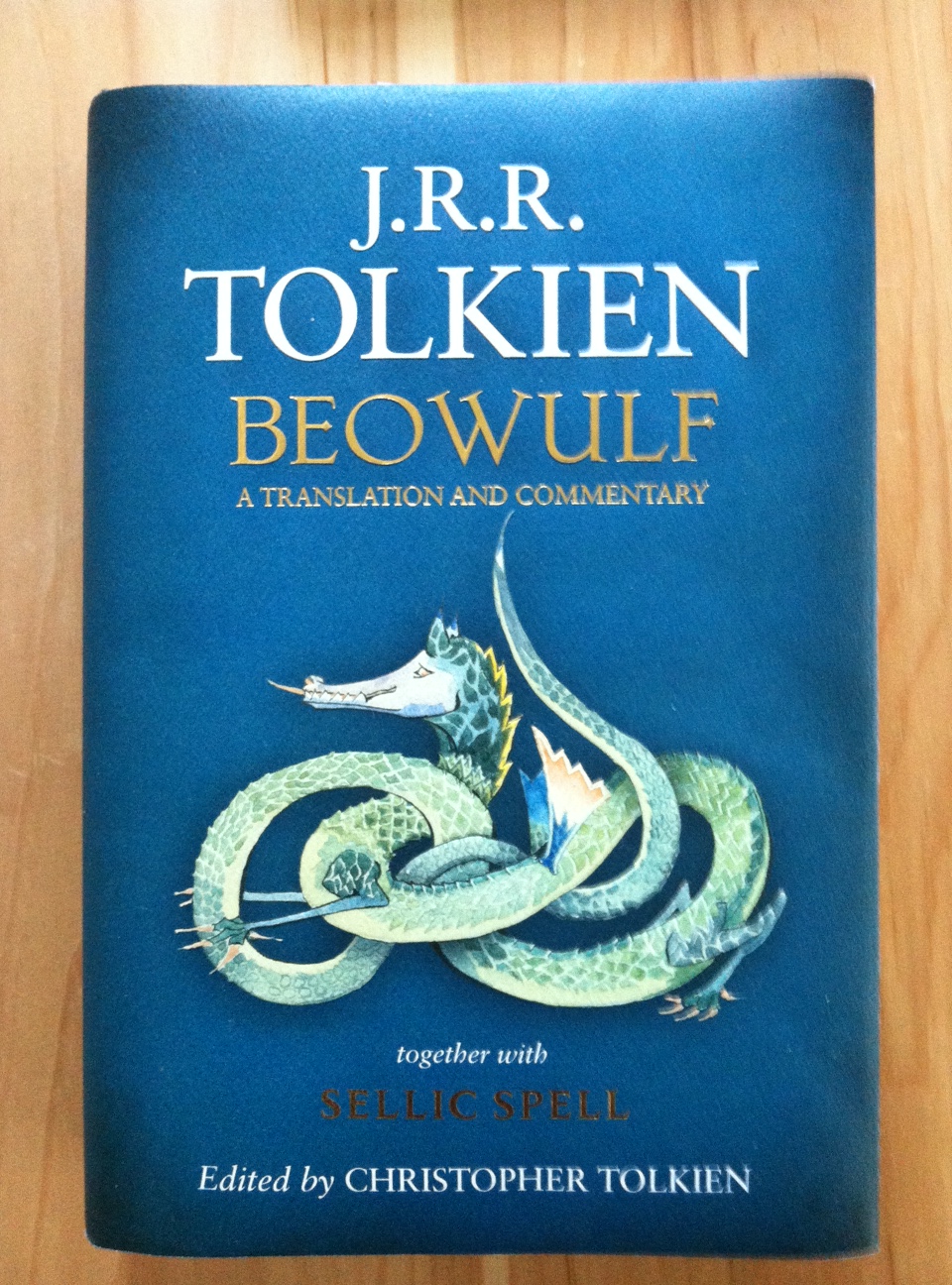
Recommended Reading: J.R.R. Tolkien’s Beowulf: A Translation and Commentary, Together with Sellic Spell (Edited by Christopher Tolkien)

(The dragon on the front cover is one of J.R.R. Tolkien's drawings.)

(The dragon on the front cover is one of J.R.R. Tolkien’s drawings.)

I have been looking forward to the publication of J.R.R. Tolkien’s translation of Beowulf* for ages, and this book more than met my expectations. It’s a treat for Tolkien aficionados like yours truly.

Here are the book’s major sections:

  • Introduction by Christopher Tolkien
  • J.R.R. Tolkien’s translation of Beowulf
  • Note on the text of the translation
  • Commentary on Beowulf
  • Sellic Spell
  • The Lay of Beowulf

In his preface to the work, Christopher Tolkien quotes his own foreword to The Legend of Sigurd and Gudrún: “‘Of its nature it is not to be judged by views prevailing in contemporary scholarship. It is intended rather as a record of his perceptions, in his own day, of a literature that he greatly admired'” (xiii). The same, he writes, applies to this version of Beowulf.

Christopher Tolkien (approaching 90) has shown a faithfulness and care for his father’s legacy that rivals Sam Gamgee’s for Frodo; without him, it’s difficult to say that we’d have The Silmarillion, or Unfinished Tales, or Children of Húrin, or The Fall of Arthur. Here, he’s provided a painstaking record of his work to bring this edition of Beowulf together, and helpfully elucidated many of his father’s notes.

Christopher Tolkien’s Introduction discusses the manuscript versions of his father’s translation, one of which, like the Beowulf manuscript itself, is damaged. J.R.R. Tolkien’s (prose) translation of the poem presented here is dense, packing nuances of meaning into every line. As one of my uncles** pointed out, quite rightly, this edition of Beowulf will not dethrone Seamus Heaney’s masterful verse translation as the edition of choice in classrooms, but it’s fascinating reading for those of us who love to read Tolkien in any form. Fans of The Lord of the Rings who read this Beowulf will recognize names and phrases that Tolkien borrowed for his own epic. Tolkien’s learned commentary (chosen from a large store of notes and lecture materials by Christopher Tolkien) illuminates particular textual cruces and passages of interest.

The hidden gems in this book are Sellic Spell and The Lay of Beowulf. The Lay of Beowulf, here presented in two versions, is a short, ballad form of the Beowulf story that is meant to be sung; Christopher Tolkien remembers his father singing it to him as a child, more than eighty years ago.

Sellic Spell is the name Tolkien gave to his reconstruction of the mythic-fairy story (as opposed to political-historic) component of Beowulf (Tolkien’s translation of his own work into Old English is also included, because yes, the man was that amazing). It’s absolutely wonderful, engrossing as the best fairy tales are, filled to the brim with descriptive touches. Parts of the dialogue recall The Hobbit, and indeed, at  twenty-five pages in the finished version, Sellic Spell is the perfect way to introduce Beowulf to younger readers, though adults  will love it, too.

This a delightful volume, a must-have for fans of Tolkien or Beowulf (or both), and highly recommended to the general reader for its inclusion of Sellic Spell and The Lay of Beowulf.

*I received a copy of this book from the publisher in exchange for an honest review.

** Happy birthday!

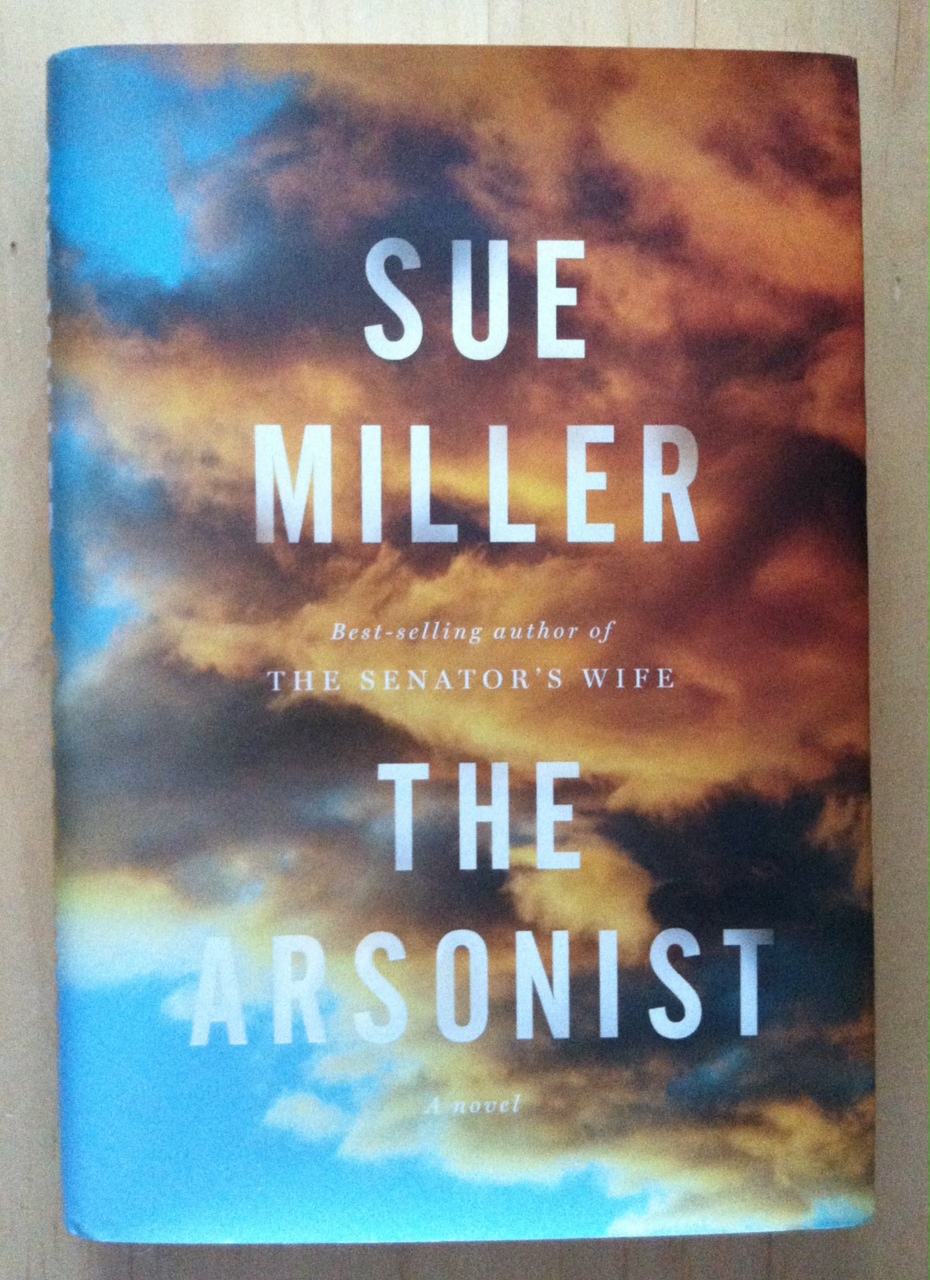
Recommended Reading: The Arsonist, by Sue Miller

photo (102)Sue Miller’s The Arsonist* is a work of exceedingly careful observation, so careful that for me the novel had an almost gauzy quality, as if the narrator, like an officer at a barricade, had removed me several paces back from the action. This is not to denigrate the novel by any means; The Arsonist is a thoughtful meditation on how people find and understand their places in the world even as that world is constantly in flux.

It’s the late 1990s, and Frankie Rowley has left East Africa to visit her parents in New Hampshire at what was once their summer home, but is now their full-time residence. After many years in aid work, Frankie wonders what good she’s really done, and if, maybe, it’s time to seek a permanent home back in America, with all that ‘home’ entails — partner and family included. As she thinks about what to do, she’s drawn back into her parents’ orbit, witnessing Alfie’s decline into dementia and her Sylvia’s struggles to care for him.

On the night she arrives, one of the summer houses — empty — is set ablaze, and in the following weeks the small town of Pomeroy is set on edge my more and more burnings. All the burned houses belong to the summer folk, and the arsons reveal the long-simmering tensions between the town’s year-round residents and the wealthy summer people: Between the two groups stands Bud, owner and chief reporter of the local paper, a transplant from Washington, D.C. who’s working out his place in Pomeroy:

[. . . ] the fires were somehow framing a question he needed to answer for himself about whose home Pomeroy was, whose experience defined it–the chatty, self-assured summer people or the observant, perhaps resentful, year-round folks. A question about who owned the town and who merely used it. (93)

Bud falls hard and fast for Frankie. Their relationship rests on uncertain ground as the fires rage, Frankie’s father gets worse, and Frankie resists making a decision about her future.

The Arsonist is a sensitive, thoughtful book, despite the lurid suggestion of its title, far more concerned with character than with pyrotechnics. Take this passage on the meaning of home:

Maybe, Frankie thought, home–what felt like home–was just a way of being in the world that felt Alfie-like to him, like being the person he’d been before the changes that were slowly turning him into someone else began. Maybe by home he meant the time when he felt whole, when he felt like himself. The time–and perhaps one of the places–where the world seemed to recognize him in some deep way, seemed to say, Come in, we’ve been expecting you. Exactly you. (271)

This is the perfect novel for summer — it’s set in summer, long enough ago to feel  both fresh and nostalgic (remember when not everyone had a cell phone), and engaged with questions we all think about, even when, thankfully, our towns aren’t on fire.

*I received a copy of this book from the publisher in exchange for an honest review.

Once More into the Breach, or, Re-reading The Iliad After Ten Years Away

photo 101When the Fates — or, the lovely people who choose Classics Club spin numbers — plunked The Iliad in front of me last month, I was neither pleased nor displeased. I’d put The Iliad on my list because it seemed like a sensible thing to do; having read it many years ago, I was due for a re-read, but I wasn’t looking forward to it the way I’m looking forward to reading Villette or Lilith’s Brood.

I bounced around looking for the right edition; the one I had in my reference section (yes, I have my own reference section) was too modern, as was another edition I found in the library. I prefer poetry to be translated into poetry, so that nixed the prose versions. Finally I settled on the verse translation by Robert Fagles, with an introduction by Bernard Knox. If you’re planning on reading The Iliad, I highly recommend this edition; the introduction is thorough, organized, and insightful, and the translation moves rapidly and flows easily. (Notes and a section on proper names are included after the text.)

The Iliad is the preeminent poem of war, and it felt somehow appropriate to be reading it while I was thinking about the poets of World War I for my weekly poetry posts. For all its focus on glory and honor — and especially the physical manifestations of those qualities — the poem doesn’t shrink from the realities of violence. It’s quite gory, and since Homer often gives us a brief bio of the fighter about to be speared, the violence is intensely personal, inflicted by one specific man on another specific man. Here’s an example (and with a poppy, too):

The archers loosed a fresh shaft from the bowstring
straight for Hector, his spirit longing to hit him–
but he missed and cut Gorgythion down instead,
a well-bred son of Priam, a handsome prince,
and the arrow pierced his chest, Gorgythion
whom Priam’s bride from Aesyme bore one day,
lovely Castianira lithe as a deathless goddess . . .
As a garden poppy, burst into red bloom, bends,
drooping its head to one side, weighed down
by its full seeds and a sudden spring shower,
so Gorgythion’s head fell limp over one shoulder,
weighed down by his helmet (8.342-53)

As Bernard Knox writes in his Introduction, Homer’s use of the word “friend” between combatants “is sincerely meant; it is a recognition of equality, the equality of men of war, all of whom must face violent death” (37). In The Iliad, even kings and gods can be injured.

I think just about everyone knows the plot of the poem, so I’ll refrain from supplying it and just touch on a few things that struck me through this reading:

Bernard Knox elucidates one of the poem’s great conflicts — fate vs. free will:

[. . . ] in fact the coexistence of these irreconcilables is not a phenomenon confined to Homer’s imagined world. In any civilization which makes a place in its thought for free will (and therefore individual responsibility) and pattern (and therefore overall meaning), the two concepts –fixed and free–exist uneasily cheek by jowl. The only escape from this logical contradiction is the prison of rigid determinism, a pattern fixed from the beginning and not subject to change, or on the other hand, the complete freedom and meaningless anarchy of an unpredictable universe. And Greek thought, like ours (or those of us at least who still live in the humane traditions of the West), tries to embrace the logical contradiction of freedom and order combined. (40)

The sensitive portrayal of Andromache and the portrayal of fierce goddesses vs. the relentless objectification of women: The poem begins, of course, with Achilles’s rage when Agamemnon carts off Briseis, one of Achilles’s war prizes (though he claims later “I loved that woman with all my heart / though I won her like a trophy with my spear” [9.416-17]). At the funeral games for Patroclus, one of the prizes Achilles offers is a woman worth four oxen, “and skilled in many crafts” (23.785). Throughout The Iliad, women are regarded as prizes and slaves (the Greeks plan to enslave the Trojan women once the city falls); rape and enslavement are weapons of war (and still are).  Andromache herself is captured by Achilles’s son Pyrrhus (who slaughters her baby son) after Troy falls, and is enslaved as his concubine. This treatment of women is highlighted by Homer’s sensitive portrayal of Andromache, and the machinations and deep feelings of the goddesses who preside over the conflict, especially Hera, Athena, and Thetis (Achilles’s mother).

Unexpectedly moving passages: Given The Iliad‘s ancientness and its stylistic patterns, I expected to be interested by the poem, to appreciate it, but I didn’t expect to be truly moved. The grief of Achilles for Patroclus, Andromache’s scene with Hector, and Priam’s determination to recover Hector’s body were stand-out exceptions. All made me want to walk over to my bookshelf and take down Madeline Miller’s The Song of Achilles — which I read twice in a row when I received it for Christmas in 2012. If you haven’t read it, please do. It is beautiful and illuminates The Iliad like nothing I’ve ever read before.

Epic lists: The Iliad is well known for its Catalogue of Ships, but there are other lists in the poem, of course. My favorite is the list of the Nereids which appears in Book 18.

Robots: Well, almost. As Hephaestus sets about forging a new shield and armor for Achilles, “Handmaids ran to attend their master / all cast in gold but a match for living, breathing girls. / Intelligence fills their hearts, voice and strength their frames, / from the deathless gods they’ve learned their works of hand” (18.488-91).

And with robots, Dear Readers, I leave you with a question: what do you think of The Iliad?

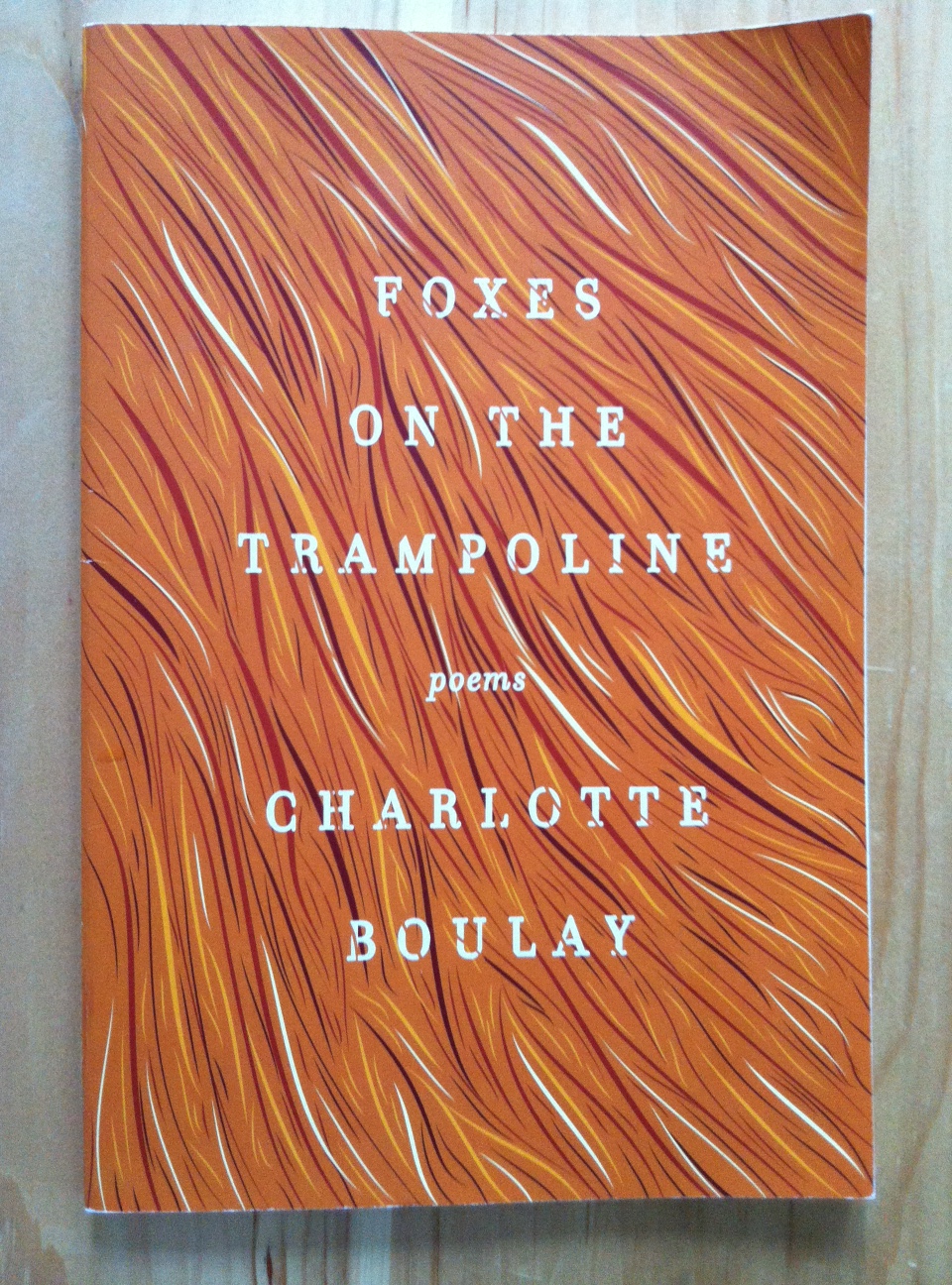
Charlotte Boulay’s “Watson and the Shark” from Foxes on the Trampoline

photo (100)Charlotte Boulay is Ecco’s first addition to its roster of poets since 2008 (a roster that includes contemporary poetry heavyweights Robert Hass and Jorie Graham, among others). Having read Ms. Boulay’s debut collection, Foxes on the Trampoline*, I see why Ecco is excited to be publishing her work.

Ms. Boulay is attentive to the power of individual words; poems like “Calenture” and “Changeling” consider the experiences these words conjure up, as well as their connotations, with startling immediacy.

The collection as a whole is grounded in its speaker’s wide range experience, reflecting Ms. Boulay’s travels in France and India. In “Pallikoodam” (which means “school”) the speaker recalls, “We lived with animals: small lizards / darting up the walls, lines of tiny / imperious ants” before going on to remember the ways she found comfort after watching (on television) the towers fall on September 11, and how she and her companion “woke in the mornings / to hear someone singing, softly / as she swept the yard clean.” This combination — of otherness and familiarity, radical change and the routines of ordinary life — resonates deeply in Foxes on the Trampoline.

You can read a selection of Charlotte Boulay’s poems on the Boston Review site, including our poem of the week, “Watson and the Shark.” In this poem, the speaker remembers a childhood encounter with the famous John Singleton Copley painting of the same name (the copy he made of his original version), which is on view at Boston’s Museum of Fine Arts (we just visited the MFA this past weekend, so this poem jumped out at me. The last stanza is amazing.

*I received a copy of this book from the publisher in exchange for an honest review.

Recommended Reading: Everything I Never Told You, by Celeste Ng

photo (97)I admired so much about Celeste Ng’s debut novel, Everything I Never Told You*: the seemingly effortless structure that passes seamlessly between decades; the rounded, careful characterizations; the gradual revelation of a loving family’s best-kept secrets.

When I first heard about Everything I Never Told You, I was in equal parts eager and nervous about reading it. Eager because the praise was already coming in, and because I recognized Ms. Ng’s name; we attended the same high school and edited the same high school creative arts magazine (four years apart; we’ve never met). And nervous because, given the book’s opening lines (“Lydia is dead. But they don’t know this yet.”), I thought that I might be reading something akin to The Lovely Bones, and I wasn’t sure I had the emotional energy in reserve. As it turns out, I needn’t have worried.

Everything I Never Told You is a nuanced portrayal of the ways in which a family copes with a loss both profound and mysterious. It’s also an exploration of how that family came into being, and how the histories of parents shape their children. It’s a novel in which a skillful writer reveals that privates dramas — made of extraordinary-ordinary stuff, no skeletons in the attic — are astonishingly compelling, and astonishingly important.

In their small Ohio town, the Lees stand out as the sole Chinese American family, a distinction that causes difficulties for them, to say the least. James Lee is the son of immigrants (their story, given in brief, is both poignant and gripping, and made me want to hear more about them); Marilyn was raised by her mother and dreamed of becoming a doctor before marriage and motherhood derailed her plans. James respects his wife’s intellect, and did not deliberately keep her from a career; like so many of us, the Lees make their decisions about work and family with practical exigencies in mind and ideal scenarios too far out of reach.

The three Lee children are Nathan (Nath), Lydia, and Hannah. Nath looks forward to leaving for Harvard in the fall; Lydia struggles with her parents’ expectations; and little Hannah is at once nearly invisible and the one who sees best what’s going on around her.

One spring morning in 1977, the Lee family realizes that Lydia is missing. Once her body is recovered, each member of the family starts to look for answers, but their searching reveals just how much has been unspoken among them, and how difficult it will be to knit together an unraveled family.

Ms. Ng’s prose is gorgeous, gliding from character to character in a manner that reminded me of Ian McEwan’s style in, say, Atonement. Here’s one passage I loved:

For the first time, she wishes she were the sort of woman, like her mother, who carried a handkerchief. She would have pressed it to her face and let it filter air, and when she lowered it the cloth would be dirty pink, the color of old bricks. Beside her, Hannah knits her fingers. She would like to worm her hand onto her mother’s lap, but she doesn’t dare. Nor does she dare look at the coffin. Lydia is not inside, she reminds herself, taking a deep breath, only her body–but then where is Lydia herself? Everyone is so still that to the birds floating overhead, she thinks, they must look like a cluster of statues. (60)

I love the detail here, and the way Ms. Ng lights on these two sad figures for just a moment, to give us a sense of what a small moment of loss feels like, how it looks.

Everything I Never Told You is a novel that asks us to examine how we define our own success or happiness, to wonder what it means to belong (in all the senses of the word) and to try mightily to understand each other better. Highly recommended.

Coming Soon: An interview with Celeste Ng, author of Everything I Never Told You

*I received a copy of this book from the publisher in exchange for an honest review.

Bostonians: You have two opportunities in July to hear Celeste Ng read from Everything I Never Told You!

July 23: BROOKLINE BOOKSMITH. 7:00 PM

279 Harvard Street
Brookline MA 02446

July 29: NEWTONVILLE BOOKS. 7:00 PM

10 Langley Road
Newton Centre
Newton, MA 02459
Recovery Reading

One of the delights  of our wedding day — which, yes, took place at a bookstore/restaurant — was working with our wonderful photographers, Matt and Paulette, who are friends of the best man and all-around great human beings.

Around Christmas 2012, Matt was diagnosed with a rare kidney disease that led to renal failure, and so Paulette orchestrated the search to find a kidney for Matt. Amazingly, it turns out that Matt’s best friend John is a match, and the transplant happened this past week — a great success! (So very happy to write that sentence!)

Excellent people that they are, Matt and Paulette asked that anyone who felt so inclined send cards, notes, books, movies, etc. for John (c/o Paulette & Matt) during his long recovery at home, so that he feels showered with love and thanks. It’s a fabulous idea, especially since there are many, many people out there grateful for his generous act of friendship and love.

We’re two of them, of course. We don’t know John that well, but we do know that he likes to read. And having been hospital-bound myself a few times, I know just how the right book can distract you from, well, not being well. (Turns out that the stellar biography of George Washington is not as effective as Thisbe Nissen’s short stories. Thanks again, Amy!)

So what books to you send to a wonderful guy who did this incredibly generous thing but who you don’t know that well? Here’s hoping the three we sent are good choices.

photo (99)Nobody’s Fool by Richard Russo. One of my all-time top-ten favorite novels, Nobody’s Fool is the engrossing and hilarious story of down-but-not-quite out Sully as he goes about his business in a tiny town in upstate New York. A few lines can’t do justice to how great this book is.


The Crossing by Cormac McCarthy. Ok, haven’t read this one, but that’s part of why we picked it. We figured John might have read The Road or No Country for Old Men, but this is one Cormac McCarthy novel that’s flown a bit under the radar. Plus, there’s nothing like McCarthy-esque violence to take one’s mind off post-op pain, right?

photo (96)The Road to Burgundy by Ray Walker.  This is a light and cheerful memoir, as noted in my review, and we figured it would be perfect pre-nap reading. A little escapism goes a long way, though we hope John won’t pack up and move to France . . .


Hope we made the right calls, and we’re wishing John a speedy recovery. If you’ve found a particular book distracting or cheering during a recovery, please share in the comments! And if you’d like to send something John’s way, let me know and I’ll message you the address.

Other ways to send books to patients: 

Donate books directly to your local hospital (call or email first)

Reach Out And Read (link to Boston Children’s Hospital program, but it’s nationwide)

Books for America 

Have another idea? Let me know and I’ll add it to the list!