“erasing absence”: Christopher Buckley’s “On the Eiffel Tower”

1909687_520858518315_5793_nAfter the terrible events in Paris last week, I found myself looking for poems about the city, but none of the ones I came across really conveyed everything I wanted them to, which makes sense—how could they when I wanted to much?
In the end, I thought I’d recommend this poem about the Eiffel Tower. Christopher Buckley’s “On the Eiffel Tower” isn’t about crisis, or free speech, or facing the worst among us with all that we can muster of our best. What it is about is the way human minds can fill the sky with something beautiful, a monument of iron lace that’s stood for more than a hundred years of war and peace.

Vive la liberté.

Correction (August 23, 2020): The original version of this post mistakenly conflated Christopher Buckley, poet, with Christopher Buckley, satirist. I regret the error, and thank the reader who brought it to my attention.

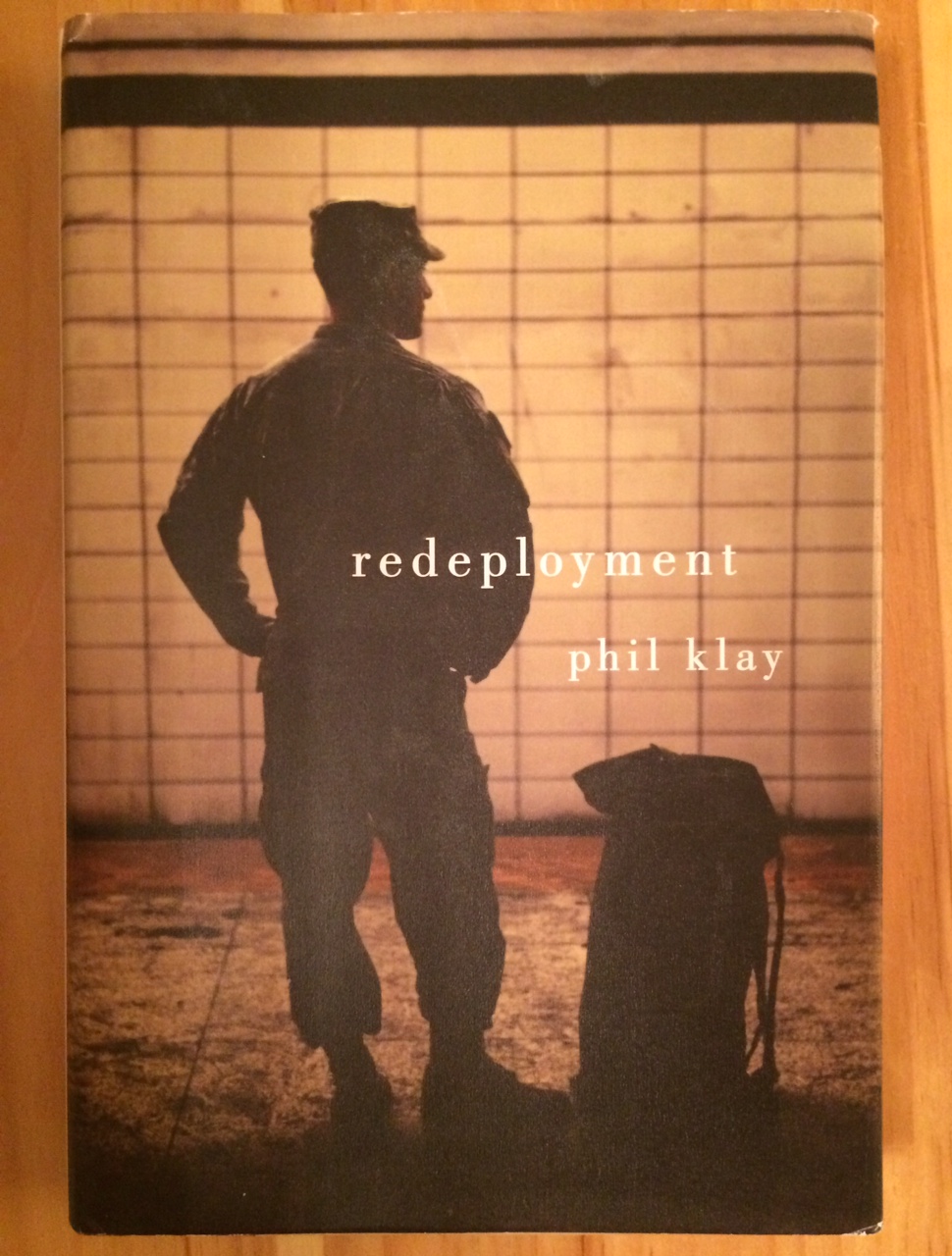
Recommended Reading: Redeployment, by Phil Klay

photo (4)

“Somebody said combat is 99 percent sheer boredom and 1 percent sheer terror. They weren’t an MP in Iraq. On the roads I was scared all the time. Maybe not pure terror. That’s for when the IED actually goes off. But a kind of low-grade terror that mixes with the boredom.”

–“After Action Report” in Redeployment* (42)

Chances are that you’ve heard about Redeployment, Phil Klay’s collection of short stories that recently won the National Book Award; it’s the best known of the books (fiction, that is) that are coming out of the wars in Iraq and Afghanistan, and after I read it, I decided that I should read more of them.

On his website, Phil Klay writes, “It’s not that there’s one thing I want people to understand about this war so much as I want people engaged with it. If you’re an American citizen, it’s your war. It’s not the soldier’s war, or the Marine’s war. The soldier and the Marine do not issue themselves orders.” (It’s a point he also made on the penultimate episode of The Colbert Report; you can watch the clip here.)

Though I’ve met veterans of the wars, I do not know any of them well enough to ask about their experiences; writing —fiction, nonfiction, journalism— is the most accessible way for me to approach the wars, and maybe it is for you too. I haven’t done enough to understand veterans’ experiences, but reading Redeployment was a small step in the right direction.

The twelve narrators in the meticulously-researched Redeployment include a chaplain, a Mortuary Affairs officer, an artillery specialist, and an infantryman who’s just returned home. None of the narrators stand in for Mr. Klay himself (he was a public affairs specialist in the Marines), but all are compelling, flawed, admirable in their own ways, and deeply changed by their time in Iraq. Their stories are unforgettable, often brutal, and impossible to put down.

The book doesn’t have a political agenda; it’s neither pro- nor anti-war, which is, I think, what makes it so powerful. As the narrator who’s a chaplain says, “nobody expects sainthood, and it’s offensive to demand it” (150). Mr. Klay has set out to show the stark realities of modern war and the gray places in human nature, all while giving civilians a glimpse of the desperate hardships endured by soldiers.

If you’ve read Redeployment and are looking for new fiction about the wars in Afghanistan and Iraq, there are several books coming out in 2015 that may pique your interest, like Elliot Ackerman’s Green on Blue,  Jesse Goolsby’s I’d Walk with My Friends If I Could Find Them, John Renehan’s The Valley, and Christopher Robinson and Gavin Kovite’s War of the Encyclopaedists, among others. I’ll definitely be reading at least one of these in the next few months.

Here are links to organizations that help soldiers and veterans and their families, which you might consider donating to:

Greater Cleveland Fisher House

Yellow Ribbon Fund

Intrepid Fallen Heroes Fund

Books for Soldiers (h/t My Book Strings)

Wounded Warrior Project (h/t commenter Ripley)

*I received a copy of this book from the publisher in a giveaway, which did not affect the content of my review.

“Letters swallow themselves in seconds”: Naomi Shihab Nye’s “Burning the Old Year”

Here’s a poem for the new year by acclaimed (and prolific) poet Naomi Shihab Nye.

It’s called “Burning the Old Year” and I love its mix of quotidian objects (“lists of vegetables”) and the blazing metaphor (papers “sizzle like moth wings / marry the air”). Then there’s the sharp turn to absence, like the strike of a clock, and a blistering finish:

only the things I didn’t do
crackle after the blazing dies.
It’s a neat, complex little poem, and I’d love to hear what you think of it.

Happy New Year!

Dear Readers,

Happy New Year! Thank you very, very much for stopping by, reading, and commenting over the past two (wonderful) years. I hope celebrating Rosemary & Reading Glasses’s birthday on New Year’s Day will be a tradition for a long time, and that we’ll all find happy reading in 2015.

Back next week with poetry and reviews.

Cheers,

Carolyn

P.S. Please let me know if there’s anything you’d like to see more or less of on the blog, features you’d like to see revived, new features, etc. I’m always open to suggestions.

“Arbolé, arbolé . . .”

Today’s poetry post is in honor of Joyce Wilson (1924-2014), who studied Spanish and French literature and was a writer herself.

I love this poem, called “Arbolé, arbolé” after its first line, by Federico García Lorca; it’s deceptively simple, almost fable-like in its repetition and use of color. But what is the “grey arm of the wind” around her waist? Does it hold her back? Protect her? Why this girl? As with so many others, I have more questions than answers about this poem.

I hope you’ve all had a wonderful holiday with family, friends, and happy reading.

“free it when they are freed”: Marianne Moore’s “The Paper Nautilus”

photo (2)I had wonderful luck at a bookstore yesterday, finding The Complete Poems of Marianne Moore and Margaret Atwood’s Selected Poems (1965-1975), which is particularly excellent because I already had the companion volume, and wondered if I’d ever come across the first volume in the wild.

Marianne Moore is one of America’s most revered poets, but I am afraid that my knowledge of her work is quite limited, so I’m happy to have the chance to puzzle over some of her very fine poetry. Her images are deep and complex, and her subjects often begin with animals, as in “The Paper Nautilus,” the poem I’m thinking about this week. At first I thought that the animal in question was a variety of nautilus, but the reference to “eight arms” tipped me off that it’s a type of octopus, named after its egg case, which Moore so beautifully describes. That was just the first of many surprises in a poem that turns and undulates like the argonaut underwater.

“The Paper Nautilus” is a fascinating, multi-layered poem that I feel I’m just beginning to get a feel for. I hope you’ll tell me what you think.

Recommended Reading, Christmas Edition: Letters from Father Christmas, by J.R.R. Tolkien

photo (1)If you’re looking for the perfect Christmas book—and maybe inspiration to write the small people in your life some larger-than-life letters—look no further than Tolkien’s Letters from Father Christmas. 

I’ve had my eye on this book for a long time, but the number of editions and their varying states of completeness put me off buying it until this year, when I came across what I think is the best edition out there: the HarperCollins hardcover edition published in the UK in 2012 (my copy came from the Book Depository). The only thing that could make it better? Bigger pages.

In this collection, edited by J.R.R. Tolkien’s former secretary (and his daughter-in-law) Baillie Tolkien, you’ll find over twenty years’ worth of correspondence from Father Christmas (with interpolations by the North Polar Bear and later notes from the Elf secretary Ilbereth) to the Tolkien children. What’s especially wonderful is that the transcriptions of the letters are accompanied by facsimiles of the letters, envelopes, and drawings themselves, so you can revel in Father Christmas’s shaky writing, the Polar Bear’s hilarious marginal commentary (and goblin alphabet!), and the beauty of Tolkein’s drawings.

You’ll find tales of mischief and eleventh-hour turnarounds, reindeer on the loose, and lots of firecrackers in these pages, and something more, too—a record of the joys and interests of the Tolkien children, and their father’s sadness at the woes of the world around them. The Depression and the Second World War do not go unnoticed, but Father Christmas’s reassurance that hope and light will return again is touching and poignant, and a good reminder for our own times.

Highly recommended reading for parents, children, Tolkien fans, and anyone who’s looking for Christmas cheer.

The Ones that Got Away: A Christmas Wishlist

Joy and lightI’ve had a delightful year of reading, but even though I’ve read some of the best 2014 has to offer, there are still some sitting on bookstore shelves that I think would look great on mine: a few books I couldn’t finish before they had to be returned to the library, a few that just came out, and a few that were published years ago that I just learned about and am coveting.

Now, this is only a wish list in the loosest sense; it’s clear that I have more than enough books to last a lifetime, and truth be told, I haven’t finished reading last year’s Christmas books yet. Still, I fearlessly present the following list, in no particular order.

Fiction

David Mitchell, The Bone Clocks (time travel!)

Michel Faber, The Book of Strange New Things (literary sci-fi, yes please)

Miriam Toews, All My Puny Sorrows (recommended by Naomi)

Emily St. John Mandel, Station Eleven (there’s Shakespeare involved, so I’m there)

Sarah Waters, The Paying Guests (Sarah Waters! Post-World War I!)

Christopher Moore, The Serpent of Venice (because Christopher Moore is a reliable laugh)

Short Fiction

Lorrie Moore, Bark (I’ve heard great things)

Paul Yoon, Once the Shore (because I loved Snow Hunters so much)

Nonfiction

Eula Biss, On Immunity (because seriously, people: immunize your kids)

Pamela Paul, ed. By the Book (I really, really want this collection)

Danielle Allen, Our Declaration (Gordon S. Wood’s review in the NYRB convinced me that this is a must-read)

Poetry

Claudia Rankine, Citizen (timely and excellent, from everything I’ve heard)

Eryn Green, Eruv (because I trust Carl Phillips’s judgment)

Ciarán Carson, For All We Know (because “The Fetch,” which I wrote about earlier this week, was amazing)

Two Poems for Knitting

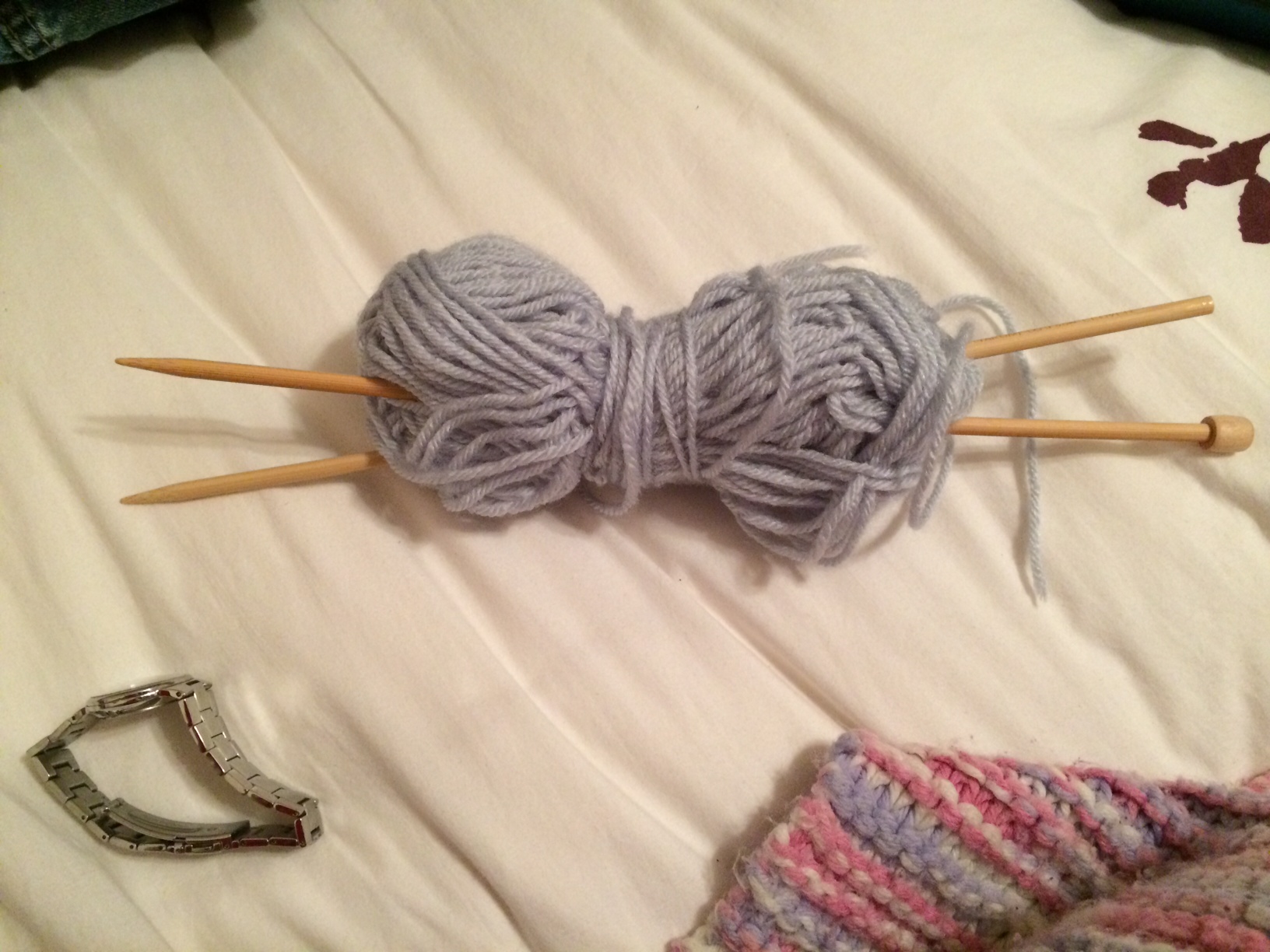
photoIn late November and into December, I often find myself knitting at night, rushing to catch up with projects destined to become Christmas presents.

I am not a very skilled knitter; I can make rectangles (scarves, small blankets) and things that can be made out of rectangles (leg warmers, arm warmers, bags, vastly oversized laptop covers . . . ). I can’t cable, use double-pointed needles, read a pattern, or reliably tell you what a slip-stitch is. Though I was taught by a talented and generous knitter, I am fairly sure that I’m holding the yarn the wrong way.

Still, I love knitting. I like seeing yarn curved and curled into something new and useful (well, mostly useful), and the sense of satisfaction that comes from weaving in the yarn ends on a scarf or a baby blanket. I’m not good enough that I can take my eyes off the work, so I usually knit while listening to a movie or TV show I’ve seen ten times before and chatting with my husband. It’s all very companionable.

Anyway, today I went looking for poems that talk about knitting, and I found a few; here are my two favorites.

The first, Ciarán Carson’s “The Fetch,” is just wickedly cool (that’s a technical term, by the way); it’s about waking, dreaming, loss, the sea, and distance, and features a nice Dickens reference, too. It’s so good I’m putting his book For All We Know on my Christmas wish list.

The second poem links knitting and waves as well. “A simple co-creator, I trust in simple decorum,” says the speaker of Cory Wade’s “Knitting Litany.” An incredibly skilled knitter, the speaker conjures a list of flora and fauna that descend from her needles, and imagines the waves she builds and builds.

Now, who’s going to teach me how to crochet?

The Rosemary and Reading Glasses Holiday Gift Guide (Because it was inevitable, wasn’t it?)

Dear Readers,

Last year I recommended non-book gifts for readers, and while those recommendations hold, I thought I’d recommend real live books this year.

Now, 2014 hasn’t seen one everybody’s-buying-it-even-if-they’re-not-reading-it hit like The Goldfinch (I myself got if for Christmas, and absolutely want to read it, I swear), but there have been a few high-profile books that have made the rounds of the top-10 and best-of lists (looking at you, The Martian, All The Light We Cannot See, Everything I Never Told You, The Book of Unknown Americans). Three cheers for those books and their authors!

But let’s branch out, shall we?

Fiction for Poets

Katy Simpson Smith, The Story of Land and Sea

Lindsay Hill, Sea of Hooks*

Howard Norman, Next Life Might Be Kinder

Something’s Up, and You Won’t Be Able to Put the Book Down

Kate Racculia, Bellweather Rhapsody

Rebecca Makkai, The Hundred-Year House

Big Sky and Taciturn Men with Unusual Names

Malcolm Brooks, Painted Horses

Kim Zupan, The Ploughmen

Lin Enger, The High Divide

Fabulous Tales, Re-Told

Helen Oyeyemi, Boy, Snow, Bird

Alexi Zentner, The Lobster Kings

Historical Fiction: Colliding Worlds

Laila Lalami, The Moor’s Account

Joseph Boyden, The Orenda

Women at War

TaraShea Nesbit, The Wives of Los Alamos

Laird Hunt, Neverhome

Worlds You Can’t See, Worlds You Don’t Want to See

Emmi Itäranta, Memory of Water

Sharona Muir, Invisible Beasts

Chris Beckett, Dark Eden

Poetry for Everyone (Everyone, Read More Poetry)

Hailey Leithauser, Swoop*

Saeed Jones, Prelude to Bruise

Mark Wunderlich, The Earth Avails

Charlotte Boulay, Foxes on the Trampoline

Books in Translation

Kyung-sook Shin, I’ll Be Right There

Elvira Dones, Sworn Virgin

In Which Letters Play a Part

Simon Garfield, To the Letter

George Prochnik, The Impossible Exile

Books by Authors Famous for Different Books

John Williams, Augustus

Jane Austen, Persuasion**

J.R.R. Tolkien, Beowulf: A Translation and Commentary, Together with Sellic Spell (ed. Christopher Tolkien)

Brilliant and Uncomfortable Reading

Hilary Mantel, The Assassination of Margaret Thatcher

Richard Powers, Orfeo

Coming Up Next: Your Humble Blogger’s Reading Wishlist

*Yes, it came out last year, but I read it this year and it is awesome. So there.

** There is never a bad time to recommend Persuasion.