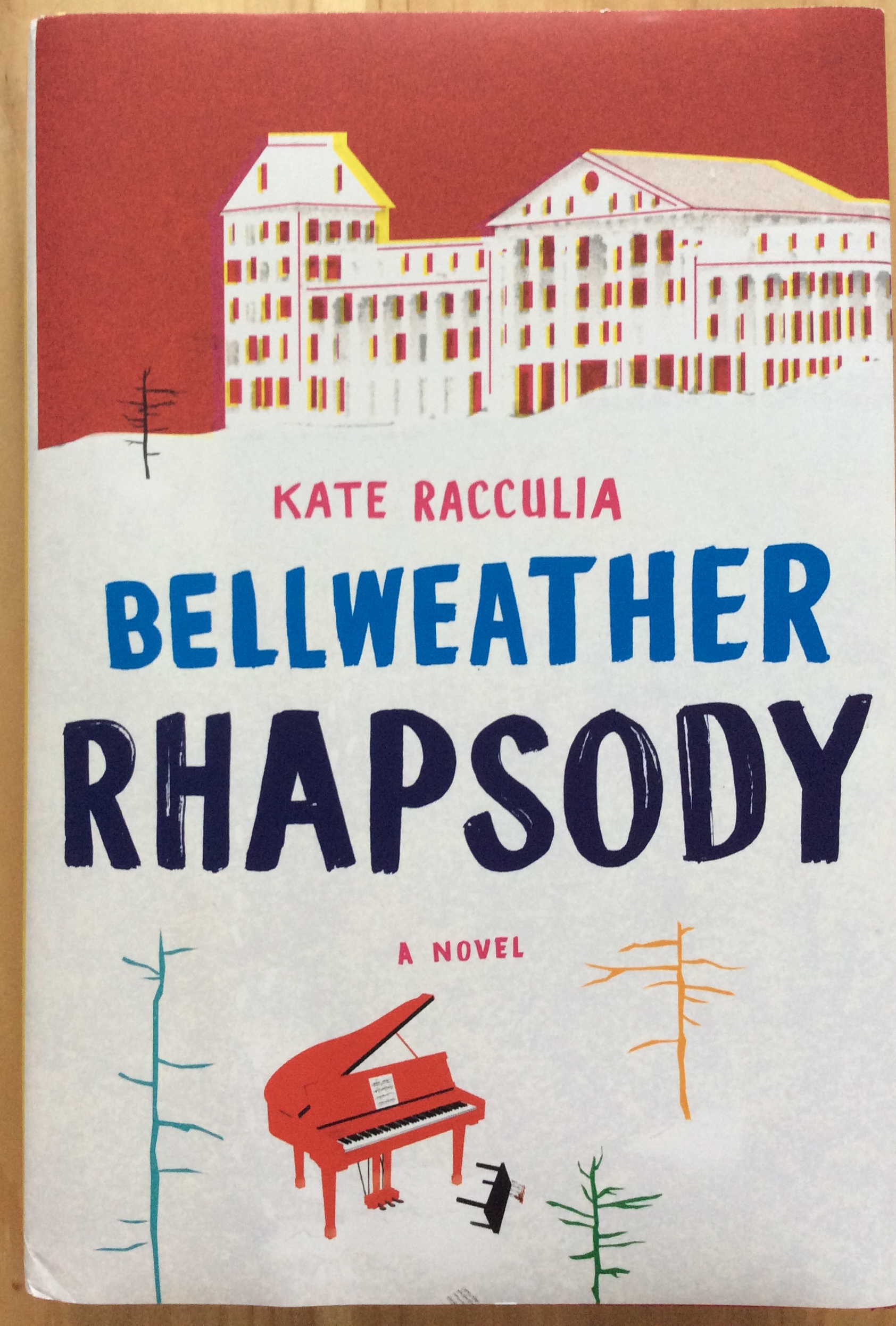
Recommended Reading: Invisible Beasts, by Sharona Muir

Ever seen a Feral Parfumier Bee? A Beanie Shark? A Truth Bat?

Of course not. They’re invisible.

photo (106)In Sharona Muir’s charming and inventive Invisible Beasts*, which will be available tomorrow, we meet Sophie, a naturalist with a peculiar genetic quirk: she can see invisible animals. Invisible Beasts belongs to these invisible creatures, rather than to Sophie, but her humane (in the best sense) voice links each tale together, and gradually we gain a sense of her life’s contours and concerns. Her sister, Evie, is a biologist, and the two sisters are linked by their concern for the natural world, though pushed apart, sometimes by how they perceive it.

Because Invisible Beasts eschews plot in favor of description — and rightly so — it feels odd to call it a novel, when really it is, as Sophie points out, a bestiary, a compendium of beasts. Bestiaries date back to antiquity, and have been written in every age since. Often, an animal — real or imagined — is pictured, a description is given, and some sort of lesson is imparted (for example, how an animal is an allegory for a virtue or a vice). Ms. Muir’s book forgoes illustration, of course, but her descriptions are glorious in their multi-textured detail. Part of the fun of reading Invisible Beasts is the unexpected, so I won’t quote here — but I hope you’ll have the pleasure of reading it for yourself. Sophie, through her whimsical and funny descriptions of her beloved creatures, offers us insights about love, sex, truthfulness, perspective, and the passage of time.

As for lessons: Ms. Muir is significantly more subtle than her medieval predecessors, though Invisible Beasts is deeply concerned with humanity’s relationship with the natural world; this is definitely environmental fiction. Invisible Beasts is a book about, at its heart, symbiosis, and how we understand our own humanity through the non-human. 

Wednesday: An interview with Sharona Muir, author of Invisible Beasts

*I received a copy of this book from the publisher for review purposes, which did not affect the content of my review.

An Interview with Celeste Ng, Author of Everything I Never Told You

Recently I reviewed Celeste Ng’s luminous debut novel, Everything I Never Told You.
Ms. Ng graciously agreed to be interviewed via email. 

How would you describe the inception of Everything I Never Told You? What was the writing process like?

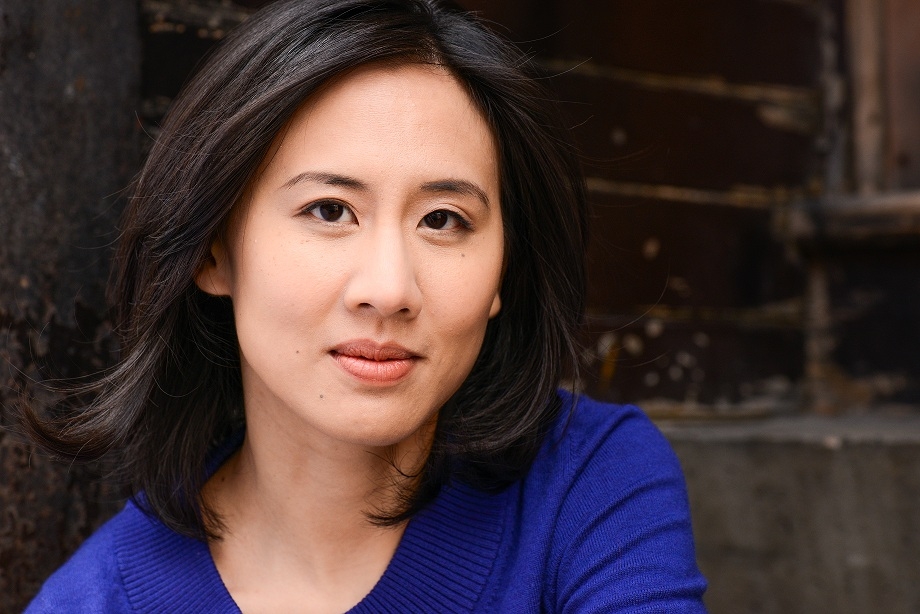
Celeste Ng Author photograph (c) Kevin Day Photography

Celeste Ng
Author photograph (c) Kevin Day Photography

CN: For me, stories almost always start with images. In this case, my husband happened to tell me that when he was a kid, he was at a friend’s house when his friend pushed his own little sister into a lake. When my husband told it, it was a funny anecdote—his parents had to come pick him up early, because wow, was his friend in trouble—but for some reason that image of a girl falling into water stuck with me. I am a terrible swimmer myself, so maybe my fear of water had something to do with it. It transformed into something quite different—in the novel, Lydia is a teenager, for one, and it’s not clear how she ended up in the water. But that was the seed that started the story.

I began the novel when I was completing my MFA at the University of Michigan, in the spring of 2006, and I wrote 4 drafts before finishing the book in 2012. So it was a long process, with a lot of changes in between: I finished school, I moved, I had a baby. I like to think that long gestation made for a better novel.

 What led you to choose to set the novel in the 1970s?

Everything I Never Told You_COliverCN: As I got to know these characters, I realized that the 1970s was a time that highlighted all of the struggles they faced. Interracial marriages have become more common now, but in the 1970s—to say nothing of the decades earlier—Marilyn and James would really have turned heads. Asians weren’t as much of a presence yet, either. And Marilyn’s dream of becoming a doctor was much more poignant in that time period—she would have been in college in the 1950s, when medicine would have been a hard path for a woman. It made my heart ache to know her daughter could have that opportunity, but that Marilyn never really would.

I also found that the 1970s allowed a bigger sense of mystery. We have a lot of ways of finding and knowing people now—we can track them by the GPS in their cell phones, or we can look at their browser history and see what websites they were looking at, or check what they posted on Twitter or Facebook for insight into their thoughts. But in the 1970s, of course, there were no cell phones, no internet, no social media. I wanted Lydia’s family to have to face that information void, to have to face a lot of unanswered questions about her life.

The structure of the novel modulates (seemingly) effortlessly between the past and present, between children and parents. How did you arrive at this structure?

CN: The structure took a lot of work. As I said earlier, I went through four drafts of this novel, and every one of them had a major structural change. I tried telling the story in parts—a few chapters when Lydia’s body is discovered, then a few chapters of Marilyn’s past, then a few chapters of James’s—but that broke up the momentum. I tried braiding the different timelines together, but it got confusing. I tried a lot of things! I ended up having to change the viewpoint as well as the structure, using an omniscient narrator to help make connections between past and present. The story itself stayed relatively constant throughout; it just took a long time to figure out how best to tell that story.

Much of the conflict in Everything I Never Told You involves longstanding miscommunication and misperceptions. What’s something you hope readers take from the novel back to their own lives?

CN: I hope readers will finish the book thinking about the ways they might misunderstand people close to them, and about the assumptions they might be making about others. We assume so much, all the time—we fill in a lot of gaps in conversation and relationships. We draw a lot of inferences about what it means when someone calls you or doesn’t, when someone gives you something or doesn’t, when someone comes to your birthday party or your brother’s funeral or your dance recital, or doesn’t. But we don’t always interpret those gestures and words correctly. It’s hard to say to someone, “Wait, what do you actually mean by that?” A lot of times it’s easier to hear things the way you want to hear them than to ask questions and listen.

On your website, you write that you grew up in a family of scientists. How did that influence your writing? When did you first think of becoming a writer?

CN: I always wanted to be a writer, but didn’t think it was an actual job you could do. So I spent most of my childhood and adolescence planning to write “on the side” while I held another job: paleontologist, astronaut, journalist, book editor. By the time I finished college, I was planning to get a Ph.D. in English, teach college literature, and write on the side, when a mentor suggested I think about an MFA instead. I had no idea such a thing even existed. And it wasn’t until years after I finished the MFA that I started thinking writing could be something I could do professionally.

I actually think that growing up in a family of scientists helped me become a better writer.  From my family, I learned a particular scientific mindset: to look closely at things that puzzle you, to find anomalies more revealing than the norms, to think about cause and effect.  Most important, I think science taught me to believe that there is a logic and a system to the universe, and that—if you try hard enough, and look closely enough—you can illuminate at least a small part of it.  All of that feeds into my fiction.  If you look at science in that way, it’s an ideal training ground for a writer.

What’s next on your writing horizon?

CN: I’m working on another novel that’s actually set in our mutual hometown of Shaker Heights, Ohio.  I won’t say too much about it yet, as I’m superstitious about such things. But as you know, Shaker Heights is an interesting place: it’s racially integrated and very well off, yet of course there are still issues of race, class, and culture that affect the city. And it has a lot of quirks, and a real concern with appearance. I always tell people about the garbage collection—how you’re not allowed to bring garbage to the curb, but you have to leave it in the back for the mini garbage-scooters to pick up and ferry to the big garbage truck, so that the front of the street never looks messy.  It’s such a fascinating place, so the new book deals—so far, anyway—with a family living in Shaker, and a mother and daughter who move there from out of town and unintentionally start to shake things up a little bit.

My thanks again to Ms. Ng for her time and thoughtful answers. You can read more about Ms. Ng, and Everything I Never Told You, on Ms. Ng’s website, www.celesteng.com. Follow Celeste Ng on Twitter: @pronounced_ing

Bostonians: You have two opportunities in July to hear Celeste Ng read from Everything I Never Told You!

July 23: BROOKLINE BOOKSMITH. 7:00 PM

279 Harvard Street
Brookline MA 02446

July 29: NEWTONVILLE BOOKS. 7:00 PM

10 Langley Road
Newton Centre
Newton, MA 02459
Recommended Reading: Emmi Itäranta’s Memory of Water

photo (107)If you’re looking for a thoughtful, surprising dystopian novel that will make you see your preferred summer body of water — ocean, lake, swimming pool — in a whole new light, look no further than Emmi Itäranta’s Memory of Water*.

Ms. Itäranta, who is Finnish and lives in England, wrote the novel in both Finnish and English (the translation of the novel’s Finnish title is The Tea Master’s Book), and readers will find both a Scandinavian setting (albeit much different from today’s region) and lyrical prose, setting Memory of Water apart from what has now become rather standard dystopian fare.

What also sets the novel apart is Ms. Itäranta’s use of conventional dystopian tropes — a world changed after environmental disaster, an authoritarian government wielding violent power, scarcity of basic resources — without following standard plot-lines. Noria Kaito lives in a far-flung village of the Scandinavian Union, which is ruled by New Qian. Her mother is a scientist, and her father is a tea master, performing the traditional tea ceremony that has been handed down for generations; Noria is his apprentice. One day, her father shows her a dangerous secret: a hidden spring that only the tea master’s family knows about. With fresh water scarce — the rest of the village drinks desalinated seawater — this knowledge is illegal, and before long, a commander from New Qian arrives in town, suspecting the tea master’s secret.

When her father dies, Noria becomes the tea master — unprecedented, since she is a woman — and must decide what to do with her knowledge. At the same time, she’s navigating her friendship with Sanja and exploring old technology that they found together in the “plastic grave” near the town, technology that leads the pair to yet another dangerous secret. The military’s hold on the town becomes more brutal, and Noria is faced with extremely difficult choices about what’s best for her, for Sanja, for their village, for the world.

I loved Memory of Water for its musicality, its lyric attention to water, its innate feminism, its conjuring of a world very different from our own, but shaped with its ghostly imprint. I loved Ms. Itäranta’s refusal to grant the reader a happy ending (reaching instead for realism) without diminishing the power of hope. Highly recommended reading.

*I received a copy of this book from the publisher for review purposes, which does not affect the content of my review.

Recommended Reading: David Gilbert’s & Sons

Herewith, Dear Readers, a list.

Types of Contemporary Novels Carolyn Does Not Tend To Enjoy 

  1. books in which all the major characters are male
  2. books in whole or in part written from the perspective of teenage boys
  3. books about writers
  4. books about rich people
  5. books about New York City

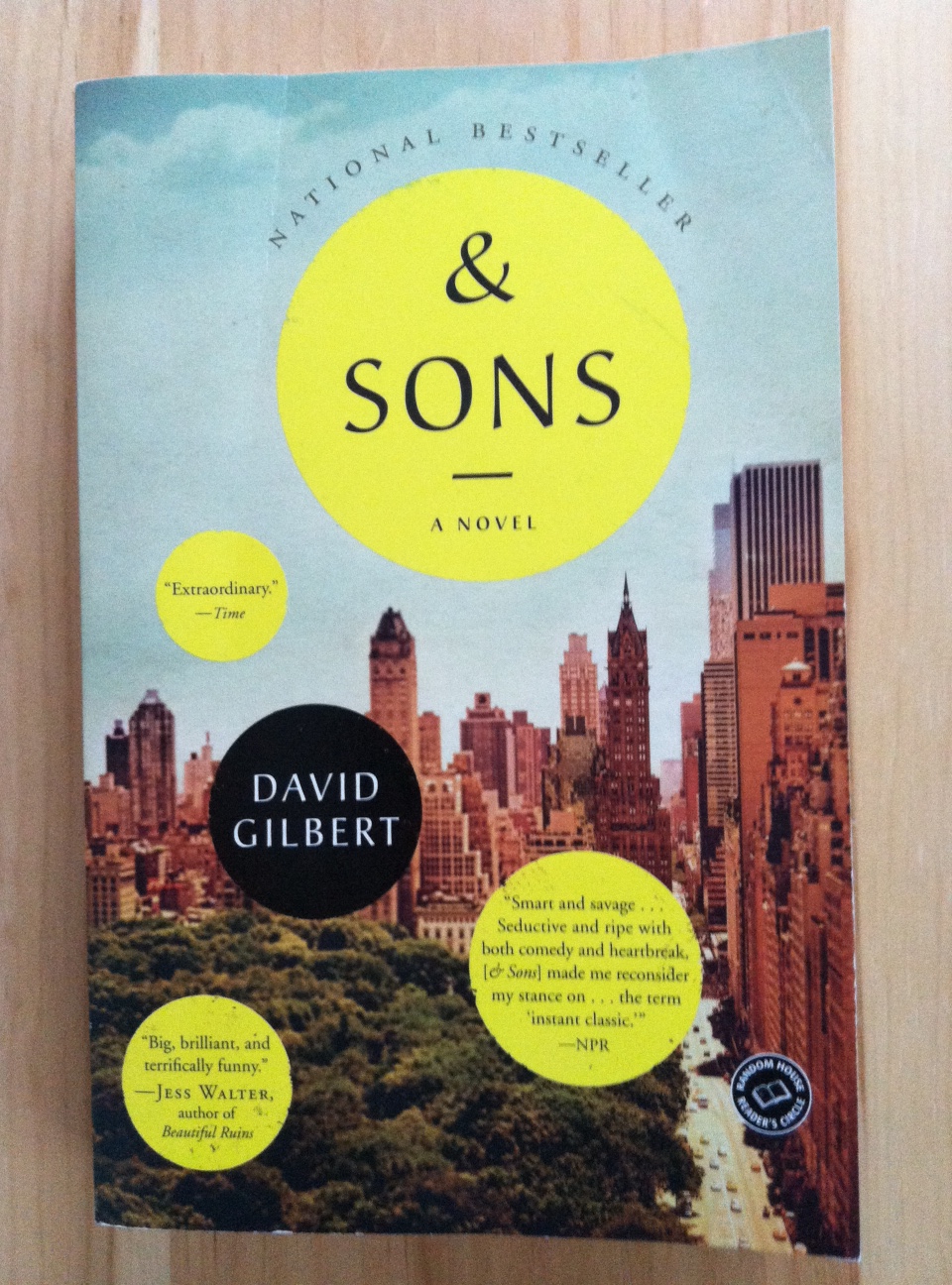
photo (105)David Gilbert’s & Sons* is a book in which all the major characters are male, one of whom is a teenage boy, two of whom are writers, all of whom are wealthy, that takes place in New York City.

And I loved it.

[This was perhaps not entirely surprising, given the general acclaim that followed the novel’s publication last year (it’s now out in paperback).]

& Sons is a big, sprawling, very literary sort of novel, helmed by a somewhat unreliable and undeniably removed narrator (think Nick Carraway**) and populated with flawed and fascinating characters.

The novel’s four main characters are acclaimed novelist A. N. Dyer, a writer whose first book achieved Catcher In the Rye***-type status, sent him into Salinger-style reclusiveness and whose subsequent output seems to match Philip Roth’s; his estranged eldest sons Richard (a recovering addict with anger issues and hoped-for screenwriting career) and Jamie (an avant-garde filmmaker with commitment issues, and many other issues; and the novelist’s youngest son, Richard and Jamie’s half-brother Andy, whose birth seventeen years earlier led to A. N. Dyer’s divorce.

The death of Andrew Dyer’s best friend, Charles Topping (whose son Philip is our narrator) seems to signal the coming end for the writer; at the funeral, says Philip, “[h]is posture reminded me of a comma, its intent not yet determined” (10). He calls all his sons together, and in a few days of frenetic activity, we meet the family, and it’s not exactly a Royal Tenenbaums collection of quirky types, though there’s a showstopping twist about halfway through the novel.

As I noted above, this is a book about men; fathers and sons and brothers, especially, but a certain type of men, who grew up wealthy in New York City, were shipped off to Philips Exeter, and have all the neuroses to prove it. They sound insufferable, but in Mr. Gilbert’s excellent prose — perfect comedic timing, graceful shifts in tone and form, masterful pacing — these men become interesting, then compelling, and finally, weirdly, moving.

A note on this paperback edition: I don’t have the hardcover to compare, but offered here along with the novel is a conversation between Mr. Gilbert and Curtis Sittenfeld (author of American Wife), which is just delightful reading, as well as a series of questions posed to the reader by Mr. Gilbert, a revelatory take on the usual Reader’s Guide.

*I received a copy of this book from the publisher for review purposes, which did not affect the content of my review.

** Confession 1: I do not care for The Great Gatsby.

*** Confession 2: I loathe The Catcher in the Rye.

Recommended Reading: Everything I Never Told You, by Celeste Ng

photo (97)I admired so much about Celeste Ng’s debut novel, Everything I Never Told You*: the seemingly effortless structure that passes seamlessly between decades; the rounded, careful characterizations; the gradual revelation of a loving family’s best-kept secrets.

When I first heard about Everything I Never Told You, I was in equal parts eager and nervous about reading it. Eager because the praise was already coming in, and because I recognized Ms. Ng’s name; we attended the same high school and edited the same high school creative arts magazine (four years apart; we’ve never met). And nervous because, given the book’s opening lines (“Lydia is dead. But they don’t know this yet.”), I thought that I might be reading something akin to The Lovely Bones, and I wasn’t sure I had the emotional energy in reserve. As it turns out, I needn’t have worried.

Everything I Never Told You is a nuanced portrayal of the ways in which a family copes with a loss both profound and mysterious. It’s also an exploration of how that family came into being, and how the histories of parents shape their children. It’s a novel in which a skillful writer reveals that privates dramas — made of extraordinary-ordinary stuff, no skeletons in the attic — are astonishingly compelling, and astonishingly important.

In their small Ohio town, the Lees stand out as the sole Chinese American family, a distinction that causes difficulties for them, to say the least. James Lee is the son of immigrants (their story, given in brief, is both poignant and gripping, and made me want to hear more about them); Marilyn was raised by her mother and dreamed of becoming a doctor before marriage and motherhood derailed her plans. James respects his wife’s intellect, and did not deliberately keep her from a career; like so many of us, the Lees make their decisions about work and family with practical exigencies in mind and ideal scenarios too far out of reach.

The three Lee children are Nathan (Nath), Lydia, and Hannah. Nath looks forward to leaving for Harvard in the fall; Lydia struggles with her parents’ expectations; and little Hannah is at once nearly invisible and the one who sees best what’s going on around her.

One spring morning in 1977, the Lee family realizes that Lydia is missing. Once her body is recovered, each member of the family starts to look for answers, but their searching reveals just how much has been unspoken among them, and how difficult it will be to knit together an unraveled family.

Ms. Ng’s prose is gorgeous, gliding from character to character in a manner that reminded me of Ian McEwan’s style in, say, Atonement. Here’s one passage I loved:

For the first time, she wishes she were the sort of woman, like her mother, who carried a handkerchief. She would have pressed it to her face and let it filter air, and when she lowered it the cloth would be dirty pink, the color of old bricks. Beside her, Hannah knits her fingers. She would like to worm her hand onto her mother’s lap, but she doesn’t dare. Nor does she dare look at the coffin. Lydia is not inside, she reminds herself, taking a deep breath, only her body–but then where is Lydia herself? Everyone is so still that to the birds floating overhead, she thinks, they must look like a cluster of statues. (60)

I love the detail here, and the way Ms. Ng lights on these two sad figures for just a moment, to give us a sense of what a small moment of loss feels like, how it looks.

Everything I Never Told You is a novel that asks us to examine how we define our own success or happiness, to wonder what it means to belong (in all the senses of the word) and to try mightily to understand each other better. Highly recommended.

Coming Soon: An interview with Celeste Ng, author of Everything I Never Told You

*I received a copy of this book from the publisher in exchange for an honest review.

Bostonians: You have two opportunities in July to hear Celeste Ng read from Everything I Never Told You!

July 23: BROOKLINE BOOKSMITH. 7:00 PM

279 Harvard Street
Brookline MA 02446

July 29: NEWTONVILLE BOOKS. 7:00 PM

10 Langley Road
Newton Centre
Newton, MA 02459

Recovery Reading

One of the delights  of our wedding day — which, yes, took place at a bookstore/restaurant — was working with our wonderful photographers, Matt and Paulette, who are friends of the best man and all-around great human beings.

Around Christmas 2012, Matt was diagnosed with a rare kidney disease that led to renal failure, and so Paulette orchestrated the search to find a kidney for Matt. Amazingly, it turns out that Matt’s best friend John is a match, and the transplant happened this past week — a great success! (So very happy to write that sentence!)

Excellent people that they are, Matt and Paulette asked that anyone who felt so inclined send cards, notes, books, movies, etc. for John (c/o Paulette & Matt) during his long recovery at home, so that he feels showered with love and thanks. It’s a fabulous idea, especially since there are many, many people out there grateful for his generous act of friendship and love.

We’re two of them, of course. We don’t know John that well, but we do know that he likes to read. And having been hospital-bound myself a few times, I know just how the right book can distract you from, well, not being well. (Turns out that the stellar biography of George Washington is not as effective as Thisbe Nissen’s short stories. Thanks again, Amy!)

So what books to you send to a wonderful guy who did this incredibly generous thing but who you don’t know that well? Here’s hoping the three we sent are good choices.

photo (99)Nobody’s Fool by Richard Russo. One of my all-time top-ten favorite novels, Nobody’s Fool is the engrossing and hilarious story of down-but-not-quite out Sully as he goes about his business in a tiny town in upstate New York. A few lines can’t do justice to how great this book is.


The Crossing by Cormac McCarthy. Ok, haven’t read this one, but that’s part of why we picked it. We figured John might have read The Road or No Country for Old Men, but this is one Cormac McCarthy novel that’s flown a bit under the radar. Plus, there’s nothing like McCarthy-esque violence to take one’s mind off post-op pain, right?

photo (96)The Road to Burgundy by Ray Walker.  This is a light and cheerful memoir, as noted in my review, and we figured it would be perfect pre-nap reading. A little escapism goes a long way, though we hope John won’t pack up and move to France . . .


Hope we made the right calls, and we’re wishing John a speedy recovery. If you’ve found a particular book distracting or cheering during a recovery, please share in the comments! And if you’d like to send something John’s way, let me know and I’ll message you the address.

Other ways to send books to patients: 

Donate books directly to your local hospital (call or email first)

Reach Out And Read (link to Boston Children’s Hospital program, but it’s nationwide)

Books for America 

Have another idea? Let me know and I’ll add it to the list!

Beach Reading: The Road to Burgundy, by Ray Walker

What’s your dream job?

You know, the one you think you’d love to try given time, and money, and the right location, and all those pesky considerations that responsible adults take into account when making decisions? If you could live anywhere in the world, with a respectable salary (enough to live comfortably but not ostentatiously), but you had to work, what would that job be?

Maybe you have two dream jobs. Or the job you have would be your dream job if there were just a couple of alterations (hi, teachers out there!). Maybe you find it hard to pin down because you think that new-car smell would fade pretty darn fast for any kind of job.

photo (96)Ray Walker is the guy who figured out what his dream job was and turned it into his day job — with a supportive family, an unbeatable work ethic, and an insane amount of luck.

The Road to Burgundy* is Mr. Walker’s memoir, a light, fast, straightforward read that chronicles his often-bumpy transition from finance work in San Francisco to making wine in Burgundy with grapes from some of the most storied vines in the world.

It’s the perfect beach read — engaging, but not stress-inducing — especially for anyone who likes reading about France (the food!) or wine. Mr. Walker’s emphasis on terroir — the place-character of a wine, if you will, is quite interesting. I do wish the memoir had gone into more detail about the old-fashioned winemaking techniques that he champions and that, apparently, have resulted in excellent wines, but ultimately, the book achieves its purpose, which is to show that once in a while that dream job is within reach.

*I received a copy of this book from the publisher in exchange for an honest review.

An Interview with Cristina Henríquez, Author of The Book of Unknown Americans

Yesterday I reviewed Cristina Henríquez’s latest novel, The Book of Unknown Americans. Ms. Henríquez graciously agreed to be interviewed via email. 

How would you describe the inception of The Book of Unknown Americans? What was the writing process like?

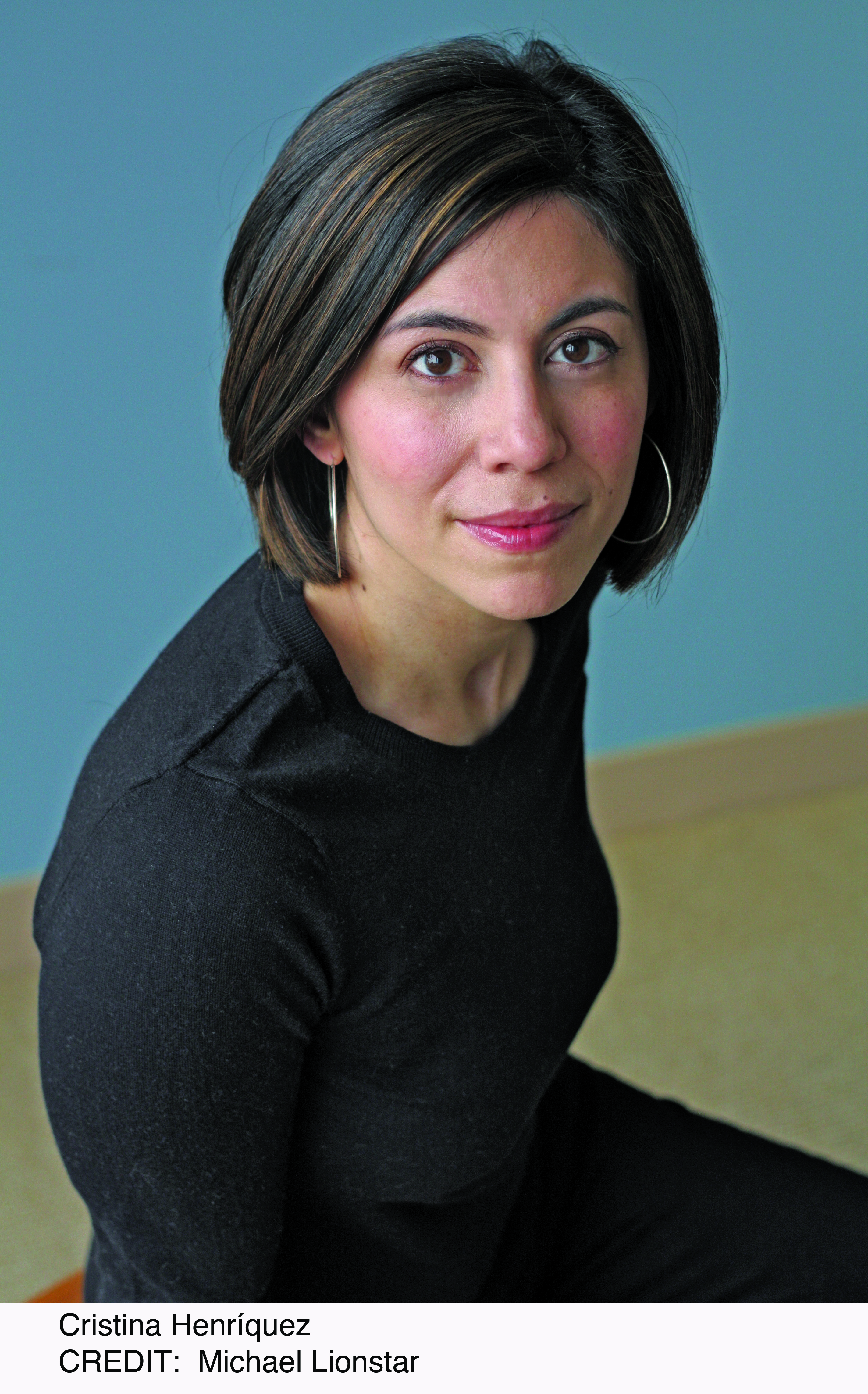
Cristina Henríquez Author photo (c) Michael Lionstar

Cristina Henríquez
Author photo (c) Michael Lionstar

CH: The novel started with a short story told from Mayor’s point-of-view. The first line of that story, which survives in the book, was, “We heard they were from Mexico.” But not long after the story was done, it haunted me — that “we.” Who was the community or group of people behind it? I wanted to find out, so I kept writing, characters and more characters, making up a community as I went along. It took me a long time to figure out the best way to incorporate all those characters, but the point of inception for the book was that story and then spinning it out.

The process itself was slow. It took me five years to write the novel. Lots of wrong turns and misdirection, lots of failed plot threads. But you just keep kneading it out, you know? Patiently, patiently. Until you realize that it’s starting to take shape.

How did you go about conducting research for the novel?

CH: I did as little research as I could. Too much research usually puts the brakes on my inventive impulses, so I edge into research cautiously, only going as far as I need to. For this book, the research consisted mostly of looking up colloquialisms, customs, and histories from each of the represented countries. I also relied fairly heavily on my mom, who is a translator for the school district in Delaware, for questions about how the special education system works and how traumatic brain injuries manifest themselves.

photo (95)Most of the characters in The Book of Unknown Americans narrate at least one chapter. Maribel is a notable exception — is that exception meant to underscore her isolation?

CH: I wish I could say yes, but really the only reason I didn’t give Maribel her own chapter was because I was being so rigid about structuring the book. I wanted the narrative to follow a pattern: Alma, Mayor, interstitial narrative, over and over. Which meant that there was space for only one member of each family to contribute to those interstitial chapters. For reasons that I hope are obvious to people after they read the book, for the Riveras, I really wanted that person to be Arturo.

Do you hope that The Book of Unknown Americans will have a political impact?

CH: No. If it does in some positive way, I would be thrilled. But I don’t hope for it. What’s more meaningful to me is if it has a personal impact, if people read it and start to see others around them — especially immigrants — differently, with more empathy.

What’s one question you hope readers take away from the novel?

CH: That’s an interesting one. Maybe: How have we let ourselves become so intolerant?

What’s next on your writing horizon?

CH: I wish I knew! I have some loosely percolating ideas, but nothing firm yet.

My thanks again to Ms. Henríquez for her time and thoughtful answers. You can read more about Cristina Henríquez, and The Book of Unknown Americans, on Ms. Henríquez’s website, www.cristinahenriquez.com. Follow Cristina Henríquez on Twitter: @crishenriquez

An Interview with Kimberly Elkins, Author of What Is Visible

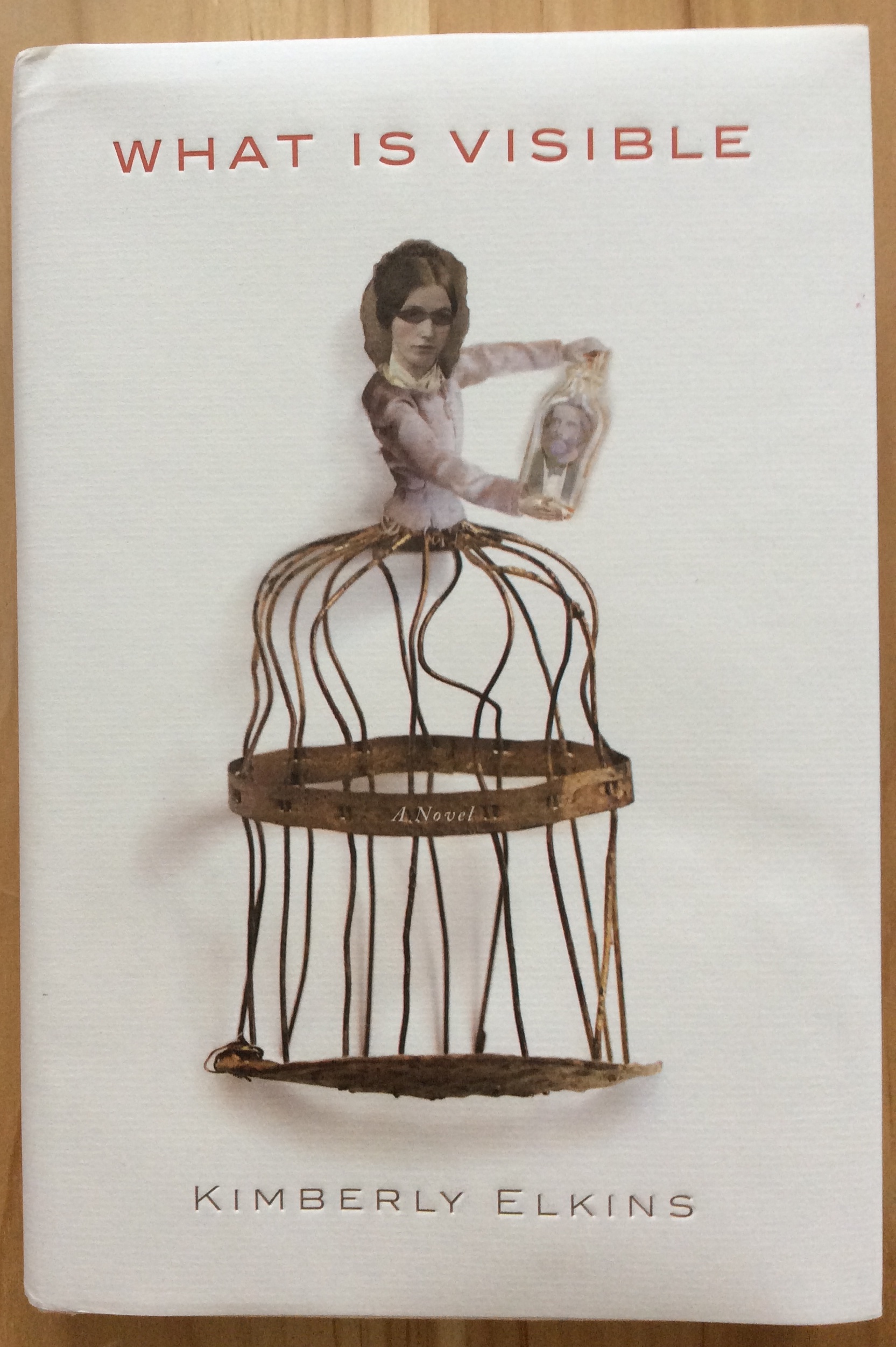
On Monday I reviewed Kimberly Elkins’s fascinating debut novel, What Is Visible. Ms. Elkins graciously agreed to be interviewed via email. 

How would you describe the inception of What Is Visible? I understand that at one point it was a shorter piece; how did you go about expanding it into a novel?

Kimberly Elkins Author photo (c) Sarah Shatz

Kimberly Elkins
Author photo (c) Sarah Shatz

KE: Originally, I wrote the eponymous short story after first reading about, and being dazzled by, Laura Bridgman in the New Yorker in 2001. I couldn’t believe I’d never heard about this remarkable woman who learned language fifty years before Helen Keller, and was considered the nineteenth-century’s most famous woman after Queen Victoria. The story was published shortly thereafter in the Atlantic.

To expand the short piece into a novel, I first had to do approximately two years of research, not only on Laura, but also on the other major real-life figures in her life. The story had taken place on one of the most important days of her life, when she was twenty, but the novel turned out to span almost fifty years, as I tried to fit together the pieces of both her life and how and why she had been, in effect, erased from history. The short story basically had to be deconstructed, with bits of it appearing in appropriate places throughout the novel.

Given the two recent biographies of Laura, and the wealth of archival material related to the characters in What Is Visible, how did you choose which episodes in Laura’s life to feature in the novel?

photo (92)KE: Actually, the two biographies came out almost fifteen years ago; however, you’re absolutely correct in that there was an enormous amount of archival material, especially letters, journals, and newspaper and magazine articles. I chose to bookend the novel with Laura’s historic meeting with the nine-year-old Helen Keller in the last year of Laura’s life, and then to skip to her at age twelve, after she’d been at Perkins for five years. That was the year Charles Dickens visited her, and was astounded by her progress, devoting an entire chapter of his book, American Notes, to Laura. Subsequently, her fame then exploded worldwide. As for the rest of the novel, I wrote about not only the milestones in Laura’s life, but also those of the other three narrators–Dr. Howe, her mentor and founder of Perkins: his wife, Julia Ward Howe, the famous poet and abolitionist who penned “The Battle Hymn of the Republic”; and Sarah Wight, Laura’s beloved last teacher.

What surprised you most as you were conducting research for What Is Visible?

KE: The biggest surprise was always Laura: her fierce intelligence, her unwillingness to bend to the rules of society and convention, even as she desperately sought human connection. Her letters and journals display a large and imaginative vocabulary, and she was even learning French and Latin when she was tragically parted from her last teacher.

What’s one question you hope readers will ask themselves after they’ve finished the novel?

KE: Could I survive and thrive as Laura Bridgman did with only one sense? My hope is that the novel amply shows that one can live a rich and full life with even the severest of handicaps.

What’s next on your writing horizon?

KE: I’m working on another historical novel, the true-life story of two 19th-century sisters who were famous mediums as children, with one going on to found the Spiritualism movement, while the other attempted to debunk all that they had accomplished together. My other project is a wildly divergent take on the classic memoir, in which I revisit events from my life, including violent ones, and write the truth sandwiched between the best- and worst-case scenarios I can imagine, with the reader not being told which narrative is the true one. I think everyone would like the chance to revise their lives, and consider not only the paths left untrod, but also the deep, dark woods or the sunlit meadows through which those paths might have traveled.

My thanks again to Ms. Elkins for her time and thoughtful answers. You can read more about Ms. Elkins, and What Is Visible, on Ms. Elkins’s website, www.kimberlyelkins.com.

Bostonians: You can hear Kimberly Elkins read from What Is Visible at Harvard Bookstore on Tuesday, July 8 at 7:30. 

An Interview with Kate Racculia, Author of Bellweather Rhapsody

On Wednesday, I reviewed Kate Racculia’s exuberant and delightful new novel, Bellweather Rhapsody. Ms. Racculia graciously agreed to be interviewed via email. 

How would you describe the inception of Bellweather Rhapsody? What was the writing process like?

Kate Racculia Author photo (c) Sage Brousseau

Kate Racculia
Author photo (c) Sage Brousseau

KR: I started writing Bellweather Rhapsody the summer my first novel, a coming-of-age-in-a-small-town story, was published, and I knew I wanted my second novel to be different: a mystery, one that paid homage to two of my favorite books of all time, Ellen Raskin’s The Westing Game and Agatha Christie’s And Then There Were None. There would be multiple twisty plots and multiple characters, and they’d all be trapped together in a pressure cooker situation.

The idea for Bellweather’s particular pressure cooker—Statewide, a weekend conference for teenage musicians, held in an enormous, decrepit hotel—was born in the late nineties, when I, a teenage musician, attended the New York State School Music Association (NYSSMA) All-State conference, which was held at the Concord, a once grand, then crumbling hotel that was surely haunted. Even at the age of seventeen, I remember thinking: this would make an incredible setting for a murder mystery.

The writing process was very different from my first novel: I wrote the majority of the (extremely messy) first draft very quickly, and the novel began to truly take shape during a methodical revision process. I spent a lot of time in the Bellweather, getting to know these characters–enough time to solve their mysteries, as it were.

Bellweather Rhapsody is full of delightful (and never gimmicky) 90s touches. What were your favorite books and albums in the late 90s?

Bellweather RhapsodyKR: I was completely obsessed with the Beatles in the 90s; the third CD I ever bought was Sgt. Pepper’s Lonely Hearts Club Band, and that sealed my fate. But if we’re talking 90s culture that was actually of the 90s, I listened to a lot of Barenaked Ladies and REM, Fiona Apple and The Cranberries, Garbage and Radiohead, and I read every Michael Crichton and Stephen King book I could get my hands on.

Like Rabbit, you were a teenage bassoonist, and according to your website, your bassoon was called Nigel. Did you and Nigel get together for a reunion tour while you were writing Bellweather Rhapsody? What kinds of research did you do for the novel?

KR: Alas, we didn’t! Nigel and I haven’t seen each other since June 1998, when I left him behind in the band room; he belonged to my high school. I bought a bassoon of my own (partially with graduation money) and played it half-heartedly during my freshman year of college, but that bassoon only ever felt like a rebound. It is, however, still in my closet, and one day I know I’m going to pick it up again.

As far as research goes, I read books on psychopaths and child prodigies, consulted with some experts (like my best friend’s dad) about which motorcycles were the coolest; went to a few performances of the Boston Symphony Orchestra and a rehearsal of the Boston Youth Symphony Orchestra; and, because I believe in experiential research (i.e., doing the same things my characters will), I went to a firing range and shot a .38 special.

If Bellweather Rhapsody were a movie, what would the track over the closing credits be?

KR: I love this question so much, I’m going to answer it twice. I’d go with either David Bowie’s “Rock ‘n’ Roll Suicide” (Bowie plays a key role in the book) or The New Pornographers’ “Moves,” which has a totally boss string intro. It depends on how you’d like your Bellweather movie to end: pensive and full of feelings, or with a driving beat?

What’s next on your writing horizon?

KR: I’m working on a big sprawling novel about diners and sea monsters and missing kids, stage mothers and office drones, tattooed ladies and rollerskating drag queens—and time travel—that’s most of all about family: the ones we’re born into, and the ones we find in the world.

My thanks again to Ms. Racculia for her time and thoughtful answers. You can read more about Ms. Racculia, and Bellweather Rhapsody, on Ms. Racculia’s website, www.kateracculia.com. Follow Kate Racculia on Twitter: @kateracculia