 A couple of years ago, in a post about my mother, I obliquely mentioned “The Lanyard,” a poem by Billy Collins. “The Lanyard” was the eulogy my uncle read at my grandmother’s funeral recently, and so I’m featuring it this week. It’s one of my favorite poems about parents and children, and I hope you’ll like it too.
Recommended Reading: Shelter, by Jung Yun
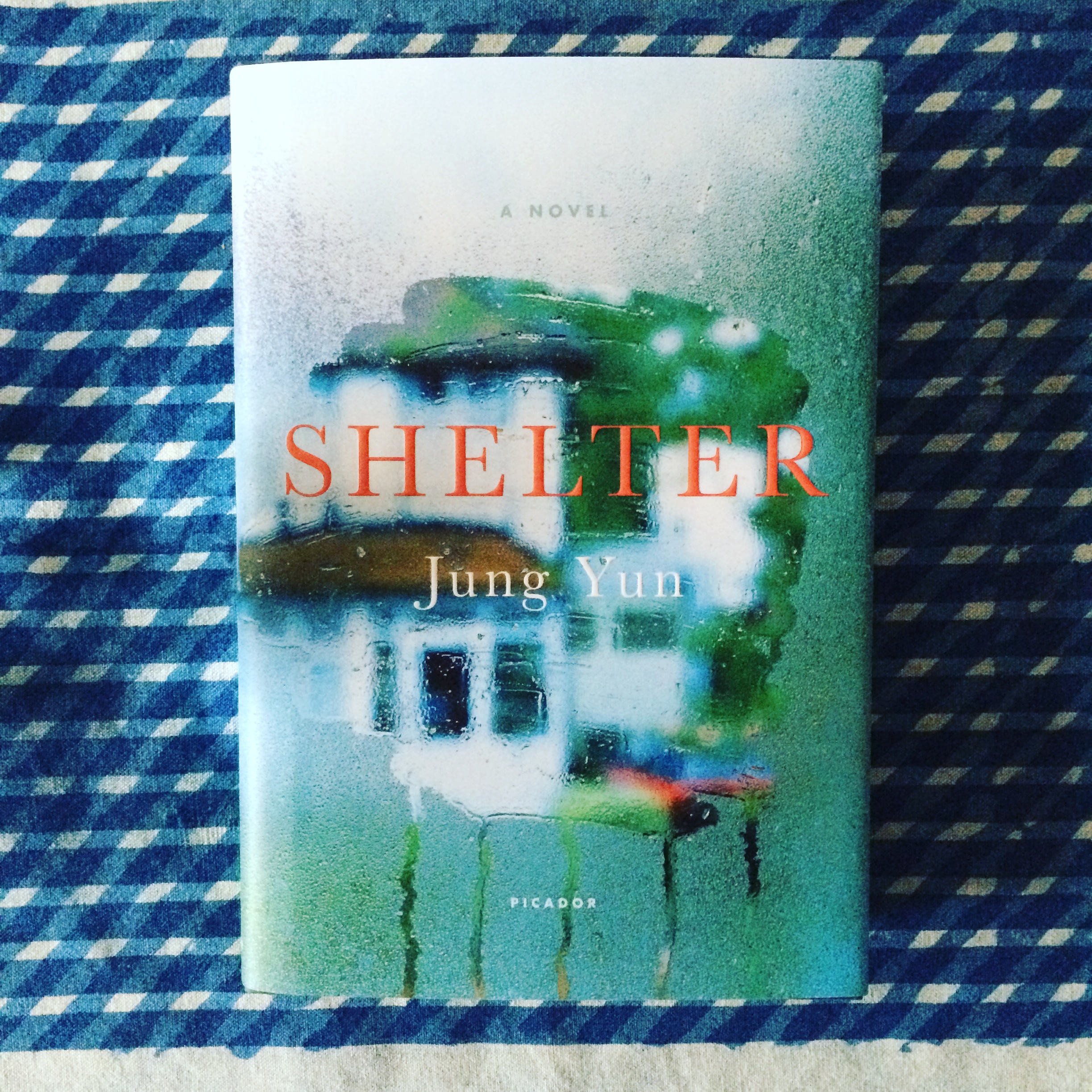 When we meet Kyung and Gillian at the beginning of Shelter*, Jung Yun’s debut novel, they, like many Americans, are struggling financially. They’re pressed by student loan debt, credit card debt, and a mortgage they can’t afford. Their garbage disposal is broken and their four-year-old son, Ethan, wakes up too early. And just as a realtor is telling them that if they sell their home it will be at a tremendous loss, a woman, naked and screaming, appears in their backyard. It’s Kyung’s mother, Mae Cho.
This juxtaposition of the ordinary with shocking plot turns is the foundation of Shelter. Ms. Yun invites readers behind closed doors, where we find what is likely to be familiar—difficult family dynamics, strained relationships between generations and in-laws, worry over how to pay the grocery bill—and then what’s hidden beneath that familiarity: abuse, years of façades, and lives slowly falling to pieces.
(This is not a happy book, but it’s not without a redemption narrative, either.)
After Mae is taken to a hospital, Kyung, his father-in-law Connie, and brother-in-law Tim discover that Mae, Jin (her husband, Kyung’s father) and their housekeeper Marina have been victims of a home invasion and brutal assaults. In the aftermath, all three come to live with Kyung and Gillian, an arrangement that brings simmering tensions to a full-blown boil. As immigrants, the Chos were isolated in the Massachusetts town where Kyung and his father now teach at the nearby university; that isolation, Ms. Yun suggests, was one of the reasons why Jin’s abuse of Mae, and hers of Kyung, went unchecked. As an adult Kyung is desperate not to revisit his parents’ sins on his son, but this means he’s not sure how to parent him, exactly. And when his parents come to live with Kyung’s family, he’s forced to acknowledge the past every day, when he has heretofore maintained a dutiful but pronounced distance.
Kyung shakes his head, aware that they’re falling back into the same old pattern again, the one in which he pities her and tries to help and she treats him badly because she hates herself for needing him. It’s impossible to be near someone like this, someone who brings out the best and worst in him, who punishes his attempts to be kind.
For most of the summer, Kyung’s attempts “to manufacture a silver lining even if he runs the risk of suffocating in it” are thwarted by his own anger and a series of plot twists and turns that make this domestic drama read as fast as a thriller.
The novel’s focus on Kyung is both a strength and a weakness. It’s a strength because Ms. Yun has created an exquisite character study. Kyung is often unlikable, his actions hard to defend, but the reader is constantly forced to question how much of his life and how many of his choices have been shaped by a childhood completely devoid of love. On the other hand, the focus on Kyung I think detracts from the portraits of the other characters, particularly Mae and Gillian, and the ending focuses on his journey to some kind of redemption, which felt wrong since it comes at the expense of his wife and mother.
Nonetheless, this is a searing study of violence as a shaping force in contemporary lives. Recommended.
Boston Readers: Jung Yun will be in conversation with James Scott at Newtonville Books on Tuesday, March 22nd, at 7pm.
*I received a copy of this book from the publisher for review purposes, which did not affect the content of my review.
Writer to Watch: Mona Awad
Mona Awad’s debut book is 13 Ways of Looking at a Fat Girl* (a play on the title of a Wallace Stevens poem); it’s a brief novel in linked short stories, rather as if all the connective tissue of a longer work has been winnowed away, leaving only a character study.
And Lizzie—variously, throughout the book, Elizabeth, Beth, and Liz—is quite a character. As the title suggests, she’s initially a fat girl, 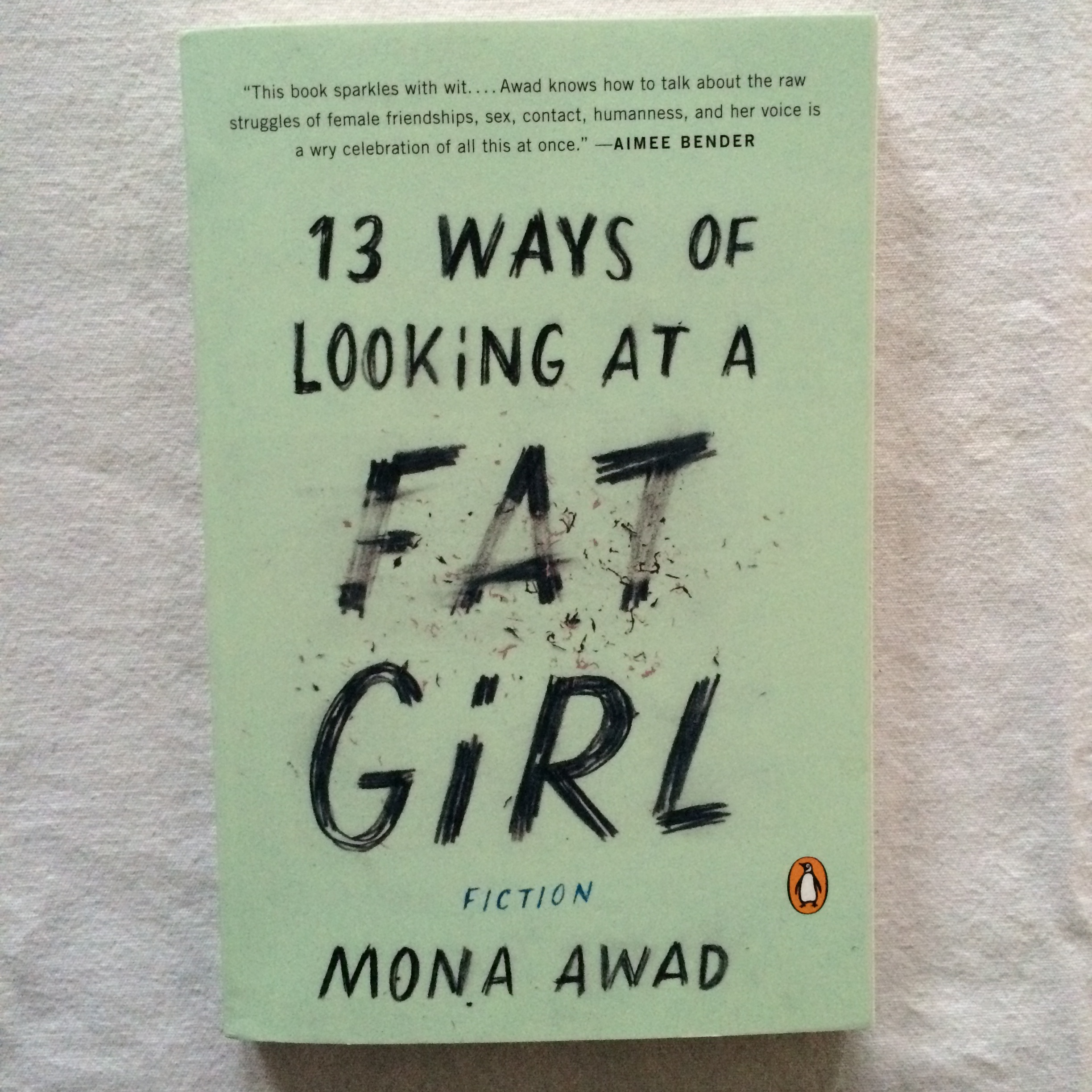 burdened by her own view of her appearance and the views of her friends, family, lovers, and the culture at large. But then she starts to lose weight, and keeps losing it until she is very thin, only to find that she is still miserable, still supremely conscious of the way her body is perceived in the world, still unable to rest for thinking about it.
There’s quite a bit to like in this book, besides its unflinching characterization and rejection of the fat-girl-gets-thin-and-then-becomes-happy-and-partnered-off trope: Lizzie’s voice is especially well developed in the early stories. Anyone who’s been self-conscious about weight will find some of her mundane struggles grimly familiar (trying to find a decent sweater without hideous cat appliqués, for example, or searching for the best camera angle for an online dating profile). Ms. Awad writes humiliation very well.
However, while 13 Ways of Looking at a Fat Girl does savage the censorious, fat-shaming, beauty-obsessed culture we live in, the novel’s treatment of Lizzie, her mother, and Lizzie’s friend Mel suggests that women (and of course it is always women) who are fat at any stage in their lives are doomed to unhappiness for the rest of them; the lone counter-example in the book is a manicurist whom Lizzie is simultaneously repulsed by and fascinated with (and not incidentally, this character isn’t portrayed as particularly perceptive or intelligent). Essentially, I ended up feeling that the book participates in the very culture of fat-shaming that it’s attempting to push back against.
Lizzie’s defining personality trait is rage: even her quips (“I’ll be hungry and angry all my life but I’ll also have a hell of a time”) are just veneers for the anger that’s always seething inside of her. She’s right to be angry, of course; the deck is stacked against her, in more ways than one. Personally, I wanted to shake the book and yell “It’s possible to be both fat and happy!” or give Lizzie a copy of Dietland. In Ms. Awad’s novel, “fat” is code for “miserable,” and I don’t think the book offers any real hope or promise or indication otherwise, no sense at all that “fat” could be—should be—just a descriptor, like “tall.”
I think Ms. Awad has a real talent for voice and characterization, so I look forward to her next book, which I hope will be on a different subject.
*I received a copy of this book from the publisher for review purposes, which did not affect the content of my review.
On Omnivorous Reading: A Tribute
About two years ago, I sent my 80-year-old grandmother a copy of The Martian, by Andy Weir, having forgotten that the first line of the novel is “I’m pretty much fucked.” That’s how I felt when I remembered it a day later, when the book was already on a truck headed for her house in the suburbs of Buffalo.
Turns out I shouldn’t have worried; as you might suspect, given that I assumed she’d want to read The Martian in the first place, Grammie told me later that she liked the novel “very much,” her highest form of praise for books and movies, even saying, with a laugh, that she appreciated the profanity because “who wouldn’t curse in that kind of situation?” She said The Martian would be one of those books she re-read once a year or so as a treat. I’m not sure she ever did get a chance to re-read it; I forgot to ask about it in our conversations over the last few months.

“I am no bird; and no net ensnares me: I am a free human being with an independent will.” This is my grandmother’s copy of Jane Eyre.
Grammie died last week, and I miss her already. I loved her very much, and was always pleased that we shared a favorite color and a favorite novel, Jane Eyre. She had the same patience with me that Helen Burns had for Jane; like Helen, she quietly accepted life’s troubles, her stoicism always a source of curiosity to me (I have the temperament, I should perhaps regret to say, of ten-year-old Jane).
Like Helen, whom Jane meets when she’s reading Johnson’s Rasselas, Grammie was a reader. I’ve written before about my parents’ love of reading and the effort they put into our reading lives, but I’ve never talked much about Grammie, and just how important she was to me, not only in the familiar grandmotherly ways—stroganoff, hamburgers in gravy, perfect chocolate cakes chilled in the fridge, quality time with her skinny hairbrush and Johnson’s no-more-tangles, birthday cards with the most even and lovely penmanship I’ve ever seen, love and support through the very best and worst of times—but also in shaping the way I read. By her example, my grandmother taught me that reading offers not only the pursuit of knowledge or the cultivation of empathy, but also pleasure and enjoyment.
When I was a child I watched my Grammie read from a distance. As Jane Eyre recalls of Helen, “I think her occupation touched a chord of sympathy somewhere; for I too liked reading, though of a frivolous and childish kind; I could not digest or comprehend the serious or substantial.” Grammie read everything, it seemed—novels about submarines, true tales of disaster and survival (believe me, there was nary a chick flick to be found on her movie shelf), classics like Kristin Lavransdatter.

Grammie’s living room bookshelf.
On her living room shelves in Buffalo were handsome 1960s volumes of major authors (Melville, Hugo, Petrarch, Dante, Dickens, Montaigne), while upstairs paperbacks left behind by my uncles (I read all Ian Fleming’s James Bond novels one summer) jostled with nonfiction history from college courses and late-60s/early-70s bestsellers (thanks to which I can report with confidence that Love Story is truly terrible and The Godfather is way raunchier than the movie). Whenever I happened into Grammie’s room there’d be a book on the nightstand (which now sits in my room) or on the nubbly white bedspread, usually with a sticker around its spine and a dust jacket; Grammie was a devoted patron of her public library. Hers was a house of books; there was always something to read, no matter what mood you were in.
Just as important as her example of omnivorous reading was her refusal to dictate what anyone else read. Grammie (like my other grandmother) was a teacher and then a homemaker, raising a family of readers (and teachers) with tastes as diverse as her own. She lived alone for more than twenty-five years, her solitude interrupted by periods when she helped to care for two separate sets of grandchildren while their mothers studied for graduate degrees. When she lived with us from when I was 7 until I was 10, every Saturday morning brought chores first, then a trip to Blockbuster (Goonies and Meatballs were perennial favorites) and the library.
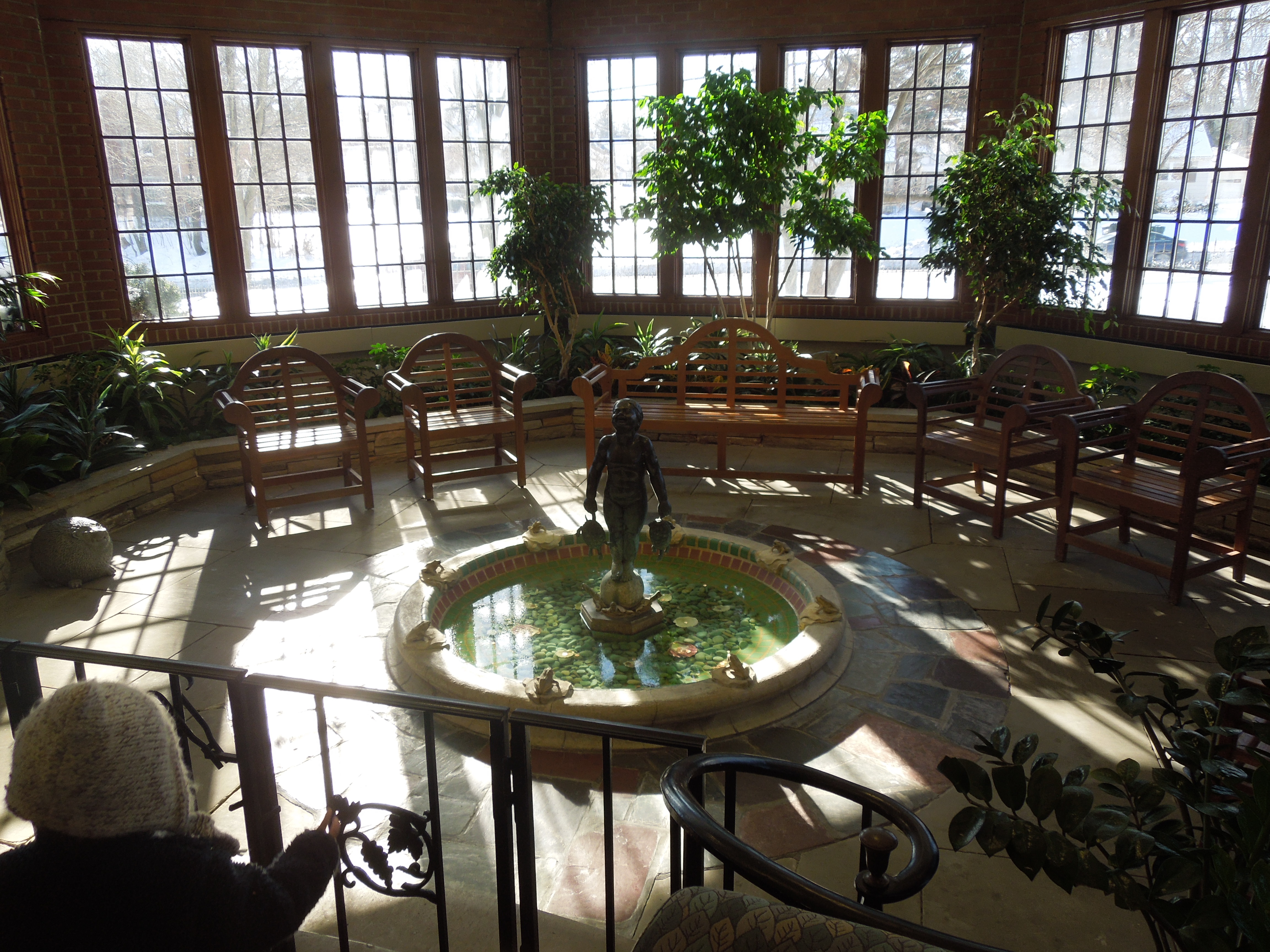
The fountain at the former SEL library.
The library in this little Cleveland suburb was like something out of a fairytale—a big Tudor mansion spangled with light (alas, it has been sold and is no longer a library). It featured slate floors, marble fireplaces, indoor plants, a burbling fountain, oddly-shaped rooms, twisty corridors, and nooks for a little reader to hide in. When we arrived at the library those Saturday mornings, Grammie took my younger sister to pick out books (hers and my sister’s), and left my brother and me to find our own. Every week for a long time I took out seven Nancy Drew books, the old editions with golden-yellow spines grayed by many grubby hands and black-edged pages that I now collect. Never once did she tell me I’d taken out too many books, never told me a little girl couldn’t read that many in a week. So I assumed I could, and every Saturday I came back for seven more until I’d read them all, and then I moved on to other authors, from Lois Lowry to Anne Frank to Judy Blume to Madeleine L’Engle. Grammie never once told me that I shouldn’t read a book because it was too mature for me; she let me and my siblings read as we chose, allowing us to develop our own tastes (a trait my parents also shared).
 Like Jane Eyre observing Helen Burns in Lowood’s schoolyard and then peppering her with questions about her book, I loved to call up Grammie and chat with her about what she was reading. Usually it was something I hadn’t heard of, since she read quite a bit of nonfiction. One of the last times we talked about books, though, before she got sick enough that we spoke mostly about the weather or what shenanigans her great-grandson was up to, she told me she was re-reading The Country of the Pointed Firs, an oft-neglected nineteenth-century classic by Sarah Orne Jewett that I didn’t encounter until a graduate school seminar nearly ten years ago. I went to my shelf to pull out my copy, flipping through a few dog-eared pages, and read her the passage that had stayed with me, and which I’ve been coming back to over and over again this week:
There was the world, and here was she with eternity well begun. In the life of each of us, I said to myself, there is a place remote and islanded, and given to endless regret or secret happiness; we are each the uncompanioned hermit and recluse of an hour or a day; we understand our fellows of the cell to whatever age of history they may belong.
“Yes,” she said. “I like that very much.”

Recommended Reading: What Is Not Yours Is Not Yours, by Helen Oyeyemi
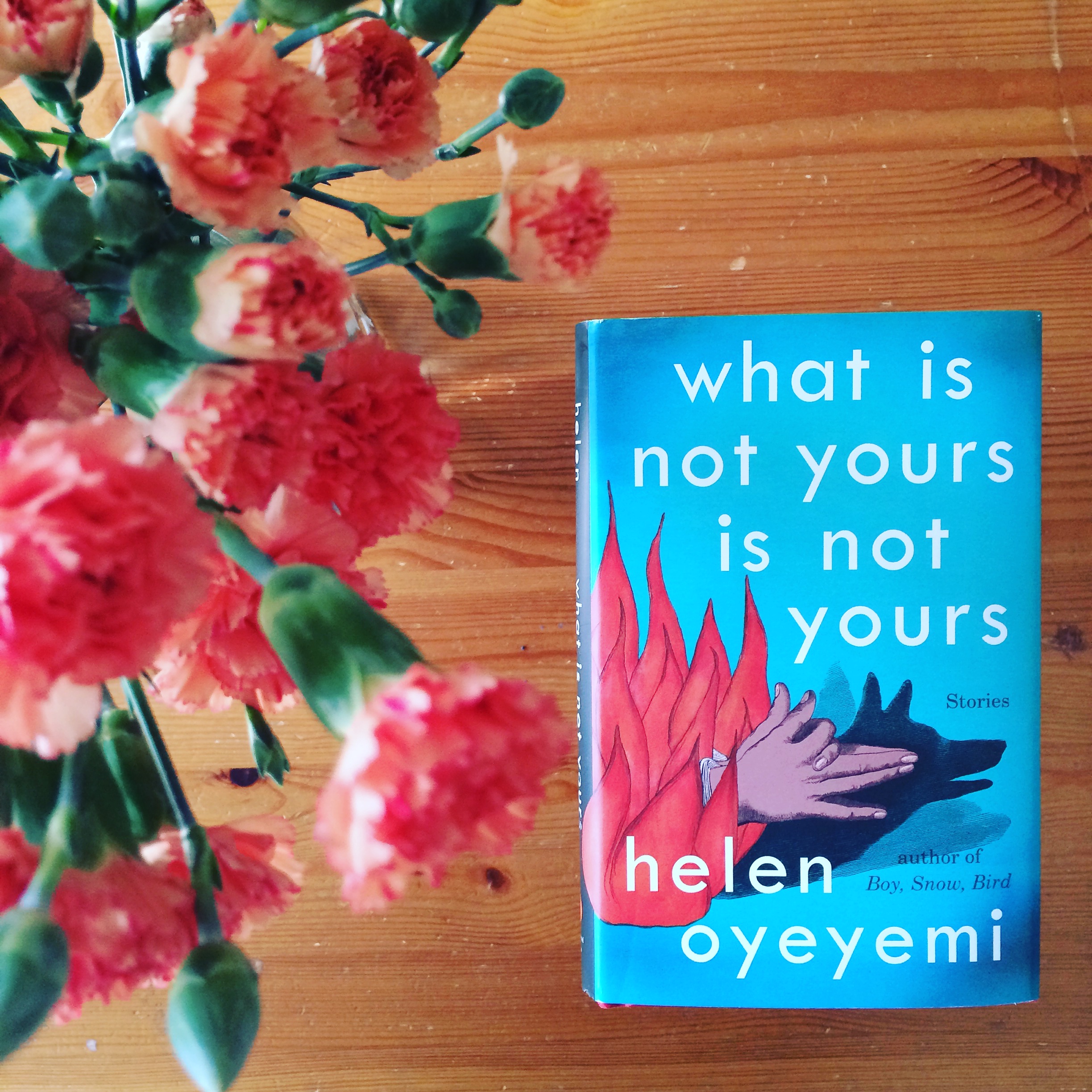 A couple of years ago, I had the pleasure of reading Helen Oyeyemi’s work for the first time (review of Boy, Snow, Bird here; interview with Ms. Oyeyemi here), and I’m delighted to report that What Is Not Yours Is Not Yours*, a collection of stories, is just as intriguing.
These nine stories (with titles like “Is Your Blood As Red As This?” and “Presence” and “Dornička and the St. Martin’s Day Goose”) are billed as linked. And they are linked thematically, through a key and lock motif, and through their focus on characters’ secrets. However, as I read the first half of the book, I think I spent a bit too much time searching for connections between each story (primarily character and location); by the time I sat down to read the second half, I’d relaxed into the book’s thematic concerns. On the short story collection-connectedness spectrum (which I just made up), it’s closer to Rebecca Makkai’s Music for Wartime than, say, The Tsar of Love and Techno (Anthony Marra).
I loved these stories’ elegant strangeness, the feeling they gave me that I was not on firm ground, but instead racing to suss out the boundaries—or lack of boundaries—in Ms. Oyeyemi’s worlds. In stories like the aforementioned “Dornička and the St. Martin’s Day Goose” and “Drownings,” readers are set down in the world of a fable or fairytale, though closer to their grim origins than the sanitized cartoon versions of childhood. In “‘Sorry’ Doesn’t Sweeten Her Tea,” a teenage girl, incensed with her favorite pop star’s non-apology to a woman he’s beaten, enlists the help of a friend of her stepfather’s—and the goddess Hecate—to bring him to justice (the story is, among other things, a brilliant exploration of online and real-life bullying).
There’s a story about puppets, including one so real that s/he is mistaken for human; a story of a secret garden and the abandoned but not unloved women who might hold its key; a story of a land ruled by a tyrant whose drowned victims live in an underwater city; a story in which an unlikely sorority (The Homely Wench Society) conducts a raid on a rival fraternity in which they swap books (this last story is so charmingly, queerly British that I found myself grinning from ear to ear at the end). There’s a hotel (where “the furnishings are a mixture of dark reds and deep purples. Moving through the lobby is like crushing grapes and plums and being bathed in the resultant wine”) whose guests, once checked in, can never leave (though they can ask almost anything of the management). There’s a pair of therapists who choose themselves as test subjects for an experiment that shows them what might have happened in their lives.
This NPR profile (from 2014, when Boy, Snow, Bird was published) is wonderful, and I think does a better job than I am doing right now of conveying the “jolly gruesomeness” of Ms. Oyeyemi’s writing. In it, she talks about finding something about Eastern Europe that meshes with her outlook, and you can see in this collection that her travels in that part of the world have born fantastical fruit.
The writing in these pages is full of inventive detail, and it’s also supple; each story brings a shift in tone, from cheerful to suspenseful and back again. Always there’s the kind of tension that fully engages my attention, as here:
She sketched with an effort that strained every limb. Montse saw that the Señora sometimes grew short of breath though she’d hardly stirred. A consequence of snatching images out of the air—the air took something back.
One imagines that Ms. Oyeyemi is often breathless.
What Is Not Yours Is Not Yours is highly recommended, and available in the US today.
*I received a copy of this book from the publisher for review purposes, which did not affect the content of my review.
A Brief Note on Claudia Emerson’s The Opposite House
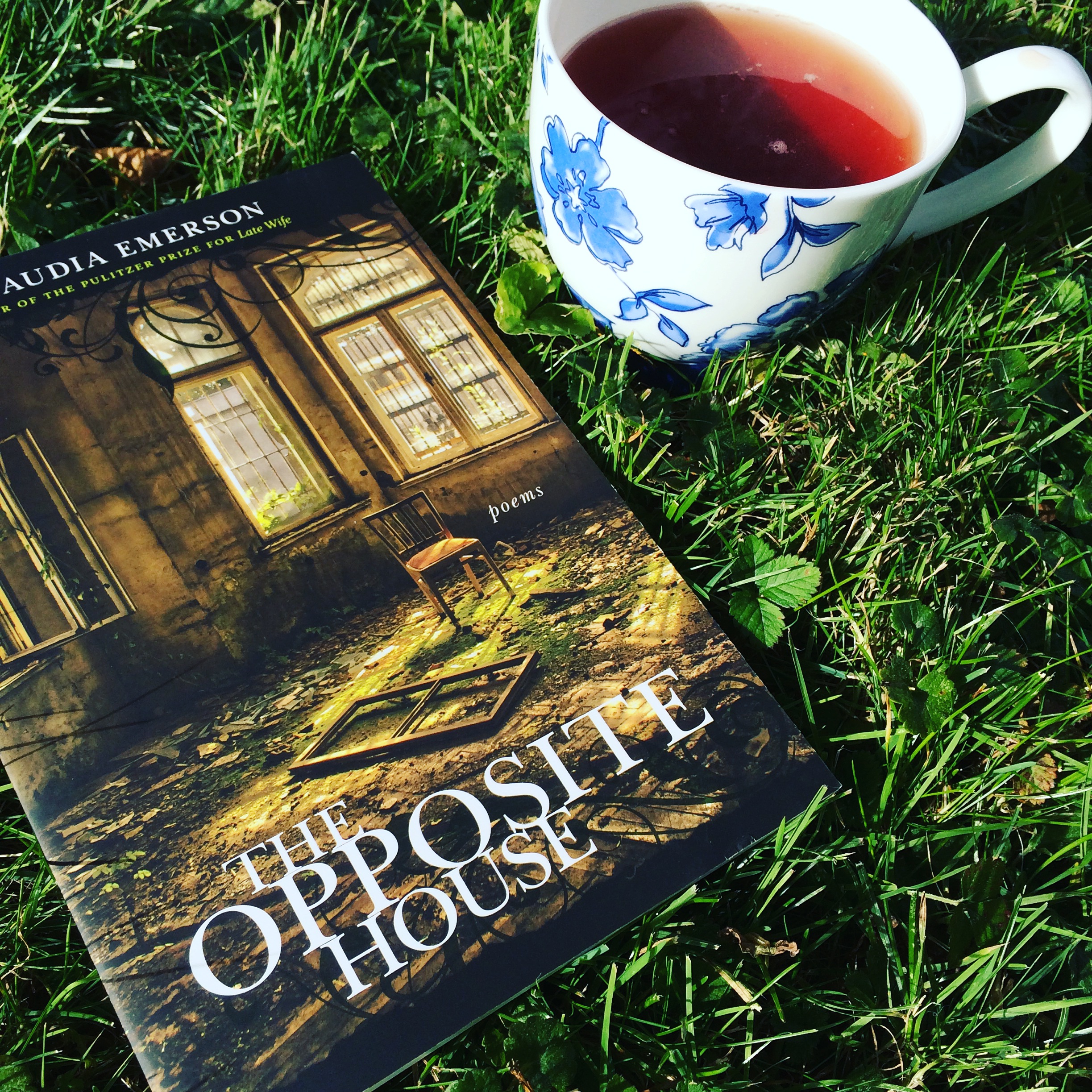 This week, I’ve been thinking quite a bit about Claudia Emerson’s book The Opposite House (which I read last year over the Thanksgiving holiday). I’ve written about her before; she died in 2014, and The Opposite House was posthumously published. As Jonathan Farmer writes in Slate,
Emerson presumably wrote the poems in The Opposite House years before she died, but it’s impossible to keep the news from them. Her gaze narrows and intensifies to an extent that I can’t help assuming—as she tells story after story of old age, demise, time folding so that what is most distant in a life comes nearest to it—that she was working on the far side of a diagnosis of cancer, if not a prognosis of death.
I completely agree. I found the poems in this collection haunting, in the best sense; take the last few lines of “Ephemeris,” a poem which Mr. Farmer considers in more depth than I will here. Here’s a link to “On Leaving the Body to Science,” in which the title accomplishes the future act of the first lines. What a poem.
The Opposite House is an intricate, fierce, intelligent collection. Highly recommended.
Recommended Reading: Black Wings Has My Angel by Elliott Chaze
 You might have noticed, Dear Readers, that while I read omnivorously, I hardly ever read horror novels (come to think of it, can’t remember the last time I did). I don’t enjoy being frightened, though I know a good many people are devotees of monsters, atmospheric creepiness, or gore (or all three). By the same token, you won’t often find me reading anything that features child endangerment (didn’t care for it before I became a parent, and now even less so) or perusing the true-crime shelf.
But I love classic noir. Plenty of suspense and hard-boiled writing with none of the drawbacks of horror or modern crime fiction (though, to be fair, it has plenty of its own problems, like racism, homophobia, and misogyny; this is one of those cases of loving something despite its flaws, not because of them).
Generally I take my noir in straight-up film form—The Big Sleep, Double Indemnity, The Big Heat—but occasionally I dip into the print canon (here’s my review of The Big Sleep). Enter Elliott Chaze’s Black Wings Has My Angel (1953), apparently a classic in the genre that’s been languishing out of print for decades, but now revived by NYRB Classics.
Black Wings Has My Angel is noir in the mode of Double Indemnity: nobody’s a good guy, the narrator is the male protagonist, and that narrator is stuck on a blonde femme fatale.
In this case, the femme fatale is Virginia, a “ten-dollar tramp” with cream-colored hair, lavender eyes, and a Wellesley accent, whom Timothy Sunblade meets after he comes off a job (and, apparently, a prison escape) in the Deep South. Though he intends to cut her loose as he makes his way out West to plan a big heist, he finds, time and again, that he can’t do it. She’s beautiful, mysterious, and damn, can she drive a Packard.
So she becomes his partner, even though he’s half in love with her and half inclined to murder her (she’s not trustworthy, and she’s got capital-L law problems of her own). From Denver to New Orleans and back again, the duo suffer reversals and get everything they think they want (and Virginia wants to bathe in cold hard cash—literally), driven by greed and fear and a determined plan. Eventually, though, the ride comes to an end, as it must in a noir, with unexpected violence.
One of the impressive things about the book (and quite a bit of classic noir, film and print), is how much violence and sensuality come across without heaps of gore or, as they say, blue language. Here’s an example, after Virginia tells Tim just how much she hates gentlemen: “I threw her on the bed and she smiled up at me. For the next three hours I applied myself to proving I hadn’t become, and wouldn’t become, a gentleman.”
Not that it’s all sex and violence. Chaze has a way of vividly bringing a setting to life. I love the description of Virginia “out there on the thin green grass, watering, the high altitude sunlight making silver hyphens of the droplets.” And his is one of the few novels I’ve read that’s set exclusively in the West and South (I recently read Patricia Highsmith’s The Price of Salt, or Carol, which makes use of the road trip West in a very different way). Chaze sets up the two regions in sharp contrast:
I kept comparing the rocks and the sky with what we have down South and kind of gloating to think that the South, though lacking in chamber-of-commerce promotion, has the subtlest colors and teasingest smells a man could want. Out West all the smells are sucked up out of the baked land by the sun. And it’s as if all the colors in the ground are gobbled up by their sunsets, and so is the blue of the sky. The sky is high and pale and impersonal and you get the feeling it doesn’t belong to you at all, but that it is the property of the chamber of commerce. In the South the sky is humid and low and rich and it’s yours to smell and feel. In the West someone sees a flower growing on a mountain and he writes a whole damned pamphlet about it. In the South the roses explode out of the weeds in the yards of the poorest shanties. Blood red ones And pink ones–pink as that new girdle.
It’s the South, of course, with its “teasingist smells,” where Virgina and Timothy meet and later find themselves in the most trouble, the West where in the thin air the two seem to lose their oxygen—and their minds.
If you’re a fan of noir, I highly recommend Black Wings Has My Angel. Great pacing, snappy writing with memorable description, and a plot that’s surprising to the end.
P.S. Shoutout to the Cleveland Museum of Art, from whence comes the cover photograph by Erwin Blumenthald.
“People say — This is how the world works”: Emily Mohn-Slate’s “Needlework”
 This week’s poem is very new; “Needlework” was just published in Tupelo Quarterly. Emily Mohn-Slate is a poet and teacher, and I had the pleasure of meeting and becoming friendly with her in graduate school (you can read more about Emily here).
I loved “Needlework” as soon as I read it. I’m interested in poems about people’s working lives and poems about everyday events (breakfast, phone calls, walks), and this poem is about both. There’s both a playfulness (the references to the gym and the treadmill–working out–in a poem about work) and a seriousness to it. This stanza–
My father told me to do what I loved to do — one third of my life
will be work. Every day, he arrived home ashen,
hiked the basement stairs broken by long pauses.
–is to me the crucial one (Note how all the stanzas are built to resemble stairs. And the description of the speaker’s father reminds me of Robert Hayden’s brilliant “Those Winter Sundays”). How many of us have been told to do what we love, and how many of us find ourselves instead doing a job we merely stand?
I think the poems suggests that the key to avoiding misery in the work that is one third of one’s life is finding something to love in the work, no matter what it is. Take the men who “cut off the trees’ hands.” This doesn’t seem, at first glance, like loveable work, to prune away something that’s alive (reinforced by the use of “hands” for branches), and yet the speaker thinks she hears “them singing,” an echo of the hum of the machines in the first stanza.
It’s a poem that bears re-reading, and I hope you’ll find it as rewarding as I have.
What’s your favorite poem about work?
Recommended Reading: Ways to Disappear, by Idra Novey
 Idra Novey’s debut novel, Ways to Disappear*, defies easy categorization. It’s part mystery, part literary meditation, part romance, part comedy—and all brilliant. I loved it.
Beatriz Yagoda, acclaimed Brazilian novelist with a fondness for cigars and online gambling, one day climbs an almond tree (cigar and suitcase in hand) and vanishes, leaving no word of her intentions with her two children, Raquel and Marcus, or with her American translator, a young woman named Emma.
“For so long, she’d willfully sought the in-between. She’d thought of herself as fated to live suspended, floating between two countries, in the vapor between languages. But too much vaporous freedom brought its own constraints. She now felt as confined by her floating state as other, more wholesome people were to the towns where they were born.”
After learning of the disappearance, Emma leaves Pittsburgh (and her fiancè, Miles) for Brazil, where an encounter with a violent loan shark is just the first sign that she’s in way over her head. Her presence isn’t exactly welcome by her author’s children, and she’s searching for Beatriz based clues from her books. Meanwhile, Beatriz may be leaving cryptic breadcrumbs for her wealthy and world-weary first publisher, Rocha, who begins a parallel search for the enigmatic writer.
It’s a wonderful setup for a novel, and Ms. Novey’s writing is top-notch. The heat of Brazil’s cities radiates from the page, her descriptions expertly woven from choice details (“a tall glass shipwrecked on the bar in a spill of caipirinha”). The glimpses of Beatriz’s own writing (mediated through Emma’s translations) are astoundingly unexpected and savagely beautiful, perhaps informed by Ms. Novey’s own work as a translator and poet. Brief chapters—the longest is four pages, I believe—are interspersed with modified dictionary entries, e-mail messages, and Brazilian news reports, giving this short book rapid-fire energy.
About her work with Beatriz, Emma thinks, “She’d remember a morning in Rio as no more than an orange glow over the ocean and use that light to illuminate the strange, dark boats of Beatriz’s images as she ferried them into English.”
What a metaphor. I highly recommend Ways to Disappear—you’ll want to ferried on this strange boat yourself.
*I received a copy of this book from the publisher for review purposes, which did not affect the content of my review.
“I never saw light that way / again”: Dorothea Grossman’s “The Two Times I Loved You Most In a Car”
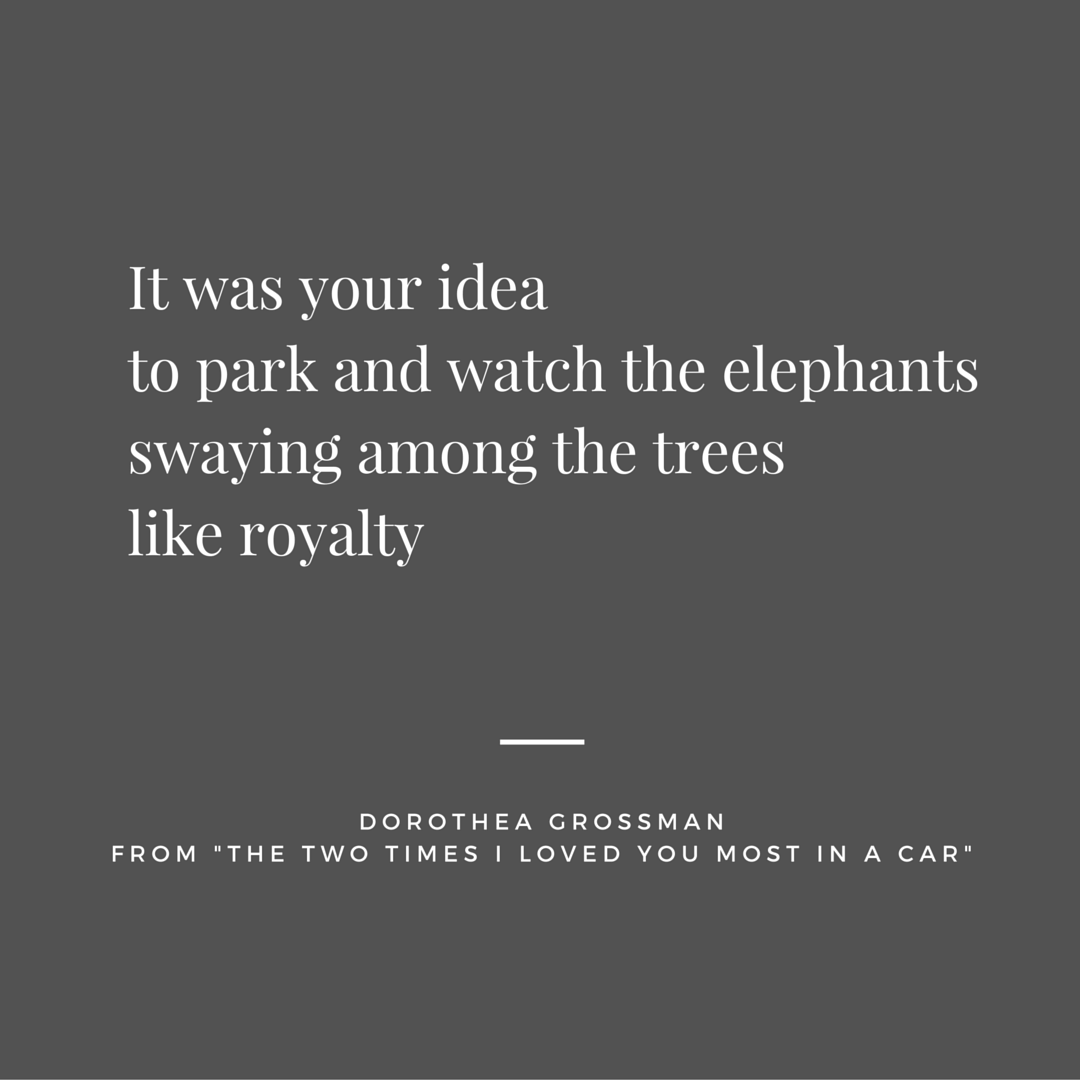 A tip of the hat to my friend, poet Ashley McHugh, for bringing Dorothea Grossman’s “The Two Times I Loved You Most In a Car” to my attention. In this two-stanza poem, the speaker recalls two instances in which sensory experience startled her: the quietness of elephants swaying among palm trees, and the appearance of stars in the desert night sky.
(You can read more about Dorothea Grossman here and here.
It’s a beautiful little poem; I’ve been thinking about who the addressed person is (A partner? A parent? A friend?).
What do you think? If you were to write a poem on the same subject, which two experiences would you write about?
 Rosemary and Reading Glasses