“Sundays too my father got up early”

Collected Poems of Robert HaydenRobert Hayden’s “Those Winter Sundays” is often anthologized, and deservedly so. A moving meditation on parents and children from the not-so-safe remove of adulthood, the poem reaches its plaintive, universal question in just three stanzas.

In the first stanza, the rhymes and alliteration (“weekday weather,” for instance) underscore the repetitiveness of the speaker’s father’s labor (“Sundays too my father got up early” [emphasis mine]); this father doesn’t rest even on the traditional day of rest.

In the second stanza, the “I” appears; the speaker includes himself in those who never thanked his father for his efforts. The same stanza, though, undercuts the father’s act of kindness, since the child fears “the chronic angers of that house.” The sense of icy brittleness expands — hard “c” sounds repeat throughout the poem — to encompass not only the winter cold, but also the chill of strained familial relationships.

The third stanza turns again, as we learn that the speaker’s father not only warmed the house, but polished the boy’s good shoes, presumably for church, an image meant to echo, I think, the biblical story of Christ washing the disciples’ feet. Our knowledge, built on the adult speaker’s point of view, that the father performed these acts of love alone and unthanked — whatever his faults may have been — brings us to the final couplet, in which the speaker asks what we all ask of ourselves at some point, thinking of those who care for us:

What did I know, what did I know
of love’s austere and lonely offices?

“After snowstorms my father / shoveled the driveway where it lay”

snow footprintsA tip o’ the hat is due to Ted Kooser and the American Life in Poetry project for this week’s poem, because I don’t think I would have found it otherwise. Thomas R. Moore’s “Removing the Dross” is a poem about snow shoveling, particularly apropos given the arctic freeze in North America this week.

The speaker’s father has a particular method of shoveling, so precise that it reminded me of a Hemingway hero’s expertise in camping. The imagery, diction, and rhythm of the poem come together in a particularly satisfying way.

Let me know what you think! Favorite lines or images?

Reading While Pregnant: Or, “enough to love / to break your heart / forever”

I was nearly halfway through pregnancy at this time three years ago, and I remember feeling the baby kick for the first time around New Year’s Eve, which was also the same time I was reading one of the three books I strongly associate with being pregnant.

Reading while pregnant isn’t really different from reading while not-pregnant, I found, except I felt I should be more discriminating since I wouldn’t read as much right after the baby was born (true, in my experience), and also because I had to get up a lot more often. And while I generally remember my reading lists pretty well, most of the books I read during those many weeks went by in a haze, though I know there were quite a few. I was teaching intro-level Shakespeare and Readings in Drama at the time, so that’s a dozen right there, and of course I read novels and poetry on the side. Looking back, though, these are the three books that epitomized the whole experience of pregnancy for me.

One is the ubiquitous What to Expect When You’re Expecting, which was so awful and made me cry so often that my husband hid it from me around the end of the first trimester (for which I am profoundly thankful). Seriously, it’s the worst: fat-shaming and fear-inducing for starters. If you’re a pregnant person, there are far better options out there (try the Mayo Clinic Guide to a Healthy Pregnancy for the nitty-gritty health stuff, and the Girlfriends’ Guide to Pregnancy for the “we’re-all-in-it-together” vibe, although if you read my edition from the late ’90s you’ll have to squeeze someone’s hand through the parts that hurt [ahem, assumption of shared privilege, ahem]). 

The second is Wuthering Heights, which is the first book I read on an e-reader. My husband got me a Nook for my birthday about a month after I found out I was pregnant. Though I’ll always be a lady of the printed word (mostly because I like books as objects, and my eyes hurt when I look at screens for too long, but we can have that tussle another day, if we must), it did make reading one-handed while standing quite easy (also: great for reading while nursing).  On the train and the bus to and from the university, I read about the unkindnesses that Cathy and Heathcliff inflict upon each other, and the harsh beauty of the moors. It wasn’t particularly uplifting, but it was distracting enough that for those forty-five minutes each way, I didn’t notice the sciatica or general discomfort associated with growing another human in one’s abdomen. And that’s all you  want from your pregnancy reading sometimes: distraction.

[It should be noted, here, that I am of the variety of plumpness that made it difficult for people to tell whether I was fat or fat and pregnant for the first twenty-seven or so weeks out of my forty-two (yes, it was awful) weeks of pregnancy. People in Boston aren’t jerks who don’t offer seats to pregnant women. For the most part.]

The third book I associate with pregnancy, the one I was reading when the baby started kicking, is Harry Potter and the Sorcerer’s Stone.

Now, I came very late to the Harry Potter fan club; the books started to appear when I, as a young teenager, thought that Ayn Rand was the height of reading sophistication. (As you can tell, my salad days have come and gone.) When the Harry Potter movies came out, my dad and I would go see them on a Monday at the Shaker Square Cinema for five bucks a ticket, with free popcorn (we’re yankees to the core); we liked them quite a bit. As it turned out, I saw all the movies with my dad, eventually. But for many years we eschewed the books as “kid stuff.”

It wasn’t til I was pregnant that I decided I should read the series to preview it for the baby, figuring, perhaps wrongly, that kids in the 2020s will be reading the same stuff as kids in the late ’90s and early ’00s. It tells you something about my reasoning ability that I thought I should preview books meant for kids 8 and up while I was still pregnant. It’s not just me, though: Pregnancy does weird stuff to your brain.

My nesting instinct pretty much came down to books: The shower was book-themed (thanks, bookish friends!), and I bought (or borrowed/stole from my siblings) every children’s book I remember loving, from Miss Rumphius and The Story of Ferdinand all the way up to the Chronicles of Narnia and Charlotte’s Web and Anne of Green Gables — without reflecting that it would be years before the baby would be big enough to understand them.

I read that first Harry Potter book and immediately ordered the set. I read them so fast that winter (three years ago now) that the plots spun together, thrilled that these were books my baby would someday, barring catastrophe, grow up to read. They might be built of the fantastic, but they made all the promise of childhood after the misery of pregnancy seem real and attainable, and I loved them unabashedly and in earnest.  While I’m not exactly sure I’m ready for our son to grow up, I can’t wait to read the books to him for myself (Mr. O read the first three to him to get him to sleep as an infant). Privet Drive is going to make his chores look easy, and even I would take gym class over Potions with Snape. Wait. No I wouldn’t. Scratch that. Sorry, kiddo. Gym class is the worst.

Harry Potter & a picture of our Baby O  (now Mr. Baby, or H) on the day he was born.

Harry Potter & a picture of our Baby O (now Mr. Baby, or H) on the day he was born.

Turns out that I’m impatient, so I read the whole series again over the Thanksgiving holidays, and whoa, nelly. They’re still wonderful, inventive while nodding to and borrowing from the best in other fantasy novels, and heartbreaking.

I didn’t know, the first time I read them, that our Baby O would be a son, but this time I couldn’t help but picture our little dude as a kid away from home, navigating the tricky staircases at Hogwarts, maybe making friends like Ron and Harry, and especially Hermione.

This is a your weekly poetry post, I promise, even though it’s taken me awhile to get here. This week we’re saying hello to a new year, and so please head on over to The Poetry Foundation to read Diane Di Prima’s “Song for Baby-O, Unborn.

It’s the kind of poem that I imagine would have crossed Lily Potter’s mind sometime. It reaches for the future with eyes wide open to the deficiencies of the present, and the tangled power that is love.

Ye Olde Year in Review

I started Rosemary and Reading Glasses on January 1 this year. I’d blogged for a couple years about food and domestic bliss (along with my husband), but a long-term illness has meant that the food I eat is consistently boring and not write-up worthy.

At the time, my plan was to get myself writing again, and to fulfill my New Year’s resolution, which was to memorize one poem every week. I failed pretty spectacularly at that goal (more on this later), but along the way

a bunch of pretty great stuff has happened.

Friends! I’ve been so lucky to “meet” delightful, thoughtful people this year, people who love books. The only downside is that often you delightful people live states/countries/continents away, so chances of us meeting in real life aren’t too good. But if you’re ever Boston-bound (and you know who you are), let’s get a beer (or a cup of tea) and then go bookstore-hopping, shall we?

Engagement! I don’t know about you, but I always hated whole-class read-alouds in grade school and high school. But the whole reading-separately-together thing has been so much fun! I love seeing everyone’s Classics Club lists, and I liked my first read-along so much — even though the book was atrocious —  that I’m hosting my own in 2014. (There’s still time to get in on it! Non-atrocious book, promise.)

Failure! Now, I know this one sounds weird, but here goes. The first ten weeks of my memorize-a-poem-a-week project went according to plan. The next ten weeks weren’t so smooth; I was cramming on Sunday nights to make my Monday memorization deadline. And then I got really sick and ended up in the hospital for ten days, and the whole project was kind of shot to hell. But you know what? It didn’t matter. I still picked a poem to think about and savor every week, even if I couldn’t memorize it. People still read the blog. It was ok. And then I signed myself up — publicly — for NaNoWriMo, and I didn’t finish that either! Guess what? Yep. The sky didn’t fall. Nobpdy reported me to the writing police, and I’m here to tell the tale.

Success! I used to consider not finishing a book a crushing personal failure. Well, maybe not crushing. Anyway. One of the side-effects of my failure episode this year was giving myself permission to put a book aside if I wasn’t enjoying it after thirty or forty pages. Not exactly revolutionary, but it’s a big step forward for me. Poetry brought me back to reading novels again, and I decided to read thirty this year, or a 300% increase from the year before (I’m the at-home parent of a 2 1/2-year-old. Enough said, I hope.). And I read thirty books. Then I read thirty-five more. That’s right, folks. I made it through 65 books this year! It’s not that the number matters (but I do feel pretty awesome), really, but that I thought about those books, wrote about most of them, and talked about them with friends in the blog-world and real-world.

Books! Yeah, I know. Of course. I’ve had my head buried in the seventeenth-century sand for so long that I lost track of contemporary fiction. And it’s wonderful! Even the books published just this year gave me a sense of the richness and breadth i’ve been missing out on. I’m not going to do a best-of-the-year list, because I don’t want to, really, but herewith I present a list of five books that have been flying under the radar this year and deserve more attention.

Hanya Yanagihara, The People in the Trees

Chloe Aridjis, Asunder

Paul Yoon, Snow Hunters

Carlene Bauer, Frances and Bernard

Jenny Uglow, The Pinecone

So, what’s next?

More Poetry! I’ve read 50+ individual poems this year, but only four full collections. That’s kind of lame for someone who considers herself a poetry person. I’m going for seven in 2014. Also, start looking forward to February, because I will be featuring super-sexy poems on Tuesdays. Mostly sexy poems by dead people, because I don’t like Valentine’s Day very much.

More Lists! People love lists, turns out. I only did one this year, and I’m not going to go all Buzzfeed on you next year, but expect a couple more lists in 2014.

More Parks & Rec posts! By far my most popular post this year was a Ron Swanson / Bobby Burns lovefest. So maybe I should write more of those.

A Readalong! Yes, I’ve plugged this one already, but here goes again! Read Paradise Lost this winter! It’s shorter than most novels and will give you some sweet vocab to impress your friends and colleagues before spring arrives.

More of the same! In 2014 you’ll still find poetry posts on Tuesdays and book reviews on Thursdays. I’m a creature of habit.

Thanks for reading this year, friends. It’s been a pleasure. Stay tuned tomorrow for the last poetry post of 2013.

Confidential to my brother: Happy birthday, Tom! You’re one of my favorite readers.

“break, blow, burn, and make me new”

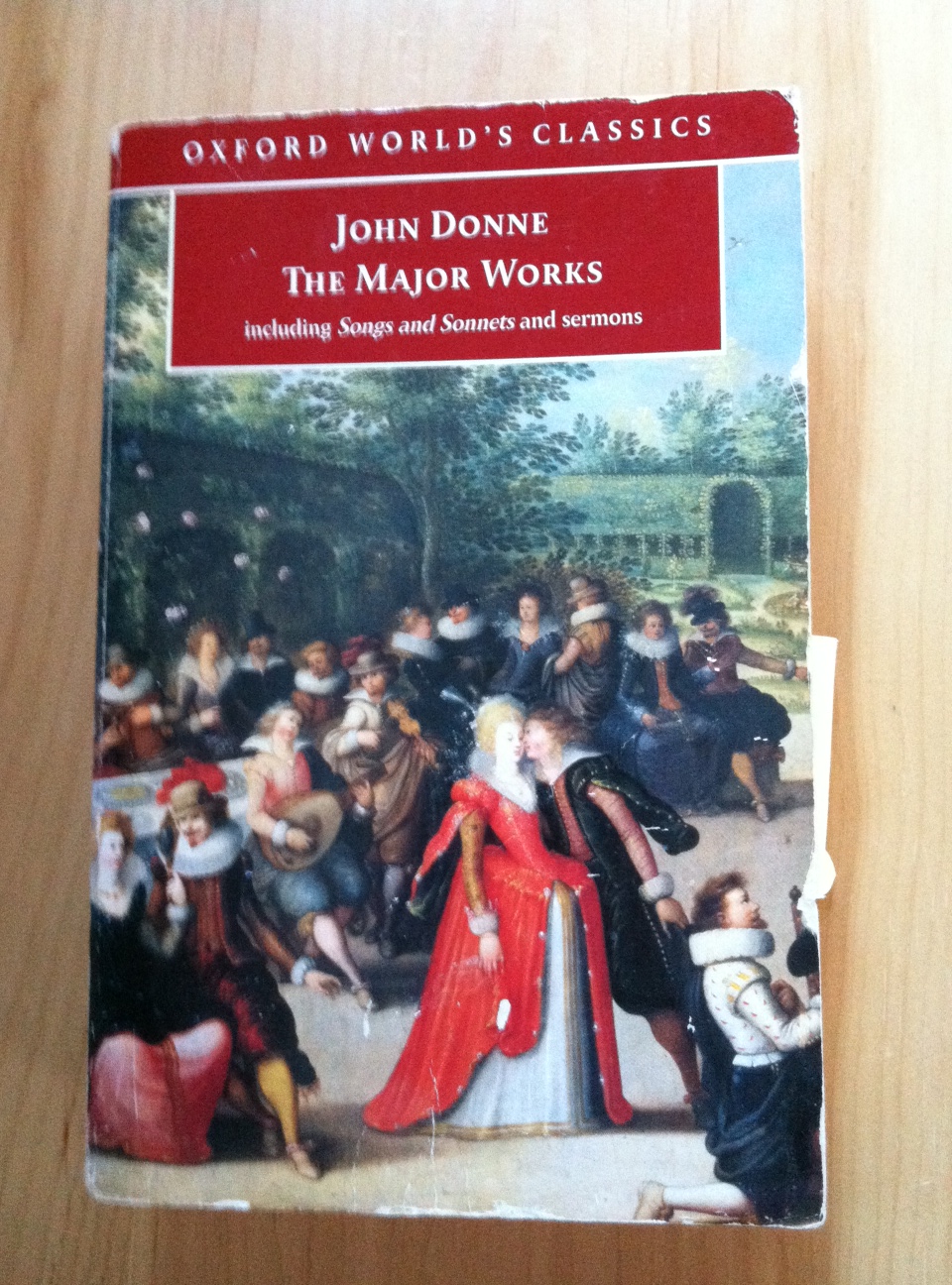
John DonneI promised John Donne this December, and I’m here to deliver.

Though now remembered for his poetry, Donne was in his own day, and in the decades following his death, renowned as a preacher — Dr. Donne. His sermons were fiery, with titles like “Death’s Duel” (which was, in fact, his last sermon, preached just days before he died, probably from stomach cancer). There’s always, in Donne, a tension between Jack Donne — rake, lady’s man, incorrigible wit– and Dr. Donne, the deeply spiritual orator wrestling with his faith and with death itself. All his writing, however, shows a mind never at rest; it’s full of paradox, and flexible, inventive language.

Worship and desire often find unusual objects in Donne’s poetry. When he writes about women, the devotion is nearly saintlike; he addresses them as he would his God. On the other hand, his devotional poetry burns with all the passion of erotic desire. It’s just one of the reasons why Donne is so compulsively readable.

Here’s Holy Sonnet X (sometimes given as XIV), known conventionally by its first line, “Batter my heart, three-person’d God’:

Batter my heart, three-person’d God; for, you
As yet but knock, breathe, shine, and seek to mend;
That I may rise, and stand, o’erthrow me, and bend
Your force, to break, blow, burn, and make me new.
I, like an usurp’d town, to another due,
Labour to admit you, but O, to no end.
Reason, your viceroy in me, me should defend,
But is captived, and proves weak or untrue.
Yet dearly I love you, and would be loved fain,
But am betroth’d unto your enemy;
Divorce me, untie, or break that knot again,
Take me to you, imprison me, for I,
Except you enthrall me, never shall be free,
Nor ever chaste, except you ravish me.

Amazing, right? Just look at the paradox in the last line! And the treatment of God as a ravishing lover — brilliant impudence.

“and yet the menace of the years, / finds and shall find me unafraid”: RIP Nelson Mandela

Nelson Mandela in 2008 Source: Wikimedia Commons

Nelson Mandela in 2008
Source: Wikimedia Commons

Nelson Mandela read “Invictus,” by Victorian poet William Ernest Henley, to fellow inmates of the Robben Island Prison. It’s an oft-quoted poem, and here it is in its entirety. “Invictus” means “unconquered.”

Invictus

Out of the night that covers me,
Black as the pit from pole to pole,
I thank whatever gods may be
For my unconquerable soul.

In the fell clutch of circumstance
I have not winced nor cried aloud.
Under the bludgeonings of chance
My head is bloody, but unbowed.

Beyond this place of wrath and tears
Looms but the horror of the shade,
And yet the menace of the years
Finds and shall find me unafraid.

It matters not how strait the gate,
How charged with punishments the scroll,
I am the master of my fate:
I am the captain of my soul.

Early Read: The Antigone Poems*, by Marie Slaight; Drawings by Terrence Tasker

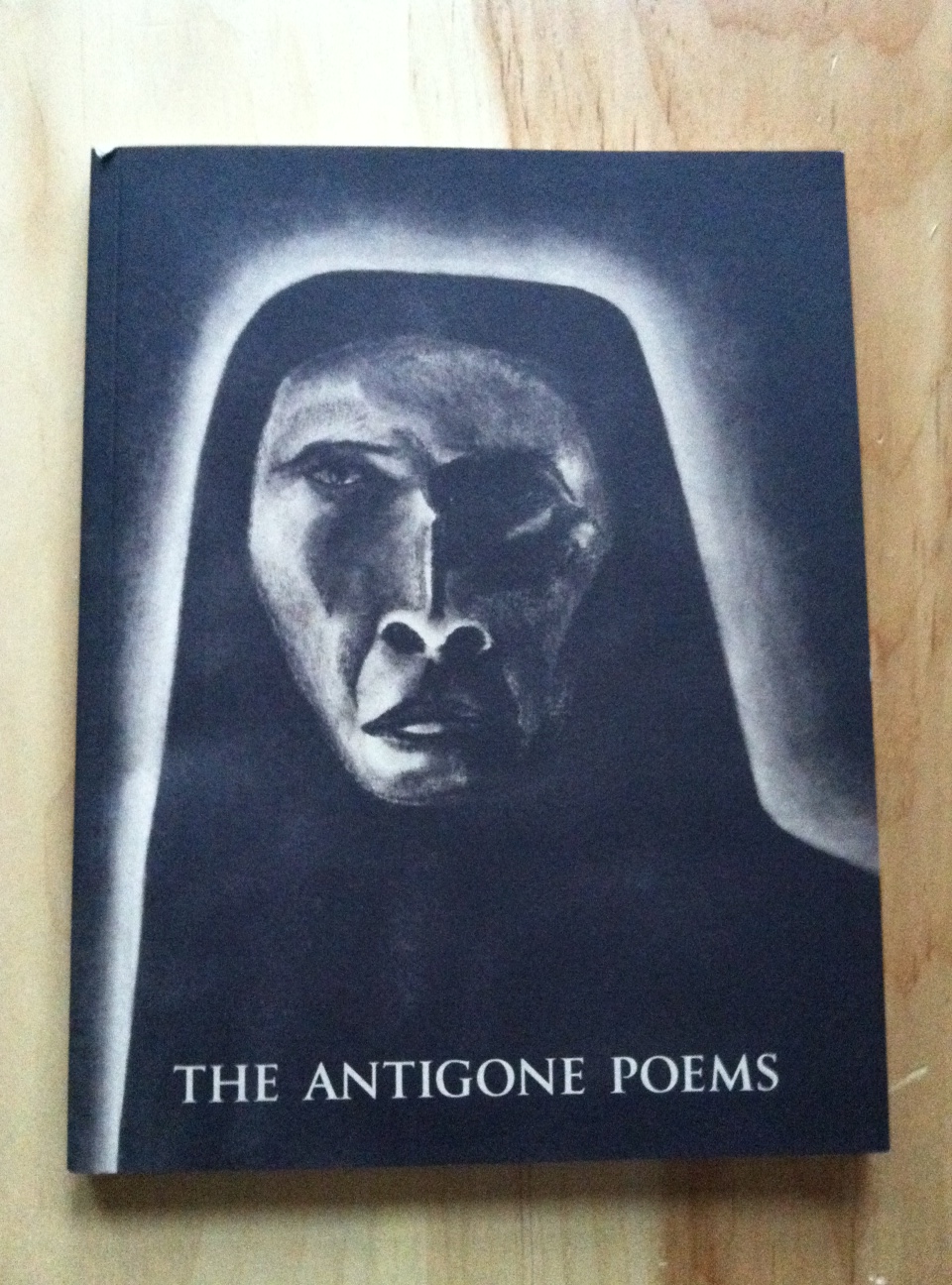
The Antigone PoemsThe Antigone Poems is a collaboration between poet Marie Slaight and artist Terrence Tasker, produced in the 1970s but forthcoming, in print-only form, in early 2014 from Altaire, a small press.

The slim volume is divided into five chapters, which are accompanied by Mr. Tasker’s charcoal drawings, which, as you can see from the cover, are strong, assured, and, at times, rather alarming. Like the poems, they’re evocative of the complexities of Sophocles’s play. I’ve taught the play several times, and I wish I’d had access to this book to share with my students.

The poems (all free verse) are surprisingly intimate, given that they often feel like screams of rage. The voice throughout appears to be Antigone’s, as she considers death, life, family, sexuality, punishment, and rebellion. The poems are simple, some fragmentary, but they’re smoldering and haunting. Some reviewers may take issue with the repetitive nature of the imagery, but I found it to be an appropriate stylistic echo of Greek tragedy.

I recommend finding a copy of The Antigone Poems when it comes out next year; try the library first.

* I received an ARC of this book through LibraryThing’s Early Reviewer program. I was in no way compensated for this review.

“They also serve who only stand and waite.”

Milton Shorter PoemsMilton’s Sonnet 19,  “When I consider how my light is spent” is one of the best sonnets in English and a poignant meditation on the poet’s own blindness and responsibility to the world and his God.

Written more than a decade before the publication of Paradise Lost, Sonnet 19 finds the poet/speaker disconsolate at its opening, unsure how he will use his talents when he is blind, unsure how he can serve his God (and in a further implication, his country) in his affliction and at his advancing age.

The turn of the sonnet appears when “patience” counsels that God does not *need* any person’s labor, since God is omnipotent and, besides, his servants work by the thousands for his glory. To serve the lord, the speaker reflects, he must merely bear his own burden with grace: “They also serve who only stand and waite.”

And Milton waited, and in his waiting, created Paradise Lost.

Here it is, in all its exquisite glory:

Sonnet 19

When I consider how my light is spent,
E’re half my days, in this dark world and wide,
And that one Talent which is death to hide,
Lodg’d with me useless, though my Soul more bent
To serve therewith my Maker, and present [ 5 ]
My true account, least he returning chide,
Doth God exact day labour, light deny’d,
I fondly ask; But patience to prevent
That murmur, soon replies, God doth not need
Either man’s work or his own gifts, who best [ 10 ]
Bear his milde yoak, they serve him best, his State
Is Kingly. Thousands at his bidding speed
And post o’re Land and Ocean without rest:
They also serve who only stand and waite.

“We see you, see ourselves and know / That we must take the utmost care / And kindness in all things.”

I’m not a religious person, but many people I treasure are very religious, and I’m always

"Eagle silhouette" Image courtesy of Gualberto107 at FreeDigitalPhotos.net

“Eagle silhouette” Image courtesy of Gualberto107 at FreeDigitalPhotos.net

grateful for their prayers and their generosity of spirit. Joy Harjo’s “Eagle Poem” gives me a way to think about prayer that is comforting and uplifting without listing toward the dogmatic.

For that reason, I think “Eagle Poem” is the perfect poem for Thanksgiving week, when we give thanks in our own ways, both secular and spiritual, for what we have and what we have not.