Recommended Reading: Monica Youn’s Blackacre

blackacre-1

Monica Youn’s Blackacre* practically shimmers with intelligence as it ranges over subjects including desire, territory (physical, emotional, imaginative), race, and fertility. Here intellect meets imagery with an intensity so great it took my breath away.
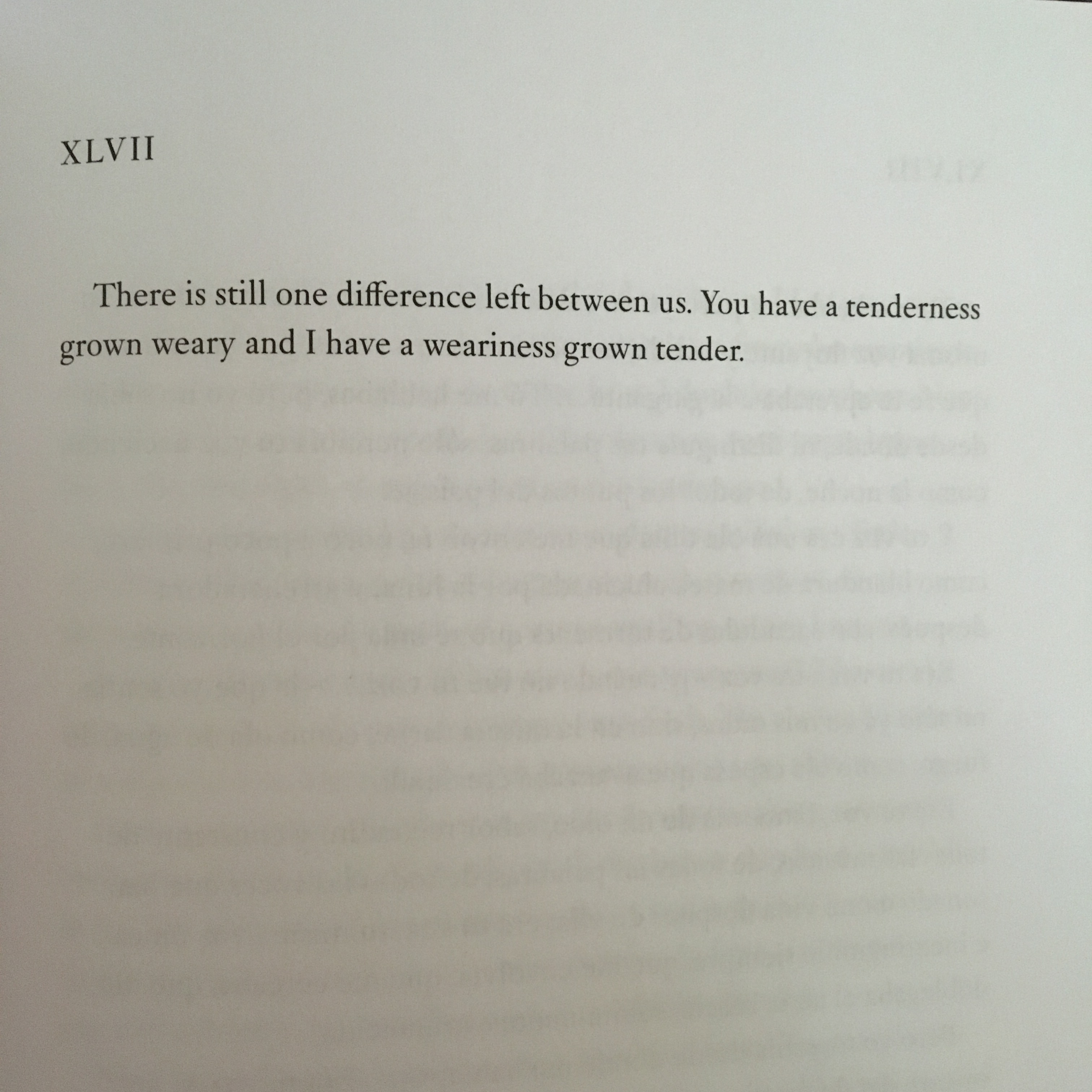
fullsizerender-5In the first section, eleven poems circle and interrogate Francois Villon’s fifteenth-century Ballade des pendus (Ballad of the Hanged Men); these poems are about transformation, and life as much as death. In “Portrait of a Hanged Woman,” the speaker rejects the Greek notion of catastrophe (the fall from grace):

No it is
the sudden
terrible

elevation of
a single point—
one dot

on the topography
of a life.

Later in the poem, she writes:

A life is not
this supple

it is not meant
to fold, to be
drawn through

a narrow ring.

These very short lines do make me think of falling, always (although that’s maybe my own readerly idiosyncrasy), which plays against the assertion that catastrophe is an elevation. And see how the narrow lines mimic the “narrow ring” of the second quotation?

Blackacre‘s second and third sections offer an eclectic sampling of forms, lengths, and subjects, from the brief, ekphrastic “Quinta del Sordo” to the multi-section “Epiphyte.” These are poems intimate enough to be whispered, learned enough to be declaimed from a lectern.

It is in the third section that the poet introduces the “____acre”; as Monica Youn explains in an essay for The Poetry Foundation, “‘Blackacre‘ is a legal fiction, an imaginary landscape. Just as we use ‘John Doe’ for a hypothetical person, lawyers use ‘Blackacre’ as a placeholder term for a hypothetical plot of land.” The hypothetical nature of the poems’ titles belies their specificity (“minnows wheeling in meticulous formation/ the occasional water snake, angry, lost.”) and (for some) their grounding in the presumably autobiographical “I.”

While I have returned and will again to many of these poems, it’s the fourth section, comprised of two poems (both called “Blackacre”) that I cannot get out of my head.

The second of the two poems, which you can find here, is an extended meditation on Milton’s famous Sonnet 19 (“On His Blindness”); you might remember its final line: “They also serve who only stand and wait.”

“Blackacre” is a long prose poem in fourteen sections. Each section takes as starting point the last word in the corresponding line of Milton’s poem, from which the speaker undertakes a close reading of the sonnet and her own experience with infertility. In the first section, she notes,

I came to consider my body — its tug-of-war of tautnesses and slacknesses — to be entirely my own, an appliance for generating various textures and temperatures of friction. Should I have known, then, that by this act of self-claiming, I was cutting 
myself off from the eternal, the infinite, that I had fashioned myself into a resource that was bounded and, therefore, exhaustible?

I read this poem for the first time in the car, as we drove west at twilight. The sky gradually darkened, and I struggled to catch the last of the sun so I could read the last few pages of this brilliant, cooly radiant book.

Highly recommended.

*I received a copy of this book for review consideration, which did not affect the content of my review.

Recommended Reading: Hag-Seed, by Margaret Atwood

hag-seed

When Margaret Atwood’s Hag-Seed* arrived in the mail, I could barely contain my glee. Margaret Atwood (the Helen Mirren of authors, as I sometimes think of her) taking on Shakespeare? Yes please!

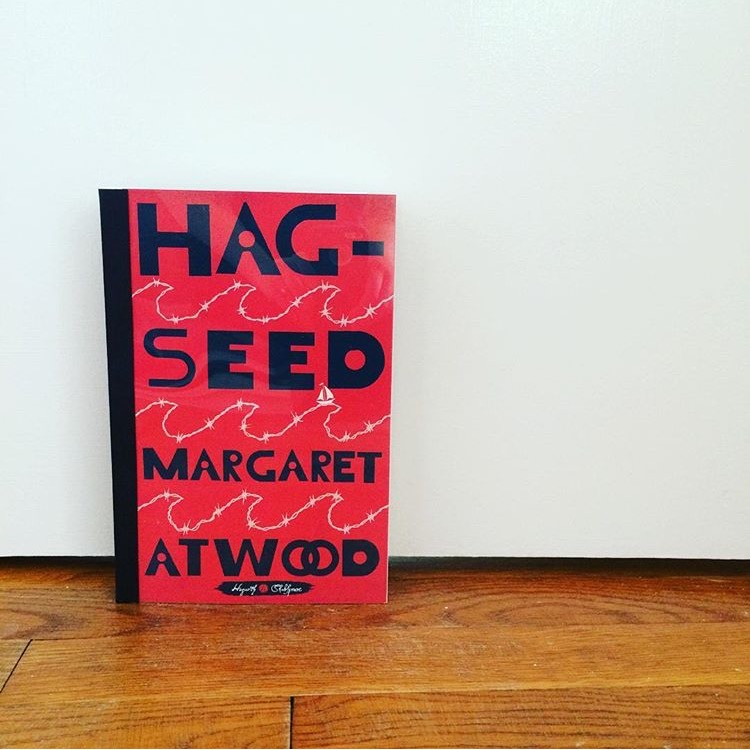
Hag-Seed photo by Carolyn OliverHag-Seed lived up to all my expectations (and it’s the best so far in the Hogarth Shakespeare series, too). I highly recommend the book (and teachers, it would be fabulous to teach alongside its source material), which is often funny, often touching, often a rollicking good time (especially for Shakespeare aficionados), and always thoughtful. It’s a tour-de-force reimagining of The Tempest, and like the original, a provocative examination of theatre, authorship, imprisonment, revenge, and grief.

Felix Phillips is the impresario Artistic Director of the Makeshiweg Theatre Festival. His productions have been beyond avant garde (audience complaints include “Did Lear have to take off all his clothes?”; Felix thinks, “What was so bad about Macbeth done with chainsaws? Topical. Direct.”), and after the sudden loss of his beloved daughter, Miranda, he throws himself into the play he thinks will bring her back to life: The Tempest. However, he’s so caught up in preparations that he doesn’t notice the machinations of Tony Price, his glad-handing lieutenant, who, with the help of Lonnie Gordon, the Chairman of the Board, subsequently ousts Felix from his position.

Despondent, Felix retreats to a hovel in the Canadian backwoods, contemplating revenge and building a new life as “Mr. Duke.” As his alter-ego—which is of course Prospero, as he knows—he takes a job teaching Shakespeare through performance to prison inmates. Years pass, but when Tony and Lonnie seem poised to pass within his orbit, Felix hatches his revenge plot—and begins to teach The Tempest to the Fletcher Correctional Players.

Hag-Seed is delightfully layered; it’s a novel whose plot is taken from a play, and in the novel the characters are enacting the play as they prepare to enact the play (got that?). And by writing Felix teaching his players The Tempest, and respecting their (varied) readings of it, Margaret Atwood is teaching us about the text and its interpretations—while also conveying the importance of literature in prisons. “It’s the words that should concern you [. . . ] That’s the real danger. Words don’t show up on scanners,” Felix thinks, going through the metal detectors and chatting with the guards.  Atwood is, of course, fascinated with imprisonment (The Handmaid’s Tale, The Heart Goes Last, Alias Grace), so it’s a treat to watch her teasing out the power relationships in the novel (and in The Tempest).  It is, as the kids used to say, very meta.

As some reviewers have noted, the minor players are not remarkably distinct from each other; our knowledge of their backgrounds is limited. While that might be a fault in a standalone novel, to me this decision makes sense given the source material. Without picking up your Collected Works, can you recall how Stephano and Trinculo differ?

There are, of course, departures from Shakespeare’s play. Felix is animated not only by revenge and a desire to reclaim his position, but also, most importantly, by grief (in a way that Prospero is not). For Felix, staging The Tempest is a way to make Miranda live again, to take substance, almost. During his years of exile, his imagining of the lost girl is a ghost, a spirit, gradually transforming into Ariel whispering in his ear.

And Prospero, in these years of exile, is Caliban, misshapen by grief and the thirst for vengeance, pinched by loneliness into a new version of his former wild self, but able to call up sweet music and language all the same.  That’s why (I believe) the book is called Hag-Seed, after one of Prospero’s epithets for Caliban; the word brings them together, and means, of course, the child of a witch. And what is Atwood if not a conjuror, and what are her books if not progeny that cannot die?

Related:

My take on Margaret Atwood’s most recent previous novel, The Heart Goes Last (which I read as a take on Milton)

Review of Vinegar Girl, Anne Tyler’s novelization of The Taming of the Shrew

Review of The Gap of Time, Jeanette Winterson’s retelling of The Winter’s Tale

*I received a copy of this book from the publisher for review consideration, which did not affect the content of my review.
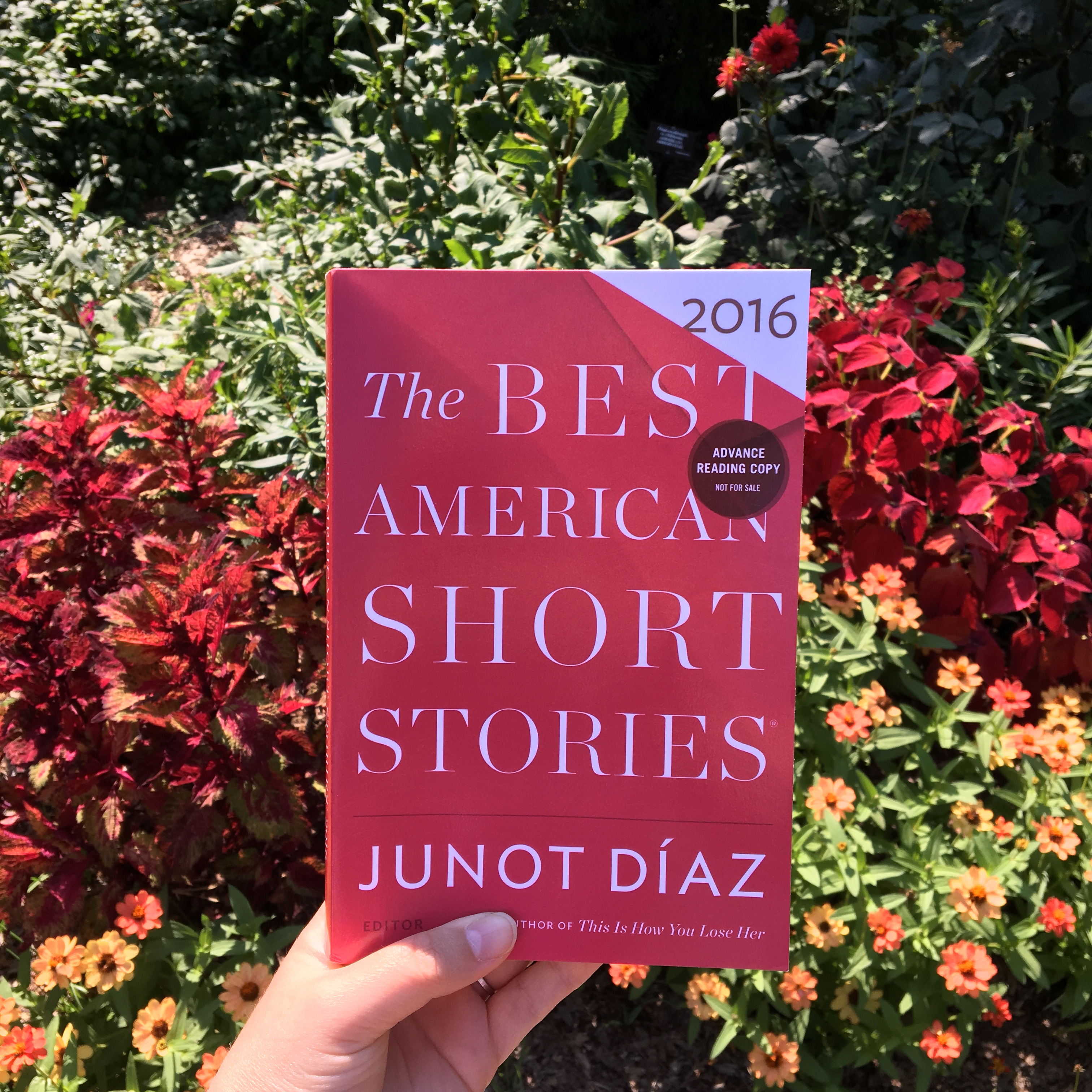
Recommended Reading: The Best American Short Stories 2016 Edited by Junot Díaz and Heidi Pitlor (series editor)

best-american-short-stories-2016

I love The Best American Short Stories anthologies; usually, I’ll have one around for quite awhile, dipping in from time to time when I want to read a story but don’t want to commit to a novel or a whole collection.

This year, though, I read The Best American Short Stories 2016* cover to cover, and I’m soimg_0839 glad I did. Like many writers, I subscribe to a rotating cast of literary magazines, but it’s impossible to read them all—unless that’s your job. Guest editor Junot Díaz and series editor Heidi Pitlor read many, many stories and chose twenty for this year’s anthology. Their choices are diverse in style, length, subject, and authors’ identities. This is a stellar collection, and I highly recommend it.

While I’d be happy to read any of these stories again, and Junot Díaz’s introduction is not to be missed, standouts (to me) included:

  • “Apollo” by Chimamanda Ngozi Adichie: In Enugu (a city in Nigeria) a man looks back to his childhood, when his friendship with a family servant his own age ended disastrously. “Reading did not do to me what it did to my parents, agitating them or turning them into vague beings lost to time, who did not quite notice when I came and went.”
  • “The Letician Age” by Yalitza Ferreras: A girl and geology, tragedy and family, love and a volcano. “Yet once in a while a person explodes out of her bedrock and becomes someone else.”
  • “For the God of Love, for the Love of God” by Lauren Groff: Tensions simmer as two friends and their husbands share a house in France. “She’d never met a child with beady eyes before. Beadiness arrives after long slow ekes of disappointment, usually in middle age.”
  • “Bridge” by Daniel J. O’Malley: “His mother’s words found a home in his mind the moment they left her mouth.” A boy, supposed to be studying, watches as an elderly couple prepares to jump from a bridge. Absolutely killer last line, which I won’t quote.
  • “On This Side” by Yuko Sakata: A changed figure from a man’s past returns asking for help, or maybe to confront him. “The first thing he felt on the staircase was a knot forming in his stomach, a forgotten seed of guilt he didn’t care to inspect, and now it was threatening to grow.

Two other stories, “Cold Little Bird” by Ben Marcus and “Gifted” by Sharon Solwitz, scared the heck out of me. The first is about a little boy who suddenly and totally withholds all affection from his parents; the second is about a woman whose son becomes critically ill. That’s not really what they’re about, of course–that’s just the framework, but let me tell you: chills. I had to go eat a piece of chocolate after “Cold Little Bird.”

And if you haven’t yet read Louise Erdrich’s excellent LaRose, you can get a taste here; her story “The Flower” is adapted from the novel.

Finally, one of the best parts of these anthologies are the Contributors’ Notes at the end–each includes a short bio of the author and some background on how the story came to be written and published—whether dashed off in a day or labored over for years and dozens of drafts. Fascinating.

Have you read any of the “Best American” anthologies? Do you have a favorite to recommend?

*I received a copy of this book from the publisher for review consideration, which did not affect the content of my review.
Recommended Reading: Marisa Silver’s Little Nothing

little-nothing

For quite some time after I put it down, I didn’t know what to make of Marisa Silver’s new novel Little Nothing*.  It’s a book as unusual as its heroine, Pavla.

img_1131Born in a nameless country (vaguely central or eastern European) at an unspecified time (perhaps the turn of the last century) to aged parents desperate for a child, Pavla consistently defies expectations. First, she’s born a dwarf, to her parents’ chagrin (her name means “little”).  And then, as a child, Pavla proves exceptionally nimble in body and mind, earning the respect of her classmates and a place as her father’s helper in his plumbing projects.

And then she grows beautiful (though not taller)—a wondrous transformation to the village, but an alarming one for her parents, who fear for her future once they are gone.  To the villagers, “Pavla is a sentence they cannot finish, an equation they cannot solve, and their desire to figure her out obviates any privacy she might otherwise hope for.”

Gripped by fear and love, Pavla’s parents turn to a charlatan to “cure” Pavla; his torture makes her taller, but changes her too. Now the privacy she might have hoped for is obliterated; to make her way in the world, she must travel with the charlatan and his assistant, Danilo, playing the Wolf Girl in their vaudeville act.

These are the first of Pavla’s transmutations, some of which she is not even aware of; Danilo, who loves her from afar, is the witness who traces her over the course of the novel. Their stories run in parallel, passing through prison, tunnels, an asylum, a deep dark wood. In many ways, this is a book about how we find ourselves in dark, hidden places.

As have no doubt realized, Little Nothing begins in the world of the fairy tale, but we read Pavla’s incredible story through a realist lens (there is quite a bit about plumbing, for example). The first part of the book was so spellbinding, the prose so finely crafted, that I was disappointed when it was over; like Pavla, I wasn’t ready to leave the village where she’d come to be valued.

But in life, nobody escapes trauma, and the departure from the village is necessary. Little Nothing is an often allegorical story of how one strong, determined soul can be transformed, sometimes radically, by traumatic experiences, and by love. It’s haunting, and recommended.

*I received a copy of this book from the publisher for review purposes, which did not affect the content of my review.

“lavishing honey light at her auburn feet”: George Elliott Clarke’s “Discourse on Pure Virtue”

discourse-on-pure-virtue

I live in Massachusetts. Usually, the autumn is  annoyingly brief here, bookended by humid heat and frigid cold on either end, but this year it’s truly ridiculous: the temperature is supposed to hit 84 today.

Which is a roundabout way of explaining why I found this week’s poem, with its heady and yet unoppressive warmth, so appealing.

Naomi at Consumed by Ink has more than once recommended to me the poetry of George Elliott Clarke, who is currently serving as Canadian Parliamentary Poet Laureate, and while I despair at finding one of his collection at a bookstore near me (the poetry section at the bookstore closest to my house is anemic when it comes to Americans, let alone anyone else), I did find a few of his poems online.

This week I’m reading “Discourse on Pure Virtue.” It’s a response, in a way, to Marlowe’s “The Passionate Shepherd to His Love”; in Mr. Clarke’s poem, “All these pleasures will we prove” immediately recalls the famous “Come live with me and be my love / and we will all the pleasures prove” of Marlowe’s. However,  this is not a direct reply, as is Ralegh’s “The Nymph’s Reply to the Shepherd” (you can read both of these poems here); instead, it’s more of a response, or a riff.

Marlowe’s poem is a seduction, wherein the speaker tries to woo the nymph with promises of pastoral pleasures. In “Discourse on Pure Virtue,” it is the speaker who is seduced by the beauty of “The brown girl, golden, sable-eyed.” Just look at all the words used to describe her and her features: exuberant, august, individualized, warm, light-dark. She’s “flowering yellow hibiscus”; her smile shows her “warm, sun-dyed, terracotta lips”; her sari is “lushly brocaded gold silk.”

I love the way the poem luxuriates in these radiant details; it’s a summoning of “virtue” completely antithetical to the way I think of the word visually (Pilgrim portraits, conduct books, grim New England winters). Similarly, “discourse” in the title suggests a certain Enlightenment-era orderly recitation of facts in service to an argument. Instead the poet gives us boundless joy.

What do you think of the poem? And what other poems are you reading this week?

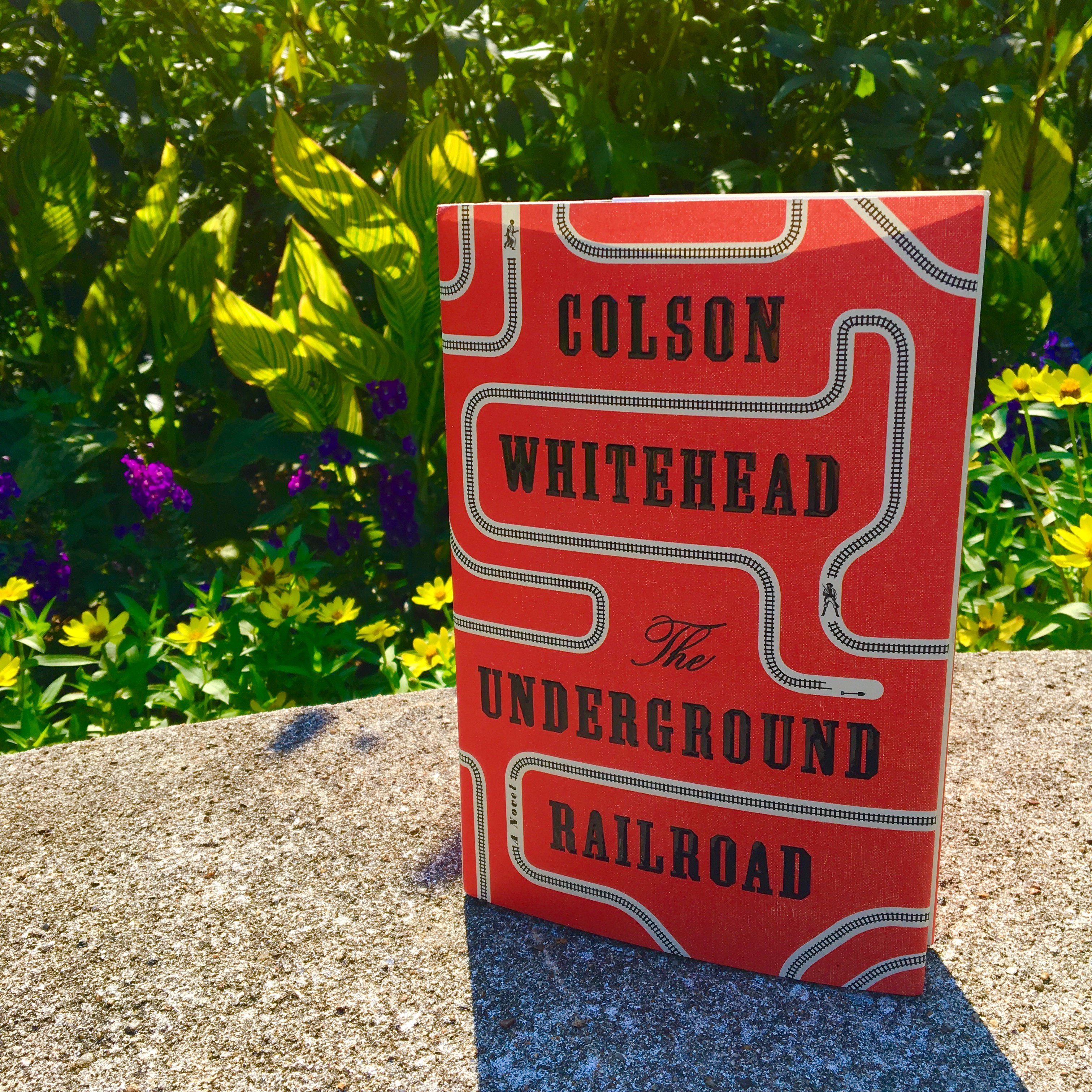
Recommended Reading: The Underground Railroad, by Colson Whitehead

the-underground-railroad

Chances are that you’ve heard of Colson Whitehead’s new novel, since it’s earned Oprah’s seal of approval (which came with a surprise early release date) and it’s already a bestseller.

Dear Readers, The Underground Railroad absolutely lives up to all of the good press.

The Underground RailroadIn a tale that echoes the Odyssey and Gulliver’s Travels, The Underground Railroad follows the journey of Cora, teenage girl who escapes the hideous cruelties of a Georgia plantation (only to find uncertain harbors) via the Underground Railroad. In the novel, it’s not only a path of safe houses, trusted helpers, and secret routes, but also an actual subterranean railway, with branches and lines—all dangerous, all necessary.

By fashioning the narrative with this kind of mythic, not-quite-fantastic element (there are others: the notorious Tuskegee experiment is transplanted to antebellum South Carolina that is supposedly “progressive”; in  gatherings that resemble our notion of the Salem witch trials, ordinary citizens in North Carolina conduct lynchings every Friday night), Mr. Whitehead reveals what he calls “states of possibility.” Each stop on Cora’s travels through this alternative Southern landscape—albeit a landscape grounded in the terrible  facts of slavery—resonates through facets of American history that we must not forget.

Handling this dense underpinning of history and metaphor with grace and subtlety, Mr. Whitehead in The Underground Railroad never loses sight of the individual human story. Cora’s journey is the novel’s main line, but at intervals other branches spin off, illuminating the lives of secondary characters. These include Ajarry (Cora’s grandmother, kidnapped in Africa and brought across the ocean), Caesar (a literate man, the slave who convinces Cora to escape), and Ethel (a white woman who, for a time, grudgingly shelters Cora).

But the book belongs to Cora, an unforgettable character, a heroine. At the beginning of the novel, she’s on the sidelines; when her friend tries to get her to dance, “Cora never joined her, tugging her arm away. She watched.” Abandoned by her mother, who escaped alone, Cora is a “stray” among her fellow slaves, living with damaged women in a cabin called Hob. When she escapes  though, she becomes the object of one man’s focus: she’s hunted by the same fanatic slave-catcher who failed to find her mother.

Cora is wary and slow to trust (absolutely understandable), strong-willed, intelligent, and very brave. She witnesses horrors that should be unspeakable, impossible; she is haunted by what she has seen and what has been done to her. The tension, even when she seems relatively safe, is always high, so that when the narrative grants her a reprieve, it feels to the reader like a long exhalation after a breath held too long:

She grabbed his hand. The almanac had a strange, soapy smell and made a cracking noise like fire as she turned the pages. She’d never been the first person to open a book before.

I hope you’ll open this one. The Underground Railroad is highly recommended.

Read more:

A great review of The Underground Railroad (much more thorough than this one)

An interview with Colson Whitehead


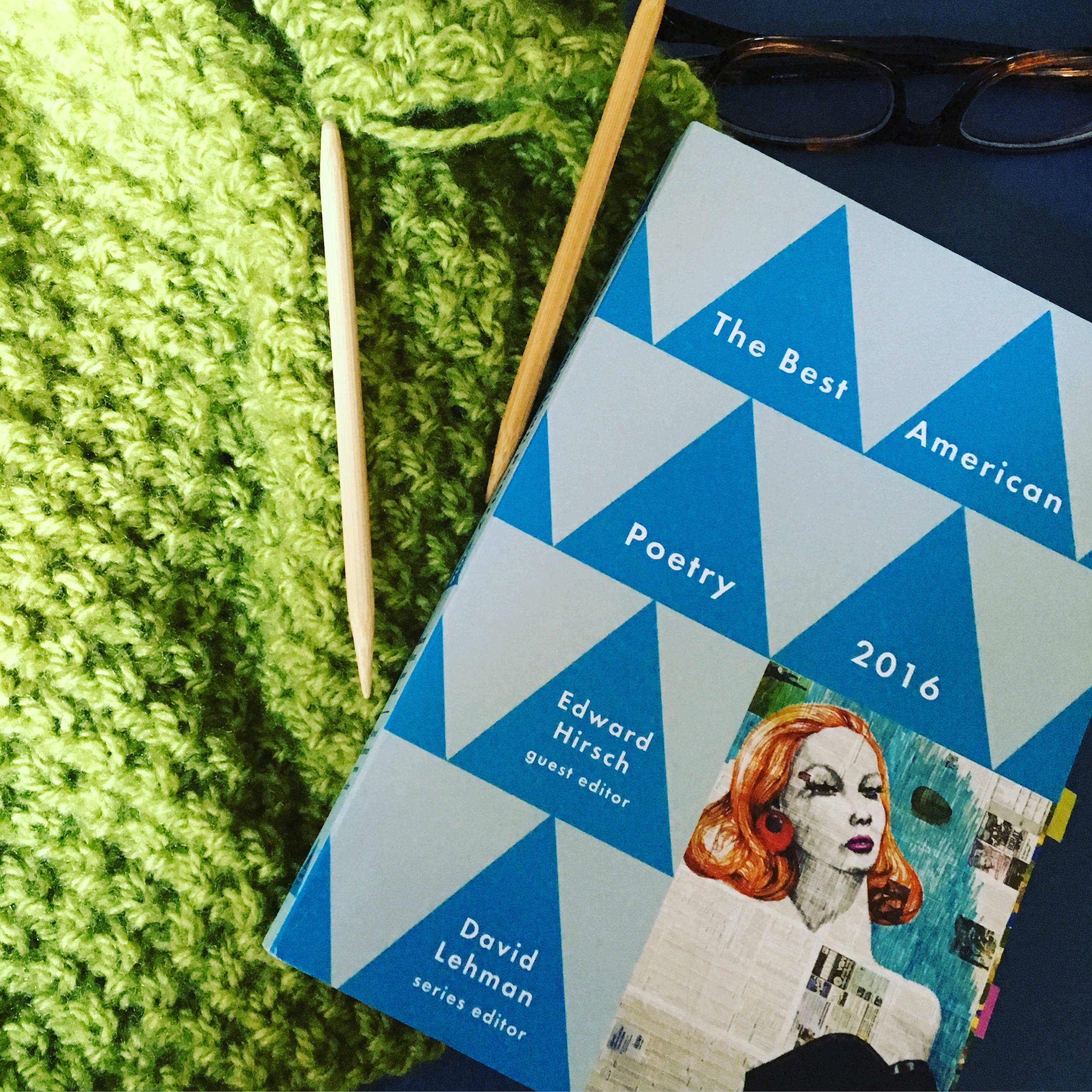
Recommended Reading: The Best American Poetry 2016, Edited by David Lehman (series editor) and Edward Hirsch (guest editor)

Best American Poetry 2016

In Robert Pinsky’s words, the Best American Poetry series is “a vivid snapshot of what a distinguished poet finds exciting, fresh and memorable,” a selection of more than 70 poems drawn from literary magazines large and small.

IMG_0679I love dipping into these collections whenever I have the chance—I especially like the inclusion of poets’ comments on their work in the Contributors section—but this year was the first that I sat down and read the whole book cover to cover in a few sittings, and I wholeheartedly recommend the experience.

Series editor David Lehman’s introduction considers Yeats’s “The Second Coming” as poem and prophecy, making the case, I think, for poetry engaged with the concerns of the day, while guest editor Edward Hirsch writes about the role of lyric poetry in the contemporary landscape (among other things, lyric poetry is, he writes, “a nonutilitarian form of language sometimes put to utilitarian ends, used to build nations and to undermine them, to reinforce power and to protest it.”)

As he read through hundred upon hundreds of poems, Mr. Hirsch (who is the recipient of many honors and awards, the author of many books, and the current president of the Guggenheim Foundation) writes,

What I found myself responding to, what continued to compel me, was precision and surprise. Memorable lines, craft deployed. Poems that demonstrated a certain kind of thinking, imagistic or metaphorical thinking, poetic inquiry. Literary investigations, obsessions, intelligence. Emotional accuracy. Poems written under pressure, poems in which something dramatic is at stake, at risk, for the speaker, who would not be deterred. A kind of ruthless authenticity. Poems that take themselves to task.

“Precision and surprise”—those are qualities I found over and over again as I read The Best American Poetry 2016*, across a broad spectrum of poetic forms and subjects. Poems by Jill Bialosky, Michelle Boisseau, Natalie Diaz, Amy Gerstler, T. R. Hummer, Major Jackson, Keetje Kuipers, Cate Marvin, Hai-Dang Phan, Anya Silver, and Adrienne Su particularly struck me, though I found something to admire in every poem in this collection. I should also note that roughly half the names in this collection were unfamiliar to me, which is both a testament to the editors’ choices and my own

A review of each poem would of course be unreasonable, so I thought I’d leave you, Dear Readers, with a handful of favorite lines, though they do seem lonesome away from their poems.

Off-shore, the whale-roads are so thick
with monsters that were you nimble enough
you could dash across their breaching.
(Michelle Boisseau, from “Ugglig”)

making their great speeded way across the darkest hours,
rippling the sapphired sky-water into a galaxy road.
(Natalie Diaz, from “How the Milky Way Was Made”)

They are all boys, ceaselessly.
(Cate Marvin, from “High School in Schuzou”)

And this, from Edward Hirsch’s introduction:

[Poetry] is an art form that continues to thrive in unexpected ways, engaging and evading its own history, setting out on unknown paths. We live, perhaps we have always lived, in perilous times, and stand on the edge of an abyss, which absorbs us. We are called to task. Poetry enlarges our experience. It brings us greater consciousness, fuller being. It stands on the side of life, our enthrallment.

Add linebreaks, and that’s a poem too.

What poems are you reading this week?

*I received a copy of this book from the publisher for review purposes, which did not affect the content of my review.

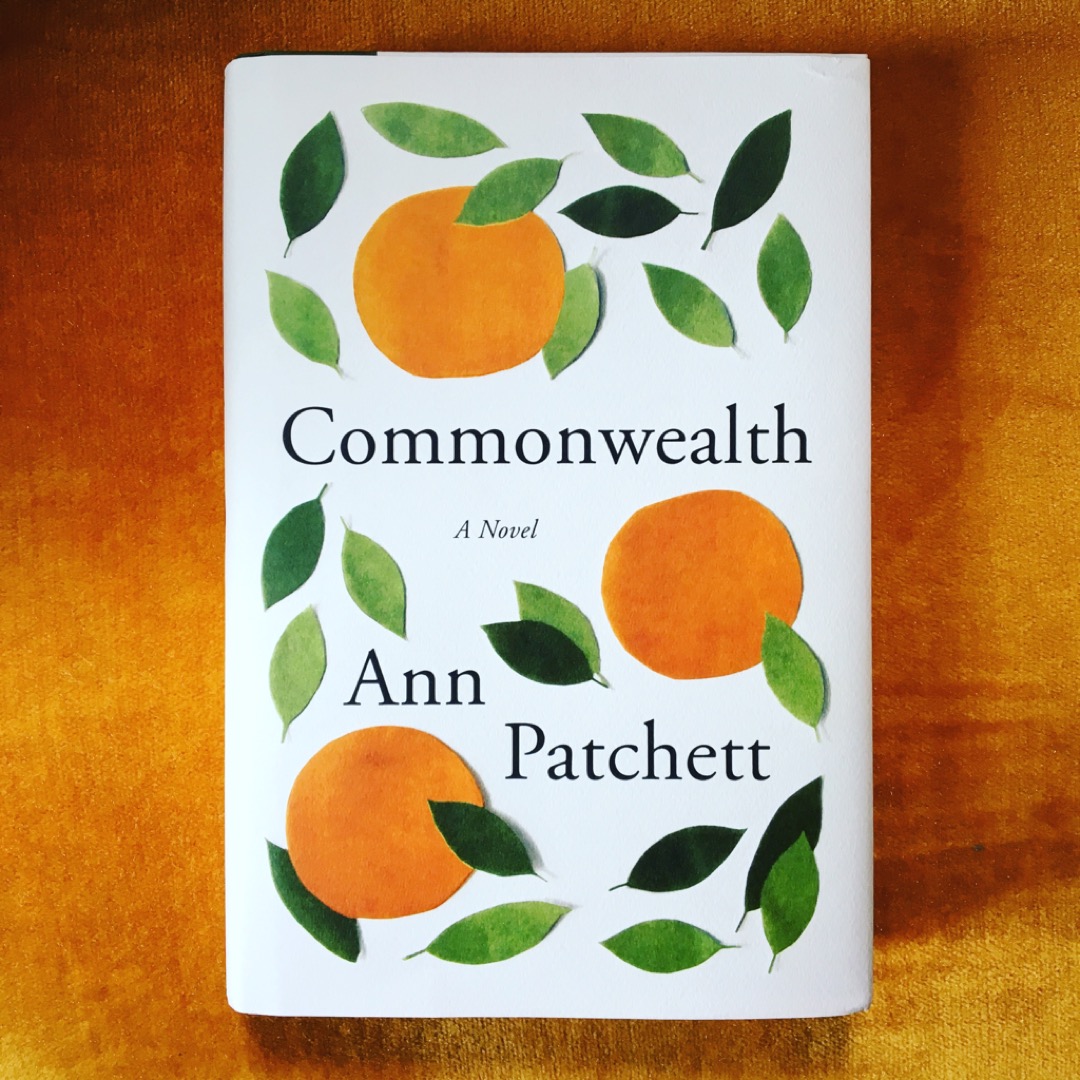
Recommended Reading: Commonwealth, by Ann Patchett

commonwealth

Ann Patchett’s Commonwealth* is like an unfamiliar lake on a ninety-degree day that you can’t  wait to sink into; even if you don’t know how deep it goes, you won’t want to come up for air.

img_1022It starts in Los Angeles, with a bottle of gin and orange trees heavy with fruit. Bert Cousins walks into the christening party for Beverly and Fix Keating’s new daughter Franny with a completely inappropriate gift (the gin), which when mixed with fresh-squeezed juice from the backyard oranges leads to revelry not usually associated with christening parties.

Then Bert kisses Beverly, leading to the unraveling of two families and the imperfect attempt to knit together a new blended family. Beverly and Bert move to Virginia with Franny and her older sister Caroline; Bert’s four children—Cal, Holly, Jeanette, and Albie—visit during the summers, leaving their mother Teresa behind in L.A. Bert and Beverly are “careless people” in many respects; the children are often unsupervised, and they find their (dangerous) freedom exhilarating: “It was like that every summer the six of them were together. Not that the days were always fun, most of them weren’t, but they did things, real things, and they never got caught.”

The kiss is the first of three turning points in this excellent novel. The second involves a terrible accident; the third is when Franny, adrift in her twenties, meets the acclaimed novelist Leo Posen and tells him her family’s story.

Commonwealth follows eleven major characters over fifty years—and manages to deliver full portraits of their lives in less than 350 pages. Each chapter is as exquisitely paced and revealing as a short story (indeed, several of the chapters could stand alone as stories), and yet the whole is greater than the sum of its parts. Ms. Patchett’s storytelling makes the ordinary gripping; for instance, when Franny is treated like a cook and maid by Leo’s publishing friends in the summer house they’ve rented together, I started biting my nails, wondering if she would snap. I practically cheered when, earlier in the book, Teresa puts her four kids on the plane to their father (who had pushed for full summer custody) without suitcases but with a list of all the appointments they need (dentist, doctor, etc): “Beverly Cousins wanted her family? Have at it.”

I started off thinking that Commonwealth would be a book about divorce; and it is, of course, but it’s more about family, bad decisions and living with the consequences of those decisions, loyalty, and friendship. My copy of the book is studded with notes marking favorite passages and lines (“Franny’s skin was so translucent it acted more as a window than a shade.”); I’m willing to bet that if you pick it up (it’s out today), your copy will be too. Commonwealth is highly recommended.

Have you read Commonwealth or any of Ann Patchett’s other books?

*I received a copy of this book from the publisher for review purposes, which did not affect the content of my review.

** Confession: Though I own Bel Canto and State of Wonder (the former acquired at a delightful book swap birthday party in January 2009, the latter at Target, which maybe tells you something about my collecting habits), Commonwealth is the first of Ann Patchett’s books that I’ve read. I admire her work on behalf of independent bookstores, and you can be sure that if I ever visit Nashville, Parnassus Books would be the first stop on my itinerary.

Recommended Reading: Absolute Solitude by Dulce María Loynaz, translated by James O’Connor

Absolute Solitude

I’m so happy to have been introduced to the work of Dulce María Loynaz (1902-1997) through Absolute Solitude*, a selection of her prose poems translated by James O’Connor.

Though her early work was well received in her native Cuba and abroad (including by writers like Gabriela Mistral and Juan Ramón Jiménez), after the Cuban Revolution Loynaz stopped writing poetry (her books were banned for decades), leaving her work to be rediscovered by a new generation when she won the prestigious Premio Miguel de Cervantes in 1992. You can read more about the poet, her struggles, and her legacy in this piece by translator James O’Connor.

Most of Absolute Solitude is taken up with a large selection from Loynaz’s book Poems Without Names (Poemas sin nombre), originally published in Spain in 1953. These prose poems are brief; almost all are less than a page in length, and most are shorter than a paragraph. (The one-line poems are almost aphoristic.)  The Spanish originals and English translations appear on opposite pages.

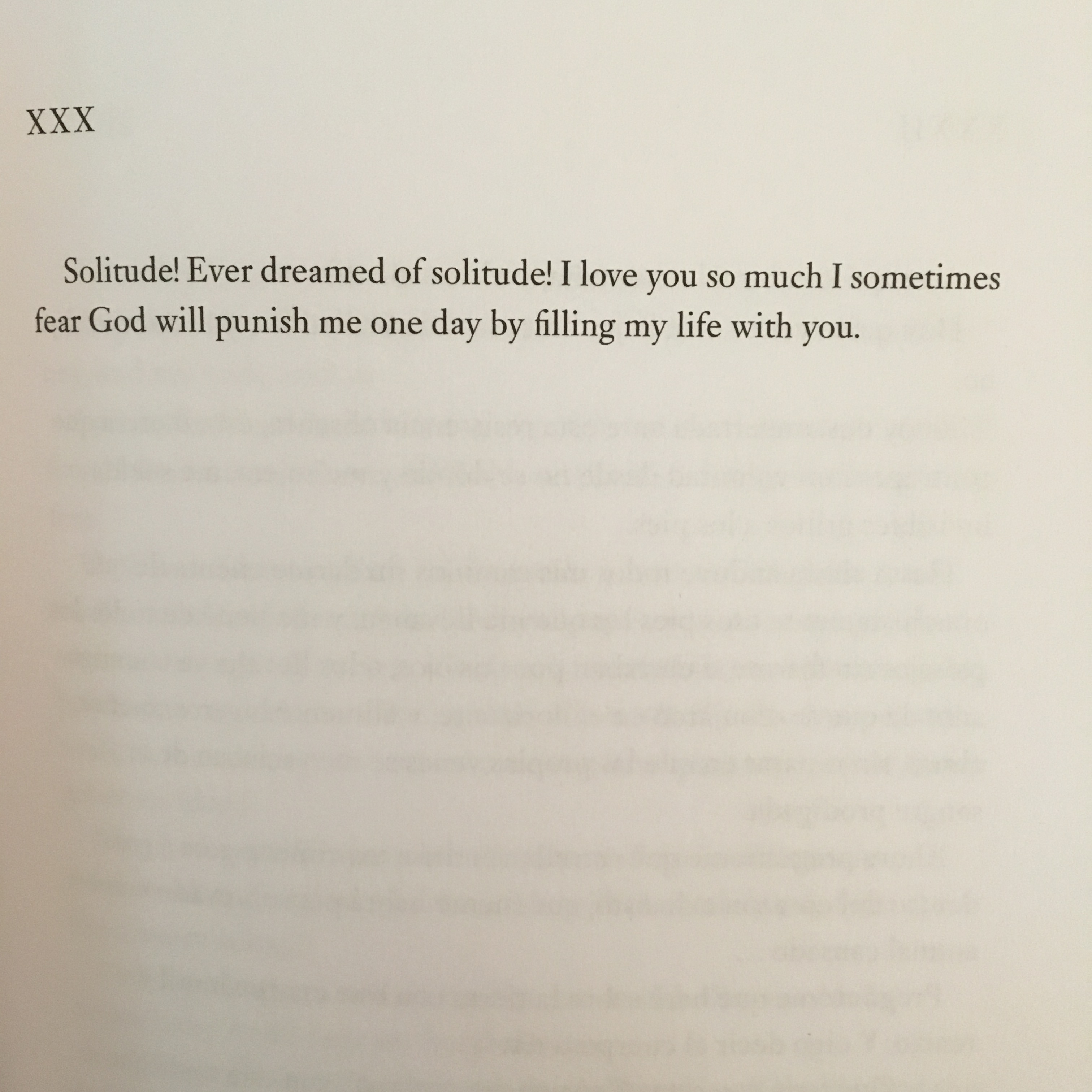
The poems are intensely personal, and yet encompass universal themes: the agonies of love, the pleasures and terrors of solitude, wrestling with the divine. I was reminded, at different times, of Rumi, Emily Dickinson, Leonard Cohen, and Gabriela Mistral; while I often find contemporary prose poems difficult—too obscure, I suppose—these I found to be transporting.

Here are a few of my favorites.

IMG_0676 IMG_0675 IMG_0674 IMG_0673

For me, the blank space on the page following each poem was an invitation to pause and think carefully about what I’d just read. I loved this jewel of a collection.

What poems are you reading this week?

* I received a copy of this book from the publisher for review purposes, which did not affect the content of my review.
Recommended Reading: Hidden Figures, by Margot Lee Shetterly

Hidden Figures

Serendipitously, Margot Lee Shetterly’s Hidden Figures* arrived on my doorstep on the ninety-eighth birthday of Katherine Johnson, pioneering scientist mathematician and recent recipient of the Presidential Medal of Freedom—and one of the subjects of this engrossing book about the black female mathematicians who helped the United States win World War II and the space race.

IMG_0659Margot Lee Shetterly’s writing is straightforward and lively; it is clear how passionate she is about her subject. She hails from Hampton, Virginia (“Spacetown USA”),  the setting of Hidden Figures, where, she writes, “I knew so many African Americans working in science, math, and engineering that I thought that’s just what black folks did.” Only years later did she learn about the history of the women who worked in West Area Computing, a division of black female mathematicians (called “computers,” since they did complex calculations by hand) at Langley Research Center. To keep up with war demand, these women (and their white counterparts) were recruited by NACA (the National Advisory Committee for Aeronautics, which later became NASA), the agency responsible for ensuring American air supremacy in World War II by researching and testing advancements in aeronautics.

Despite the fact their expertise was badly needed, the West Computers, including Dorothy Vaughan, Katherine Johnson, Miriam Mann, and Mary Jackson, often faced longer routes to advancement than the white women who did the same kind of work, and all women at Langley found it difficult to break into the ranks of the engineers.

Women, on the other hand, had to wield their intellects like a scythe, hacking away against the stubborn underbrush of low expectations. A woman who worked in the central computing pools was one step removed from the research, and the engineers’ assignments sometimes lacked the context to give the computer much knowledge about the afterlife of the numbers that bedeviled her days. [. . . ] Even a woman who had worked closely with an engineer on the content of a research report was rarely rewarded by seeing her name alongside his on the final publication. Why would the computers have the same desire for recognition that they did? many engineers figured. They were women, after all.

Besides the hurdles common to all the female mathematicians and engineers working at Langley, the black women of West Computing faced segregation in the workplace and in Hampton; even after segregated bathrooms and cafeteria sections at Langley disappeared, their children were sent to schools separate from those of their white colleagues. Many of the West Computers were working mothers; some were also widowed or separated geographically from their spouses. Given the difficult work and long hours of the job, this presented its own set of challenges, which Hidden Figures touches upon.

Hidden Figures places the story of the West Computers in the context of war, the fight for civil rights, and the space race without losing sight of the details (though I did want a bit more explanation of the mathematical and scientific tasks the engineers worked on). Necessarily, the book focuses on a handful of women, but also emphasizes that they were not alone; as Ms. Shetterly writes, “For too long, history has imposed a binary condition on its black citizens: either nameless or renowned, menial or exceptional, passive recipients of the forces of history or superheroes who acquire mythic status not just because of their deeds but because of their scarcity. The power of the history of NASA’s black computers is that even the Firsts weren’t the Onlies.”

The story of these mathematicians, engineers, and scientists is one of  discrimination and perseverance, dedication and curiosity, orbital trajectories and soap-box derbies. I came to admire the women of this book immensely; they are the epitome of grace under pressure, and it’s long past time their story was told.

What nonfiction have you been reading lately?

P. S.: Fellow Trekkies, there is a fantastic anecdote in Hidden Figures that you don’t want to miss.

*I received a copy of this book from the publisher for review consideration, which did not affect the content of my review.