“And early though the laurel grows / It withers quicker than the rose.”

Readers might notice that on or around April 11 every year I post a poem like this one, in honor of someone I loved very much.


To an Athlete Dying YoungHousman
A. E. Housman

The time you won your town the race
We chaired you through the market-place;
Man and boy stood cheering by,
And home we brought you shoulder-high.

Today, the road all runners come,
Shoulder-high we bring you home,
And set you at your threshold down,
Townsman of a stiller town.

Smart lad, to slip betimes away
From fields where glory does not stay,
And early though the laurel grows
It withers quicker than the rose.

Eyes the shady night has shut
Cannot see the record cut,
And silence sounds no worse than cheers
After earth has stopped the ears.

Now you will not swell the rout
Of lads that wore their honours out,
Runners whom renown outran
And the name died before the man.

So set, before its echoes fade,
The fleet foot on the sill of shade,
And hold to the low lintel up
The still-defended challenge-cup.

And round that early-laurelled head
Will flock to gaze the strengthless dead,
And find unwithered on its curls
The garland briefer than a girl’s.


(Rest in peace, EVC.)
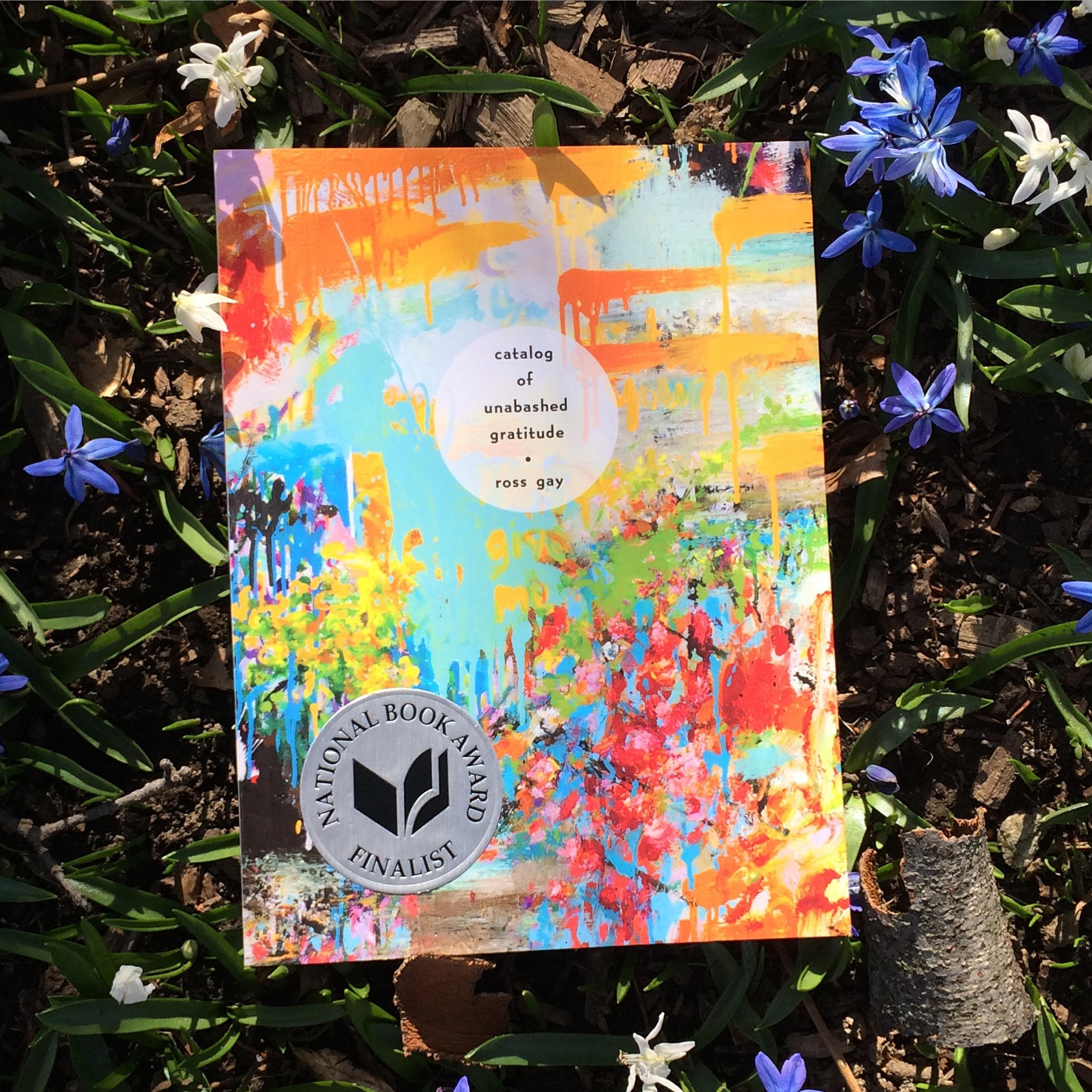
Recommended (Poetry) Reading: Ross Gay’s Catalog of Unabashed Gratitude

IMG_6414As I thought about how to describe Ross Gay’s Catalog of Unabashed Gratitude, I found myself turning into some sort of very specific thesaurus: his work is ebullient, irrepressible, joyous, boisterous. I loved it without reservation.

In this collection you’ll find a wonderful poem about strangers in a city gathering to pick figs from an overladen tree; an epithalamion (one that I would have liked at my own wedding); a searing, funny, furious elegy for the poet’s friend Don Belton; reflective poems about the poet’s parents; many poems celebrating gardens, orchards, and green growing things.

It took me a bit to adjust to Mr. Gay’s lines, which are often quite short, with limited punctuation, but I came to find that these kinds of lines offered me the chance to be deeply attentive, unstrung from my usual way of seeing a line and automatically looking for the outlines of a sentence. Here are the first few lines of “Ode to the Puritan in Me”:

There is a puritan in me
the brim of whose
hat is so sharp
it could cut
your tongue out

I think my favorite poem in the collection might be the wholly unexpected “Last Will and Testament,” but since I couldn’t find it online, here’s a link to the collection’s title (and penultimate) poem, “Catalog of Unabashed Gratitude.”

I love the way the poem invites the reader in by opening with a direct address (“Friends”—a strategy you’ll see more than once in the collection), and then sweeps into an account of a dream. Now, like most people, I find other people’s dreams rather a trial to hear or read about, but not this one. In the dream is a command to speak, and so begins the catalog of gratitude, with an orchard sunk into colorfully acquired compost:

twirling dung with my pitchfork
again and again
with hundreds and hundreds of other people
we dreamt an orchard this way,
furrowing our brows,
and hauling our wheelbarrows,
and sweating through our shirts,
and two years later there was a party
at which trees were sunk into the well-fed earth,
one of which, a liberty apple, after being watered in
was tamped by a baby barefoot
with a bow hanging in her hair
biting her lip in her joyous work
and friends this is the realest place I know,


This poem is absolute magnificent; I was crying by the end of it. I highly recommend this remarkable book. 

If this quick review piques your interest, you might like:

Ross Gay’s tour of his garden in essay form

This correspondence in poems between Mr. Gay and poet Aimee Nezhukumatathil about their gardens. 

“we can say at least the lettuce loved the rain”: Lisa Olstein’s “Dear One Absent This Long While”

Lisa Olstein_Dear One Absent This Long WhileLisa Olstein’s “Dear One Absent This Long While” is a lovely poem, and especially appropriate for the rainy early spring we’re having here, when “everything blooms coldly.”

In what I thought of as an unsent letter, the speaker addresses the absent person—though the poem leaves open the identity of the missing loved one—revealing how she’s been so anxious to see him or her that she’s mistaken “leaves in the wind,” “the retreating shadow of a fox, daybreak” for the return of the absent loved one.

In the meantime, the speaker (solitary, we understand, since the other who wait are the cat and the stove—stoves in poems always remind me of Bishop’s “Sestina,” by the way) takes to planting to pass the time:

June efforts quietly.
I’ve planted vegetables along each garden wall


so even if spring continues to disappoint
we can say at least the lettuce loved the rain.
Initially stopped short by the unusual verb choice in that first line (“June efforts quietly”), I’ve since come to like it; it suggests the whole month is gathering its forces with the speaker, to try to wait out this rainy, lonely period.
What do you make of the last three stanzas? There’s the contrast of the new gardening tools with the practice of eulogies (eulogies that either describe animals or describe people using animals as metaphors) and the suggestion of death and decay (the “unrabbited” woods instead of the fecundity associated with rabbits). The beloved’s name is spoken by leaves that somehow chatter (like books?)–but are the leaves on the trees, or lying dead on the forest floor? Lots to think about.


“the flesh inside them once white and wet as snow”: Jennifer Grotz’s “The Snow Apples,” from Window Left Open

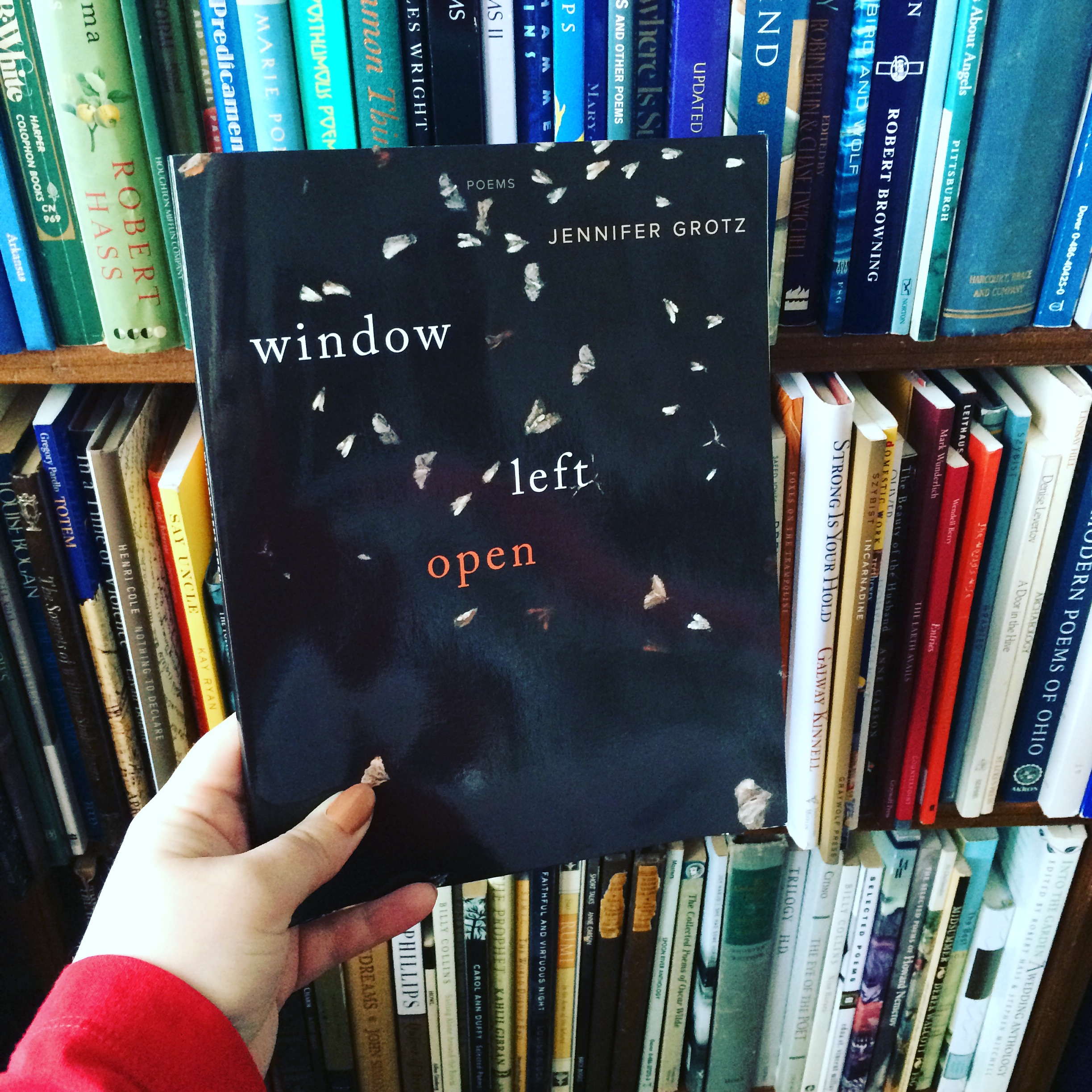
IMG_6313I’ve been slowly reading Jennifer Grotz’s third poetry collection, Window Left Open*, over the last three weeks, a keenly enjoyable experience because her poems invite the very kind of attentiveness that they demonstrate.

In “The Snow Apples,” which you can read here, the speaker considers the “Dulled, shrunken, nicked by wind-flung branches, / squirrel-pawed and beak-pierced, infested / macabre baubles hanging” from the apple tree in February, grasping the branches when most apples  fell together in  “a syncopation” in autumn. These winter apples the speaker compares to “a hard knot / deep in the core, something winter / winnow me down to.” I like the clever use of “core” here, the way the line breaks so that for a a moment the reader can imagine that the “hard knot” is “something winter.” The sadness of these “indegestible” apples “piled beneath the earth’s pelt of snow” is a disquieting, vivid metaphor for the speaker’s sense of disturbance in the long gray months.

Engagement with the natural world runs through Window Left Open, in which you’ll find (in just the first section) a forest with an “unending / staircase of roots worn silver like the soldered iron / that holds stained glass together,” snowflakes “denticulate as dandelion greens,” a display of living, giant cockroaches alongside pinned butterflies, rain “stately at first as punctuation,” a foreign city with “a gray, nearsighted river / one that massages the eyes, focuses / the sweeping birds that skim the water’s surface.”

The second section of the book finds the poet meditating on her time at a French monastery. There’s a poem about a piano in the Alps, one about the impossibility of glimpsing the entirety of a mountain from a window, another about a peacock “as strange as Mount Rushmore.” One of my favorites is called “Apricots,” which will make you see the fruit in a whole new way (“And the ripe ones, which felt like biting into / my own flesh, slightly carnivorous.”).

It’s tempting to go on quoting the memorable images in these poems; it’s harder to get at the sense of the speaker observing not only her world, but herself, and finding unexpected loveliness and unexpected fear, often at the same time. In “Poppies,” Ms. Grotz writes,  “Love is letting the world be half-tamed.” If you look closely enough at anything—an animal, a window, even a word—you’ll find a distancing peculiarity, and Ms. Grotz translates that feeling in these poems. She has a gift for making the familiar strange, and making the strange familiar. I highly recommend Window Left Open.

Further reading:

Ta-Nehisi Coates on “Poppies”

“Self-Portrait on the Street of an Unnamed Foreign City”

*I received a copy of this book from the publisher for review purposes, which did not affect the content of my review.

“the rueful admission”: Billy Collins’s “The Lanyard”

Collins_The LanyardA couple of years ago, in a post about my mother, I obliquely mentioned “The Lanyard,” a poem by Billy Collins. “The Lanyard” was the eulogy my uncle read at my grandmother’s funeral recently, and so I’m featuring it this week. It’s one of my favorite poems about parents and children, and I hope you’ll like it too.

Here’s a link to Mr. Collins reading the poem. 

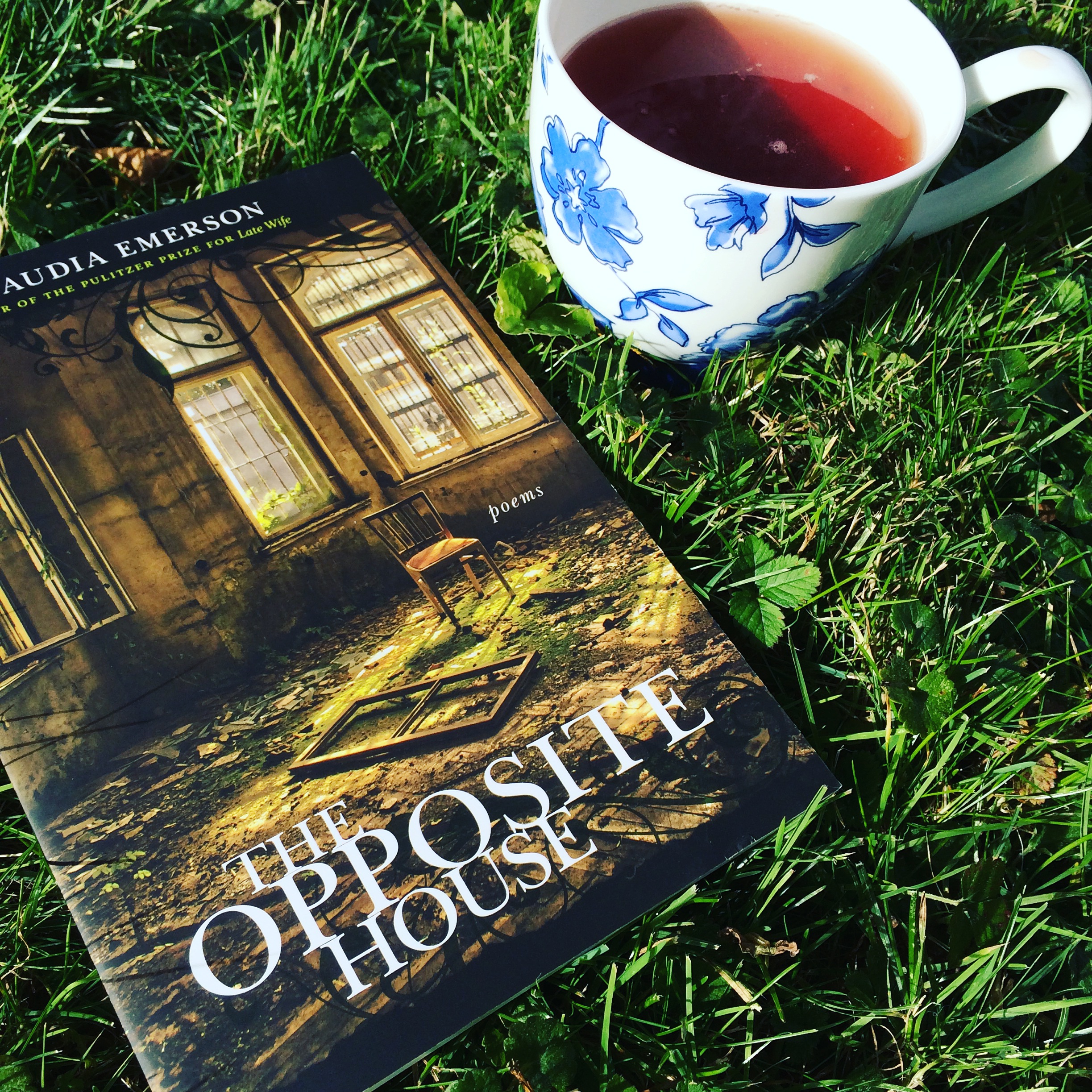
A Brief Note on Claudia Emerson’s The Opposite House

IMG_5562This week, I’ve been thinking quite a bit about Claudia Emerson’s book The Opposite House (which I read last year over the Thanksgiving holiday). I’ve written about her before; she died in 2014, and The Opposite House was posthumously published. As Jonathan Farmer writes in Slate,

Emerson presumably wrote the poems in The Opposite House years before she died, but it’s impossible to keep the news from them. Her gaze narrows and intensifies to an extent that I can’t help assuming—as she tells story after story of old age, demise, time folding so that what is most distant in a life comes nearest to it—that she was working on the far side of a diagnosis of cancer, if not a prognosis of death.

I completely agree. I found the poems in this collection haunting, in the best sense; take the last few lines of “Ephemeris,” a poem which Mr. Farmer considers in more depth than I will here. Here’s a link to “On Leaving the Body to Science,” in which the title accomplishes the future act of the first lines. What a poem.

The Opposite House is an intricate, fierce, intelligent collection. Highly recommended.

“People say — This is how the world works”: Emily Mohn-Slate’s “Needlework”

Emily Mohn-Slate -Needlework-This week’s poem is very new; “Needlework” was just published in Tupelo Quarterly. Emily Mohn-Slate is a poet and teacher, and I had the pleasure of meeting and becoming friendly with her in graduate school (you can read more about Emily here).

I loved “Needlework” as soon as I read it. I’m interested in poems about people’s working lives and poems about everyday events (breakfast, phone calls, walks), and this poem is about both. There’s both a playfulness (the references to the gym and the treadmill–working out–in a poem about work) and a seriousness to it. This stanza–

My father told me to do what I loved to do — one third of my life
will be work. Every day, he arrived home ashen,
hiked the basement stairs broken by long pauses.

–is to me the crucial one (Note how all the stanzas are built to resemble stairs. And the description of the speaker’s father reminds me of Robert Hayden’s brilliant “Those Winter Sundays”). How many of us have been told to do what we love, and how many of us find ourselves instead doing a job we merely stand?

I think the poems suggests that the key to avoiding misery in the work that is one third of one’s life is finding something to love in the work, no matter what it is. Take the men who “cut off the trees’ hands.” This doesn’t seem, at first glance, like loveable work, to prune away something that’s alive (reinforced by the use of “hands” for branches), and yet the speaker thinks she hears “them singing,” an echo of the hum of the machines in the first stanza.

It’s a poem that bears re-reading, and I hope you’ll find it as rewarding as I have.

What’s your favorite poem about work?

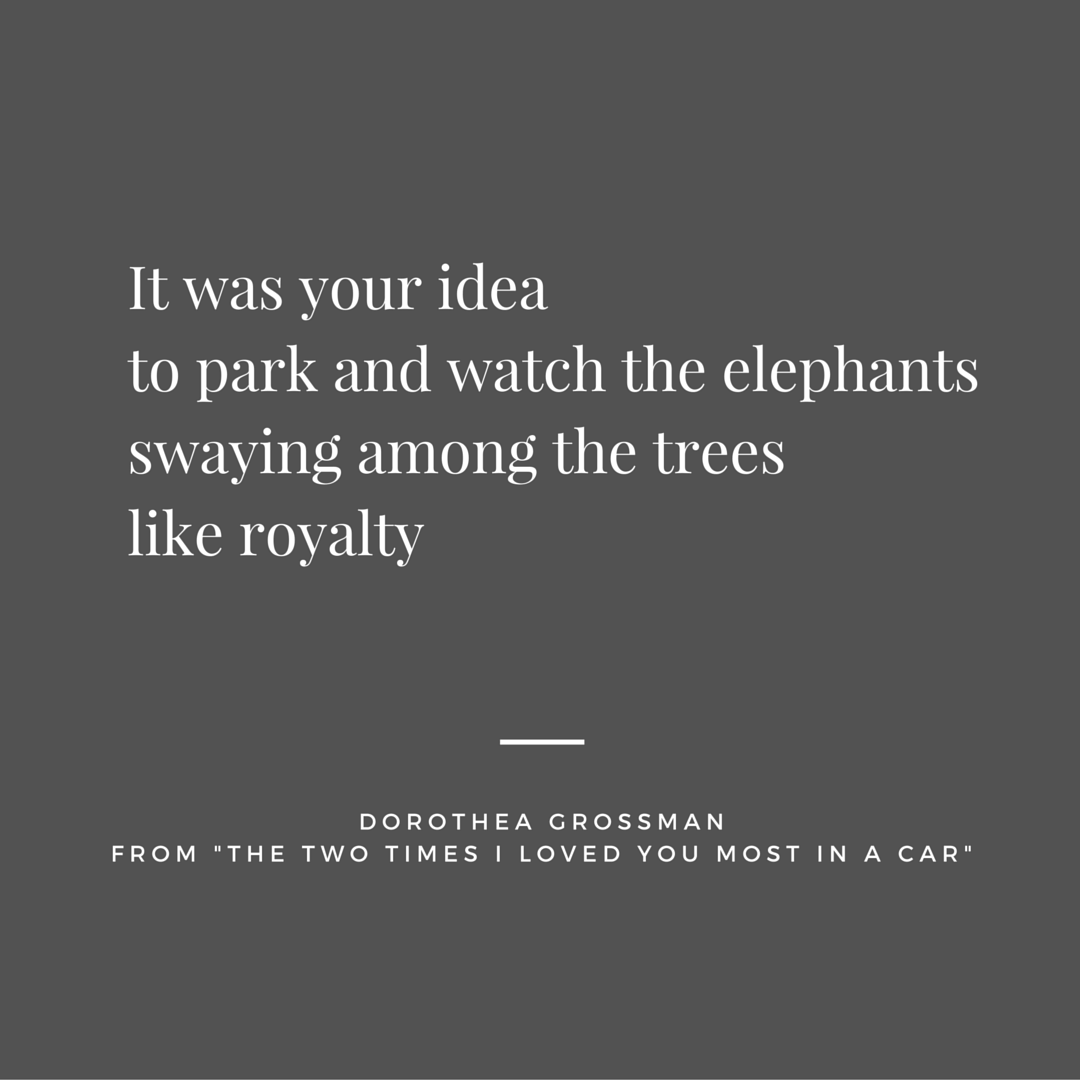
“I never saw light that way / again”: Dorothea Grossman’s “The Two Times I Loved You Most In a Car”

Dorothea GrossmanA tip of the hat to my friend, poet Ashley McHugh, for bringing Dorothea Grossman’s “The Two Times I Loved You Most In a Car” to my attention. In this two-stanza poem, the speaker recalls two instances in which sensory experience startled her: the quietness of elephants swaying among palm trees, and the appearance of stars in the desert night sky.

(You can read more about Dorothea Grossman here and here.

It’s a beautiful little poem; I’ve been thinking about who the addressed person is (A partner? A parent? A friend?).

What do you think? If you were to write a poem on the same subject, which two experiences would you write about?


13 Poems for Galentine’s Day

Friends, there’s a holiday this weekend that we should be celebrating with mimosas, flowers, and massive quantities of waffles with whipped cream.

I’m talking, of course, about Galentine’s Day.

What’s Galentine’s Day, you say?

giphy

It’s only the best day of the year, according to notable Pawnee citizen Leslie Knope.

Galentine’s Day is February 13, and it’s the day when “friends leave their husbands and their boyfriends at home and just kick it breakfast style. Ladies celebrating ladies. It’s like Lilith Fair, minus the angst. Plus, frittatas!” Sorry dudes, but uteruses before duderuses, you know what I mean?

Anyway, Leslie Knope competes only with C.J. Cregg for the title of “Carolyn’s Favorite Fictional Female Government Official,” and let me tell you, those ladies would throw the best planned and wittiest Galentine’s brunch this fine nation has ever seen.

I like to think that brunch would feature readings hand-selected for participants by Leslie Knope; as dedicated Parks and Rec fans know, she once matched poetry with Scotch in a way that moved even the stolid Ron Swanson.

So, in honor of Leslie Knope and in celebration of Galentine’s Day, here are 13 poems on friendship by female poets. Some are elegiac, some are sad, some are funny, some are opaque, some are straightforward—but all are by talented ladies, and I hope you like them.

Happy Galentine's Day!Patricia Spears Jones, “What Beauty Does”

Regan Huff, “Occurrence on Washburn Avenue” 

Elizabeth Woody, “Girlfriends” 

Katherine Philips, “Friendship’s Mystery, To my Dearest Lucasia”

Tess Gallagher, “Love Poem to Be Read to an Illiterate Friend”

Bernadette Mayer,“On Gifts for Grace”

Rebecca Lindenberg, “Letter to a Friend, Unsent”

Jessica Greenbaum, “I Had Just Hung up from Talking to You”

Margaret Kaufman, “Photo, Brownie Troop, St. Louis, 1949” 

Colette Labouff Atkinson, “Perhaps this verse would please you better—Sue—(2)”

Carolyn Kizer, “October 1973”

Lucilla Perillo, “The Garbo Cloth”

Eloise Klein Healy, “The Beach at Sunset”


What will you be reading to celebrate Galentine’s Day?

“Various long midwinter Glooms. / Various Solitary and Terrible Stars”: Alice Oswald’s “Various Portents”

AliceOswald_VariousPortentsI’m partial to poems that are lists; it’s always impressive when a poet can give an impression of action, or set a mood, simply by making a list of items.

Alice Oswald is a poet I know nothing about, but a quick look at her biography at The Poetry Foundation intrigued me; I’m now itching to read Memorial, her treatment of the Iliad, and Dart, a book that’s based on her research into the history of the community around a river in Devon, England.

“Various Portents” is subtly ominous and a bit wintry; it made me think of Game of Thrones (though no, I still haven’t read the book). What do you think of the poem?