Beach Reading: The Road to Burgundy, by Ray Walker

What’s your dream job?

You know, the one you think you’d love to try given time, and money, and the right location, and all those pesky considerations that responsible adults take into account when making decisions? If you could live anywhere in the world, with a respectable salary (enough to live comfortably but not ostentatiously), but you had to work, what would that job be?

Maybe you have two dream jobs. Or the job you have would be your dream job if there were just a couple of alterations (hi, teachers out there!). Maybe you find it hard to pin down because you think that new-car smell would fade pretty darn fast for any kind of job.

photo (96)Ray Walker is the guy who figured out what his dream job was and turned it into his day job — with a supportive family, an unbeatable work ethic, and an insane amount of luck.

The Road to Burgundy* is Mr. Walker’s memoir, a light, fast, straightforward read that chronicles his often-bumpy transition from finance work in San Francisco to making wine in Burgundy with grapes from some of the most storied vines in the world.

It’s the perfect beach read — engaging, but not stress-inducing — especially for anyone who likes reading about France (the food!) or wine. Mr. Walker’s emphasis on terroir — the place-character of a wine, if you will, is quite interesting. I do wish the memoir had gone into more detail about the old-fashioned winemaking techniques that he champions and that, apparently, have resulted in excellent wines, but ultimately, the book achieves its purpose, which is to show that once in a while that dream job is within reach.

*I received a copy of this book from the publisher in exchange for an honest review.

An Interview with Cristina Henríquez, Author of The Book of Unknown Americans

Yesterday I reviewed Cristina Henríquez’s latest novel, The Book of Unknown Americans. Ms. Henríquez graciously agreed to be interviewed via email. 

How would you describe the inception of The Book of Unknown Americans? What was the writing process like?

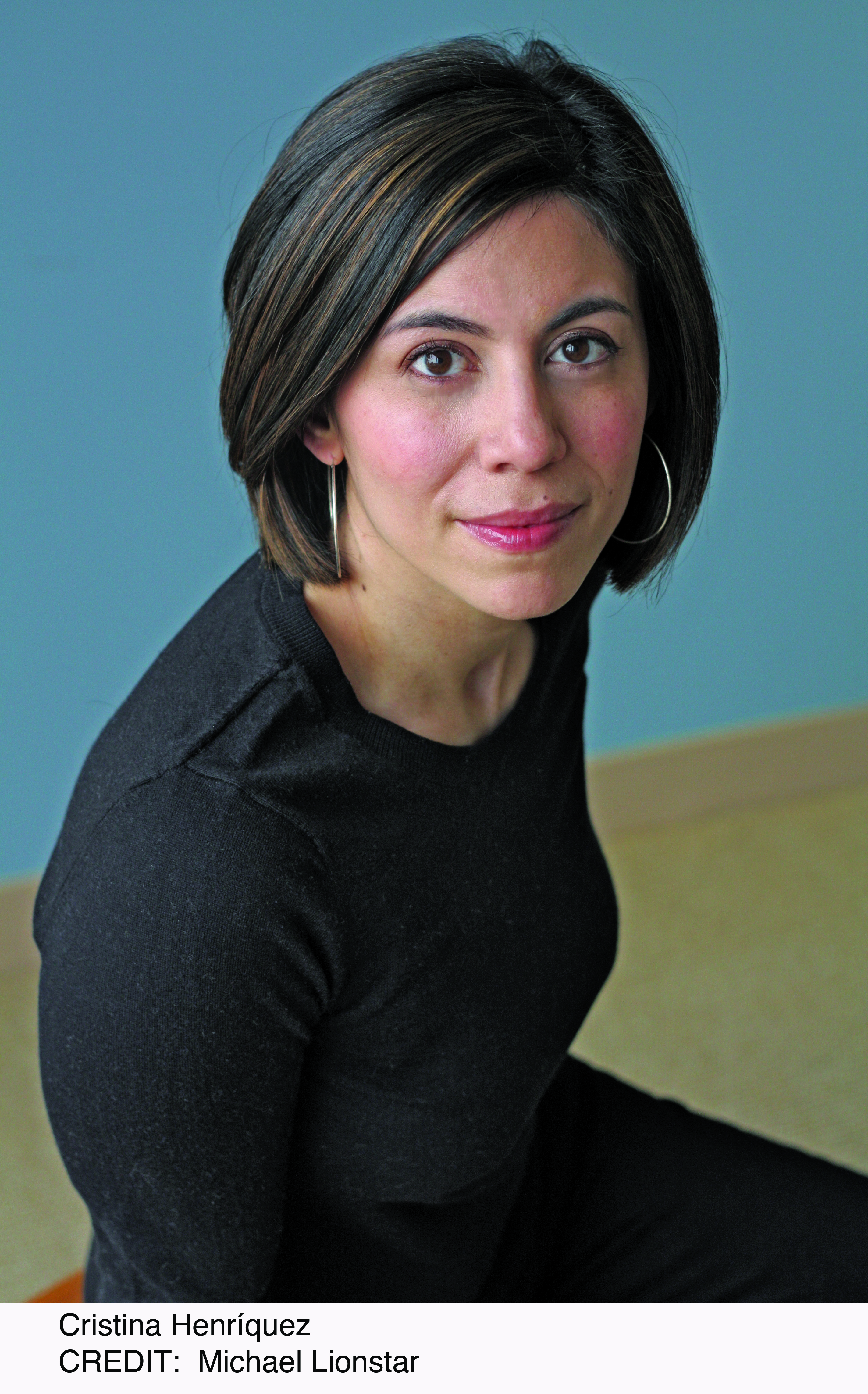
Cristina Henríquez Author photo (c) Michael Lionstar

Cristina Henríquez
Author photo (c) Michael Lionstar

CH: The novel started with a short story told from Mayor’s point-of-view. The first line of that story, which survives in the book, was, “We heard they were from Mexico.” But not long after the story was done, it haunted me — that “we.” Who was the community or group of people behind it? I wanted to find out, so I kept writing, characters and more characters, making up a community as I went along. It took me a long time to figure out the best way to incorporate all those characters, but the point of inception for the book was that story and then spinning it out.

The process itself was slow. It took me five years to write the novel. Lots of wrong turns and misdirection, lots of failed plot threads. But you just keep kneading it out, you know? Patiently, patiently. Until you realize that it’s starting to take shape.

How did you go about conducting research for the novel?

CH: I did as little research as I could. Too much research usually puts the brakes on my inventive impulses, so I edge into research cautiously, only going as far as I need to. For this book, the research consisted mostly of looking up colloquialisms, customs, and histories from each of the represented countries. I also relied fairly heavily on my mom, who is a translator for the school district in Delaware, for questions about how the special education system works and how traumatic brain injuries manifest themselves.

photo (95)Most of the characters in The Book of Unknown Americans narrate at least one chapter. Maribel is a notable exception — is that exception meant to underscore her isolation?

CH: I wish I could say yes, but really the only reason I didn’t give Maribel her own chapter was because I was being so rigid about structuring the book. I wanted the narrative to follow a pattern: Alma, Mayor, interstitial narrative, over and over. Which meant that there was space for only one member of each family to contribute to those interstitial chapters. For reasons that I hope are obvious to people after they read the book, for the Riveras, I really wanted that person to be Arturo.

Do you hope that The Book of Unknown Americans will have a political impact?

CH: No. If it does in some positive way, I would be thrilled. But I don’t hope for it. What’s more meaningful to me is if it has a personal impact, if people read it and start to see others around them — especially immigrants — differently, with more empathy.

What’s one question you hope readers take away from the novel?

CH: That’s an interesting one. Maybe: How have we let ourselves become so intolerant?

What’s next on your writing horizon?

CH: I wish I knew! I have some loosely percolating ideas, but nothing firm yet.

My thanks again to Ms. Henríquez for her time and thoughtful answers. You can read more about Cristina Henríquez, and The Book of Unknown Americans, on Ms. Henríquez’s website, www.cristinahenriquez.com. Follow Cristina Henríquez on Twitter: @crishenriquez

Recommended Reading: Cristina Henríquez’s The Book of Unknown Americans

photo (95)As The Book of Unknown Americans* opens,  Alma and Arturo Rivera arrive in Delaware with their daughter, Maribel. The journey was long and uncomfortable, and already they miss their life in Mexico, but what they hope for eclipses all the uncertainty and fear they face: they just want their daughter, injured in an accident, to get well.

They’ve waited for months for Arturo to find work — though in Mexico he worked as a skilled builder, here he works long days in darkness at a mushroom-growing facility — so that Maribel can attend a school that might help her manage the memory loss and personality fluctuations that resulted from her accident.

Some of the first neighbors to welcome them to their new apartment complex are the Toros, a family who fled political upheaval in Panama years before. Mayor is about Maribel’s age; he’s shy, bullied at school, and woefully unskilled at soccer compared to his older brother. He feels caught between two worlds: “I felt more American than anything, but even that was up for debate according to the kids at school [. . . ] The truth was that I didn’t know which I was. I wasn’t allowed to claim the thing I felt and I didn’t feel the thing I was supposed to claim” (78). Mayor falls immediately for Maribel’s beauty, but as the weeks go on they develop a deep friendship.

While Maribel is at school and Arturo is at work, Alma navigates life in a strange country, helped along by Mayor’s mother Celia. After a run-in with a menacing teenager soon after their arrival, Alma is extremely protective of Maribel.  Her protectiveness and Mayor’s growing affection for Maribel soon lead to friction between the two families, and, eventually, tragic consequences.

The Book of Unknown Americans is about love: not just romantic love, but the love of parents for their children. It’s not a Romeo and Juliet story, and I appreciated the depth of the narrative that’s due to Alma and Mayor’s alternating narration.

The novel is also an evocative rendering of the multiplicity of immigrant experiences. In deftly composed vignettes, Ms. Henríquez introduces us to many of the residents of the Toros’ and Riveras’ apartment complex, men and women from all over Latin America, men and women with sad and funny and terrible stories. These small sections, told in characters’ own voices, feature some of the best writing in the novel; I wanted to know more about these characters. The brevity of these sections is deliberate, of course; even these sketches are more than we usually read about the “unknown Americans” of the novel’s title. As Micho Alvarez puts it,

When I walk down the street, I don’t want people to look at me and see a criminal or someone that they can spit on or beat up. I want them to see a guy who has just as much right to be here as they do, or a guy who works hard, or a guy who loves his family, or a guy who’s just trying to do the right things. [. . . ] We’re the unknown Americans, the ones no one even wants to know, because they’ve been told they’re supposed to be scared of us and because maybe if they did take the time to get to know us, they might realizes that we’re not that bad, maybe even that we’re a lot like them. And who would they hate then? (237)

The Book of Unknown Americans is a nuanced, deeply affecting examination of what it means to live in America, and what it means to be American. Highly recommended reading.

Tomorrow: An interview with Cristina Henríquez, author of The Book of Unknown Americans

* I received a review copy of this book from the publisher in exchange for an honest review


An Interview with Kimberly Elkins, Author of What Is Visible

On Monday I reviewed Kimberly Elkins’s fascinating debut novel, What Is Visible. Ms. Elkins graciously agreed to be interviewed via email. 

How would you describe the inception of What Is Visible? I understand that at one point it was a shorter piece; how did you go about expanding it into a novel?

Kimberly Elkins Author photo (c) Sarah Shatz

Kimberly Elkins
Author photo (c) Sarah Shatz

KE: Originally, I wrote the eponymous short story after first reading about, and being dazzled by, Laura Bridgman in the New Yorker in 2001. I couldn’t believe I’d never heard about this remarkable woman who learned language fifty years before Helen Keller, and was considered the nineteenth-century’s most famous woman after Queen Victoria. The story was published shortly thereafter in the Atlantic.

To expand the short piece into a novel, I first had to do approximately two years of research, not only on Laura, but also on the other major real-life figures in her life. The story had taken place on one of the most important days of her life, when she was twenty, but the novel turned out to span almost fifty years, as I tried to fit together the pieces of both her life and how and why she had been, in effect, erased from history. The short story basically had to be deconstructed, with bits of it appearing in appropriate places throughout the novel.

Given the two recent biographies of Laura, and the wealth of archival material related to the characters in What Is Visible, how did you choose which episodes in Laura’s life to feature in the novel?

photo (92)KE: Actually, the two biographies came out almost fifteen years ago; however, you’re absolutely correct in that there was an enormous amount of archival material, especially letters, journals, and newspaper and magazine articles. I chose to bookend the novel with Laura’s historic meeting with the nine-year-old Helen Keller in the last year of Laura’s life, and then to skip to her at age twelve, after she’d been at Perkins for five years. That was the year Charles Dickens visited her, and was astounded by her progress, devoting an entire chapter of his book, American Notes, to Laura. Subsequently, her fame then exploded worldwide. As for the rest of the novel, I wrote about not only the milestones in Laura’s life, but also those of the other three narrators–Dr. Howe, her mentor and founder of Perkins: his wife, Julia Ward Howe, the famous poet and abolitionist who penned “The Battle Hymn of the Republic”; and Sarah Wight, Laura’s beloved last teacher.

What surprised you most as you were conducting research for What Is Visible?

KE: The biggest surprise was always Laura: her fierce intelligence, her unwillingness to bend to the rules of society and convention, even as she desperately sought human connection. Her letters and journals display a large and imaginative vocabulary, and she was even learning French and Latin when she was tragically parted from her last teacher.

What’s one question you hope readers will ask themselves after they’ve finished the novel?

KE: Could I survive and thrive as Laura Bridgman did with only one sense? My hope is that the novel amply shows that one can live a rich and full life with even the severest of handicaps.

What’s next on your writing horizon?

KE: I’m working on another historical novel, the true-life story of two 19th-century sisters who were famous mediums as children, with one going on to found the Spiritualism movement, while the other attempted to debunk all that they had accomplished together. My other project is a wildly divergent take on the classic memoir, in which I revisit events from my life, including violent ones, and write the truth sandwiched between the best- and worst-case scenarios I can imagine, with the reader not being told which narrative is the true one. I think everyone would like the chance to revise their lives, and consider not only the paths left untrod, but also the deep, dark woods or the sunlit meadows through which those paths might have traveled.

My thanks again to Ms. Elkins for her time and thoughtful answers. You can read more about Ms. Elkins, and What Is Visible, on Ms. Elkins’s website, www.kimberlyelkins.com.

Bostonians: You can hear Kimberly Elkins read from What Is Visible at Harvard Bookstore on Tuesday, July 8 at 7:30. 

Robert Graves’s “Recalling War”

Like his friend Siegfried Sassoon, Robert Graves survived the war. He went on to become a prolific writer, penning over one hundred books and becoming especially famous for his poetry, translations of classical texts, work on poetic inspiration (The White Goddess) and his novel I, Claudius.  (Seriously, Dear Readers, if you haven’t seen the miniseries based on the novel, go get it. It’s made for binge-watching, and features a plethora of stars: Derek Jacobi, Siân Phillips, Brian Blessed, John Hurt, and — my personal favorite — Patrick Stewart. With hair.)

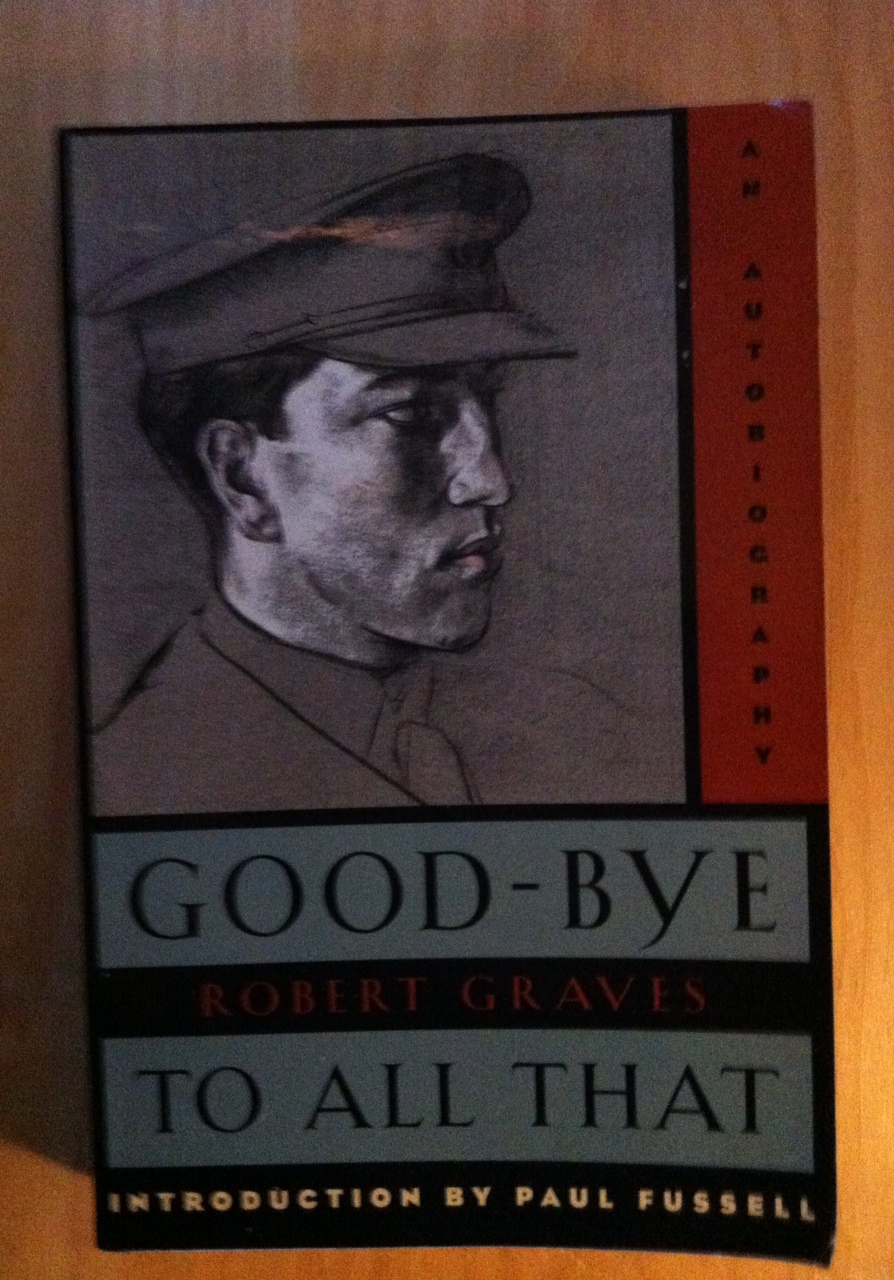
photo (93)Graves is also justly famous for his only autobiography, 1929’s Goodbye to All That, considered by many to be the best memoir that came out of the war. It is, by turns, wry (, dramatic, darkly funny, and elegiac. It’s absolutely worth reading, and I heartily commend it to your attention.

Graves’s poetry about the war is not as well-known as Sassoon’s or Owen’s, but it too rings with the depth of feeling only born out of horrendous experience. In “Recalling War,” Graves borrows Homer’s knack for comparing the brutal business of war to those events common to homely life; in Graves’s poem, the speaker remembers the guns “Nibbling the walls of factory and church / Like a child, piecrust; felling groves of trees / Like a child, dandelions with a switch!” In these lines, Graves reminds us that nothing — church, work, nature itself — remains untouched by war.

“Recalling War” finds the speaker looking back twenty years after the war’s end, wondering, “What, then, was war?” He answers himself,

No mere discord of flags
But an infection of the common sky
That sagged ominously upon the earth
Even when the season was the airiest May.
Down pressed the sky, and we, oppressed, thrust out
Boastful tongue, clenched fist and valiant yard.
Natural infirmities were out of mode,
For Death was young again; patron alone
Of healthy dying, premature fate-spasm.

and later in the poem,

War was return of earth to ugly earth,
War was foundering of sublimities,
Extinction of each happy art and faith
By which the world has still kept head in air,
Protesting logic or protesting love,
Until the unendurable moment struck –
The inward scream, the duty to run mad.

It is a bitter remembrance, and Graves offers us no comfort in the poem’s final lines:

Down in a row the brave tin-soldiers fall:
A sight to be recalled in elder days
When learnedly the future we devote
To yet more boastful visions of despair.

You can read the full poem at The Legacy Project.

Recommended Reading: What Is Visible, by Kimberly Elkins

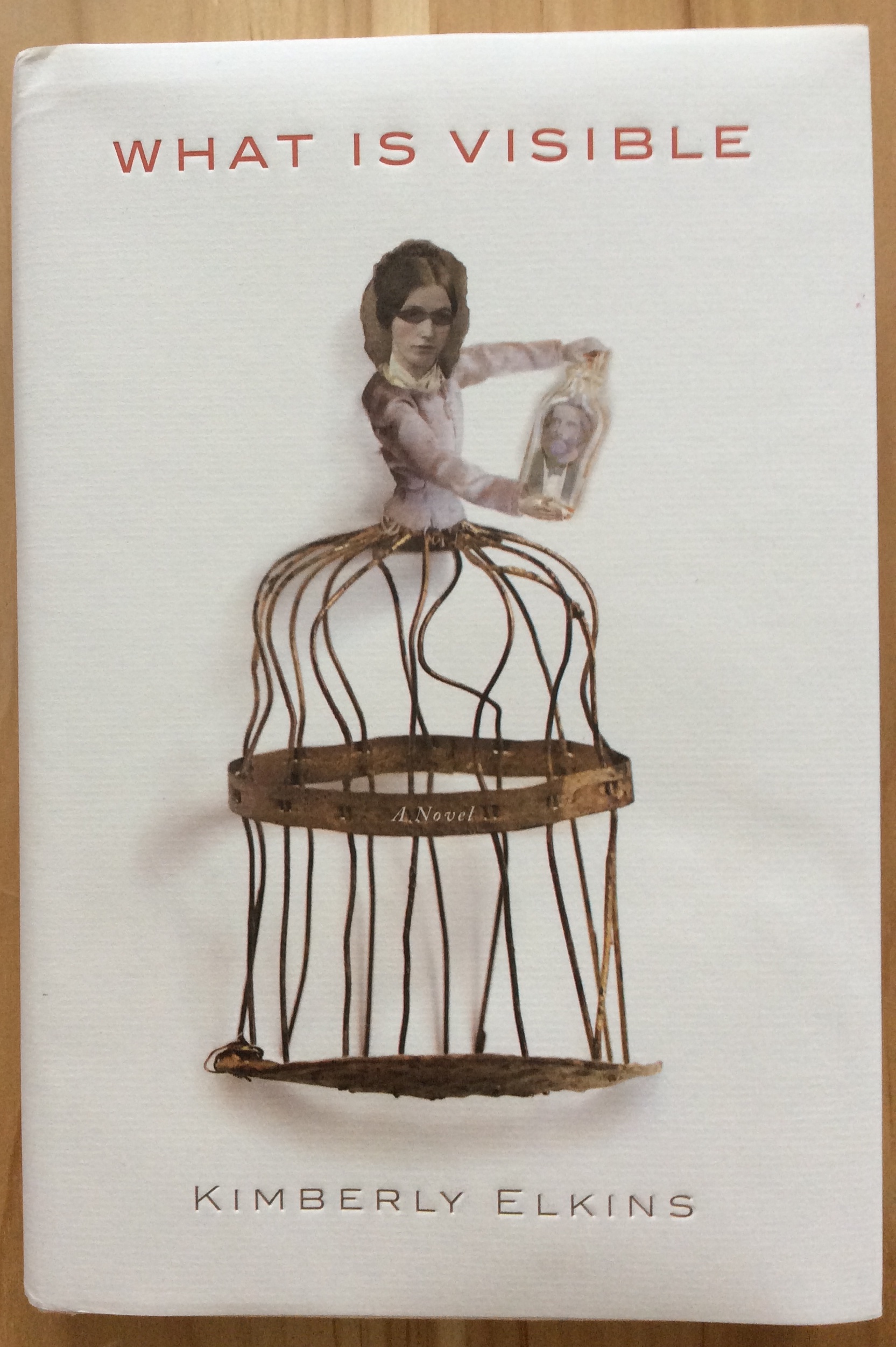
photo (92)What Is Visible*, Kimberly Elkins’s debut novel, begins with a meeting. Helen Keller, just eight years old, is introduced to the woman whose fame was legendary in the nineteenth century, a woman whose incredible story will be eclipsed by Helen Keller, fifty years her junior. The woman’s name is Laura Bridgman, and she’s the subject of What Is Visible, a fascinating novel.

At the age of two, Laura Bridgman lost not only her sight and hearing, but also her senses of taste and smell to scarlet fever. Brought to the Perkins Institute in Boston, she becomes a star pupil, learning to read and write, communicating through hand spelling. Crowds came to see her, and dignitaries requested private meetings; Charles Dickens wrote a chapter about her in American Notes. At one point, it’s said, she and Queen Victoria were the most famous women in the world.

What Is Visible traces the story of Laura’s life, interspersing her narration with that of the people closest to her; they fill in the gaps with parts of the story Laura could not know. The novel includes a striking number of nineteenth-century celebrity cameos, from Henry Wadsworth Longfellow to John Brown to Dickens and (in absentia) Emily Dickinson.

What’s more remarkable, however, is Ms. Elkins’s skill in bringing Laura’s world — a world dominated by the sense of touch — to brilliant life. In her rendering, Laura is immensely perceptive and inquisitive; she could tell if someone enters a room by the change in the air currents, and loves the textures of fabrics especially. She’s also very sensitive, and devoted to her teachers, in particular Sarah Wight and Dr. Samuel Howe, the head of the Perkins Institute (then in South Boston, now in Watertown). Until his marriage, he and Laura act more like father and daughter than teacher and pupil; when he meets the lovely Julia Ward, however, everything changes.

The Howes’ marriage is the first great disruption of Laura’s life that we read about in the novel, though others follow. Julia Ward Howe — yes, the poet behind “The Battle Hymn of the Republic” — is the novel’s second fixation. Prone to depression, sometimes repulsed by her husband’s pupils, chafing under her husband’s edict that she cease to write and publish, and very uncomfortable with Laura’s attentions, Julia is often unsympathetic, but endlessly interesting. Laura and Julia’s dynamic relationship is expertly rendered here.

The brilliance of What Is Visible lies in the way it explore’s Laura’s inner world, the vast richness of her emotions, opinions, and perceptions — and the way it explores the outside world’s fascination with her, a fascination that reveals a determination to view her as a social experiment. Laura’s education, her religion, even her body are subjects of controversy and concern. Dr. Howe, who helped her to acquire language, is also the person who denies her glass eyes, a Bible, a lock on her door, all in the name of her best interests, her moral upbringing. Laura’s fits of temper are completely understandable given the lack of control she’s awarded over her own life; her aching desire to be loved, to be seen, is heart-wrenching.

It’s astounding that such a witty, intelligent, accomplished figure has virtually disappeared from our collective memory. Here’s hoping What Is Visible will bring Laura Bridgman back to the spotlight she deserves.

Wednesday: An interview with Kimberly Elkins, author of What Is Visible

*I received a review copy of this novel from the publisher in exchange for an honest review.


Readers interested in nonfiction accounts of Laura Bridgman’s life have two recent (historically speaking) biographies to choose from: The Imprisoned Guest, by Elisabeth Gitter, and The Education of Laura Bridgman, by Ernest Freeberg.

What Is Visible is published by Twelve, an imprint of Hachette Book Group, which, if you haven’t heard, is having a, shall we say, disagreement with Amazon at the moment. If you’re considering buying What Is Visible, I highly recommend shopping your local independent bookstore.

An Interview with Kate Racculia, Author of Bellweather Rhapsody

On Wednesday, I reviewed Kate Racculia’s exuberant and delightful new novel, Bellweather Rhapsody. Ms. Racculia graciously agreed to be interviewed via email. 

How would you describe the inception of Bellweather Rhapsody? What was the writing process like?
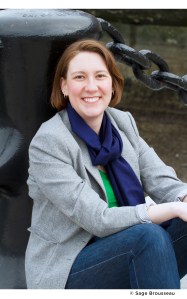
Kate Racculia Author photo (c) Sage Brousseau

Kate Racculia
Author photo (c) Sage Brousseau

KR: I started writing Bellweather Rhapsody the summer my first novel, a coming-of-age-in-a-small-town story, was published, and I knew I wanted my second novel to be different: a mystery, one that paid homage to two of my favorite books of all time, Ellen Raskin’s The Westing Game and Agatha Christie’s And Then There Were None. There would be multiple twisty plots and multiple characters, and they’d all be trapped together in a pressure cooker situation.

The idea for Bellweather’s particular pressure cooker—Statewide, a weekend conference for teenage musicians, held in an enormous, decrepit hotel—was born in the late nineties, when I, a teenage musician, attended the New York State School Music Association (NYSSMA) All-State conference, which was held at the Concord, a once grand, then crumbling hotel that was surely haunted. Even at the age of seventeen, I remember thinking: this would make an incredible setting for a murder mystery.

The writing process was very different from my first novel: I wrote the majority of the (extremely messy) first draft very quickly, and the novel began to truly take shape during a methodical revision process. I spent a lot of time in the Bellweather, getting to know these characters–enough time to solve their mysteries, as it were.

Bellweather Rhapsody is full of delightful (and never gimmicky) 90s touches. What were your favorite books and albums in the late 90s?

Bellweather RhapsodyKR: I was completely obsessed with the Beatles in the 90s; the third CD I ever bought was Sgt. Pepper’s Lonely Hearts Club Band, and that sealed my fate. But if we’re talking 90s culture that was actually of the 90s, I listened to a lot of Barenaked Ladies and REM, Fiona Apple and The Cranberries, Garbage and Radiohead, and I read every Michael Crichton and Stephen King book I could get my hands on.

Like Rabbit, you were a teenage bassoonist, and according to your website, your bassoon was called Nigel. Did you and Nigel get together for a reunion tour while you were writing Bellweather Rhapsody? What kinds of research did you do for the novel?

KR: Alas, we didn’t! Nigel and I haven’t seen each other since June 1998, when I left him behind in the band room; he belonged to my high school. I bought a bassoon of my own (partially with graduation money) and played it half-heartedly during my freshman year of college, but that bassoon only ever felt like a rebound. It is, however, still in my closet, and one day I know I’m going to pick it up again.

As far as research goes, I read books on psychopaths and child prodigies, consulted with some experts (like my best friend’s dad) about which motorcycles were the coolest; went to a few performances of the Boston Symphony Orchestra and a rehearsal of the Boston Youth Symphony Orchestra; and, because I believe in experiential research (i.e., doing the same things my characters will), I went to a firing range and shot a .38 special.

If Bellweather Rhapsody were a movie, what would the track over the closing credits be?

KR: I love this question so much, I’m going to answer it twice. I’d go with either David Bowie’s “Rock ‘n’ Roll Suicide” (Bowie plays a key role in the book) or The New Pornographers’ “Moves,” which has a totally boss string intro. It depends on how you’d like your Bellweather movie to end: pensive and full of feelings, or with a driving beat?

What’s next on your writing horizon?

KR: I’m working on a big sprawling novel about diners and sea monsters and missing kids, stage mothers and office drones, tattooed ladies and rollerskating drag queens—and time travel—that’s most of all about family: the ones we’re born into, and the ones we find in the world.

My thanks again to Ms. Racculia for her time and thoughtful answers. You can read more about Ms. Racculia, and Bellweather Rhapsody, on Ms. Racculia’s website, www.kateracculia.com. Follow Kate Racculia on Twitter: @kateracculia

Recommended Reading: All the Light We Cannot See, by Anthony Doerr

photo (91)Anthony Doerr’s All the Light We Cannot See* follows two young people, Marie-Laure and Werner, as Europe teeters on the brink of World War II and then falls into the abyss. All the Light We Cannot See is one of the most beautiful books I’ve read all year; Mr. Doerr’s prose is elegant, luminous, and unflinching. Secondary characters are finely rendered and remembered throughout the novel (one of my favorites is a classmate of Werner’s who reminded me of Helen Burns from Jane Eyre); no-one is lost. Every page offers beautiful sentences and lovingly rendered textures of places and things.

Here’s just one passage that I marked for its perfect description:

Hours later, he wakes to see the silhouette of an airplane blot stars as it lurches east. It makes a soft tearing sound as it passes overhead. Then it disappears. The ground concusses a moment later.

A corner of the night sky, beyond a wall of trees, blooms red. In the lurid, flickering light, he sees that the airplane was not alone, that the sky teems with them, a dozen swooping back and forth, racing in all directions, and in a moment of disorientation, he feels that he’s looking not up but down, as though a spotlight has been shined into a wedge of bloodshot water, and the sky has become the sea, and the airplanes are hungry fish, harrying their prey in the dark. (90-91)


Marie-Laure goes blind as a young girl. Her father, who works with locks at Paris’s Museum of Natural History and fashions puzzle boxes for each of Marie-Laure’s birthday, constructs a tiny scale model of their neighborhood so that she can learn to navigate on her own. When the Nazis invade, however, they’re forced to flee Paris for the home of Marie-Laure’s eccentric and reclusive uncle, haunted by what he witnessed during the First World War. In new surroundings and faced with constant fear, Marie-Laure learns to make do — with the Resistance rising around her. 

In Germany, Werner lives in an orphanage with his younger sister, dreading the day when he’ll be old enough to work in the mines that killed his father. By chance, he and Jutta find a broken radio, and Werner fixes it as if by magic. At night they listen surreptitiously, enraptured by what they hear, especially a children’s program in French. Before long, Werner’s radio repair skills are famous in their town, and he wins entry to a school for Hitler Youth — his escape from the mines. But he’s unprepared for the cruelty he finds there, and for what he finds himself doing in the army.

Eventually, but inexorably, Werner and Marie-Laure enter each other’s orbits. Part of All the Light We Cannot See‘s brilliance is its structure, which allows for maximum description (the book was ten years in the making, apparently) and maximum suspense. Scenes from Marie-Laure’s and Werner’s days in the same town — incredibly suspenseful — are suspended between the chapters devoted to exploring their individual adolescences. All the Light We Cannot See is quite long — more than five hundred pages — but it moves with the pace of a much shorter book.

Both Werner and Marie-Laure attempt to bring small works of order to a world that’s gone mad,  Werner working his equations and Marie-Laure counting her steps. Both love to lose themselves in other worlds — in Werner’s case, it’s the world of radio, of those untethered voices shimmering in the air, while Marie-Laure adores Jules Verne, racing her fingers across braille editions of his novels. That the pair prefer imagined worlds is unsurprising given the terrors of their own; it’s their tenacity, their determination to survive, that’s so heartbreaking and wondrous.

*I received a copy of this book from the publisher in exchange for an honest review.

Recommended Reading: Kate Racculia’s Bellweather Rhapsody

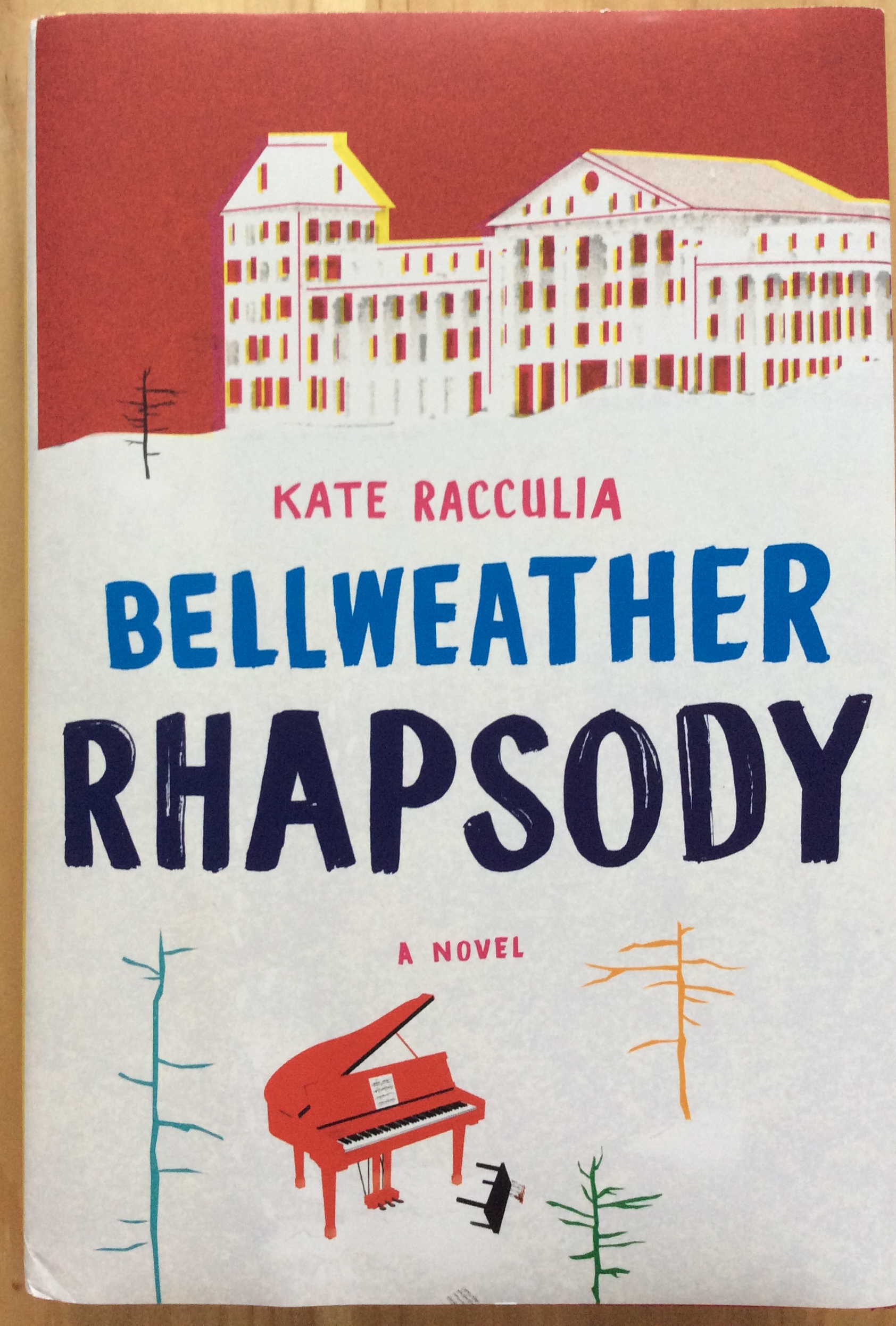
Bellweather RhapsodyIn Bellweather Rhapsody*, her second novel, Kate Racculia conjures up a tale of conductors, students, chaperones, guests, and hotel staff thrown together at a statewide high school music festival — at a very creepy hotel in 1997 upstate New York. Everyone has a secret, no-one’s being completely honest, and there’s a snowstorm coming.

Then a girl goes missing from Room 712 — the same room where a murder-suicide took place fifteen years earlier, and those secrets aren’t safe anymore.

Bellweather Rhapsody is a piquant mixture of genres and tones — mystery, comedy, bildungsroman, thriller — which together form a perfectly seasoned piece of literary fiction. It’s that rare kind of novel that captures not only what it’s like to be a teenager on the verge of adulthood, but also what it’s like to be an adult and wonder if you’re getting it all wrong.

The characters are unforgettable: Rabbit Hatmaker, a shy bassoonist; Alice, his diva-like twin sister; their chaperone Mrs. Wilson, who has a gun and might have used it once; Fisher Brodie, Scottish conductor who once was a piano virtuoso and now comes across as rather mad; Minnie, a young woman still reeling from the traumatic events she witnessed years before, comforted now only by her deaf dog and horror movies; Mr. Hastings, a genteel concierge who remembers the Bellweather in her glory days; and Viola Fabian, a Lady Macbeth-style sociopath — with a daughter.

As its title suggests, Bellweather Rhapsody is about not only the characters gathered under the hotel’s roof, but also about music itself, and its strange power. Ms. Racculia clearly loves music and understands it. Her descriptions of the experience of music — hearing it, playing it — are thrilling in their accuracy. If you’ve ever lost your breath listening to Holst or Beethoven or Debussy, this book is for you. And if you haven’t, read this book, and you will.

(Bonus: Delightful and sly 90s references!)

Friday: An interview with Kate Racculia, author of Bellweather Rhapsody

*I received a copy of this book from the publisher in exchange for an honest review.

Siegfried Sassoon’s “The General”

Siegfried Sassoon survived World War I and was one of its most famous poets; he was a mentor to Wilfred Owen and friend to Robert Graves (who I’ll be writing about in another post). Sassoon is one of the characters in Pat Barker’s Regeneration, the first in a remarkable trilogy of books about the war (and yes, I’ll be writing a Pat Barker post too).

Sassoon was an officer in the Royal Welsh Fusiliers, beloved by his men and given the nickname “Mad Jack” for his daring exploits, which often amounted to near-suicide missions.

In 1917, Sassoon sent a three-paragraph letter (which you can read in full here) to his commanding officer and several newspapers (it was read later in Parliament) protesting the war. Here’s the second paragraph:

I have seen and endured the sufferings of the troops and I can no longer be a party to prolong these sufferings for ends which I believe to be evil and unjust. I am not protesting against the conduct of the war, but against the political errors and insincerities for which the fighting men are being sacrificed.

Though he could have been court-martialed for sending the letter, Sassoon was instead declared unfit for duty — thanks to the offices of his friend Robert Graves — and sent to convalesce at Craiglockhart hospital. (This “convalescence” is the subject of Regeneration.)

In 1918, Sassoon published Counter-Attack And Other Poems, a slim volume that includes some of his best work. Like Owen and Rosenberg, Sassoon writes of the grim and grisly sights of war, in poems whose immediacy is driven home by the use of dialogue. He reserves special contempt for those who do not fight themselves — the press, women, generals, even himself, haunted by ghosts in the poem “Sick Leave”:

In bitter safety I awake, unfriended;
And while the dawn begins with slashing rain
I think of the Battalion in the mud.
“When are you going out to them again?
Are they not still your brothers through our blood?”

Sassoon decided to return to the front to fight in solidarity with his men, to do his best to protect them from the enemy — even if that enemy was the man supposedly leading them all. Here’s the bitter, nearly-funny poem “The General”:

“Good morning, good morning,” the general said,
When we met him last week on our way to the line.
Now the soldiers he smiled at are most of ’em dead,
And we’re cursing his staff for incompetent swine.
“He’s a cheery old card,” muttered Harry to Jack
As they slogged up to Arras with rifle and pack.

But he did for them both by his plan of attack.


You can read the full text of Counter-Attack and Other Poems at Project Gutenberg or Bartleby.