“A little this side of the snow / And that side of the haze”

It is November, and high time for an Emily Dickinson poem.

Or two. I’m unpredictable.

[IN A LIBRARY]

A precious, mouldering pleasure ’tis
To meet an antique book,
In just the dress his century wore;
A privilege, I think,

His venerable hand to take,
And warming in our own,
A passage back, or two, to make
To times when he was young.

His quaint opinions to inspect,
His knowledge to unfold
On what concerns our mutual mind,
The literature of old;

What interested scholars most,
What competitions ran
When Plato was a certainty.
And Sophocles a man;

When Sappho was a living girl,
And Beatrice wore
The gown that Dante deified.
Facts, centuries before,

He traverses familiar,
As one should come to town
And tell you all your dreams were true;
He lived where dreams were sown.

His presence is enchantment,
You beg him not to go;
Old volumes shake their vellum heads
And tantalize, just so.

[NOVEMBER]

Besides the autumn poets sing,
A few prosaic days
A little this side of the snow
And that side of the haze.

A few incisive mornings,
A few ascetic eyes, —
Gone Mr. Bryant’s golden-rod,
And Mr. Thomson’s sheaves.

Still is the bustle in the brook,
Sealed are the spicy valves;
Mesmeric fingers softly touch
The eyes of many elves.

Perhaps a squirrel may remain,
My sentiments to share.
Grant me, O Lord, a sunny mind,
Thy windy will to bear!

“Who now shall refill the cup for me?”

Today is Veterans Day in the United States, and Armistice Day and Remembrance Day in other parts of the world; we honor military veterans on this date because the armistice that ended World War I went into effect in the eleventh hour of the eleventh day of the eleventh month.

I thought I’d mark the day by discussing a poem by one of the war poets; as regular readers know, the literature of the Great War is one of my particular areas of interest, though I’ve been delayed  when it comes to my World War I Reading List post (I should have it in time for the centenary of the end of the war . . . ). However, since I’ve talked about Sassoon, Owen, Graves, Rosenberg, and Blunden already this year, I thought I’d detour (though that’s a misleading word) into the work of one of their contemporaries.

"Tolkien 1916". Licensed under Public domain via Wikimedia Commons - http://commons.wikimedia.org/wiki/File:Tolkien_1916.jpg#mediaviewer/File:Tolkien_1916.jpg

“Tolkien 1916”. Licensed under Public domain via Wikimedia Commons – http://commons.wikimedia.org/wiki/File:Tolkien_1916.jpg#mediaviewer/File:Tolkien_1916.jpg

Typically pictured as a twinkly-eyed, pipe-smoking scholar,  J.R.R. Tolkien is not often remembered as a veteran, though readers of The Lord of the Rings, The Silmarillion, and The Hobbit may know that he served during the First World War; he fought in the Battle of the Somme. Most of his comrades were killed after he was sent back to England to recover from an illness; he spent the rest of the war weak and ill, though he served in various garrisons on the home front.

In the preface to the second edition of The Lord of the Rings, Tolkien wrote, contradicting those who supposed the work was an allegory for the Second World War, that the book was not an allegory, and that in any case the war that shaped him first began in 1914: “By 1918 all but one of my close friends were dead.” In 1918 Tolkien was twenty-six.

Here’s a link to Tolkien reading “Namárië,” or Galadriel’s Lament, the poem of the week in honor of Tolkien and all other veterans. He reads the poem in Elvish (Quenya, for those keeping score), and you can read the English version below the video.

If you’d like to read more about Tolkien’s experiences during the First World War and their influence on his writing, reliable sources recommend John Garth’s Tolkien and the Great War: The Threshold of Middle-earth.

In Memoriam: Galway Kinnell

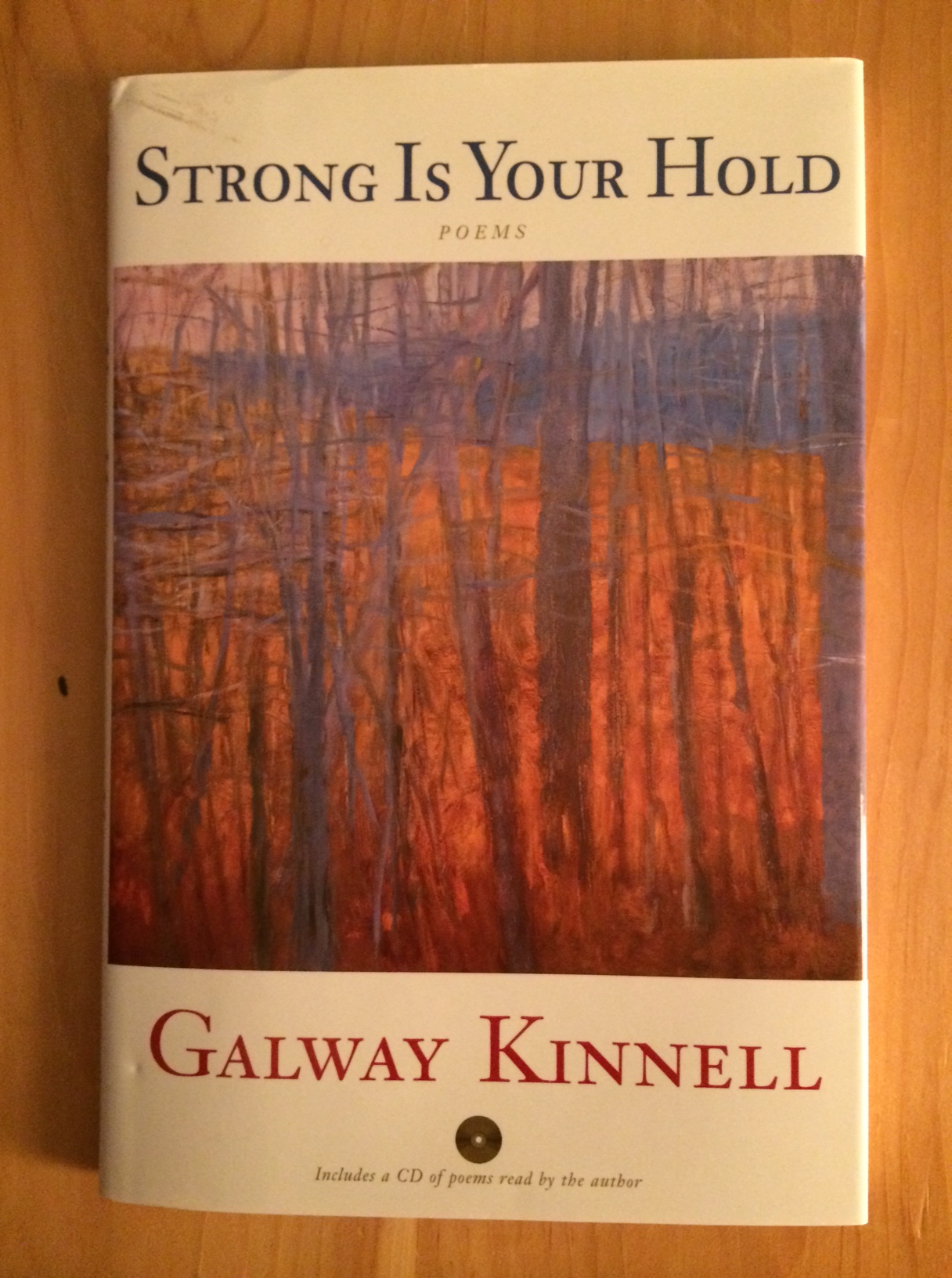
Strong Is Your HoldPoet Galway Kinnell died last week, and so this weekend, I took Strong Is Your Hold, his last collection, off the shelf and read through it.

It’s beautiful: direct and yet tender, unflinching in the face of death, and very, very human, encompassing both the ugly and the transcendently lovely. He wrote a musical, welcoming free verse that is incredibly appealing.

If you’ve enjoyed the perennial favorite “After Making Love We Hear Footsteps,” or “The Bear,” I highly recommend you pick up Strong is Your Hold. Here’s a link to “Why Regret?,” the last poem in the collection, to give you a sense of its tone.

My favorite poems in the book were  the  tender poems about his first wife, Ines, and their children, as well as three elegies for his friends. I was struck by how easily I cried reading them; I love poetry, but it doesn’t often provoke me to tears. The volume also includes “When the Towers Fell,” a long poem about September 11th, which I think is the best poem I’ve read about the tragedy.

The New York Times’s obituary quotes Galway Kinnell on poetry: “To me,” he said, “poetry is somebody standing up, so to speak, and saying, with as little concealment as possible, what it is for him or her to be on earth at this moment.”

The person best suited to write an elegy for Galway Kinnell is, of course, Galway Kinnell, but while we wait for someone else to try her hand, here are the lines from Walt Whitman from which Kinnell took his title:

Tenderly—be not impatient,
(Strong is your hold O mortal flesh
Strong is your hold O love.)

In Memoriam: Carolyn Kizer

Carolyn Kizer, who won the Pulitzer Prize nearly thirty years ago, and who was one of the most respected American poets, died last week. As is too often the case, I do not know her work as well as I ought to, but I’ll be taking the time this week to read some of her poems; perhaps you will too?

I commend to you her utterly charming poem “A Child’s Guide to Central Ohio” and the fiery yet funny “Pro Femina.” Her final collection of poems appeared in 2001–Cool, Calm, and Collected: Poems 1960-2000. 

If you have a favorite Carolyn Kizer poem, please tell me about it in the comments section!

On Meditation and Poetry and Neil Fischer’s [As if the moon could haul through you]

CarolynOliver_MountAuburnCemetery_October2014I’ve been thinking about mindfulness lately, which is, I realize, sort of ridiculous; instead of thinking about mindfulness, I should just be mindful, right?

I do try, but then there’s always something in the back of my mind– a project for a client, how much Christmas gift-planning I have left (hey, I start early but my Decembers are very relaxed), books to read, reviews to write, wondering if my son will ever outgrow the vegetarian-except-for-bacon-phase, wondering what color I’d paint my front door if I owned a house with paintable front door (purple, but what shade?), how often I should be checking to see if Leonard Cohen is going on tour again,  which houseplant I’ve brought closest to death this week, how much I wish Parks & Rec season 7 was on right now . . . and so on.

I have a few friends who practice meditation,and they seem calmer and better adjusted than I feel, but every time I think about getting a meditation app or reading a book about how to meditate, I’m distracted by something (often a small something who likes to wear three shirts at once, demands very specific, non-findable episodes of Super Why, and recently expressed a need for a “poem-book,” thereby bringing his mother to tears).

Which is all a long way of saying that my one small step toward meditation is reading poetry. Sometimes—most of the time—I can’t read a full collection, but one poem? I can do that.

So this week I’ve been reading and re-reading Neil Fischer’s [As if the moon could haul through you], which is gorgeous, and is about clearing the mind, even if it fills the reader’s with heady images (“the purl of south-bending river”—I swooned, almost).

“Please take / care of me”: Henri Cole’s “Dandelions (II)”

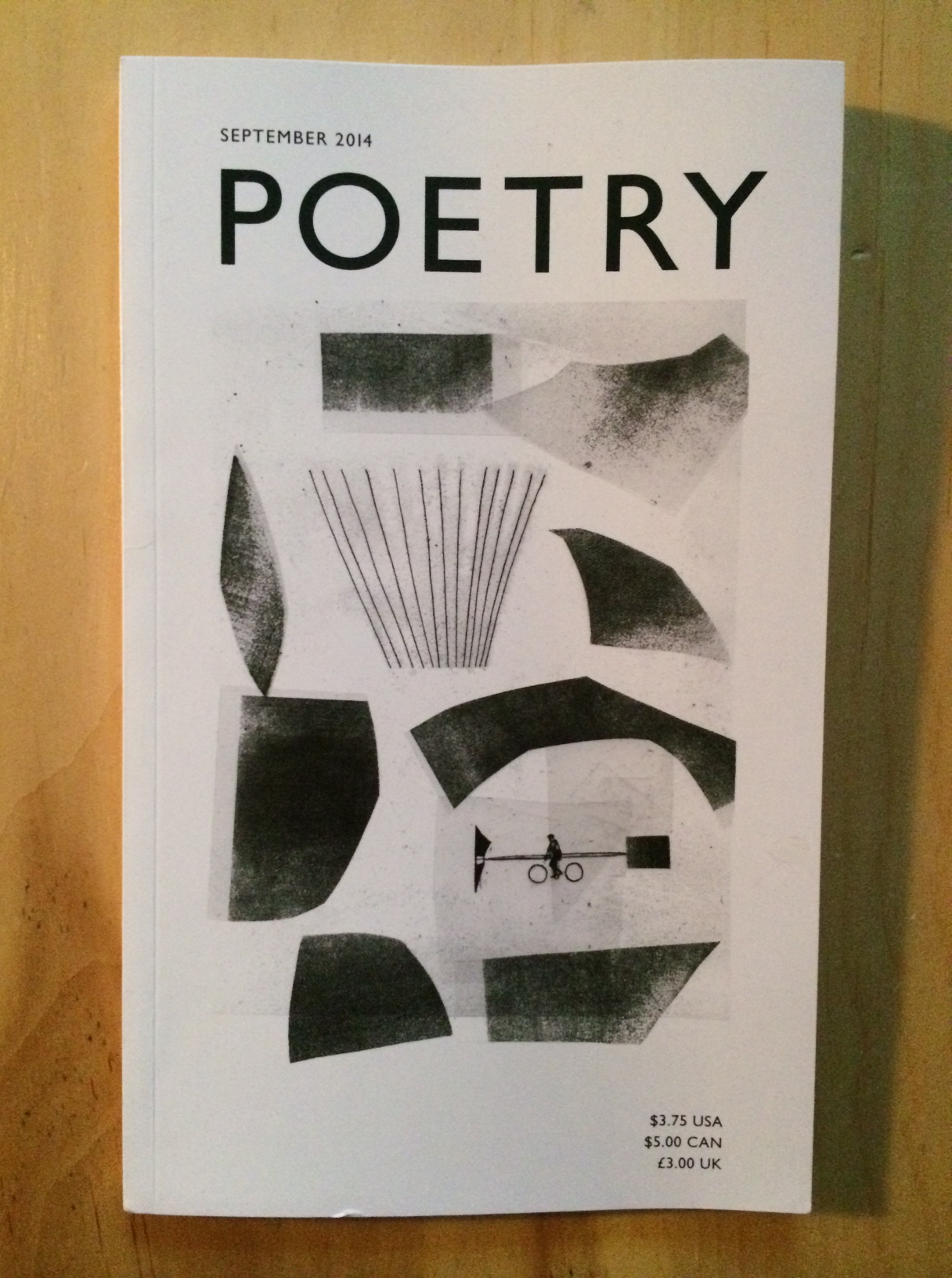
photo 1 (23)Two of the best presents I’ve ever gotten myself are subscriptions: one to the New York Review of Books (this takedown of Jeff Koons makes my heart sing), and one to Poetry.

It just so happens that this month’s issue of Poetry includes poems by a couple of my favorite poets, one of whom is Henri Cole. I’m declaring his poem “Dandelions (II)” the poem of the week, partly because it’s excellent and partly because it wrestles with questions I’ve been thinking about quite a bit this week, thanks to an interesting article in The Atlantic and Katy Butler’s book Knocking on Heaven’s Door (review to come).  From what do we derive value and pleasure in life, and how do we weigh those values and pleasures as we become old or sick? How can we best care for those who cannot care for themselves? How do we deal with endings?

photo 2 (20)On a related note, I just finished reading Louise Glück’s new collection, Faithful and Virtuous Night. It’s stunning, and I highly recommend it.


Recommended Reading: Entries, by Wendell Berry

EntriesI find myself rushed this week, Dear Readers, so this post will not be as long as it ought to be given its subject: Wendell Berry.

Mr. Berry is a noted essayist, novelist, poet, and environmentalist; he is particularly concerned with the loss of small farms in America. He practices what he preaches, living and working on his own farm in Kentucky.

Entries is the first book of his that I’ve ever picked up; I wish I’d come across it sooner, because the poems in it are wonderful. They are human and humble, agile and grounded. Though I admired all the poems, and the poet’s fine sense of our relationship to nature, I particularly loved a poem called “The Wild Rose,” which is a tribute to his wife, and In Extremis, a series of poems about his father’s illness and death. If you’d like to get a sense of Mr. Berry’s style, the Poetry Foundation has links to quite a few poems on this page.

I highly recommend Entries; I’ll be on the lookout for more books by Wendell Berry. If you have a favorite book or poem, please let me know what it is!

“I passed through, I should have paused”: “In the Corridor” from Saksia Hamilton’s Corridor

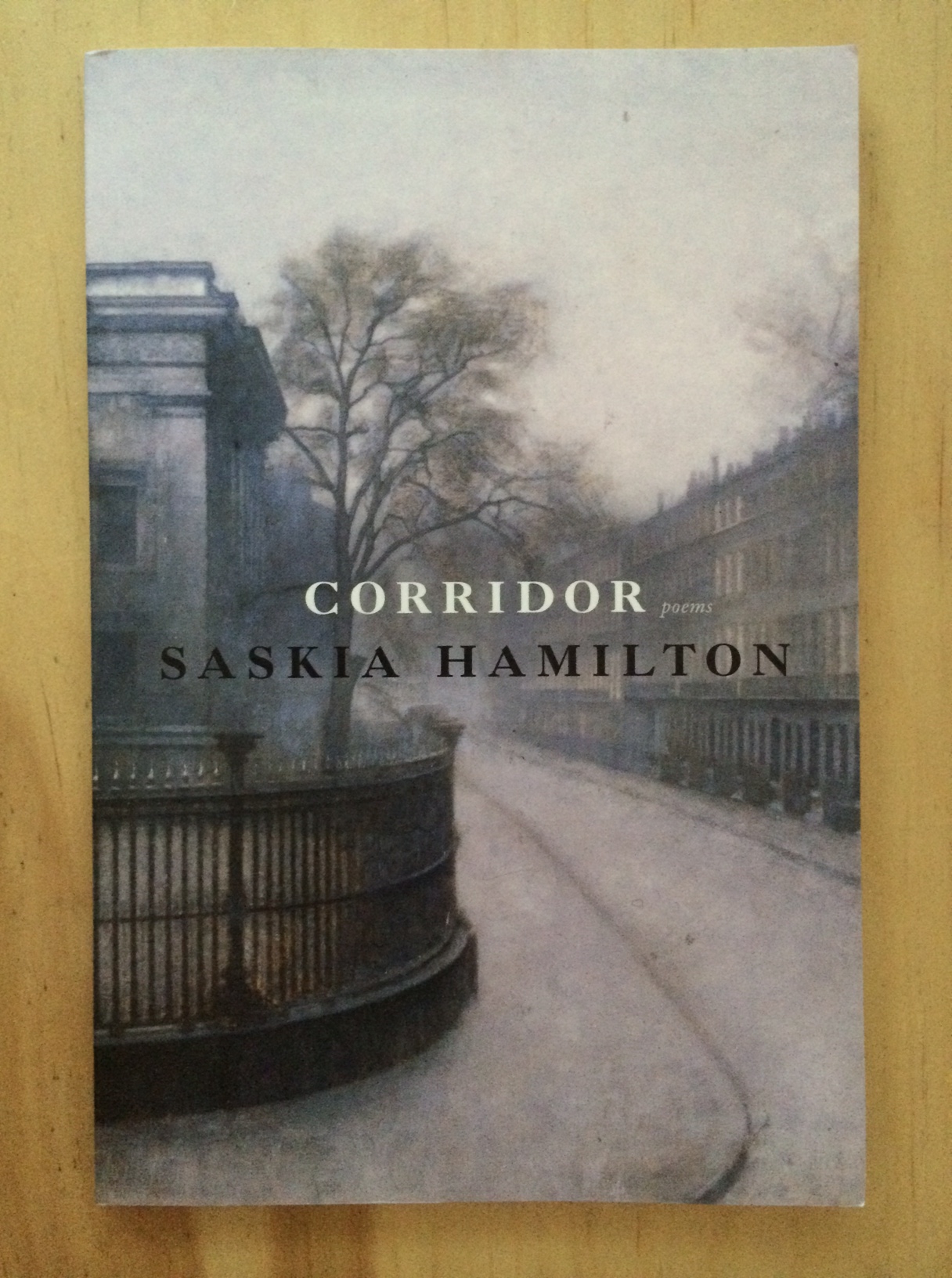
CorridorSaskia Hamilton’s Corridor* was one of this year’s more challenging reads for me. Ms. Hamilton’s poems carefully shaped and almost spare in style, but their content is so dense that I’d often read a poem three or four times before I felt I was beginning to understand it. This isn’t a criticism, necessarily; I read poetry in part because I like to be asked to use the mental flexibility and creativity at my disposal. Ms. Hamilton’s poems require quite a bit of both.

Corridor‘s poems are observant, almost painterly. Ms. Hamilton offers us carefully-described scenes in nature and in rooms, but the effect of her lines is to make us feel as if we’re definitely in a place, but not of it; we are passing through. This emphasis on transience applies not only to places, but also to objects and books (there’s a wonderful poem that refers to Milton’s Satan in Paradise Lost). Throughout the collection, I found the interplay of intimacy and dispassionate interest fascinating.

If you’d like to sample one of Ms. Hamilton’s poems, you can read “In the Corridor” here. Corridor is a collection that rewards the effort required to read it, and I’m pleased to recommend it.

*I received a copy of this book from the publisher for review purposes, which did not affect the content of my review.

“Stay, I said / to the cut flowers”: Jane Hirshfield’s “The Promise” from Come, Thief

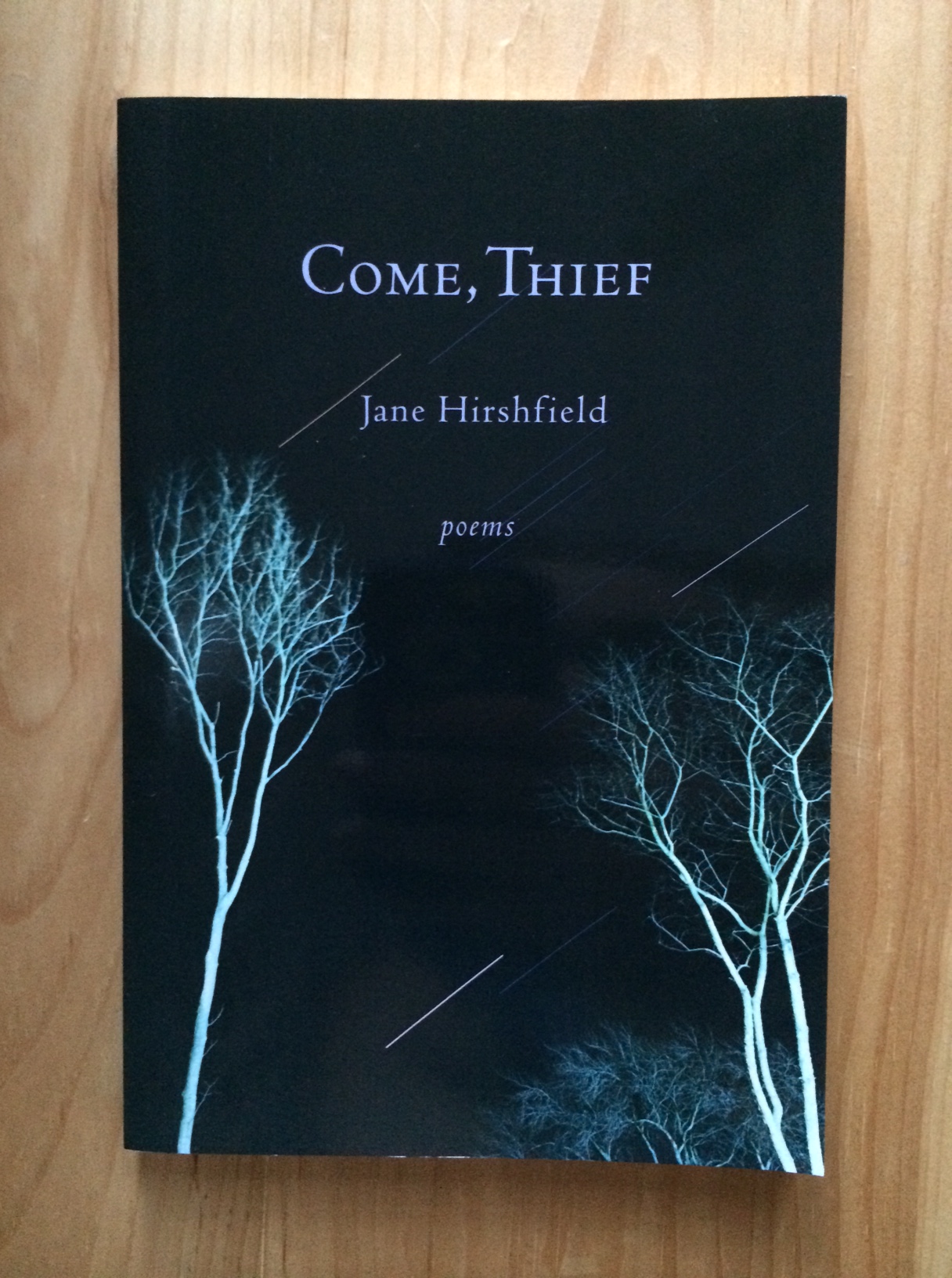
Come, ThiefOn vacation earlier this month, Mr. O and I visited the well-appointed Island Books in Middletown, Rhode Island. One of the things I liked best about this little shop was its poetry selection, which included recommended titles handpicked by the bookstore’s staff. Thanks to their recommendation, I picked up Jane Hirshfield’s 2011 book Come, Thief, which I highly recommend.

In this collection, Ms. Hirshfield focuses on small scenes, both natural and domestic, as she reflects on attentiveness, change, and beauty; of special note are several exquisite poems about aging and the inevitable failures of body and mind.

In “The Promise,” which you can read here, the speaker wishes that things both small and beautiful (a cut flower, a spider, a leaf) and large and wondrous (the body, the earth itself) would not change or fade or leave, while acknowledging the inevitability of those kinds of losses. It’s a wistful but lovely poem. drooping flower