“speckled / like a sky” : May Swenson’s “Blue”

A modern entry into the venerable poetic tradition of cataloging the beloved’s physical beauties (see: Petrarch, Shakespeare, Donne), May Swenson’s “Blue” is a poem that just begs to be read aloud. It’s rhythmic, sexy, and filled with bilabial consonants (‘p’ and ‘b’ in particular) that press the reader’s lips together into a kiss.

Swenson

The speaker addresses her lover in lines replete with sensory imagery — taste and touch especially — made even more immediate by the present-tense action of the poem. And you won’t believe what she can do with three colors — white, rose (also the lover’s name), and blue.

Here are my favorite lines:

You’re white in
patches, only mostly Rose,
buckskin and salty, speckled
like a sky. I love your spots,
your white neck, Rose, your hair’s
wild straw splash, silk spools
for your ears.

You can read the entire poem here.

Recommended Reading: Incarnadine, by Mary Szybist

The poems in Mary Szybist’s Incarnadine* consider the collision of the ordinary and the otherworldly (as figured in the Annunciation) from a multitude of angles. With their varied forms and fierce fragility, the poems gracefully explore the relationship between the spirit and the body, motherhood and childlessness, discovery and loss, violence and desire, the sacred and the secular.

Incarnadine

What surprised me most about the collection was the striking range of forms that Ms. Szybist employs. Incarnadine includes a poem in terza rima, a concrete poem (lines densely radiating from a circular negative space, appearing like a sun), prose poems, a poem composed with pieces snipped from Natalie Angier’s Woman: An Intimate Geography and Henry James’s The Portrait of a Lady, a poem as a diagrammed sentence, an abecedarian, near-sonnets, hymn-like structures — all in seventy-two pages.

This formal variety enhances the collection’s fresh approach to the subject of the Annunciation; the scene is replayed in new contexts many times over. For example, in “Annunciation in Nabokov and Starr,” excerpts from Lolita and The Starr Report fill out an annunciation account from the angel’s point of view, while later, in “Annunciation: Eve to Ave,” Eve explains her bewilderment at the discovery that the man who brought her news was not a man at all. After this poem’s especially playful diction, the last lines rise to the surface in all their parenthetical heaviness: “(But I was quiet, quiet as / eagerness–that astonished, dutiful fall.).”

As the book goes on, and the annunciations stack up, they become more and more ensnared in violation, which, it appears, is the underside of this particular adumbration; spirit does not instantiate in flesh without violence.

Ms. Szybist’s verse is elegant, sometimes deceptively simple, and poised, balancing darkness and transcendence, incarnadine and cerulean. Highly recommended reading. 

Incarnadine won the National Book Award for poetry in 2013

*My thanks to Graywolf Press for sending me a review copy of Incarnadine.

An Interview with Lindsay Hill, Author of Sea of Hooks

Yesterday I reviewed Sea of Hooks, Lindsay Hill’s first novel, which was published in 2013 by McPherson & Company. Mr. Hill graciously agreed to be interviewed via email.

Lindsay Hill Photo by Adrian L. Smith

Lindsay Hill
Photo by Adrian L. Smith

How and why did you begin to write Sea of Hooks?

LH: The book was begun on a trip to Bhutan in 1994.  I was traveling with the poet and anthropologist, Nathaniel Tarn, and carrying a notebook.  My intention had been to make a limited written record of the trip and to record any thoughts or lines (for possible poems) that came to mind.  During the course of our travels, we learned of the Terma Tradition within the Nyingma school of Buddhism.  This tradition concerns the scattering of Terma (spiritual treasures) in earth, water, air and mind, for future discovery, in proper sequence, by treasure–finders called Terton.  I was spellbound by the beauty of this tradition and by the idea that such treasures lay hidden among us, waiting to be discovered.  As we traveled through the stunning Himalayan landscape, I started to write the outlines of a story. From the beginning, the themes were going to include the emergence of compassion and the spiritual transformation of a traveler.  Even so, having written only poetry, I had little idea of how to proceed.

Did you approach writing Sea of Hooks, your first novel, differently from the way you approach writing poetry?

LH: The trip to Bhutan, completely inadvertently, began a new phase in my life as a writer.  I began to carry, and fill, small notebooks with thoughts as they occurred to me.  This was very different from sitting down to write, or intending to compose, a finished poem.  I found that I had embarked on the composition of a continuous open text.   Very soon, I began titling the individual entries and letting the threads find their way.  Perhaps because I am severely dyslexic, I subvocalize everything I read.  Also, I am only able to read very slowly.  This combination of conditions led me, very early on, to a passion for reading poetry.  Every concussive syllable, every shifting rhythm, every lyric leap, enthralled me.  At Bard, where I was lucky enough to go to school, I started with Middle English (The Pearl Poet and Chaucer), and finally arrived at the 20th century in my senior year.  In essence, I apprenticed my ear to the arc of great poets in English, and a bit of that rich tradition couldn’t help but rub off!  So, in writing anything, I find myself attentive to sound and rhythm.  Also, I like the difficulty and the challenging associative leaps that often occupy the best poems.  Combine these preferences with my short attention span, and you end up with a novel of titled fragments that carry, at least to some degree, the stylistic characteristics of poems.  The difference lay in the particular demands that the novel, as an artistic form, places on any writer.  The necessities of finding and sustaining “voice” over an extended text; the demands of constructing a compelling plot; the challenges of developing plausible characters; all of these were extremely daunting to me, and any success that I had took hundreds upon hundreds of pages of missteps.  Ultimately, what I hope I was able to accomplish with Sea of Hooks, is a genre–spanning work that employs poetic methods, and architectures, to strengthen narrative structures.  Certainly, this is nothing new or unique, but for me, it was an entirely marvelous adventure of learning how a story could become the wetting stone of lyric language.

I understand that you composed Sea of Hooks over a period of more than twenty years. When you began the work, did you think or know that so much time would pass before it would be finished?

LH: I had no idea.  Originally, I intended to write a simple story.  Eventually, I had to be willing to be completely, even relentlessly, patient as complexity intervened.  Especially in the last eight years of its composition, I was working every day on the novel.  It was a completely joyful enterprise, and I was honestly unconcerned with when it would wrap itself up.  Many times, I truly doubted that it would ever “come together.”  By the time I started editing, I had over 5,000 titled sections from which to select and with which to assemble a coherent book.  The editing took three years and, in the final year, I did no other work.  Basically, four out of every five “sections” were thrown out.  Clearly, I’m not a very efficient novelist!

One thread in the narrative finds Christopher exploring Bhutan and Buddhism. How did you come to this choice?

As mentioned above, this thread originated with my trip to The Himalayas and with my learning about the Terma Tradition.  Christopher, the book’s protagonist, is following an inquiry into how a shattered world can be reassembled.  Everything is at stake for him in this.  Philosophically, Buddhism has much to say about the topics that preoccupy his thinking: the nature of the construction of the self, the puzzle of desire and suffering, the meaning of emptiness and liberation.  One of the book’s central images, that of a mother running armless beside a river where her child is drowning, came from Patrul Rinpoche’s The Words of My Perfect Teacher, and is among the most powerful I’ve ever encountered.  In Rinpoche’s teachings, this image represents a paradigm of compassion: not simply as empathy, but as the practice of staying steadily with suffering that cannot be fixed.  Through the lens of Christopher’s experience, this understanding is key.  So, Buddhism had an extremely generative affect on my thinking and writing and, above all, on my ability to perceive, from the heart, the possibilities that suffering offered for transformation in Christopher’s life.  Of course, Sea of Hooks is a story, and in no way presumes to be a scholarly explication of Buddhism or to reveal the depths of its great traditions.

Which writers do you read while writing? Do your reading choices change depending on the writing project at hand?

LH: I still, primarily, read poetry.  While writing Sea of Hooks,  I spent time with a wide range of work, from Donne’s Satires (...as streams are, power is...) to Gerard Manley Hopkins (…like shining from shook foil…), to the works of contemporaries like Tarn (The Beautiful Contradictions, Ins and Outs of the Forest Rivers), and Palmer (Six Hermetic Songs, Thread), and many younger poets as well.  Also, I read a good deal of philosophy, from the Pre–Socratics to Wittgenstein.  Mostly, I like to read work that poses interesting questions and that approaches them in innovative ways.  I like to read work that takes risks.  This doesn’t really change depending on what I’m writing but I do try to avoid work that may offer “solutions,” to questions I’m wrestling with in my own writing.  I like to stay with difficulties until they reveal their own underpinnings; their own “ways out.

What kinds of writing projects are you planning next?

LH: I strongly believe that a writing project deserves to have authentic urgency behind it: something at risk for the writer in writing it, and for the reader in reading it.  At least for me, that urgency, that necessity, isn’t something that can be “put” into a work.  It’s not an “ingredient.”  It’s the ground from which the work grows, and around which it organizes itself, as it takes shape, and strives to inhabit a living space.  Sometimes you just have to wait for that urgency to arrive.  In the meantime, my intention, and practice, is to maintain a constant relationship with writing.  This means that I continue to keep a small notebook in my back pocket and write as often as something of potential interest occurs to me.  I do this without any expectation that my jottings will be “good,” or used later in any way.  It’s just a practice to keep the dialogue open with my work.  The result has been that I have a joyful and relaxed approach to writing.  All that aside, I have, with some trepidation, started a new novel.  I envision a simple story…

My thanks again to Mr. Hill for sharing his time and generous answers. 

Recommended Reading: Sea of Hooks, by Lindsay Hill

[Note: Late last year, Rick at Another Book Blog proposed a bookish Secret Santa, and I was lucky enough that Rick drew my name and chose Sea of Hooks for me to read. He also asked the publisher, McPherson & Company, to send me a copy, for which I am truly grateful. Sea of Hooks, in case you missed it, was named one of the top books of 2013  by Publishers Weekly. Here’s my review, which was originally published on Rick’s blog.]

Sea of HooksLindsay Hill’s Sea of Hooks is brilliant.

Mr. Hill, a sometime-banker and longtime poet, spent twenty years writing Sea of Hooks, a novel so audacious, so intricately constructed, that it was a reading experience unlike any I’ve ever had. And it completely reinvents the bildungsroman in the process.

As the novel opens, we learn that Christopher Westall’s mother has committed suicide, and that he is in Bhutan with an American group — but we don’t know why. Interspersed with Christopher’s travels in Bhutan as a young man (in his early twenties) are memories of his childhood, which gradually expand until we find ourselves immersed in the narrative of his life.

Deeply imaginative and sensitive, Christopher spends his childhood navigating between the extremes of his parents’ personalities:

BARBELL

It was as if Evelyn’s finding everything to be disturbing brought Westy to the position that nothing was disturbing—a kind of barbell of panic and indifference with Christopher in the middle. (75)

Evelyn is fragile, and Christopher hides his innermost thoughts — the knife people under his bed, the pieces of street detritus that he sees as “messengers”– from her, and Westy with devastating consequences in his early adolescence. Evelyn keeps Christopher home from school for a whole year, quizzes him relentlessly about the finer points of bridge, and collects antiques he’s terrified to break.  Westy generally ignores his son as he nurses a perpetual hangover, despite Christopher’s rather hopeless attempts to please him:

THE IRONING BOARD DOOR

Christopher tried to crop himself so that he could be with his father, to be like the pollarded trees lining the band shell seating area in Golden Gate Park. He tried to cut himself back, to be straightforward and unswaying, and he tried to be interested in British cars and business stories and baseball. And Christopher thought that if he could just compress himself a bit more, maybe then he could be with his father. (128)

It sounds rather bleak, but Mr. Hill nonetheless imbues the tale with  humor: “Christopher was thin, tousled, intense and disoriented, with a Keatsian frailty, a fine-boned waifishness that was endearing or off-putting depending on how you were with waifishness” (87).

As you can tell from the passages I’ve quoted, the novel is written in a particularly intriguing style: short, titled paragraphs jump from topic to topic, across time and perspectives. None is longer than a page. Images and themes accumulate slowly, relentlessly, like the tide washing up flotsam on a beach. As soon as I finished the novel I wanted to start reading again immediately.

Often these prose-poem paragraphs are achingly lovely, and ring with truth. Here’s one of my favorites:

ORBITS

And Dr. Thorn told Christopher that if you looked carefully you could discern, in the irregularities of people’s lives, the presence of things that must be there outside of view; the influences pulling on them–hungers, expectations, memories, loss—and you could sense a cutting away of the attention toward something hidden, like a cutting of the eyes from what was present, and in that instant of absence a perturbation formed. (180-81)

and another:

WHERE THE WILD THINGS ARE

Dr. Thorn asked Christopher if he’d had a favorite children’s book. Christopher said that it was Where the Wild Things Are, except he didn’t know why Max came back. Dr. Thorn said Max came back because he was bored and hungry, and because a person could never be a person by being a wild things, even if they were king of the wild things. “So you have to come back and press forward into the world. This is what you have, what you must make something of—not hiding, not wrecking yourself on the rocks but walking into the world, and this is a sacred act because everything is at risk.” (194)

Isn’t that beautiful? Christopher sees his father hiding and his mother wrecking herself on the rocks, and chooses the third path: to walk into the world, despite its tendency to cause him suffering. His compassion causes him to be intensely sensitive to the world around him — not only to people, but to animals and objects and ideas. His mentor, Dr. Thorn, advises him that sometimes it’s necessary to “stand still in your own discomfort” (216), so that “you will not make a life of trying to transfer itself it onto others” (299). By the age of twelve, Christopher is an expert in this adult maneuver, which, I think, sets him apart from those self-engrossed fictional young men like Holden Caulfield and Stephen Daedalus. They wallow. Christopher transcends.

Another review called Sea of Hooks “a spiritual biography,” and I think that’s right. It’s a novel that proves that the complexities of one young man’s daily life, his preoccupations and his nightmares, and above all, his compassion, can be extraordinarily fascinating, suspenseful, and revelatory.

Tomorrow: An interview with Lindsay Hill, author of Sea of Hooks.

“charged and waiting”: Audre Lorde’s “Recreation”

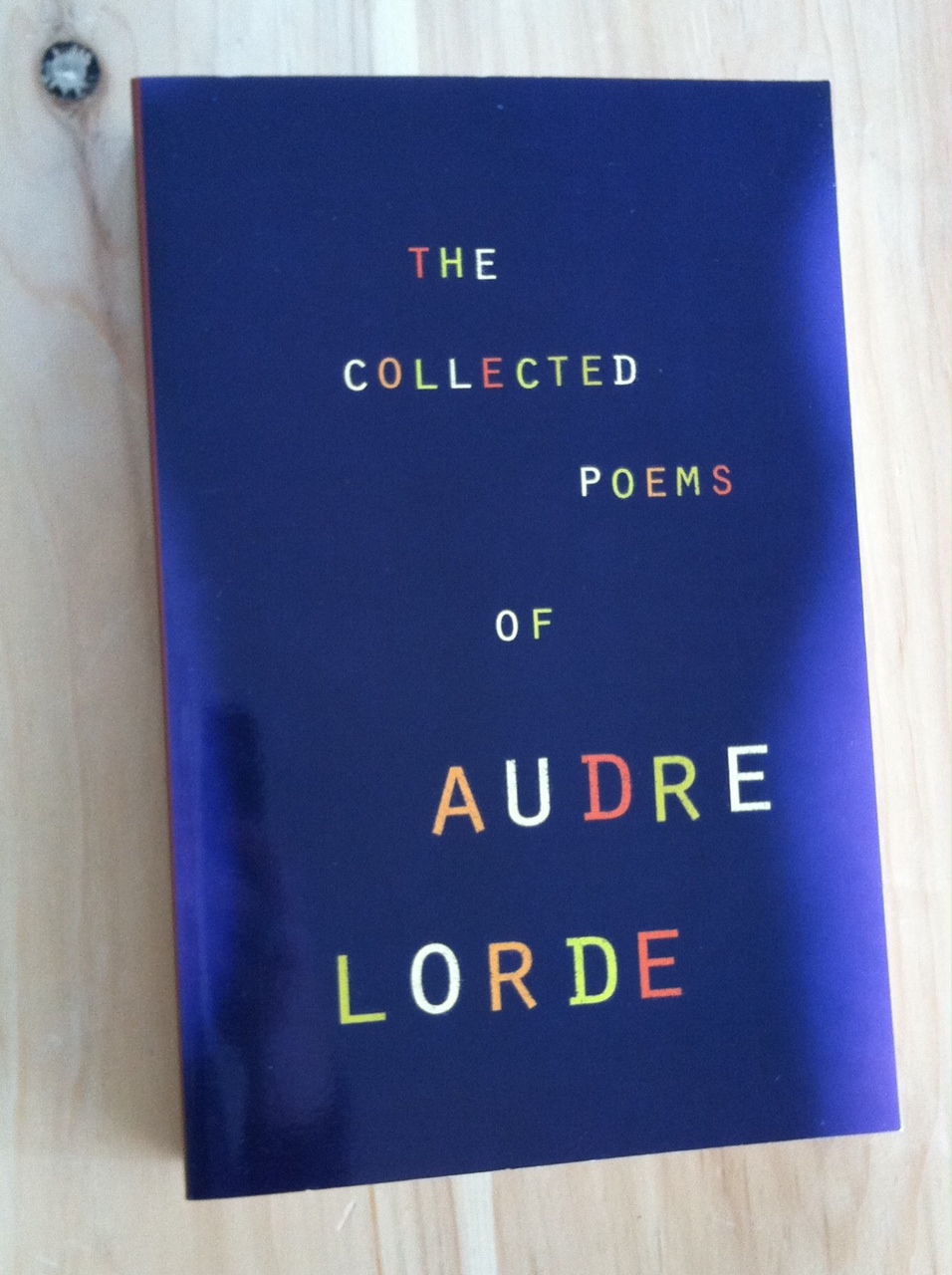
Audre Lorde Collected WorksAudre Lorde’s poem “Recreation” is simultaneously about sex and writing — the act of love and the act of creating. The title itself suggests doubleness: “recreation” in the sense of play (as in, Parks and) and “recreation” as in the repeated act of creating.

Reciprocity is one of the poem’s themes, as the poet/lover both gives to and takes from writing and her lover. At the same time, writing and sex are reciprocal, too:


moving through our word countries
my body
writes into your flesh
the poem
you make of me.


One of the many things I like about this poem is its specificity; it doesn’t claim a universal love, or generalize about pleasure. It’s about a particular speaker in a particular moment, which is deliberate, given Lorde’s views on the relationships among power, creativity, and the erotic.

Bringing Sexy Back (To Valentine’s Day): 15 Steamy Poems by Esteemed Poets

Toss that teddy bear and give your significant person the gift of verse this Valentine’s Day.

Red Rose Petals by Victor Habbick, courtesy freedigitalphotos.net

Red Rose Petals by Victor Habbick, courtesy freedigitalphotos.net

That poet everyone reads at weddings is actually much more appropriate for the bedroom:

e. e. cummings, “i like my body when it is with your” 

An unsexy title for a very sexy poem (check out those ellipses!): 

Li-young Lee, “This Room and Everything In It”

The “Oh, snap” kind of sexy:

Edna St. Vincent Millay, “I, being born a woman and distressed”:

Wistful sexy:

C. P. Cavafy, “Body, remember”

Bitter sexy:

Thomas Wyatt. “They Flee from Me”

Literate sexy:

Robert Hass, “Etymology” (start watching at 18:42)

Damn sexy:

Audre Lorde, “Recreation

Desire, frustration, and jewelry. Also: socioeconomic tension. (And the first overtly lesbian poem I read as a teenager. Bit of a lightbulb moment, there.)

Carol Ann Duffy, “Warming her Pearls”

Difficult to choose just one Donne poem, but hey, let’s go with the salute to nakedness:

John Donne, “To His Mistress Going to Bed”

Restraint and abandonment, all at once:

Emily Dickinson, “Wild Nights – Wild Nights! (269)”

For the Dear Readers who are also parents: 

Galway Kinnel, “After Making Love We Hear Footsteps”

Maybe this is where they got the title for Blue is the Warmest Color:

May Swenson, “Blue”

I hate birds, but this poem is still amazing: 

Henri Cole, “Loons”

You’ll never look at roses the same way again, I promise:

D.H. Lawrence, “Gloire de Dijon”

And yes, a Neruda poem. But I can’t find it anywhere on the interwebs, so you’ll have to go find a copy of World’s End or Late and Posthumous Poems for yourself. 

Pablo Neruda, “Física”/”Physics”

Your turn: what’s the sexiest poem you’ve ever read?

Recommended Reading: To the Lighthouse, by Virginia Woolf

To the LighthouseAttempting to write a review of To The Lighthouse makes me feel rather like Lily Briscoe about to take up her brushes:

Where to begin?–that was the question, at what point to make the first mark? One line placed on the canvas committed her to innumerable risks, to frequent and irrevocable decisions. All that in idea seemed simple became in practice immediately complex; as the waves shape themselves symmetrically from the cliff top, but to the swimmer among them are divided by steep gulfs, and foaming crests. Still, the risk must be run; the mark made. (157)

It’s been about ten years since I read To The Lighthouse, and I’m glad it’s found me again just now. I’m a devotee of Mrs. Dalloway to such an extent that I know the page numbers of certain passages in my copy (I’ve taught it three times at least), and there’s a family joke that the correct answer to any question is probably Mrs. Dalloway.  I want that kind of familiarity with To the Lighthouse.

I read Persuasion while I was reading To the Lighthouse, and what struck me as I read was the startling interiority of Persuasion, and the way it almost leads up to Woolf’s style “Stream of consciousness” doesn’t do Woolf’s writing justice because she creates and chooses such fascinating characters whose consciousnesses to follow. Woolf in this novel is primarily concerned with women’s perceptions, making visible the unseen and silent struggles of women’s everyday interactions.

The first section of the novel often floats in the currents of Mrs. Ramsay’s thoughts. If Mrs. Dalloway is the perfect hostess, Mrs. Ramsay is, outwardly, the model of the Victorian “angel in the house” (an ideal Woolf satirized in an essay) — she’s a wife, mother, mistress of servants, and anticipator of others’ needs. But Woolf shows us the turmoil under her deferential demeanor. Here’s Mrs. Ramsay after her husband dismisses the notion of a trip to the lighthouse the following day, ruining their six-year-old son’s hopes:

To pursue truth with such astonishing lack of consideration for other people’s feelings, to rend the thin veils of civilisation so wantonly, so brutally, was to her so horrible an outrage of human decency that, without replying, dazed and blinded, she bent her head as if to let the pelt of jagged hail, the drench of dirty water, bespatter her unrebuked. There was nothing to be said. (32)

So she doesn’t say anything, and seethes.

Though she is a doting mother, kind and sensitive to the needs of her eight (!) children of varying ages, Mrs. Ramsay recognizes the need for her own time. My friend Katie wrote a funny (and spot-on) post recently about how difficult it is to find portrayals of life with small children in fiction. I think this passage, though, captures what it’s like for parents, especially at-home parents, to sit down at the end of a long day:

No, she thought, putting together some of the pictures he had cut out–a refrigerator, a mowing machine, a gentleman in evening dress–children never forget. For this reason, it was so important what one said, and what one did, and it was a relief when they went to bed. For now she need not think about anybody. She could be herself, by herself. And that was what now she often felt the need of–to think; well, not ever to think. To be silent; to be alone. All the being and the doing, expansive, glittering, vocal, evaporated; and one shrunk, with a sense of solemnity, to being oneself, a wedge-shaped core of darkness, something invisible to others. Although she continued to knit, and sat upright, it was thus that she felt herself; and this self having shed its attachments was free for the strangest adventures. When life sank down for a moment, the range of experience seemed limitless. (62)

“The range of experience seemed limitless” — that’s a good way to describe this book. The novel is broken in three sections: “The Window,” “Time Passes,” and “The Lighthouse” — but it’s difficult to convey the plot. A family and visitors gather at the family summer home before the First World War. After that last summer, some people drift away, some die (including a major character, in one sentence at the end of a paragraph), and the war happens. Ten years later, a few of the guests and a few of the family gather again at the house. I haven’t made it sound like much, but somehow, the novel is about art and life, men and women, children and parents, love and death, and above all, change. It’s brilliant and beautiful and never, ever sentimental.

Lily, as the artist, solitary and devoted to her work, seems to stand in for the author at times. In this passage, which I’ll leave you with, her description of life itself could describe To the Lighthouse:

And, what was even more exciting, she felt, too, as she saw Mr. Ramsay bearing down and retreating, and Mrs. Ramsay sitting with James in the window and the cloud moving and the tree bending, how life, from being made up of little separate incidents which one lived one by one, became curled and whole like a wave which bore one up with it and threw one down with it, there, with a dash on the beach. (47)

“Full nakedness! All joys are due to thee”: John Donne, Sexy Poetry, and Making Valentine’s Day Fun Again

Back in the waning days of 2013, I promised that I’d devote February’s Tuesday poetry posts to sexy poems by dead poets.

I’m here to deliver.

I kinda hate Valentine’s Day, for all the usual reasons, I suppose. Pink looks sickly to me, overpriced roses do not smell as nice as regularly priced roses, and Victoria’s Secret is pretty gross.It’s all so generic and impersonal, and nothing epitomizes the sorry state of Valentine’s Day like the Hallmark card.

So I propose that we bring sexy back with real, honest-to-goodness poetry. Grab some steamy lines from some esteemed wordsmiths and write those in your card to your significant person.

Love poem anthologies there are a-plenty (just search for wedding poems and prepare for the deluge), so I shall take it upon myself this month to point you toward the sexiest poems in English. No hearts, no mushy stuff.

There may even be a list.

John DonneTo start things off, here’s John Donne’s elegy “To His Mistress Going to Bed” (I know I wrote about John Donne last year, but that was a Holy Sonnet. This is not.).

In the poem, the speaker encourages his inamorata to shed her clothes, piece by piece, because, well, being naked is fun. And only John Donne can manage to convey that the woman being seduced is rich (she has a pocket watch and a tres chic outfit), refer to England’s new colonies, and bring up a midwife in an erotic poem that sparkles with wit, puns, and the most charming sophistry you’ve ever read. Bonus: women are compared to books to explain their sex appeal.

What a guy.

For those who don’t want to write out the whole poem in their Valentine’s Day cards, I’ve excerpted the funniest/raunchiest bit at the end of the post.

Elegy XIX: To His Mistress Going to Bed
John Donne

Come, Madam, come, all rest my powers defy,
Until I labour, I in labour lie.
The foe oft-times having the foe in sight,
Is tir’d with standing though he never fight.
Off with that girdle, like heaven’s Zone glistering,
But a far fairer world encompassing.
Unpin that spangled breastplate which you wear,
That th’eyes of busy fools may be stopped there.
Unlace yourself, for that harmonious chime,
Tells me from you, that now it is bed time.
Off with that happy busk, which I envy,
That still can be, and still can stand so nigh.
Your gown going off, such beauteous state reveals,
As when from flowery meads th’hill’s shadow steals.
Off with that wiry Coronet and shew
The hairy Diadem which on you doth grow:
Now off with those shoes, and then safely tread
In this love’s hallow’d temple, this soft bed.
In such white robes, heaven’s Angels used to be
Received by men; Thou Angel bringst with thee
A heaven like Mahomet’s Paradise; and though
Ill spirits walk in white, we easily know,
By this these Angels from an evil sprite,
Those set our hairs, but these our flesh upright.
Licence my roving hands, and let them go,
Before, behind, between, above, below.
O my America! my new-found-land,
My kingdom, safeliest when with one man mann’d,
My Mine of precious stones, My Empirie,
How blest am I in this discovering thee!
To enter in these bonds, is to be free;
Then where my hand is set, my seal shall be.
Full nakedness! All joys are due to thee,
As souls unbodied, bodies uncloth’d must be,
To taste whole joys. Gems which you women use
Are like Atlanta’s balls, cast in men’s views,
That when a fool’s eye lighteth on a Gem,
His earthly soul may covet theirs, not them.
Like pictures, or like books’ gay coverings made
For lay-men, are all women thus array’d;
Themselves are mystic books, which only we
(Whom their imputed grace will dignify)
Must see reveal’d. Then since that I may know;
As liberally, as to a Midwife, shew
Thy self: cast all, yea, this white linen hence,
There is no penance due to innocence.
To teach thee, I am naked first; why then
What needst thou have more covering than a man?


As promised, the funniest/naughtiest lines (you may need to alter some pronouns to fit your situation. I won’t tell John Donne, but give him a h/t, ok?)

Licence my roving hands, and let them go,
Before, behind, between, above, below.
O my America! my new-found-land,
My kingdom, safeliest when with one man mann’d,
My Mine of precious stones, My Empirie,
How blest am I in this discovering thee!

Literary Wives: The Inquisitor’s Wife, by Jeanne Kalogridis

literarywives2If you missed the Literary Wives introductory post, here’s the summary:  I’ll be joining bloggers Ariel, Audra, Cecilia, Kay, and Lynn  as we post every other month about a different book with the word “wife” in the title. When we read these books, we have two questions in mind:

1. What does this book say about wives or the experience of being a wife?

2. In what way does this woman define “wife”—or in what way is she defined by “wife”?

This month, we’re talking about Jeanne Kalogridis’s novel The Inquisitor’s Wife, which was published in 2013. We invite you to join the discussion by commenting on our blogs (links below) or posting your own review on our shiny new Facebook page, which you can find here.

Readers take note: Although I usually refrain from spoilers, what follows is a consideration of one aspect of the novel, and so I shall be spoiling away. Beware!

The Inquisitor's WifeHere’s part of the Goodreads summary of The Inquisitor’s Wife:

In 1480 Seville, Marisol, a fearful young conversa (descendant of Spanish Jews forced to convert to Christianity), is ashamed of her Jewish blood. Forced into a sham marriage with a prosecutor for the new Inquisition, Marisol soon discovers that her childhood sweetheart, Antonio, has just returned to Seville and is also working for the inquisitors. When Marisol’s father is arrested and tortured during Spain’s first auto da fe, Marisol comes to value her Jewish heritage and vows to fight the Inquisition.

What I liked best about this novel: the period details (a family’s palace fallen on hard times, the bearing and sartorial choices of Isabella of Castile, the gruesome ritual of public penance) and its attempt to correct misconceptions about the Spanish Inquisition. Ms. Kalogridis focuses on the plight of conversos — those who converted to Catholicism from Judaism, as well as their descendants — in the city of Seville, and I liked the specificity of the city’s history and geography.

Contemporary scholarship suggests several different motivations behind the Inquisition, and Ms. Kalogridis comes down solidly on the side of Isabella’s desire to acquire the wealth and property of convicted conversos. It’s a convincing performance; Isabella is the most charismatic and dangerous character in the novel.

However, the book suffers when it comes to the “fiction” half of historical fiction. Marisol, the novel’s protagonist and narrator, is thoroughly unlikable, despite her family’s suffering. Now, I don’t mind an unlikable narrator or main character in the right circumstances (Gone Girl, for example, or Shakespeare’s Coriolanus), but we are supposed to empathize with Marisol, and for most of the book, it’s nearly impossible to do so. She’s sullen, selfish, and insensible to her mother’s feelings and heritage and her father’s delicate political position.

When she suddenly stops receiving letters from her childhood sweetheart and devoted fiance, Antonio, does she seek him out or ask her parents to find out what’s going on? No. She sends letters for months and then gives up on him. Clearly she hasn’t read enough novels. When her father subsequently arranges her marriage to their hulking, creepy (and stooge of the Inquisition) neighbor, Gabriel, Marisol doesn’t do what any self-respecting heroine would do (run away, or at least attempt escape) — she merely fumes in silence and refuses to kiss her father goodbye.

This sulky teenager performance is all the worse when we learn that Marisol’s mother is indeed a crypto-Jew, attempting to keep her faith alive after a horrific incident of savagery took her family from her when she was a young child. Marisol’s arranged marriage is obviously an attempt to protect her from the offices of the Inquisition, and the price for that protection turns out to be her father’s life, freely given in exchange for hers. Marisol only finds her courage (and accepts her heritage) when it’s much too late to save her father.

Instead, the novel closes with the revelation of Marisol’s mother’s identity a half-hearted resumption of Marisol’s romance with Antonio (who, obviously to the reader, if not to Marisol, has been working to subvert the Inquisition from within and never stopped loving her.).  I think I understand why Ms. Kalogridis chose to write the novel from the perspective of a conversa who must discover her own heritage, but the secondary characters — particularly Marisol’s mother and Mariam, her friend and servant — have far more interesting stories and perspectives.

And now on to our discussion questions:

1. What does this book say about wives or about the experience of being a wife?

The book considers the very specific position of wives in fifteenth-century Seville. Women are expected to be obedient to their fathers and husbands, accepting orders, chastisement, and arranged marriages without complaint. Even Marisol’s father, generally portrayed as sympathetic, does not hesitate to strike Marisol’s mother or command her to obey him.

A notable contrast with the wives of Seville is the queen, Isabella, who never appears with her husband in the novel. Powerful, wily, and ruthless, Isabella changes her outward appearance to conform to the expectations of her audience (rich adornment for a private court party, simple black with a crucifix for public occasions or audiences with monks). It’s politically useful for her to appear as a dutiful wife, and so she takes on that appearance — all the while remaining completely independent.

2. In what way does this woman define “wife”—or in what way is she defined by “wife”?

As Gabriel’s wife, Marisol expects to follow her mother’s example and submit to her husband’s wishes. Gabriel repulses her, not only because of his creepy fixation on her since childhood, but because he’s cruel and brutal (he beat a defenseless elderly man as a teenager, and as an adult he works for the Inquisition and shows no compunction about having people tortured — including Marisol, late in the book).

However, thanks to Gabriel’s brother’s machinations (and later, Gabriel’s apparent unfamiliarity with female anatomy), the marriage goes unconsummated. According to church doctrine, consummation is required to make the marriage complete; perhaps this is yet another reason why Marisol feels no loyalty to Gabriel. Conveniently, it also makes possible annulment and remarriage to Antonio feasible.

Still, because Marisol is Gabriel’s wife — and a conversa —  Gabriel manipulates her for his own political and personal purposes, and Marisol only thwarts him with subterfuge and help from Mariam. She is obliged by circumstance to fear Gabriel, even though she does not respect him.

Please visit the other Literary Wives bloggers to get their takes on the book! 

Audra at Unabridged Chick

Ariel at One Little Library

Cecilia at Only You

Kay at WhatMeRead

Lynn at Smoke and Mirrors

(Emily’s on hiatus for awhile.)

We’ll be reading The Zookeeper’s Wife next, so we hope you’ll stop by again for the next Literary Wives discussion on the first Monday in April.

An Interview with Melissa Pritchard, author of Palmerino

Yesterday, I reviewed Palmerino, Ms. Pritchard’s latest novel, out now from Bellevue Press. Ms. Pritchard graciously consented to be interviewed via email. 

How did you first learn about Violet Paget/Vernon Lee, and what led you to write a novel about V.’s life?

Melissa Pritchard photo (c) John Beckett

Melissa Pritchard
photo (c) John Beckett

MP: In July 2008, while visiting Florence, I was introduced by an Italian friend, Giuditta Viceconte, to Federica Paretti, a member of the Angeli family, current owners of Villa il Palmerino, Vernon Lee’s former home.  At the time, I had been thinking of starting a writer’s residency, and Giuditta immediately decided I should meet Federica to discuss possibilities. On the afternoon I met Federica, I felt an immediate kinship with her and strangely, with the Villa itself. I had a deeply comforting sense of having “come home.” As I learned of Vernon Lee from Federica, I began to sense and to “see” things around the villa and the property that caused Federica to regard me strangely, until she finally said, “You may be meant to write a book about Vernon Lee. Perhaps that is the real reason you have come here.” For example, as I was looking out of a upstairs window onto the terrace, I  “saw,” as in a film, a puppet show for children being performed there. I turned to Federica, saying “this would make a wonderful space for a children’s puppet show!”  She then told me that was the exact place where Vernon Lee performed puppet shows for the children of the peasants or contadini. But it was after I learned about Vernon Lee’s supernatural tales, about her fascination with genius loci or spirit of place, and about her being one of the first writers to explore the notion of empathy in art, that I began to connect with her on a deeper level, and feel “called” to write about her. It’s also true that I fell in love with Villa il Palmerino itself before I fully committed to researching and writing about Vernon Lee. After our first meeting, Federica invited me to return, and one year later I did, renting out one of the spacious rooms. I would return three more times, each time for a longer period, to do research on Vernon Lee and to write the first and subsequent drafts of the novel. I completed Palmerino in Switzerland, at Chateau Lavigny, a writer’s residence, in the autumn of 2012.

What was the writing process for Palmerino like? Do you share writing traits with Sylvia?

MP: I embarked upon over a year of research, visiting the Vernon Lee archives at Colby College, Maine, and returning to Florence several more times. Once I felt prepared, I then had to begin to shape the novel’s perimeters, determine its structure. Once I decided to largely focus on Vernon Lee’s emotional life, specifically her two great love affairs, I began the actual writing. I designed the novel in three alternating threads, Vernon Lee’s ghostly voice, Sylvia’s voice, and the story that Sylvia was telling. Writing is a risk, a gamble, a running through the darkness, so I could only hope this unconventional design would work. One of my literary inspirations was Henry James’s The Turn of the Screw, the other Vernon Lee’s own highly regarded supernatural tales, particularly “Amor Dure.”

If I share any writing traits with Sylvia, it may be that I always write in longhand first, and that I love to have food around me when I write. I also tend to isolate myself when I’m writing, particularly when working on a first draft – it’s the only way I can “hear” the book. It is a lonely phase, but also a thrilling kind of pilgrimage into the life of the imagination, into other lives and worlds.

V. dismisses modern scholarship about her life and, particularly, her sexuality (pages 127-28). Do you share her assessment of current scholarly efforts to understand, or analyze, Vernon Lee’s/Violet Paget’s life?

MP: In the last ten or so years, there has been a tremendous resurgence of scholarly interest in Vernon Lee. There is a wonderful online journal, The Sibyl, that is richly and entirely devoted to current studies on Vernon Lee. In September, 2012, I was fortunate to be a part of the first international seminar on Vernon Lee, held in Florence. I went to many talks by scholars dedicating their academic lives to aspects of Vernon Lee’s extraordinary and prolific life. I was honored to close the seminar with a reading from Palmerino, a reading held at twilight, in one of the many hidden gardens on the grounds of Villa il Palmerino. It was a magical way to close a scholarly seminar, and while reading,I seemed to feel Vernon Lee’s presence nearby. My sense is that she would both be critical of all the research being done on her, the published books, papers and articles, the seminars, but that she would also be deeply pleased.

How did you go about conducting research for Palmerino?
PalmerinoI started with Vernon Lee biographies, relying mainly on two, then read many of the books Vernon herself had read and admired. I visited Colby College, Maine and in the archives room, sat for hours poring through correspondence between Henry James, John Singer Sargent, Edith Wharton, Clementina “Kit” Anstruther Thompson and Vernon Lee. I cannot describe the feeling of holding a letter written by Henry James, addressed to Vernon, in my hands. And while reading Kit’s immensely charming letters, illustrated with whimsical figures, I understood exactly how and why Vernon fell in love with her, needed her, and was devastated when she left Vernon. In Florence, I found the two places Vernon and her family had lived before moving to Villa il Palmerino. I visited the British Institute where there is a room filled entirely with a large portion of Vernon Lee’s extensive library, and was able to look through her books, see her pencilled annotations and marginalia, written with a bold, energetic hand. And at the famous Gabinetto Vieusseux, I was able to read more of her letters, many in Italian or German, and see the progression of her emotional state through her handwriting from the firm, bold hand of her middle years to the weak scrawl of later years, the intelligence still evident but the infirmity of a failing body sadly taking hold. And of course, I found much to read online, scholarly papers, other references.

Which writers do you read while you’re writing, if any? Do they change from book to book?

As part of my research for Palmerino, I read a great many of the books Vernon had been strongly influenced by. I also read books and articles relating to that time period in Florence, to the Anglo-American cultural community of 19th century Florence. On my author website, on the Palmerino page, I have put a partial list of these books. I also listened to classical music, particularly music Vernon Lee had liked. She was, among other things, a respected authority on eighteenth century Italian music.

When I write a book, it becomes an immersion experience. If it is an historically based novel or short story, I intentionally surround myself with the books, art and music of that time period, as a way of spelling myself back into that time and place. In writing contemporary fiction, I mainly read poetry and contemporary fiction I find compelling and hugely exciting. Steeping myself in the best literature is, I have found, a pleasant way to keep standards for my own writing as high as possible.

What kinds of projects are you planning next?

I’d like to finish editing a book-length collection of essays I’ve written, all of which have been individually published. After writing historically inspired fiction and a few humanitarian journalism pieces for the last three or so years, I’m starved to return to writing contemporary fiction – as a way of balancing, I think. But my next big project will be another historically based novel about a nineteenth century British Shakespearean actress who was also an abolitionist. The big, ambitious plan is to write a series of historically inspired novels, beginning with Vernon Lee, on three nineteenth century British women, a writer, an actress, a medical reformer. All three of these women defied the constraints and conventions of their time and forged, not without sacrifice, accomplished and brave lives.

My thanks again to Ms. Pritchard for her time and generous, thoughtful answers. You can read more about Palmerino, and Melissa Pritchard’s other published works, on her website, and you can follow Ms. Pritchard on Twitter: @PritchardMeliss.