“And love is love”: Lin-Manuel Miranda’s Sonnet

Double Rainbow, Western Massachusetts (c) 2010 Carolyn OliverLike so many others, I was sick at heart after hearing about the mass murder targeting LGBT people in Orlando.

It feels that everything there is to be said has been said, and said before; I don’t have much to muster this time.

Maybe you watched the Tonys on Sunday night; I did, for a bit of good cheer and the chance to see a performance from Hamilton. If you did, you saw Lin-Manuel Miranda read a beautiful sonnet that was a tribute to his wife, to Orlando, and to love.

IMG_6527Here’s a lovely piece by Charlotte Runcie with an analysis of the poem, as well as its full text. 

I think Hamilton, if you haven’t listened to it, might be just the thing to bring a little joy to your week, since it represents how amazing America can be—it 100% lives up to the hype. And I just finished reading Hamilton: The Revolution, which combines Lin-Manuel Miranda’s libretto with Jeremy McCarter’s account  of how the production took off. Highly recommended for Hamilton fans.


A programming note: As you may have picked up on, here at Chez O we’re deep into packing for the move to our first home. I have a few posts scheduled to appear, but it’s going to take me quite a while to get back to comments and catch up on other blogs (I’m sorry to be missing out on your wonderful posts!). Everything should be back to normal in a few weeks. Thank you!

Recommended Reading: The Whale: A Love Story, by Mark Beauregard

The Whale

As I wrote about a few years ago, it took me a long, long time to come around to enjoying Moby-Dick, the now celebrated tome that destroyed its author’s career when it was published. I left off in the middle of a re-read, but Mark Beauregard’s new novel, The Whale: A Love Story*, has me wishing my copy of Melville’s book weren’t packed away right now.

IMG_6959Known to many of his nineteenth-century readers as “the man who lived among the cannibals,” the summer of 1850 finds Herman Melville struggling with a new book, an adventure story about two unlikely friends who set off on a whaling voyage. The book isn’t taking shape the way he’d like, and since creditors have made his family’s home in New York uncomfortable, he and his wife Lizzie are staying in the Berkshires.

When he meets reclusive Nathaniel Hawthorne (to whom Moby-Dick was dedicated) during a rain- and champagne-soaked picnic, Melville’s life—both personal and creative—takes a turn for the unexpected. Infatuated with the handsome older writer and spurred by his advice and presence to press into strange and fantastical waters in his novel, Melville spends money he doesn’t have buying a farm close to Hawthorne’s cottage, convinced that he’s found his muse—and love.

While I wasn’t convinced by the novel’s proposal regarding Melville and Hawthorne’s relationship (and coincidentally, there’s a apparently a new biography of Melville just out that puts forward a different candidate as Melville’s muse and love interest), I liked the audacity of the theory. Mr. Beauregard undertook extensive research as he wrote the novel (the book is studded with Melville’s actual letters to Hawthorne), which shines in its depictions of everyday life in 1850s Massachusetts, its exploration of passion in its many facets, and especially in its portrayal of the mercurial, exuberant, infuriating Melville.

I’d recommend The Whale to Melville fans, Hawthorne fans, literary friendship enthusiasts, and anyone looking for a LGBTQ spin on literary history. If none of those rings your bell, have a gander at these passages I loved:

Melville’s doubts about the early draft of Moby-Dick:

He couldn’t imagine the genteel, middle-class ladies of America flocking to buy a novel in which frenzied sharks devoured whale gore and seagulls plucked each other’s eyes out fighting for the scraps—and middle-class ladies were the only people who bought books.

On his frenzied revision of the book:

He slopped the pigs, scattered seeds for the chickens, and gave his horse oats; and then he climbed the stairs to his study with a cup of tea and sat scribbling madly about the open seas for six or eight hours in a row, trying to keep the different versions of his story straight in his head. He was writing his whaling adventure at Hawthorne now, channeling all of his frustrations and affections, which he could express to no one in real life, into the operatic desires of his fishy allegory.

Christmas in the Berkshires:

The snow transformed the landscape, at first pleasantly erasing the grass and the dirt and the sharp edges and corners of the house and barn; but then, as the flakes became heavier and bigger and fell faster and faster, the air itself turned white, a blank wall against which Herman’s longing was just another ghost.

I marked a half dozen more passages to return to; there’s some very fine writing in The Whale, and I’d be delighted to read Mr. Beauregard’s next book.

What’s your favorite novel about a well known author?

*I received a copy of this book from the publisher for review purposes, which did not affect the content of my review.

“the upswept fog bank of her hair”: J. D. McClatchy’s “Three Dreams about Elizabeth Bishop”

Three Dreams about Elizabeth Bishop

Do you suppress the urge to roll your eyes whenever someone mentions “the crazy dream I had last night?” I know I do, or at least I sure hope so, since I don’t like offending people unnecessarily. Rarely are dreams of interest to anyone but the dreamers themselves (and psychoanalysts, I suppose).

The same holds true in fiction—I’ve been known to scan quickly through dream descriptions, looking for the “real” action to start—but recently I read a poem about dreams that I loved: J.D. McClatchy’s “Three Dreams about Elizabeth Bishop.” 

The poem’s three sections (for the three dreams) are packed with memorable images and lines, from the description of Bishop lying in state (like Lenin) and her eyes fluttering as Robert Lowell speaks to her (while the speaker looks on as a memorial wreath) to the “upswept fog bank of her hair” to the homely sight of two mugs with last night’s gin left on a deck come morning.

This is a poem I’ll come back to.

What do you think of the poem? Are there any poems about dreams that you like?

Recommended Reading: LaRose, by Louise Erdrich


LaRose“Our son will be your son now,” Landreaux Iron says to his best friend, Peter Ravich, near the beginning of LaRose.

Landreaux and his wife Emmaline (half sister to Nola, Peter’s wife) have come to deliver their son to the Raviches because Landreaux has inadvertently killed Dusty, the Raviches’ young son and best friend of LaRose, the Irons’ youngest child. Heart-stricken and in agony, they consult their priest, Father Travis, and their Ojibwe traditions before making the fateful choice to hand over their child.

IMG_6770The accident and the sacrifice that follows are the rock thrown into a murky pool; the rest of the novel details the ripples and the matter brought to the surface.

The Irons’ sacrificial act of justice slakes Peter’s need for retribution, and both devastated families grope toward healing. Nola latches on to LaRose immediately, while Maggie, Dusty’s troubled older sister, takes longer to come around; when she does, it is with fierce and fearsome loyalty.

Meanwhile, Emmaline retreats from Landreaux, and their children (Hollis, adopted from one of Landreaux’s childhood friends, Romeo, who’s now an addict and grifter); Josette and Snow, volleyball players and dispensers of sage teenage advice; and Coochy, solid and quiet) try to make their way around the hole their brother’s absence has left in their lives.

Eventually, Peter realizes that LaRose must be allowed to see his mother, and so the little boy shuttles back and forth between his two families, bringing Maggie along with him. He’s unusually perceptive and empathetic, always checking in on the feelings of the family around him and becoming the son or the brother they need in the moment.

LaRose can interact with another world; he can see and hear the spirits of departed people, from Dusty to the first LaRose in his family. This ability is almost an echo of the novel’s narrative mode, which finds scenes from the North Dakota of 1999-2003 intercut with descriptions of the first LaRose’s life in the early nineteenth century, her daughter’s story, and Landreaux’s attempted escape from boarding school as a child. The novel’s sense of time works like a tapestry, the older events not exactly gone or even over, but layered under present events, peeking through in the right light. (In this book race, like history, is a story in flux; it’s not always so easy to say who is white and who is Native American, when the threads of assimilation and tradition are tangled.)

While Landreaux determines to push on after the accident (“But the harder, the best, the only thing to do was to say alive. Stay with the consequences, with his family. Take on the shame although its rank weight smothered him.”), and Peter works hard to do the same, one man cannot let it go: Romeo, whose son Hollis lives with the Irons. In his eyes Landreaux is a rival, a thief who stole the life that could have been Romeo’s (and what a great choice for a name—how better to conjure the useless pursuit of vengeance?). Romeo (father of one and yet father to none) lurks in the periphery, piecing together something to tear the families apart again. But in the background too is Father Travis (father of none and yet father to many), doing his small part to hold things together.

And at the center of them all is LaRose.

LaRose is a magnificent novel about family: families of origin, families formed through adoption and loss, sacrifice and grace, broken families soldered back together. Highly recommended.

Related posts:

Review of The Round House

Poetry: Jacklight

*I received a copy of this book from the publisher for review purposes, which did not affect the content of my review.

“Three people come where no people belong any more”: Hayden Carruth’s “Abandoned Ranch, Big Bend”

Abandoned Ranch, Big Bend

As I’ve mentioned before, I’m a big fan of the Poetry Foundation’s “Poem of the Day” emails. I don’t always love the featured poem, but I do appreciate the chance to sample the work of poets who are (let’s be honest, more often than not) unfamiliar to me. As a certified poetry pusher, I think you should sign up too!

Last week, one of the featured poems was “Abandoned Ranch, Big Bend” by Hayden Carruth, whom—and this is going to sound familiar—I don’t know much about. But now I’m on the hunt for more of his work, because anyone who titles a book of poems Scrambled Eggs and Whiskey is someone I want to know better (also, I’m going to go ahead and recommend to Leslie Knope that she pick that collection up for Ron’s birthday, for reasons I hope are obvious.)

Anyway, the poem drew me in with its intense descriptions (“Sun / on the corrugated roof is a horse treading”) of the scene: a man, woman, and child converge on an abandoned ranch. We don’t know why; “here are only / Dry cistern, adobe flaking, a lizard.” The scene feels timeless, like something out of the nineteenth century, until the introduction of the useless binoculars, which would only reveal the desert “spiral[ing] away.” And then we learn that the three people have been drawn to this place:

Summoned
From half across the world, from snow and rock,
From chaos, they arrived a moment ago, they thought,
In perfect fortuity.

And then it gets really creepy:

There is a presence emerging here in
Sun dance and clicking metal, where the lizard blinks
With eyes whetted for extinction; then swirling
Outward again, outward and upward through the sky’s
White-hot funnel. Again and again among the dry
Wailing voices of displaced Yankee ghosts
This ranch is abandoned to terror and the sublime.

I’m getting shades of Yeats there (am I the only one?), and the tone reminds me of the grim Westerns I’ve loved (like Kim Zupan’s The Ploughmen).

In a poem marked by repeated words like “summoned,” “pulsing,” “sun,” “horse,” “lizard,” the last lines arrive like a trickle of clear water:

They give him
The steady cool mercy of their unreproachful eyes.

For me, “Abandoned Ranch, Big Bend” is tantalizing, like a story with key plot points missing; the fun is filling them in.

What do you think of the poem?

P.S. Here’s the link to Big Bend National Park in Texas. Rory at Fourth Street Review visited the park not too long ago; here’s her post.

The Great Library Rundown, Part 3: Afternoon Reads

Fast Reads

Today for your consideration, Dear Readers: two books you can read in an afternoon.

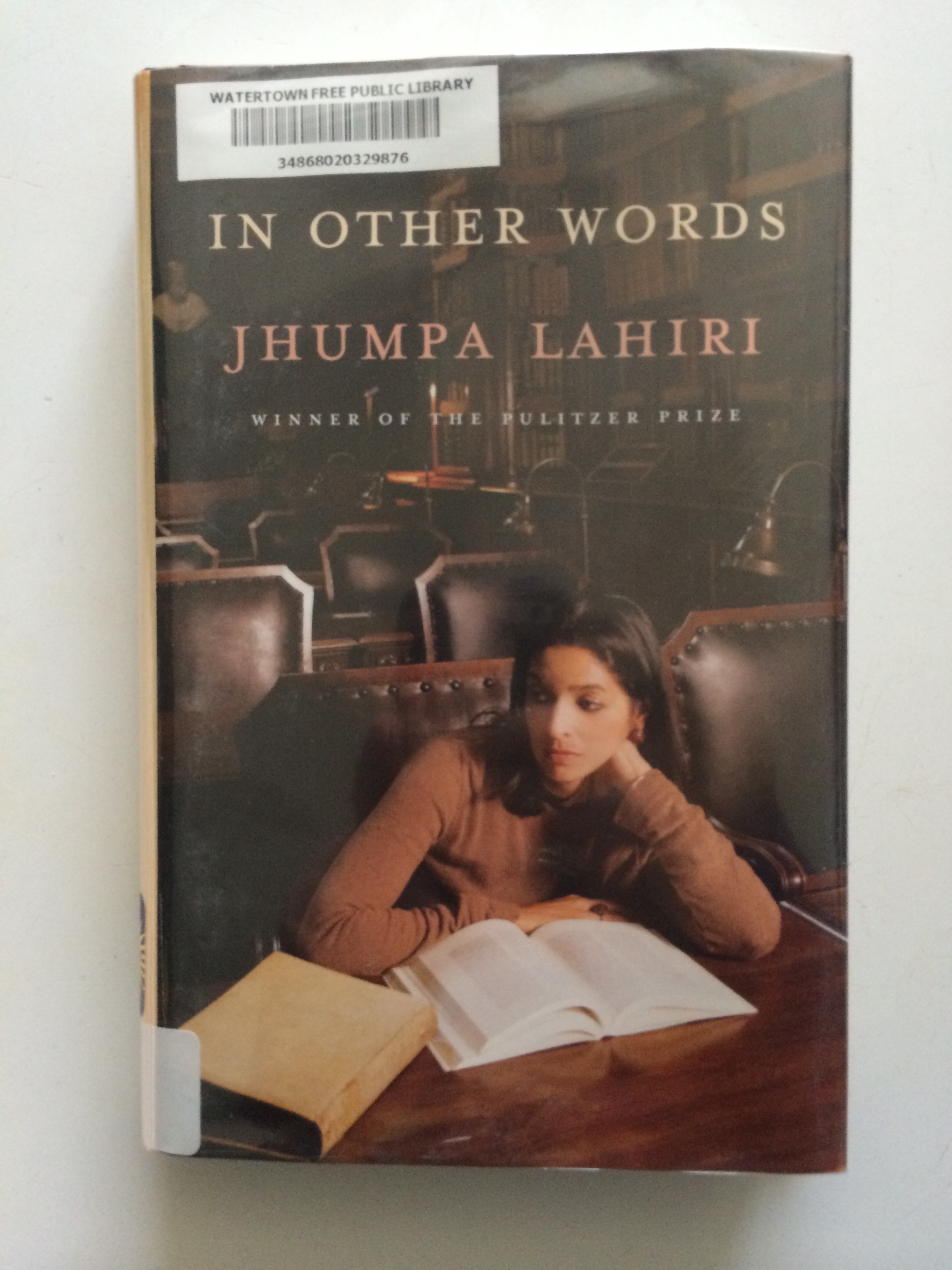
IMG_6535First is Jhumpa Lahiri’s In Other Words, a book of short meditations on her love for Italian. A few years ago, the writer acclaimed for books including The Interpreter of Maladies and The Lowland moved to Italy and committed to reading and writing exclusively in Italian, which she had started learning in her twenties (and which is, by the way, her third language). Ms. Lahiri wrote the book in Italian, and the original is presented side-by-side with Ann Goldstein’s translation into English (if that names sounds familiar, it might be because she also translates Elena Ferrante’s work).

I loved reading this (and it was fun to dip into the Italian to look for phrases to puzzle out, or just to whisper all those delightful consonants), not only for the language, but also for its consideration of isolation, belonging, effort, mastery, and passion. Highly recommended.

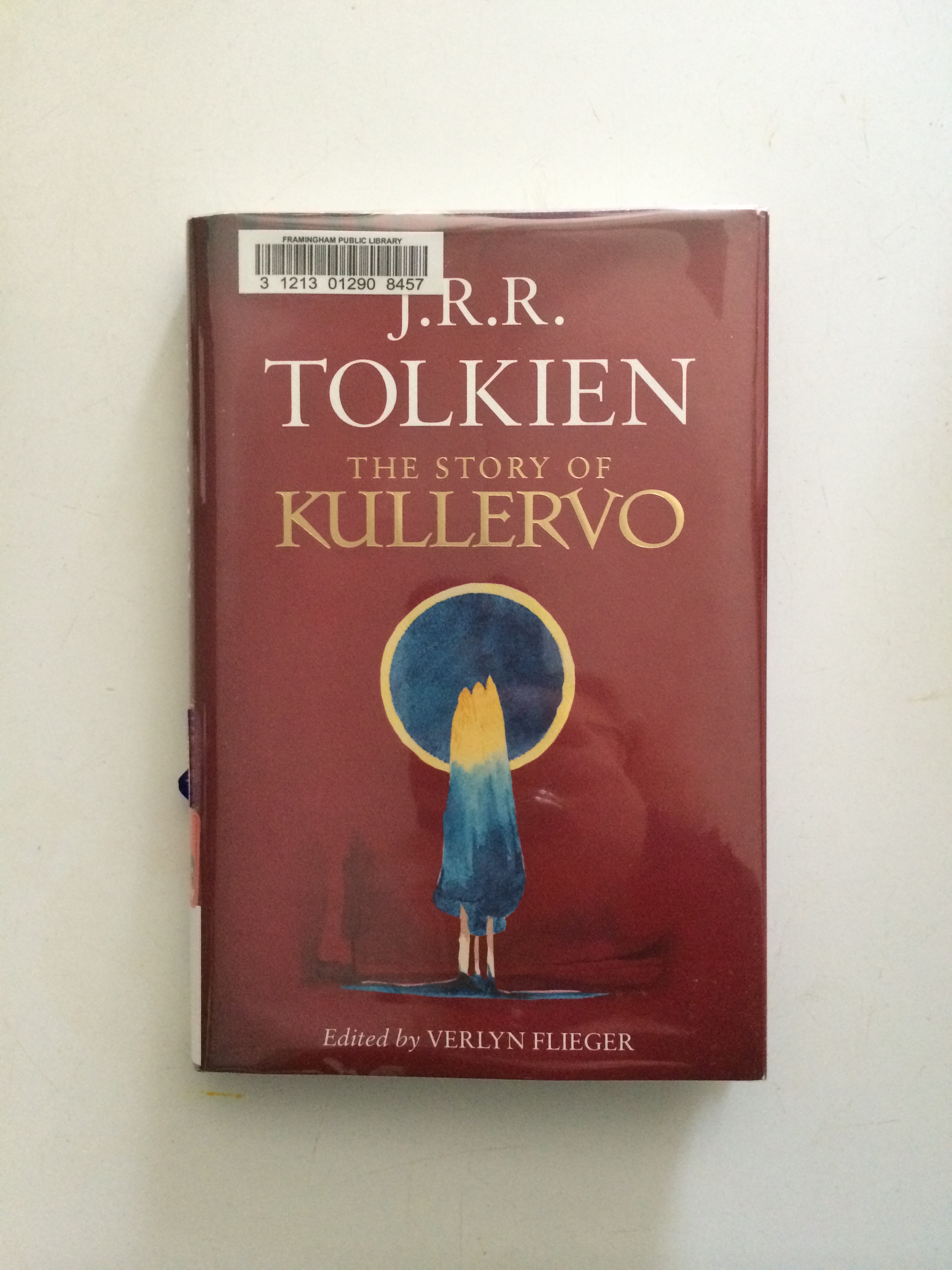
IMG_6536Next is J.R.R. Tolkien’s The Story of Kullervo, edited and with notes by esteemed Tolkien scholar Verlyn Flieger. Drawn from the Kalevala, a Finnish epic, the tragic tale follows Kullervo, one of the inspirations for The Silmarillion‘s Túrin Turambar. Here’s the summary from the publisher:

Brought up in the homestead of the dark magician Untamo, who killed his father, kidnapped his mother, and who tries three times to kill him when still a boy, Kullervo is alone save for the love of his twin sister, Wanona, and guarded by the magical powers of the black dog, Musti. When Kullervo is sold into slavery he swears revenge on the magician, but he will learn that even at the point of vengeance there is no escape from the cruelest of fates.

It’s a rather grim tale, and I think that if you’re not a Tolkien die-hard, this book isn’t for you, since the story itself is not fully fleshed out. The explanatory material is quite interesting, though, and it put the Kalevala on my to-read list.

Have you read any afternoon-long books recently?

Recommended Reading: Jennifer Stewart Miller’s A Fox Appears

A Fox Appears

My friend Emily sent me  A Fox Appears by Jennifer Stewart Miller, and I’m so grateful she did (thanks, Emily!). This is a small gem of a book, “a biography of a boy in haiku,” as the subtitle has it.

In six sections, the poet gives us glimpses of her son’s early life through haiku. Maybe you, like me, spent a fifth-grade unit on haiku, struggling to conjure up nature imagery and conform to the 5/7/5-syllable format (those pesky articles and conjunctions, am I right?). As it turns out, rules are meant to be broken; the charming folks at the Academy of American Poets tell us that in modern haiku-writing, while some formal elements may lapse, “the philosophy of haiku has been preserved: the focus on a brief moment in time; a use of provocative, colorful images; an ability to be read in one breath; and a sense of sudden enlightenment and illumination.”

IMG_6829That is exactly what I found in A Fox Appears. As Ms. Miller shows, the haiku is an ideal form (perhaps the ideal form) for evoking a parent’s perspective of the fleeting phases of early childhood. These poems are perfectly, unexpectedly descriptive; their simplicity enhances their perceptiveness.

Here are a few of my favorites (with apologies since the line indents won’t come through):

I stroke the sole
of your foot — small toes
flick open like a fan.

Tiny hands —
fiddlehead ferns
waiting to unfurl.

Patient as stone
you drop stones
in the sea.

The washing machine
empties your pockets —
acorns acorns.

Across a green field
a bluebird flew —
you were at school.

Lovely, aren’t they?

Cats, the moon, stones, and feathers appear throughout this slim volume, tying together the observations and giving us a sense of the passing of seasons and years. And I should note too that Franklin Einspruch’s beautiful black and white gouache artwork complements the poems very well. A Fox Appears is a beautiful volume, and recommended. Thank you Emily!

Have you ever written haiku? Do you have a favorite?

The Great Library Rundown, Part 2: Beach Reads


BeachReads

I don’t know about you, but my stack of books to take to the beach generally weighs more than my four-year-old. I’ve recently read three library books with beach potential; June approaches, so let’s assess, shall we?

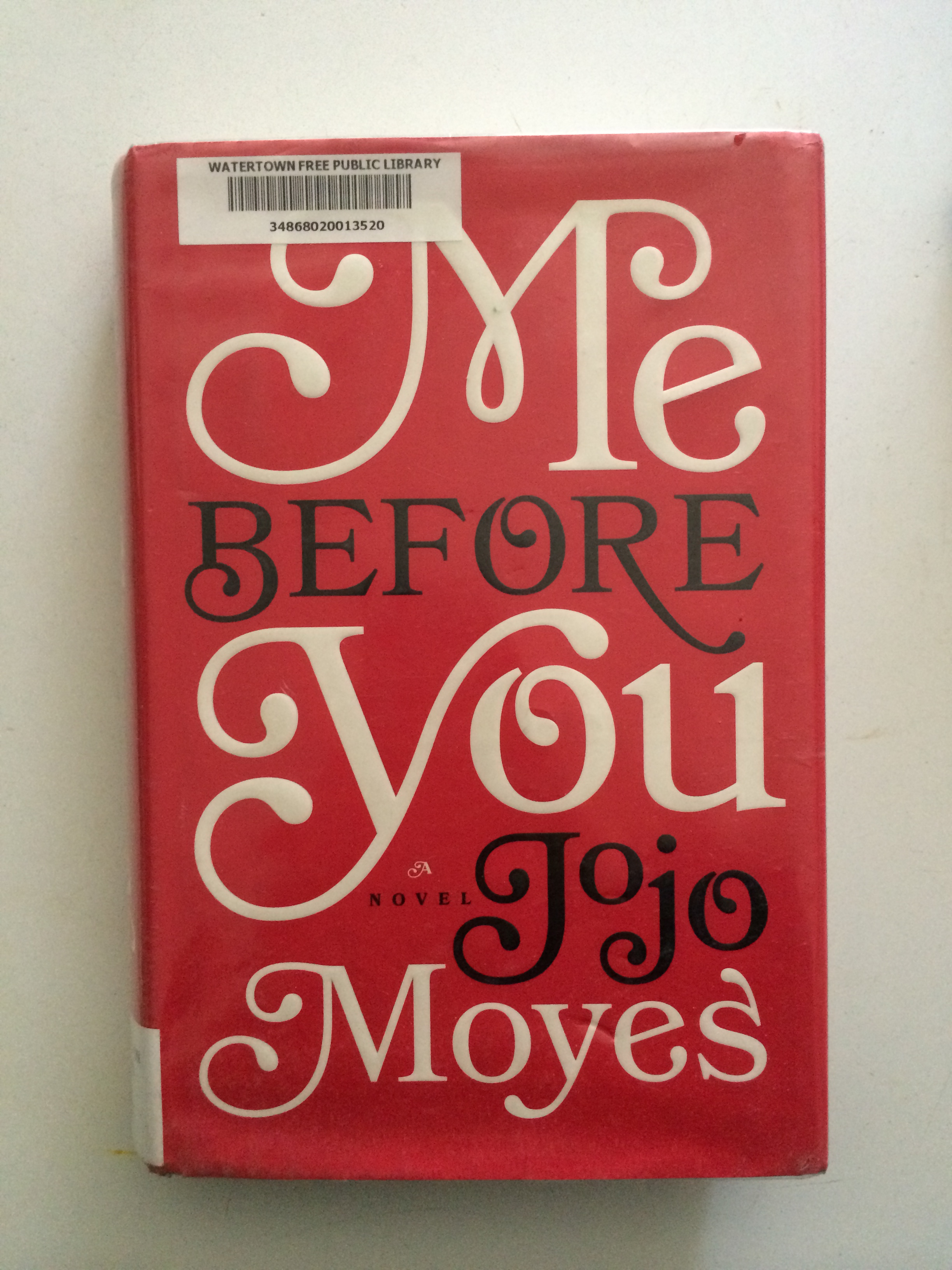
IMG_6537Me Before You, by Jojo Moyes

Yes, I know I might be the last person on the continent to have read this tearjerker (soon to be a feature film), but then again, there was still a waitlist for it at my local library.

Synopsis: Louisa, a quirky young woman from a working-class family, gets a last-ditch job as a companion for Will, a young businessman and adventurer paralyzed in a car accident. When Louisa finds out Will’s plans for physician-assisted suicide, she determines to prove to him that life is still worth living, and in the process, she opens up her own horizons.

The good: I liked that Lou comes from a working-class family, and that the book doesn’t attempt to skate over the difficulties of job loss and living paycheck-to-paycheck. Lou and her sister Treena, a brilliant single mom, have an interesting relationship, combative and loving at the same time.

The not-so-good: I thought the pacing was off and the changes in perspective were annoying. I wish there’d been more balance in the depiction of life as a quadriplegic; Will is pretty damn miserable—despite his enormous financial advantages—but certainly not all quadriplegics feel the same way (there’s an attempt to show this through a fictitious message board, but why not introduce another character?).

Verdict: Depends entirely on your taste for tearjerkers.

Maestra, by L.S. HiltonIMG_6838

Judith Rashleigh is an assistant at a London auction house who becomes embroiled in intrigue after she’s unjustly fired from her job and ends up on the French Riviera, trying to pass as one of the rich and carefree. Sex and murder and art fraud shenanigans ensue.

[Sidebar here: Whoever did the marketing on this book is very good—from the cover to the deliberate comparisons to Fifty Shades of Grey and Gone Girl, they’ve tried very hard to make this a hit. Oh, and the book already has two planned sequels and a movie deal. Le sigh.]

The good: This book had so much potential—there’s one good twist, the bits about art and appraisal are fascinating (I wished the book had stayed more focused on the art world), and somewhere there’s some good material relating to young women’s righteous rage at being undervalued at work and treated like sex objects all the time.

The bad:  Well, let’s see: there’s fat-shaming (lots of it), gratuitous name-dropping of designer labels (this gets worse as the book goes on), unconvincing plot maneuvers, repetitive, humorless sex scenes that try too hard to shock readers . . . I could go on.

The verdict: Leave it at the library.

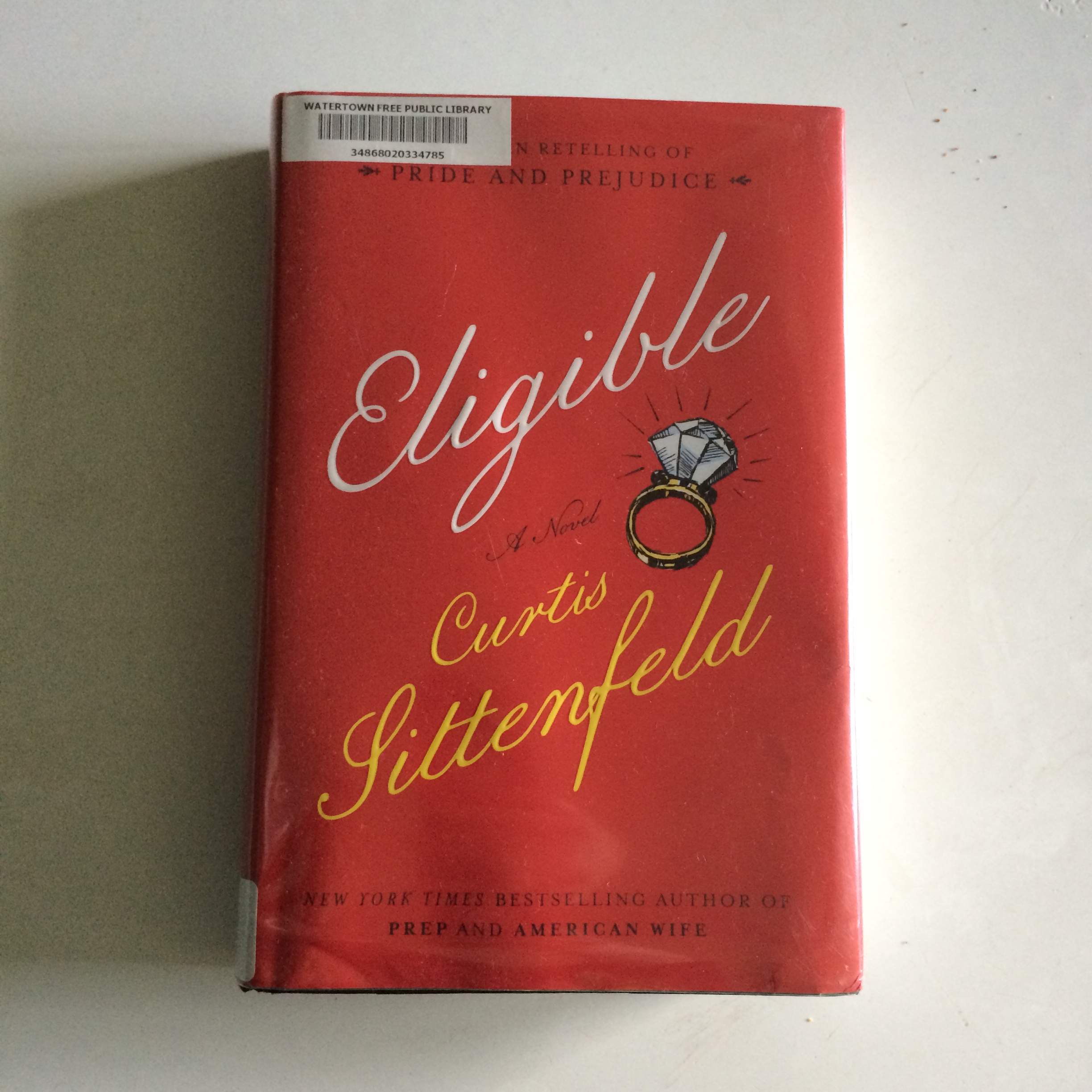
Eligible, by Curtis SittenfeldIMG_6864
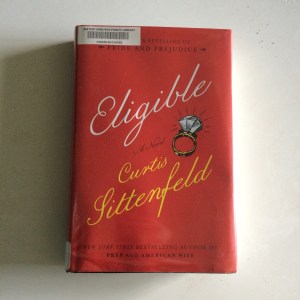
Synopsis: In this modern-day retelling of Pride and Prejudice, the Bennet sisters are natives of Cincinnati. Liz and Jane, both approaching 40, are home from New York to care for their dad after his heart attack when they meet Chip Bingley (former contestant on a Bachelor-type show) and his haughty neurosurgeon friend, Darcy. You can take it from there, folks.

The good: Part of the fun of reading this was, for me, guessing how Ms. Sittenfeld would update Austen’s plot points for twenty-first-century readers (CrossFit makes an appearance, for example). Liz and Jane are pitch-perfect, I loved the choice of Cincinnati as setting, and I think the Bennets’ socioeconmic status makes sense. And the last chapter is a-mazing.

The not-so-good: I think the attempts to highlight race and LGBTQ issues were a good idea, but not taken far enough. There’s quite a bit of silliness at the end, which I could have done without.

Also, I’m a transplanted Ohioan, and good lord did this make me miss Graeter’s and Skyline.

The verdict: Not destined to be a classic, and not Curtis Sittenfeld’s best (I think the consensus points to American Wife), but 100% beachworthy.

What’s on your beach reading list this summer?

“in the pleatpetal purring of mouthweathered May”: Karen Volkman’s “May”

IMG_6833A couple years ago, I reviewed Hailey Leithauser’s Swoop, a collection that plays with language so exuberantly that I found myself grinning over many of the poems.

I felt that same sense of exuberance–though tilted toward the macabre, I think–when I read Karen Volkman’s “May.”

In the poem’s couplets, “the old saw wind” dressed in May’s finery (“gaud gown and ruby reckoning”) “[s]ays, dance that skeletal startle the way I might.” In couplets the wind directs a kind of dance (“you one, you two, you three your cruder schemes, / you blanch black lurk and blood the pallid bone”) that’s more about evoking a sense of atmosphere through words that punch than about describing actual movement.

For me the poem captures those brief days in May when all the trees are blooming pink and white, but already on the cusp of discarding those petals—just waiting for the right breeze.

It’s a tricky poem, though; what do you think of it?


The Great Library Rundown, Part 1: Garth Greenwell’s What Belongs to You and Katie Roiphe’s The Violet Hour: Great Writers at the End

Though I generally don’t use my local library as often as I feel I should, over the last few months I’ve read a steady stream of library books, which I’ll be opining on in batches. Chez O is about to see some very busy weeks, so longer review posts will appear sporadically, I’m afraid.

Let’s sally forth, shall we?

In March I checked out two books I’ve had my eye on for quite a while: Garth Greenwell’s debut novel What Belongs to You and Katie Roiphe’s study of writers meeting their deaths, The Violet Hour. Both were on hold, so I had to return them before I could do a proper write-up, but here’s a short glimpse of each.

IMG_6233What Belongs to You is narrated by an American teacher living in Bulgaria, who finds himself drawn to Mitko, a beguiling and needy hustler. In long sentences and paragraphs (sometimes pages long), Mr. Greenwell reveals the narrator’s troubled Southern childhood, his attempts to control his desire for risk, his confessional impulses. The prose is precise and rather cool, I would say, for a book so concerned with lust and longing, but the contrast between subject and style works to draw the reader into the kinds of worlds we might ordinarily look past, to overcome our resistance to deeply examining uncomfortable emotions like fear, shame, and pity. It’s a remarkable, timely, and difficult novel, well worth reading.

Here’s a passage I particularly liked, from later in the novel when the narrator and his mother have traveled by train in a compartment with another woman and a small boy:

Making poems is a way of loving things, I had always thought, of preserving them, of living moments twice; or more than that, it was a way of living more fully, of bestowing on experience a richer meaning. But that wasn’t what it felt like when I looked back at the boy, wanting a last glimpse of him; it felt like a loss. Whatever I could make of him would diminish him, and I wondered whether I wasn’t really turning my back on things in making them into poems, whether instead of preserving the world I was taking refuge from it.


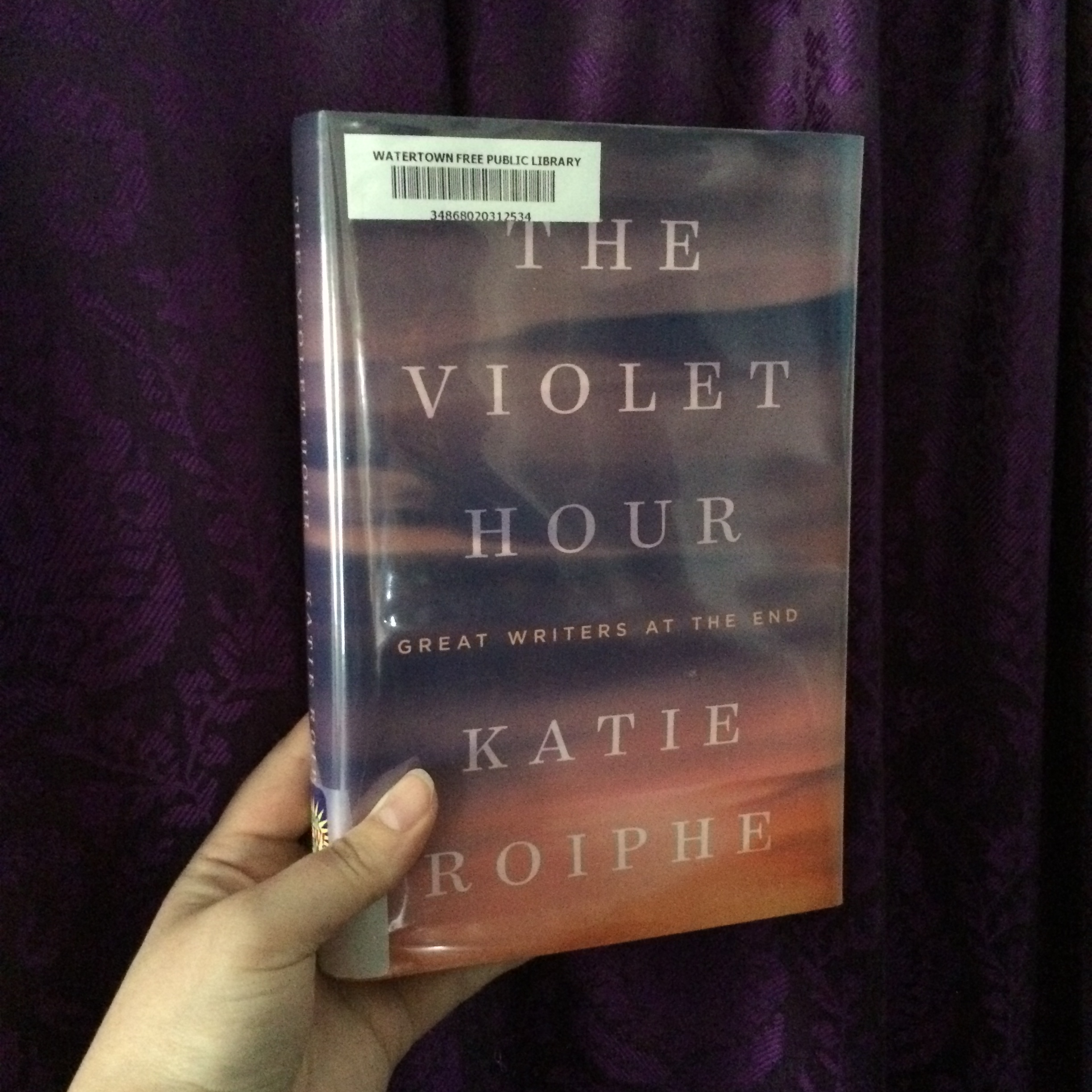
IMG_6239I’m fascinated with death—not in a Hot Topic skull necklace kind of way, I mean, but about its practical realties and existential murkiness—and so this book was right up my alley. Ms. Roiphe, herself the survivor of a near-fatal childhood illness, conducted research (including interviews with relatives, friends, and caregivers) on how writers approached their own looming ends. You’ll find chapters on Susan Sontag, Freud, Dylan Thomas, Maurice Sendak, and John Updike (and a conversation with James Salter at the end of the book); each is utterly different and completely absorbing.  As soon as I finished it, I put The Violet Hour on my (imaginary) wish list. Intellectual, unflinching, ferocious questioning. Here are a few lines I noted:

In even the worst deaths, observed closely, there is a great burst of life.

*

Time in the hospital is strange; it just hangs there, with no progression of the sun, no night, even, in all that fluorescence, in the nurses ducking in at three in the morning, in tests, and medications, and blood pressure takings.

*

[about James Salter] In some larger sense, of course, the thing I want from him is delusional. I want him to tell me what it means to come close to death. He flew fighter planes in Korea. He writes more radiant sentences than any writer alive. He seems from his fiction to see ends in beginnings, loss before the fact. From these unrelated details, I have somehow concocted a fantasy that he has made peace with death, seen it up close, knows its surface. I have a further implausible fantasy that he can or wants to share this knowledge with me and put it into words.

P.S. for Ripley: Happy birthday; no bildungsroman today!