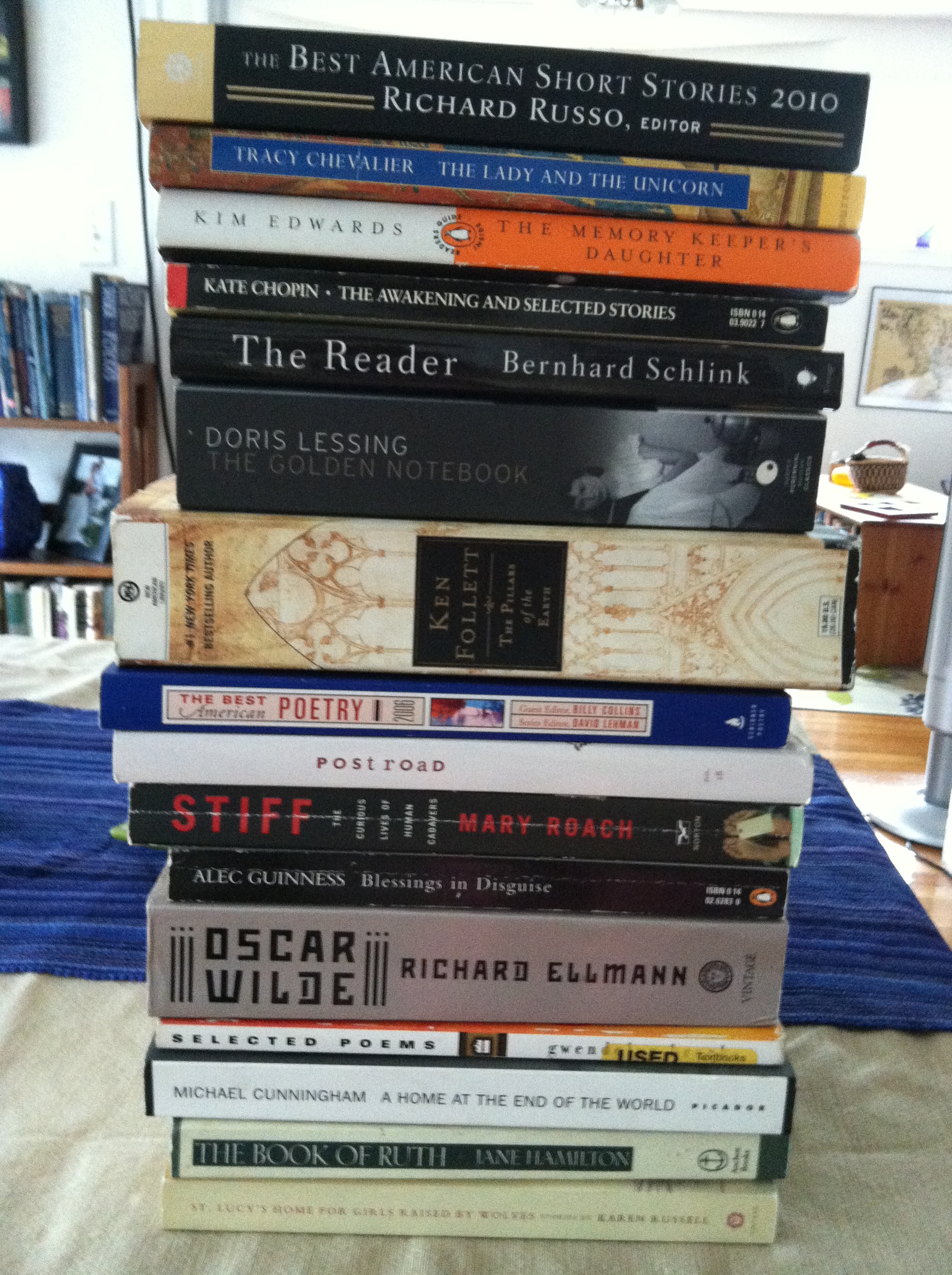
“they don’t pause, don’t buzz, don’t / fly up in fear and light again”

I’ve been itching to feature this poem all summer, but I restrained myself until the timing was right — and now it is!

Image courtesy SweetCrisis / Freedigitalphotos.net

Image courtesy SweetCrisis / Freedigitalphotos.net

This week, I’m working on Andrew Hudgins’s sublime “Wasps in August.” You can hear Professor Hudgins read the poem here, at Slate (text too). And you should immediately go find Ecstatic in the Poison, from which this poem comes. I own two copies, and I am, sad to say, not sharing.

Professor Hudgins is one of the best living formalist poets, and a kind and funny man to boot (he teaches at The Ohio State University, alma mater of your humble blogger). I’ve never had the pleasure of taking his classes, but my friends who did treasure the experience. He was gracious enough to support the campus literary magazine and its young poets, and he was (and is) a highly-regarded mentor to new poets.

This poem describes the dying days of the wasps outside the speaker’s home, who defend and nurture their larvae in the nest. But it’s about more than that: frailty, death, rebirth, renewal, futility . . . I could go on.

The last line will floor you.

Recommended Reading: The Pinecone, by Jenny Uglow

What drew me to this book was its subtitle: The Story of Sarah Losh, Forgotten Romantic Heroine—Antiquarian, Architect, and Visionary. I thought to myself, “why haven’t I heard of this person?”

Pine Cone image courtesy of cbenjasuwan / FreeDigitalPhotos.net

Pine Cone image courtesy of cbenjasuwan / FreeDigitalPhotos.net

Sarah Losh (1785-1853) was part of a large and prosperous family who lived in Wreay, in Cumbria (northern England). As I learned from Ms. Uglow’s history, Sarah never married, but enjoyed a full and exciting life of the mind, traveling and working with her sister Katharine (her closest friend, like Jane Austen’s sister Cassandra). She consistently stood up for and helped the poor and the vulnerable in her community, and after her death the townspeople planted a tree in her honor, the tribute they thought would be most fitting.

Sadly, Sarah ordered her own papers and letters to be destroyed, so Ms. Uglow reconstructs her history by painting a picture of her extended family and the cultural milieu of Cumbria in particular and late-eighteenth- and early-nineteenth-century England and Europe in general.

Sarah’s crowning achievement is the unique (to say the least) village church at Wreay, which she redesigned herself, choosing everything from the stone to the timber to the glass. She even helped to carve the baptistry and the candlesticks. The church features lecterns in the shapes of an eagle and a stork; images of ammonites and other fossils, pinecones, lotuses, and even bats! I did wish the book’s pictures were in color so that I could get a better sense of the church’s tone — I rather doubt I’ll be in Cumbria any time soon.

A few odds and ends that I loved (and which made me realize that, for books like The Pinecone, I should really invest in these):

  • The Bishop of Carlisle, Dean Milner, wore wigs, which, according to his granddaughter, “were known in the family as ‘Highty, Tighty, and Scrub; the first for London and State occasions; the second for official appearances in Carlisle; and Scrub for home wear'” (72).
  • Sarah’s father John belonged to a club, and the men, over a very long sitting, would each drink three bottles of port, except “‘On rare occasions, wrote Lonsdale, ‘such as a victory by Nelson or the dashing Cochrane, the fourth bottle to each man was held to be the right mode of rendering the fact historical'” (74).
  • One thing that struck me was how forcefully and effectually Sarah’s uncle, James Losh, advocated for the education and intellectual advancement of his nieces, and his admiring praise for Sarah’s many accomplishments. (For instance, she studied Italian and French, could sight-read Latin, and she studied ancient Greek three hours every day until she could translate it almost at sight; Ms. Uglow compares her to Eliot’s Dorothea [78]).
  • A book that was popular in the nineteenth century and so good that Byron “allegedly wept with jealousy when he read it” (209): Thomas Hope’s Anastasius. I just looked for it on Goodreads, and there isn’t a single rating or review.
  • Instead of gargoyles, Sarah’s church features a crocodile, a cross between a snake and a plesiosaur, a winged turtle, and a dragon. The dragon’s mouth spouts smoke from the boiler in the church below. Seriously. Her church has a fire-breathing dragon.
  • I love the profusion of treatises with unassuming titles in the nineteenth century. Ms. Uglow does an excellent job of showcasing some of those titles, as well as the nineteenth century’s numerous amateur societies that discussed and spurred advancements in the arts and sciences. I wonder, do blogs today take up some of these societies’ functions? Are we a dispersed Society for the Advancement of Reading?

Full of interesting anecdotes and offering a sweeping overview of this fascinating period in English history, The Pinecone is an excellent foray into reviving the memory of an extraordinary woman.

Have you read any great nonfiction books lately? Do you know of any forgotten female figures in need of a revival?

Bookstore in Pictures: The Montague Bookmill

A follow-up to my post yesterday about our bookish wedding.

First floor, in the back

First floor, in the back

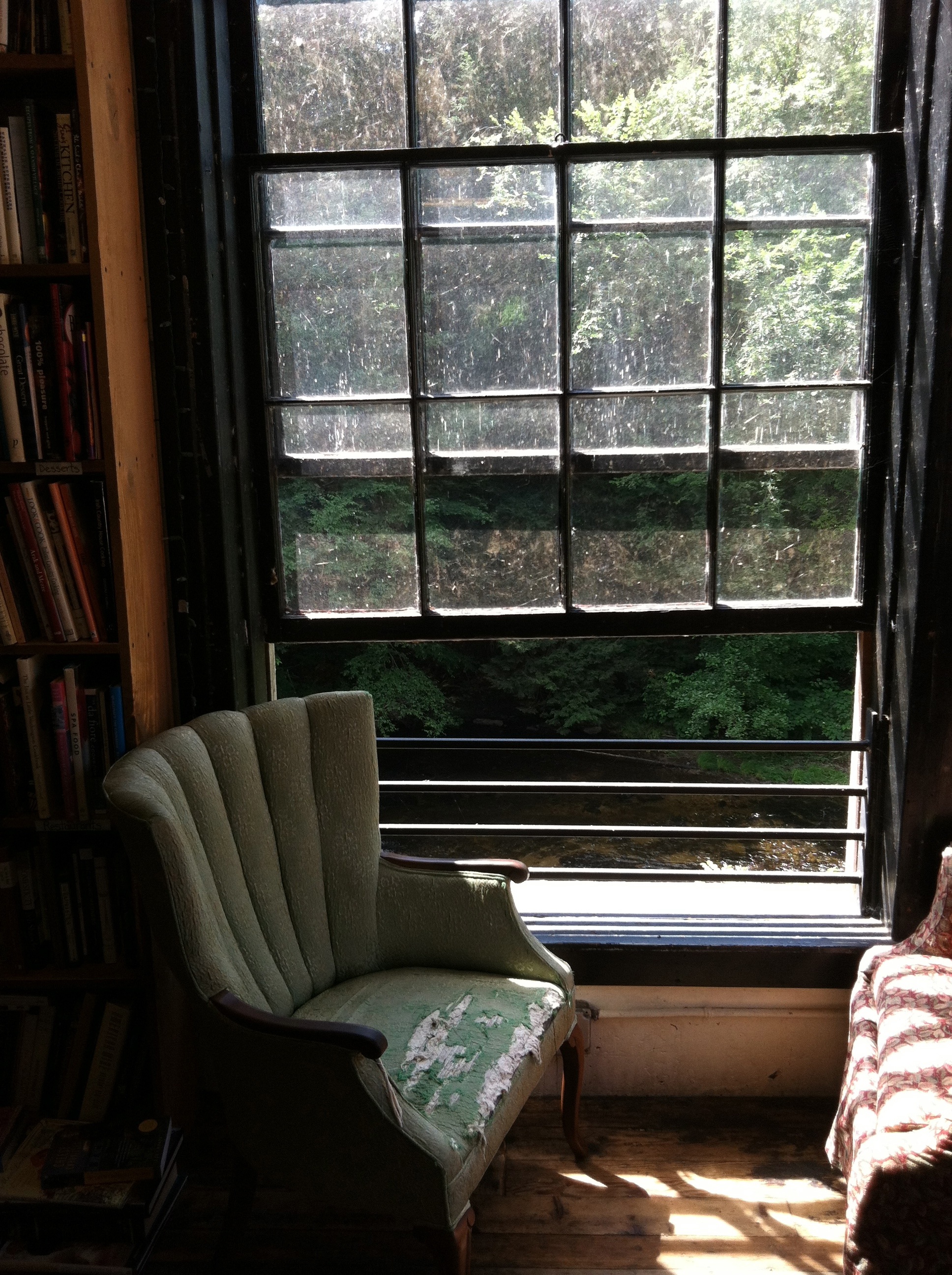
Comfy chairs by a window overlooking the river

Comfy chairs by a window overlooking the river

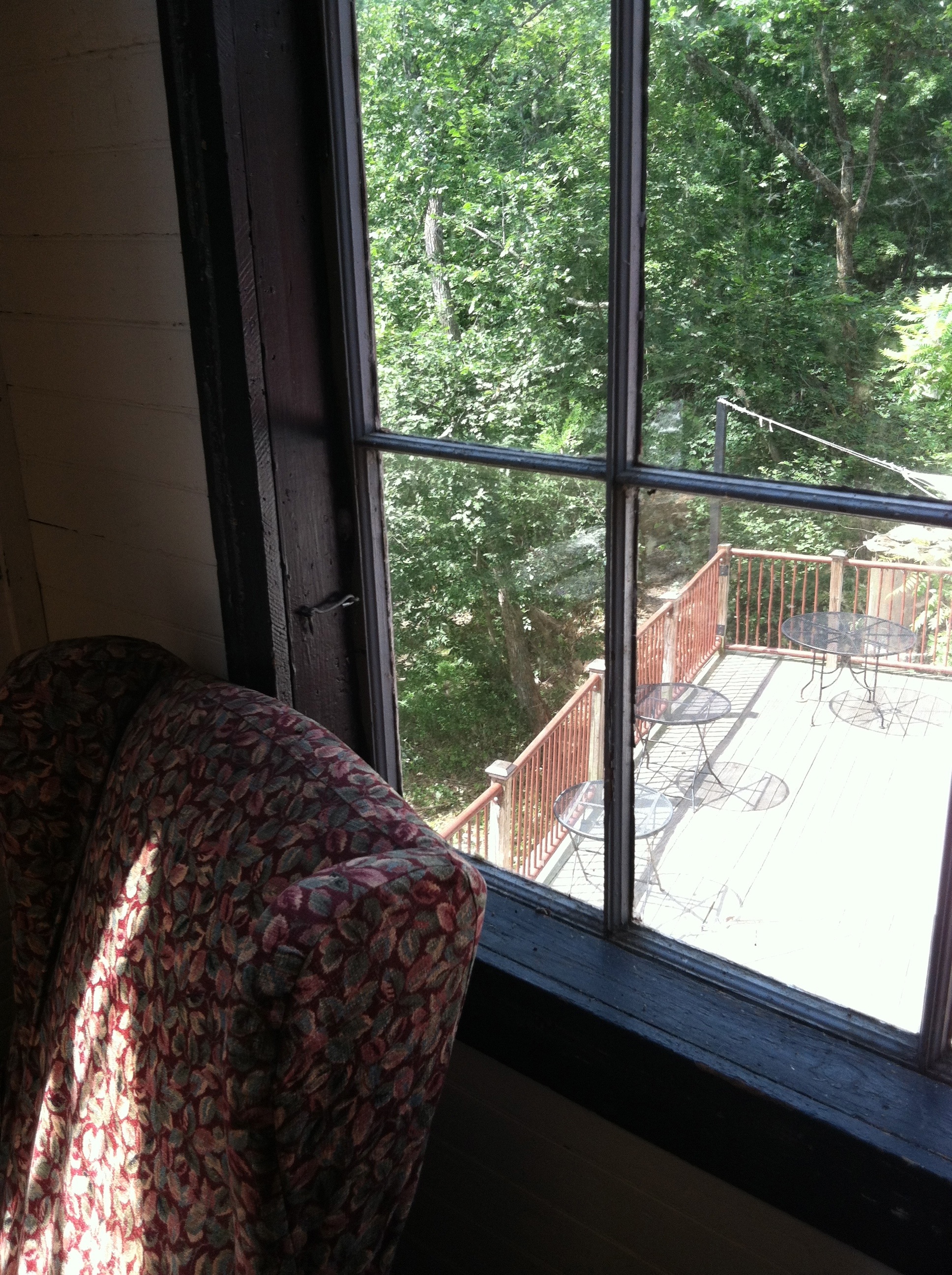
A view of the Night Kitchen's deck, where we were married

A view of the Night Kitchen’s deck, where we were married

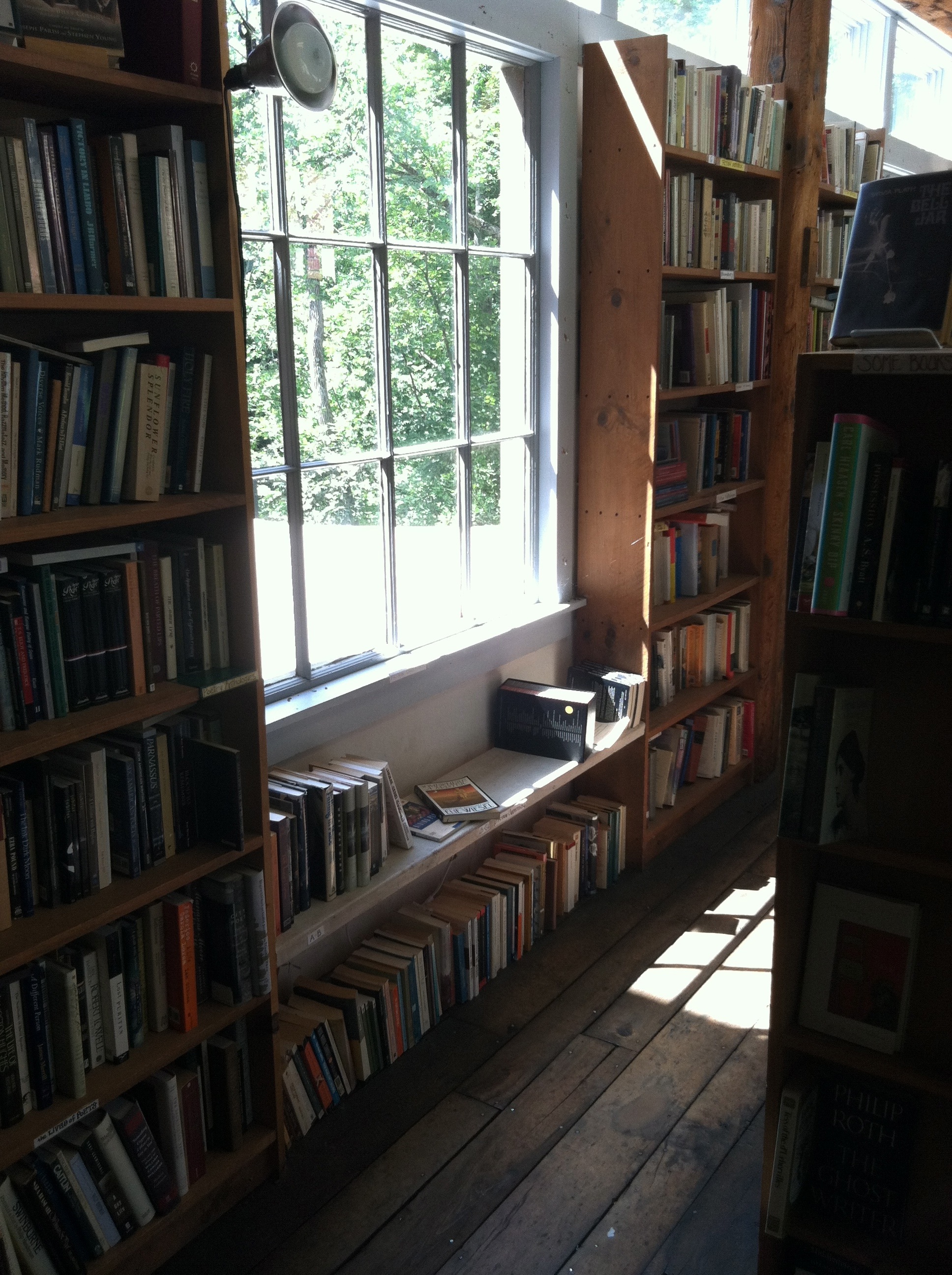
First floor, right side room -- poetry and fiction

First floor, right side room — poetry and fiction

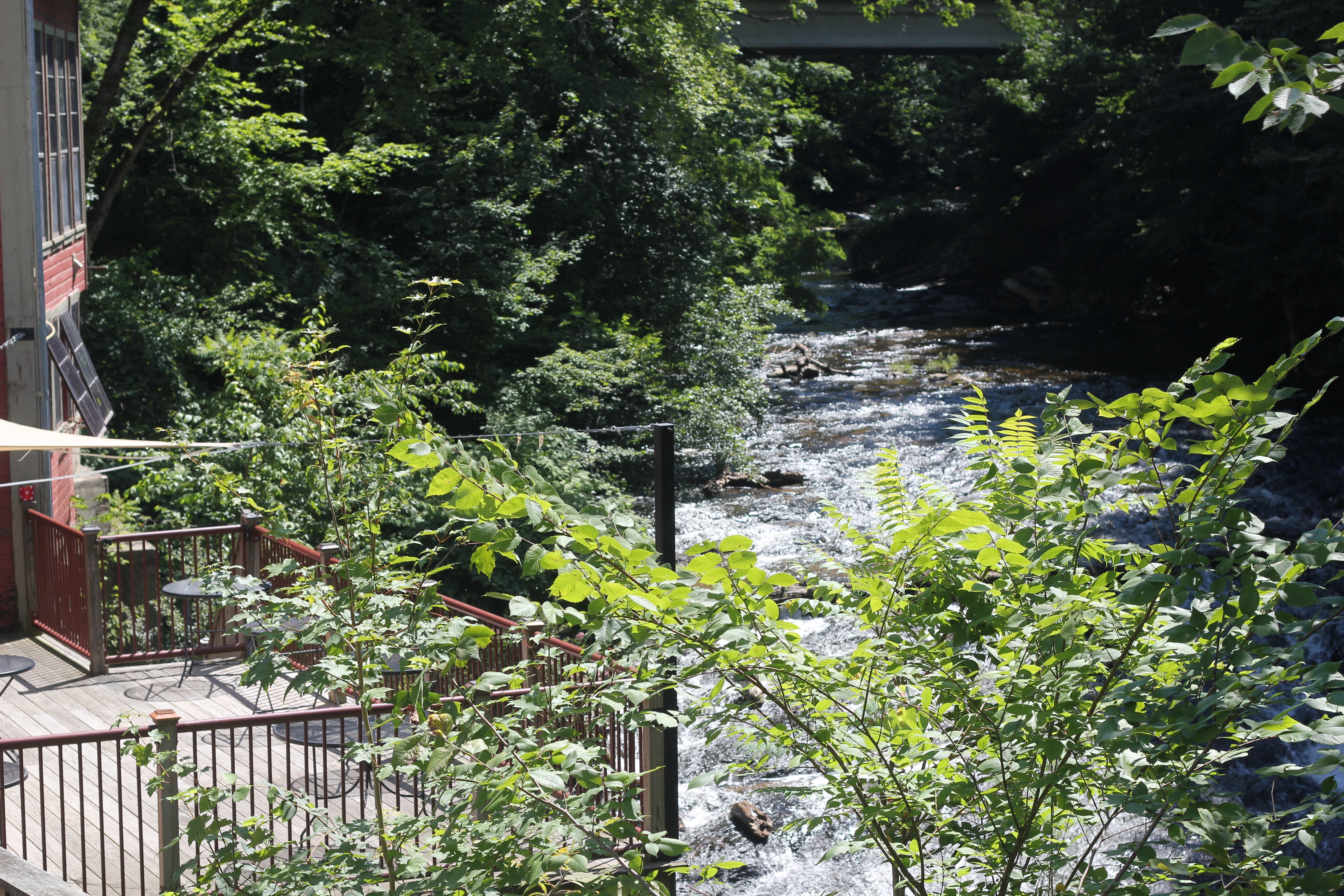
The river and falls.

The river and falls.

The deck where we were married

The deck where we were married

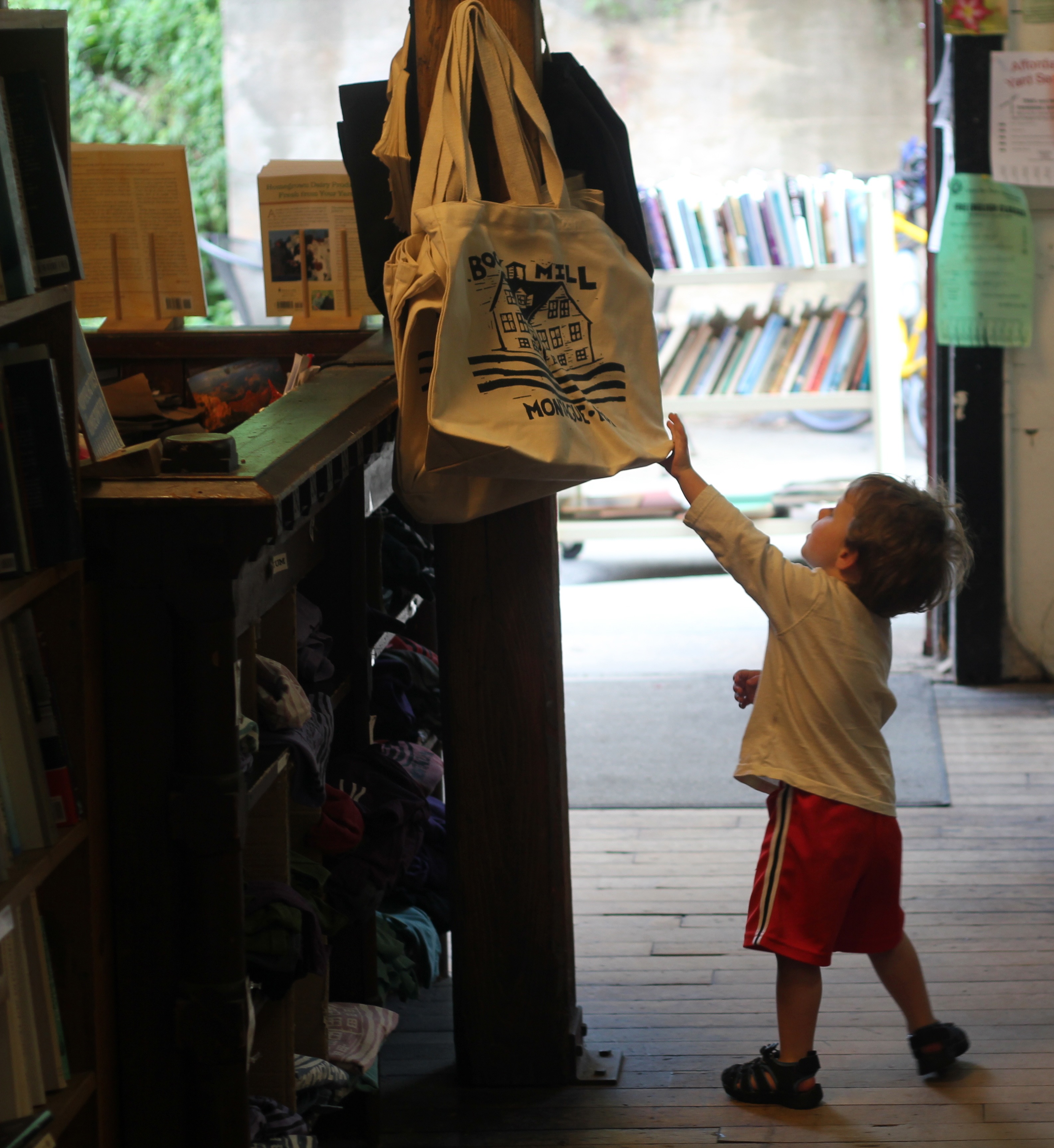
Our son is something of an indiscriminate reader.

Our son is something of an indiscriminate reader.

He thought this was my tote bag, mysteriously transported from home

He thought this was my tote bag, mysteriously transported from home

That path on the left was our "aisle."

That path on the left was our “aisle.”

This patio is surrounded by flowers, and it's where we went after the ceremony for champagne and toasts before lunch.

This patio is surrounded by flowers, and it’s where we went after the ceremony for champagne and toasts before lunch.

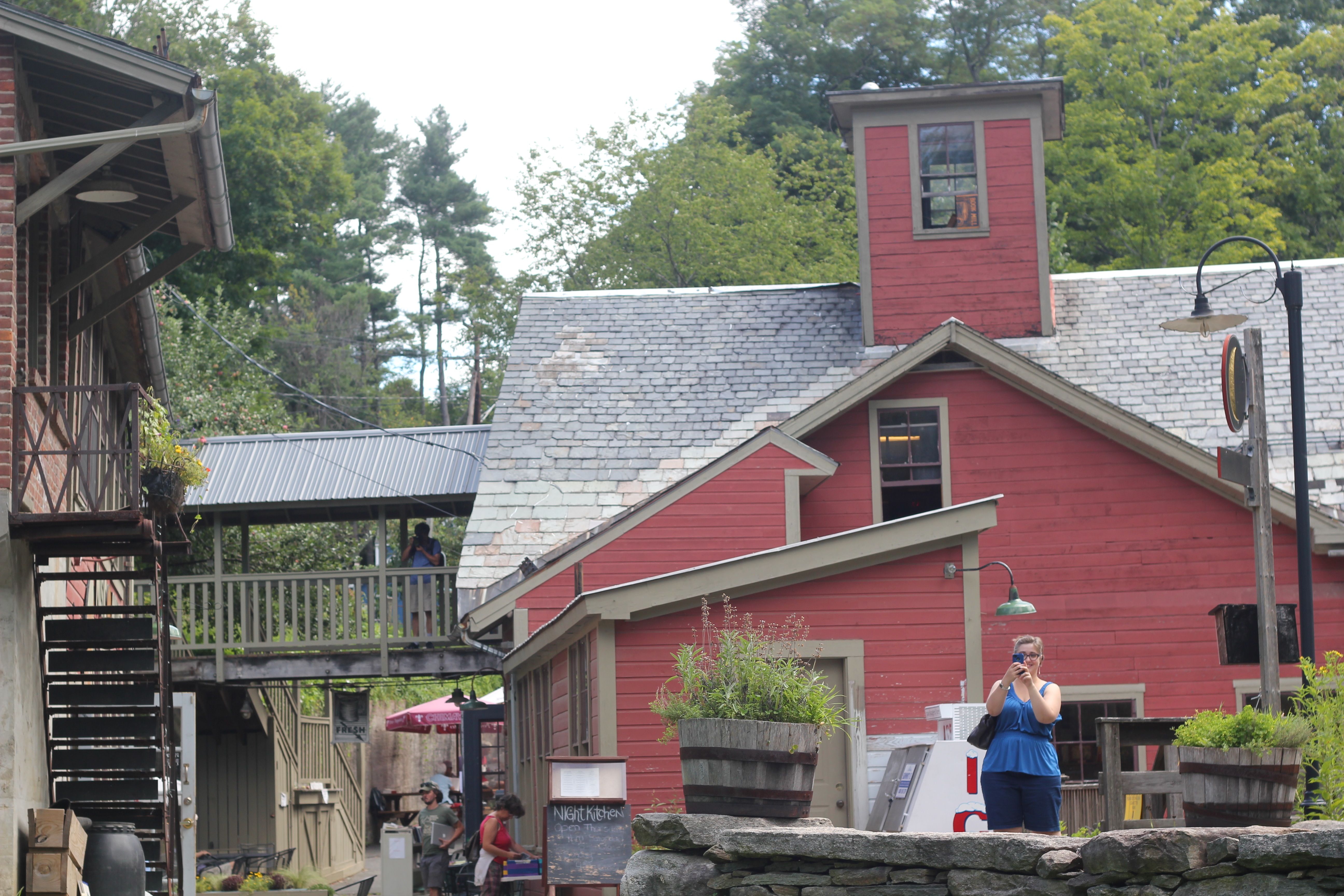
Here's one view of the mill (that's me in blue, taking a picture of my husband).

Here’s one view of the mill (that’s me in blue, taking a picture of my husband).

Upstairs on the second floor -- a little reading or writing nook.

Upstairs on the second floor — a little reading or writing nook.

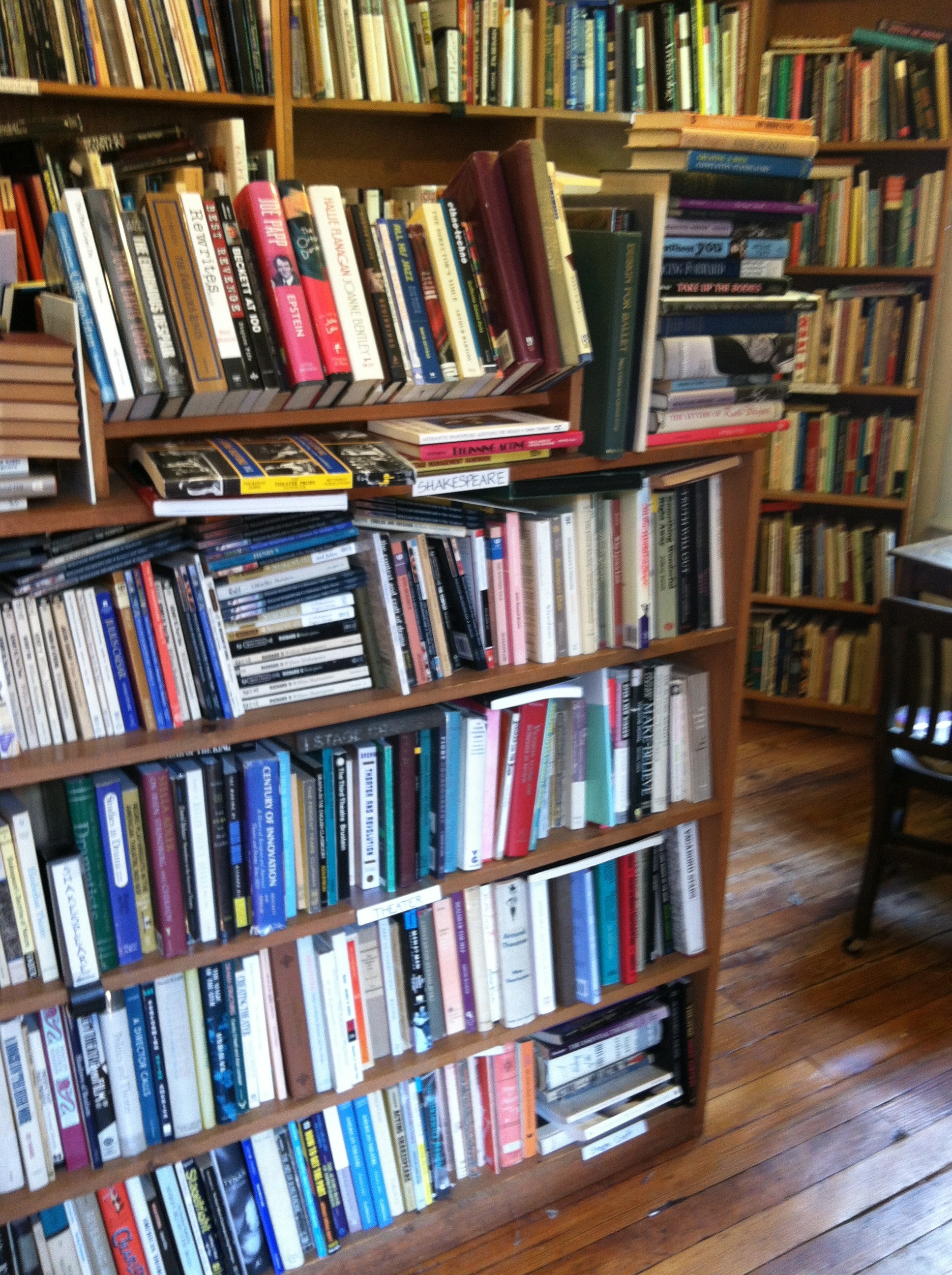
Shakespeare and theatre section

Shakespeare and theatre section

The large upstairs nonfiction room; to the right, out of the frame, is a walkway, another entrance.

The large upstairs nonfiction room; to the right, out of the frame, is a walkway, another entrance.

old typewriters above the narrow stairs

old typewriters above the narrow stairs

This is us! Three years later . . .

This is us! Three years later . . .

A Literary Wedding, or, “Earth’s the right place for love: / I don’t know where it’s likely to go better.”

our rings

Our wedding rings

We were married three years ago this week, back in the olden days before Pinterest provided endless helpful suggestions regarding how to personalize your wedding with monograms and mason jars.

Now, I love a mason jar as much as the next gal, but our last name’s initial looks a heckuva lot like a circle, so I didn’t (and don’t) see much point in monogramming anything. I think it would have confused people. (“Which table are you sitting at?” “Table 0.” “Oh, I thought we were at table O.” “Oh dear.”) Personalizing one’s wedding ought to mean something more than splashing one’s initials all over it in in perfect wildflower hues, right?

Our wedding would never make the pages of Martha Stewart Weddings. We didn’t meticulously handcraft garlands of paper cranes from the pages of vintage books. We didn’t do favors, rice, confetti, a “real” wedding cake (we went with the Heart of Darkness chocolate torte, with mango coulis), or a “normal” ceremony.

What we did do was try very hard to make the wedding our own, an event that expressed not only who we are as a couple but where we came from — the people and words and music that shaped our lives.

The program included the line from “Birches” I’ve used in this post’s title, and Juliet’s immortal lines, “My bounty is as boundless as the sea / My love as deep. The more I give to thee / The more I have, for both are infinite.” The lettering on the front of the program used a font based on Jane Austen’s handwriting; on the last page we reprinted Shakespeare’s Sonnet 130 in memory of absent friends.

The processional was “Building the Barn” from Witness, because, well, just watch that part of the movie (bonus: Viggo Mortenson cameo!). And the recessional was “Everyone” by Van Morrison because, well, watch the end of The Royal Tenenbaums. But only if you’ve seen the beginning and the middle.

While guests waited they had the option of tinkering with a crossword we made about us, our friends, and families, or looking out over a little river and falls, or browsing in the bookstore.

Yes, we were married at a bookstore. Well, technically, we were married on a deck that’s part of a restaurant that’s located in an old mill that’s been converted into a used bookstore in a town called, of all things, Montague. But I just tell everyone that we were married at a bookstore. It’s easier that way.

[It’s lovely to be able to return to a place that holds such beautiful memories for us; we try to go back at least once a year. I’ll post pictures from our latest visit tomorrow.  I bet you’ll want to go there too.]

Our ceremony was comprised of the usual wedding bits, retooled to suit our beliefs and preferred wording, and literary readings. Each of us asked a parent, a sibling, a friend, and an aunt or uncle to read during the ceremony, in groups of two.

Which readings, you ask?

  • “In Lands I Never Saw,” by Emily Dickinson
  • “The Owl and the Pussycat,” by Edward Lear
  • Most Like an Arch This Marriage,” by John Ciardi
  • Sonnet 116, by William Shakespeare
  • “The Master Speed,” by Robert Frost
  • a selection from the Song of Songs
  • a selection from Emma, by Jane Austen
  • a selection from The Lord of the Rings, by J.R.R. Tolkien

I can still hear each one of these people reading, people we love who shared these words that mean so much to us. Because a marriage ceremony is an act of speaking something into being, and it’s important to get the words right.

***

So, since today is Tuesday, and therefore a poetry day around these parts, I thought today I’d highlight a poem that wasn’t read at our wedding.

You read that right. We both love Robert Frost’s “Birches” — so much so that my husband’s wedding ring is etched to look like birch bark — but it is long, and not really related to marriage, so we chose a different Frost poem for our set of readings. Now, though, after three years and one child together, this poem has taken on even more significance to us. Sometimes I imagine my son as the boy in the poem, confident though solitary. Sometimes I turn to the poem when things get hard, as they are wont to do, when

I’d like to get away from earth awhile
And then come back to it and begin over.

But above all, we love the poem for its abiding love for the beauty and promise of this world and its often-anonymous inhabitants. After all, “one could do worse than be a swinger of birches.”

Three years later, at the bookmill.

Three years later, at the Bookmill.

Did you incorporate readings into your wedding ceremony? How did you choose your readings?
Recommended Reading: Frances and Bernard, by Carlene Bauer

Letter-writing

As I’ve mentioned before, I love a good epistolary novel, and here’s one, slender and new, that I hope you’ll love too.

It’s no secret that Carlene Bauer takes as her models for her correspondents Flannery O’Connor and Robert Lowell; in fact, several reviewers have complained that those (real) voices have not been satisfactorily mimicked, or that Ms. Bauer ought to have worked with material of her own devising.

I confess that I am unmoved by both these objections. It may be heretical to say it, as someone who attended BU and sat in the Lowell room from time to time, but confessional is not my favored poetic brand, and I have been derelict in my scholarly duty to thoroughly read O’Connor (though what I have read is sublime). And why shouldn’t writers dip into the past or borrow historical figures, in whole or in part, as they tell their own stories? [That said, I think the voices of the wholly imagined characters — Claire and Ted — come through very strongly.]

So. I loved this book for its earnest but unwearisome approach to matters of faith, writing, love, and family, which, as you might suppose, are all connected. But humor, so often lost in conversations about weighty subjects (an understatement, I know), is wry and sly and happening all the time in this novel. Here’s my favorite zinger: “The Beats are really nothing more than a troop of malevolent Boy Scouts trying to earn badges for cultural arson” (14).

[Sidebar: I will be stealing one of Frances’s lines for my Christmas/Hannukah cards this year: “Love and joy come to you, and to your wassail too” (9). I know it’s too early to be thinking about Christmas, and yet: look at me go!]

I loved the way Frances and Bernard proceed almost immediately into matters of import, which I’ve found can happen when one starts a correspondence with someone not well known and not likely to be seen again, even if that’s something one would like. As I read the novel, I thought about my own treasured friendships, and resolved to write more letters.

[I’m rather terrible at keeping up with correspondence, though; do you have any tips for becoming a reliable letter-writer?]

What are your favorite first lines?

Yesterday, my friend Kori pointed me to a piece in the Atlantic in which authors choose their favorite opening lines, and write little paragraphs about their reasoning, or, in Margaret Atwood’s case, a tweet:

“Call me Ishmael.” 3 words. Power-packed. Why Ishmael? It’s not his real name. Who’s he speaking to? Eh?

That’s my favorite of the lot. My own favorite first line, however, is a tossup between Hamlet and Jane Eyre.

Hamlet begins with Bernardo’s challenge, “Who’s there?” — and the interpretive possibilities are endless. Is he afraid? Full of bravado? Why is a soldier, on duty in his own kingdom, challenging someone else in uniform? Is it nighttime? Is he speaking to us, the audience? Who’s the “who”? How do we define ourselves? How do we answer?

Shakespeare offers at least as many questions in two words as Melville does in three.

Now, on to Jane Eyre: “There was no possibility of taking a walk that day.” Why not? Who was planning on walking? What’s the significance of “that” day?

There was no possibility of taking a walk that day.

There was no possibility of taking a walk that day.

This line has more meaning as you progress through the novel (and if you haven’t, now’s the time to stop reading this post so I don’t ruin the experience for you. And seriously, go read Jane Eyre!).

Of course, “that” day is the day that John Reed throws a book at Jane’s head and Mrs. Reed sends Jane to the Red Room, which precipitates her move to Lowood, and, eventually, Thornfield Hall. And while Jane and her cousins remain inside on account of the rain, in a few short weeks, she and the other unfortunate girls at Lowood will be exposed to all manner of the elements. Jane often walks when others think she ought not to, or when she has no other choice. For instance, it’s on a long walk alone (despite the protestations of Mrs. Fairfax) that she meets Mr. Rochester, and it’s alone again that she makes her way through the fields to the Riverses’ cottage.

But where would Jane have ended up if she had been able to walk that day?

What are your favorite first lines?

Recommended Reading: Gone Girl, by Gillian Flynn

I know, I know: this was the it book of 2012, and I am late to the party.

It’s a pretty rad party.

Gone Girl is part mystery, part comedy, part domestic drama, and entirely, viciously delightful. Amy disappears on the morning of her fifth wedding anniversary, and police attention begins to swirl (inevitably?) on her attractive husband with the flimsy alibi. But nothing turns out how you think it will.

Highly recommended, especially as a highbrow beach read.

Recommended Essay: “Twenty Little Poems That Could Save America,” by Tony Hoagland

Tony Hoagland’s piece in Harper’s, which you can read here, is long and worth the length. His opening salvo is a lament for the state of poetry in schools, and an argument for poetry’s necessity:

 . . . poetry is our common treasure-house, and we need its aliveness, its respect for the subconscious, its willingness to entertain ambiguity; we need its plaintive truth-telling about the human condition and its imaginative exhibitions of linguistic freedom, which confront the general culture’s more grotesque manipulations. We need the emotional training sessions poetry conducts us through. We need its previews of coming attractions: heartbreak, survival, failure, endurance, understanding, more heartbreak.

He’s certainly not the first to suggest that students (and sometimes teachers too!) have a difficult time engaging with non-contemporary poetry, but I like his concrete proposal for building a common American cultural vernacular: teach twenty contemporary poems to all students.

Now, I know there’s a lot of talk out there in the education world about Common Core standards, and I’m not going to get into it here (I have my doubts, to put it mildly.). But I do think it’s essential, as does Hoagland that we all share at least some cultural references in common. I’ve written before about the all-university summer reading requirement at Ohio State, and how wonderful that was.

As I used to tell my students, you’ll be awfully embarrassed at your in-laws’ cocktail party/barbecue/mini-golf outing/gallery opening if you don’t know who Hamlet is.

What I especially like about Mr. Hoagland’s piece is his suggestion that we do not jettison the classics, but rather work backwards toward them:

The cultural chain has been broken, as anyone paying attention knows. Moreover, the written word always needs renewal. Art must be recast continually. “Dover Beach” and “My mistress’ eyes are nothing like the sun” are not lost, but instead are being rewritten again and again, a hundred times for each new generation. Culture is always reanimating itself, and when it does so, it validates, reorganizes, and reinvigorates the past as well as the present.

If anthologies were structured to represent the way that most of us actually learn, they would begin in the present and “progress” into the past. I read Lawrence Ferlinghetti before I read D. H. Lawrence before I read Thomas Wyatt. Once the literate appetite is whetted, it will keep turning to new tastes. A reader who first falls in love with Billy Collins or Mary Oliver is likely then to drift into an anthology that includes Emily Dickinson and Thomas Hardy.

Brilliant. And true; pairing contemporary poems with older poems is an excellent teaching method, in my experience. Students are surprised (and thrilled) to learn just how sex-filled John Donne’s poetry is (oh is it ever), and that a good number of Shakespeare’s sonnets were written to a man.

You’ll find the list of twenty poems that Mr. Hoagland recommends at the end of his essay.  I’d add Gwendolyn Brooks’s “We Real Cool” and “Ecstatic in the Poison” by Andrew Hudgins. Which poem or poems would you add?

Recommended Reading: Shift, by Hugh Howey

When Dust comes out this August, I’ll be first in line to buy the complete Silo trilogy, without even reading the last one first. These books are just so fun—suspenseful, inventive page-turners.

My practice is never to reveal spoilers, and I won’t start here. So really, I can’t say too much about the plot because you must read Wool first. Shift answers some of Wool‘s questions and will leave the reader with many more to ponder before the final installment comes out.

If anyone out there has read Hugh Howey’s other novels, I’d love to hear what you thought of them!