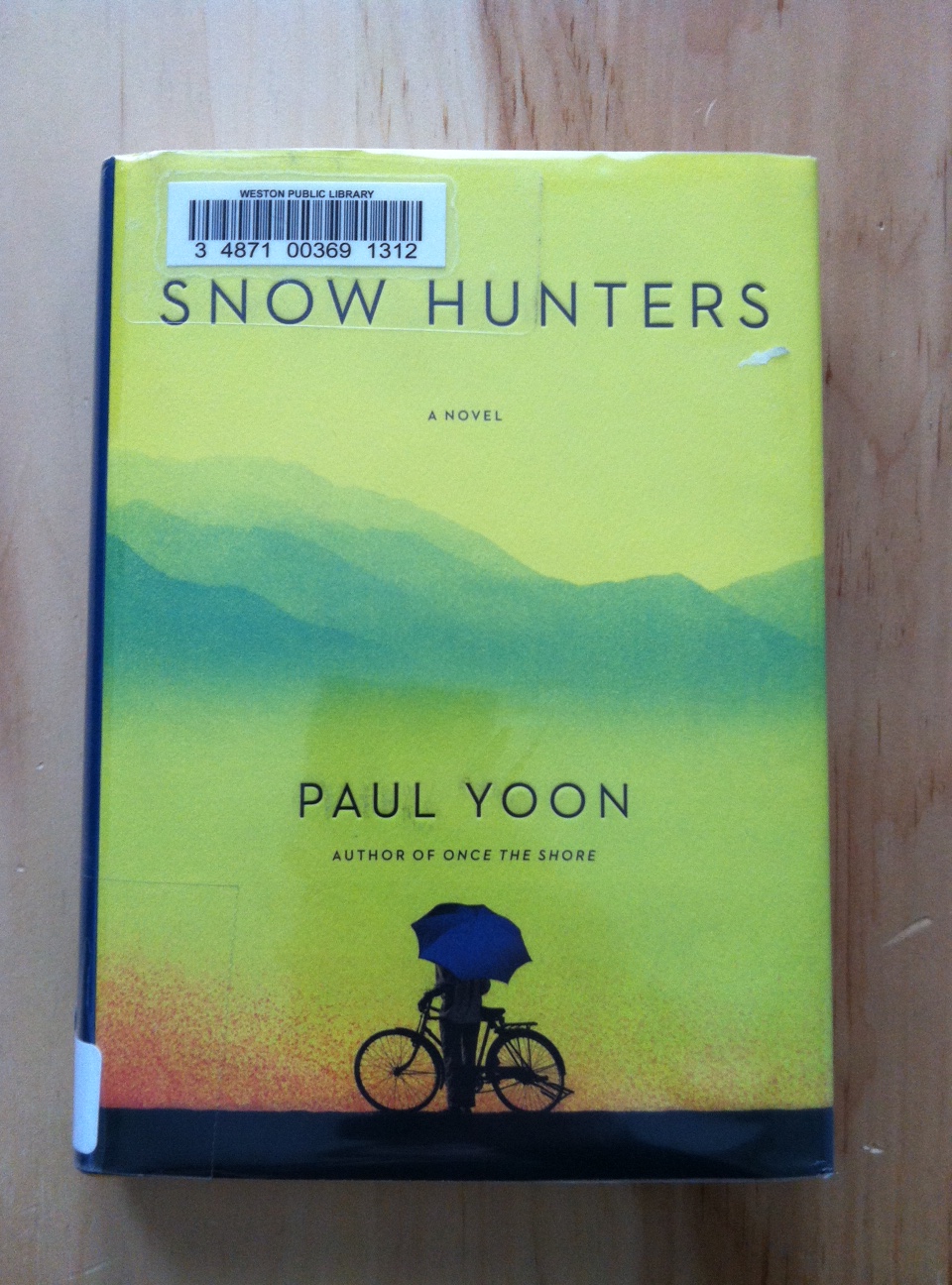
Recommended Reading: Snow Hunters, by Paul Yoon

snow huntersI’m so pleased to end my year of reading recommendations with this lovely, lovely work by Paul Yoon.

Snow Hunters follows Yohan, a tailor who lives in Brazil, as he adjusts to his new life, new occupation, and as he struggles with his memories of war and friendship in his native Korea. It’s a novel about place and time. Reading it, I could imagine standing in the sun on the coast of Brazil, what it would be like to feel the small triumph of learning a street’s name.

Mr. Yoon’s pose is spare but illuminating; it often reminded me of Hemingway’s writing, but with more light behind the shuttered windows. Here’s one of my favorite passages:

And he understood that he would never be able to hold all the years that had gone in their entirety. That those years would begin to loosen, break apart, slip away. That there would come a time when there was just a corner, a window, a smell, a gesture, a voice to gather and assemble. (151)

Beautiful. Writing that bears re-reading.

(Cecilia has a wonderful review of Snow Hunters on her blog, Only You.)

Secret Santa . . . With a Bookish Twist

Rick over at Another Book Blog came up with an excellent idea for those of us with bibliophilic tendencies: A book blog Secret Santa! No buying, no sending, just reading — it’s perfect. Rick drew names out of an interweb hat, and each blogger will (a) choose a book for another blog to read and (b) post about the book suggested to her/him on the suggester’s blog. If that sounds confusing, go check out Rick’s opening salvo.

Here’s who’ll be a-reading during the twelve days of Christmas:

Rick’s already revealed that I’m his giftee (and I am so psyched to read the book he chose!), and I’m excited to say, with a trumpet fanfare you’ll need to imagine, that I’ve pulled

CJ from Ebookclassics

from the hat!

Now, I don’t “know” CJ that well, but her project (reading one hundred classics in e-book form) is totally rad, and, luckily for me, comes with a built-in list of titles that she’s read and means to read. I skimmed the list — it’s a great list — and was tempted by quite a few. I would love if someone would preview Tess of the D’Urbervilles or Madame Bovary for me, but I thought those were maybe a little weighty for this season of hope and good cheer. Then I was quite tempted by Persuasion, since I’m reading it myself right now, and it’s short, highly underrated (and under-read), and delightful. But then I saw that CJ’s read and blogged about Sense and Sensibility, so I thought she might want a change of pace. And thus, I came around to:

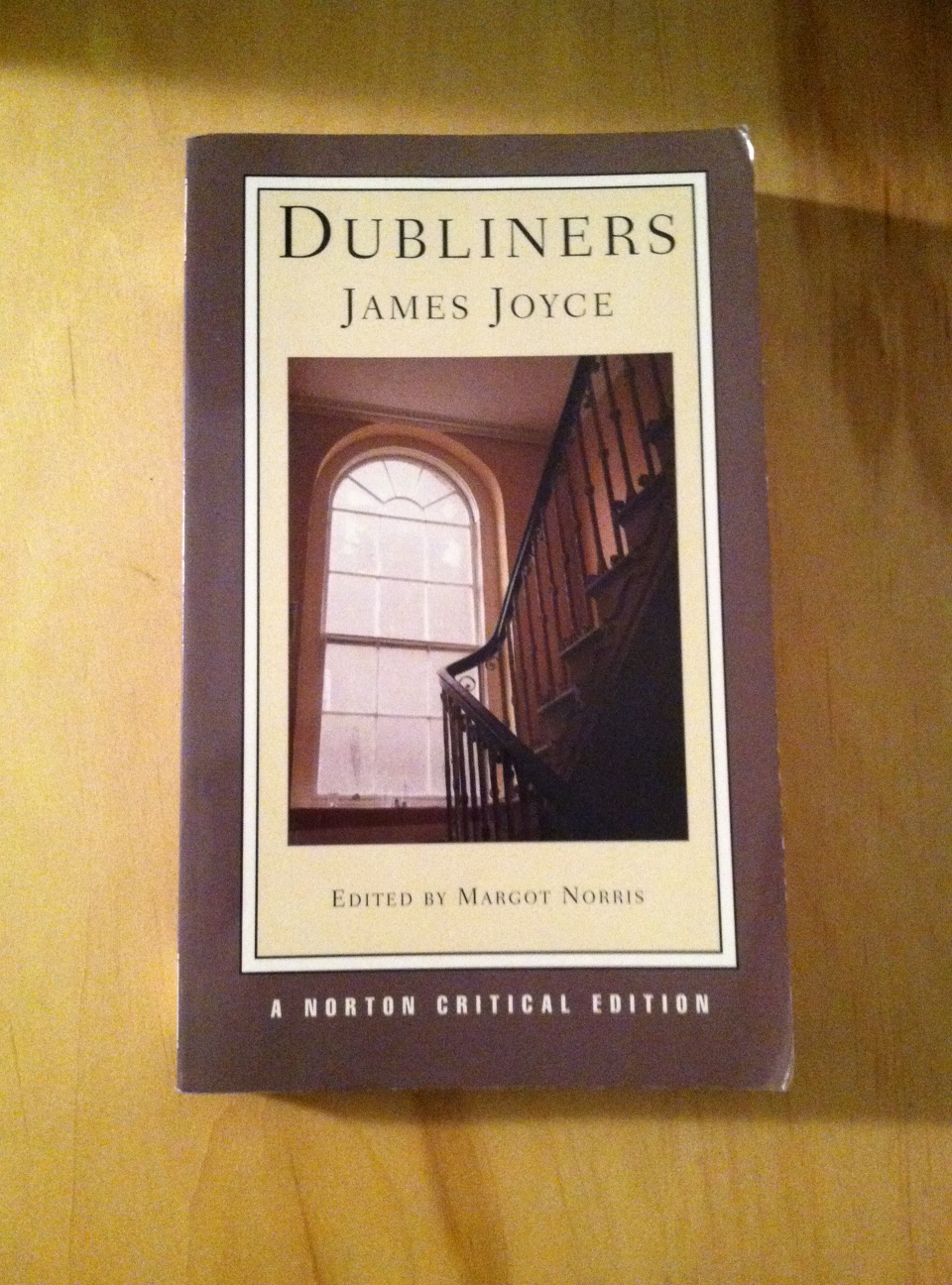
Dubliners

Dubliners is Joyce’s collection of short stories, a volume that ends with the sublime, wonderful, wintry, “The Dead.” I hope CJ thinks it’s the perfect Christmas present. Merry Christmas CJ! Can’t wait to host your review!

Sing O Muse: Paradise Lost Readalong 2014!

Yes, this is just a sample of my Milton collection.

Yes, this is just a sample of my Milton collection.

January 1 will mark this blog’s one-year birthday, and what better way to celebrate than with an epic (literally) readalong? I’m hosting a Paradise Lost readalong from January 1 to March 1, and I hope you’ll come along to brighten up the winter doldrums. I’ll be tweeting with the tag #ReadPL if you want to follow along.

Here’s the breakdown:

January 1: Introductory post

January 10: Books I & II reaction

January 20: Books III and IV reaction

January 30: Books V and VI reaction

February 10: Books VII and VIII reaction

February 20: Books IX and X

March 1: Books XI and XII; Wrap-up

Let me know in the comments if you’re interested, and I’ll link up to the participating blogs. Cheerio!

Recommended Reading: Orkney, by Amy Sackville

This is a small book, modest in its ambitions.  Light on plot and heavy on atmospherics, you might say. Orkney

A middle-aged professor takes his young, mysterious bride to Orkney (the Seal Islands, north of Scotland) for their honeymoon. Everyday his research languishes as he watches her out the window; she stares into the sea, and her closed thoughts and wishes torment him.

I was drawn to the book by its premise and because I love the sea, and I’ve always been fascinated by the very cold shores that are barely inhabited, so old and so weathered that they seem out of legend and myth, or the very beginning of the world.

Orkney brings this kind of landscape into beautiful focus — I’ve never read so many words for the colors of the sea or the sound of the wind. It’s lovely — enchanting, even. It’s not a page-turner, but it’s food for the imagination, and so I recommend it.

“break, blow, burn, and make me new”

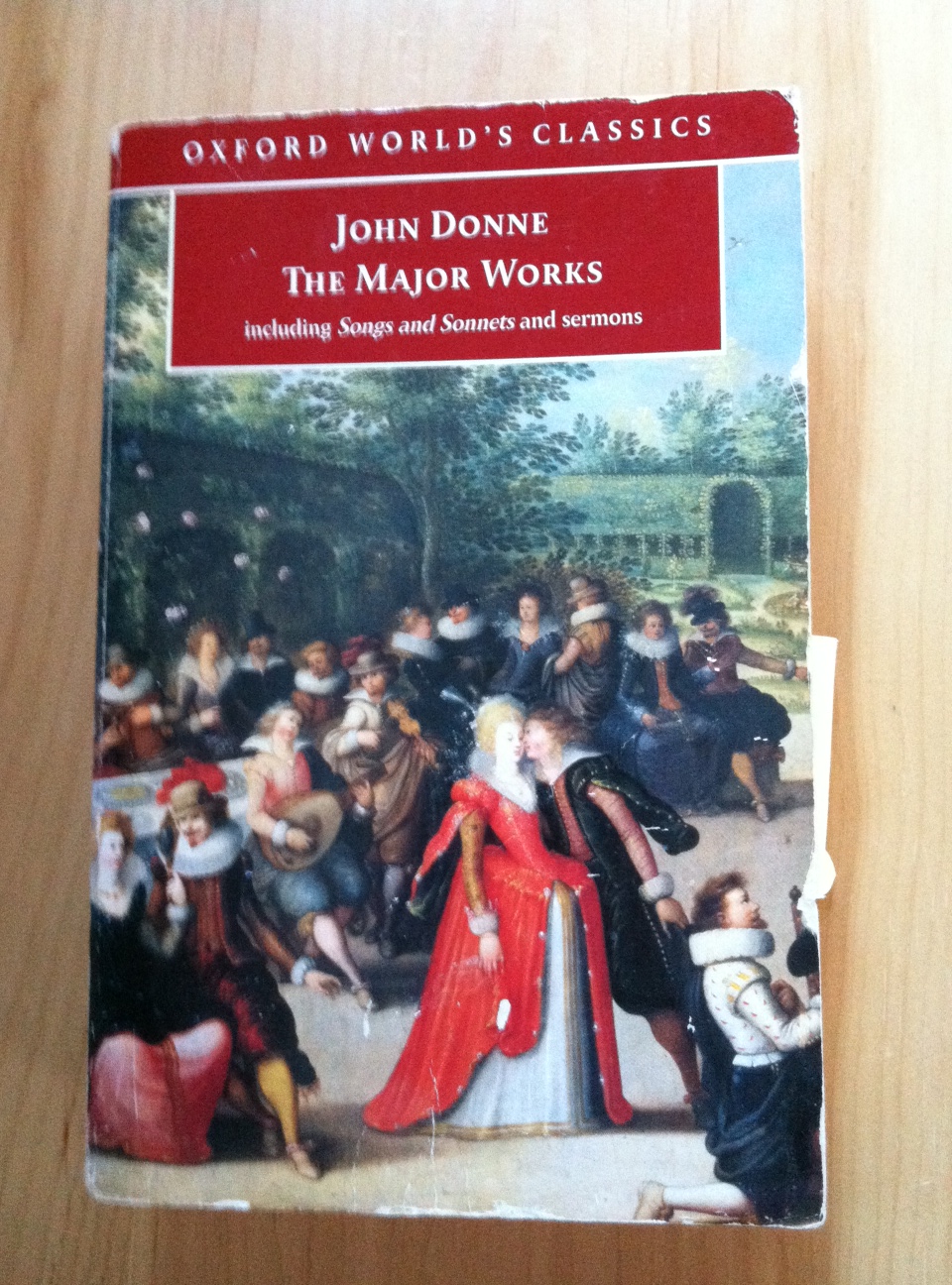
John DonneI promised John Donne this December, and I’m here to deliver.

Though now remembered for his poetry, Donne was in his own day, and in the decades following his death, renowned as a preacher — Dr. Donne. His sermons were fiery, with titles like “Death’s Duel” (which was, in fact, his last sermon, preached just days before he died, probably from stomach cancer). There’s always, in Donne, a tension between Jack Donne — rake, lady’s man, incorrigible wit– and Dr. Donne, the deeply spiritual orator wrestling with his faith and with death itself. All his writing, however, shows a mind never at rest; it’s full of paradox, and flexible, inventive language.

Worship and desire often find unusual objects in Donne’s poetry. When he writes about women, the devotion is nearly saintlike; he addresses them as he would his God. On the other hand, his devotional poetry burns with all the passion of erotic desire. It’s just one of the reasons why Donne is so compulsively readable.

Here’s Holy Sonnet X (sometimes given as XIV), known conventionally by its first line, “Batter my heart, three-person’d God’:

Batter my heart, three-person’d God; for, you
As yet but knock, breathe, shine, and seek to mend;
That I may rise, and stand, o’erthrow me, and bend
Your force, to break, blow, burn, and make me new.
I, like an usurp’d town, to another due,
Labour to admit you, but O, to no end.
Reason, your viceroy in me, me should defend,
But is captived, and proves weak or untrue.
Yet dearly I love you, and would be loved fain,
But am betroth’d unto your enemy;
Divorce me, untie, or break that knot again,
Take me to you, imprison me, for I,
Except you enthrall me, never shall be free,
Nor ever chaste, except you ravish me.

Amazing, right? Just look at the paradox in the last line! And the treatment of God as a ravishing lover — brilliant impudence.

Recommended Reading: Life After Life, by Kate Atkinson

I’d been lingering for two months on the library waitlist for Kate Atkinson’s new book, so it was with glee that I delved in to this 500+-page thumper.  Life after Life

I went in cold, and was blind-sided by the inventive structure. The novel attempts to answer that unanswerable question: what would you do if you could live your whole life over again? What would you change? How would you try to get it “right?”

You see, Ursula Todd, the novel’s lens and protagonist, can live her life over again, and not just once. This twist ensures that she also dies, over, and over, and over again, so many times that I lost count. She begins again at her birth (though sometimes, mercifully, Atkinson fast-forwards to another precipitous event), and, until she makes it past childhood, her first focus is to avoid the things that carried her off in those years: accident and illness.

Once she successfully navigates into adolescence, Ursula begins to recognize her peculiar form of reincarnation, and starts trying to prevent not only her own death, but those of her family and neighbors, and finally, even greater catastrophes. But she finds that every choice engenders unintended, often dangerous consequences.

I loved this book, not only for its unconventional, even experimental form, but also for its carefully-chosen language and attention to the details of time and place and families. If I had the chance to speak with Ms. Atkinson, I’d ask her how she kept track of the detailed strands of narrative; the continuity across times and lines of plot is striking.

And I’d ask how she decided when to stop the book, when in theory the variations could continue on and on.  And I’d ask her if she’d like the chance to live over and over again, or if once is enough. I’m asking myself that question right now.

7 Last-Minute Gifts for the Bibliophile, Recommended by Your Friendly Neighborhood Book Blogger*

Joy and lightThis is my favorite time of year. I love the lights that seem to keep the ever-encroaching darkness at bay, carols, ornaments, sending Christmas cards (one of those traditions that’s quite sadly going by the wayside), finding Christmas cards in the mail . . . I even like snow. I love that people are especially generous this time of year, with those they love and with complete strangers.

So whether you’re celebrating Christmas, Solstice, Festivus, Kwanzaa, (belated) Hanukkah, or just the end of the year, here’s a roundup of gift picks for readers, in no particular order.

1. A donation to a book- or literacy-related charity in your giftee’s name: Try First Book, Room to Read, and Reading is Fundamental, for starters.
2. Page nibs: For the inveterate dog-earer and library borrower (ahem). You know that friend whose paperbacks look a half-inch thicker on top because of the turned-down pages? Think page nibs. Levenger.com 
3. Typographic ornaments: Nothing makes a book lover’s tree look cheerier than ampersands, fleurons, and nautical stars (I would know). Absolutely Icebox! on Etsy
4. Gift card (or membership!) to a local independent bookstore: For example, the ever-wonderful Newtonville Books.
5. Litographs gift certificate: This website has amazing T-shirts and prints with designs created from whole texts. Way cool. They’re made to order, so you’re too late for the holidays if you need something specific, but a gift certificate means your bibliophile can choose the text they like best. My personal favorite: The Leaves of Grass T-shirt. Litographs.com  
6. Jane Austen paperweight: Captain Wentworth and Anne Elliot are probably the most romantic, and definitely the too-often overlooked pairing in Austen’s work.  Bixler and Johnson on Etsy
7. Writer-ly prints and cards: Prints and cards featuring writers’ houses — especially the Romantics and the Bloomsbury group. Amanda White on Etsy

*Hint, hint.

Early Read: The Antigone Poems*, by Marie Slaight; Drawings by Terrence Tasker

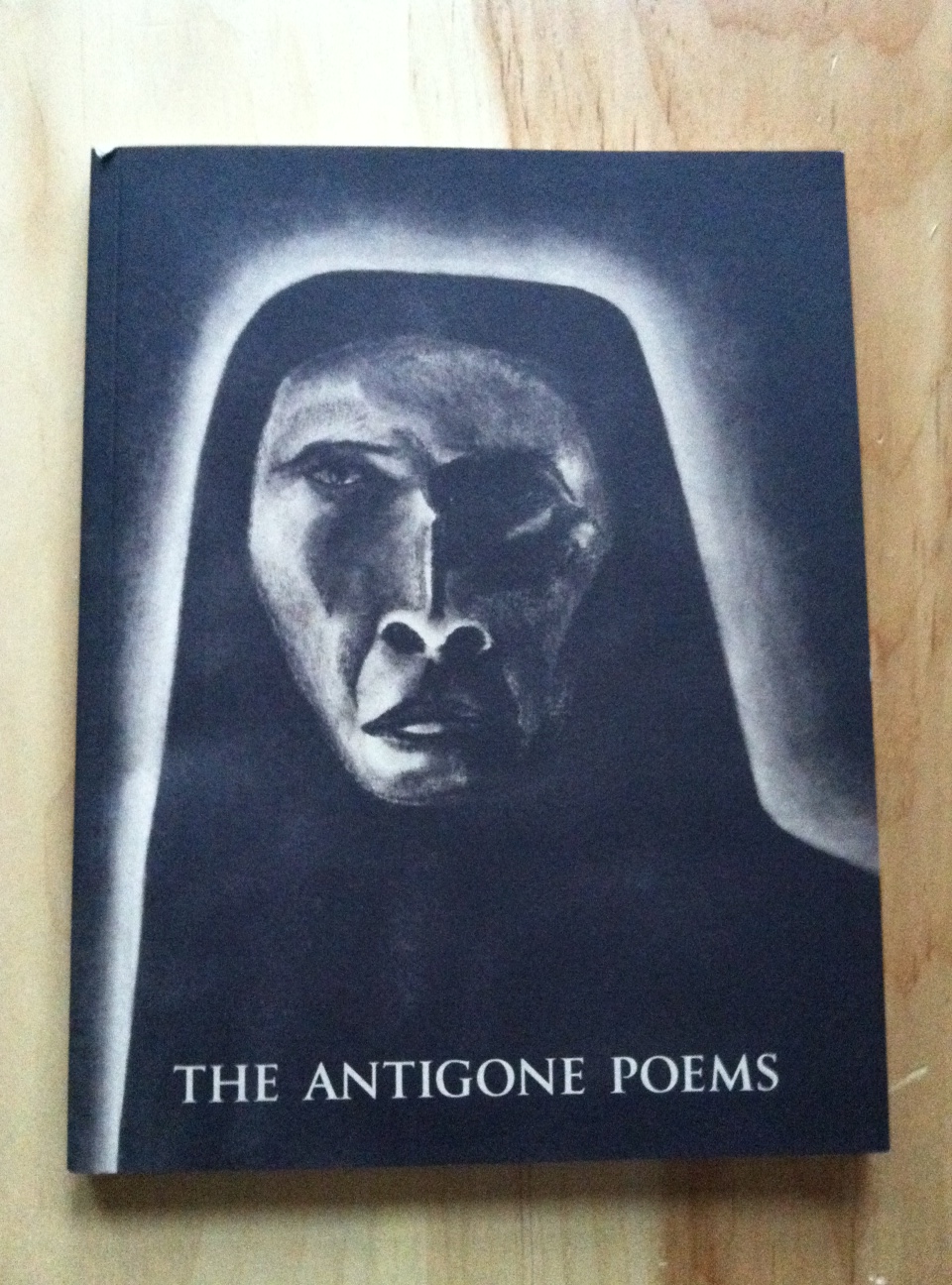
The Antigone PoemsThe Antigone Poems is a collaboration between poet Marie Slaight and artist Terrence Tasker, produced in the 1970s but forthcoming, in print-only form, in early 2014 from Altaire, a small press.

The slim volume is divided into five chapters, which are accompanied by Mr. Tasker’s charcoal drawings, which, as you can see from the cover, are strong, assured, and, at times, rather alarming. Like the poems, they’re evocative of the complexities of Sophocles’s play. I’ve taught the play several times, and I wish I’d had access to this book to share with my students.

The poems (all free verse) are surprisingly intimate, given that they often feel like screams of rage. The voice throughout appears to be Antigone’s, as she considers death, life, family, sexuality, punishment, and rebellion. The poems are simple, some fragmentary, but they’re smoldering and haunting. Some reviewers may take issue with the repetitive nature of the imagery, but I found it to be an appropriate stylistic echo of Greek tragedy.

I recommend finding a copy of The Antigone Poems when it comes out next year; try the library first.

* I received an ARC of this book through LibraryThing’s Early Reviewer program. I was in no way compensated for this review.

Recommended Reading: A Constellation of Vital Phenomena, by Anthony Marra

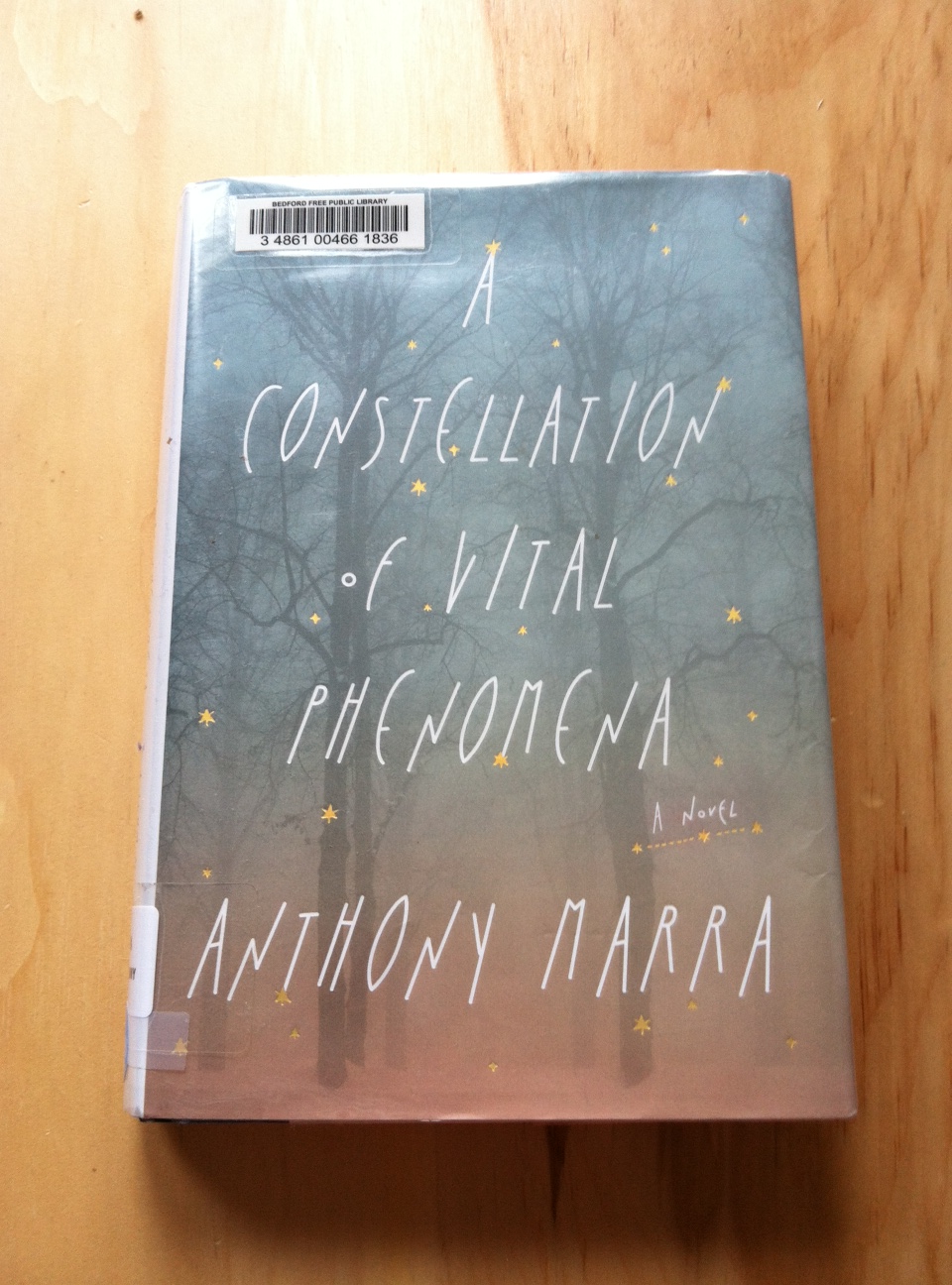
If I hadn’t read the jacket copy, I would have assumed A Constellation of Vital Phenomena is the work of an accomplished, many-times-published novelist. A Constellation of Vital Phenomena

But it’s Anthony Marra’s first novel, and when you read it, you’re going to weep, not just because there’s no way that should be possible, but because the story is so moving and so perfectly told, a gut-wrenching exploration of two Chechen wars, history, family, and the significance of place.

Eight-year-old Havaa’s father, Dokka, is disappeared by Russian forces in the middle of the night. Their neighbor Akhmed (like Dokka and Havaa, an ethnic Chechen) finds Havaa in the woods the next morning, and (rightly) fearing for her safety, takes her to the last doctor in the only hospital in the neighboring city, an ethnic Russian named Sonja. Sonja is processing her own trauma — the disappearance of her sister, Natasha. Over the course of the novel, the threads connecting all the principal characters — Dokka, Havaa, Akhmed, Sonja, Natasha, and Dokka’s betrayer and the betrayer’s father — slowly reveal themselves, forming a web more complicated and more harrowing than any of the characters understand.

The narrative jumps back and forward over a period of ten years, but the tendrils of connection reach back into Soviet Russia and forward into a future that’s not yet known. Tangential sequences that reveal information about secondary characters were masterful; the level of detail, the attentiveness to the minutiae of human survival, are impeccable.

I could write about this book for pages and pages, but I don’t want to ruin anyone else’s sense of discovery. It’s a December book, in that it will make you feel grateful for whatever and whomever you have to wrap around you.

*Be forewarned: there are torture scenes that made me physically ill, and I have a strong stomach.