Recovery Reading

One of the delights  of our wedding day — which, yes, took place at a bookstore/restaurant — was working with our wonderful photographers, Matt and Paulette, who are friends of the best man and all-around great human beings.

Around Christmas 2012, Matt was diagnosed with a rare kidney disease that led to renal failure, and so Paulette orchestrated the search to find a kidney for Matt. Amazingly, it turns out that Matt’s best friend John is a match, and the transplant happened this past week — a great success! (So very happy to write that sentence!)

Excellent people that they are, Matt and Paulette asked that anyone who felt so inclined send cards, notes, books, movies, etc. for John (c/o Paulette & Matt) during his long recovery at home, so that he feels showered with love and thanks. It’s a fabulous idea, especially since there are many, many people out there grateful for his generous act of friendship and love.

We’re two of them, of course. We don’t know John that well, but we do know that he likes to read. And having been hospital-bound myself a few times, I know just how the right book can distract you from, well, not being well. (Turns out that the stellar biography of George Washington is not as effective as Thisbe Nissen’s short stories. Thanks again, Amy!)

So what books to you send to a wonderful guy who did this incredibly generous thing but who you don’t know that well? Here’s hoping the three we sent are good choices.

photo (99)Nobody’s Fool by Richard Russo. One of my all-time top-ten favorite novels, Nobody’s Fool is the engrossing and hilarious story of down-but-not-quite out Sully as he goes about his business in a tiny town in upstate New York. A few lines can’t do justice to how great this book is.


The Crossing by Cormac McCarthy. Ok, haven’t read this one, but that’s part of why we picked it. We figured John might have read The Road or No Country for Old Men, but this is one Cormac McCarthy novel that’s flown a bit under the radar. Plus, there’s nothing like McCarthy-esque violence to take one’s mind off post-op pain, right?

photo (96)The Road to Burgundy by Ray Walker.  This is a light and cheerful memoir, as noted in my review, and we figured it would be perfect pre-nap reading. A little escapism goes a long way, though we hope John won’t pack up and move to France . . .


Hope we made the right calls, and we’re wishing John a speedy recovery. If you’ve found a particular book distracting or cheering during a recovery, please share in the comments! And if you’d like to send something John’s way, let me know and I’ll message you the address.

Other ways to send books to patients: 

Donate books directly to your local hospital (call or email first)

Reach Out And Read (link to Boston Children’s Hospital program, but it’s nationwide)

Books for America 

Have another idea? Let me know and I’ll add it to the list!

Recommended Reading: Cristina Henríquez’s The Book of Unknown Americans

photo (95)As The Book of Unknown Americans* opens,  Alma and Arturo Rivera arrive in Delaware with their daughter, Maribel. The journey was long and uncomfortable, and already they miss their life in Mexico, but what they hope for eclipses all the uncertainty and fear they face: they just want their daughter, injured in an accident, to get well.

They’ve waited for months for Arturo to find work — though in Mexico he worked as a skilled builder, here he works long days in darkness at a mushroom-growing facility — so that Maribel can attend a school that might help her manage the memory loss and personality fluctuations that resulted from her accident.

Some of the first neighbors to welcome them to their new apartment complex are the Toros, a family who fled political upheaval in Panama years before. Mayor is about Maribel’s age; he’s shy, bullied at school, and woefully unskilled at soccer compared to his older brother. He feels caught between two worlds: “I felt more American than anything, but even that was up for debate according to the kids at school [. . . ] The truth was that I didn’t know which I was. I wasn’t allowed to claim the thing I felt and I didn’t feel the thing I was supposed to claim” (78). Mayor falls immediately for Maribel’s beauty, but as the weeks go on they develop a deep friendship.

While Maribel is at school and Arturo is at work, Alma navigates life in a strange country, helped along by Mayor’s mother Celia. After a run-in with a menacing teenager soon after their arrival, Alma is extremely protective of Maribel.  Her protectiveness and Mayor’s growing affection for Maribel soon lead to friction between the two families, and, eventually, tragic consequences.

The Book of Unknown Americans is about love: not just romantic love, but the love of parents for their children. It’s not a Romeo and Juliet story, and I appreciated the depth of the narrative that’s due to Alma and Mayor’s alternating narration.

The novel is also an evocative rendering of the multiplicity of immigrant experiences. In deftly composed vignettes, Ms. Henríquez introduces us to many of the residents of the Toros’ and Riveras’ apartment complex, men and women from all over Latin America, men and women with sad and funny and terrible stories. These small sections, told in characters’ own voices, feature some of the best writing in the novel; I wanted to know more about these characters. The brevity of these sections is deliberate, of course; even these sketches are more than we usually read about the “unknown Americans” of the novel’s title. As Micho Alvarez puts it,

When I walk down the street, I don’t want people to look at me and see a criminal or someone that they can spit on or beat up. I want them to see a guy who has just as much right to be here as they do, or a guy who works hard, or a guy who loves his family, or a guy who’s just trying to do the right things. [. . . ] We’re the unknown Americans, the ones no one even wants to know, because they’ve been told they’re supposed to be scared of us and because maybe if they did take the time to get to know us, they might realizes that we’re not that bad, maybe even that we’re a lot like them. And who would they hate then? (237)

The Book of Unknown Americans is a nuanced, deeply affecting examination of what it means to live in America, and what it means to be American. Highly recommended reading.

Tomorrow: An interview with Cristina Henríquez, author of The Book of Unknown Americans

* I received a review copy of this book from the publisher in exchange for an honest review


Robert Graves’s “Recalling War”

Like his friend Siegfried Sassoon, Robert Graves survived the war. He went on to become a prolific writer, penning over one hundred books and becoming especially famous for his poetry, translations of classical texts, work on poetic inspiration (The White Goddess) and his novel I, Claudius.  (Seriously, Dear Readers, if you haven’t seen the miniseries based on the novel, go get it. It’s made for binge-watching, and features a plethora of stars: Derek Jacobi, Siân Phillips, Brian Blessed, John Hurt, and — my personal favorite — Patrick Stewart. With hair.)

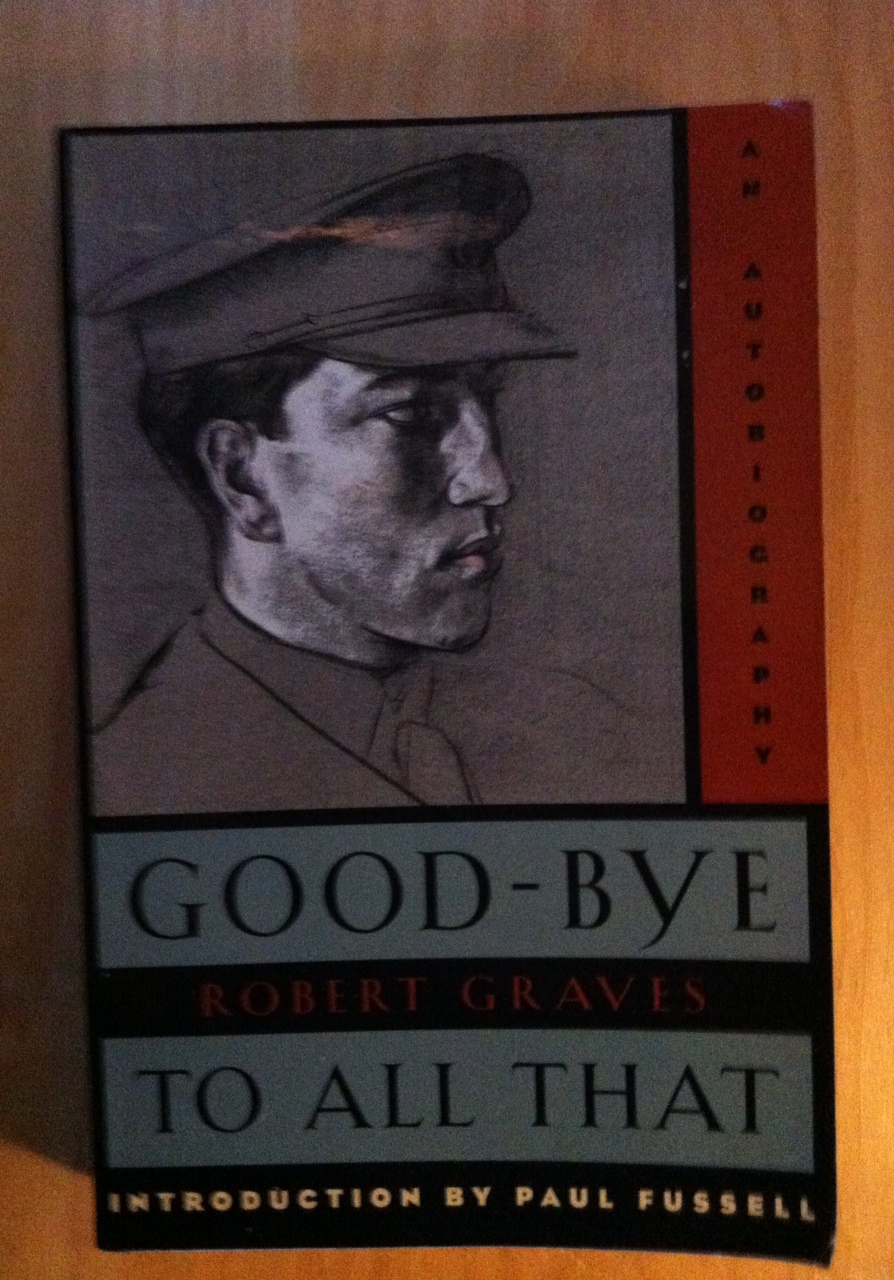
photo (93)Graves is also justly famous for his only autobiography, 1929’s Goodbye to All That, considered by many to be the best memoir that came out of the war. It is, by turns, wry (, dramatic, darkly funny, and elegiac. It’s absolutely worth reading, and I heartily commend it to your attention.

Graves’s poetry about the war is not as well-known as Sassoon’s or Owen’s, but it too rings with the depth of feeling only born out of horrendous experience. In “Recalling War,” Graves borrows Homer’s knack for comparing the brutal business of war to those events common to homely life; in Graves’s poem, the speaker remembers the guns “Nibbling the walls of factory and church / Like a child, piecrust; felling groves of trees / Like a child, dandelions with a switch!” In these lines, Graves reminds us that nothing — church, work, nature itself — remains untouched by war.

“Recalling War” finds the speaker looking back twenty years after the war’s end, wondering, “What, then, was war?” He answers himself,

No mere discord of flags
But an infection of the common sky
That sagged ominously upon the earth
Even when the season was the airiest May.
Down pressed the sky, and we, oppressed, thrust out
Boastful tongue, clenched fist and valiant yard.
Natural infirmities were out of mode,
For Death was young again; patron alone
Of healthy dying, premature fate-spasm.

and later in the poem,

War was return of earth to ugly earth,
War was foundering of sublimities,
Extinction of each happy art and faith
By which the world has still kept head in air,
Protesting logic or protesting love,
Until the unendurable moment struck –
The inward scream, the duty to run mad.

It is a bitter remembrance, and Graves offers us no comfort in the poem’s final lines:

Down in a row the brave tin-soldiers fall:
A sight to be recalled in elder days
When learnedly the future we devote
To yet more boastful visions of despair.

You can read the full poem at The Legacy Project.

Recommended Reading: What Is Visible, by Kimberly Elkins

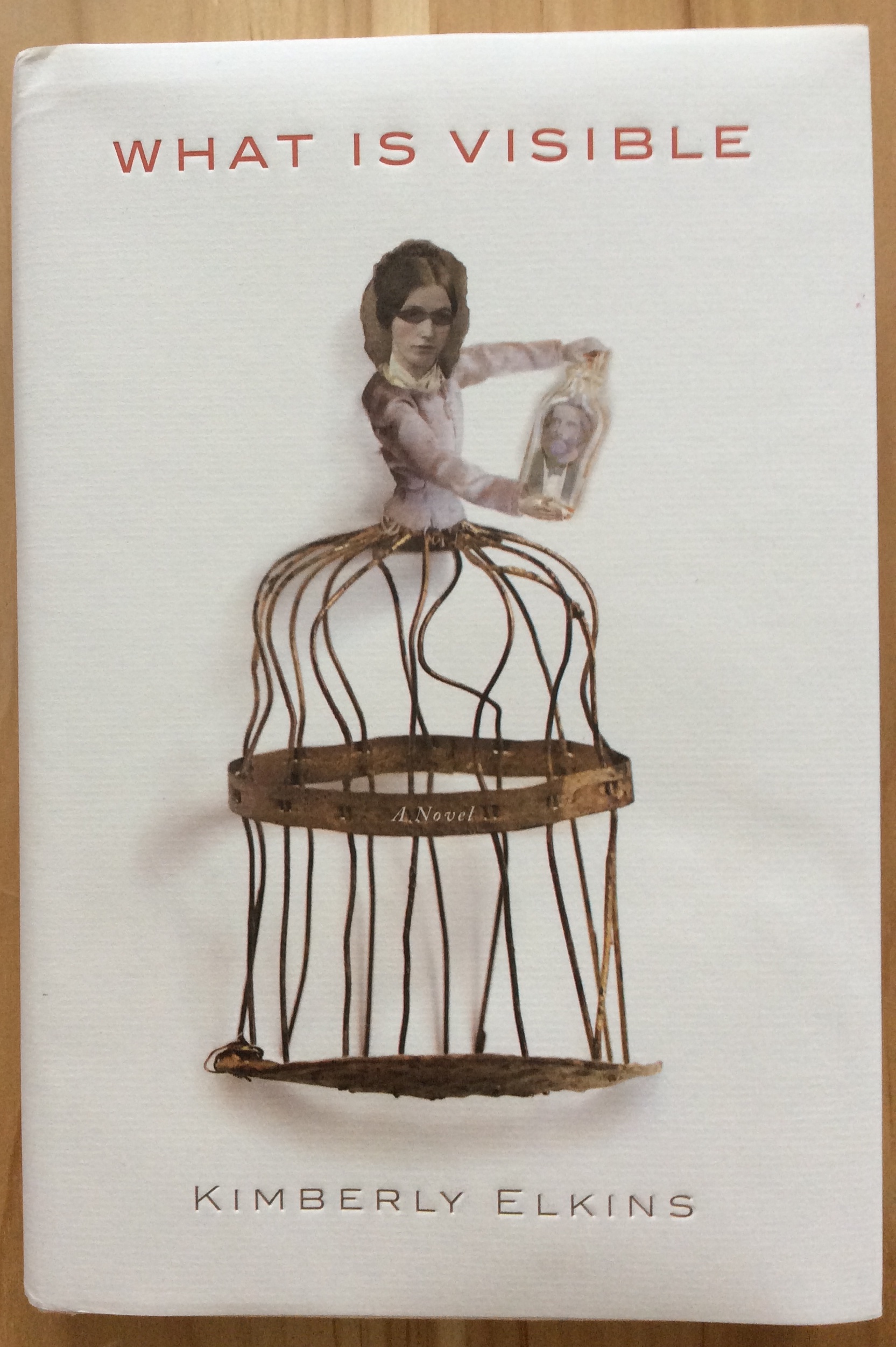
photo (92)What Is Visible*, Kimberly Elkins’s debut novel, begins with a meeting. Helen Keller, just eight years old, is introduced to the woman whose fame was legendary in the nineteenth century, a woman whose incredible story will be eclipsed by Helen Keller, fifty years her junior. The woman’s name is Laura Bridgman, and she’s the subject of What Is Visible, a fascinating novel.

At the age of two, Laura Bridgman lost not only her sight and hearing, but also her senses of taste and smell to scarlet fever. Brought to the Perkins Institute in Boston, she becomes a star pupil, learning to read and write, communicating through hand spelling. Crowds came to see her, and dignitaries requested private meetings; Charles Dickens wrote a chapter about her in American Notes. At one point, it’s said, she and Queen Victoria were the most famous women in the world.

What Is Visible traces the story of Laura’s life, interspersing her narration with that of the people closest to her; they fill in the gaps with parts of the story Laura could not know. The novel includes a striking number of nineteenth-century celebrity cameos, from Henry Wadsworth Longfellow to John Brown to Dickens and (in absentia) Emily Dickinson.

What’s more remarkable, however, is Ms. Elkins’s skill in bringing Laura’s world — a world dominated by the sense of touch — to brilliant life. In her rendering, Laura is immensely perceptive and inquisitive; she could tell if someone enters a room by the change in the air currents, and loves the textures of fabrics especially. She’s also very sensitive, and devoted to her teachers, in particular Sarah Wight and Dr. Samuel Howe, the head of the Perkins Institute (then in South Boston, now in Watertown). Until his marriage, he and Laura act more like father and daughter than teacher and pupil; when he meets the lovely Julia Ward, however, everything changes.

The Howes’ marriage is the first great disruption of Laura’s life that we read about in the novel, though others follow. Julia Ward Howe — yes, the poet behind “The Battle Hymn of the Republic” — is the novel’s second fixation. Prone to depression, sometimes repulsed by her husband’s pupils, chafing under her husband’s edict that she cease to write and publish, and very uncomfortable with Laura’s attentions, Julia is often unsympathetic, but endlessly interesting. Laura and Julia’s dynamic relationship is expertly rendered here.

The brilliance of What Is Visible lies in the way it explore’s Laura’s inner world, the vast richness of her emotions, opinions, and perceptions — and the way it explores the outside world’s fascination with her, a fascination that reveals a determination to view her as a social experiment. Laura’s education, her religion, even her body are subjects of controversy and concern. Dr. Howe, who helped her to acquire language, is also the person who denies her glass eyes, a Bible, a lock on her door, all in the name of her best interests, her moral upbringing. Laura’s fits of temper are completely understandable given the lack of control she’s awarded over her own life; her aching desire to be loved, to be seen, is heart-wrenching.

It’s astounding that such a witty, intelligent, accomplished figure has virtually disappeared from our collective memory. Here’s hoping What Is Visible will bring Laura Bridgman back to the spotlight she deserves.

Wednesday: An interview with Kimberly Elkins, author of What Is Visible

*I received a review copy of this novel from the publisher in exchange for an honest review.


Readers interested in nonfiction accounts of Laura Bridgman’s life have two recent (historically speaking) biographies to choose from: The Imprisoned Guest, by Elisabeth Gitter, and The Education of Laura Bridgman, by Ernest Freeberg.

What Is Visible is published by Twelve, an imprint of Hachette Book Group, which, if you haven’t heard, is having a, shall we say, disagreement with Amazon at the moment. If you’re considering buying What Is Visible, I highly recommend shopping your local independent bookstore.

Recommended Reading: All the Light We Cannot See, by Anthony Doerr

photo (91)Anthony Doerr’s All the Light We Cannot See* follows two young people, Marie-Laure and Werner, as Europe teeters on the brink of World War II and then falls into the abyss. All the Light We Cannot See is one of the most beautiful books I’ve read all year; Mr. Doerr’s prose is elegant, luminous, and unflinching. Secondary characters are finely rendered and remembered throughout the novel (one of my favorites is a classmate of Werner’s who reminded me of Helen Burns from Jane Eyre); no-one is lost. Every page offers beautiful sentences and lovingly rendered textures of places and things.

Here’s just one passage that I marked for its perfect description:

Hours later, he wakes to see the silhouette of an airplane blot stars as it lurches east. It makes a soft tearing sound as it passes overhead. Then it disappears. The ground concusses a moment later.

A corner of the night sky, beyond a wall of trees, blooms red. In the lurid, flickering light, he sees that the airplane was not alone, that the sky teems with them, a dozen swooping back and forth, racing in all directions, and in a moment of disorientation, he feels that he’s looking not up but down, as though a spotlight has been shined into a wedge of bloodshot water, and the sky has become the sea, and the airplanes are hungry fish, harrying their prey in the dark. (90-91)


Marie-Laure goes blind as a young girl. Her father, who works with locks at Paris’s Museum of Natural History and fashions puzzle boxes for each of Marie-Laure’s birthday, constructs a tiny scale model of their neighborhood so that she can learn to navigate on her own. When the Nazis invade, however, they’re forced to flee Paris for the home of Marie-Laure’s eccentric and reclusive uncle, haunted by what he witnessed during the First World War. In new surroundings and faced with constant fear, Marie-Laure learns to make do — with the Resistance rising around her. 

In Germany, Werner lives in an orphanage with his younger sister, dreading the day when he’ll be old enough to work in the mines that killed his father. By chance, he and Jutta find a broken radio, and Werner fixes it as if by magic. At night they listen surreptitiously, enraptured by what they hear, especially a children’s program in French. Before long, Werner’s radio repair skills are famous in their town, and he wins entry to a school for Hitler Youth — his escape from the mines. But he’s unprepared for the cruelty he finds there, and for what he finds himself doing in the army.

Eventually, but inexorably, Werner and Marie-Laure enter each other’s orbits. Part of All the Light We Cannot See‘s brilliance is its structure, which allows for maximum description (the book was ten years in the making, apparently) and maximum suspense. Scenes from Marie-Laure’s and Werner’s days in the same town — incredibly suspenseful — are suspended between the chapters devoted to exploring their individual adolescences. All the Light We Cannot See is quite long — more than five hundred pages — but it moves with the pace of a much shorter book.

Both Werner and Marie-Laure attempt to bring small works of order to a world that’s gone mad,  Werner working his equations and Marie-Laure counting her steps. Both love to lose themselves in other worlds — in Werner’s case, it’s the world of radio, of those untethered voices shimmering in the air, while Marie-Laure adores Jules Verne, racing her fingers across braille editions of his novels. That the pair prefer imagined worlds is unsurprising given the terrors of their own; it’s their tenacity, their determination to survive, that’s so heartbreaking and wondrous.

*I received a copy of this book from the publisher in exchange for an honest review.

Recommended Reading: Kate Racculia’s Bellweather Rhapsody

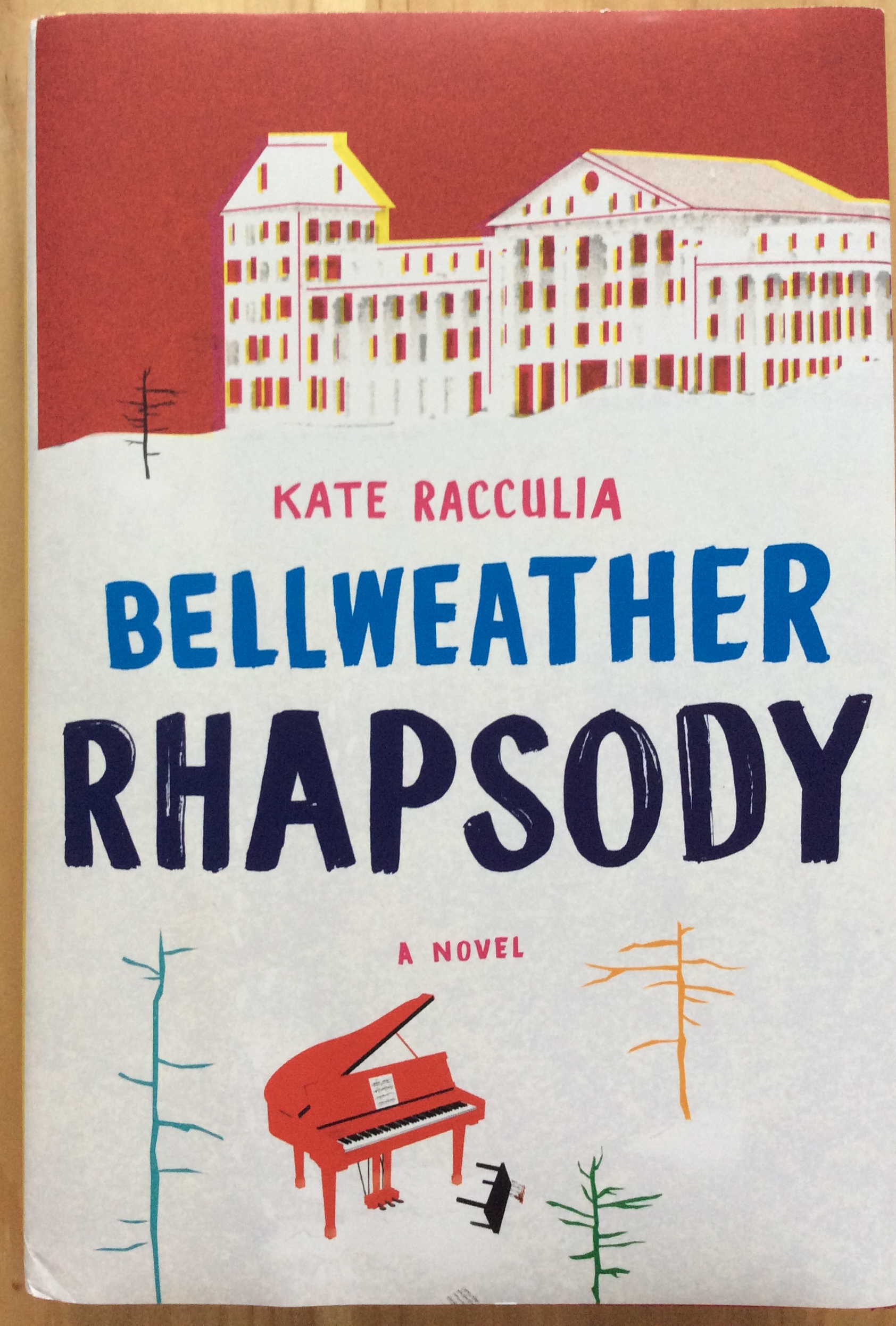
Bellweather RhapsodyIn Bellweather Rhapsody*, her second novel, Kate Racculia conjures up a tale of conductors, students, chaperones, guests, and hotel staff thrown together at a statewide high school music festival — at a very creepy hotel in 1997 upstate New York. Everyone has a secret, no-one’s being completely honest, and there’s a snowstorm coming.

Then a girl goes missing from Room 712 — the same room where a murder-suicide took place fifteen years earlier, and those secrets aren’t safe anymore.

Bellweather Rhapsody is a piquant mixture of genres and tones — mystery, comedy, bildungsroman, thriller — which together form a perfectly seasoned piece of literary fiction. It’s that rare kind of novel that captures not only what it’s like to be a teenager on the verge of adulthood, but also what it’s like to be an adult and wonder if you’re getting it all wrong.

The characters are unforgettable: Rabbit Hatmaker, a shy bassoonist; Alice, his diva-like twin sister; their chaperone Mrs. Wilson, who has a gun and might have used it once; Fisher Brodie, Scottish conductor who once was a piano virtuoso and now comes across as rather mad; Minnie, a young woman still reeling from the traumatic events she witnessed years before, comforted now only by her deaf dog and horror movies; Mr. Hastings, a genteel concierge who remembers the Bellweather in her glory days; and Viola Fabian, a Lady Macbeth-style sociopath — with a daughter.

As its title suggests, Bellweather Rhapsody is about not only the characters gathered under the hotel’s roof, but also about music itself, and its strange power. Ms. Racculia clearly loves music and understands it. Her descriptions of the experience of music — hearing it, playing it — are thrilling in their accuracy. If you’ve ever lost your breath listening to Holst or Beethoven or Debussy, this book is for you. And if you haven’t, read this book, and you will.

(Bonus: Delightful and sly 90s references!)

Friday: An interview with Kate Racculia, author of Bellweather Rhapsody

*I received a copy of this book from the publisher in exchange for an honest review.

Siegfried Sassoon’s “The General”

Siegfried Sassoon survived World War I and was one of its most famous poets; he was a mentor to Wilfred Owen and friend to Robert Graves (who I’ll be writing about in another post). Sassoon is one of the characters in Pat Barker’s Regeneration, the first in a remarkable trilogy of books about the war (and yes, I’ll be writing a Pat Barker post too).

Sassoon was an officer in the Royal Welsh Fusiliers, beloved by his men and given the nickname “Mad Jack” for his daring exploits, which often amounted to near-suicide missions.

In 1917, Sassoon sent a three-paragraph letter (which you can read in full here) to his commanding officer and several newspapers (it was read later in Parliament) protesting the war. Here’s the second paragraph:

I have seen and endured the sufferings of the troops and I can no longer be a party to prolong these sufferings for ends which I believe to be evil and unjust. I am not protesting against the conduct of the war, but against the political errors and insincerities for which the fighting men are being sacrificed.

Though he could have been court-martialed for sending the letter, Sassoon was instead declared unfit for duty — thanks to the offices of his friend Robert Graves — and sent to convalesce at Craiglockhart hospital. (This “convalescence” is the subject of Regeneration.)

In 1918, Sassoon published Counter-Attack And Other Poems, a slim volume that includes some of his best work. Like Owen and Rosenberg, Sassoon writes of the grim and grisly sights of war, in poems whose immediacy is driven home by the use of dialogue. He reserves special contempt for those who do not fight themselves — the press, women, generals, even himself, haunted by ghosts in the poem “Sick Leave”:

In bitter safety I awake, unfriended;
And while the dawn begins with slashing rain
I think of the Battalion in the mud.
“When are you going out to them again?
Are they not still your brothers through our blood?”

Sassoon decided to return to the front to fight in solidarity with his men, to do his best to protect them from the enemy — even if that enemy was the man supposedly leading them all. Here’s the bitter, nearly-funny poem “The General”:

“Good morning, good morning,” the general said,
When we met him last week on our way to the line.
Now the soldiers he smiled at are most of ’em dead,
And we’re cursing his staff for incompetent swine.
“He’s a cheery old card,” muttered Harry to Jack
As they slogged up to Arras with rifle and pack.

But he did for them both by his plan of attack.


You can read the full text of Counter-Attack and Other Poems at Project Gutenberg or Bartleby.

An Interview with Darragh McKeon, Author of All That Is Solid Melts into Air

Recently, I reviewed Mr. McKeon’s haunting debut novel, All That Is Solid Melts into Air. Mr. McKeon graciously agreed to be interviewed via email. 

What first drew you to the Chernobyl disaster and its aftermath as a subject for the novel?

Darragh McKeon Author Photograph (c) Ana Schecter

Darragh McKeon
Author Photograph (c) Ana Schecter

DM: I’m from Ireland and it’s quite a present issue there due to the work of an Irish charity ‘Chernobyl Children International’. Since the early 1990s, they’ve brought about 20,000 children from the area to Ireland for recuperation. Some of these children came to my hometown when I was a teenager and they were amongst the first foreigners I’d ever met.

As readers may know, you’re a successful theatre director. How did working in theatre influence the composition of All That Is Solid Melts into Air?

DM: I’m sure it’s influenced me in many ways I’m not even aware of, but primarily as a director you learn to observe. I’ve spent countless hours watching actors in a rehearsal room and gradually I probably honed my awareness of all of the elements that impact upon the work – rhythm, pacing, personality, anxiety, lighting etc etc. Every scene in theatre must carry a certain dynamic. When it’s absent, the scene has no life. Identifying the central dynamic of a situation is a useful ability to carry into novel writing.

photo (85)Your four main characters are a doctor, a child piano prodigy, a dissident-turned-steelworker, and a teenage boy living in a Belarusian village. With such disparate occupations and perspectives to consider, how did you go about conducting research for the novel?

DM: By reading. A lot. I didn’t research with any particular direction or strategy, just ingested anything I could find. I did eventually travel to Moscow for specific research, but by that stage the novel was near completion.

Which writers do you read while writing? Do your reading choices change depending on the writing project at hand?

DM: On a basic level, writing a novel is a process of accumulating sentences. So I try to read and re-read great sentence writers: DeLillo, Ondaatje, Andrei Makine for a start, as well as plenty of poetry.

In the essay included with All That Is Solid Melts into Air, “The Empty City,” you make it clear that the devastating effects of Chernobyl are ongoing. How can readers help?

DM: The problems associated with nuclear energy are so vast and complicated that it’s difficult to suggest a starting point. I would encourage people to donate to Chernobyl Children International. I’ve seen their work first hand and they really are a lifeline to people in the region.

What kinds of writing projects will you be working on next?

DM: Right now I’m doing a lot of reading, I’ll hopefully be starting on another novel in the near future.

My thanks again to Mr. McKeon for his time and thoughtful answers. You can read more about All That Is Solid Melts into Air and Darragh McKeon’s work at www.darraghmckeon.com.

Recommended Reading: I’ll Be Right There, by Kyung-sook Shin

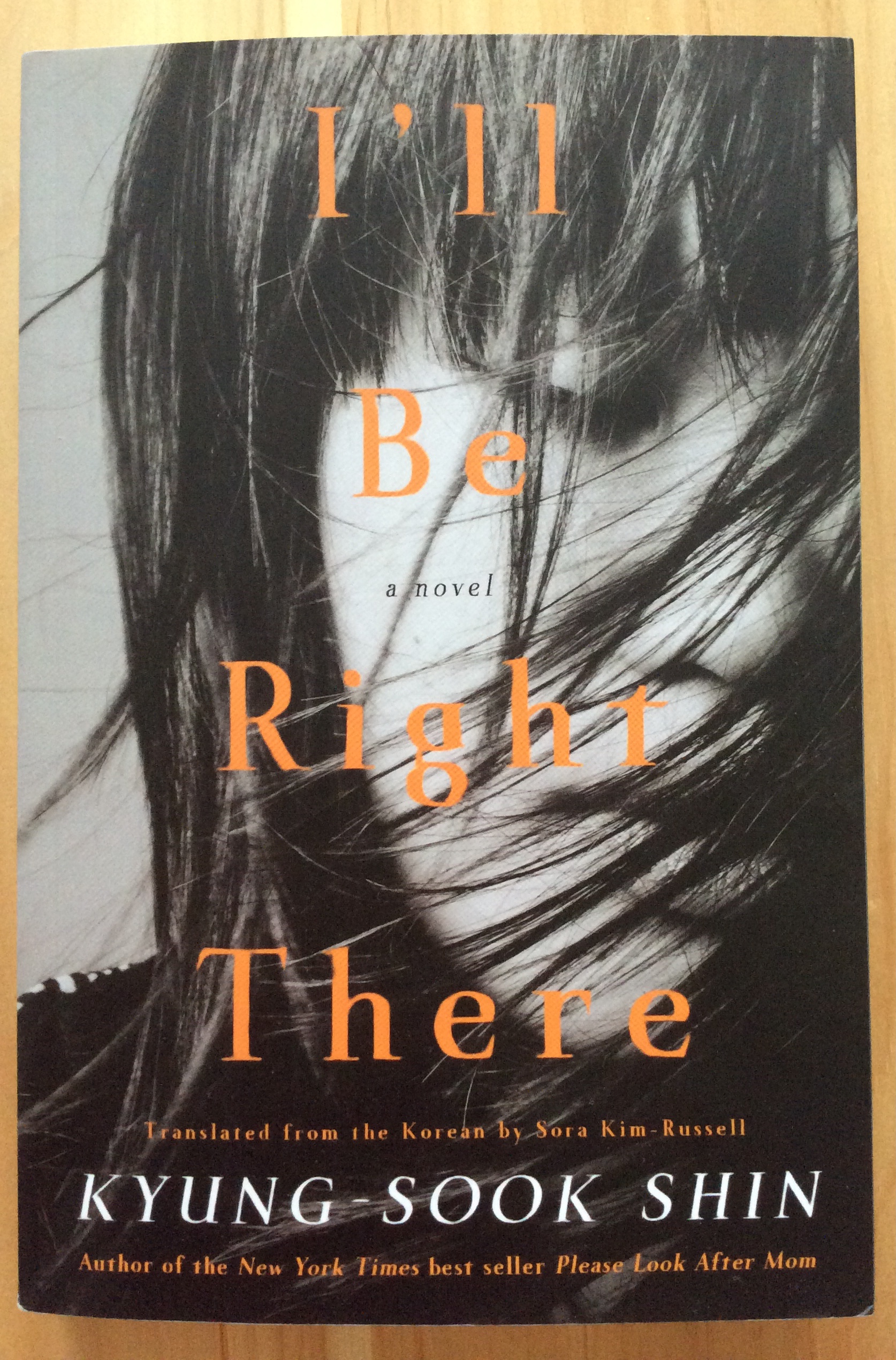
photo (88)I’ll Be Right There* is a gem of a novel, a quiet, masterful rendering of the emotional life of a young woman looking back on the formative years of her early twenties. Ms. Shin is one of South Korea’s most popular writers, and I’ll Be Right There is her second book translated into English (the first was the bestseller Please Look After Mom); Sora Kim-Russel’s deft translation flows smoothly and carefully through its pages.

Jung Yoon recalls the period that began with the illness and death of her mother, when Yoon attempts to navigate life on her own, university courses, friendships new and old, first love, and escalating political turmoil. Though the novel is loosely set in the late 1980s and early 1990s, Ms. Shin makes clear in her author’s note that she deliberately did not assign specific dates to the work:

[. . . ] I believe that what happens to the characters in I’ll Be Right There is in no way limited to South Korea. Everything that happens in this novel could happen in any country and in any generation. I believe that no matter how rough the world becomes, there will always be teachers and students learning from each other, and even when savage and violent powers obstruct our freedoms, there will always be earnest and heartfelt first loves and friendships being born. While writing, I was focused on and absorbed in giving expression to those moments. I believe those are the moments that define our lives. We may be the protagonists of tragedy, but we are also the heroes of our most beautiful and thrilling experiences. (324)

I loved Yoon’s thoughtful, melancholy voice from the beginning of the novel, and her three friends — Miru, lost without her absent sister; Myungsah, wavering between protest and study, and Yoon’s first love; and Dahn, Yoon’s childhood friend who abandons art for the army — are beautifully delineated through Yoon’s memories, as well as letters and diary entries.

A show-stopping passage in which Yoon’s favorite professor tells a version of the St. Christopher tale, about fifty pages into the novel, makes I’ll Be Right There a must-read; it resonates through the rest of the novel, to the very end. Like the professor’s story, I’ll Be Right There is about how we manage adversity and grief in all its forms. Delicately conveyed and beautifully human, it’s highly recommended reading.

*I received a copy of this book from the publisher in exchange for an honest review.

Recommended Reading: An Untamed State, by Roxane Gay

Critics have been calling Roxane Gay’s An Untamed State* “breathless” and “gripping” and “harrowing.” They’re right.

Tom Perrotta sums it up best: “An Untamed State is a harrowing, suspenseful novel about the connections between sexual violence and political rage, narrated in a voice at once traumatized and eerily controlled. Roxane Gay is a remarkable writer, an astute observer of Haitian society and a deeply sympathetic, unflinching chronicler of the compromises people make in order to survive under the most extreme conditions.”

Here’s the summary from the publisher:

Mireille Duval Jameson is living a fairy tale. The strong-willed youngest daughter of one of Haiti’s richest sons, she has an adoring husband, a precocious infant son, by all appearances a perfect life. The fairy tale ends one day when Mireille is kidnapped in broad daylight by a gang of heavily armed men, in front of her father’s Port au Prince estate. Held captive by a man who calls himself The Commander, Mireille waits for her father to pay her ransom. As it becomes clear her father intends to resist the kidnappers, Mireille must endure the torments of a man who resents everything she represents.

An Untamed State is a novel of privilege in the face of crushing poverty, and of the lawless anger that corrupt governments produce. It is the story of a willful woman attempting to find her way back to the person she once was, and of how redemption is found in the most unexpected of places.

I’m having a difficult time writing about the novel, which is unsurprising since I’m pretty sure that my usually low blood pressure was elevated to unhealthy levels while I was reading it. On every level –plotting, pacing, dialogue, characterization — the novel is pitch perfect. The subject matter simply makes it extraordinary difficult to read. An Untamed State is photo (87)an important book, because it lays bare the traumas —  emotional, sexual, racial, economic — that we don’t like to think about because of their painful nature.

One of my favorite people once asked me why I (sometimes) read fiction that’s so dark, that imagines such terrible things — isn’t there enough violence and sorrow in the world already? The news — no matter where you live — seems always to be showing us some new predator, some new house of horrors. No hometown is safe, not mine and not yours. People are ferocious creatures.

It’s a valid question, and I’ve struggled to find the right answer. I don’t read horror (rest easy, I’m not talking about Stephen King) or watch torture-porn (Saw, etc.) because I take no pleasure in being frightened, in watching the pain of others; it seems to me that no-one is served by that kind of violence. And I cannot watch those police procedurals that show only the aftermath of violence. I believe the creators of these shows have good intentions: to try to offer even a small measure of justice for victims and to draw attention to the impact and extent of sexual violence, but these shows never tell the full story.

But books like An Untamed State, Louise Erdich’s The Round House, and Evie Wyld’s All the Birds, Singing (and there are many more) give voice to victims and survivors of violence, particularly sexual violence, which has been so deeply stigmatized for so very long. We cannot expect real-life survivors to relive or retell their experiences for us — though we should be very, very grateful when they do — and so fiction offers us a way to empathize with survivors without infringing on their privacy. Fiction gives us access to thoughts and emotions with nuance and depth that can’t be conveyed on a screen; books contain enough pages to tell what comes after, and what came before.

Rory, in her review of Cynthia Bond’s Ruby (another difficult-but-necessary novel), pointed to an essay by Ms. Bond in which she discussed her own experience (scroll down to find the essay), and these words have stayed with me every since: “Somewhere along the way, working with at risk and homeless youth in Los Angeles for 15 years, living with my own abuse, and hearing stories of such pain and torment, I thought—If you can bear to have lived it, I can at least bear to listen.”

Exactly. I read An Untamed State because somewhere out there, someone has lived it. And I can at least bear to listen.

* I received a copy of this book from the publisher in exchange for an honest review.


RAINN (Rape, Abuse, and Incest National Network): https://www.rainn.org/get-involved

National Violence Against Women Research Prevention Center: https://www.musc.edu/vawprevention/

What Men Can Do to Stop Violence Against Women: http://www.stsm.org/sexual-assault-and-abuse/what-men-can-do-stop-violence-against-women