“Joy-buzzer buzz”: Hailey Leithauser’s “‘Was You Ever Bit by a Dead Bee?'”

photo (62)Hey, remember yesterday when I wrote about how much I loved Swoop, Hailey Leithauser’s debut collection? Remember how I bet that you wanted to read the rest of “‘Was You Ever Bit by a Dead Bee?'”

Well, want no more! Here’s a link to the full text of the poem, with a special bonus: an audio recording of the poet herself reading it!

Joy-buzzer buzz!

“Sundays, like a stanza break”: Glyn Maxwell’s “Museum”

For reasons I can’t really explain, I’ve been looking for poems about dinosaurs. Surprisingly, they’re tricky to find, but in my search I ran across this little gem by British poet and playwright Glyn Maxwell. It’s not abut dinosaurs, but it’s still delightful.

It’s too short — only one sentence — to quote without giving away the store, so please head on over to poets.org to have a look.

And let me know if you know a good dinosaur poem, won’t you?

“There is courtship, and there is hunger”: Mary Szybist’s “In Tennessee I Found a Firefly”

IncarnadineA couple weeks ago, I reviewed Mary Szybist’s new collection, Incarnadine, which won the Pulitzer Prize for poetry last year. This week’s poem, “In Tennessee I Found a Firefly” is from her first collection, Granted (2003).

I was hooked on this poem from the first two lines. The first sentence assumes the “firefly” of the poem’s title as its subject, retaining the punch of the initial verb: “Flashing in the grass; the mouth of a spider clung / to the dark of it” (1-2).  I love the phrasing of “the dark of it,” suggesting both the transitory darkness of the insect’s flickering light and also the permanently dark portions of its body, with a suggestion of private, dark spaces.

The co-incidence of hunger and desire, violence and beauty appears in Incarnadine, too, but I like this poem’s particular study of the minute, physical world, “the burr and the barb of them.”

You can read the full poem here.


“speckled / like a sky” : May Swenson’s “Blue”

A modern entry into the venerable poetic tradition of cataloging the beloved’s physical beauties (see: Petrarch, Shakespeare, Donne), May Swenson’s “Blue” is a poem that just begs to be read aloud. It’s rhythmic, sexy, and filled with bilabial consonants (‘p’ and ‘b’ in particular) that press the reader’s lips together into a kiss.

Swenson

The speaker addresses her lover in lines replete with sensory imagery — taste and touch especially — made even more immediate by the present-tense action of the poem. And you won’t believe what she can do with three colors — white, rose (also the lover’s name), and blue.

Here are my favorite lines:

You’re white in
patches, only mostly Rose,
buckskin and salty, speckled
like a sky. I love your spots,
your white neck, Rose, your hair’s
wild straw splash, silk spools
for your ears.

You can read the entire poem here.

“charged and waiting”: Audre Lorde’s “Recreation”

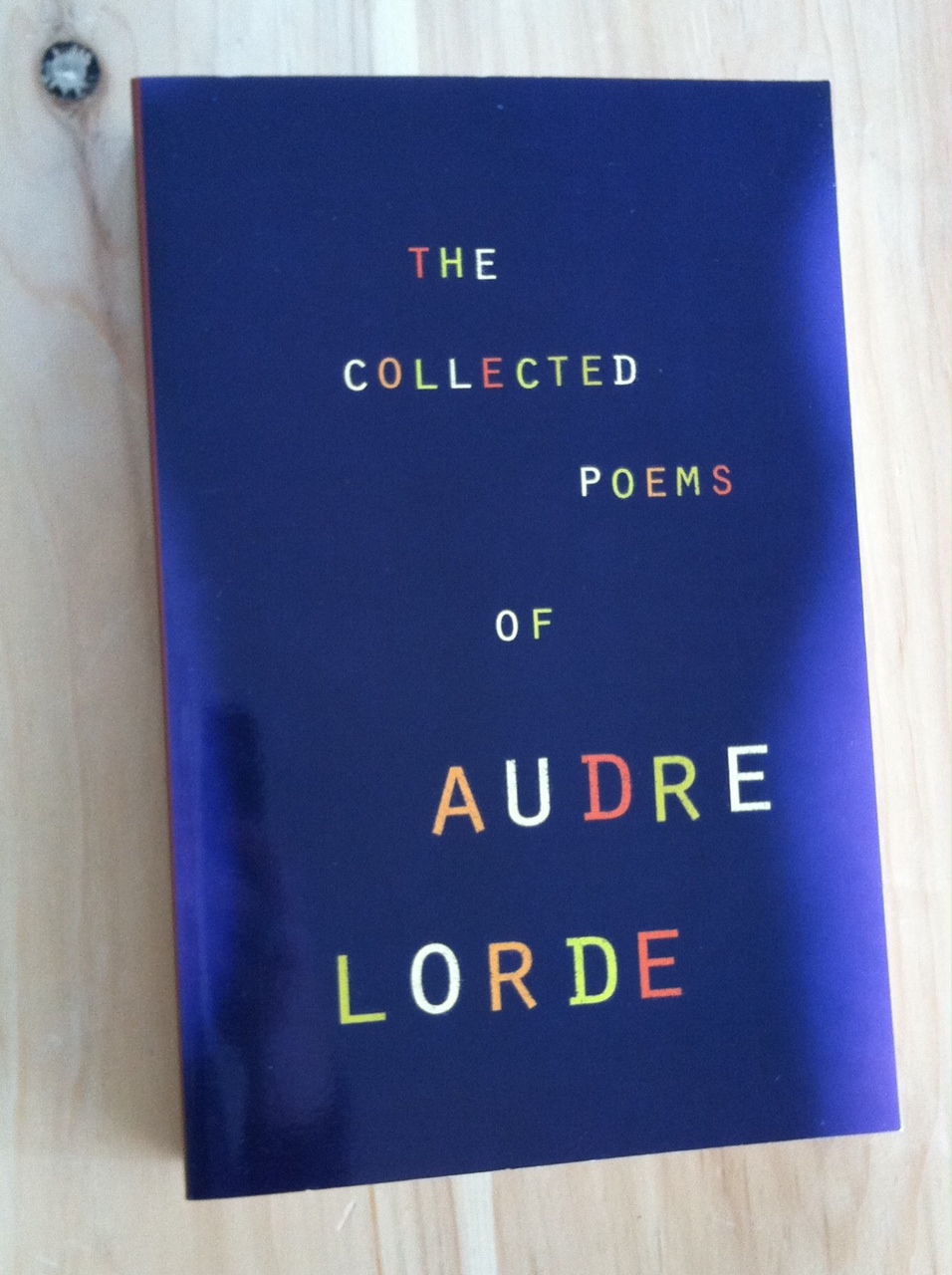
Audre Lorde Collected WorksAudre Lorde’s poem “Recreation” is simultaneously about sex and writing — the act of love and the act of creating. The title itself suggests doubleness: “recreation” in the sense of play (as in, Parks and) and “recreation” as in the repeated act of creating.

Reciprocity is one of the poem’s themes, as the poet/lover both gives to and takes from writing and her lover. At the same time, writing and sex are reciprocal, too:


moving through our word countries
my body
writes into your flesh
the poem
you make of me.


One of the many things I like about this poem is its specificity; it doesn’t claim a universal love, or generalize about pleasure. It’s about a particular speaker in a particular moment, which is deliberate, given Lorde’s views on the relationships among power, creativity, and the erotic.

“Full nakedness! All joys are due to thee”: John Donne, Sexy Poetry, and Making Valentine’s Day Fun Again

Back in the waning days of 2013, I promised that I’d devote February’s Tuesday poetry posts to sexy poems by dead poets.

I’m here to deliver.

I kinda hate Valentine’s Day, for all the usual reasons, I suppose. Pink looks sickly to me, overpriced roses do not smell as nice as regularly priced roses, and Victoria’s Secret is pretty gross.It’s all so generic and impersonal, and nothing epitomizes the sorry state of Valentine’s Day like the Hallmark card.

So I propose that we bring sexy back with real, honest-to-goodness poetry. Grab some steamy lines from some esteemed wordsmiths and write those in your card to your significant person.

Love poem anthologies there are a-plenty (just search for wedding poems and prepare for the deluge), so I shall take it upon myself this month to point you toward the sexiest poems in English. No hearts, no mushy stuff.

There may even be a list.

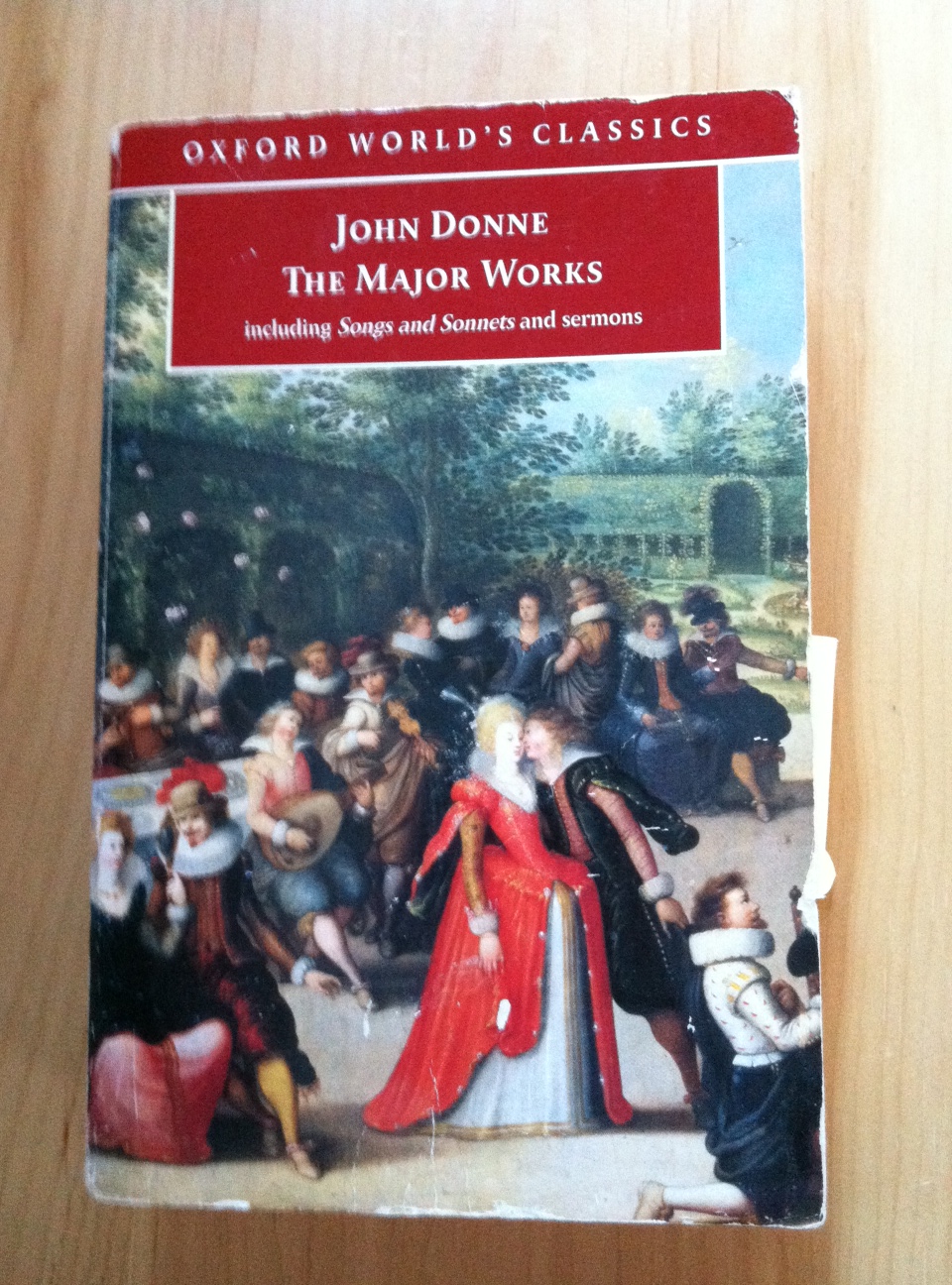
John DonneTo start things off, here’s John Donne’s elegy “To His Mistress Going to Bed” (I know I wrote about John Donne last year, but that was a Holy Sonnet. This is not.).

In the poem, the speaker encourages his inamorata to shed her clothes, piece by piece, because, well, being naked is fun. And only John Donne can manage to convey that the woman being seduced is rich (she has a pocket watch and a tres chic outfit), refer to England’s new colonies, and bring up a midwife in an erotic poem that sparkles with wit, puns, and the most charming sophistry you’ve ever read. Bonus: women are compared to books to explain their sex appeal.

What a guy.

For those who don’t want to write out the whole poem in their Valentine’s Day cards, I’ve excerpted the funniest/raunchiest bit at the end of the post.

Elegy XIX: To His Mistress Going to Bed
John Donne

Come, Madam, come, all rest my powers defy,
Until I labour, I in labour lie.
The foe oft-times having the foe in sight,
Is tir’d with standing though he never fight.
Off with that girdle, like heaven’s Zone glistering,
But a far fairer world encompassing.
Unpin that spangled breastplate which you wear,
That th’eyes of busy fools may be stopped there.
Unlace yourself, for that harmonious chime,
Tells me from you, that now it is bed time.
Off with that happy busk, which I envy,
That still can be, and still can stand so nigh.
Your gown going off, such beauteous state reveals,
As when from flowery meads th’hill’s shadow steals.
Off with that wiry Coronet and shew
The hairy Diadem which on you doth grow:
Now off with those shoes, and then safely tread
In this love’s hallow’d temple, this soft bed.
In such white robes, heaven’s Angels used to be
Received by men; Thou Angel bringst with thee
A heaven like Mahomet’s Paradise; and though
Ill spirits walk in white, we easily know,
By this these Angels from an evil sprite,
Those set our hairs, but these our flesh upright.
Licence my roving hands, and let them go,
Before, behind, between, above, below.
O my America! my new-found-land,
My kingdom, safeliest when with one man mann’d,
My Mine of precious stones, My Empirie,
How blest am I in this discovering thee!
To enter in these bonds, is to be free;
Then where my hand is set, my seal shall be.
Full nakedness! All joys are due to thee,
As souls unbodied, bodies uncloth’d must be,
To taste whole joys. Gems which you women use
Are like Atlanta’s balls, cast in men’s views,
That when a fool’s eye lighteth on a Gem,
His earthly soul may covet theirs, not them.
Like pictures, or like books’ gay coverings made
For lay-men, are all women thus array’d;
Themselves are mystic books, which only we
(Whom their imputed grace will dignify)
Must see reveal’d. Then since that I may know;
As liberally, as to a Midwife, shew
Thy self: cast all, yea, this white linen hence,
There is no penance due to innocence.
To teach thee, I am naked first; why then
What needst thou have more covering than a man?


As promised, the funniest/naughtiest lines (you may need to alter some pronouns to fit your situation. I won’t tell John Donne, but give him a h/t, ok?)

Licence my roving hands, and let them go,
Before, behind, between, above, below.
O my America! my new-found-land,
My kingdom, safeliest when with one man mann’d,
My Mine of precious stones, My Empirie,
How blest am I in this discovering thee!

“Sweetbitter”: The Complete Poems of Sappho, translated by Willis Barnstone

sappho trans, barnstonePlato called her “the tenth muse,” and yet Sappho remains an elusive figure. The outlines of her biography are sketchy, and nearly all her extant poems are fragmentary. Still, the lines we have are some of the most beautiful ever written, hungry and haunted as they are by love and loss.

Acclaimed poet and translator Willis Barnstone’s edition of the poems is grouped thematically, and he makes the interesting choice to title the poems. I’m still on the fence about the effect. In some cases, the titles merely refer to a personage named in the poem; in others, the titles reflect the obvious subject of the poem (“Old Age,” for example). With a few of the poems, however, I would have preferred an untitled version in order to better draw my own conclusions. But this is a small complaint; the volume is beautifully done, and I highly recommend it. (I’d also love to compare it with Anne Carson’s If Not, Winter, which I haven’t read yet — if you have, will you tell me what you think?)

It’s difficult to choose which poem to highlight this week, so I’ll leave you with Mr. Barnstone’s translation of fragment 130, which he titles “Sweetbitter”:

Eros loosener of limbs once again trembles me,
a sweetbitter beast irrepressibly creeping in

“Let now the chimneys blaze / And cups o’erflow with wine”

Here’s a poem to warm up with — Renaissance poet and musician Thomas Campion’s (1567-1620) “Now Winter Nights Enlarge”:

Now Winter Nights Enlarge

Now winter nights enlarge
    The number of their hours;
And clouds their storms discharge
    Upon the airy towers.
Let now the chimneys blaze
    And cups o’erflow with wine,
Let well-turned words amaze
    With harmony divine.
Now yellow waxen lights
    Shall wait on honey love
While youthful revels, masques, and courtly sights
    Sleep’s leaden spells remove.
This time doth well dispense
    With lovers’ long discourse;
Much speech hath some defense,
    Though beauty no remorse.
All do not all things well;
    Some measures comely tread,
Some knotted riddles tell,
    Some poems smoothly read.
The summer hath his joys,
    And winter his delights;
Though love and all his pleasures are but toys,
    They shorten tedious nights.


I like the physicality of this poem, the concession that the chill and storms of winter require light, and wine, and company to be borne, even if “love and all his pleasures are but toys.”

“Sundays too my father got up early”

Collected Poems of Robert HaydenRobert Hayden’s “Those Winter Sundays” is often anthologized, and deservedly so. A moving meditation on parents and children from the not-so-safe remove of adulthood, the poem reaches its plaintive, universal question in just three stanzas.

In the first stanza, the rhymes and alliteration (“weekday weather,” for instance) underscore the repetitiveness of the speaker’s father’s labor (“Sundays too my father got up early” [emphasis mine]); this father doesn’t rest even on the traditional day of rest.

In the second stanza, the “I” appears; the speaker includes himself in those who never thanked his father for his efforts. The same stanza, though, undercuts the father’s act of kindness, since the child fears “the chronic angers of that house.” The sense of icy brittleness expands — hard “c” sounds repeat throughout the poem — to encompass not only the winter cold, but also the chill of strained familial relationships.

The third stanza turns again, as we learn that the speaker’s father not only warmed the house, but polished the boy’s good shoes, presumably for church, an image meant to echo, I think, the biblical story of Christ washing the disciples’ feet. Our knowledge, built on the adult speaker’s point of view, that the father performed these acts of love alone and unthanked — whatever his faults may have been — brings us to the final couplet, in which the speaker asks what we all ask of ourselves at some point, thinking of those who care for us:

What did I know, what did I know
of love’s austere and lonely offices?

“After snowstorms my father / shoveled the driveway where it lay”

snow footprintsA tip o’ the hat is due to Ted Kooser and the American Life in Poetry project for this week’s poem, because I don’t think I would have found it otherwise. Thomas R. Moore’s “Removing the Dross” is a poem about snow shoveling, particularly apropos given the arctic freeze in North America this week.

The speaker’s father has a particular method of shoveling, so precise that it reminded me of a Hemingway hero’s expertise in camping. The imagery, diction, and rhythm of the poem come together in a particularly satisfying way.

Let me know what you think! Favorite lines or images?