- Apparently, the times aren’t a-changing as much as we’d like: it’s Banned Books Week, and the ALA (among other sponsoring groups) has a handy list of a few of the books banned in 2012-13.
- One of the worst parts of novel-writing (so I’m told) is summarizing what you’ve labored to say at length. Here’s writer Askold Melnyczuk on the task.
- October is National Reading Group Months (good news for those of us with literary wives or dragon sex on the horizon); here’s another handy list of recommended books (including Louise Erdrich’s superb The Round House, which I wrote about early in the summer).
Library Finds
Well, this happened.
This week, I was going to write a post about “Cetology,” that not-much-loved chapter of Moby-Dick, but then I got a little email from my library telling me that a book I’d requested had arrived. (Don’t worry, my pretties, we’ll get to “Cetology” yet.)
So, here’s the book I requested:

What have I done?
Now, there’s a way to look at this where this is all Rick’s fault. He made a joke about how he ought to host a paranormal romance read-along, and then the joke became a reality, kind of like a turducken. I’m reading the post, laughing so hard that my neighbors were probably concerned, and apparently I lost the flow of oxygen to my brain, because I threw my hat in the ring too.
Oh lord. I’m about to read my first-ever romance book.
I would also like to add that I was too much of a coward to go pick it up at the library (the librarians know me now, you know?), and since I’m not good with disguises, I sent my husband in my stead. He’s a noble fellow.
So, here’s Rick’s timetable. Run out and get your copies now, folks. Seriously. Please don’t make me do this alone.
- September 30: Introductory Post
- October 7: First-third reaction
- October 14: Second-third reaction
- October 21: Third-third (?) reaction
I’d also recommend following Rick (@BlogAnotherBook) on Twitter. He claims he’s going to live-tweet the experience.
Excuse me. I have to go gird my loins.
Recommended Reading: American Wife, by Curtis Sittenfeld
At 555 pages, this novel, inspired by the life of Laura Bush, is quite an undertaking, in more ways than one. The original four Literary Wives bloggers — Angela, Ariel, Audra, and Emily — have reviewed the book with more insight than I’ll be able to muster, but I thought I’d share just a few thoughts.

First, some highlights, passage-wise, for me:
- Alice’s love for the Midwest: “It is quietly lovely, not preening with the need to have its attributes remarked on” (53).
- “When you are a high school girl, there is nothing more miraculous than a high school boy” (58).
- The passage about Alice and Charlie during the tornado warning (193-96); Alice and Charlie are from Wisconsin, and Ms. Sittenfield, like yours truly, is a native of Ohio. I live outside Boston now, and the Boston-born didn’t have tornado drills growing up, and are always amused at the description I provide. But I’ve never been really close to a tornado, and I have no desire to be, ever. Sidebar here: Immediately read Catherine Pierce’s amazing poem “The Mother Warns the Tornado.”
- “I have always had a soft spot for people who talk a lot beause I feel as if they’re doing the work for me” (223).
- I can’t find the page, but I liked the way Alice recognized a single woman based on what she was buying at the grocery store — yogurt and apples (though I have to say, I bought my fair share of hamburger as a single woman. Spaghetti is always the right answer to “What should I make for dinner?”). The novel is full of nice little details like this.
- Almost any passage involving Alice’s grandmother.
- “But I should note, for all my resistance to organized religion, that I don’t believe Charlie could have quit drinking without it. It provided him with a way to structure his behavior, and a way to explain that behavior, both past and present, to himself. Perhaps fiction has, for me, served a similar purpose—what is a narrative arc if not the imposition of order on disparate events?—and perhaps it is my avid reading that has been my faith all along” (429-30).
I found Alice, the main character, both intriguing and infuriating, both a product of her time and well ahead of it.
I think Alice’s nods to her privileged existence (when she’s at the pool with Jadey, when she’s thinking about the war at the novel’s end) were cursory, but I couldn’t tell if this is a fault in Alice’s thinking or the author’s failing. Sure, Alice is charitable and cares about others less fortunate than she, but she allows her values to be completely overshadowed by her husband’s. It’s as if Alice disappears, and I didn’t feel Ms. Sittenfield provided a satisfactory explanation for Alice’s weak attempt to explain herself (sorry, “they elected him, not me” doesn’t cut it). At the very least, as a citizen, she should feel free to express her views to her husband.
(Please note: I’m not judging Laura Bush here, because I don’t have the access to the interior self that Sittenfeld provides us for Alice. And literacy rules.)
Despite my frustration, I thought the book was excellent, and as I went along, I began to think that maybe the unresolved ambiguities in Alice’s thoughts and behavior are meant to be inscrutable; after all, how much do we really know about our neighbors’ marriages, or about our own? How much do we want to admit to ourselves?
Recommended Reading: Bay of Fires, by Poppy Gee
It was this book’s title that led me to pull it off the shelf, as well as the understated cover design. I didn’t realize, at the time, that the Bay of Fires is a real place in Tasmania, a large island off Australia’s southern coast.
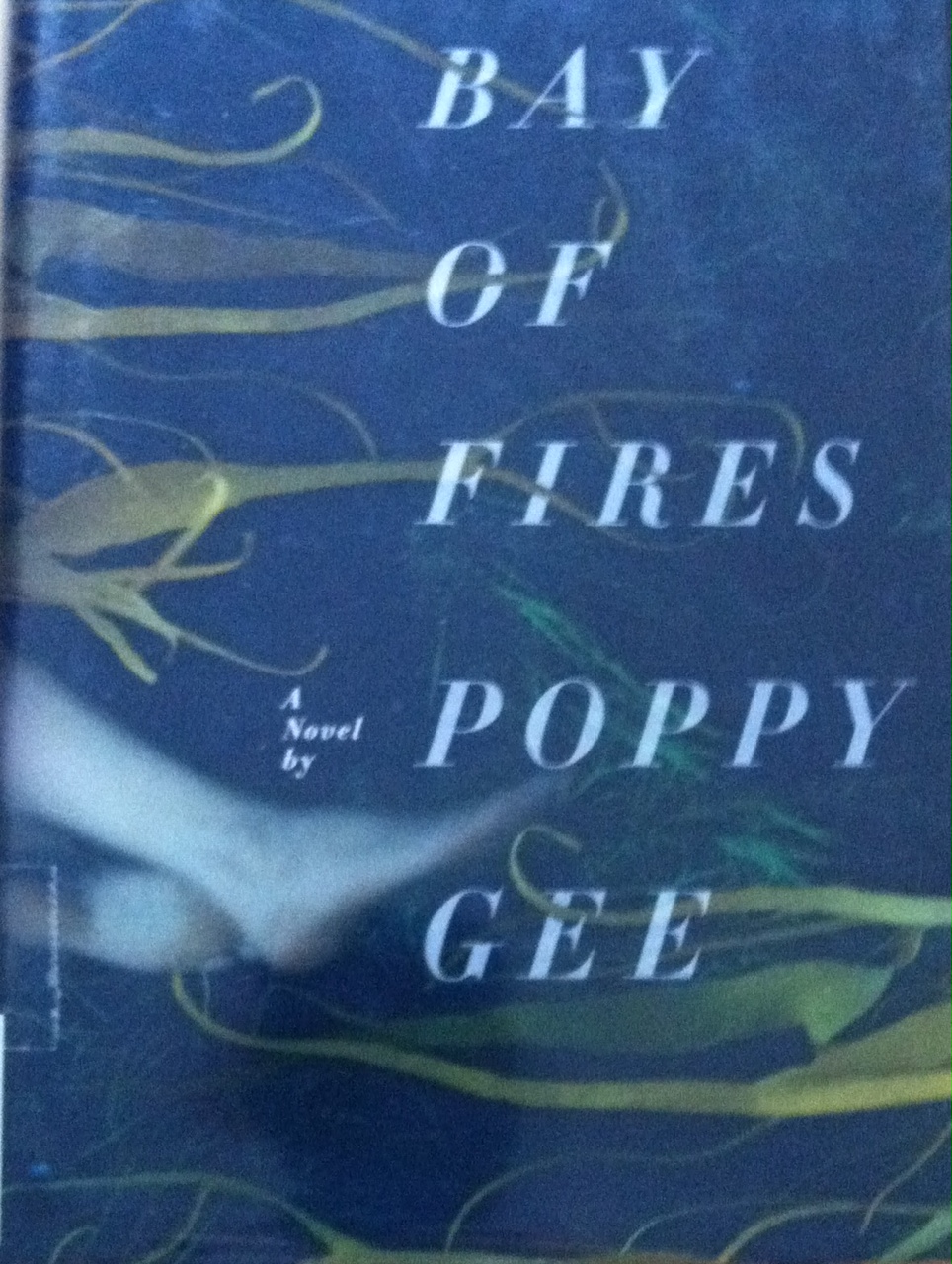
Here’s the setup: Sarah, after some bad decisions, ends up at home for the holidays, unsure what to do next. While she’s thinking it over, she’s one of two people to discover a young woman’s body on the beach, and for the next week, she and a down-on-his-luck reporter try to solve the mystery of the young woman’s disappearance.
Now, before I read Ms. Gee’s novel, I knew nothing about Tasmania, other than that it is an island and the namesake of a small, fierce marsupial creature. But one of this novel’s best features is its strong sense of place; Ms. Gee describes the scrub, the ocean, the rock pools, and the small community on the bay in fresh detail. Often, scenery escapes me, because I’m so focused on characters (with exceptions: Jane Eyre, The Lord of the Rings, and A Midsummer Night’s Dream come to mind). However, I think I was jolted out of my reading habits by the reversed seasons — the novel takes place around Christmas and New Year’s Day, and yet it’s summer.
Equally refreshing is Bay of Fires‘s main character, Sarah Avery. Deeply flawed, she is nonetheless tenacious, strong, and good. You know, a person, not a caricature of womanhood. For awhile, Ms. Gee’s focus on Sarah’s physical strength and fitness annoyed me, until I realized that her fitness is an integral part of her character, and informs many of her decisions over the novel’s course. She’s an original, interesting character, who sometimes reminded me of Starbuck from Battlestar Galactica. If you loved Starbuck, you’ll love Sarah.
Here’s my final recommendation: I thought I had the mystery solved on page 107 (of 371), and I kept reading. I was only half right, and the novel kept me guessing til the very end. I’ll be looking for Poppy Gee’s next book.
Feeling Restless After The Ten-Year Nap
The Ten-Year Nap finds four friends, women who live in New York, contemplating the choices they made about parenting and professions. The four all gave up their careers about ten years ago (hence the title), and some regret the decision; others are comfortable with the lives they’ve chosen.

It’s a testament to the talents of Meg Wolitzer that even thought I didn’t care for this book, I still borrowed two more of her novels from my local library. She’s very, very funny — keep an eye out for Amy Lamb’s reaction to her son’s favored reading material.
The novel follows all four women, plus one more character who drives the plot, and then veers off to show vignettes in the lives of women related the main characters. I felt that the novel never settled, as if Ms. Wolitzer couldn’t decide which person she was most interested in exploring; there’s fodder here for two or three novels.
Another aggravation for me was the jacket copy (no surprise there), which described the characters as middle class. Um, no. Maybe two of them are middle class by New York standards, as my friend Katie pointed out, but by any other standard these women are wealthy, wealthy, wealthy, with the luxury of choosing whether or not to parent their children at home.
Occasionally they glance at the lives of the less fortunate. Roberta, for instance, flutters in and out of left-wing activism; at the private boys’ school attended by three of the friends’ sons, poor children of color are invited for a yearly visit that is halted after an incident (there’s not too much plot to give away here, but nonetheless, I refrain.). Even Jill, whose adopted daughter comes from an understaffed Russian orphanage, spends her mental energy focused on herself, without much thought for the other children left without adoptive parents. I found these women unlikable, but I suspect Ms. Wolitzer is trying to point out foibles that we might find in ourselves: a tendency, no matter our political leanings, toward self-centeredness. We draw back from the world we see out the window.
The Ten Year-Nap also made me uncomfortable because it hits close to home. I’m the at-home parent to our son, and though he’s too small for school now, I do wonder what I will do, how I will feel, when he’s ten, or twelve, or fifteen. Even if I wanted to enter the workforce right now (I’m ambivalent, given H’s age), or go back to grad school to finish my PhD, we couldn’t afford it. Yes, you read that right. Daycare is so expensive here that it’s cheaper for me to stay home than to work as a teacher. And for other women the situation is reversed: they can’t afford not to work. As I often explain, it’s a complicated calculus, one that will probably hold for the next few years, though I hope not forever. I love my child and will do my best to see that he arrives safely at adulthood as a kind and loving person, and I think that’s a worthy goal, a worthy and difficult occupation. But I want to contribute something more to the world —not necessarily something better, just something more.
To me, The Ten-Year Nap implies that the women it follows had done something wrong, some disservice to themselves, by parenting their children at home. Even the title is diminutive, implying that the women are childish (not a rest or a sleep, but a nap). Maybe it’s the suggestion that these women are asleep to themselves that I find annoying; why can’t one be oneself and an at-home parent too?
Have you read the novel? What did you think?
Recommended Reading: The People in the Trees, by Hanya Yanagihara
Hanya Yanigahara’s The People in the Trees is the most disturbing novel I’ve read in years, and simultaneously one of the most beautiful.
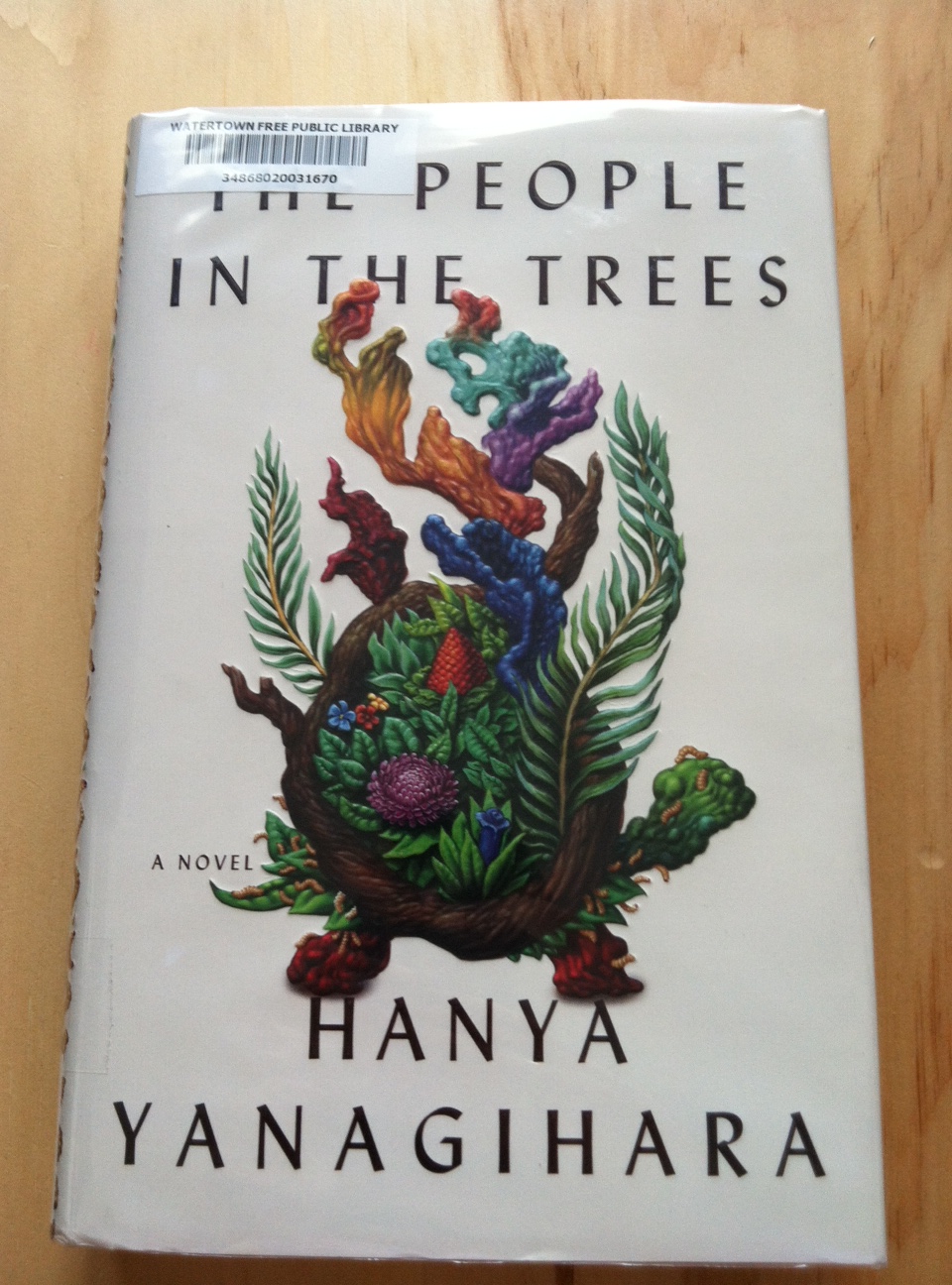
Seeing the look on my face when I was most of the way through the novel, my husband asked, “Are you reading horror?”
“No,” I said, “but it’s pretty frightening.”
“Well, the title is creepy.”
And so it went.
The epigraph to The People in the Trees comes from The Tempest (4.1), when Prospero inveighs against what he sees as Caliban’s fundamental intractability, his resistance to civilization (that is, both civilization itself and being civilized, none too humanely, by Prospero). It’s an apt choice for Ms. Yanagihara’s narrative of science, immortality, destruction, ethics, and exploration itself.
The novel is composed of the memoirs of Norton Perina, framed by a preface and epilogue penned by his colleague and friend, Ronald Kubodera, who provides insight and explication with academic footnotes throughout the text. Perina, a doctor, is part of a small group that discovers a “lost” tribe on the fictional island of Ivu’ivu, with disastrous consequences for the islanders and, ultimately, for Perina himself. (By the way, I suggest that you do not read the jacket copy before you begin reading the novel itself — spoilers abound.)
Perina’s voice is compelling — both suave and vicious, aware of his personal shortcomings and willfully blind to his greatest moral failings. Kubodera, though trying to protect his mentor and justify his life’s work (and his own), consistently undercuts Perina’s attempt to appear as if he is withholding nothing, giving the reader the unvarnished truth. And maybe, in some sick way, Perina thinks he is delivering his own truth.
The horrors the novel presents are juxtaposed with the lush (there’s no other word) descriptions of the fantastical plants and creatures of Ms. Yanagihara’s invention. Even the few words of the U’ivuan language that Perina shares are musical and perfectly suited to the environment of the story.
As a child, I remember learning in school that the rainforest ought to be protected so that it would remain available for future study. When I read this novel, it occurred to me, after all these years, that perhaps we should be protecting it, and all the other wild places of the world, from study. After all, wouldn’t Caliban have been better off without Prospero?
Recommended Reading: The Wife by Meg Wolitzer
A tip of the hat once more to my friend Katie, who pointed me toward Meg Wolitzer (Katie was, at the time, reading The Ten-Year Nap, and that’s on my list now, too!). The Wife is about a very unfunny subject —the unravelling of a marriage — but in Ms. Wolitzer’s capable hands, Joan (the wife in question) tells her story in darkly comic fashion.
Photo courtesy Tanatat / Freedigitalphotos.net
Joan’s husband is the much-awarded novelist Joe Castleman, and when the novel opens, she’s made up her mind to leave him as they fly to Helsinki, where he’s to receive his latest accolade. From there, Joan takes the narrative back to Smith College in the 1950s, and we learn how the pair met, and just how it all went wrong.
As a narrator, Joan is simultaneously unreliable and honest, and always a keen observer, not only of her own marriage, but also of the changing world around her. Though The Wife was published ten years ago, Joan’s observations about the role of wives echo loudly, especially with the recent debates about Sheryl Sandberg’s Lean In and Anne-Marie Slaughter’s article on work-life balance in last summer’s Atlantic. Here’s Joan near the end of the novel:
Everyone knows how women soldier on, how women dream of blueprints, recipes, ideas for a better world, and then sometimes lose them on the way to the crib in the middle of the night, on the way to the Stop & Shop, or the bath. They lose them on the way to greasing the path on which their husband and children will ride serenely through life. (183)
Apparently, I’m not the first reader to love this passage; the page was dog-eared when I picked up the book.
Recommended Reading: Fraud, by David Rakoff
Longtime readers may recall a post about this book (and Steven Seagal, and All About Eve) way back in the mists of time. I returned the book to my friend, who had left it here accidentally, and put it on my someday list. Of course, when I came around to that part of the list, our local library didn’t have a copy, so I had to wait for the book to arrive from the moneyed halls of Weston.

Happily, the other thirteen essays live up to the wry promise of “In New England Everyone Calls You Dave” and “Including One Called Hell.” The essays are from Rakoff’s point of view, but oriented outward, whereas, for example, David Sedaris’s essays (at least to me) are engaged with the world but oriented inward. I’m not knocking them; they’ve made me guffaw on the porch so hard that the neighbors probably thought my personal clock was set to five p.m. I think Rakoff’s brand of humor is quieter, his voice more melancholy, though his opinions are fierce (he truly hates Life is Beautiful, and thanks to him, I can’t imagine ever watching it.)
Whether he’s giving outdoor tracking school a try, hunting for the Loch Ness Monster, searching for elves in Iceland, or remembering what it was like to live in Tokyo, Rakoff gives master classes in understated elegance and economy of language. He’s clear. Take, for instance, these lines, some of my favorites, from “The Best Medicine”: “Not being funny doesn’t make you a bad person. Not having a sense of humor does.”
I think my favorite essay in the collection, aside from the one about Seagal-fest and the opening salvo (climbing Mount Monadnock on Christmas Day), is “Christmas Freud,” in which Rakoff describes what it was like to play Freud in a department store Christmas window display. Now, I find the whole idea of the Christmas tableau vivant very odd indeed (I’ve never seen one in person — have you?), but Rakoff elevates it to the sublime. Read this book, and I think you, like me, will wish for Christmas Freuden too.
A Book I’m Not Sure What to Make of: The Testament of Mary, by Colm Tóibín
Published last year to critical acclaim (and just longlisted for the 2013 Man Booker Prize), Colm Tóibín‘s The Testament of Mary is a short novel (only eighty-one pages) that upends our (or at least, my) cultural conception of Mary.
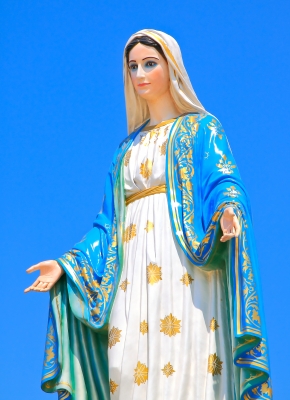
Image courtesy of Seksuwat / Freedigitalphotos.net
In Mr. Tóibín’s vision, the mother of Jesus does not believe that her son is divine, tries to save him from a path that will lead to execution, thinks his followers are a mob of lost men, and flees for her life before her son’s death on the Cross. She thinks of John and Paul (not named; I’m inferring—please correct me if I’m in error) as supercilious keepers, rather than trusted supporters. In her old age, Mary judges herself harshly, and her opinion of the nascent Christian movement is hardly charitable.
This novel isn’t plot driven, and I didn’t expect to like it. I’m still not sure how I feel about it, to tell the truth. But what I did appreciate was the intimacy and immediacy of Mary’s voice. Mr. Tóibín makes her come alive (with unexpected thoughts and feelings, to be sure) dissolving the distance that I feel when reading about her or seeing a painting of her.
Oddly, this portrayal of Mary reminded me of Olivia Hussey’s performance in Zefferelli’s Jesus of Nazareth (a family tradition at Christmas and Easter when I was growing up). Unlike this older, wearier Mary, Ms. Hussey’s Mary is convinced of her son’s divinity and supportive of his ministry. Like Mr. Tóibín’s Mary, however, she is infused with quiet strength and dignity.
Have you read The Testament of Mary? What did you think? If you haven’t read it, do you plan to?
Recommended Reading: The Pinecone, by Jenny Uglow
What drew me to this book was its subtitle: The Story of Sarah Losh, Forgotten Romantic Heroine—Antiquarian, Architect, and Visionary. I thought to myself, “why haven’t I heard of this person?”

Pine Cone image courtesy of cbenjasuwan / FreeDigitalPhotos.net
Sarah Losh (1785-1853) was part of a large and prosperous family who lived in Wreay, in Cumbria (northern England). As I learned from Ms. Uglow’s history, Sarah never married, but enjoyed a full and exciting life of the mind, traveling and working with her sister Katharine (her closest friend, like Jane Austen’s sister Cassandra). She consistently stood up for and helped the poor and the vulnerable in her community, and after her death the townspeople planted a tree in her honor, the tribute they thought would be most fitting.
Sadly, Sarah ordered her own papers and letters to be destroyed, so Ms. Uglow reconstructs her history by painting a picture of her extended family and the cultural milieu of Cumbria in particular and late-eighteenth- and early-nineteenth-century England and Europe in general.
Sarah’s crowning achievement is the unique (to say the least) village church at Wreay, which she redesigned herself, choosing everything from the stone to the timber to the glass. She even helped to carve the baptistry and the candlesticks. The church features lecterns in the shapes of an eagle and a stork; images of ammonites and other fossils, pinecones, lotuses, and even bats! I did wish the book’s pictures were in color so that I could get a better sense of the church’s tone — I rather doubt I’ll be in Cumbria any time soon.
A few odds and ends that I loved (and which made me realize that, for books like The Pinecone, I should really invest in these):
- The Bishop of Carlisle, Dean Milner, wore wigs, which, according to his granddaughter, “were known in the family as ‘Highty, Tighty, and Scrub; the first for London and State occasions; the second for official appearances in Carlisle; and Scrub for home wear'” (72).
- Sarah’s father John belonged to a club, and the men, over a very long sitting, would each drink three bottles of port, except “‘On rare occasions, wrote Lonsdale, ‘such as a victory by Nelson or the dashing Cochrane, the fourth bottle to each man was held to be the right mode of rendering the fact historical'” (74).
- One thing that struck me was how forcefully and effectually Sarah’s uncle, James Losh, advocated for the education and intellectual advancement of his nieces, and his admiring praise for Sarah’s many accomplishments. (For instance, she studied Italian and French, could sight-read Latin, and she studied ancient Greek three hours every day until she could translate it almost at sight; Ms. Uglow compares her to Eliot’s Dorothea [78]).
- A book that was popular in the nineteenth century and so good that Byron “allegedly wept with jealousy when he read it” (209): Thomas Hope’s Anastasius. I just looked for it on Goodreads, and there isn’t a single rating or review.
- Instead of gargoyles, Sarah’s church features a crocodile, a cross between a snake and a plesiosaur, a winged turtle, and a dragon. The dragon’s mouth spouts smoke from the boiler in the church below. Seriously. Her church has a fire-breathing dragon.
- I love the profusion of treatises with unassuming titles in the nineteenth century. Ms. Uglow does an excellent job of showcasing some of those titles, as well as the nineteenth century’s numerous amateur societies that discussed and spurred advancements in the arts and sciences. I wonder, do blogs today take up some of these societies’ functions? Are we a dispersed Society for the Advancement of Reading?
Full of interesting anecdotes and offering a sweeping overview of this fascinating period in English history, The Pinecone is an excellent foray into reviving the memory of an extraordinary woman.
Have you read any great nonfiction books lately? Do you know of any forgotten female figures in need of a revival?
 Rosemary and Reading Glasses