Winter Reading

winter-reading
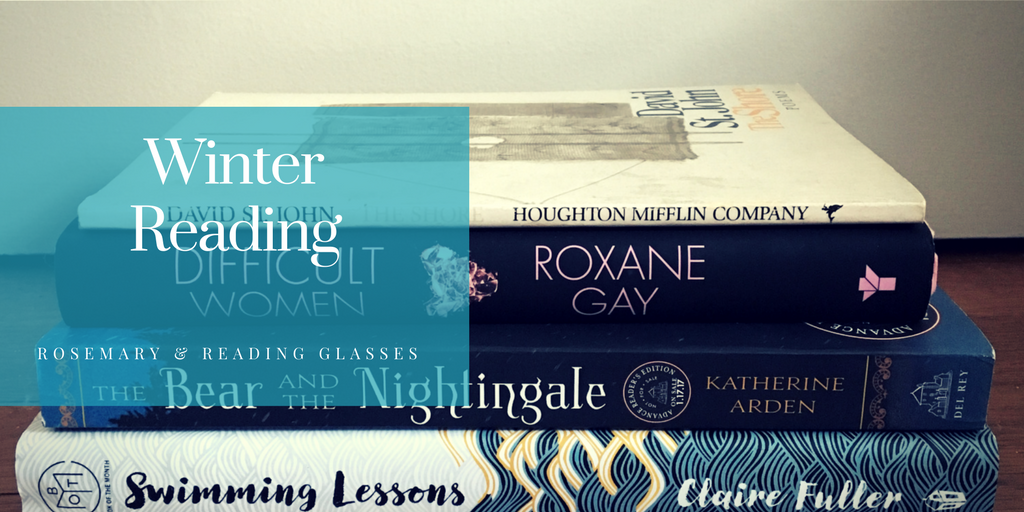
What I read last week: Roxane Gay’s story collection, debut fiction from Kathleen Arden, poetry by David St. John, and Claire Fuller’s second novel.

The first week of 2017 was a good start to the reading year; I had a bit more time to read than usual, thanks to the holiday, so I managed to zip through four books.

img_2913First up: Roxane Gay’s Difficult Women*, a collection of Ms. Gay’s previously published short stories. The women portrayed in these stories are troubled—by violence, abuse, miscarriage, lost children, lost childhoods—and troubling to those (mostly men) around them, who cannot come to grips with their struggles. Recurring motifs include knives, deer, hunting, mold, and sex, though the stories run the gamut in setting (Michigan’s Upper Peninsula to Florida) and style (realist to fantastical). The exquisite “North Country” is worth the price of admission, and I loved the title story, which takes on the categories women often find themselves assigned to (“Crazy Women”, “Frigid Women,” “Mothers,” and more). Emotionally difficult but worthwhile reading, which is what I expect from the author of An Untamed State and Bad Feminist.

img_3432Katherine Arden’s The Bear and the Nightingale* is perfect reading for a snowy weekend. In her debut, Ms. Arden (who has quite an impressive background in Russian studies) brings medieval Russia to life as she chronicles the extraordinary days of Vasilisa, the fearless, adventuresome youngest daughter of a boyar living in a small village at the edge of a wild forest. If that sounds like the setup for a fairytale, that’s because it is: myth and magic are intertwined with the everyday eking out of survival in Vasya’s world, as she and siblings forget their frozen fingers and empty stomachs as they listen to her old nurse’s tales of the frost demon and the smaller spirits of their home. While there were a few loose ends (meant for a sequel, perhaps?) and one subplot that was a bit trite, overall I found The Bear and the Nightingale to be a delicious, exuberant foray into a lost world.

img_3119Long ago, when this blog was young, it was a way to push myself to memorize poems—less than successful, I’m sorry to say. But the poets I read that year have stuck with me, including David St. John, whose poem “In the  High Country” is just lovely. I was happy to find a copy of The Shore (1980) at one of my favorite used bookstores, but while I liked the collection (and a few poems in particular, including “Guitar” and “Until the Sea is Dead”), it’s not destined for my all-time favorites list. I’m still glad to have read it, though.

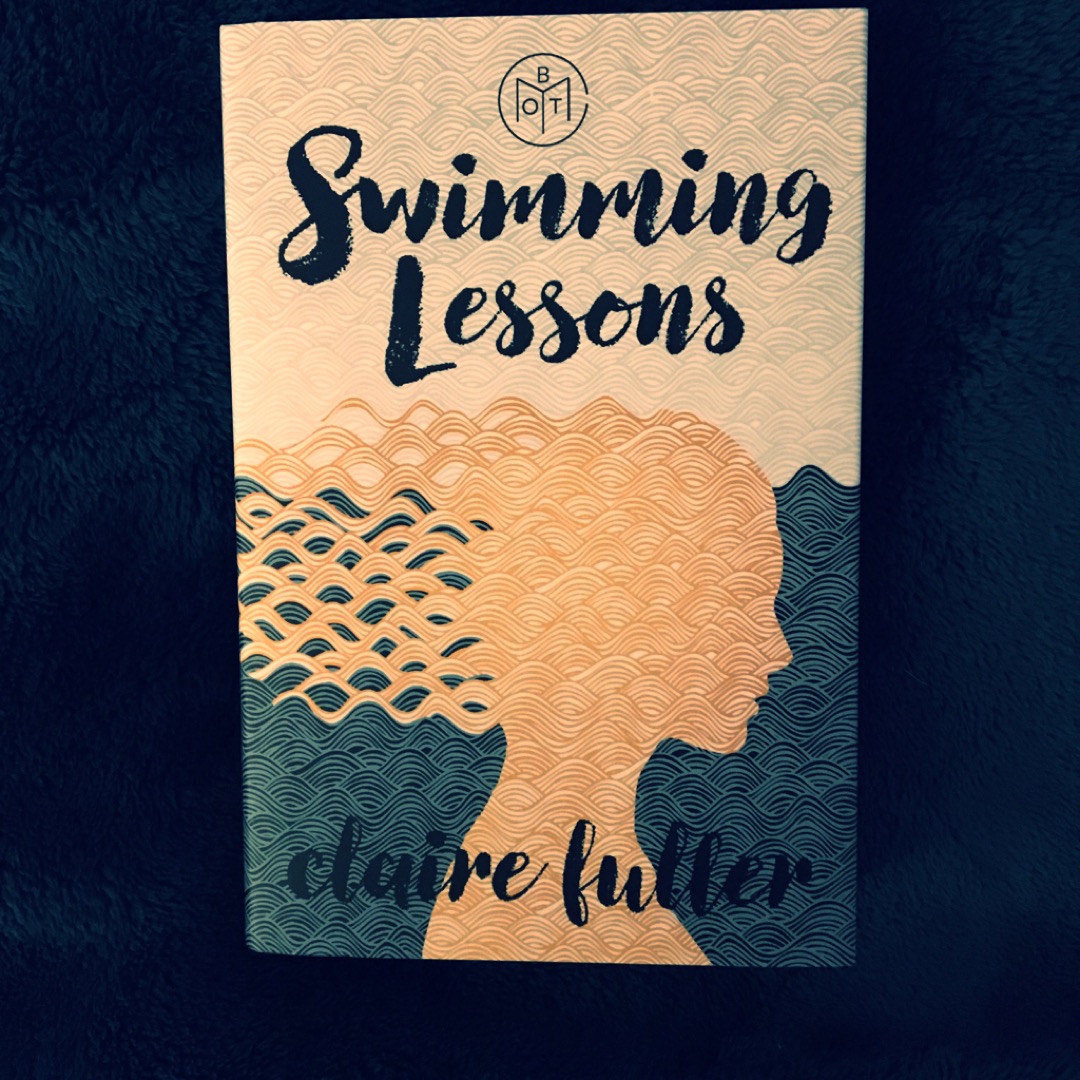
img_3046I recommended Our Endless Numbered Days, Claire Fuller’s debut novel, when it was published in 2015, and her new novel, Swimming Lessons, is another great find (it’s an early pick for the Book of the Month club; look for it in bookstores this February). Like Our Endless Numbered Days, Swimming Lessons offers twin mysteries: in this case, both revolve around the disappearance of Ingrid Coleman, the wife of a semi-famous English novelist and mother to their two daughters. In the present, Flora, the younger daughter, returns to her childhood home to care for her father (with the help of Nan, her sister) and to investigate her mother’s disappearance. In alternating chapters, we read Ingrid’s letters to Gil (never sent; placed in several of his multitudinous books) that chronicle how she was swept away by their romance—and might explain why she disappeared. If you read and like Swimming Lessons, I recommend Meg Wolitzer’s The Wife and Lauren Groff’s Fates and Furies.

I hope your first (and second) week of reading went well! 

*I received a copy of these books from the publishers for review purposes, which did not affect the content of my reviews.

Happy New Year!

happy-new-year

Dear Readers,

Happy New Year! I hope 2017 brings you health, happiness, and many delightful books.

Rosemary & Reading Glasses has just entered its fifth year, and some changes are in the offing. In order to pursue some personal projects and goals, I’ll be cutting back on the number of posts; instead of posting twice a week, I might post three to four times a month. I’ll still be reviewing new books, but not quite so many, and I’d like to focus particularly on debut authors, poetry, and small presses. You can also expect to see books reviewed in batches, since I anticipate that reducing the amount of time I spend writing longer reviews will give me more time to, you know, read more books.

As ever, I hope these posts lead you to great books (and more poetry!), and I thank you very much for reading.


A final note:

I’m delighted to have a story in the new issue of Pulp Literature, which Canadian readers might be able to find in local bookshops; the magazine is also available for e-readers.

(Links to other work, as usual, are on carolynoliver.net.)


Recommended Reading: We Show What We Have Learned by Clare Beams

we-show-what-we-have-learned

Clare Beams’s story collection We Show What We Have Learned* is gleefully good reading—and, as the cover suggests, mighty creepy too. I mean that in the best possible way. Horror isn’t my cup of tea, but suspense is another matter.  You won’t find gore in these nine stories, or monsters, really, except those we carry with us. However, each of Ms. Beams’s nine stories (some historical, some slipstream, some contemporary) offers tension so acute that I often found myself squirming in my chair.

img_2833A boarding school’s promise of “transformational education” isn’t limited to the mind in “Hourglass.” An unnamed landscape architect with a talent for making his clients’ desires to rtakes on the project of a lifetime in “World’s End,” but finds himself bewildered by the orders he’s given. A young woman decides to reclaim childhood happiness and demonstrate her own giving nature by taking her elderly grandmother back to the country cabin where they vacationed long ago, but the excursion does not have the effect on “Granna” that she expected. In the haunting “All the Keys to All the Doors,” an older woman in a small town wonders if she could have done more to prevent a horrific act of violence. In “The Saltwater Cure,” a Depression-era Plymouth health resort is the setting for a young man’s coming of age. Two sisters love the same plague doctor in “Ailments.” A teacher falls apart in “We Show What We Have Learned,” while a new bride becomes more and more concerned about her wedding dress (made from her husband’s wartime parachute) in “The Drop.” Finally, in “The Renaissance Person Tournament” we meet another teacher—this one holding herself together as she coaches a promising student.

All nine stories are affecting and beautifully written, the sentences crafted for maximum impact without calling attention to the writing in a way that would pull a reader out of the world of the story. Take just one example, from the opening of “Hourglass,” which drew me in: “With its damp-streaked stone and clinging pine trees, the school looked ideal for transformations, like a nineteenth-century invalids’ home, a place where a person could go romantically, molderingly mad.”

I love that sentence, which I read with an equal measure of delight and apprehension–exactly what I think you’ll feel once you start reading this fabulous collection, which I highly recommend.

And three cheers for small presses like Lookout, which published this book! What small press books have you loved this year?

*I received a copy of this book from the publisher for review consideration, which did not affect the content of my review.

5 Reasons to Read: The Guineveres, by Sarah Domet

5-reasons-to-read-the-guineveres

IThe Guineveresn Sarah Domet’s debut novel The Guineveres*, four girls, all named Guinevere, find each other at a convent run by the Sisters of the Supreme Adoration. Abandoned by their families for various reasons, the four Guineveres (Gwen, Win, Ginny, and Vere), united by their unusual name, find strength in numbers. When a group of comatose soldiers arrives at the convent for care, the girls plot their escape into their adult lives, with unexpected consequences.

Here are five reasons to read it for yourself:

  1. It’s a bildungsroman about girls: Spare me your Holden Caulfields; give me the complex inner lives of girls, and especially girls in groups, any day.
  2. The convent isn’t Lowood, and the nuns aren’t evil: I was dreading a clichéd take on the Catholic convent school, but my fears were unfounded. Life with the Sisters of the Supreme Adoration is austere, often dull, and strictly bounded, but the nuns care about their charges, and do what they think is best to keep them safe and promote their spiritual development. In fact, I thought the nuns were interesting enough to deserve their own book.
  3. The narrative is pleasingly polyphonic: The book proceeds chronologically, with most sections keyed to events on the liturgical calendar, like feast days and holidays. Though Vere is the book’s narrator, she often slips into the first-person plural, so that the Guineveres speak together. Interspersed with the story of their fateful year are Vere’s retellings of the lives of female saints, and each girl’s account of how she came to live with the Sisters of the Supreme Adoration.
  4. Vere is a winning narrator: The shyest of the Guineveres, Vere is a careful observer of her companions’ habits and inclinations, the faithful chronicler of their lives together and human nature (“The heart is funny in that way: When it keeps on loving, and loving, and loving what isn’t there, it becomes attached to the notion that love is the wait itself, the emptiness of it.”). Personality-wise, think Elinor Dashwood meets Jo March; she also reminded me, a little, of the narrators of Rush Oh! and My Name is Lucy Barton.
  5. The writing is quite good: While I have two critiques (First, “Mass” is not capitalized as it ought to be, and second, I found the refusal to name the time period aggravating—my search for clues kept throwing me out of the world, though I think the intended effect was to render the book timeless), on the whole I found Ms. Domet’s writing smooth and often lovely. Certain images linger, like the nuns’ worn-out shoes repurposed as planters, and the idea that Ginny’s “sensitivity was like an open wound that occasionally scabbed over but never healed completely.”

What are you reading this week?

*I received a copy of this book from the publisher for review consideration, which did not affect the content of my review.

“Going home / behind the curtain”: Farewell, Leonard Cohen

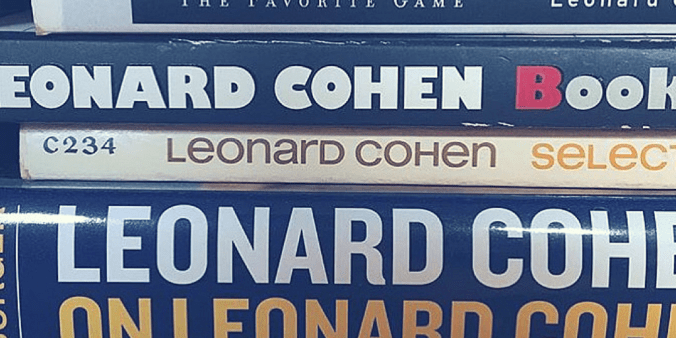
Leonard Cohen books photo by Carolyn Oliver

He wants to write a love song
An anthem of forgiving
A manual for living with defeat
from “Going Home”

If you’re a longtime reader of R&RG, you know about my devotion to Leonard Cohen. His death wasn’t public when I wrote the post quoting “Anthem” right after the election last week, but now I realize how strange it was that I used the past tense to talk about him—I almost always use the present when writing about living authors. The news of his death wasn’t shocking  (his last album, You Want It Darker, which is amazing, is also a farewell; and then there was his last letter to Marianne Ihlen, who died this summer), but it was heartbreaking nonetheless.

I can’t muster much more at the moment, except to commend his books to your reading and his albums to your listening; recommendations available upon request.

Rest well, Leonard. Endless love, see you down the road.

Here’s a 2014 review of Leonard Cohen on Leonard Cohen, edited by Jeff Burger.


I’m fairly certain that I would have spent my high school years as perpetually moody and angst-ridden as Molly Ringwald in any given John Hughes movie had it not been for Theatre (capital-T, said in your best Addison DeWitt voice).

To the Shaker Heights High School Theatre Arts Program (yes, it’s really called that) I owe a debt of gratitude: for leading me to my two best friends in high school, one of whom I met when she was tasked with teasing my nearly waist-length hair so that it would stand straight out from my head; for playwriting class; for teaching me the world “décolletage”; for the knowledge that I should never, ever wear flesh-tone spandex; for the chance to eat lunches with friends in Room 129; for the ability to recite, in perfect tandem with any other alum, “Shaker Theater events are non-smoking, non-drinking, non-drug-using, safe-driving, recycling events”; and for Leonard Cohen.

The department chair, Mr. Thornton, had a fondness for the Canadian singer-songwriter, and from the moment I heard that smoky voice singing “The Window,” I was hooked. I used my babysitting money to buy his albums, talked so much about him that my parents knew to get me Ten New Songs for my birthday, and hoped Leonard Cohen would tour someday so that I could see him live. One of the stupidest things I’ve ever done is not begging, borrowing, or stealing enough money to see him in concert in Boston in 2012.

photo 3 (5)Before he became famous, relatively late (he was in his thirties) as a singer-songwriter, Leonard Cohen was a poet and novelist whose work earned him comparisons with James Joyce, even if it didn’t pay the bills. Music did, and more than forty-five years after the release of Songs of Leonard Cohen, the dapper and impeccably polite poet is a musical legend.
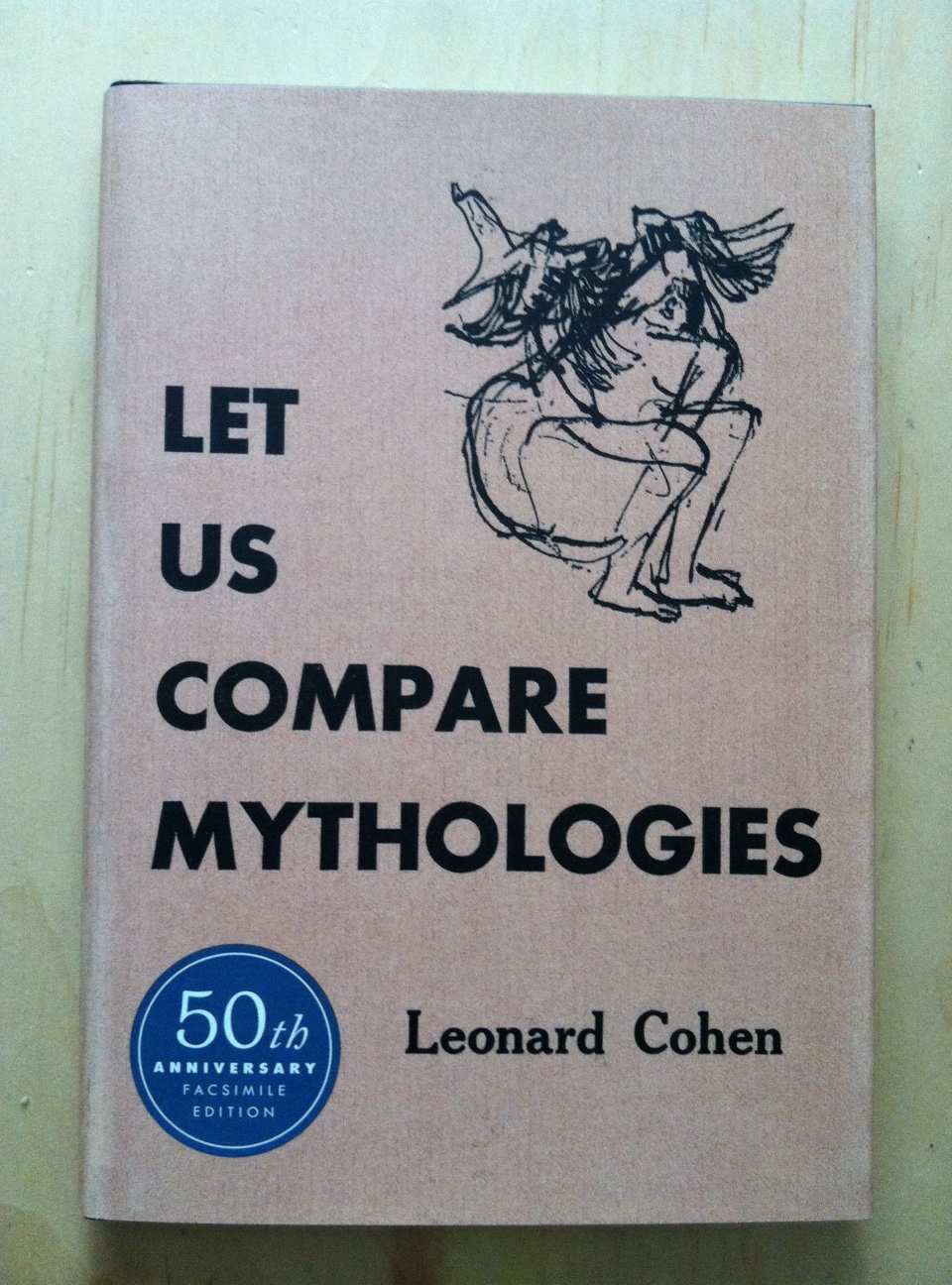
photo 2 (14)I was so entranced by his music that it wasn’t until college that I went looking for Mr. Cohen’s published poetry and fiction.  Let Us Compare Mythologies (1956) which I recently re-read, is raw and energetic, the work of a young idealist who’s afraid the world is already lost. Book of Mercy (my favorite of the collections) is often called a modern book of psalms, although in an interview Mr. Cohen characterized them as “more conversations with the absolute” (148). The prose-poems — fifty of them — are prayers of great sadness and great longing. Here’s part of my favorite (19): “O beloved speaking, O comfort whispering in the terror, unspeakable explanation of the smoke and cruelty, undo the self-conspiracy, let me dare the boldness of joy.” It’s the same voice — almost mystic, worldly, sad — from “The Window”:

Oh tangle of matter and ghost
Oh darling of angels, demons and saints
And the whole broken-hearted host
Gentle this soul

Like his poetry, Leonard Cohen’s songs are about the difficulties of love, of living, of dying; he sings about a world that’s broken and the people trying and often failing to keep the pieces together. He writes songs about betrayal, sex, faith, politics. A reviewer once famously said that it was “music to slit your wrists to,” but I’ve never found it anything but comforting, occasionally funny (see “Tower of Song”), and very, very beautiful. I’m not the only one.

photo 1 (17)Leonard Cohen on Leonard Cohen: Interviews and Encounters*, edited by Jeff Burger and recently published by Chicago Review Press, is a book meant for fans of the man who wrote not only “Suzanne” and “First We Take Manhattan” and yes, the ubiquitous “Hallelujah” (for the record, I like Leonard’s version best, followed by Jeff Buckley’s, followed by John Cale’s, then k d lang’s), but also Book of Mercy and Beautiful Losers and The Spice-Box of Earth. Judiciously selected interviews from Mr. Cohen’s four decades in the music industry trace the evolution of his public persona even as they illuminate aspects of his personal life and career that aren’t widely talked about. (Did you know he once made a signature drink for his band? I do now, and I’ll be mixing up a few batches this summer.)

What comes across in these interviews — which the interviewers themselves note in their interviews with Mr. Burger — is Leonard Cohen’s graciousness, his sense of humor, and his modesty. He unflappably fields predictable questions about his lack of commercial success in the U.S., speaks well of every woman he’s been romantically linked with, and pokes fun of himself (he riffs on his early albums’ bland (“neutral”) titles by joking that he’ll call the next one Songs in English [163].) He’s completely open about the grueling process of songwriting (he’ll write dozens and dozens of stanzas for one song, rejecting all but a few; songs often take years to complete), his difficulties with romantic relationships, and, in the later interviews, about his struggles with depression. Most longtime Leonard Cohen fans know that he spent years in relative isolation at a Zen center outside Los Angeles, but these interviews offer a fuller view of what those years were like, which I found particularly fascinating.

With more than five hundred pages of interviews (several never before translated into English, some transcribed from the raw footage of television interviews), it’s not surprising that some material is repetitive. Interviewers ask questions asked many times before, and sometimes Mr. Cohen’s answers retread ground already broken. Still, the book is a treasure trove, and worth reading just for the interviewers with specialized backgrounds who share long, knowledgable conversations with Mr. Cohen on songwriting and his Jewish background, among other subjects. Rarely did four or five pages pass without me turning down a corner to come back to an idea or a phrase; choosing favorite passages and quotes for this review proved an impossible task. But here’s a snippet from a conversation the editor had with interviewer Thom Jurek, who spoke with Leonard Cohen in 1993:

Jurek recalled asking Cohen why it had taken so long after the release of The Future for him to tour. “He explained that it was because backing vocalist Julie Christensen had borne a child; it was important to hold off on the tour to give the new family time to bond.” What about finding another singer? Cohen said he hadn’t even considered that. “The reason, he said– and I am pretty sure I remember this by heart–was: ‘She shouldn’t be punished for bringing life into the world.’

This from a man who says, “We cannot forestall the apocalypse. The bomb has already gone off. We are now living in the midst of its aftermath. The question is: how can we live with this knowledge with grace and kindness?” (507).

There is a risk in books of this kind — as in meeting a favorite author — that the subject will be demystified in some way, will appear all too human, which is not, after all, how we prefer our idols. This isn’t the case with Leonard Cohen on Leonard Cohen. For all his foibles and favored anecdotes, the man is consistently human in the best sense of the word: compassionate, invested in the welfare of others, deeply concerned with ideas. I came away admiring him, and loving his work, even more.


Related:

An Interview with Jeff Burger, Editor of Leonard Cohen on Leonard Cohen.

“Going Home”

Review of So Long, Marianne

New Yorker profile of Leonard Cohen (October 2016)

*I received a copy of this book from the publisher for review purposes, which did not affect the content of this review.
Recommended Reading: Bestiary, by Donika Kelly

bestiary

A bestiary, as you probably know, is a catalogue of beasts, either real or mythical or both. It’s a rich framework for a book of poems, and Donika Kelly’s Bestiary*, longlisted for the National Book Award, is a wonder. Here you’ll find birds, bears, centaurs, Pegasus, dogs, the Minotaur, a werewolf, and a mermaid—and poems of love, grief, and human monstrosity.

Bestiary photo by Carolyn OliverThese poems bear evidence of trauma, particularly childhood abuse, which makes them both difficult to read and deeply moving. (You can read Donika Kelly’s brief statement on who she wrote the book for here.) The speaker in the long poem “How to be alone” chronicles her loneliness, curling on the couch with her dogs, challenging herself to admit all that she has endured (including her mother’s death, her father’s abuse, self-harm, “the little ways you brick up your heart”). Each four- to seven-line stanza appears on its own page, emphasizing the speaker’s isolation. It’s an incredibly intimate self-portrait.

Bestiary is a book I’ll come back to again, not only for the way it confronts human frailty, but for its love poems. “I have never known a field as wild / as your heart” begins “Love Poem: centaur.” “Love Poem: Satyr” finds the creature calling to its love “with a breath / of spring, a small wind warmed in my breast / and shaped by the lips you loved.” These poems swell with lyric beauty.

I highly recommend this collection. To get a taste of it, you can read “Bower” at VQR here, and “Pegasus” at Graywolf’s website.

You can also read more about Bestiary here and here.

What’s the last poem you read?

*I received a copy of this book from the publisher for review consideration, which did not affect the content of my review.

In Brief: Reputations and The Mothers

the-mothers-and-reputations

Dear Readers, I hope your autumn (or spring, hello Australian readers!) has been going swimmingly. Here at Chez O I’m ramping up my night-time knitting (the holidays, and new nieces/nephews approach), so my evenings are not as devoted to reading as they are the rest of the year. Still, recently I finished two books that I’m happy to recommend.

Reputations, by Juan Gabriel Vásquez, translated by Anne McLean

Reputations_Carolyn Oliver photoThis slim novel (under 200 pages) reminded me of Virginia Woolf’s Mrs. Dalloway in two ways. First, Reputations takes place over a short period (three days to Mrs. Dalloway‘s one), but manages to show the contours of the middle-aged main character’s entire life. Second, Mr. Vásquez’s management of tense is remarkable, like Woolf’s. The past and present flow alongside each other easily, almost liquid.

The prose is beautiful (credit to the translator here too!), with long, cascading sentences, and memorable similes. Two of my favorites:

“The night before had been like making love with a memory, with the memory of a woman and not with the woman who was present, the way we keep feeling, after stepping barefoot on a stone, the shape of the stone in the arch of our foot.”

“Forgetfulness was the only democratic thing in Colombia: it covered them all, the good and the bad, the murderers and the heroes, like the snow in the James Joyce story, falling upon all of them alike.”

The plot: Political cartoonist Javier Mallarino is a force to be reckoned with, dashing careers for decades with a bit of ink and a pithy caption. Honored for his work one evening, he is confronted by a forgotten figure from his past the next day, causing him to question memory, honesty, and his own reputation.

The Mothers, by Brit Bennett

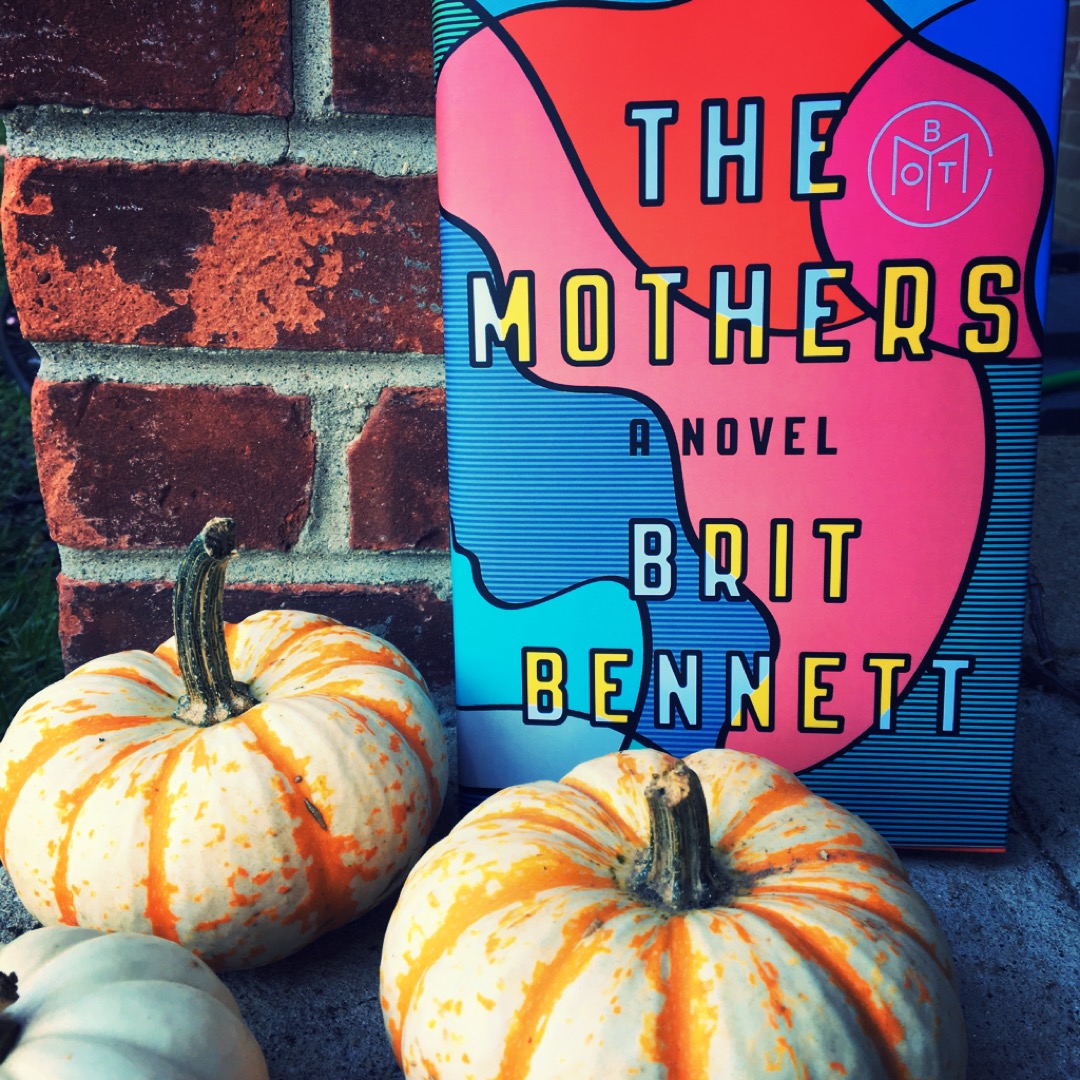
The Mothers photo by Carolyn OliverIf you’re a denizen of the bookternet, there’s no way you haven’t heard of this book, one of the most anticipated of the year. Brit Bennett’s debut novel follows three young people in Southern California—Nadia, Luke, and Aubrey—over the course of a decade.

Reeling after the death of her mother, Nadia becomes involved with Luke, the pastor’s son (and a former football star) during the summer before she leaves for college. But their time together ends in a secret and a coverup, one that if exposed would shake their tight-knit black community badly. After Luke and Nadia part ways, Nadia becomes close with Aubrey, a shy, chaste girl who’s often to be found helping Luke’s mother at their church.

The Mothers is a book about friendship, love, community, mothering, and most importantly, choices. The three main characters’ lives are webbed together not only by the paths they took, but by the paths they didn’t take, and these haunt them.

I loved the writing in this novel (though I wanted more from and about The Mothers, the elderly women who keep Upper Room, the church, running, and who serve as the collective narrator). Here are a few of my favorite lines:

“[ . . .] hard deaths resist words. A soft death can be swallowed with Called home to be with the Lord or We’ll see her again in glory, but hard deaths get caught in the teeth like gristle.”

“The pier was nothing but a long piece of wood that kept crumbling until it was rebuilt, and years later, she wondered if that was the point, if sometimes the glory was in rebuilding the broken thing, not the result but the process of trying.”

“Oh girl, we have known littlebit love. That littlebit of honey left in an empty jar that traps the sweetness in your mouth long enough to mask your hunger. We have run tongues over teeth to savor that last littlebit as long as we could, and in all our living, nothing has starved us more.”

What are your reading plans for this season? 

5 Reasons to Read: The Wangs vs. the World, by Jade Chang

5-reasons-to-read-the-wangs-vs-the-world

Jade Chang’s The Wangs vs. the World* is an exuberant, madcap debut novel about a family in crisis. It’s also one of the most anticipated novels of the fall. Here are five reasons to give it a try:

  1. the wangs vs the worldIt’s a spin on classic immigrant stories: Charles Wang, the patriarch of the family, came to the United States from Taiwan with next to nothing. Decades later, he’s a multimillionaire with a thriving cosmetics business—until the financial crisis hits. Suddenly Charles finds himself with no business, no home, and one very upset family. His new plan: head back to mainland China to reclaim the family land stolen in the Cultural Revolution. But first he needs to get from L.A. to upstate New York in a 38-year-old station wagon.
  2. It’s a road-trip novel: I can’t really remember the last time I read one of these. This is a high-energy book, and part of that is because the scenery changes so often–from L.A. to Arizona, Texas, New Orleans, North Carolina, and a tiny town in New York that hasn’t yet been found by New York City residents who need a country breather. Ms. Wang has a knack for conveying the flavor of a place, and she’s especially good at writing food, from crawfish and doughnuts to flaked whitefish and multi-course banquets.
  3. It’s chock full of compelling characters: Charles is headstrong, brash, lucky and then very unlucky, and full of dad jokes. He loves his luxuries (like his cigarette boat “painted with twenty-seven gallons of Suicide Blonde, his best-selling nail polish color”), but he loves his family more. Barbra, his second wife, is all seething analysis under her quiet exterior. Saina, the eldest daughter (a disgraced New York art-world darling) is torn between two men, and worse, can’t figure out how to move into the next phase of her life. Andrew is a sweet and funny would-be comedian. And Grace is an overprotected, undersupervised, suicide-obsessed, self-indulgent teenager. You’ll end up loving her.
  4. It’s angry: The first lines are, “Charles Wang was mad at America. Actually, he was mad at history.” Despite the futility of these feelings—sure, if none of twentieth-century history had happened, Charles would still be happily ensconced on his family’s land in China, he thinks—Charles still has them. Anger is, I think, an understudied emotion in novels, but this one has it in spades. All the Wangs, and most of the other characters who flit into their orbits, are angry about the way their lives have turned out. It’s compelling to watch them work their way out of that feeling.
  5. The ending: Well, I can’t really say much about that, can I? It’s satisfying without being overly neat—I loved it.

What are you reading this week?

*I received a copy of this book from the publisher for review consideration, which did not affect the content of my review.


Recommended Reading: Hag-Seed, by Margaret Atwood

hag-seed

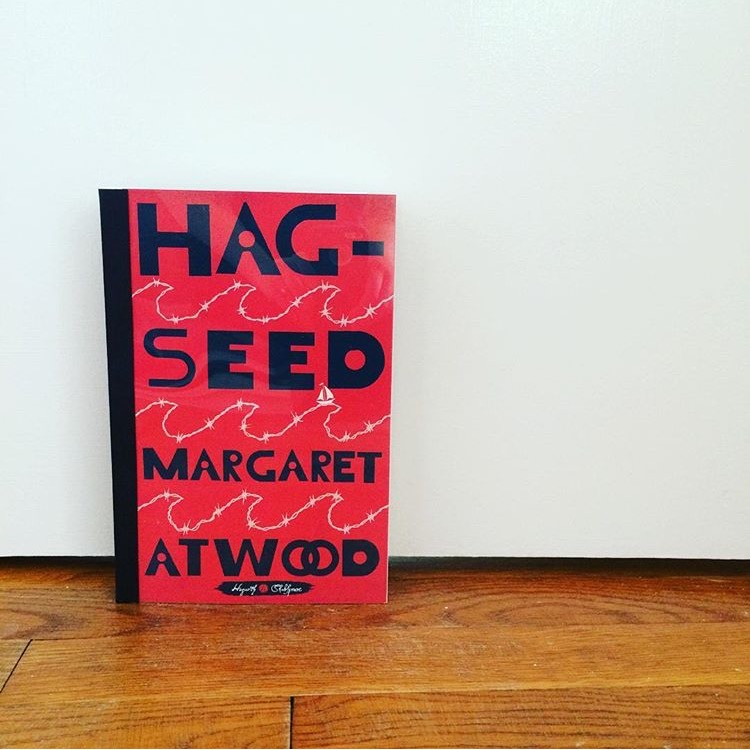
When Margaret Atwood’s Hag-Seed* arrived in the mail, I could barely contain my glee. Margaret Atwood (the Helen Mirren of authors, as I sometimes think of her) taking on Shakespeare? Yes please!

Hag-Seed photo by Carolyn OliverHag-Seed lived up to all my expectations (and it’s the best so far in the Hogarth Shakespeare series, too). I highly recommend the book (and teachers, it would be fabulous to teach alongside its source material), which is often funny, often touching, often a rollicking good time (especially for Shakespeare aficionados), and always thoughtful. It’s a tour-de-force reimagining of The Tempest, and like the original, a provocative examination of theatre, authorship, imprisonment, revenge, and grief.

Felix Phillips is the impresario Artistic Director of the Makeshiweg Theatre Festival. His productions have been beyond avant garde (audience complaints include “Did Lear have to take off all his clothes?”; Felix thinks, “What was so bad about Macbeth done with chainsaws? Topical. Direct.”), and after the sudden loss of his beloved daughter, Miranda, he throws himself into the play he thinks will bring her back to life: The Tempest. However, he’s so caught up in preparations that he doesn’t notice the machinations of Tony Price, his glad-handing lieutenant, who, with the help of Lonnie Gordon, the Chairman of the Board, subsequently ousts Felix from his position.

Despondent, Felix retreats to a hovel in the Canadian backwoods, contemplating revenge and building a new life as “Mr. Duke.” As his alter-ego—which is of course Prospero, as he knows—he takes a job teaching Shakespeare through performance to prison inmates. Years pass, but when Tony and Lonnie seem poised to pass within his orbit, Felix hatches his revenge plot—and begins to teach The Tempest to the Fletcher Correctional Players.

Hag-Seed is delightfully layered; it’s a novel whose plot is taken from a play, and in the novel the characters are enacting the play as they prepare to enact the play (got that?). And by writing Felix teaching his players The Tempest, and respecting their (varied) readings of it, Margaret Atwood is teaching us about the text and its interpretations—while also conveying the importance of literature in prisons. “It’s the words that should concern you [. . . ] That’s the real danger. Words don’t show up on scanners,” Felix thinks, going through the metal detectors and chatting with the guards.  Atwood is, of course, fascinated with imprisonment (The Handmaid’s Tale, The Heart Goes Last, Alias Grace), so it’s a treat to watch her teasing out the power relationships in the novel (and in The Tempest).  It is, as the kids used to say, very meta.

As some reviewers have noted, the minor players are not remarkably distinct from each other; our knowledge of their backgrounds is limited. While that might be a fault in a standalone novel, to me this decision makes sense given the source material. Without picking up your Collected Works, can you recall how Stephano and Trinculo differ?

There are, of course, departures from Shakespeare’s play. Felix is animated not only by revenge and a desire to reclaim his position, but also, most importantly, by grief (in a way that Prospero is not). For Felix, staging The Tempest is a way to make Miranda live again, to take substance, almost. During his years of exile, his imagining of the lost girl is a ghost, a spirit, gradually transforming into Ariel whispering in his ear.

And Prospero, in these years of exile, is Caliban, misshapen by grief and the thirst for vengeance, pinched by loneliness into a new version of his former wild self, but able to call up sweet music and language all the same.  That’s why (I believe) the book is called Hag-Seed, after one of Prospero’s epithets for Caliban; the word brings them together, and means, of course, the child of a witch. And what is Atwood if not a conjuror, and what are her books if not progeny that cannot die?

Related:

My take on Margaret Atwood’s most recent previous novel, The Heart Goes Last (which I read as a take on Milton)

Review of Vinegar Girl, Anne Tyler’s novelization of The Taming of the Shrew

Review of The Gap of Time, Jeanette Winterson’s retelling of The Winter’s Tale

*I received a copy of this book from the publisher for review consideration, which did not affect the content of my review.

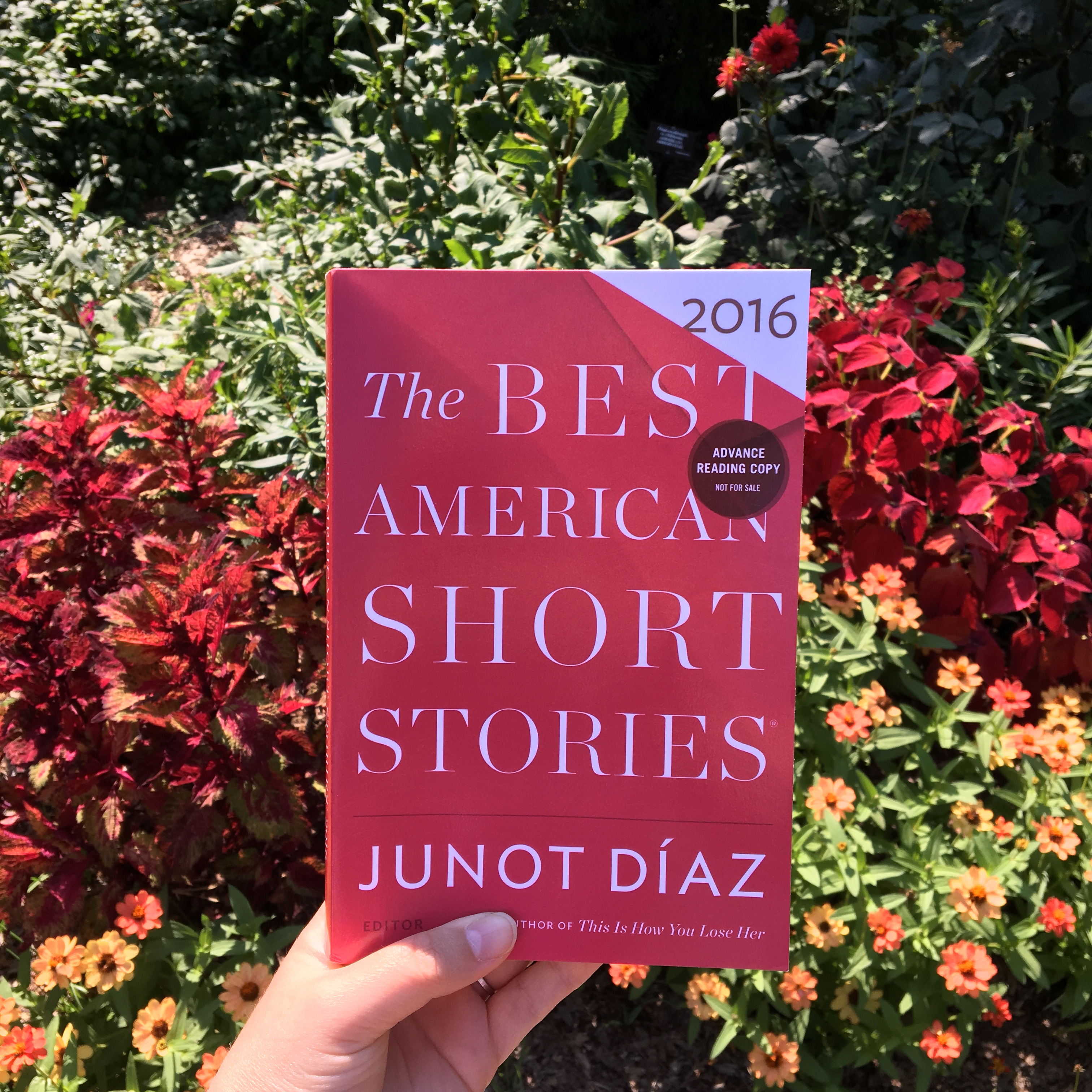
Recommended Reading: The Best American Short Stories 2016 Edited by Junot Díaz and Heidi Pitlor (series editor)

best-american-short-stories-2016

I love The Best American Short Stories anthologies; usually, I’ll have one around for quite awhile, dipping in from time to time when I want to read a story but don’t want to commit to a novel or a whole collection.

This year, though, I read The Best American Short Stories 2016* cover to cover, and I’m soimg_0839 glad I did. Like many writers, I subscribe to a rotating cast of literary magazines, but it’s impossible to read them all—unless that’s your job. Guest editor Junot Díaz and series editor Heidi Pitlor read many, many stories and chose twenty for this year’s anthology. Their choices are diverse in style, length, subject, and authors’ identities. This is a stellar collection, and I highly recommend it.

While I’d be happy to read any of these stories again, and Junot Díaz’s introduction is not to be missed, standouts (to me) included:

  • “Apollo” by Chimamanda Ngozi Adichie: In Enugu (a city in Nigeria) a man looks back to his childhood, when his friendship with a family servant his own age ended disastrously. “Reading did not do to me what it did to my parents, agitating them or turning them into vague beings lost to time, who did not quite notice when I came and went.”
  • “The Letician Age” by Yalitza Ferreras: A girl and geology, tragedy and family, love and a volcano. “Yet once in a while a person explodes out of her bedrock and becomes someone else.”
  • “For the God of Love, for the Love of God” by Lauren Groff: Tensions simmer as two friends and their husbands share a house in France. “She’d never met a child with beady eyes before. Beadiness arrives after long slow ekes of disappointment, usually in middle age.”
  • “Bridge” by Daniel J. O’Malley: “His mother’s words found a home in his mind the moment they left her mouth.” A boy, supposed to be studying, watches as an elderly couple prepares to jump from a bridge. Absolutely killer last line, which I won’t quote.
  • “On This Side” by Yuko Sakata: A changed figure from a man’s past returns asking for help, or maybe to confront him. “The first thing he felt on the staircase was a knot forming in his stomach, a forgotten seed of guilt he didn’t care to inspect, and now it was threatening to grow.

Two other stories, “Cold Little Bird” by Ben Marcus and “Gifted” by Sharon Solwitz, scared the heck out of me. The first is about a little boy who suddenly and totally withholds all affection from his parents; the second is about a woman whose son becomes critically ill. That’s not really what they’re about, of course–that’s just the framework, but let me tell you: chills. I had to go eat a piece of chocolate after “Cold Little Bird.”

And if you haven’t yet read Louise Erdrich’s excellent LaRose, you can get a taste here; her story “The Flower” is adapted from the novel.

Finally, one of the best parts of these anthologies are the Contributors’ Notes at the end–each includes a short bio of the author and some background on how the story came to be written and published—whether dashed off in a day or labored over for years and dozens of drafts. Fascinating.

Have you read any of the “Best American” anthologies? Do you have a favorite to recommend?

*I received a copy of this book from the publisher for review consideration, which did not affect the content of my review.