Literary Wives: The World’s Wife, by Carol Ann Duffy

literarywives2If you’re new to Literary Wives, here’s the summary: we’re an online bookclub of five to six book bloggers, and we post every other month about a different book with the word “wife” in the title. When we read these books, we have two questions in mind:

1. What does this book say about wives or the experience of being a wife?

2. In what way does this woman define “wife”—or in what way is she defined by “wife”?

This month, we’re talking about Carol Ann Duffy’s The World’s Wife, a 1999 collection of poetry.  We invite you to join the discussion by commenting on our blogs (links below) or posting your own review on our Facebook page.

We also hope you’ll join us next time, on Monday, October 6, when we’ll be discussing Melanie Gideon’s Wife 22.
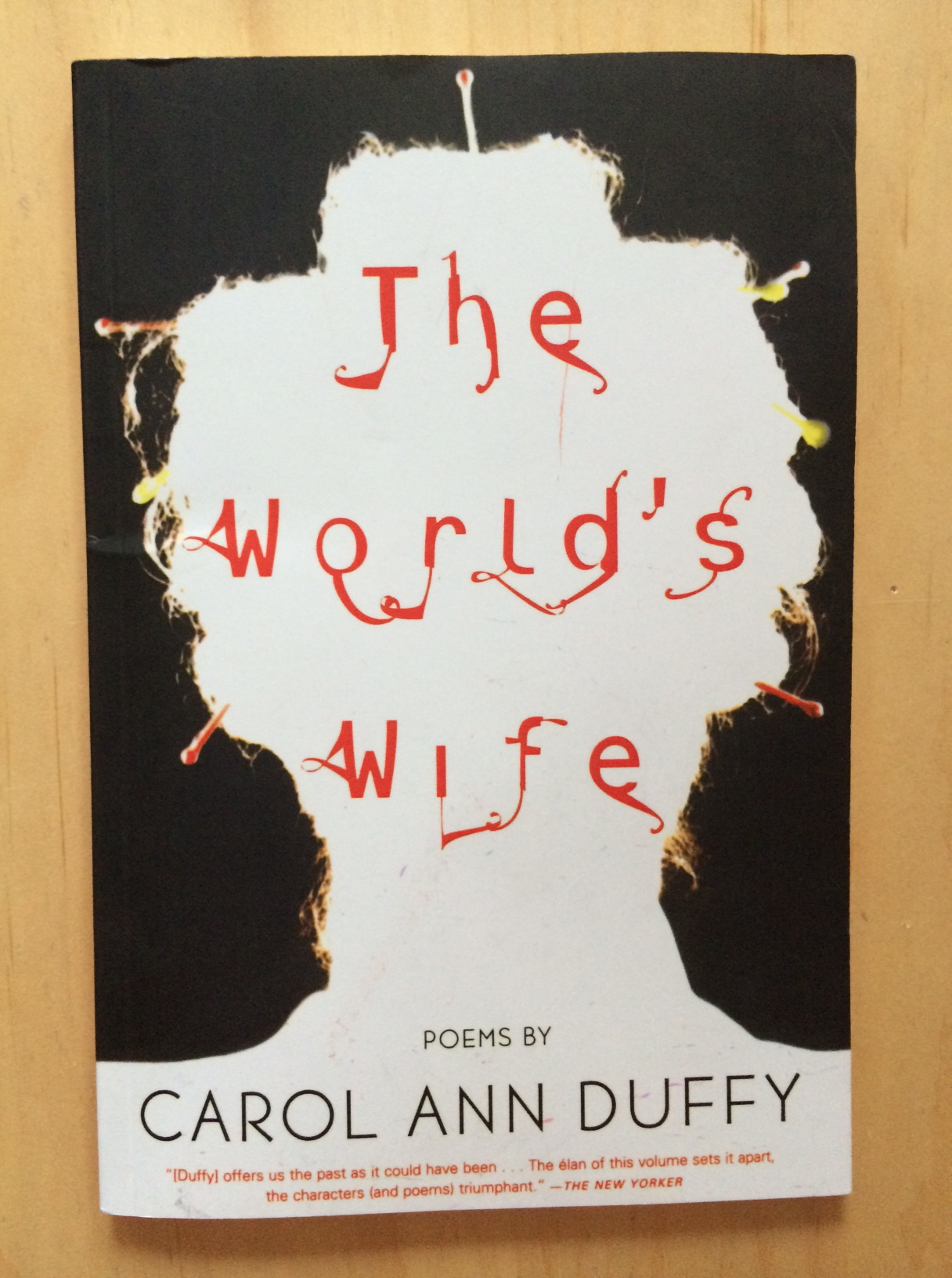

photo (112)Dear Readers, it will come as no surprise to you that I love Carol Ann Duffy. I’ve talked about her poetry in a couple of different contexts (here and here), and she’s one of the few writers whose work I’ll buy without reading reviews or flipping through pages. Several of the poems in The World’s Wife are included in Ms. Duffy’s Selected Poems, which is how I first learned of the book.

In The World’s Wife, Ms. Duffy imagines the voices of the women close to famous historical or cultural male figures (“Mrs. Lazarus”, “Frau Freud”) or the voices of the people those male figures might have been had they been female (so, “The Kray Sisters” instead of the Kray Brothers, “Queen Kong” instead of King Kong), or the voices of women whose stories have been rendered in men’s voices (“Delilah,” “Little Red Cap”).

The poems range from a few lines to a few pages long, but all of them feature Ms. Duffy’s trademark sharp wit, incisive language, and zinging, unexpected rhymes. These poems are often funny and always thought provoking, a glorious medley of feminist social commentary in an entertaining package.

Usually, this is the part of the post in which I’d address our Literary Wives questions, but since this book presents so many women, it would be folly to write about them all. In general, though, Ms. Duffy presents a picture of wifehood that is at once one of frustration and one of power; the invisible wives of history are, in The World’s Wife, fully imbued with agency, requiring our attention. Ms. Duffy asks us to consider what it would be like to mourn and grieve for a dead partner, only to have him reappear (“Mrs. Lazarus”) or what it would be like to be terrified that your husband might accidentally turn you into gold (“Mrs. Midas”).

Sometimes Ms. Duffy’s characters supply an answer to a vexing historical quandary. In “Anne Hathaway,” Shakespeare’s wife tells us exactly why her husband in his will left her “my second best bed.” Sometimes her speakers are drawn forward into the modern era. We see wily “Mrs. Faust” making use of her husband’s bargain, and witness “Mrs. Tiresias”‘s  exasperation when her gender-changing husband experiences menstruation for the first time (hint: a strongly-worded letter to “the powers that be” demanding paid menstrual leave ensues”).  These are “Bad girls. Serious women.” They’re not always women you’d like to meet, but they’re fascinating creations.
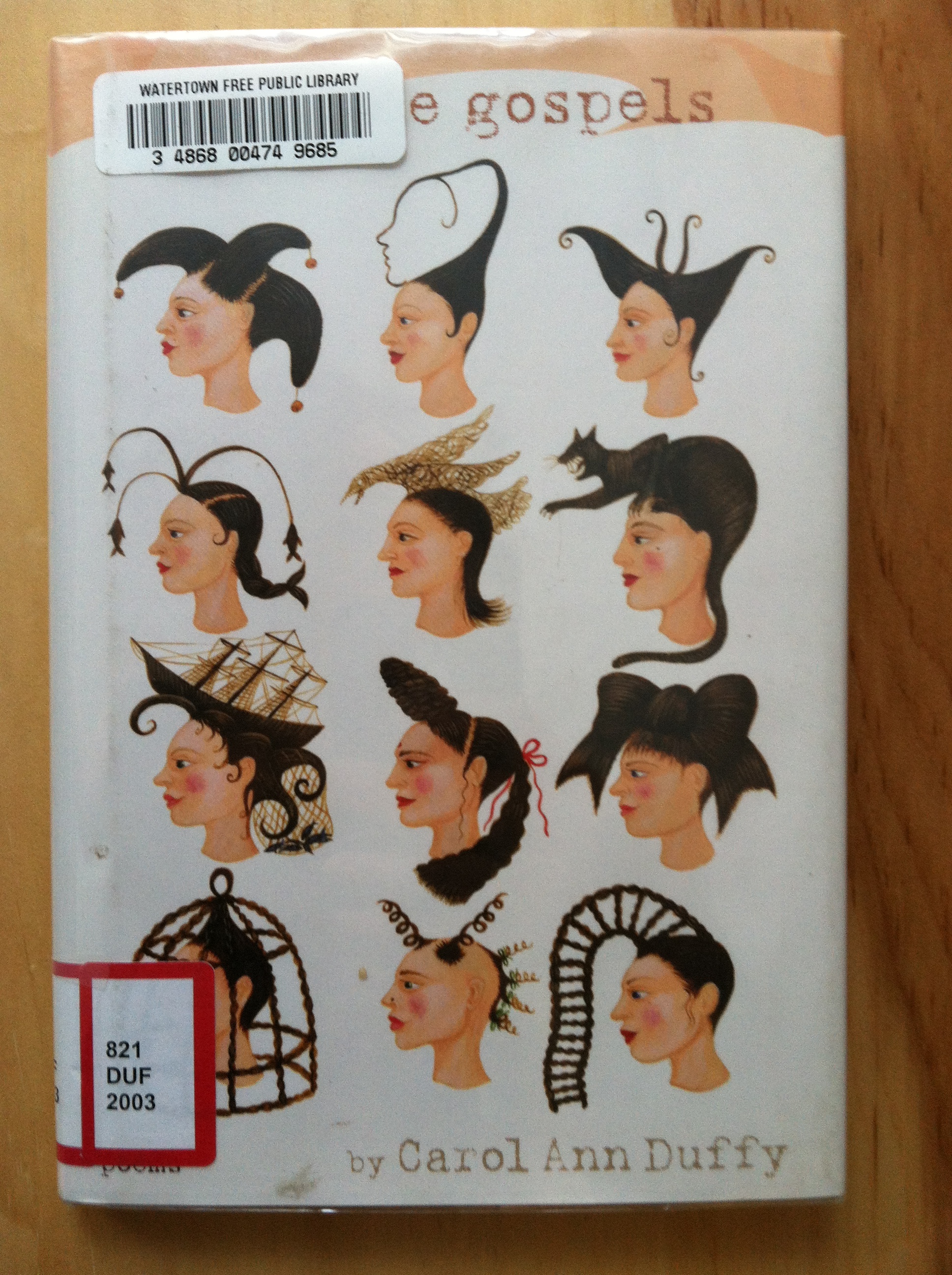
Feminine GospelsIf you loved The World’s Wife and are wondering which book to read next, I’m happy to recommend Ms. Duffy’s collection Feminine Gospels (2002), which you might consider a kind of follow-up to The World’s Wife. I read it recently and it was fantastic. Like The World’s Wife, the characters in the poems allow us entry into the world from a female perspective, though one much more everyday, not necessarily associated with names everyone knows. Feminine Gospels includes a long poem, “The Laughter of Stafford Girls’ High” which sparkles with wit and depth and character; I don’t usually go in for non-epic long poems, but this one is just fabulous.


Please visit the other Literary Wives bloggers to get their takes on the book! 

Emily at The Bookshelf of Emily J. 

Cecilia at Only You

Kay at WhatMeRead

Lynn at Smoke and Mirrors

(Ariel at One Little Library will be posting sometime in the next couple weeks)

(Audra at Unabridged Chick is on hiatus)

The Queen of the Tearling: We Have a Verdict

photo 2 (17)Erika Johansen’s debut novel The Queen of the Tearling* is the subject of a massive marketing and publicity campaign: promotion in major media outlets, publicity at Comic Con, movie rights already sold, the works. The book itself is gorgeous; it even has one of those convenient red ribbon bookmarks built in.

It received a starred review in Booklist and a so-so review in Publisher’s Weekly, and yet it’s the July Indie Next pick. If you’re going by Goodreads reviews, though, and let’s say for a moment that we are, The Queen of the Tearling is polarizing, eliciting both rage and raves from its reviewers. So where do I fall?

Solidly in the middle, Dear Readers.

The Queen of the Tearling has been compared to Harry Potter, Game of Thrones**, and The Hunger Games. It doesn’t match these series by any metric: writing quality, character development, world-building. Nonetheless, it’s a promising enough debut that I’d happily sit down with the next installment (it’s the first in a trilogy, or so I hear).

Like The Hunger Games, The Queen of the Tearling is set in a dystopian future world. Like the Harry Potter series, magic exists in its world. Like Game of Thrones, it’s a particularly violent and nasty world, especially for women and children. (Sigh. As usual.)

It’s been some hundreds of years since a cataclysmic event caused humans to attempt “The Crossing,” which resulted in new kingdom formation. The Tearling is an utopian experiment gone wrong, a country mired in feudalism where memories of advanced technology (and books) are fading. Its next-door neighbor is Mortmesne (yes, just go ahead and think of it as Mordor), powerful, flesh-hungry, and ruled by an ageless and brutal sorceress called the Red Queen.

Kelsea Raleigh, the daughter of the last queen of the Tearling, has just turned nineteen, and intends to come out of hiding and claim her throne. Before she can become Queen of the Tearling, however, she must evade a band of thieves, a society of assassins, the most evil fictional bureaucrat ever, and her uncle (the regent), who’s hell-bent on murdering her before she can set foot in her castle (Or after. Whatever works). Members of the Queen’s guard, led by the fearsome and enigmatic Mace, will do their best to protect Kelsea. And because this is a fantasy novel,  we all know that getting the crown isn’t going to be the hardest part of our intrepid heroine’s ordeal.

Ms. Johansen has clearly done her reading; she nods explicitly to Tolkien and Rowling, and the epigraphs that precede each chapter are straight out of Dune. (The Mace bears a strong resemblance to Gurney Halleck, too.) The adults-keeping-secrets-from-powerful-adolescents trope harkens back to Ender’s Game.

Kelsea (which, sorry, is a name I cannot stand) has some Katniss-like qualities: she says what she means, she’s incredibly intelligent, she cares deeply about those less fortunate and weaker than herself. She’s impulsive and often angry; she’s got depth. On the whole, I liked her.

Ms. Johansen’s emphasis on her physical appearance, however, is troubling. Kelsea is repeatedly called, by the narrator, other characters, and herself, plain (with a soupçon of fat-shaming too, oh joy). Being plain in and of itself is not a problem (in fact, please, writers, give us more diverse-looking female characters!); physically attractive women do not have a monopoly on valor, kindness, loyalty, wisdom, or any other virtue (see: Eyre, Jane; Lewis’s Orual), and it’s refreshing to read a heroine who isn’t take-off-her-glasses-and-she’s-hot faux-plain, just plain-plain. The problem is that Kelsea is dismayed with her appearance, and she thinks about it often enough that it becomes distracting and takes away from the narrative.

Also, memo to Emma Watson (who’s apparently attached to the film in the works): Girl, this is not your character. Please let an unknown actress take this one and sweep us off our feet.

Ms. Johansen’s writing is solid, but not deftly inventive (Rowling) or stately (Tolkien) or fast-paced (Collins). The novel needs simultaneously more detail and more editing to trim it down. It’s a 434-page book that should be about 350, I think. A couple of plot threads — Kelsea’s eventual love interest, who I presume will become obvious in Book 2, for example — are a bit too easy to tease out, and some feel unnecessarily held back. However, there’s enough material here — enigmas about Kelsea’s parentage, a bunch of Very Bad People, questions about the nature of the event that required The Crossing (pretty sure I have it figured out, but not positive), the fate of the country — to keep a reader entertained. I’d certainly read the next book.

A note about the intended audience: Kelsea’s age, the use of magic, and the comparisons to powerhouse series like Harry Potter and The Hunger Games might have you considering picking this one up for your preteen or young teenage nephew or niece. Don’t.

The Queen of the Tearling is definitely not YA, and while it doesn’t reach Game of Thrones-level gore, it is violent and disturbing, especially, as I said, with regard to women and children (worse than The Hunger Games, I’d say); it’s an emotionally difficult read in several sections. I’d steer teens younger than 16 or 17 away from this one, or at least suggest you read it first before you put it in front of anyone younger.

*I received a copy of this book from the publisher for review purposes, which did not affect the content of my review.

** I’ve read two chapters of the first Game of Thrones book, and seen three or four episodes of the show. It’s not for me (at least, it’s not for me until the whole series is published), but I freely admit that the man can write.

An American in Burgundy, Part Deux: Maximillian Potter’s Shadows in the Vineyard

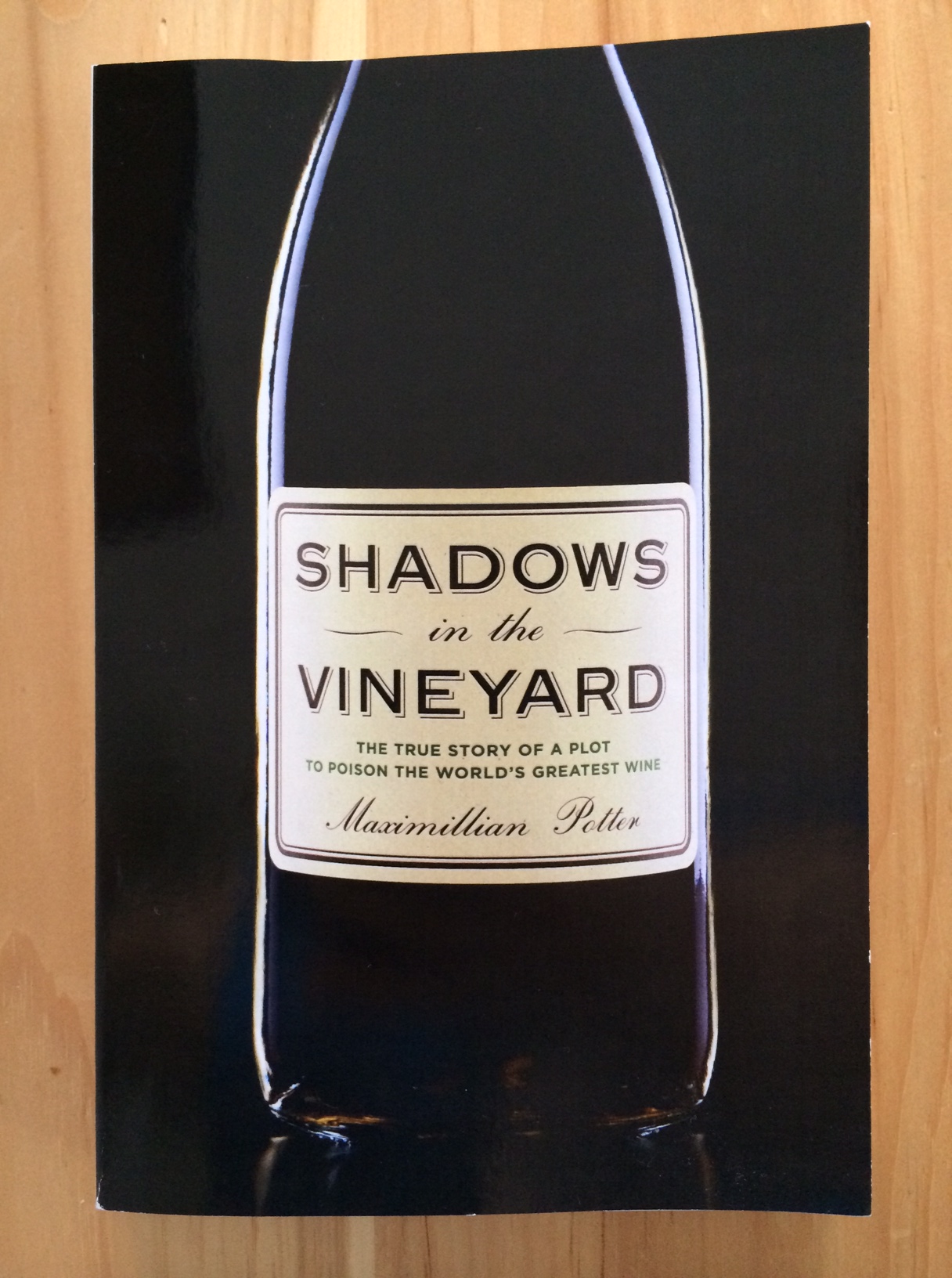
photo (110)The subtitle of Maximillian Potter’s Shadows in the Vineyard* is “The True Story of the Plot to Poison the World’s Greatest Wine,” which conjures up images of ski-masked men in dark cellars lacing bottles of wine with cyanide or arsenic.

The truth is somewhat different; a more accurate subtitle would have focused on the vineyard and the vines that produce one of the world’s most expensive and highly-regarded wines. While no cyanide appears in Shadows in the Vineyard, two vines in the Domaine de la Romanée Conti vineyard were indeed poisoned, and the man who did it threatened to poison more. These events were the subject of a Vanity Fair article penned by Mr. Potter, which was then expanded into this book.

The book as it stands is less about the crime than about the history of the vineyard and its tangled web of owners and winemakers; Mr. Potter in particular focuses on Aubert de Villane, the Domaine’s current proprietor, a serious, kindly, humble man who clearly cherishes his vineyard and its wines. (I started to think of him as “the grape-whisperer” as I read Shadows in the Vineyard.)

Earlier this summer I reviewed Ray Walker’s The Road to Burgundy, which is one man’s tale of leaving it all for the love of terroir. Shadows in the Vineyard is more invested in territory, in how this famous vineyard came to be, in the forces that shaped both winemakers and winemaking.

The organization of the book leaves much to be desired; Mr. Potter attempts to build tension and flesh out a short true-crime story by coming back to the poisoning plot time and again even as he digresses into other subjects (history, the wine market, tensions among the DRC’s owners, etc.). A better strategy, I think, would have been to frame the poisoning plot as just one of the many challenges the vineyard has surmounted over hundreds of years, and using it to bookend his study of Aubert de Villane and his vineyard.

Still, there’s much to learn, and if you’re a wine connoisseur, you won’t want to miss this book given its focus on vineyards and the history of burgundy wine (especially the Domaine’s). For the rest of us mere mortals, who will probably never taste a wine valued at thousands of dollars a bottle (really: check out this Sotheby’s auction listing), Shadows in the Vineyard offers carefully drawn portraits of Monsieur de Villane (though I rather wish the author would not purport to know exactly what the man was thinking at such-and-such a moment), his family, and even the vine-poisoner.

Mr. Potter, and many others, consider the best kind of wine to be a consumable work of art, a da Vinci painting, say, in a glass; what would drive a person to deface that kind of beauty? If you’re interested in the question, you might like Shadows in the Vineyard.

*I received a copy of this book from the publisher for review purposes, which did not affect the content of my review.

A Not-Quite Reading List for the Centenary of World War I

All summer long, I’ve wanted to post a World War I reading list, a syllabus, if you will, of literature related to the Great War. Today would be the perfect day to post such a list, since it’s now officially 100 years since the war began.

When my list reached thirty titles, however, it became clear that a long post will have to wait until August. In the meantime, here’s a preview of some of the titles I’ll be talking about.

World War 1 Lit Collage__CarolynOliverIt’s my very first collage (as you can tell, I’m sure). I’m moving into the twenty-first century, Dear Readers.


Recommended Reading: God is an Astronaut, by Alyson Foster

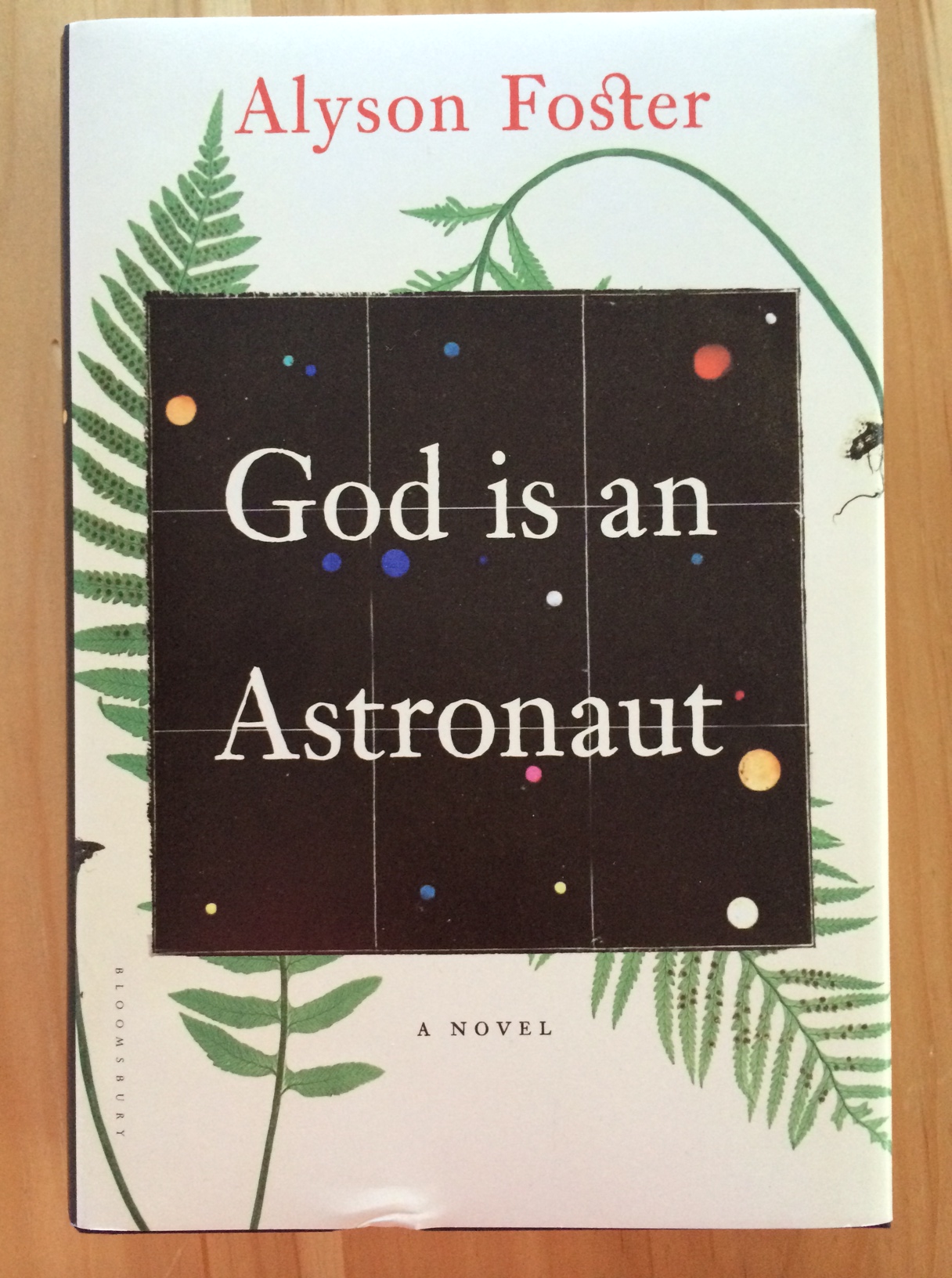
photo (109)Alyson Foster’s debut novel God Is an Astronaut* considers questions of personal and public ethics as its protagonist, Jess, sorts out the reverberations from several shocking events.

Jess is a professor of botany, and her husband, Liam, is an engineer and part of the leadership of a space tourism company; they live quietly with their two children in Michigan. When one of the company’s shuttles explodes just after takeoff, Liam and Jess’s lives are upended as the investigation into the cause of the crash begins.

We see events only from Jess’s perspective, because God Is an Astronaut is an epistolary novel, composed entirely of emails from Jess to her colleague and friend, Arthur (we never see Arthur’s replies — just his subject lines when Jess keeps an “re:” thread going). As Jess explains what life is like with constant media scrutiny, staged press conferences, and even a documentary crew underfoot, Ms. Foster gradually reveals the unraveling seams of Jess’s marriage, and the ways that she’s tied to Arthur.

The epistolary form creates both intimate and distancing effects. Because Jess (apparently unafraid of the NSA) shares with Arthur not only Liam’s company’s secrets, but also her own struggles and desires, and the mundane workings of ordinary life, the reader is drawn close, a feeling compounded by the voyeuristic pleasures of reading someone else’s mail.  On the other hand, Jess’s emails are both lengthy and extremely detailed, and it strains credulity that a busy working parent with a surly husband and a publicity crisis would have time to write such lyrical missives. This, combined with the effort required to imagine Arthur’s words from Jess’s replies, pushes the reader an arm’s length away from the material.

Nevertheless, the novel’s lyrical meditations on our responsibilities in the world — to our spouses, children, family, friends, colleagues, customers, the earth itself — are quite lovely. If you’re in the mood for an extended character study, or you’d like to feel better about not being able to afford a Virgin Galactic ticket, this is the novel for you.

*I received a copy of this book from the publisher for review purposes, which did not affect the content of my review.

Recommended Reading: George Prochnik’s The Impossible Exile

photo 1 (19)George Prochnik’s The Impossible Exile: Stefan Zweig at the End of the World* is an amalgam of forms, combining elements of biography, family history, intellectual and cultural history, and literary criticism.

Its subject is Stephan Zweig, an Austrian writer of prolific output who was one of the best-known cultural figures of his day. Zweig was a proponent of international humanism, a cosmopolitan in every sense of the word, a stalwart supporter of all the arts, a music aficionado, and mentor to many aspiring writers. His books — fiction and nonfiction — were the most widely translated of the 1930s and were more often than not bestsellers.

When the Nazis rose to power, however, Zweig (who was Jewish) found himself exiled from his beloved Austria, drifting from country to country, increasingly demoralized and depressed. In 1942, he and his wife killed themselves in a small Brazilian town.

On the surface, this was an inexplicable act. Zweig was only sixty. had just published two books (his memoir and a study of Brazil, a country he loved), was, by all accounts, deeply in love with his much-younger second wife, and was still one of the most popular authors in the world. The Impossible Exile seeks to understand his situation by exploring Zweig’s life, shifting cultural milieu, and his work.

photo 2 (16)

As you can tell from the photo above, I found this book utterly fascinating. I read Zweig’s biography of Marie Antoinette when I was a teenager, but at that time had no idea of the reach of his influence (or that he wrote with purple ink); The Impossible Exile was an education. Mr. Prochnik takes pains to provide a rounded portrait of Zweig that includes his many foibles and failures, as well as his brilliant successes. As Mr. Prochnik writes,

Zweig’s life illuminates abiding questions of the artist’s responsibilities in times of crisis: the debt owed one’s fellow sufferers relative to the debt owed one’s muse; the role of politics in the arts; and the place of art in education. His tale also raises questions of how we come to belong anywhere–of responsibility to family and ethnic roots relative to ideals of cosmopolitanism. (8)

For Mr. Prochnik, investigating Zweig’s life in exile has personal resonance, since his own father and grandparents fled Austria in 1938 to escape the Nazis. Too often, he writes, the successful escape is the story; we don’t read or hear about the particular experience of exile with its concomitant losses.

The Impossible Exile is a thoughtful, sensitive work, and highly recommended. I also recommend this excellent long review in the New York Review of Books, which also includes a brief discussion of Wes Anderson’s recent film The Grand Budapest Hotel, which inspired in many ways by Zweig and his ouevre.  (it’s an excellent movie; I love Wes Anderson movies, and The Grand Budapest Hotel represents real branching out for him).

If you’d like to read some of Zweig’s own work, I can recommend from personal reading experience his biography of Marie Antoinette; New York Review Books is also re-issuing some of his works in new translations.

*I received a copy of this book from the publisher for review purposes, which did not affect the content of my review.

An Interview with Rebecca Makkai, Author of The Hundred-Year House

Yesterday I reviewed Rebecca Makkai’s inventive and engrossing second novel, The Hundred-Year House.  Ms. Makkai graciously agreed to be interviewed via email. 

In the Acknowledgments that follow The Hundred-Year House, you write, “This book started as a short story about male anorexia.” Given that beginning, which section of the novel, or which character, came first?

Rebecca Makkai Author photo (c) Philippe Matsas

Rebecca Makkai
Author photo (c) Philippe Matsas

RM: That short story was a small slice of what’s now the first (1999) section of the novel. There were two couples (Cameron and Z, and Steve and Miranda) living in a coach house. The fact that “Steve and Miranda” didn’t set Sex and the City alarm bells ringing should be a sign of how long ago this was… Cameron became Doug, Z became Zee (after I realized British readers would pronounce her name “Zed”), and Steve and Miranda became Case and Miriam. Steve was the anorexic, and Cameron – although he was working on ghostwriting children’s books, as he is in the novel – was primarily preoccupied with proving Steve’s anorexia to everyone else. It wasn’t a very good story.  

photo (108)How did the novel’s unusual structure fall into place?

RM: I set the short story aside for many years, and when I came back to it I realized it could be a novel – but I initially saw it all happening in that one time period. My own curiosity about what had happened in the past was what led me to open those doors and actually write about it… and so the backwards order of those sections was actually completely organic. There was a load of planning involved, it didn’t just come flying out, but the sections are ordered as they came to me.

At one point in The Hundred-Year House, there’s a distinction made between “haunted” houses and “haunting” houses. Is that a distinction readers are meant to make with regard to the characters, too?

RM: I suppose that’s true. As we go back in time and meet certain characters, it might become clear that they’ve been the ones haunting the previous sections of the book. And some characters are much more receptive than others to the haunting influence of the house (which often takes the form of ridiculous luck, whether good or bad). Case is a prime example, in the 1999 section – he’s like a lightning rod for the house’s energy.

Visual arts play an important role in The Hundred-Year House. How did you conceive of the different artworks?

RM: I wish I could be a visual artist—I have a lot of ideas for art—but my hands won’t execute what I see. So I have to settle for writing about it instead. Certain works in the book are modeled on real-life art, though; Zilla Silverman, an artist in the 1929 section, is partly based on Georgia O’Keeffe, and her works are similar to O’Keeffe’s.

Laurelfield was once an arts colony, and The Hundred-Year House is dedicated to Ragdale and Yaddo. Is the novel’s section about the arts colony drawn primarily from your own experience as a resident, or from research into early twentieth-century artists’ colonies, or both? Who are some of your favorite writers who stayed at artists’ colonies?

RM: I actually conceived of Laurelfield before I’d ever set foot at a residency. I started applying to them as I worked on this book not only because I needed the time and solitude to work (I have two small children) but because I felt like I needed to know that world better. I was not disappointed. And I was able to do a bit of research into the history of Yaddo while I was there, which informed the book enormously. In terms of who stayed at colonies… You’d be hard-pressed to find a major American artist of the last century who didn’t stay at an artists’ residency. There’s a library at Yaddo of books by past residents, and it’s basically just like a normal library. There’s practically no one missing.

What’s next on your writing horizon?

RM: My story collection, Music for Wartime, will be out next summer. And I’m working on a novel set in the Chicago art world amidst the AIDS crisis.

My thanks again to Ms. Makkai for her time and thoughtful answers. You can read more about Ms. Makkai, and The Hundred-Year House, on Ms. Makkai’s website, www.rebeccamakkai.com. Follow Rebecca Makkai on Twitter: @rebeccamakkai

Recommended Reading: The Hundred-Year House, by Rebecca Makkai

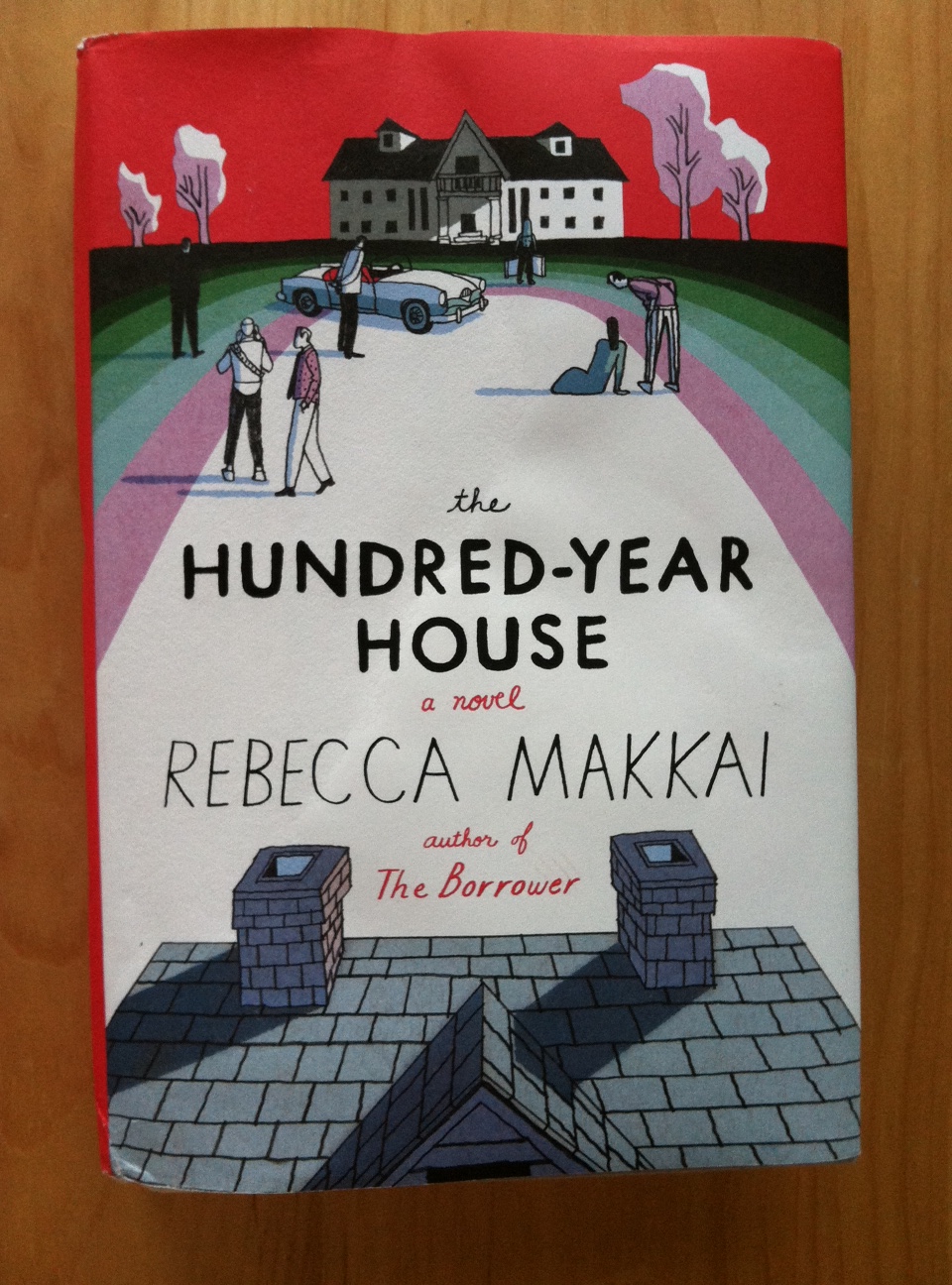
photo (108)Like Proteus, the mythological figure invoked in one of her character’s poetry, Rebecca Makkai’s The Hundred-Year House* twists and turns, refusing to be confined to any one genre or style. And like Proteus, The Hundred-Year house refuses to tell the future; instead, it charts a way through the past.

The story begins — or rather, ends — with Zee and Doug, a married couple who’ve come to live in the carriage house that belongs to Zee’s mother, Gracie and stepfather, Bruce. Zee, a self-professed “Marxist literary scholar” (as a former-ish academic myself, I loved the intradepartmental sniping at Zee’s college), and her mother Gracie are Devohrs, members of a wealthy Canadian family that built an estate called Laurelfield near Chicago, one hundred years before Zee and Doug’s arrival. One of the Devohrs, Violet, is said to be a ghost who still haunts Laurelfield; a huge oil portrait of Zee’s great-grandmother still hangs in the house.

For about thirty years, Laurelfield was an art colony, and it just so happens that one of its major residents was the poet Edwin Parfitt, the subject of Doug’s research. Doug hopes that access to Laurelfield’s records will force him to finish his book, so that he can get a teaching job, instead of surreptitiously ghost-writing a series for middle-school girls. But there’s a catch or two: Gracie’s none too keen on allowing Doug to kick up dust in the attic, and Bruce’s son and daughter-in-law arrive and upend Zee and Doug’s attempted domestic bliss.

More than enough material for a novel there, right?  Yet Ms. Makkai gives us more: another section follows giving us scenes from Laurelfield in 1955; then another section about the arts colony in 1929; and a brief prologue set in 1900. Each section is written in a different style, and reveals a bit more of the Laurelfield puzzle, which is so tantalizing that I won’t say anything more about it.

Ms. Makkai’s writing is lively, engaging, and crisp, and her pacing is sublime. As I read The Hundred-Year House,  I was caught between the impulse to keep turning pages, impatient to learn more of Laurelfield’s secrets, and the inclination to pause over each page, to note a particularly well-crafted sentence or a telling detail. It’s a marvelous novel, and highly recommended.

Tomorrow: An interview with Rebecca Makkai, author of The Hundred-Year House

*I received a copy of this book from the publisher for review purposes, which did not affect the content of my review.

An Interview with Sharona Muir, Author of Invisible Beasts

On Monday I reviewed Sharona Muir’s imaginative debut novel, Invisible Beasts. Ms. Muir graciously agreed to be interviewed via email. 

Many of the chapters in Invisible Beasts started out as short stories. How did you go about linking them to form a novel?

Sharona Muir Author Photo (c) Tom Muir

Sharona Muir
Author Photo (c) Tom Muir

SM: Actually, I thought of the entire work from the first as a bestiary – outside the “short story vs. novel” genre categories. As the question of point of view arose, not only for the action in the stories but also for the philosophical ideas behind them, I created the narrator, Sophie. In a medieval bestiary, the point of view is a given: it’s the anonymous voice of a medieval monk offering you all he knows about animals and their religious meanings. I needed some voice that had as much personality and authority, but updated. Sophie, like the good fictional character that she is, repaid me for her creation by providing all kinds of feelings, motivations, and insights that united the collection through her perspective.

For example, once I worked out her relationship with her biologist sister Evie – two brilliant sisters, one a straightforward scientist, the other endowed with a peculiar, poetic vision of living beings – the whole first section fell into place, followed by resonances of their back-and-forth throughout the book. Creating Sophie and Evie materialized the dialogue between imagination and science that is at the heart of the book, and makes it a cohesive novel.

That’s the long answer. The short answer is that as a longtime adorer of Italo Calvino’s work, in the back of my mind I had his novel, Cosmicomics, which is similar in structure and approach to Invisible Beasts: his narrator, the mysterious being called “old Qwfwq,” also unites a series of speculative tales.

Which of these invisible beasts first caught your eye (so to speak)? How would you describe the inception of the project?

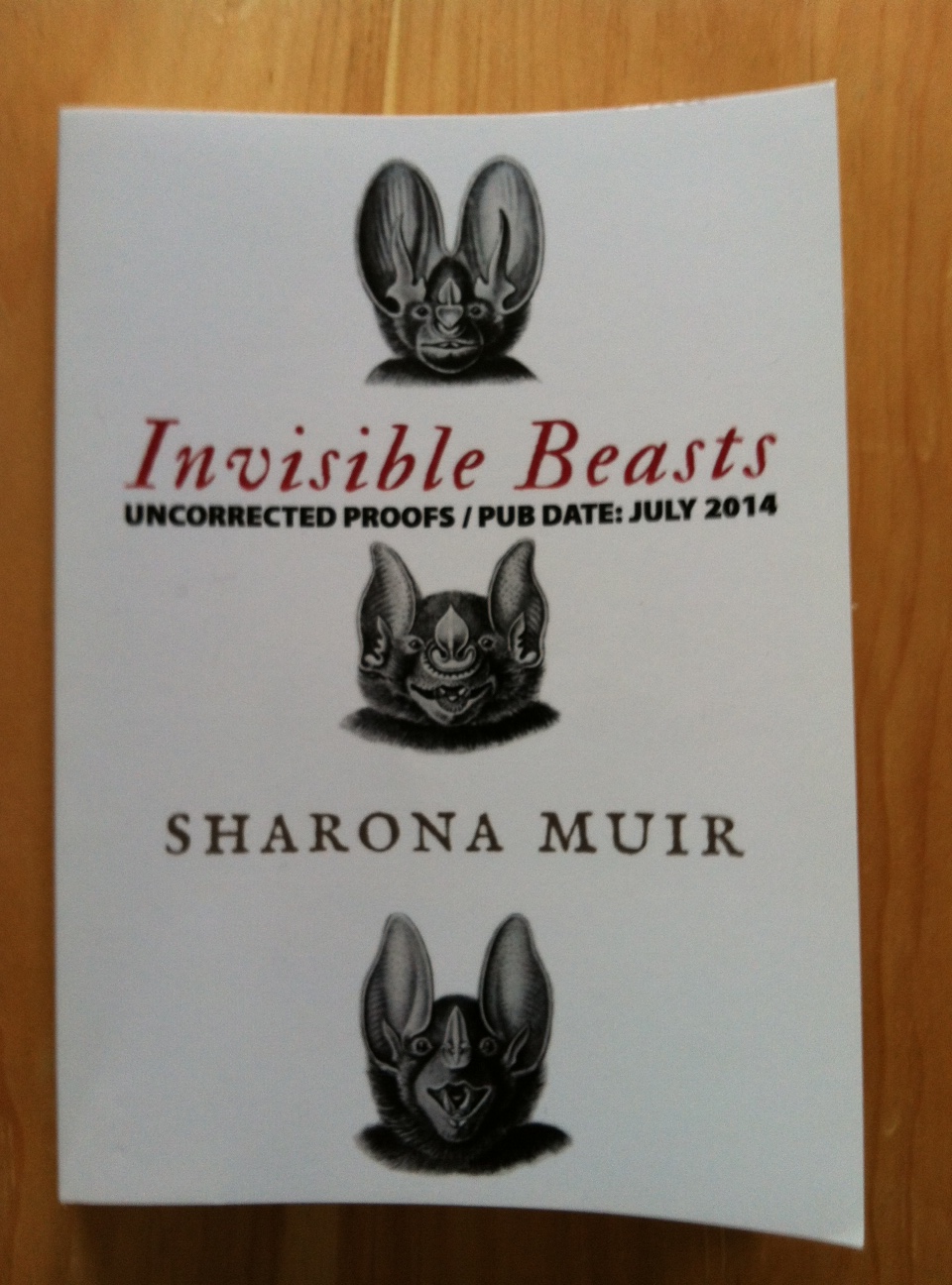
photo (106)SM: I decided to have fun. I’d been reading Lynn Margulis’ and Dorion Sagan’s wonderful book, What Is Life? in which, among many other delightful moments, Margulis at one point more or less says that life is about bacteria. This made me laugh. So I wrote a short story, long since filed in my wastebasket, about imaginary bacteria called “Bedcrumbs” that, through elaborate chemical means, induce people to crave snacks after making love – in order to ensure the reproduction of their human hosts, of course. I had so much fun writing this silly tale that I couldn’t resist trying a few others, and when it was clear that I was inventing imaginary animals on a weekly basis, I started showing them to my biologist friends, and from there on we developed a game in which I’d try to create a scientific plausible, yet utterly and truly nonexistent imaginary animal. (I came close only once, Mother Nature having been at this game longer than me.) Although the project didn’t seem at all salable, I felt that I was paying a tribute to whatever blessed accident and evolutionary history had put me here, and was having too much fun to quit.

Invisible Beasts is not only a novel, but also a bestiary. Were you inspired by any medieval or modern bestiaries? Are there any you’d recommend to readers who enjoyed Invisible Beasts?

SM: Oh yes. Calvino’s Cosmicomics is charming, and a first-class example of what E.O. Wilson calls consilience, that is, unifying the arts and sciences. E.O. Wilson’s novel Anthill, in describing the empire of an imaginary species of super-ant, is as magnificently compelling as Gibbon crossed with H.G. Wells (or rather, with Wilson, the great ant maven of our time.) I was tremendously excited when I read Wilson’s excerpt from his book in The New Yorker: it showed that bestiary writing, involving knowledge of science — at least in popular form — by creative writers, was an important new development in the culture of letters.

As for the old stuff, my training in Renaissance literature meant that for years I’d carried Ariosto’s hippogryph in the back of my mind: this lion-tailed Pegasus is the weird apparition that Sophie sees at the end of the chapter called “Grand Tour Butterflies.” I looked at medieval bestiaries, too, naturally, but my favorite is Pliny the Elder’s Natural History. There is something seductive about an era when it was possible to imagine all knowledge collected in a single book (or several scrolls), and the straightfaced way in which Pliny, bless his stout Roman heart, mingles perfectly sound observations with what sounds like insane fantasy was in every way a model for my book.

Readers might know that you teach creative writing at Bowling Green State University. How has teaching influenced your own writing?

SM: There are two rewards to being a teacher.

The first is when, through learning how to explain literary mechanics to your students, you find yourself focusing on very simple and obvious things, because the basics of the craft are in their way extremely profound. I love working with beginners. It reminds me of the way a karate teacher whom I knew would say that the first thing you needed to do, after earning a black belt, was to revisit all the exercises of a white belt. Teaching my students keeps me aware of the basics, and their really endless depth.

The second reward is that of seeing a student become aware that he or she has an imagination, and has made it do something. We’re so saturated in intellectual passivity and laziness – in the instant gratification provided by digital technologies – that students often aren’t aware of how hard it is to make art, and how wondrous it is that you can. When they find out that they can do something hard, and that thanks to their effort, their imaginations have put something new in the world, the expressions on their faces make me very happy and honored to be a teacher. That energy certainly feeds my work.

Do you have a favorite endangered species you’d like to draw readers’ attention to, or an environmental project that addresses the values embedded in Invisible Beasts?

SM: Yes, I’d like to mention Wolf Park, in Battleground, Indiana.  This is a huge preserve for timber or gray wolves, which have been taken off the threatened and endangered species list.  I’m no expert on the politics or biology of that issue, but my husband, who photographs wildlife, and I have greatly enjoyed our visits to this preserve, managed by ethologists.  They keep a “tame” pack of wolves, meaning that the wolves will tolerate keepers under very specific conditions.  After seeing and learning about the wolves — their great strength, big bony heads, shrewd eyes, and the complexity of interactions among themselves – my 100-lb. German shepherd looked to me like a delicate flower of civilization and felt like a cousin.  This experience is very valuable for helping people understand wolves, and wildness generally, in concrete terms, with reference to the reality of the animals, and without romanticism.

At the same time, it’s clear that humans can’t resist making up stories of all sorts about animals, even ones as special and dangerous as wolves.  Everyone who gets to know the park wolves wants to offer names for new pack members or puppies, and becomes intrigued with the personalities of the wolves, as if they and we were all in a Hans Anderson tale together.  We can’t help being enchanted by other creatures.  We want them in our imaginations.  E.O. Wilson calls this “biophilia,” and it’s an aspect of human psychology that is central to my work.

What’s next on your writing horizon?

SM: Another bestiary!   Thanks for the pleasure of chatting with you.

[The pleasure was mine! –CO]

My thanks again to Ms. Muir for her time and thoughtful answers. 

The Poetry Concierge Recommends: Samuel Taylor Coleridge

[The Poetry Concierge is an occasional feature here on Rosemary and Reading Glasses wherein I select a poem, poet, or book of poems for individual readers based on a short questionnaire. Come play along! Read the introductory post here, my first recommendation here, and then email me at: rosemaryandreadingglasses [at] gmail [dot] com. ]

This week, our pilgrim in search of poetry is the blogger who goes by Stressing Out Student (SOS).

1. When you read fiction, who’s your go-to author?

I don’t read much of any particular author. I usually look for the content to interest me before expecting the style to interest me. But the author I’ve read the most of would likely be John Steinbeck.

2. If you read nonfiction, which subjects are most likely to interest you? (cultural history, science, biography, memoir, survival stories?)

Psychology, behaviorial/social sciences, how the mind/people work

3. If you were stuck on a desert island for a week, which five books would you bring to keep you entertained?

Good Omens by Terry Pratchett and Neil Gaiman, The Etymologicon by Mark Forsyth, horror short story anthology, The Stranger by Albert Camus, When You Are Engulfed in Flames by David Sedaris

4. If you were on a five-year mission to Mars, which five books would you bring to keep you sane?

The Stranger, Cannery Row by John Steinbeck, Crime and Punishment by Fyodor Dostoevsky, Broom of the System by David Foster Wallace, 1984 by George Orwell

5. What kinds of questions are most likely to keep you up at night? (death, the nature of love, politics, environmental issues, meaning of life, end of the world, justice and injustice, etc?)

Am I doing the right thing? How can I know to do the right things at the right times? What does the future hold?

6. If you’ve read poetry before, what have you liked? What have you disliked?

I’ve liked:
“The Grasshopper” by E.E. Cummings
“I Wandered Lonely as a Cloud” by William Wordsworth
“Dream within a Dream” Edgar Allan Poe
All of Shel Silverstein

Dislike…
“Ode on a Grecian Urn” John Keats


Well, when I saw Terry Pratchett and Neil Gaiman on SOS’s list of favorite authors, I thought, ha! Edgar Allan Poe! — only to have my first thought dashed in question 6 (yes, if you tell me you like a poet, I do feel obliged to find a new one for you to like).

Enter Samuel Taylor Coleridge, poet and critic, rehabilitator of Shakespeare and Milton, and perhaps the most productive opium addict the world has ever seen. His writing influenced Wordsworth and the rest of the Romantics (and he was one himself, of course), some of his most famous poems tell strange and fantastic stories (a la Pratchett & Gaiman), and the workings of the human mind are certainly at the forefront of his poetic concerns.

(And if SOS is interested in what the future holds, perhaps she’ll have fun imagining the endings to “Kubla Kahn and “Christabel.”)

This week’s poem of the week, and the poem I especially commend to SOS, is “The Rime of the Ancient Mariner,” first published in Lyrical Ballads (though this links to a later version). Why? Check out the listing of its subjects given by the Poetry Foundation: “Religion, Crime & Punishment, Living, Social Commentaries, Seas, Rivers, & Streams, Horror, Faith & Doubt, Nature, Christianity, Weather, Death, Mythology & Folklore, Animals, God & the Divine.”

This poem’s got it all. Except romance, and hey, we can all use a break from that once in a while, right?

SOS, I hope you find something to love in these poems. Thanks for writing in!


Would you like the Poetry Concierge to make a recommendation for you? Check out the introductory post, and send your answers to the questionnaire, along with the name and/or blog you’d like posted with the reply, to rosemaryandreadingglasses [at] gmail [dot] com.