In Brief: Recent Reads

Friends, Romans, countrypersons: if I had my druthers, I’d review every book I read in-depth, but alas, my druthers never seem to be had. Herewith, three recent—and very different—titles in brief.

The High Divide** by Lin Enger

photo (8)Perfect if you’re looking for a Western with big themes.

One day, Ulysses Pope walks away from his home, his wife Gretta, and their two sons, Eli and Danny—without any explanation. Eli and Danny decide to follow him, and Gretta them, and their odyssey (you knew that was coming, right?) becomes both a search for survival in a changing Western environment and a search for forgiveness. Mr. Enger writes women very well, has a knack for the perfect detail, and somehow kept me reading even though child endangerment (in this case, running away on trains) usually scares me off. And I loved the book’s ending. Highly recommended.


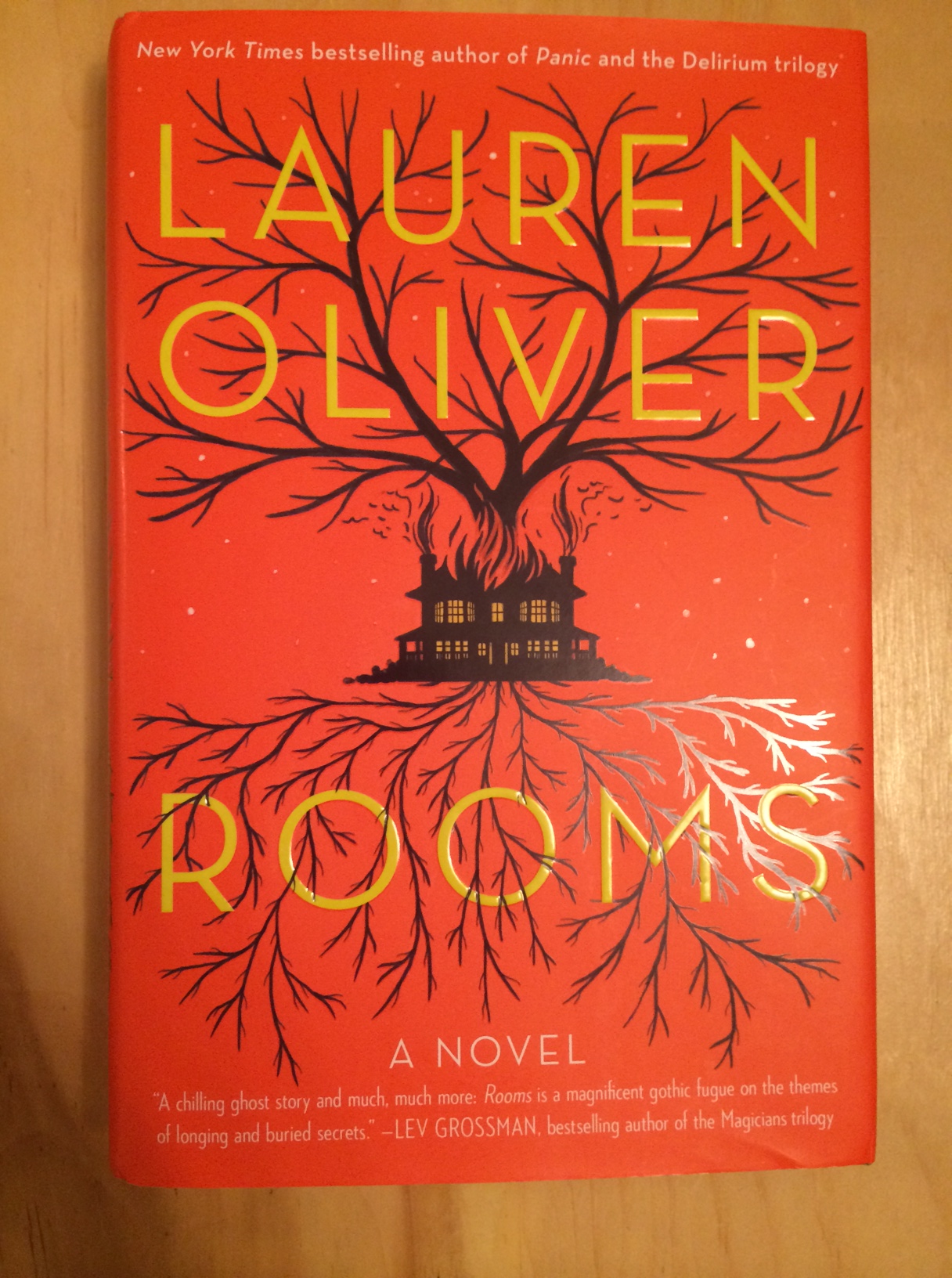
Rooms* by Lauren Oliver

photo 1Perfect if you’re still craving spooky after Halloween.

Ms. Oliver is known for her young adult fiction (which I haven’t read); Rooms is her first novel for adults. It’s a ghost story, in a way, but with a nice twist: the house is a ghost, or rather, ghosts. A family (dipsomaniac mother, nymphomaniac daughter, depressed son) returns to their country home after the death of the estranged patriarch. Mysteries—theirs and the ghosts’—ensue. Rooms is a great example of a novel with near-completely unlikable protagonists that is nonetheless compelling. The ghosts are a treat to read, and for a few days the normal sounds of house (creaks, buzzes, sighs) might seem very strange.

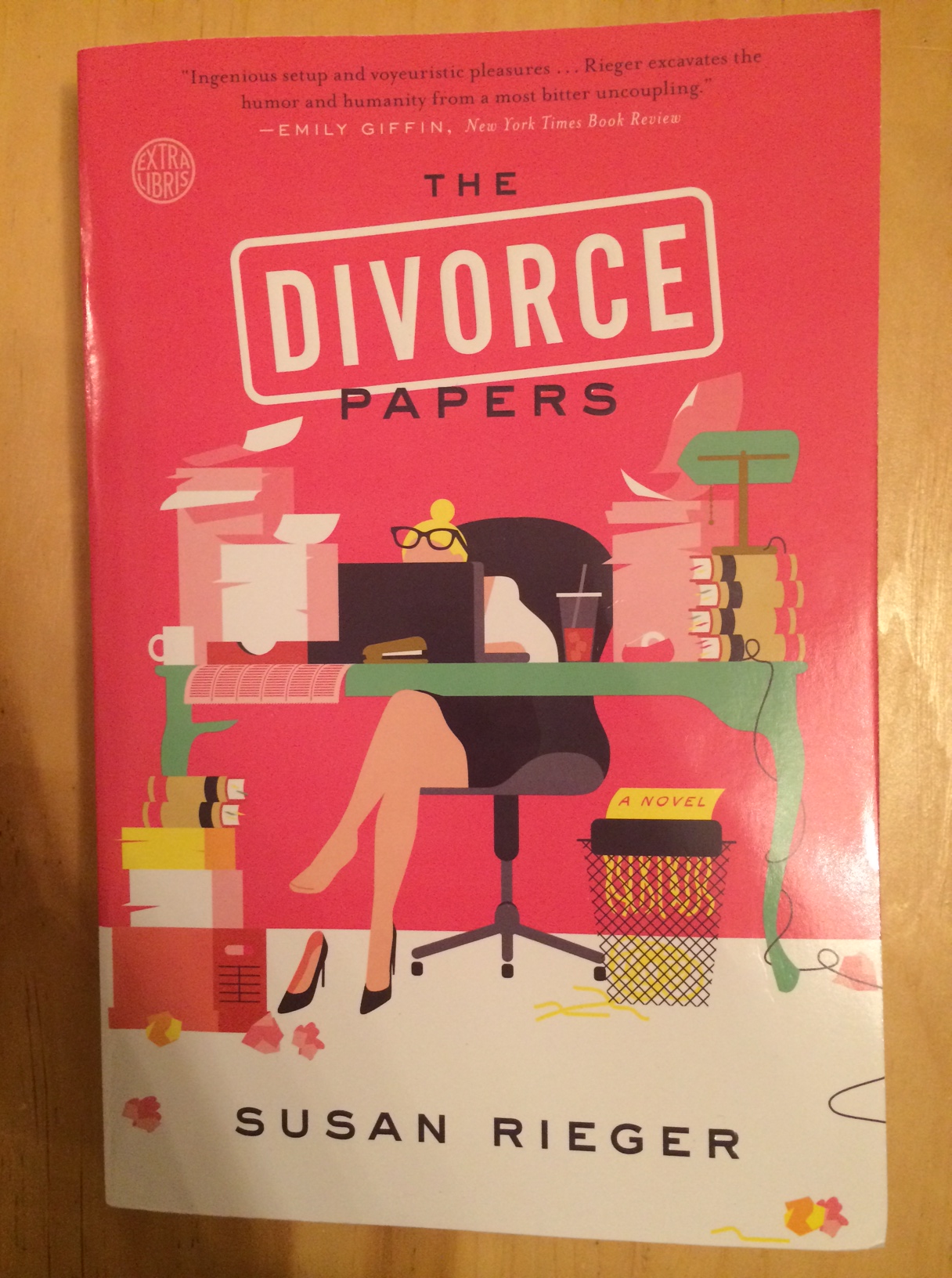
The Divorce Papers** by Susan Rieger

photo 2Perfect for the plane (which is where I read it).

The Divorce Papers is amusing but not laugh-out-loud funny. Despite its chick-lit pink cover (detest, detest, detest), the book features some seriously interesting legal writing (Ms. Rieger is a lawyer, and this is her first novel). Sophie is a criminal lawyer in the fictional state of Narragansett who’s pulled into a high-profile divorce case against her better judgment. As the title suggests, The Divorce Papers is an epistolary novel, combining Sophie’s memos, legal briefs, court cases, emails, rage notes between soon-to-be-ex-spouses, and other documents. I liked the (invented) legal cases the best; Sophie’s emails to her boss (both personal and professional) made me cringe — no lawyer I know would ever in million years write in such a fashion to her (or his) boss, but that’s artistic license, I suppose. A subplot about sexism in law firms had great potential, but fell flat. I’d like to see what Ms. Rieger could do with a protagonist who doesn’t whine about being teased for going to Yale Law (seriously?) and a subject other than divorce, especially given the detail and wonderful voices of her case summaries.

*I received this book from the publisher for review purposes, which did not affect the content of my review.

** I received these books from Library Thing’s Early Reviewers Program, which did not affect the content of my reviews.

“Who now shall refill the cup for me?”

Today is Veterans Day in the United States, and Armistice Day and Remembrance Day in other parts of the world; we honor military veterans on this date because the armistice that ended World War I went into effect in the eleventh hour of the eleventh day of the eleventh month.

I thought I’d mark the day by discussing a poem by one of the war poets; as regular readers know, the literature of the Great War is one of my particular areas of interest, though I’ve been delayed  when it comes to my World War I Reading List post (I should have it in time for the centenary of the end of the war . . . ). However, since I’ve talked about Sassoon, Owen, Graves, Rosenberg, and Blunden already this year, I thought I’d detour (though that’s a misleading word) into the work of one of their contemporaries.

"Tolkien 1916". Licensed under Public domain via Wikimedia Commons - http://commons.wikimedia.org/wiki/File:Tolkien_1916.jpg#mediaviewer/File:Tolkien_1916.jpg

“Tolkien 1916”. Licensed under Public domain via Wikimedia Commons – http://commons.wikimedia.org/wiki/File:Tolkien_1916.jpg#mediaviewer/File:Tolkien_1916.jpg

Typically pictured as a twinkly-eyed, pipe-smoking scholar,  J.R.R. Tolkien is not often remembered as a veteran, though readers of The Lord of the Rings, The Silmarillion, and The Hobbit may know that he served during the First World War; he fought in the Battle of the Somme. Most of his comrades were killed after he was sent back to England to recover from an illness; he spent the rest of the war weak and ill, though he served in various garrisons on the home front.

In the preface to the second edition of The Lord of the Rings, Tolkien wrote, contradicting those who supposed the work was an allegory for the Second World War, that the book was not an allegory, and that in any case the war that shaped him first began in 1914: “By 1918 all but one of my close friends were dead.” In 1918 Tolkien was twenty-six.

Here’s a link to Tolkien reading “Namárië,” or Galadriel’s Lament, the poem of the week in honor of Tolkien and all other veterans. He reads the poem in Elvish (Quenya, for those keeping score), and you can read the English version below the video.

If you’d like to read more about Tolkien’s experiences during the First World War and their influence on his writing, reliable sources recommend John Garth’s Tolkien and the Great War: The Threshold of Middle-earth.

Recommended Reading: Texts from Jane Eyre, by Mallory Ortberg

Texts from Jane EyreWhen Mallory Ortberg’s Texts from Jane Eyre* arrived, I tried to put off reading it because I knew I wouldn’t want to stop.

I failed.

In text message vignettes, Mallory Ortberg skewers everything from Medea to The Hunger Games, and everyone from Thoreau to Cormac McCarthy. Imagine Hamlet as a petulant teenager, Mr. Rochester as that guy who texts in all caps, and Ashley fending off sexts from Scarlett O’Hara.  I’ve been trying to find a section to excerpt, but I just can’t because I want you to enjoy this book in its entirety. I will say that I started crying with laughter when I read the words “pocket witch.” I bet you will too.

This book is so, so very funny. It’s so funny I called my parents just to read them excerpts. It’s so funny I woke up my son because I was laughing so hard.

If you spend any of your free time reading book blogs (thank you!), I think you’re going to love it.
If you like Mallory Ortberg’s work on The Toast (which, by the way, just published an amazing essay by Katie, whom I’m proud to call a friend), you probably already know how much fun you’re in for.
If you’re an English teacher, run out and get it. I can’t stop wishing it had been published when I was teaching Shakespeare or drama or Modern lit because it would have been like dessert after every book or play we read.

Okay, to review: This book. Very funny. You should read it if you like laughing.

Review: The Woman Who Would Be King, by Kara Cooney

The Woman Who Would Be KingKara Cooney’s The Woman Who Would Be King* is what I would call a speculative biography. The subject of the book, Hatshepsut, Egypt’s second female king, is shrouded in mystery for the very simple fact that she lived a very long time ago and thus very little is known about the details of her reign.

Egyptologist Kara Cooney (you may recognize her name, since she produced a Discovery Channel series on Ancient Egypt) attempts to fill in the gaps with The Woman Who Would Be King. Ms. Cooney is careful to note which of her conclusions are speculative, and which are based in archaeological evidence (the book’s Notes section is extensive), though the book necessarily relies heavily on the former.

Hatshepsut, though she ruled for a period of over twenty years, has been overlooked in history compared to, say, Cleopatra VII, Ms. Cooney argues, because Hatshepsut does not fit patriarchal culture’s paradigm of a powerful woman ruler. Based on the extant evidence, Hatshepsut did not come to power through treachery or force, nor did she make a bad end. Her reign was marked by peace and prosperity for Egypt’s people (though not for Egypt’s southern neighbor, Nubia).

Though I am an ardent feminist, I found this argument less interesting than the history Ms. Cooney presents in The Woman Who Would Be King. In its pages we learn about the elaborate religious rituals Egyptian kings were expected to perform (I’d rather like to see such strenuous feats as a requirement for members of the U.S. Congress), the ways that royal families consolidated and retained power, and why it’s so difficult to understand the psychology of important historical figures like Hatshepsut, her adviser Senenmut, and her co-king Thutmose III.

Hatshepsut’s story, in Ms. Cooney’s telling, is one of political savvy, astute emphasis of her important religious role, and careful cultivation of a changing public gender identity. Were she alive today, I suspect Hatshepsut would be the world’s foremost expert on re-branding.

I think The Woman Who Would Be King will be be of particular interest to readers of historical nonfiction, people with an interest in Ancient Egypt, and anyone who enjoyed Ms. Cooney’s Out of Egypt series. I’d be very interested to read Ms. Cooney’s perspective on a historical figure for whom we have more records and artifacts in the future.

Ms. Cooney explores so many possible ways of thinking about Hatshepsut’s life that I found myself wishing I could read one narrative all the way through to its end. I haven’t read any historical fiction about Hatshepsut, but my friend and fellow blogger Audra at Unabridged Chick, who reads tons of historical fiction, recommends Daughter of the Gods, by Stephanie Thornton.

*I received a copy of this book from the publisher for review purposes, which did not affect the content of my review.

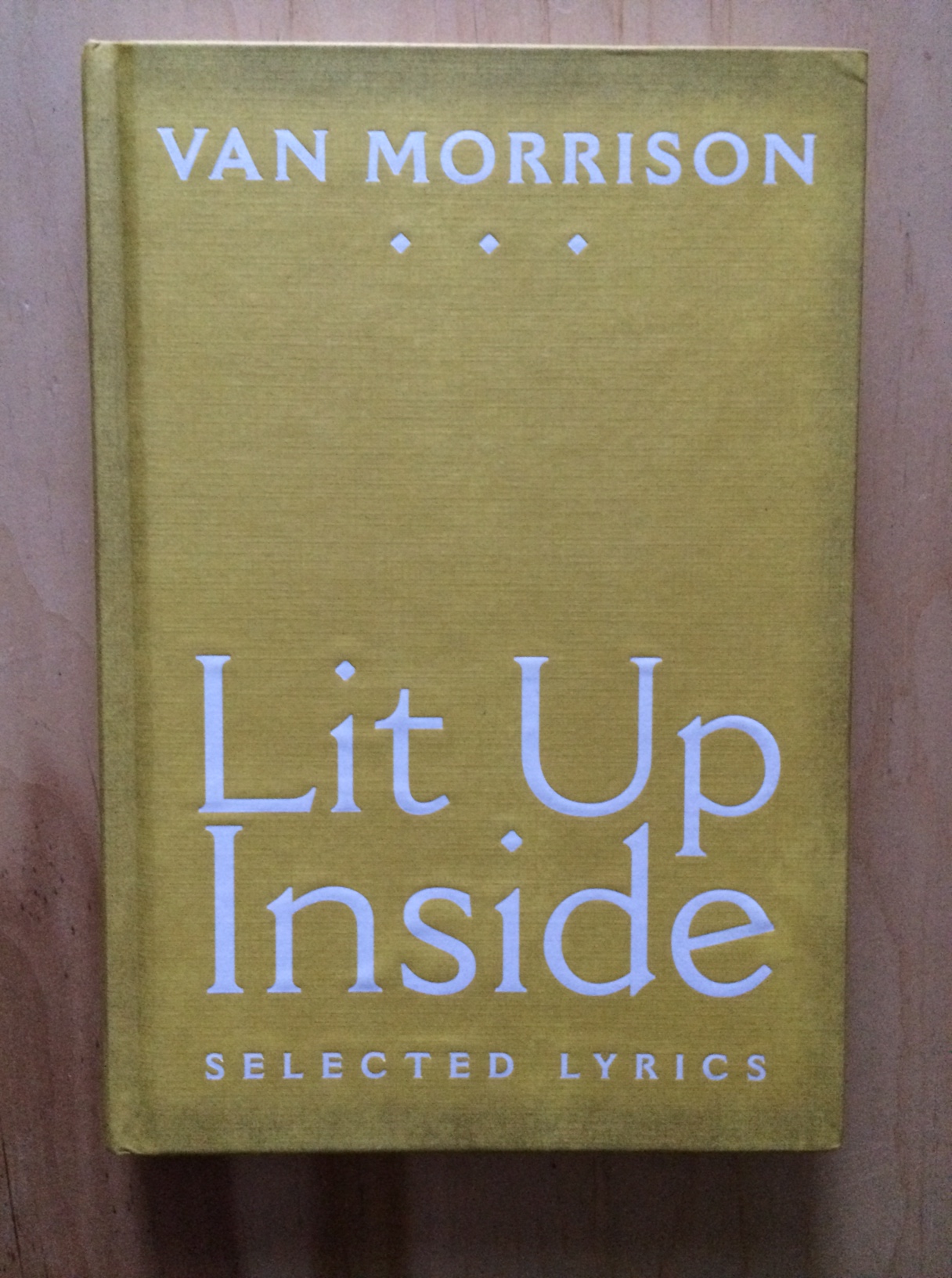
“We were born before the wind”: Van Morrison’s Lit Up Inside: Selected Lyrics

Lit Up InsideVan Morrison’s collection of lyrics, Lit Up Inside*, is out today, and if you’re a fan, you’re going to want to pick it up. Famously private, Mr. Morrison doesn’t often comment on his work, so this selection (roughly 100), which is about a third of his total output, is itself a statement.

The lyrics chosen range from the famous early work (“Moondance,” “Gloria,” “Brown Eyed Girl”) to songs from his recent catalogue. Many are grounded in the singer’s native Ireland, in its cities and working people (the introduction by Eammon Hughes focuses in particular on urban geography), and of course in Van Morrison’s romantic lyricism and interest in the divine.

Like his music, the lyrics collected in Lit Up Inside often defy categorization; some are really lyrics alone, requiring music to reach their potential greatness; some read like Beat poetry; some are prayers. All of them made me want to listen to Van Morrison, which is perhaps the best compliment I can pay the book. 

Thanks to Lit Up Inside, I just revisited two of my favorite albums.  Astral Weeks is just plain brilliant, and who doesn’t love Moondance? “And It Stoned Me” is one of the best songs about childhood of all time. “Crazy Love” is on my top-five list of greatest love songs. “Everyone” was our wedding recessional, and now our son likes to dance to it on sunny Sunday mornings. 

I have maybe five of his forty-odd albums, so I’m not a die-hard Van Morrison fan by any means, but this selection gave me the opportunity to focus on the lyrics alone, and thus Mr. Morrison’s engagement with literature, religion, history, and social concerns (reflected in Mr. Morrison’s choice of the venerable and independent City Lights as the United States publisher).  But it also made me think about how poetry and music make each other, and I think for Van Morrison, even more than, say, Leonard Cohen, the two are inextricably linked.  If you’d like to know Van Morrison better, I wholeheartedly recommend Lit Up Inside.

Here’s a link to “Into the Mystic,” which is the poem of the week.

*I received a copy of this book from the publisher for review purposes, which did not affect the content of my review.
Recommended Reading: Hilary Mantel’s The Assassination of Margaret Thatcher

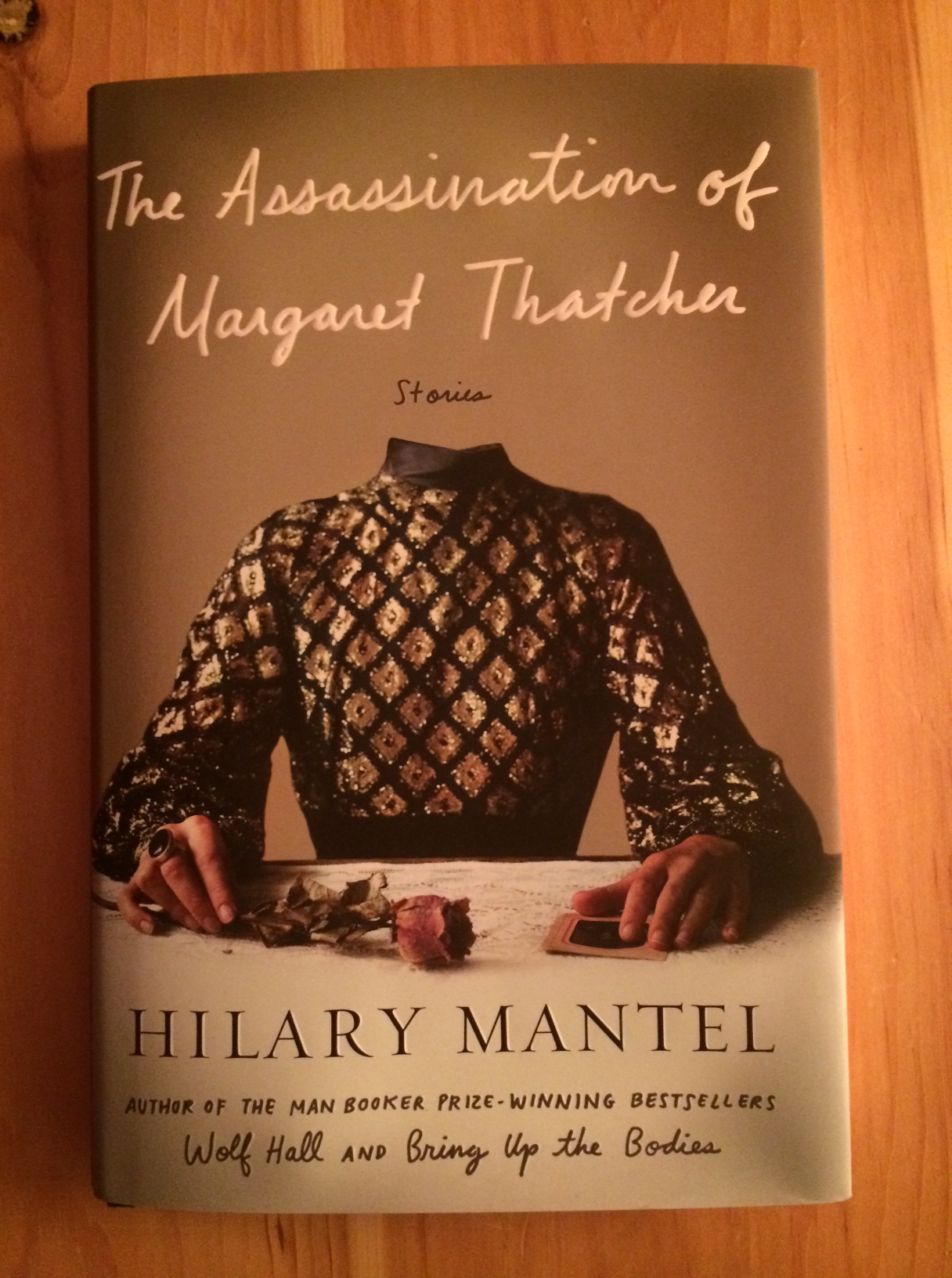
photo (132)Yes, I’ll talk about the controversial title in a second, but let me say this first: at one point, I looked up from reading this book and said to my husband, “Hilary Mantel is unbelievably good.” One look at my face and he replied, “That good, huh?” Yes, that good.

Now, about the title story, which is the last story in the collection: it’s a good story, a fascinating premise. It does not depict the assassination of Margaret Thatcher, but the narration makes it clear that in the story’s alternate timeline, the assassination happened. The story is an examination of character, of history, of choices. The narrator, a woman who lives near an eye clinic where the Prime Minister has had surgery, lets in a man she thinks is a plumber, but who turns out to be an IRA operative. He holds her as a semi-willing hostage, and the pair discuss what he intends to do. It’s chilling and strange, and none to flattering toward Margaret Thatcher, who is still a divisive figure in the UK (Baroness Thatcher died last year), where the controversy over the story is much louder and nastier than it has been here (there have been Orwellian calls for Ms. Mantel’s imprisonment, for example). However, I imagine that if a similar story had been published here about Ronald Reagan so close to his death, the commentary would be just as deafening.

As a girl, I loved reading about Margaret Thatcher; I considered her a role model, since at the time I wanted to go into politics (also astrophysics—ah, the follies of junior high). Now, as an adult, I admire her in some respects, though I don’t think I’d find her domestic policies agreeable. What I’m trying to say is that I have no ill-will toward Margaret Thatcher, and my only objection to Ms. Mantel’s story is that though it depicts Margaret Thatcher as a public figure, not a private person, it should perhaps have been held back for another year or two in deference to Baroness Thatcher’s family’s mourning.

By the way, I do not know who chose the title for this collection of stories, but the cover suggests to me that the American publisher, in any case, is not at all alarmed by the prospect of controversy, and perhaps welcomes it.

Most stories in the collection have been previously published (the oldest, by publication, dates back to 1993, but most were published after 2000), and their contemporary settings will come as a surprise to anyone who is familiar with Ms. Mantel’s glorious rendering of Tudor England in the Booker Prize-winning novels Wolf Hall and Bring Up the Bodies. In “Sorry to Disturb” (which, incidentally, I think would have made a better title) a woman living in Saudi Arabia comes to regret allowing a stranger in to use the phone, which leads to an increasingly awkward series of social encounters. Another story, “Comma,” finds a young girl and her slightly older friend sneaking around an invalid’s house; rarely have I found a child-narrator so interesting.

“How Shall I Know You?” finds an author on a dispiriting stop of her book tour, alternately loathing and pitying the people around her. The last line of the story took my breath away; was a good story up to that point, but the last line made it blossom into something magnificent.

Other characters in The Assassination of Margaret Thatcher* include a girl watching her sister slowly die from anorexia, a philandering husband, a traveler on a train who sees her father’s ghost, and couple on holiday who leave too much unsaid.

These stories are often grim, often chilly, and often funny. The characters tend toward the grotesque, but reveal just as much about the reader as they do about themselves.

And oh lord, the language. Ms. Mantel’s images are detailed, strange, perfect. A girl’s twisted hair ribbon makes “her head [look] like a badly tied parcel” (40); table linen is fringed “like the ears of a teddy bear” (25); “big eyes—unripe fruits–were bulgy with incomprehension” (107). In context, they can be eerie, or funny, but they’re always illuminating.

Hilary Mantel is an absolute wonder. If you like short stories and exquisite writing, don’t miss this book.

*I received a copy of this book from the publisher for review purposes, which did not affect the content of my review.

“the stooping haunted readers”: Louis MacNeice’s “The British Museum Reading Room”

I just got a copy of Van Morrison’s Lit Up Inside (City Lights), and I’m looking forward to diving in soon (I hope to talk about it in next week’s poetry post).

In the meantime, here’s a poem by another Irishman, Louis MacNeice, which has nothing to do with brown-eyed girls. “The British Museum Reading Room” is, I think, my favorite poem of his, and I hope you’ll tell me what you think in the comments!

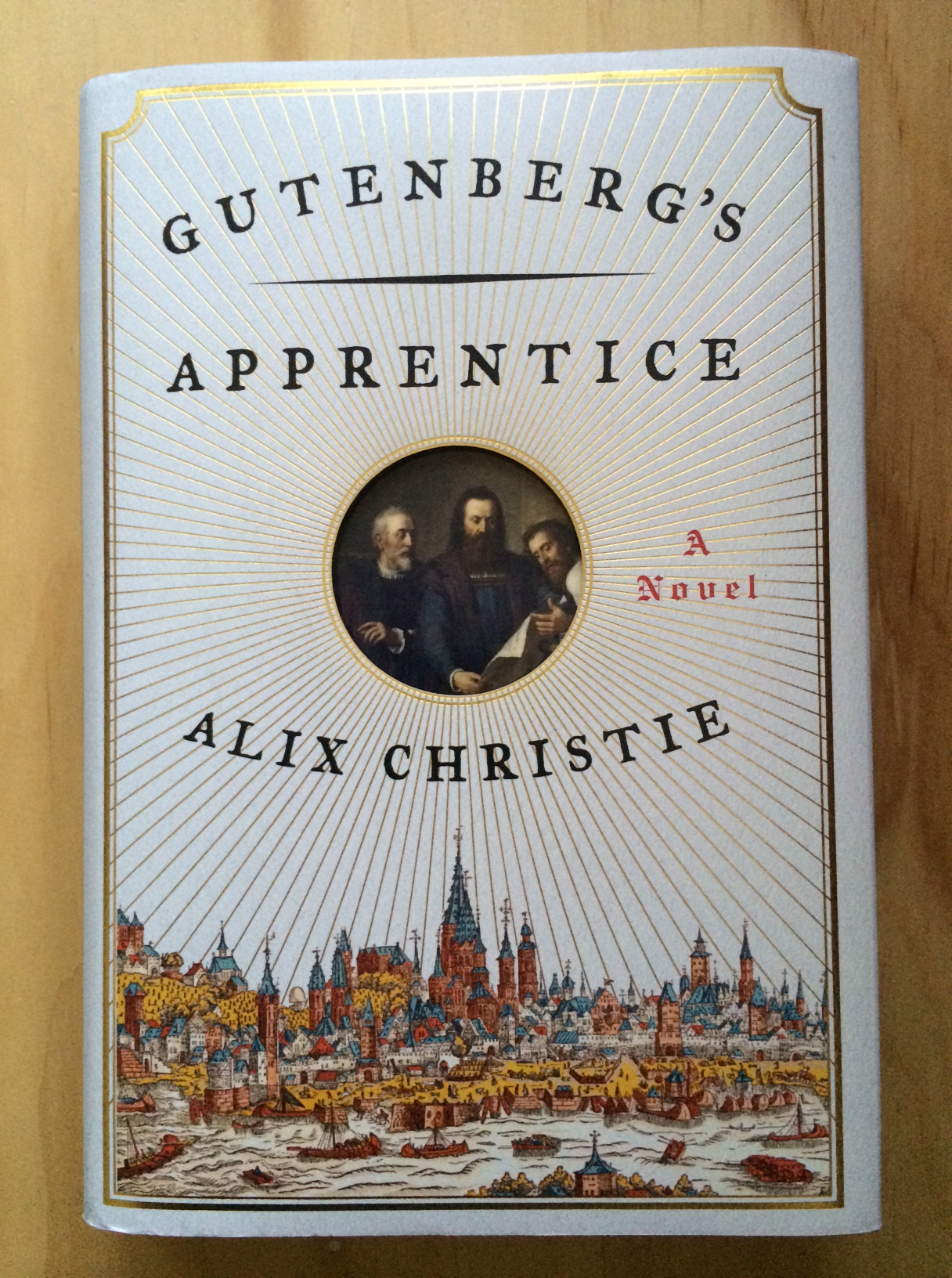
Recommended Reading: Gutenberg’s Apprentice, by Alix Christie

photo (131)As you might have noticed, the photos that accompany my review posts are not the lovely, high-definition pictures of a book cover alone, but rather photos of the copies of the books that I read.

One of the reasons for this is that I’m perhaps overly cautious when it comes to copyright, so I don’t like the idea of pulling covers from Amazon or publishers’ websites.

The other reason, though, is that I want to show writers and publishers that I am reading physical books.

Don’t worry, this isn’t an e-books-are-evil rant; even though I find them problematic in many ways, I understand why many people like them. I even have an e-reader (an ancient Nook) that I used when I was pregnant and commuting by train or bus and didn’t want to lose my grip to turn pages (much as I love Boston, it’s not the kind of town where pregnant women are automatically offered a seat, even if they are visibly pregnant). It was also a godsend when I was nursing and only had one arm free. But ever since, it’s been a backup device, there if I think I might want to read Jane Eyre or Sense and Sensibility on a trip.

I prefer physical books, and for this simple and selfish reason, I don’t want printed books to go the way of the illuminated manuscript. I like their heft, I like flipping the pages, I like seeing the type and the layout and width of the edge left to read. I like seeing my friends’ books arrayed on their shelves. I like seeing my own books arrayed on my shelves. I like bookmarks, reading lights, notes in the margins, and of course, reading glasses.

(I love books.)

And that is why you’ll see my humble photos of the books I read for as long as I run this site.

And that brings me to Gutenberg’s Apprentice*, Alix Christie’s debut novel about loyalty, family, religion, invention, and the printing press.

Let me say first, before I delve into the novel, that is is a gorgeous book. Ms. Christie owns and operates a letterpress, and the book designer must have taken her expertise into account when putting Gutenberg’s Apprentice together. The typefaces are perfectly chosen, the initial capitals resemble those in Gutenberg’s books, and the cover is spectacular. The map inside is hand-drawn and serves as the book’s endpaper, too.

Now, like most people who took Modern Euro in high school, I knew that Gutenberg invented the printing press with movable type, which allowed books to be printed on an unprecedented scale. Books became accessible (if sometimes dangerous to own) and widespread, which meant, among other things, that more writers could influence more people.

What I did not know, however, is just how much work it took to print the Gutenberg Bible, and how much the hand of man figured in the machine that changed the world.

The apprentice in Gutenberg’s Apprentice is Peter Schoeffer, a young scribe dedicated to the art of copying manuscripts. Called home to Mainz by his foster father, the merchant Johann Fust, he hopes that he’ll soon be back in Paris, working on a large commission. To his dismay, Fust wants to apprentice him to a wild-eyed man named Johann Gutenberg, who is working on an invention that Peter views initially as evil, the work of the devil meant to eclipse the beauty of hand-lettered manuscripts.

Duty to Fust, who rescued him from an impoverished orphanhood, prevails, and Peter joins Gutenberg’s highly secret workshop. Backed by Fust’s funding, Gutenberg hopes to perfect his movable type technique and reap the rewards of selling cheaply printed books; Fust, too, hopes that printed books will make their own market and make him even richer.

Peter finds the work backbreaking, the master harsh and impatient on his best days, and the need for secrecy claustrophobic. Slowly, too, he finds himself caught between his master and his father, neither of whom trusts the other. Mainz is a city gripped by conflict; the complicated politics of Church and guild constantly threaten the work of printing, especially when it’s finally decided to begin a massive project: printing the Bible.

The work, always under threat of discovery, stretches on for years, but in those years, Peter begins to find in the workshop a kind of family. He takes pleasure and pride in his work, but more than that, begins to believe that they have been ordained by God Himself to accomplish this great task. The frame of the novel finds him looking back over these weary years:

He once believed that what they did would lift them higher, ever higher–he sensed the godliness that flows throughout Creation brush them. Until it cracked, and their whole workshop filled with anger and recriminations. With each succeeding year Peter has seen the world become unhinged, cacophonous, the very earth stunned by the pounding of machines. And he’s begun to wonder if God did not unleash some darker force with that great shining net of words. (4)

It does seem, given the labor involved—carving molds, casting type, mixing ink, pressing paper and vellum—a kind of miracle that the Gutenberg Bible ever came to exist. I had the privilege of seeing one, once, at the University of Texas, and it is a marvel. It’s enormous (two volumes). Its paper is creamy and its columns perfectly set, the ink a deep, crisp black. Gutenberg’s Apprentice helped me see the immense effort that went into creating this book, the men behind the machinery.

Ms. Christie’s book immerses the reader in mid-fifteenth-century Mainz, in its tangible details and its political climate; we feel the mood of the times. Her prose is straightforward and clean, bringing technical details to artful life.

Gutenberg’s Apprentice invites us to imagine how we would have viewed the printing press had we lived half a thousand ago, and how the inventors of the press might view our own historical moment. The sense of fear and hostility, curiosity and anticipation toward the printing press resonates with our own culture’s ambivalence about the proliferation of texts and voices in the age of digital media. Who can know what was meant to be, and who can predict what comes next?

*I received a copy of this book from the publisher for review purposes, which did not affect the content of my review.

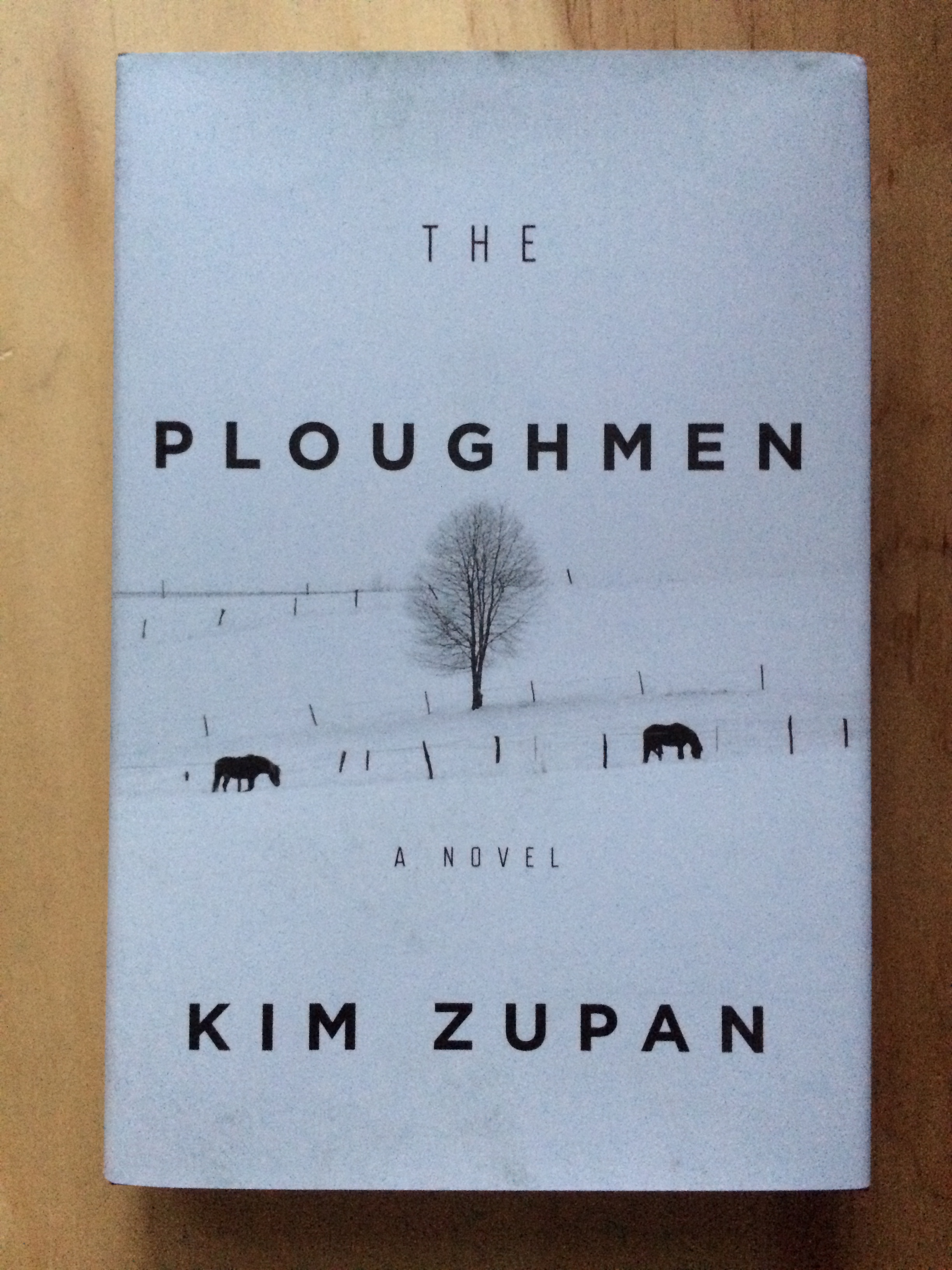
Recommended Reading: The Ploughmen, by Kim Zupan

photo (130)I love Westerns, I love books that keep me guessing, and I love a book that makes me see a landscape. Kim Zupan’s debut novel, The Ploughmen*, is all three, and was an excellent reading experience.

John Gload is a murderer, plain and simple. Murder is how he made his living, and in his late seventies, he’s finally been caught and is waiting for his trial. He’s smart, strong, and utterly unrepentant.

Valentine Millimaki is a sheriff’s deputy, the most junior man on the force and its most skilled tracker; together with his dog he searches for people lost in Montana’s wildernesses. Haunted by the death of his mother, on a bad streak of finding only bodies, and fighting to keep his marriage going, he comes to sit by Gload’s cell at night, to talk and to listen.

The two men have more in common than they know, and slowly, they share more with each other. Valentine’s job is to extract information out of Gload that will damn him at trial; Gload finds himself concerned by Valentine’s appearance, as the long night shifts and daytime insomnia take their toll.

For the rest of us, thought, thought Millimaki, the distance from reason to rage is short, a frontier as thin as parchment and as frail, restraining the monster. It was there in everyone, he thought. It was there in himself. (113)

The Ploughmen is tense; I was never sure what would be revealed next, or how the two men’s relationship would develop. It’s not a tale of redemption, but neither does it glory in cruelty for its own sake. The violence in the novel isn’t sanitized, but it almost seems to be played off-stage.

Often Westerns are described as “spare,” but The Ploughmen is the opposite. Mr. Zupan’s prose, almost old-fashioned, given the novel’s contemporary setting, luxuriates in the Montana landscapes he knows so well; seldom have I been able to picture a place so clearly.

Far below through the greening trees he could almost see the place along the creek where they’d swum one afternoon in their courting days. To get there they pushed through undergrowth and came out near the creek and from the tall grass and thin willow stems at their elbows rose a cloud of small orange butterflies and they went before them on the warm air like a blizzard of flower petals strewn before heroes. (120)

Despite its beauty, at times the landscape, with its blizzards and wildlife and craggy ravines is just as brutal as John Gload’s hands. Valentine is used to seeing death from exposure, and John Gload has caused death by violence, but old age and sorrow too haunt the jail they share together.

The Ploughmen is about searching, no matter how little hope there is, and no matter how strange or difficult the object of the search.

Highly recommended reading. Also recommended: Rory’s wonderful review.

*I received a copy of this book from the publisher for review purposes, which did not affect the content of my review.

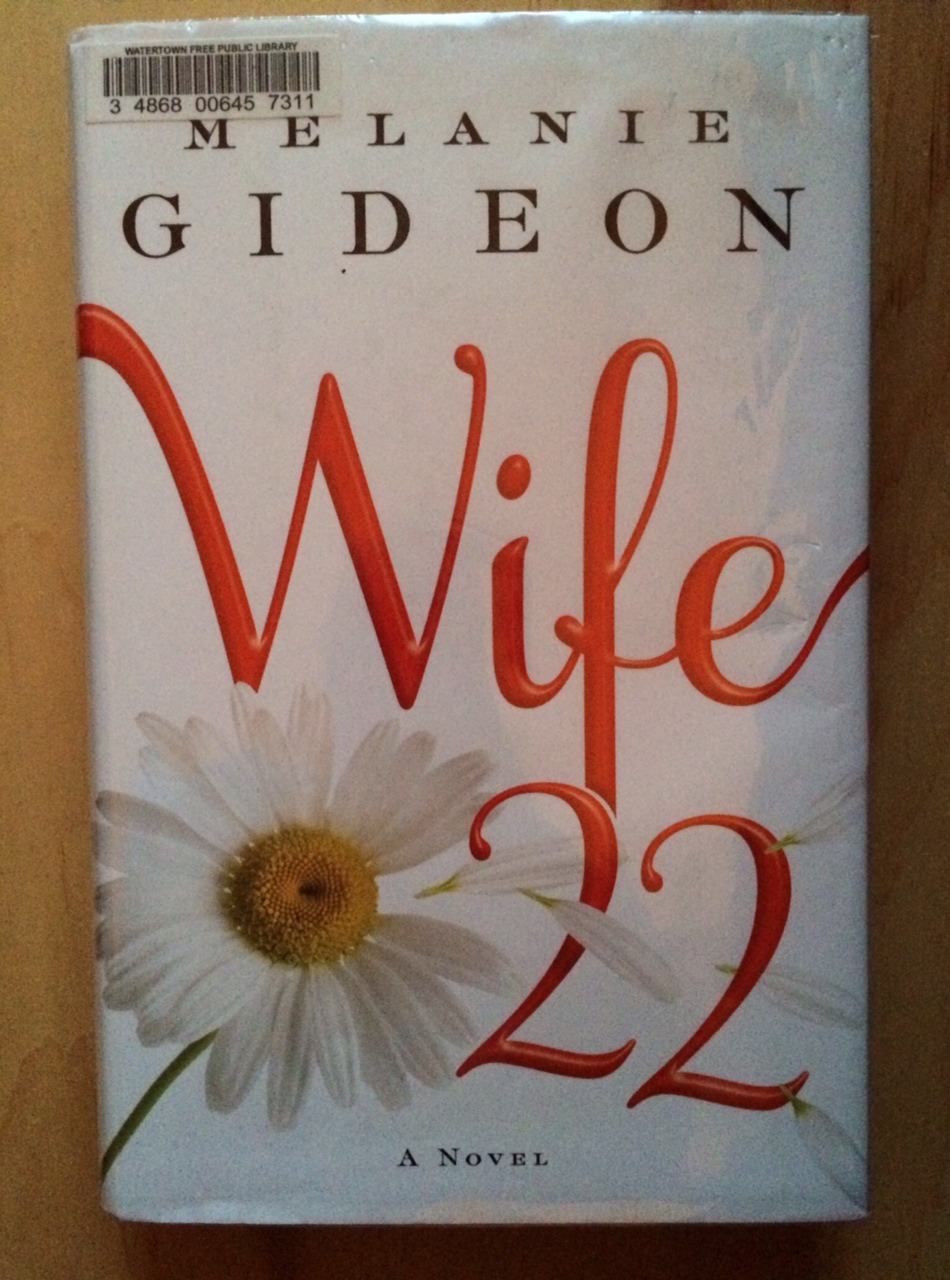
Literary Wives: Wife 22, by Melanie Gideon

literarywives2If you’re new to Literary Wives, here’s the summary: we’re an online bookclub of five to six book bloggers, and we post every other month about a different book with the word “wife” in the title. When we read these books, we have two questions in mind:

1. What does this book say about wives or the experience of being a wife?

2. In what way does this woman define “wife”—or in what way is she defined by “wife”?

This month, we’re talking about Melanie Gideon’s 2012 novel, Wife 22.  We invite you to join the discussion by commenting on our blogs (links below) or posting your own review on our shiny new Facebook page.

We also hope you’ll join us next time, on Monday, December 1, when we’ll be discussing Adriana Trigiani’s The Shoemaker’s Wife.


Here’s the jacket copy/summary from the publisher:

Maybe it was those extra five pounds I’d gained. Maybe it was because I was about to turn the same age my mother was when I lost her. Maybe it was because after almost twenty years of marriage my husband and I seemed to be running out of things to say to each other.

But when the anonymous online study called “Marriage in the 21st Century” showed up in my inbox, I had no idea how profoundly it would change my life. It wasn’t long before I was assigned both a pseudonym (Wife 22) and a caseworker (Researcher 101).

And, just like that, I found myself answering questions.

7. Sometimes I tell him he’s snoring when he’s not snoring so he’ll sleep in the guest room and I can have the bed all to myself.
61. Chet Baker on the tape player. He was cutting peppers for the salad. I looked at those hands and thought, I am going to have this man’s children.
67. To not want what you don’t have. What you can’t have. What you shouldn’t have.
32. That if we weren’t careful, it was possible to forget one another.

Before the study, my life was an endless blur of school lunches and doctor’s appointments, family dinners, budgets, and trying to discern the fastest-moving line at the grocery store. I was Alice Buckle: spouse of William and mother to Zoe and Peter, drama teacher and Facebook chatter, downloader of memories and Googler of solutions.

But these days, I’m also Wife 22. And somehow, my anonymous correspondence with Researcher 101 has taken an unexpectedly personal turn. Soon, I’ll have to make a decision—one that will affect my family, my marriage, my whole life. But at the moment, I’m too busy answering questions.

As it turns out, confession can be a very powerful aphrodisiac.

photo (128)Meet Alice Buckle. She’s a former playwright, current children’s drama teacher, and her marriage to William, an ad executive, is not failing, exactly, but it’s not going exactly well, either. Both love their children; she loves their dog. They live in the Bay Area in a nice house, and have suitably cool friends. [Memo to novelists and screenwriters: enough with the token the San Francisco non-white lesbian friend, ok? Maybe try a non-white San Francisco lesbian as a main character? Sheesh.]

And of course she’s in the middle of a mid-life crisis, because “having a secret is the most powerful aphrodisiac in the world and, by necessity, exactly what’s missing in a marriage” (88).

In Wife 22, being a wife is difficult because it involves boredom and stagnation, and because the wife in question has difficulty communicating directly with her spouse. Motherhood seems equally difficult (for different reasons) but more rewarding. 

The novel’s plot is predictable, the characters mostly so, and the commentary bland, but the dialogue is lively and the format keeps things moving. If Alice narrated the whole thing, I don’t think I would have enjoyed the novel, but Ms. Gideon uses e-mails, Google searches, Facebook messages, and discussion board postings (that made me fear PTA parents) to break up the text. I did think that providing Alice’s answers to the survey questions without providing the questions themselves until the end of the book was pretty gimmicky. 

Wife 22 is about a very specific type of marriage: white, affluent, heterosexual, urban; Alice and William’s struggles feel frivolous and self-indulgent given the experiences of the great majority of couples in the United States and, indeed, the world.

But perhaps that’s not a fair assessment, since Wife 22 is really light reading. It has its moments of perceptiveness, of course, like this one, when Alice meets with her support group composed of women who, like her, have lost their mothers:

[. . .] we offered shoulders to lean on, hands to hold, and ears to bend. And when we failed at that, there was lumpia and waterproof mascara samples, links to articles, and yes, vodka-laced tomato juice.

But mostly there was the ease that came from not having to pretend you had ever recovered. The world wanted you to go on. The world needed you to go on. But the Mumble Bumbles understood that the loss soundtrack was always playing in the background. Sometimes it was on mute, and sometimes it was blasting away on ten, making you deaf. (106)

And it can be quite funny, especially when the novel focuses on the couple’s two kids, or when Alice makes an unexpected comparison.

I want to have a conversation with my husband that goes deeper than insurance policies and taxes and what time will you be home and did you call the guy about the gutters, but we seem to be stuck here floating around on the surface of our lives like kids in the pool propped up on those Styrofoam noodles. (33)

Wife 22 is like,  I think, a slightly more serious version of a post-2000 Nancy Meyers movie, only without the divorce. It’s good-natured, well-intentioned entertainment about a subset of Americans who get more than their fair share of screen (and page) time.


Please visit the other Literary Wives bloggers to get their takes on the book! 

Emily at The Bookshelf of Emily J. 

Ariel at One Little Library

Cecilia at Only You

Kay at WhatMeRead

Lynn at Smoke and Mirrors

(Audra at Unabridged Chick is on hiatus)