It’s Milton Time! Paradise Lost Readalong 2014

ParadiseLostReadalong

Well, friends, here we are, about to embark on the good ship Milton for the next two months.

And by “we” I mean Rick (Another Book Blog) and CJ (ebookclassics) and me, unless y’all step up to the plate and climb aboard (and no, Milton won’t be mixing metaphors the way I do.). Paradise Lost is dense, but we’ll only be covering 300 pages in two months, so it’s not exactly like tackling Moby-Dick or Middlemarch (not knocking — worthy books, both).

By the time Milton was starting work on the epic poem in English, his political cause was in decline, his first wife and only son were dead, and he was blind (he dictated the poem to one of his daughters). By the time Paradise Lost was first published (1667*) Milton had been imprisoned for his role in the English Revolution (and subsequently released, thanks in part to the offices of his friend, fellow poet Andrew Marvell) and London had burned in the Great Fire of 1666. Paradise Lost, then, was an epic born in a time of upheaval — personal, political, and national — for its poet.

Like the great Greek epics before it, Paradise Lost begins in medias res. Books I and II find Satan newly come to Hell, pondering his plan of resistance. We’ll find a Satan quite unlike the medieval caricature that might be expected, but that doesn’t mean that Hell is without horrors.

Here’s our reading and posting schedule — please join us!

January 1: Introductory post

January 10: Books I & II reaction

January 20: Books III and IV reaction

January 30: Books V and VI reaction

February 10: Books VII and VIII reaction

February 20: Books IX and X reaction

March 1: Books XI and XII reaction; Wrap-up

A word about editions: I’m partial to Gordon Teskey’s 2005 Norton Critical Edition of the poem. I was the teaching assistant (for one semester) for his Milton class at Harvard, and I was won over by his persuasive reading of the poem, and by his approach to punctuating it (lightly). The edition also includes goodies — critical responses, a brief biography of Milton, and extracts from some of Milton’s prose works.  It’s third from the top in the picture above. Even if you decide not to go with this edition, I’d recommend sticking with a reputable academic publisher.

*Paradise Lost initially appeared in ten books; the 1674 printing expanded the poem to twelve books (like the Aeneid) and included a few small changes as well. 

Reading While Pregnant: Or, “enough to love / to break your heart / forever”

I was nearly halfway through pregnancy at this time three years ago, and I remember feeling the baby kick for the first time around New Year’s Eve, which was also the same time I was reading one of the three books I strongly associate with being pregnant.

Reading while pregnant isn’t really different from reading while not-pregnant, I found, except I felt I should be more discriminating since I wouldn’t read as much right after the baby was born (true, in my experience), and also because I had to get up a lot more often. And while I generally remember my reading lists pretty well, most of the books I read during those many weeks went by in a haze, though I know there were quite a few. I was teaching intro-level Shakespeare and Readings in Drama at the time, so that’s a dozen right there, and of course I read novels and poetry on the side. Looking back, though, these are the three books that epitomized the whole experience of pregnancy for me.

One is the ubiquitous What to Expect When You’re Expecting, which was so awful and made me cry so often that my husband hid it from me around the end of the first trimester (for which I am profoundly thankful). Seriously, it’s the worst: fat-shaming and fear-inducing for starters. If you’re a pregnant person, there are far better options out there (try the Mayo Clinic Guide to a Healthy Pregnancy for the nitty-gritty health stuff, and the Girlfriends’ Guide to Pregnancy for the “we’re-all-in-it-together” vibe, although if you read my edition from the late ’90s you’ll have to squeeze someone’s hand through the parts that hurt [ahem, assumption of shared privilege, ahem]). 

The second is Wuthering Heights, which is the first book I read on an e-reader. My husband got me a Nook for my birthday about a month after I found out I was pregnant. Though I’ll always be a lady of the printed word (mostly because I like books as objects, and my eyes hurt when I look at screens for too long, but we can have that tussle another day, if we must), it did make reading one-handed while standing quite easy (also: great for reading while nursing).  On the train and the bus to and from the university, I read about the unkindnesses that Cathy and Heathcliff inflict upon each other, and the harsh beauty of the moors. It wasn’t particularly uplifting, but it was distracting enough that for those forty-five minutes each way, I didn’t notice the sciatica or general discomfort associated with growing another human in one’s abdomen. And that’s all you  want from your pregnancy reading sometimes: distraction.

[It should be noted, here, that I am of the variety of plumpness that made it difficult for people to tell whether I was fat or fat and pregnant for the first twenty-seven or so weeks out of my forty-two (yes, it was awful) weeks of pregnancy. People in Boston aren’t jerks who don’t offer seats to pregnant women. For the most part.]

The third book I associate with pregnancy, the one I was reading when the baby started kicking, is Harry Potter and the Sorcerer’s Stone.

Now, I came very late to the Harry Potter fan club; the books started to appear when I, as a young teenager, thought that Ayn Rand was the height of reading sophistication. (As you can tell, my salad days have come and gone.) When the Harry Potter movies came out, my dad and I would go see them on a Monday at the Shaker Square Cinema for five bucks a ticket, with free popcorn (we’re yankees to the core); we liked them quite a bit. As it turned out, I saw all the movies with my dad, eventually. But for many years we eschewed the books as “kid stuff.”

It wasn’t til I was pregnant that I decided I should read the series to preview it for the baby, figuring, perhaps wrongly, that kids in the 2020s will be reading the same stuff as kids in the late ’90s and early ’00s. It tells you something about my reasoning ability that I thought I should preview books meant for kids 8 and up while I was still pregnant. It’s not just me, though: Pregnancy does weird stuff to your brain.

My nesting instinct pretty much came down to books: The shower was book-themed (thanks, bookish friends!), and I bought (or borrowed/stole from my siblings) every children’s book I remember loving, from Miss Rumphius and The Story of Ferdinand all the way up to the Chronicles of Narnia and Charlotte’s Web and Anne of Green Gables — without reflecting that it would be years before the baby would be big enough to understand them.

I read that first Harry Potter book and immediately ordered the set. I read them so fast that winter (three years ago now) that the plots spun together, thrilled that these were books my baby would someday, barring catastrophe, grow up to read. They might be built of the fantastic, but they made all the promise of childhood after the misery of pregnancy seem real and attainable, and I loved them unabashedly and in earnest.  While I’m not exactly sure I’m ready for our son to grow up, I can’t wait to read the books to him for myself (Mr. O read the first three to him to get him to sleep as an infant). Privet Drive is going to make his chores look easy, and even I would take gym class over Potions with Snape. Wait. No I wouldn’t. Scratch that. Sorry, kiddo. Gym class is the worst.

Harry Potter & a picture of our Baby O  (now Mr. Baby, or H) on the day he was born.

Harry Potter & a picture of our Baby O (now Mr. Baby, or H) on the day he was born.

Turns out that I’m impatient, so I read the whole series again over the Thanksgiving holidays, and whoa, nelly. They’re still wonderful, inventive while nodding to and borrowing from the best in other fantasy novels, and heartbreaking.

I didn’t know, the first time I read them, that our Baby O would be a son, but this time I couldn’t help but picture our little dude as a kid away from home, navigating the tricky staircases at Hogwarts, maybe making friends like Ron and Harry, and especially Hermione.

This is a your weekly poetry post, I promise, even though it’s taken me awhile to get here. This week we’re saying hello to a new year, and so please head on over to The Poetry Foundation to read Diane Di Prima’s “Song for Baby-O, Unborn.

It’s the kind of poem that I imagine would have crossed Lily Potter’s mind sometime. It reaches for the future with eyes wide open to the deficiencies of the present, and the tangled power that is love.

Ye Olde Year in Review

I started Rosemary and Reading Glasses on January 1 this year. I’d blogged for a couple years about food and domestic bliss (along with my husband), but a long-term illness has meant that the food I eat is consistently boring and not write-up worthy.

At the time, my plan was to get myself writing again, and to fulfill my New Year’s resolution, which was to memorize one poem every week. I failed pretty spectacularly at that goal (more on this later), but along the way

a bunch of pretty great stuff has happened.

Friends! I’ve been so lucky to “meet” delightful, thoughtful people this year, people who love books. The only downside is that often you delightful people live states/countries/continents away, so chances of us meeting in real life aren’t too good. But if you’re ever Boston-bound (and you know who you are), let’s get a beer (or a cup of tea) and then go bookstore-hopping, shall we?

Engagement! I don’t know about you, but I always hated whole-class read-alouds in grade school and high school. But the whole reading-separately-together thing has been so much fun! I love seeing everyone’s Classics Club lists, and I liked my first read-along so much — even though the book was atrocious —  that I’m hosting my own in 2014. (There’s still time to get in on it! Non-atrocious book, promise.)

Failure! Now, I know this one sounds weird, but here goes. The first ten weeks of my memorize-a-poem-a-week project went according to plan. The next ten weeks weren’t so smooth; I was cramming on Sunday nights to make my Monday memorization deadline. And then I got really sick and ended up in the hospital for ten days, and the whole project was kind of shot to hell. But you know what? It didn’t matter. I still picked a poem to think about and savor every week, even if I couldn’t memorize it. People still read the blog. It was ok. And then I signed myself up — publicly — for NaNoWriMo, and I didn’t finish that either! Guess what? Yep. The sky didn’t fall. Nobpdy reported me to the writing police, and I’m here to tell the tale.

Success! I used to consider not finishing a book a crushing personal failure. Well, maybe not crushing. Anyway. One of the side-effects of my failure episode this year was giving myself permission to put a book aside if I wasn’t enjoying it after thirty or forty pages. Not exactly revolutionary, but it’s a big step forward for me. Poetry brought me back to reading novels again, and I decided to read thirty this year, or a 300% increase from the year before (I’m the at-home parent of a 2 1/2-year-old. Enough said, I hope.). And I read thirty books. Then I read thirty-five more. That’s right, folks. I made it through 65 books this year! It’s not that the number matters (but I do feel pretty awesome), really, but that I thought about those books, wrote about most of them, and talked about them with friends in the blog-world and real-world.

Books! Yeah, I know. Of course. I’ve had my head buried in the seventeenth-century sand for so long that I lost track of contemporary fiction. And it’s wonderful! Even the books published just this year gave me a sense of the richness and breadth i’ve been missing out on. I’m not going to do a best-of-the-year list, because I don’t want to, really, but herewith I present a list of five books that have been flying under the radar this year and deserve more attention.

Hanya Yanagihara, The People in the Trees

Chloe Aridjis, Asunder

Paul Yoon, Snow Hunters

Carlene Bauer, Frances and Bernard

Jenny Uglow, The Pinecone

So, what’s next?

More Poetry! I’ve read 50+ individual poems this year, but only four full collections. That’s kind of lame for someone who considers herself a poetry person. I’m going for seven in 2014. Also, start looking forward to February, because I will be featuring super-sexy poems on Tuesdays. Mostly sexy poems by dead people, because I don’t like Valentine’s Day very much.

More Lists! People love lists, turns out. I only did one this year, and I’m not going to go all Buzzfeed on you next year, but expect a couple more lists in 2014.

More Parks & Rec posts! By far my most popular post this year was a Ron Swanson / Bobby Burns lovefest. So maybe I should write more of those.

A Readalong! Yes, I’ve plugged this one already, but here goes again! Read Paradise Lost this winter! It’s shorter than most novels and will give you some sweet vocab to impress your friends and colleagues before spring arrives.

More of the same! In 2014 you’ll still find poetry posts on Tuesdays and book reviews on Thursdays. I’m a creature of habit.

Thanks for reading this year, friends. It’s been a pleasure. Stay tuned tomorrow for the last poetry post of 2013.

Confidential to my brother: Happy birthday, Tom! You’re one of my favorite readers.

Anyone Want to Get Together and Talk About The Time Traveler’s Wife?

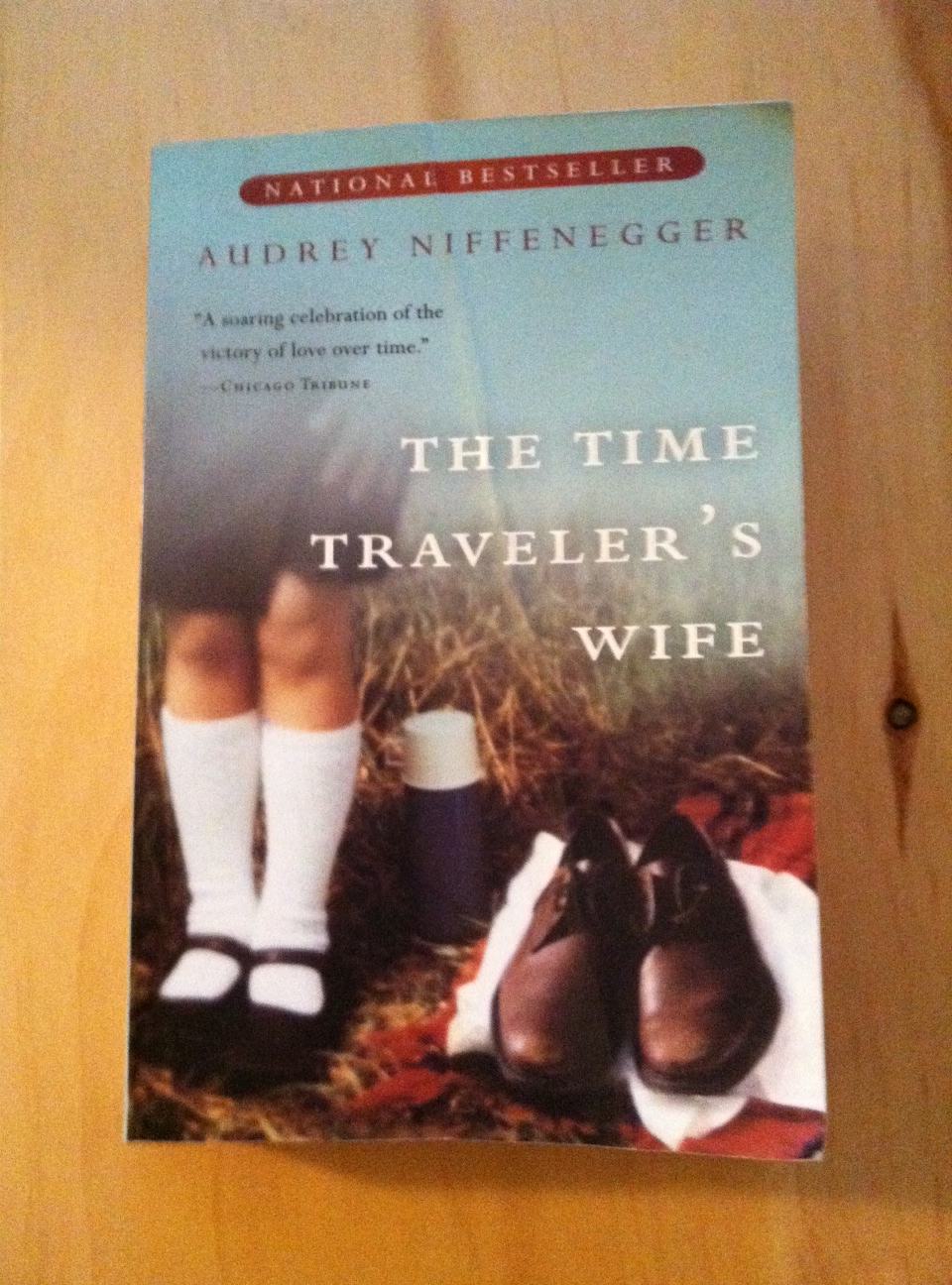
The Time Traveler's WifeI can remember exactly when I heard about The Time Traveler’s Wife, Audrey Niffenegger’s 2003 mega-hit: it was summer 2004, in one of the dorms at BC. I was there for a summer course on the philosophy of Tolkien (see: nerd credentials, my), and my roommate told me it was her favorite book.

I don’t think I can tell you the favorite books of any of my other roommates, sadly, but this particular roommate went on to become one of my very best friends, so her recommendation has stuck with me for the last nine years and five months. Of course, now she’s gone and moved to Colorado, and she works nights, so I can’t call her up on any old afternoon to chat about the book.

Here’s the premise, for those of you who missed the big hullabaloo ten years ago: Clare and Henry are in love, but Henry suffers from a rare genetic disorder that causes him to time travel, involuntarily and without warning. He travels to the future and to the past, always landing naked (like the Terminator) and afraid, and not sure how long he’ll be gone from his present time. As you might suspect, Henry and Clare face some pretty weird challenges as they navigate their relationship.

What I liked best about the novel is its mix of genres: sci-fi, romance, domestic drama. Ms. Niffenegger’s writing is lively (though occasionally veering into cliche) and she has a knack for choosing quotations (Derek Walcott and A.S. Byatt both make appearances) that enhance the story. Thanks to her background in art, the scenes of Clare in her studio are some of the best in the book; I found myself wanting to learn more about contemporary paper-making and paper art.

The structure of the novel makes for a compulsive reading experience (also, it turns out that something Very Bad happens on my exact birthdate, so that was sort of weird and intriguing at the same time). It loosely follows Clare’s timeline, with tangents forward and backward as necessary. At one point, time is compared to a Möbius strip, an apt analogy; the future Henry is always part of Clare’s past, for example, and the present Henry and Clare cannot escape either the past or the future. Henry often feels helpless, not only because he cannot control his time traveling, but also because he cannot alter events. He might know about a terrible accident in the future, but he has no power, in his past, to change it. (On the other hand, he’s pretty handy with the stock market.)

Despite the genre-bending premise, The Time Traveler’s Wife is primarily a love story; the science part of the sci-fi doesn’t really hold water. Sure, genetics could explain the physical symptoms associated with Henry’s time displacement, but the actual time traveling as a genetic quirk? I’m not buying. (And that comes from a lady who can quote you Next Gen, chapter and verse.)

Ok, so here are the topics I want to talk to somebody (you?) about:

Henry’s the lit-nerd’s perfect guy, right? He’s a librarian, he speaks multiple languages, he’s tall dark and mysterious, he’s wicked sexy, he’s a bad-boy-turned-good-guy . . . I mean, really. Is he too perfect?

Wait, let me answer my first question with another question: Is Henry too damn paternalistic? All this withholding information from Clare (for her own good, of course) seems awfully condescending, and the implication that it’s ok because Clare has her own secrets doesn’t sit too well with me.

Is giving Clare a rich family lazy? My mother pointed out to me years ago that it’s easier for writers when characters are rich; you don’t have to write in what it’s like to have to forgo dinner out to pay the phone bill, or write about shopping clearance sales instead of waltzing into a boutique, or explain why someone is able to buy a house or fly to Orlando. She was commenting on movies (see: Nancy Meyers’s post-1990 oeuvre), but the point holds for novels, too, I think. Unless wealth and its effects are important to the plot or theme of the novel, making characters rich just seems lazy. Sure, Clare’s family’s property is so big that nobody notices her childhood chats with future-Henry, but why not put her on a ranch, or a farm, or a city apartment with parents who work long hours (or a single parent, for that matter)?

On a related note: What’s up with many of the non-white characters being household help? I grant that Kimy is a three-dimensional character, but she still deserves more prominent placement. Could have done without Celia’s characterization as a predatory lesbian, too. I think Ms. Niffenegger consciously tries to include non-white characters, but too often the attempt reads as tokenism.

And here’s a question with some spoiler material, so stop reading now if you want to be kept in the dark. I’ll let you know when it’s safe to come back. 

Why don’t Clare and Henry just adopt? Six miscarriages, at least one involving a massive transfusion? Adoption seems to be the sensible solution here. I HATE with a fiery passion Clare’s rationale for not adopting:

Clare says, “But that would be fake. It would be pretending.” She sits up, faces me, and I do the same.

“It would be a real baby, and it would be ours. What’s pretend about that?”

“I’m sick of pretending. We pretend all the time. I want to really do this.”

“We don’t pretend all the time. What are you talking about?”

“We pretend to be normal people, having normal lives! [. . . ]” (349-350)

It would be one thing if Clare apologized for this outburst (and for not really answering Henry’s question) and explained herself. Instead, her implication that adoption is somehow “pretend” is left hanging (Henry gets angry, leaves the house, and time travels), and in a feat of magical realism, a past Henry pops up and impregnates her. Pregnancy number seven is lucky, and she delivers a healthy baby, which reads to me as if the novel endorses Clare’s f’ed up analysis of the ontological status of adoption.

Safe to return, dear readers!

Despite these shortcomings, I found the novel fascinating, and, as you can tell, it gave me lots to think about. Have you read it? What did you think? And how was the movie?

Recommended Reading, Bonus Round: The Lost City of Z, by David Grann

I’ve run out of Thursdays to post my Recommended Reading, but I’ve read a couple more books recently that I didn’t want to leave unwritten-about when the calendar flips to 2014.

The first is David Grann’s 2009 bestseller The Lost City of Z, a nonfiction account of Mr. Grann’s attempt to trace the story of legendary explorer Percy Fawcett’s disappearance into the Amazon in 1925. I bought the book for my husband a couple years ago, and I’ve been eyeing it ever since.The Lost City of Z

You’ve probably noticed that my reading habits tend toward fiction and poetry, but I do try to live up to my “Omnivorous Reader” tagline by dabbling in YA, nonfiction, and even, once, romance (shudder). And I’m very glad this is so, because The Lost City of Z was a great read.

Now, generally I don’t go in for books about adventurers and extreme sports, because I just can’t get over the “why the hell would you leave your family to perform some completely unnecessary feat of strength and possibly endanger people who are required to rescue you?” reaction. All those books about people who climb Everest drive me CRAZY. Don’t get me started on skydiving. Want a physical challenge and have money and/or time to burn? Volunteer for Habitat for Humanity, or help medical brigades deliver care to rural areas of the world, participate in disaster relief, join an archaeological dig. Or, you know, just take a hike, with the proper equipment and planning.

Anyway. Lost City of Z avoids this problem since a large chunk of the book traces Fawcett’s treks in the first quarter of the twentieth century, when great swaths of the Amazon were unexplored and when aerial surveys weren’t feasible. Fawcett made invaluable contributions to cartography, and though he was as ethnocentric as the next British explorer in those years, he avoided violence and showed respect for tribespeople. Yes, exploration is inherently violent in many respects, but this guy wasn’t out to conquer — he was out to make discoveries. And the discovery he most wanted to make was of ‘Z,’ the name Fawcett coined to describe a city of a hypothetical lost Amazon civilization, which he believed would have rivaled the Aztecs or the Inca in sophistication and scope.

As Mr. Grann tries to understand Fawcett’s disappearance (the man was a legend, unbelievable skilled at survival and endowed with an almost miraculously sturdy constitution), he inserts himself into his own narrative, poking through dusty archives, visiting with Fawcett’s descendants, even trekking out to the Amazon himself. In a documentary film, this kind of move would be an automatic turn-off — seriously, even Werner Herzog barely gets away with it in Grizzly Man — but Mr. Grann is so relentlessly focused on his object of study that these self-insertions make sense. Fawcett is so hard to track down that he turns other people into explorers.

Full of outsized personalities and interesting factoids, The Lost City of Z reads so smoothly that it felt novel-like. Highly recommended.

Recommended Reading: Snow Hunters, by Paul Yoon

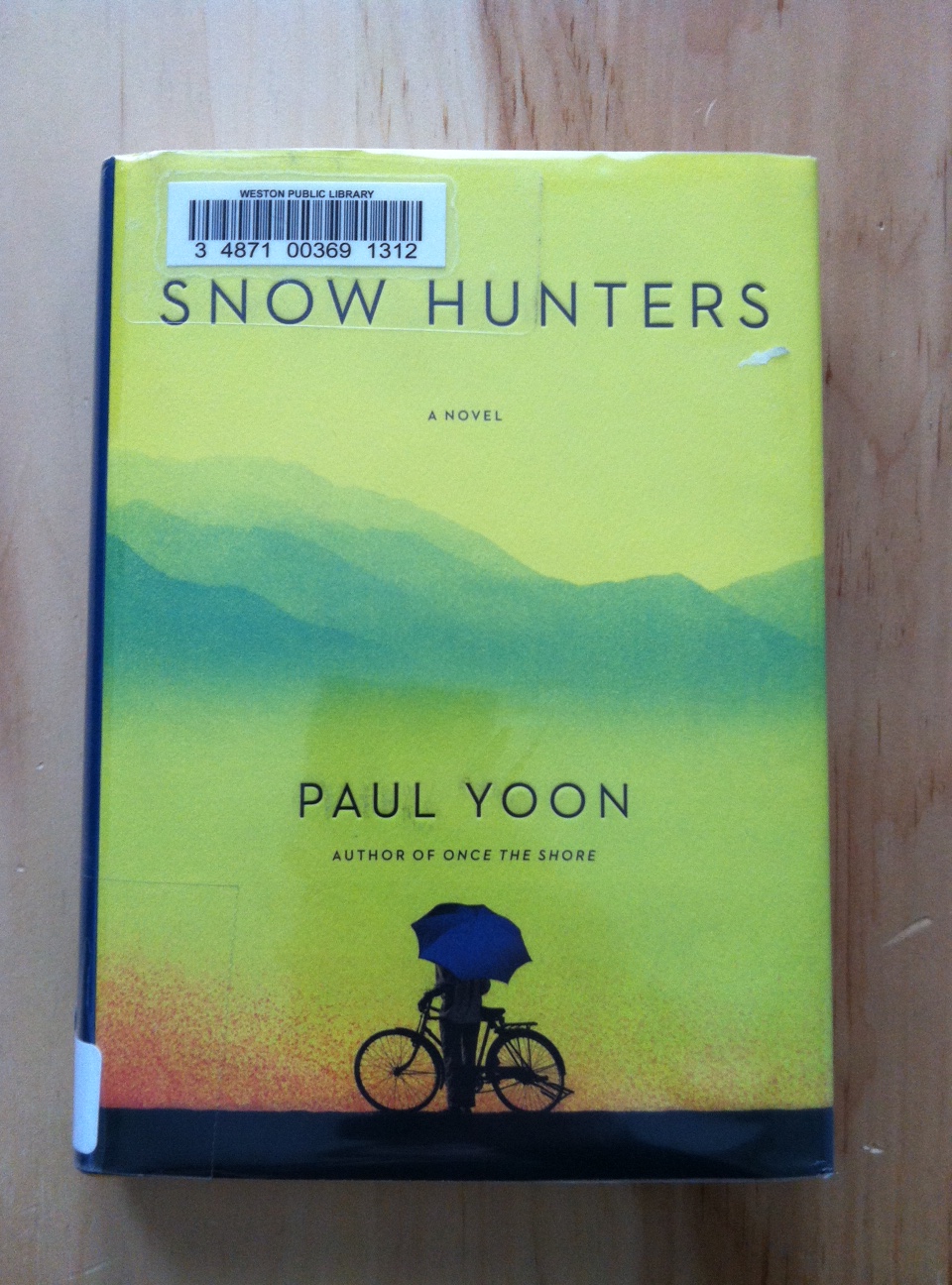
snow huntersI’m so pleased to end my year of reading recommendations with this lovely, lovely work by Paul Yoon.

Snow Hunters follows Yohan, a tailor who lives in Brazil, as he adjusts to his new life, new occupation, and as he struggles with his memories of war and friendship in his native Korea. It’s a novel about place and time. Reading it, I could imagine standing in the sun on the coast of Brazil, what it would be like to feel the small triumph of learning a street’s name.

Mr. Yoon’s pose is spare but illuminating; it often reminded me of Hemingway’s writing, but with more light behind the shuttered windows. Here’s one of my favorite passages:

And he understood that he would never be able to hold all the years that had gone in their entirety. That those years would begin to loosen, break apart, slip away. That there would come a time when there was just a corner, a window, a smell, a gesture, a voice to gather and assemble. (151)

Beautiful. Writing that bears re-reading.

(Cecilia has a wonderful review of Snow Hunters on her blog, Only You.)

“What marvels in a Christmas-cake!”

Image via Wikimedia Commons

Image via Wikimedia Commons

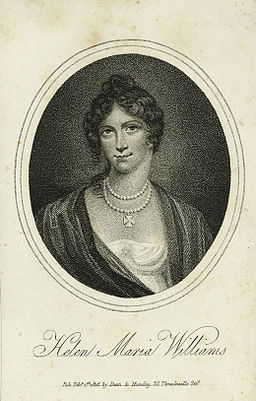
Here’s a funny little English poem by the assuredly serious Helen Maria Williams about the pleasures of home and friendship — condensed in a traditional Christmas cake. I like it because it reminds me that objects’ significance resides in their relations to people and ideas important to us, and because I’ll be missing my Cleveland family this year at Christmas. And because my best friend always sends out Christmas cookies as an expression of her love.

To Mrs. K—-, On Her Sending Me an English Christmas Plum-Cake at Paris

What crowding thoughts around me wake,
What marvels in a Christmas-cake!
Ah say, what strange enchantment dwells
Enclosed within its odorous cells?
Is there no small magician bound
Encrusted in its snowy round?
For magic surely lurks in this,
A cake that tells of vanished bliss;
A cake that conjures up to view
The early scenes, when life was new;
When memory knew no sorrows past,
And hope believed in joys that last! —
Mysterious cake, whose folds contain
Life’s calendar of bliss and pain;
That speaks of friends for ever fled,
And wakes the tears I love to shed.
Oft shall I breathe her cherished name
From whose fair hand the offering came:
For she recalls the artless smile
Of nymphs that deck my native isle;
Of beauty that we love to trace,
Allied with tender, modest grace;
Of those who, while abroad they roam,
Retain each charm that gladdens home,
And whose dear friendships can impart
A Christmas banquet for the heart!

Secret Santa . . . With a Bookish Twist

Rick over at Another Book Blog came up with an excellent idea for those of us with bibliophilic tendencies: A book blog Secret Santa! No buying, no sending, just reading — it’s perfect. Rick drew names out of an interweb hat, and each blogger will (a) choose a book for another blog to read and (b) post about the book suggested to her/him on the suggester’s blog. If that sounds confusing, go check out Rick’s opening salvo.

Here’s who’ll be a-reading during the twelve days of Christmas:

Rick’s already revealed that I’m his giftee (and I am so psyched to read the book he chose!), and I’m excited to say, with a trumpet fanfare you’ll need to imagine, that I’ve pulled

CJ from Ebookclassics

from the hat!

Now, I don’t “know” CJ that well, but her project (reading one hundred classics in e-book form) is totally rad, and, luckily for me, comes with a built-in list of titles that she’s read and means to read. I skimmed the list — it’s a great list — and was tempted by quite a few. I would love if someone would preview Tess of the D’Urbervilles or Madame Bovary for me, but I thought those were maybe a little weighty for this season of hope and good cheer. Then I was quite tempted by Persuasion, since I’m reading it myself right now, and it’s short, highly underrated (and under-read), and delightful. But then I saw that CJ’s read and blogged about Sense and Sensibility, so I thought she might want a change of pace. And thus, I came around to:

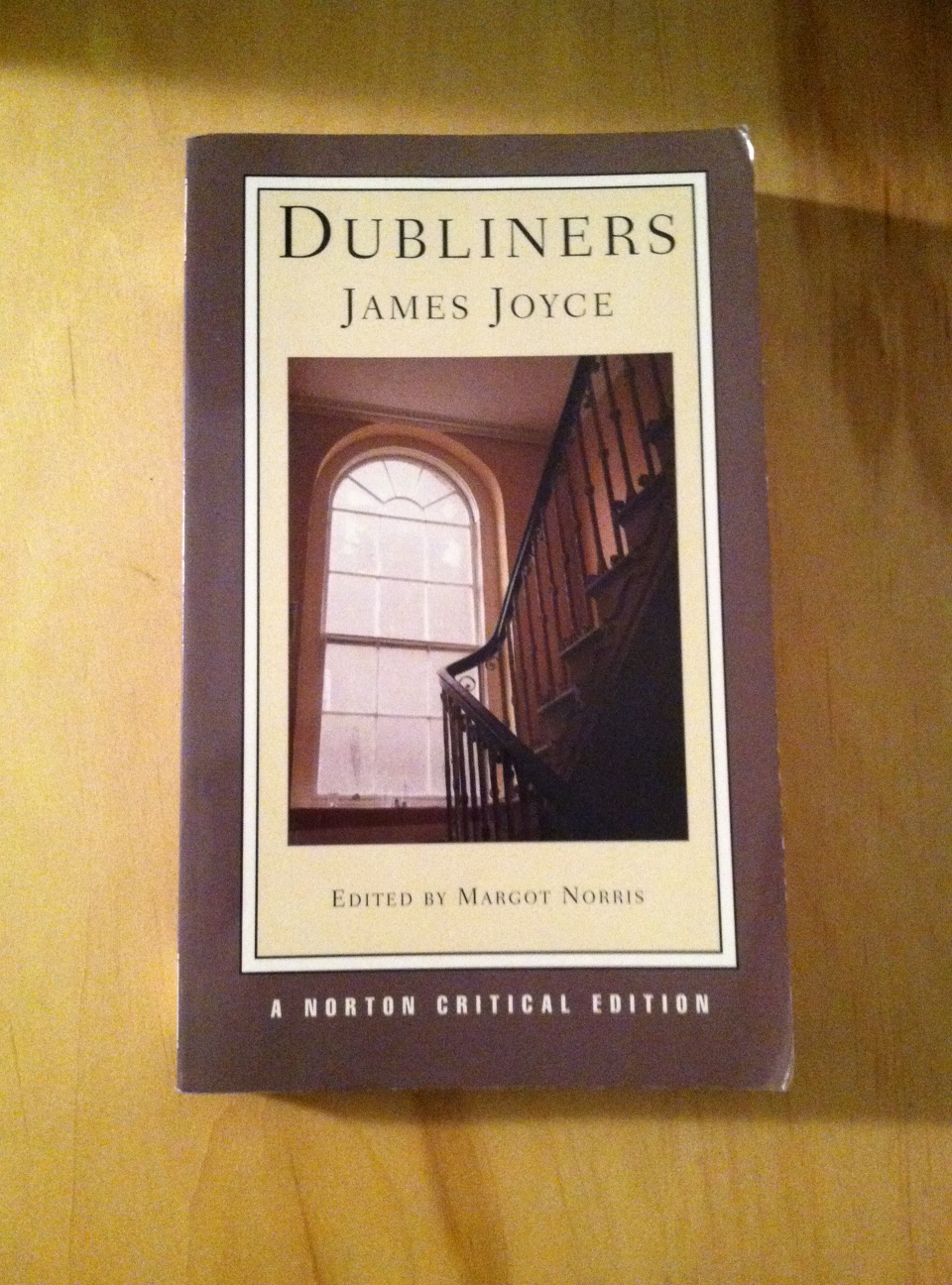
Dubliners

Dubliners is Joyce’s collection of short stories, a volume that ends with the sublime, wonderful, wintry, “The Dead.” I hope CJ thinks it’s the perfect Christmas present. Merry Christmas CJ! Can’t wait to host your review!

Sing O Muse: Paradise Lost Readalong 2014!

Yes, this is just a sample of my Milton collection.

Yes, this is just a sample of my Milton collection.

January 1 will mark this blog’s one-year birthday, and what better way to celebrate than with an epic (literally) readalong? I’m hosting a Paradise Lost readalong from January 1 to March 1, and I hope you’ll come along to brighten up the winter doldrums. I’ll be tweeting with the tag #ReadPL if you want to follow along.

Here’s the breakdown:

January 1: Introductory post

January 10: Books I & II reaction

January 20: Books III and IV reaction

January 30: Books V and VI reaction

February 10: Books VII and VIII reaction

February 20: Books IX and X

March 1: Books XI and XII; Wrap-up

Let me know in the comments if you’re interested, and I’ll link up to the participating blogs. Cheerio!