Recommended Reading: Katy Simpson Smith’s The Story of Land and Sea

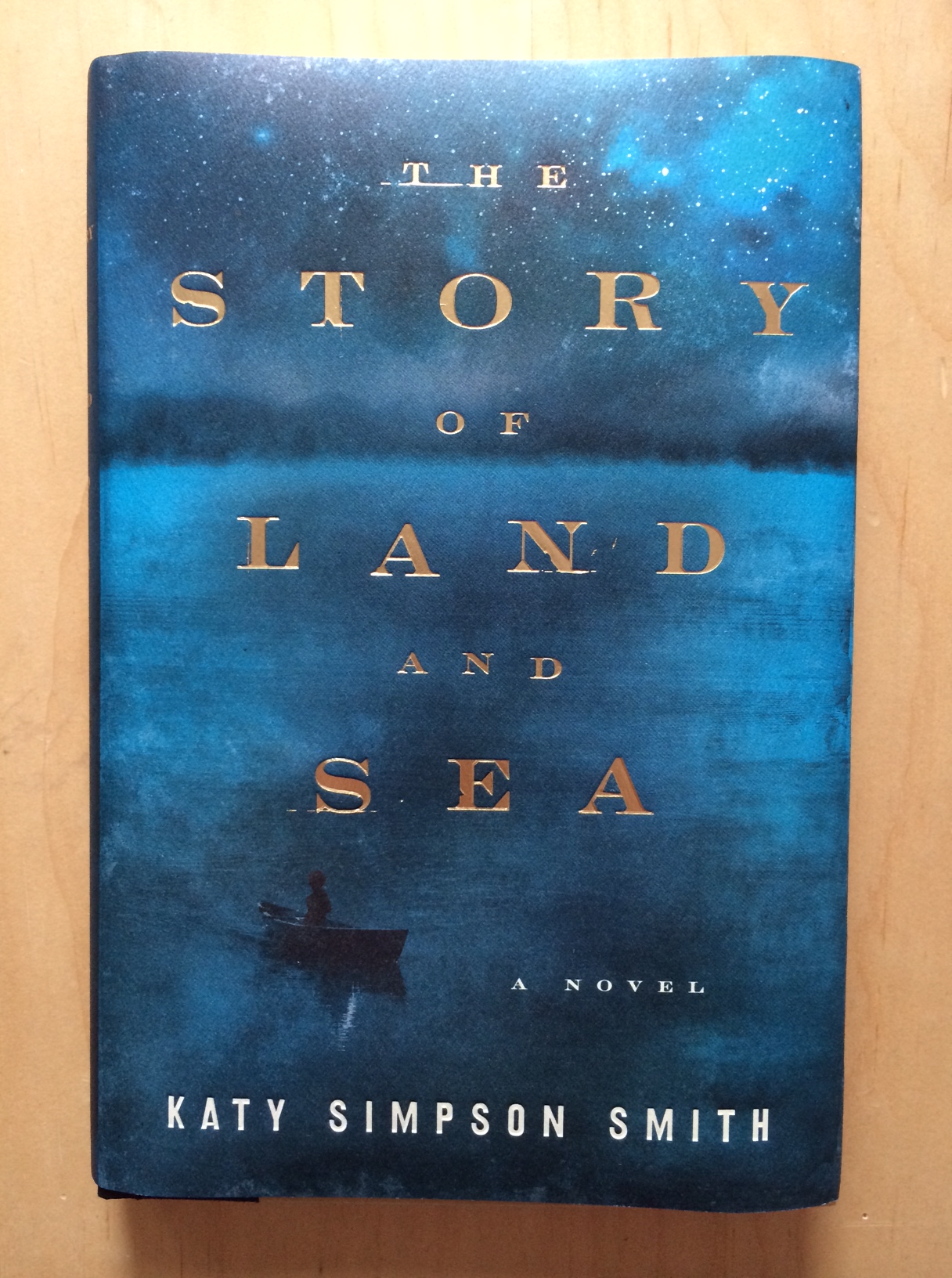
photo (116)Katy Simpson Smith’s luminous debut novel is The Story of Land and Sea*, a careful, spare tale of family in late-eighteenth-century America.

What interested me first in the novel was Paul Yoon’s advance praise; I loved his novel Snow Hunters, which was published last year. (Mr. Yoon teaches at the Bennington Writing Seminars, which Ms. Smith attended.) Like Snow Hunters, The Story of Land and Sea often reads like poetry; Ms. Smith’s prose is extraordinarily graceful.

Graceful and powerful, too — at a mere 240 pages, The Story of Land and Sea contains so much material that a lesser novelist might have molded it into a sprawling 500-page book, or even a trilogy. Yet Ms. Smith’s compact style is highly evocative and time and place, and studded with descriptive jewels.  For instance, one character picking roses “prefers the blossoms with petals tightly packed, like women’s skirts” (176-77); another “comes downstairs in bare feet, her head feeling crowded with sharp rocks” (18).

Told in three parts spanning twenty-odd years, the novel orbits around three parent-child pairings in a coastal North Carolina town: John and his daughter Tabitha, Asa and his daughter Helen (later John’s wife and Tabitha’s mother), and Moll and her son Davy.

John is a former pirate. Asa is a respected landowner. Moll is a slave — Helen’s slave.

These three parents love their children with ferocity, even in the face of overwhelming obstacles and losses. All the characters are rendered with compassion and imbued with full emotional ranges. The role faith (and despair) plays in the novel is incredibly nuanced, especially as it intersects with the most terrible of American institutions: slavery.

The Story of Land and Sea is a story of parents and children, but it is also a story of how America came to be, how a nation conceived in the hope of freedom came into the world blighted with the cancer of enslavement. It reveals the terrible price of the loss of empathy, or its fundamental lack.

Moll, who needs freedom most, is the least free of all the characters, so constrained that she cannot bring herself to love the children she bears after Davy:

Two years passed before her second child, and by then she understood that these babies belonged to someone else. Love was weakness. Love was acknowledging the rightness of the world, and this she could not do. The children were beautiful and they deserved affection and she would do her almighty best, but her firstborn son was the last thing she allowed herself to cherish. (167)

The Story of Land and Sea is an unflinching look at the worst and the best of human nature, a beautiful meditation on American origins, and a compelling family saga. Highly recommended reading.

*I received a copy of this book from the publisher for review purposes, which did not affect the content of my review.

In Brief: Essay Edition

The Empathy Exams: Essays*
by Leslie Jamison

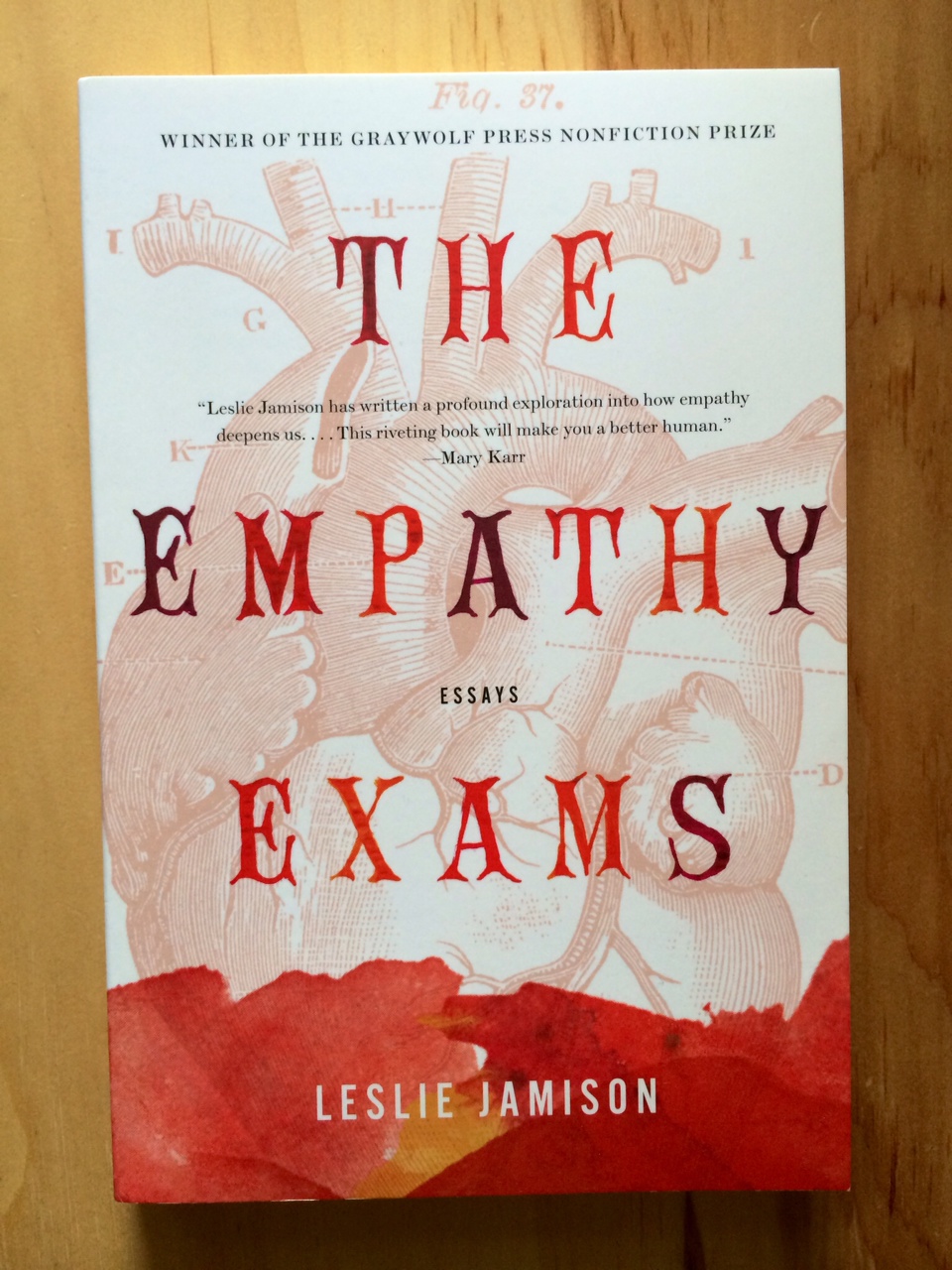
photo (111)Unless you’ve been hiding from all forms of media for the last few months, you’ve no doubt heard the overwhelming praise for this collection of essays, winner of Graywolf Press’s Nonfiction Prize. I am pleased to report that The Empathy Exams deserves all the good press.

In these intensely personal meditations, Ms. Jamison turns her sharp wits on herself, examining her experiences, faults, successes, and privilege as she writes about empathy and how we deploy it. Anyone who’s ever had a difficult experience conveying pain in a medical environment will find material of great interest here, but Ms. Jamison reaches beyond the medical in essays about prison, mining, an extreme endurance race, and the history of artificial sweeteners, among other topics. Her essays vary in length and form, expanding the parameters of the genre and allowing the reader the pleasure of wondering what will come next even as the insights from the previous essay are still being digested. The final essay, “Grand Unified Theory of Female Pain,” is a tour de force, and an absolute must-read.

Don’t Get Too Comfortable: The Indignities of Coach Class, the Torments of Low Thread Count, the Never-Ending Quest for Artisanal Olive Oil, and Other First World Problems
by David Rakoff

photo 5 (2)Last year, I reviewed David Rakoff’s 1997 collection, Fraud, which was in some ways responsible for me being forced to sit through a Steven Seagal marathon, and which is one of the funniest books I’ve ever read, so funny that it had me choking with laughter.

Don’t Get Too Comfortable (2005) finds Mr. Rakoff in a less jocular mood, skewering American consumerism in its many forms. Don’t get me wrong — a society that produces Hooters Air richly deserves skewering, but in these essays, laced as they are with humor, I felt a sense of bitterness, which simply wasn’t what I was expecting, though maybe I should have been, given the collection’s title. Still, essays on edible foraging in Central Park and the zaniness of fashion week are worth the price of admission.

*I received a copy of this book from the publisher for review purposes, which did not affect the content of my review.

Recommended Reading: Land of Love and Drowning, by Tiphanie Yanique

photo 3 (7)Tiphanie Yanique’s debut novel, Land of Love and Drowning*, is one of the most unusual and spellbinding family sagas I’ve ever read. Set over six decades in the Virgin Islands, the narrative revolves around two strikingly beautiful, and strikingly different, sisters.

Anette and Eeona are the children of one Captain Bradshaw and his wife Antoinette, two volatile people who keep secrets from each other, their children, and maybe even themselves. Both have high hopes and expectations when the Virgin Islands trade hands from Danish to American rule in the early 1900s, hopes that are dashed. Their children are left orphaned, and when Anette and Eeona begin to navigate their straitened financial and social circumstances, the story takes flight.

Though they’re both bound to love the wrong kind of man, the sisters are different in terms of temperament, tastes, education, and worldview. Heavily influenced by her mother, Eeona longs to escape from the Virgin Islands (and from the responsibility of raising Anette); she’s aware of her beauty’s perilous power, and takes care to isolate herself in many ways. Given her education and upbringing, it’s no surprise that the sections of the narrative written in Eeona’s voice showcase her careful choice of words and formal style.

Anette, on the other hand, is much more open and frank (with other people) than her sister. Her voice is rendered in dialect; she’s warm and funny and curious, open to all kinds of experiences, even if they land her in trouble. While Eeona is wary of love and male attention, Anette welcomes what comes her way, accepting the devotions of three very different, but good men.

What this review can’t convey adequately is the grace with which Ms. Yanique renders her portrait of the Virgin Islands in a century of upheaval and change (war, tourism, protest movements, and a hurricane all affect the characters), and the deft way in which she weaves magical realism into the narrative to explore characters and emotions.  Land of Love and Drowning is a beautiful, vibrant book, and I hope it brings more attention not only to the talented Ms. Yanique, but also to Caribbean literature.

Coming Soon: An Interview with Tiphanie Yanique, author of Land of Love and Drowning

*I received a copy of this book from the publisher for review purposes, which did not affect the content of my review.

Recommended Reading: Malcolm Brooks’s Painted Horses

photo 2 (18)Malcolm Brooks’s debut novel, Painted Horses*, is a Western that’s not limited to the West. It’s ambitious, engaging, and sure to be the start of a long literary career.

In 1956, graduate student Catherine LeMay is hired by the Smithsonian to spend a few months in Montana proving that a canyon set to be destroyed by a proposed dam isn’t the site of any artifacts of archaeological significance. Catherine made a name for herself in London, and wjile North American archaeology isn’t her field of expertise, she’s eager to prove up to the challenge, facing down doubts from her parents, her fiancé, and her colleagues.

In Montana, Catherine is daunted by the canyon “as deep as Satan’s own appetites” and finds her guide, a horse breaker named Jack Allen, more adversarial than helpful. Still, in the small town near the canyon she finds people sympathetic to her project: Mr. Caldwell, a gas station owner and former dam worker himself; Miriam, a young Native American woman with loyalties to both the past and the future; and John H, a mysterious horseman with a penchant for painting and a knack for coming across Catherine when she least expects it.

The novel revolves around Catherine and John H. Their histories are slowly revealed as their paths start to intersect, and it’s in John H’s sections that Mr. Brooks’s writing shines brightest. John H is in many ways a classic Western (and Hemingway) hero: strong, silent, skilled, and deeply wounded by what he’s witnessed. By giving John H an early life far from Montana, and war experiences in Europe, Mr. Brooks expertly shows the lure of the West as it was.

Painted Horses is a novel of competing interests, particularly the perils of preservation and progress. Catherine in some ways embodies this tension, focused as she is on preserving history, while at the same time, both as a woman in a male-dominated field and also as an Easterner acclimating to the West, embodying different kinds of progress. John H, too, appears as a relic of a way of life that’s dead or dying, while also carrying with him the scars of the modern world. Like the best literature, Painted Horses offers more questions than answers, and resists easy political interpretations by giving us Miriam, who whirls in traditional tribal dances but wonders whether her family, too, shouldn’t want power and light.

The novel is filled to the brim with beautiful scenery, and unexpected scenes; a woman lining her eyes with kohl, a grove of carved aspens, a particular hat trod underneath a horse’s hoof. Mr. Brooks pokes fun at some of the Western’s favorite tropes; for every laconic horse breaker or sheep herder in Painted Horses, there is a character who speaks in paragraphs, a loquaciousness that seems unusual and a bit funny. Also unexpected, but most welcome, are the novel’s many references to Basque culture and language.

Painted Horses is a pleasure to read, bringing together as it does painting, history, archaeology, horses, and landscape into sharp focus. It’s a gorgeous exploration of the American West on the knife’s edge of change.

Coming soon: An interview with Malcolm Brooks, author of Painted Horses

*I received a copy of this book from the publisher for review purposes, which did not affect the content of my review.

Literary Wives: The World’s Wife, by Carol Ann Duffy

literarywives2If you’re new to Literary Wives, here’s the summary: we’re an online bookclub of five to six book bloggers, and we post every other month about a different book with the word “wife” in the title. When we read these books, we have two questions in mind:

1. What does this book say about wives or the experience of being a wife?

2. In what way does this woman define “wife”—or in what way is she defined by “wife”?

This month, we’re talking about Carol Ann Duffy’s The World’s Wife, a 1999 collection of poetry.  We invite you to join the discussion by commenting on our blogs (links below) or posting your own review on our Facebook page.

We also hope you’ll join us next time, on Monday, October 6, when we’ll be discussing Melanie Gideon’s Wife 22.


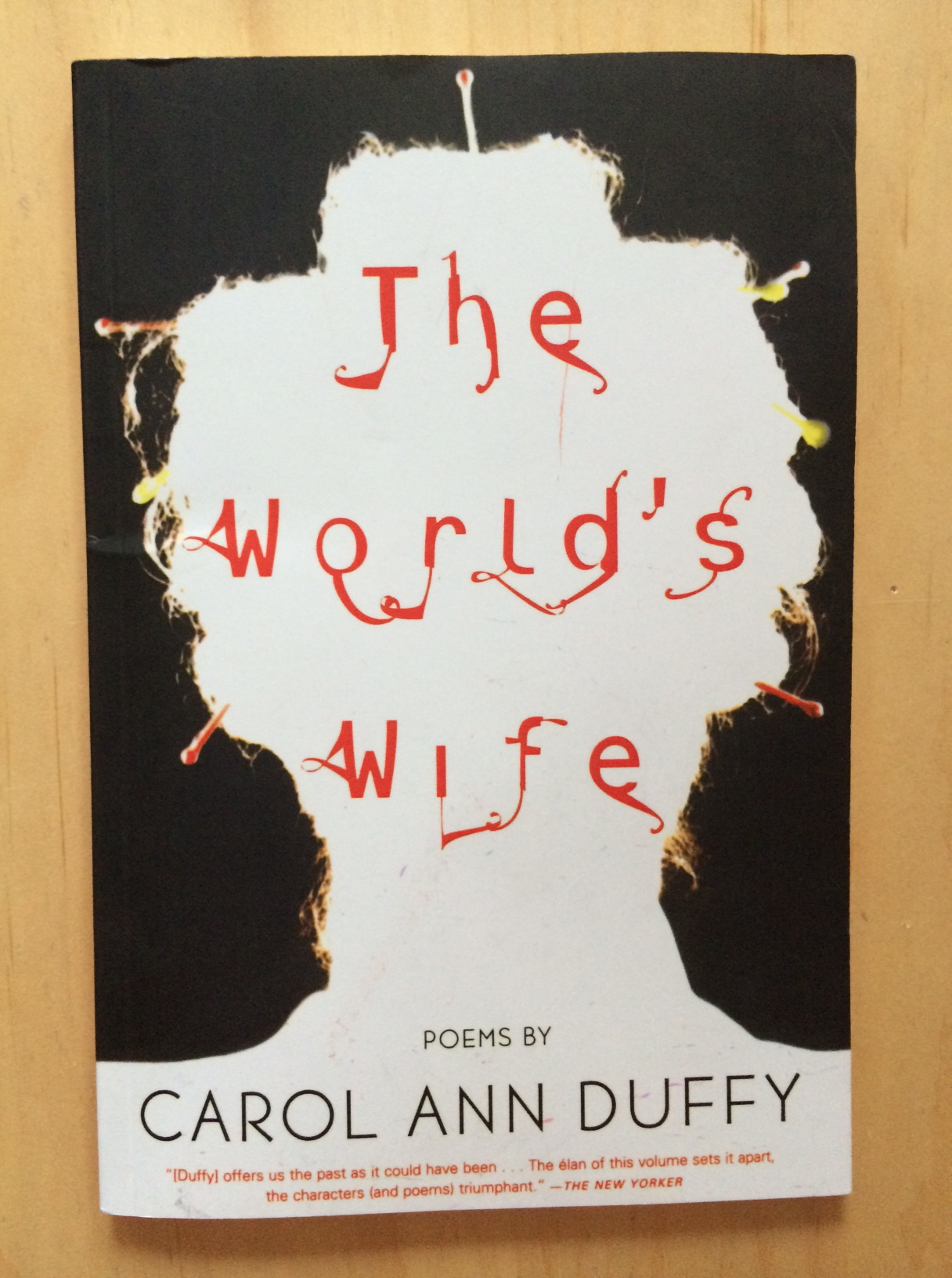
photo (112)Dear Readers, it will come as no surprise to you that I love Carol Ann Duffy. I’ve talked about her poetry in a couple of different contexts (here and here), and she’s one of the few writers whose work I’ll buy without reading reviews or flipping through pages. Several of the poems in The World’s Wife are included in Ms. Duffy’s Selected Poems, which is how I first learned of the book.

In The World’s Wife, Ms. Duffy imagines the voices of the women close to famous historical or cultural male figures (“Mrs. Lazarus”, “Frau Freud”) or the voices of the people those male figures might have been had they been female (so, “The Kray Sisters” instead of the Kray Brothers, “Queen Kong” instead of King Kong), or the voices of women whose stories have been rendered in men’s voices (“Delilah,” “Little Red Cap”).

The poems range from a few lines to a few pages long, but all of them feature Ms. Duffy’s trademark sharp wit, incisive language, and zinging, unexpected rhymes. These poems are often funny and always thought provoking, a glorious medley of feminist social commentary in an entertaining package.

Usually, this is the part of the post in which I’d address our Literary Wives questions, but since this book presents so many women, it would be folly to write about them all. In general, though, Ms. Duffy presents a picture of wifehood that is at once one of frustration and one of power; the invisible wives of history are, in The World’s Wife, fully imbued with agency, requiring our attention. Ms. Duffy asks us to consider what it would be like to mourn and grieve for a dead partner, only to have him reappear (“Mrs. Lazarus”) or what it would be like to be terrified that your husband might accidentally turn you into gold (“Mrs. Midas”).

Sometimes Ms. Duffy’s characters supply an answer to a vexing historical quandary. In “Anne Hathaway,” Shakespeare’s wife tells us exactly why her husband in his will left her “my second best bed.” Sometimes her speakers are drawn forward into the modern era. We see wily “Mrs. Faust” making use of her husband’s bargain, and witness “Mrs. Tiresias”‘s  exasperation when her gender-changing husband experiences menstruation for the first time (hint: a strongly-worded letter to “the powers that be” demanding paid menstrual leave ensues”).  These are “Bad girls. Serious women.” They’re not always women you’d like to meet, but they’re fascinating creations.

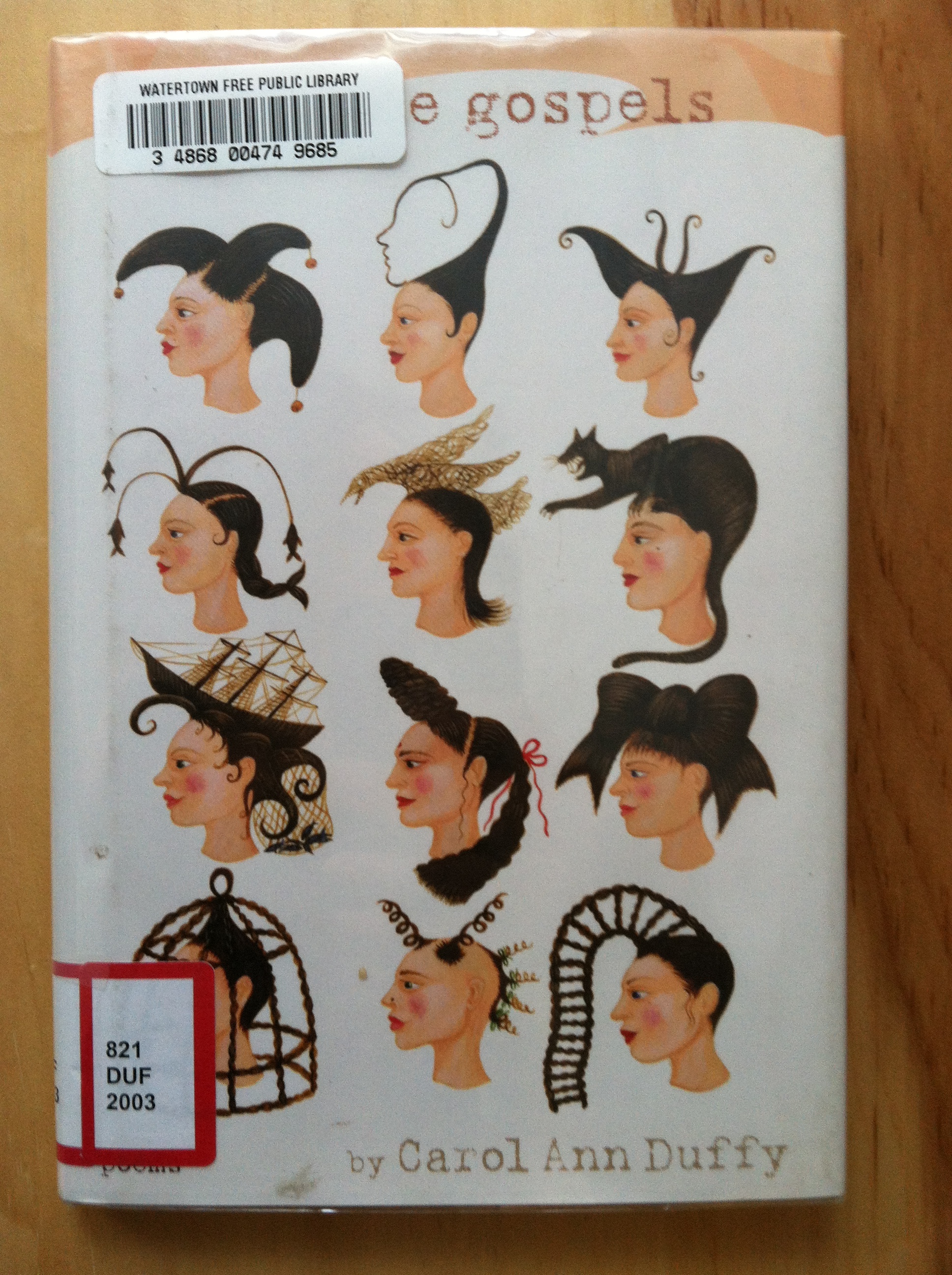
Feminine GospelsIf you loved The World’s Wife and are wondering which book to read next, I’m happy to recommend Ms. Duffy’s collection Feminine Gospels (2002), which you might consider a kind of follow-up to The World’s Wife. I read it recently and it was fantastic. Like The World’s Wife, the characters in the poems allow us entry into the world from a female perspective, though one much more everyday, not necessarily associated with names everyone knows. Feminine Gospels includes a long poem, “The Laughter of Stafford Girls’ High” which sparkles with wit and depth and character; I don’t usually go in for non-epic long poems, but this one is just fabulous.


Please visit the other Literary Wives bloggers to get their takes on the book! 

Emily at The Bookshelf of Emily J. 

Cecilia at Only You

Kay at WhatMeRead

Lynn at Smoke and Mirrors

(Ariel at One Little Library will be posting sometime in the next couple weeks)

(Audra at Unabridged Chick is on hiatus)

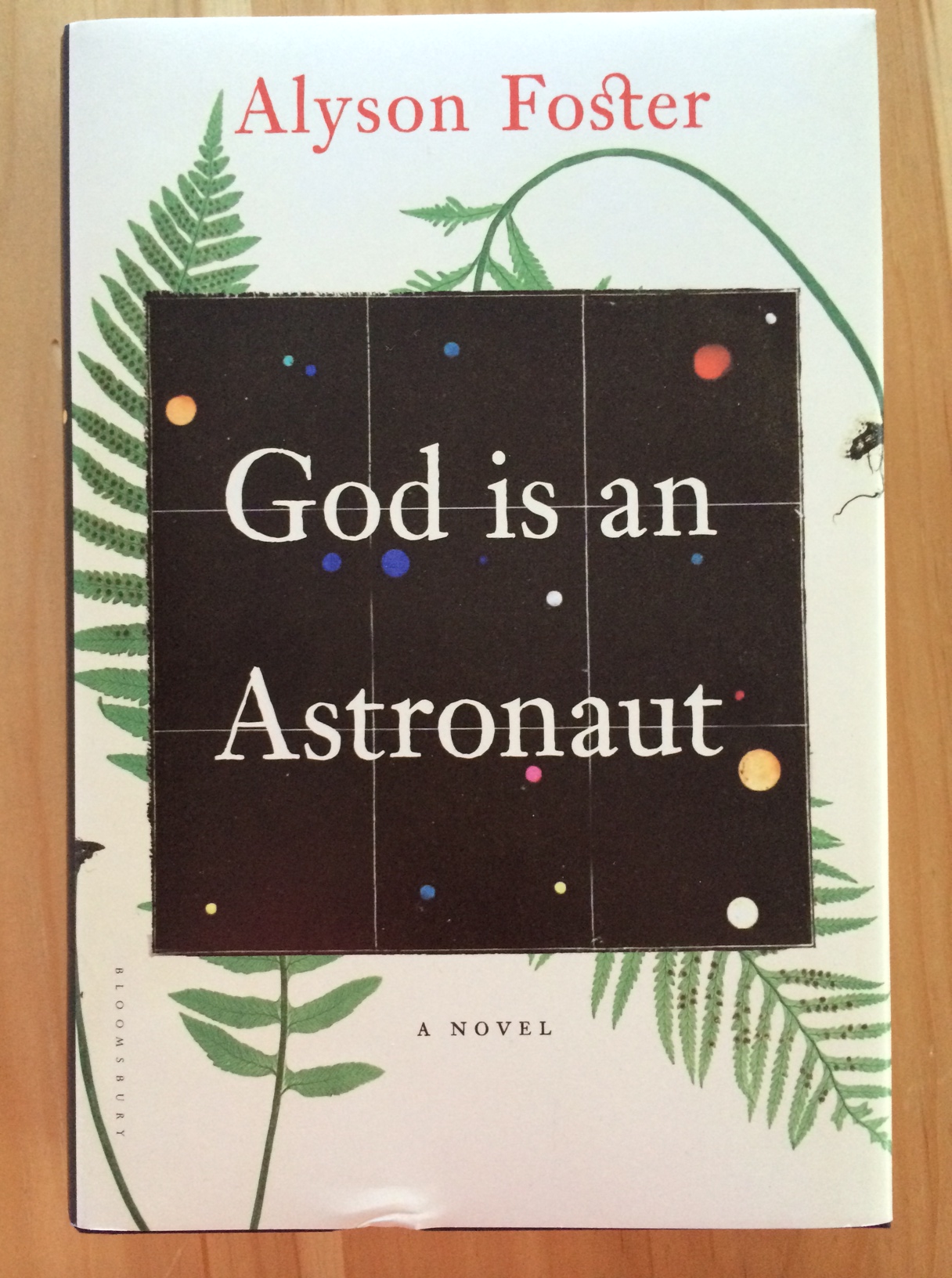
Recommended Reading: God is an Astronaut, by Alyson Foster

photo (109)Alyson Foster’s debut novel God Is an Astronaut* considers questions of personal and public ethics as its protagonist, Jess, sorts out the reverberations from several shocking events.

Jess is a professor of botany, and her husband, Liam, is an engineer and part of the leadership of a space tourism company; they live quietly with their two children in Michigan. When one of the company’s shuttles explodes just after takeoff, Liam and Jess’s lives are upended as the investigation into the cause of the crash begins.

We see events only from Jess’s perspective, because God Is an Astronaut is an epistolary novel, composed entirely of emails from Jess to her colleague and friend, Arthur (we never see Arthur’s replies — just his subject lines when Jess keeps an “re:” thread going). As Jess explains what life is like with constant media scrutiny, staged press conferences, and even a documentary crew underfoot, Ms. Foster gradually reveals the unraveling seams of Jess’s marriage, and the ways that she’s tied to Arthur.

The epistolary form creates both intimate and distancing effects. Because Jess (apparently unafraid of the NSA) shares with Arthur not only Liam’s company’s secrets, but also her own struggles and desires, and the mundane workings of ordinary life, the reader is drawn close, a feeling compounded by the voyeuristic pleasures of reading someone else’s mail.  On the other hand, Jess’s emails are both lengthy and extremely detailed, and it strains credulity that a busy working parent with a surly husband and a publicity crisis would have time to write such lyrical missives. This, combined with the effort required to imagine Arthur’s words from Jess’s replies, pushes the reader an arm’s length away from the material.

Nevertheless, the novel’s lyrical meditations on our responsibilities in the world — to our spouses, children, family, friends, colleagues, customers, the earth itself — are quite lovely. If you’re in the mood for an extended character study, or you’d like to feel better about not being able to afford a Virgin Galactic ticket, this is the novel for you.

*I received a copy of this book from the publisher for review purposes, which did not affect the content of my review.

Recommended Reading: George Prochnik’s The Impossible Exile

photo 1 (19)George Prochnik’s The Impossible Exile: Stefan Zweig at the End of the World* is an amalgam of forms, combining elements of biography, family history, intellectual and cultural history, and literary criticism.

Its subject is Stephan Zweig, an Austrian writer of prolific output who was one of the best-known cultural figures of his day. Zweig was a proponent of international humanism, a cosmopolitan in every sense of the word, a stalwart supporter of all the arts, a music aficionado, and mentor to many aspiring writers. His books — fiction and nonfiction — were the most widely translated of the 1930s and were more often than not bestsellers.

When the Nazis rose to power, however, Zweig (who was Jewish) found himself exiled from his beloved Austria, drifting from country to country, increasingly demoralized and depressed. In 1942, he and his wife killed themselves in a small Brazilian town.

On the surface, this was an inexplicable act. Zweig was only sixty. had just published two books (his memoir and a study of Brazil, a country he loved), was, by all accounts, deeply in love with his much-younger second wife, and was still one of the most popular authors in the world. The Impossible Exile seeks to understand his situation by exploring Zweig’s life, shifting cultural milieu, and his work.

photo 2 (16)

As you can tell from the photo above, I found this book utterly fascinating. I read Zweig’s biography of Marie Antoinette when I was a teenager, but at that time had no idea of the reach of his influence (or that he wrote with purple ink); The Impossible Exile was an education. Mr. Prochnik takes pains to provide a rounded portrait of Zweig that includes his many foibles and failures, as well as his brilliant successes. As Mr. Prochnik writes,

Zweig’s life illuminates abiding questions of the artist’s responsibilities in times of crisis: the debt owed one’s fellow sufferers relative to the debt owed one’s muse; the role of politics in the arts; and the place of art in education. His tale also raises questions of how we come to belong anywhere–of responsibility to family and ethnic roots relative to ideals of cosmopolitanism. (8)

For Mr. Prochnik, investigating Zweig’s life in exile has personal resonance, since his own father and grandparents fled Austria in 1938 to escape the Nazis. Too often, he writes, the successful escape is the story; we don’t read or hear about the particular experience of exile with its concomitant losses.

The Impossible Exile is a thoughtful, sensitive work, and highly recommended. I also recommend this excellent long review in the New York Review of Books, which also includes a brief discussion of Wes Anderson’s recent film The Grand Budapest Hotel, which inspired in many ways by Zweig and his ouevre.  (it’s an excellent movie; I love Wes Anderson movies, and The Grand Budapest Hotel represents real branching out for him).

If you’d like to read some of Zweig’s own work, I can recommend from personal reading experience his biography of Marie Antoinette; New York Review Books is also re-issuing some of his works in new translations.

*I received a copy of this book from the publisher for review purposes, which did not affect the content of my review.

An Interview with Rebecca Makkai, Author of The Hundred-Year House

Yesterday I reviewed Rebecca Makkai’s inventive and engrossing second novel, The Hundred-Year House.  Ms. Makkai graciously agreed to be interviewed via email. 

In the Acknowledgments that follow The Hundred-Year House, you write, “This book started as a short story about male anorexia.” Given that beginning, which section of the novel, or which character, came first?

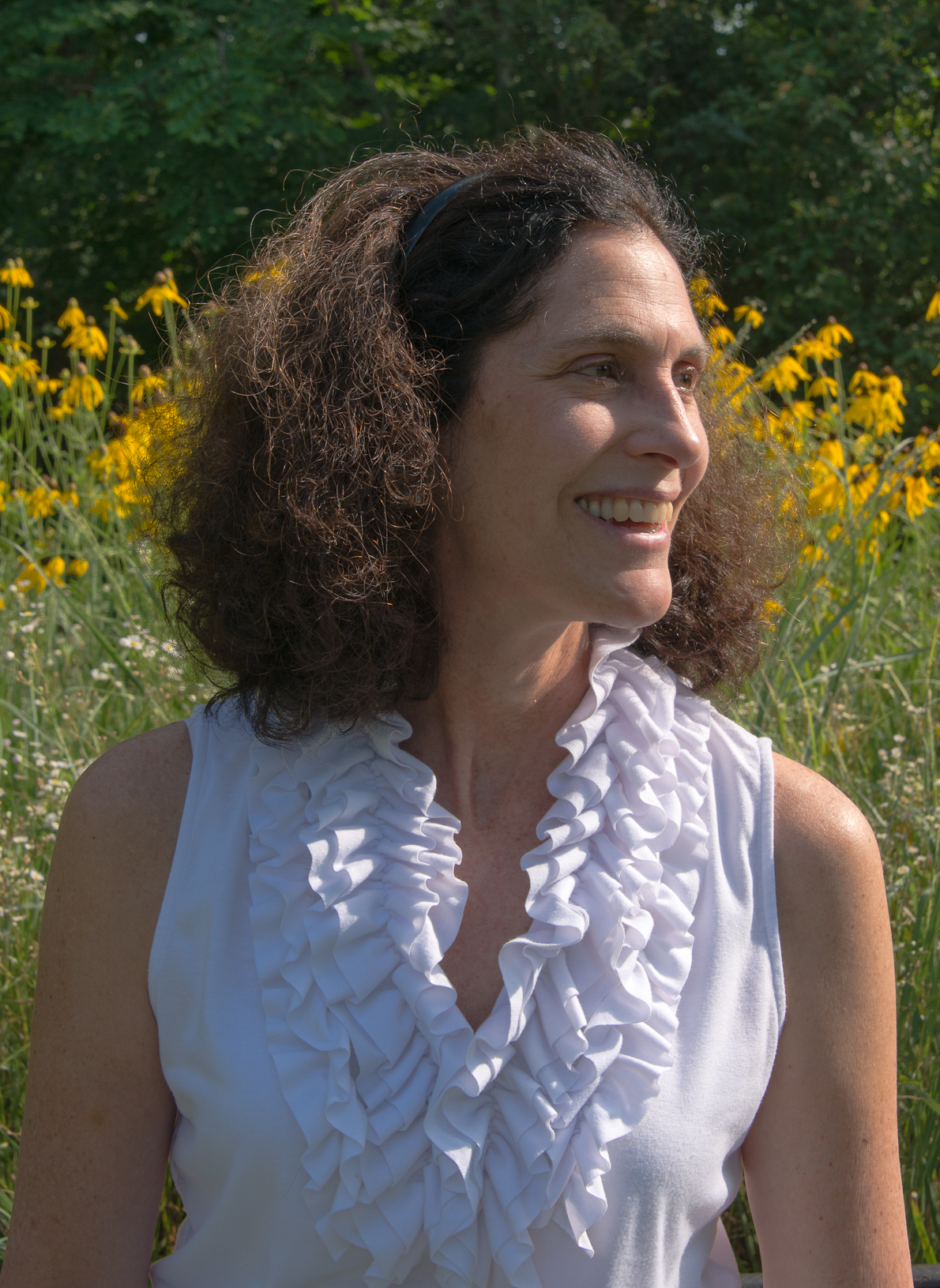
Rebecca Makkai Author photo (c) Philippe Matsas

Rebecca Makkai
Author photo (c) Philippe Matsas

RM: That short story was a small slice of what’s now the first (1999) section of the novel. There were two couples (Cameron and Z, and Steve and Miranda) living in a coach house. The fact that “Steve and Miranda” didn’t set Sex and the City alarm bells ringing should be a sign of how long ago this was… Cameron became Doug, Z became Zee (after I realized British readers would pronounce her name “Zed”), and Steve and Miranda became Case and Miriam. Steve was the anorexic, and Cameron – although he was working on ghostwriting children’s books, as he is in the novel – was primarily preoccupied with proving Steve’s anorexia to everyone else. It wasn’t a very good story.  

photo (108)How did the novel’s unusual structure fall into place?

RM: I set the short story aside for many years, and when I came back to it I realized it could be a novel – but I initially saw it all happening in that one time period. My own curiosity about what had happened in the past was what led me to open those doors and actually write about it… and so the backwards order of those sections was actually completely organic. There was a load of planning involved, it didn’t just come flying out, but the sections are ordered as they came to me.

At one point in The Hundred-Year House, there’s a distinction made between “haunted” houses and “haunting” houses. Is that a distinction readers are meant to make with regard to the characters, too?

RM: I suppose that’s true. As we go back in time and meet certain characters, it might become clear that they’ve been the ones haunting the previous sections of the book. And some characters are much more receptive than others to the haunting influence of the house (which often takes the form of ridiculous luck, whether good or bad). Case is a prime example, in the 1999 section – he’s like a lightning rod for the house’s energy.

Visual arts play an important role in The Hundred-Year House. How did you conceive of the different artworks?

RM: I wish I could be a visual artist—I have a lot of ideas for art—but my hands won’t execute what I see. So I have to settle for writing about it instead. Certain works in the book are modeled on real-life art, though; Zilla Silverman, an artist in the 1929 section, is partly based on Georgia O’Keeffe, and her works are similar to O’Keeffe’s.

Laurelfield was once an arts colony, and The Hundred-Year House is dedicated to Ragdale and Yaddo. Is the novel’s section about the arts colony drawn primarily from your own experience as a resident, or from research into early twentieth-century artists’ colonies, or both? Who are some of your favorite writers who stayed at artists’ colonies?

RM: I actually conceived of Laurelfield before I’d ever set foot at a residency. I started applying to them as I worked on this book not only because I needed the time and solitude to work (I have two small children) but because I felt like I needed to know that world better. I was not disappointed. And I was able to do a bit of research into the history of Yaddo while I was there, which informed the book enormously. In terms of who stayed at colonies… You’d be hard-pressed to find a major American artist of the last century who didn’t stay at an artists’ residency. There’s a library at Yaddo of books by past residents, and it’s basically just like a normal library. There’s practically no one missing.

What’s next on your writing horizon?

RM: My story collection, Music for Wartime, will be out next summer. And I’m working on a novel set in the Chicago art world amidst the AIDS crisis.

My thanks again to Ms. Makkai for her time and thoughtful answers. You can read more about Ms. Makkai, and The Hundred-Year House, on Ms. Makkai’s website, www.rebeccamakkai.com. Follow Rebecca Makkai on Twitter: @rebeccamakkai

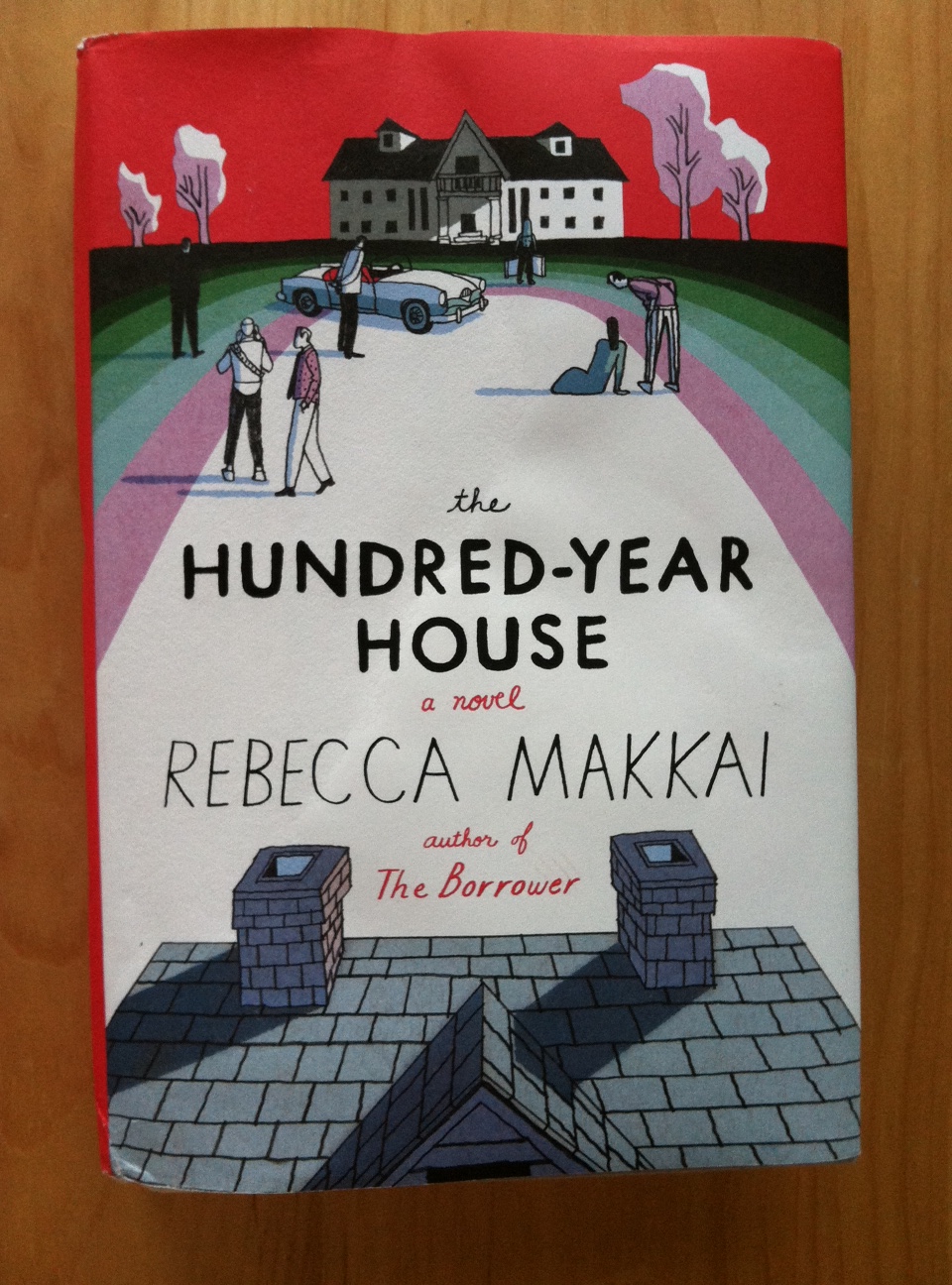
Recommended Reading: The Hundred-Year House, by Rebecca Makkai

photo (108)Like Proteus, the mythological figure invoked in one of her character’s poetry, Rebecca Makkai’s The Hundred-Year House* twists and turns, refusing to be confined to any one genre or style. And like Proteus, The Hundred-Year house refuses to tell the future; instead, it charts a way through the past.

The story begins — or rather, ends — with Zee and Doug, a married couple who’ve come to live in the carriage house that belongs to Zee’s mother, Gracie and stepfather, Bruce. Zee, a self-professed “Marxist literary scholar” (as a former-ish academic myself, I loved the intradepartmental sniping at Zee’s college), and her mother Gracie are Devohrs, members of a wealthy Canadian family that built an estate called Laurelfield near Chicago, one hundred years before Zee and Doug’s arrival. One of the Devohrs, Violet, is said to be a ghost who still haunts Laurelfield; a huge oil portrait of Zee’s great-grandmother still hangs in the house.

For about thirty years, Laurelfield was an art colony, and it just so happens that one of its major residents was the poet Edwin Parfitt, the subject of Doug’s research. Doug hopes that access to Laurelfield’s records will force him to finish his book, so that he can get a teaching job, instead of surreptitiously ghost-writing a series for middle-school girls. But there’s a catch or two: Gracie’s none too keen on allowing Doug to kick up dust in the attic, and Bruce’s son and daughter-in-law arrive and upend Zee and Doug’s attempted domestic bliss.

More than enough material for a novel there, right?  Yet Ms. Makkai gives us more: another section follows giving us scenes from Laurelfield in 1955; then another section about the arts colony in 1929; and a brief prologue set in 1900. Each section is written in a different style, and reveals a bit more of the Laurelfield puzzle, which is so tantalizing that I won’t say anything more about it.

Ms. Makkai’s writing is lively, engaging, and crisp, and her pacing is sublime. As I read The Hundred-Year House,  I was caught between the impulse to keep turning pages, impatient to learn more of Laurelfield’s secrets, and the inclination to pause over each page, to note a particularly well-crafted sentence or a telling detail. It’s a marvelous novel, and highly recommended.

Tomorrow: An interview with Rebecca Makkai, author of The Hundred-Year House

*I received a copy of this book from the publisher for review purposes, which did not affect the content of my review.

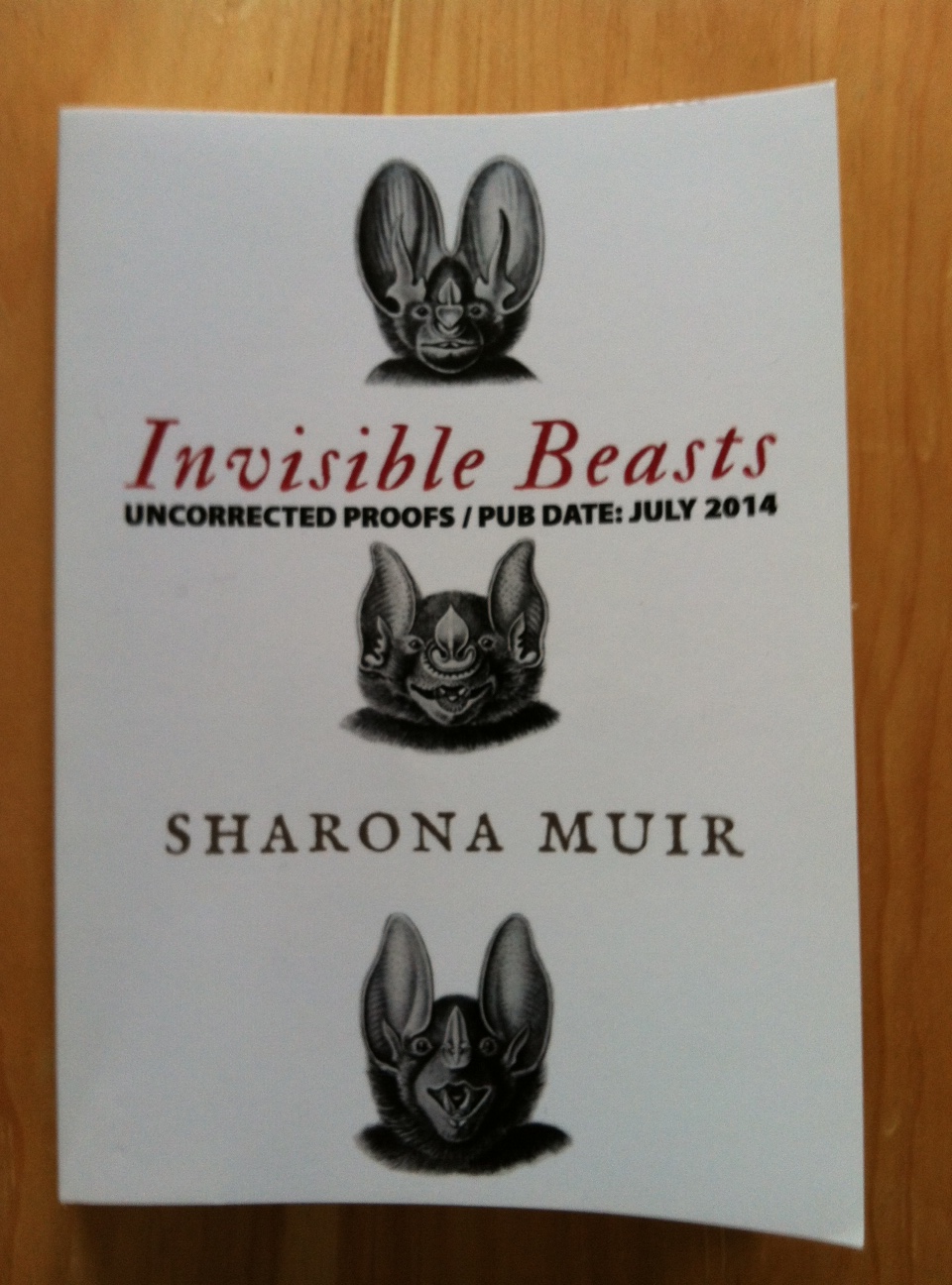
An Interview with Sharona Muir, Author of Invisible Beasts

On Monday I reviewed Sharona Muir’s imaginative debut novel, Invisible Beasts. Ms. Muir graciously agreed to be interviewed via email. 

Many of the chapters in Invisible Beasts started out as short stories. How did you go about linking them to form a novel?
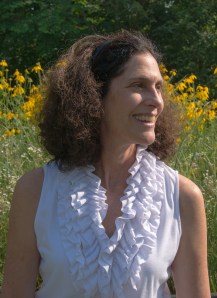
Sharona Muir Author Photo (c) Tom Muir

Sharona Muir
Author Photo (c) Tom Muir

SM: Actually, I thought of the entire work from the first as a bestiary – outside the “short story vs. novel” genre categories. As the question of point of view arose, not only for the action in the stories but also for the philosophical ideas behind them, I created the narrator, Sophie. In a medieval bestiary, the point of view is a given: it’s the anonymous voice of a medieval monk offering you all he knows about animals and their religious meanings. I needed some voice that had as much personality and authority, but updated. Sophie, like the good fictional character that she is, repaid me for her creation by providing all kinds of feelings, motivations, and insights that united the collection through her perspective.

For example, once I worked out her relationship with her biologist sister Evie – two brilliant sisters, one a straightforward scientist, the other endowed with a peculiar, poetic vision of living beings – the whole first section fell into place, followed by resonances of their back-and-forth throughout the book. Creating Sophie and Evie materialized the dialogue between imagination and science that is at the heart of the book, and makes it a cohesive novel.

That’s the long answer. The short answer is that as a longtime adorer of Italo Calvino’s work, in the back of my mind I had his novel, Cosmicomics, which is similar in structure and approach to Invisible Beasts: his narrator, the mysterious being called “old Qwfwq,” also unites a series of speculative tales.

Which of these invisible beasts first caught your eye (so to speak)? How would you describe the inception of the project?

photo (106)SM: I decided to have fun. I’d been reading Lynn Margulis’ and Dorion Sagan’s wonderful book, What Is Life? in which, among many other delightful moments, Margulis at one point more or less says that life is about bacteria. This made me laugh. So I wrote a short story, long since filed in my wastebasket, about imaginary bacteria called “Bedcrumbs” that, through elaborate chemical means, induce people to crave snacks after making love – in order to ensure the reproduction of their human hosts, of course. I had so much fun writing this silly tale that I couldn’t resist trying a few others, and when it was clear that I was inventing imaginary animals on a weekly basis, I started showing them to my biologist friends, and from there on we developed a game in which I’d try to create a scientific plausible, yet utterly and truly nonexistent imaginary animal. (I came close only once, Mother Nature having been at this game longer than me.) Although the project didn’t seem at all salable, I felt that I was paying a tribute to whatever blessed accident and evolutionary history had put me here, and was having too much fun to quit.

Invisible Beasts is not only a novel, but also a bestiary. Were you inspired by any medieval or modern bestiaries? Are there any you’d recommend to readers who enjoyed Invisible Beasts?

SM: Oh yes. Calvino’s Cosmicomics is charming, and a first-class example of what E.O. Wilson calls consilience, that is, unifying the arts and sciences. E.O. Wilson’s novel Anthill, in describing the empire of an imaginary species of super-ant, is as magnificently compelling as Gibbon crossed with H.G. Wells (or rather, with Wilson, the great ant maven of our time.) I was tremendously excited when I read Wilson’s excerpt from his book in The New Yorker: it showed that bestiary writing, involving knowledge of science — at least in popular form — by creative writers, was an important new development in the culture of letters.

As for the old stuff, my training in Renaissance literature meant that for years I’d carried Ariosto’s hippogryph in the back of my mind: this lion-tailed Pegasus is the weird apparition that Sophie sees at the end of the chapter called “Grand Tour Butterflies.” I looked at medieval bestiaries, too, naturally, but my favorite is Pliny the Elder’s Natural History. There is something seductive about an era when it was possible to imagine all knowledge collected in a single book (or several scrolls), and the straightfaced way in which Pliny, bless his stout Roman heart, mingles perfectly sound observations with what sounds like insane fantasy was in every way a model for my book.

Readers might know that you teach creative writing at Bowling Green State University. How has teaching influenced your own writing?

SM: There are two rewards to being a teacher.

The first is when, through learning how to explain literary mechanics to your students, you find yourself focusing on very simple and obvious things, because the basics of the craft are in their way extremely profound. I love working with beginners. It reminds me of the way a karate teacher whom I knew would say that the first thing you needed to do, after earning a black belt, was to revisit all the exercises of a white belt. Teaching my students keeps me aware of the basics, and their really endless depth.

The second reward is that of seeing a student become aware that he or she has an imagination, and has made it do something. We’re so saturated in intellectual passivity and laziness – in the instant gratification provided by digital technologies – that students often aren’t aware of how hard it is to make art, and how wondrous it is that you can. When they find out that they can do something hard, and that thanks to their effort, their imaginations have put something new in the world, the expressions on their faces make me very happy and honored to be a teacher. That energy certainly feeds my work.

Do you have a favorite endangered species you’d like to draw readers’ attention to, or an environmental project that addresses the values embedded in Invisible Beasts?

SM: Yes, I’d like to mention Wolf Park, in Battleground, Indiana.  This is a huge preserve for timber or gray wolves, which have been taken off the threatened and endangered species list.  I’m no expert on the politics or biology of that issue, but my husband, who photographs wildlife, and I have greatly enjoyed our visits to this preserve, managed by ethologists.  They keep a “tame” pack of wolves, meaning that the wolves will tolerate keepers under very specific conditions.  After seeing and learning about the wolves — their great strength, big bony heads, shrewd eyes, and the complexity of interactions among themselves – my 100-lb. German shepherd looked to me like a delicate flower of civilization and felt like a cousin.  This experience is very valuable for helping people understand wolves, and wildness generally, in concrete terms, with reference to the reality of the animals, and without romanticism.

At the same time, it’s clear that humans can’t resist making up stories of all sorts about animals, even ones as special and dangerous as wolves.  Everyone who gets to know the park wolves wants to offer names for new pack members or puppies, and becomes intrigued with the personalities of the wolves, as if they and we were all in a Hans Anderson tale together.  We can’t help being enchanted by other creatures.  We want them in our imaginations.  E.O. Wilson calls this “biophilia,” and it’s an aspect of human psychology that is central to my work.

What’s next on your writing horizon?

SM: Another bestiary!   Thanks for the pleasure of chatting with you.

[The pleasure was mine! –CO]

My thanks again to Ms. Muir for her time and thoughtful answers.