Recommended Reading: Land of Love and Drowning, by Tiphanie Yanique

photo 3 (7)Tiphanie Yanique’s debut novel, Land of Love and Drowning*, is one of the most unusual and spellbinding family sagas I’ve ever read. Set over six decades in the Virgin Islands, the narrative revolves around two strikingly beautiful, and strikingly different, sisters.

Anette and Eeona are the children of one Captain Bradshaw and his wife Antoinette, two volatile people who keep secrets from each other, their children, and maybe even themselves. Both have high hopes and expectations when the Virgin Islands trade hands from Danish to American rule in the early 1900s, hopes that are dashed. Their children are left orphaned, and when Anette and Eeona begin to navigate their straitened financial and social circumstances, the story takes flight.

Though they’re both bound to love the wrong kind of man, the sisters are different in terms of temperament, tastes, education, and worldview. Heavily influenced by her mother, Eeona longs to escape from the Virgin Islands (and from the responsibility of raising Anette); she’s aware of her beauty’s perilous power, and takes care to isolate herself in many ways. Given her education and upbringing, it’s no surprise that the sections of the narrative written in Eeona’s voice showcase her careful choice of words and formal style.

Anette, on the other hand, is much more open and frank (with other people) than her sister. Her voice is rendered in dialect; she’s warm and funny and curious, open to all kinds of experiences, even if they land her in trouble. While Eeona is wary of love and male attention, Anette welcomes what comes her way, accepting the devotions of three very different, but good men.

What this review can’t convey adequately is the grace with which Ms. Yanique renders her portrait of the Virgin Islands in a century of upheaval and change (war, tourism, protest movements, and a hurricane all affect the characters), and the deft way in which she weaves magical realism into the narrative to explore characters and emotions.  Land of Love and Drowning is a beautiful, vibrant book, and I hope it brings more attention not only to the talented Ms. Yanique, but also to Caribbean literature.

Coming Soon: An Interview with Tiphanie Yanique, author of Land of Love and Drowning

*I received a copy of this book from the publisher for review purposes, which did not affect the content of my review.

“Sometimes the most beautiful poetry can be about simple things, like a cat, or a flower or rain. You see, poetry can come from anything with the stuff of revelation in it. Just don’t let your poems be ordinary. Now, who’s next?”*

O Captain! My Captain!
by Walt Whitman

O Captain! my Captain! our fearful trip is done,
The ship has weather’d every rack, the prize we sought is won,
The port is near, the bells I hear, the people all exulting,
While follow eyes the steady keel, the vessel grim and daring;
But O heart! heart! heart!
O the bleeding drops of red,
Where on the deck my Captain lies,
Fallen cold and dead.

O Captain! my Captain! rise up and hear the bells;
Rise up—for you the flag is flung—for you the bugle trills,
For you bouquets and ribbon’d wreaths—for you the shores a-crowding,
For you they call, the swaying mass, their eager faces turning;
Here Captain! dear father!
The arm beneath your head!
It is some dream that on the deck,
You’ve fallen cold and dead.

My Captain does not answer, his lips are pale and still,
My father does not feel my arm, he has no pulse nor will,
The ship is anchor’d safe and sound, its voyage closed and done,
From fearful trip the victor ship comes in with object won;
Exult O shores, and ring O bells!
But I with mournful tread,
Walk the deck my Captain lies,
Fallen cold and dead.

_______________

“We don’t read and write poetry because it’s cute. We read and write poetry because we are members of the human race. And the human race is filled with passion. Medicine, law, business, engineering, these are noble pursuits, and necessary to sustain life. But poetry, beauty, romance, love, these are what we stay alive for. To quote from Whitman: ‘O me, o life of the questions of these recurring, of the endless trains of the faithless, of cities filled with the foolish. What good amid these, o me, o life?’ Answer: that you are here. That life exists, and identity. That the powerful play goes on, and you may contribute a verse. That the powerful play goes on and you may contribute a verse. What will your verse be?”*

–from Dead Poets Society, script by Tom Schulman

In Brief: Recent Works in Translation

Sworn Virgin*
by Elvira Dones
Translated from the Italian by Clarissa Botsford

photo 3 (6)In Albania’s mountains, there’s a tradition in which it’s possible for a woman to become a man. If a family loses all its men, to blood feud or war or sickness, a woman can step forward, put on men’s clothing, and live the rest of her life as a man. If, that is, she forswears sex, marriage, and children.

Elvira Dones, an Albanian writer, explores this phenomenon (which you can read about here) in the fictional Sworn Virgin, which was originally published in Italian.

We meet Hana as she’s preparing to leave her life in Albania — and her identity as Mark — behind for a new life in America. The transition is a difficult one in many respects, reflecting the terrible challenge she faced nineteen years earlier, when she became Mark.

At the time, Albania was under oppressive Communist rule, and Hana had left her mountain home, and her beloved aunt and uncle, to study literature in Tirana. For reasons that slowly become clear as the novel progresses, Hana puts aside her hopes and her ambitions, and becomes a chain-smoking, heavy drinking shepherd in a mountain village without modern amenities. And she lives as Mark until she simply can’t anymore.

Ms. Dones has a gift for slowly opening up her characters — Hana, her family, her romantic interests, her cousins who take care of Hana in America. Hana’s decision to become Mark isn’t fully explained until the end of the novel (and for this reason I don’t recommend reading the Foreword until you’ve finished the book), and it’s depicted with care and compassion. Equally compassionate is Ms. Dones’s exploration of how Hana adjusts to becoming a woman again, to gaining her independence, learning English, and navigating American customs as a newly-arrived immigrant. Sworn Virgin is a fascinating novel, and highly recommended.


The Burning of the World: A Memoir of 1914*
by Béla Zombory-Moldován
Translated by Peter Zombory-Moldován

photo (114)Part of a larger autobiographical work, this slim volume was found, painstakingly edited, and translated by the author’s grandson; it appears for the first time (in any language) thanks to New York Review Books Classics.

The summer of 1914 found Hungarian artist Béla Zombory-Moldován enjoying a holiday with friends. When the war broke, he was summoned for duty, leaving the holiday for home to gather supplies and bid his family and city farewell. Just a few weeks later, Zomobory-Moldován fought in one of the war’s earliest battles, in Galicia, where he and his men had to fashion dugouts in the absence of tools. He was very badly wounded, and returned to Budapest to recover from his injuries and shell-shock; he soon realized that nothing would be the same again.

The Burning of the World was eye-opening for me, presenting as it does an under-read national perspective (Hungarian) and since it recounts experiences on the Easter Front, when I (along with most readers, I suspect) am accustomed to reading memoirs of trench warfare on the Western Front. In addition, Peter Zombory-Moldován’s Introduction gives an excellent thumbnail sketch of Hungarian history and pre-war life, as well as answering the reader’s questions about his grandfather’s eventual fate.

As in many war memoirs, we see the poor decisions of superior officers that lead to senseless deaths, and the quick onset of disillusionment. The memoir has a modernist feel; the author writes in the present tense, and is focused on his own interiority as much as his surroundings. (In one section, his attempt to recover some pre-war spirit in one of his favorite haunts sounds like something from The Sun Also Rises.) Zombory-Moldovan’s descriptions are carefully constructed and highly memorable; he describes shell fire as “the sound of a watermelon being struck with a stick” (44).

The Burning of the World is essential reading for anyone with serious interest in the war, Hungarian history, or memoir. Highly recommended.


So Long, Marianne: A Love Story*
by Kari Hesthamar
Translated from the Norwegian by Helle V. Goldman
photo 4 (6)As we’ve established, I love Leonard Cohen, and I think the rest of the world should too. So Long, Marianne takes its title from one of his most famous songs; the subject of both the song and the book is Marianne Ihlen. Though Leonard Cohen features prominently in the publicity materials, this book is Marianne’s biography (she doesn’t meet Cohen until halfway through the book). Born into a middle-class family in Norway, as a young woman Marianne had a turbulent relationship with the novelist Axel Jensen, traveling with him through Europe and eventually settling on the Greek island of Hydra. The two married, but not long after Marianne gave birth to their son, Axel abandoned them. Leonard Cohen had met the Jensens before their separation and was immediately smitten with Marianne, and soon the two began a love affair that lasted throughout most of the 1960s.

Though reading about Marianne’s relationship with the self-obsessed Axel was often frustrating, I found this book to be an interesting portrait of life lived without the comforting certainties of long-term plans or even everyday routines. Marianne’s self-confidence, as it emerges after her separation and during her relationship with Leonard Cohen, is something to cheer for.

I also loved the details about life on Hydra during the 60s — the market, the local restina, even the weather. When Marianne and Axel arrived in the late 50s, it was rustic, with few foreigners living there; by the time Marianne moved away, Hydra was home to a thriving expatriate artists’ colony.

For Leonard Cohen fans, So Long Marianne features a small selection of previously unpublished material (letters, poems, photographs), and confirmation that yes, Leonard is the kind of man who treats women with kindness and respect, even at the end of a relationship. But we knew that already.

*I received copies of these books from their respective publishers for review purposes, which did not affect the content of my reviews.

Classics Club Spin # 7

Classics Club Spin #5 — which landed me with Great Expectations — was, to my surprise, a great success, and I liked reading The Iliad for Spin #6, so I’m throwing my hat into the ring again. Same list, just swapped in a new number 1.

Here’s my (randomly chosen) list, from my larger List o’ 51, for the Wheel of Fortune to choose from on Monday:

  1. Homer, The Odyssey
  2. Thomas Hardy, Tess of the D’Urbervilles
  3. Anne Brontë, Agnes Grey
  4. Nathaniel Hawthorne, The Scarlet Letter
  5. Henry Miller, Tropic of Cancer
  6. Ray Bradbury, The Martian Chronicles
  7. Margaret Atwood, The Blind Assassin
  8. Chinua Achebe, Things Fall Apart
  9. Sherwood Anderson, Winesburg, Ohio
  10. Robertson Davies, The Rebel Angels
  11. Edgar Lee Masters, Spoon River Anthology
  12. Willa Cather, O Pioneers!
  13. Wilkie Collins, The Woman in White
  14. Doris Lessing, The Golden Notebook
  15. Iris Murdoch, The Sea, The Sea
  16. James Baldwin, Another Country
  17. Wallace Stegner, Angle of Repose
  18. Flannery O’Connor, Wise Blood
  19. Sherman Alexie, The Lone Ranger and Tonto Fistfight in Heaven
  20. Vladimir Nabokov, Pale Fire

Wish me luck!

Recommended Reading: Malcolm Brooks’s Painted Horses

photo 2 (18)Malcolm Brooks’s debut novel, Painted Horses*, is a Western that’s not limited to the West. It’s ambitious, engaging, and sure to be the start of a long literary career.

In 1956, graduate student Catherine LeMay is hired by the Smithsonian to spend a few months in Montana proving that a canyon set to be destroyed by a proposed dam isn’t the site of any artifacts of archaeological significance. Catherine made a name for herself in London, and wjile North American archaeology isn’t her field of expertise, she’s eager to prove up to the challenge, facing down doubts from her parents, her fiancé, and her colleagues.

In Montana, Catherine is daunted by the canyon “as deep as Satan’s own appetites” and finds her guide, a horse breaker named Jack Allen, more adversarial than helpful. Still, in the small town near the canyon she finds people sympathetic to her project: Mr. Caldwell, a gas station owner and former dam worker himself; Miriam, a young Native American woman with loyalties to both the past and the future; and John H, a mysterious horseman with a penchant for painting and a knack for coming across Catherine when she least expects it.

The novel revolves around Catherine and John H. Their histories are slowly revealed as their paths start to intersect, and it’s in John H’s sections that Mr. Brooks’s writing shines brightest. John H is in many ways a classic Western (and Hemingway) hero: strong, silent, skilled, and deeply wounded by what he’s witnessed. By giving John H an early life far from Montana, and war experiences in Europe, Mr. Brooks expertly shows the lure of the West as it was.

Painted Horses is a novel of competing interests, particularly the perils of preservation and progress. Catherine in some ways embodies this tension, focused as she is on preserving history, while at the same time, both as a woman in a male-dominated field and also as an Easterner acclimating to the West, embodying different kinds of progress. John H, too, appears as a relic of a way of life that’s dead or dying, while also carrying with him the scars of the modern world. Like the best literature, Painted Horses offers more questions than answers, and resists easy political interpretations by giving us Miriam, who whirls in traditional tribal dances but wonders whether her family, too, shouldn’t want power and light.

The novel is filled to the brim with beautiful scenery, and unexpected scenes; a woman lining her eyes with kohl, a grove of carved aspens, a particular hat trod underneath a horse’s hoof. Mr. Brooks pokes fun at some of the Western’s favorite tropes; for every laconic horse breaker or sheep herder in Painted Horses, there is a character who speaks in paragraphs, a loquaciousness that seems unusual and a bit funny. Also unexpected, but most welcome, are the novel’s many references to Basque culture and language.

Painted Horses is a pleasure to read, bringing together as it does painting, history, archaeology, horses, and landscape into sharp focus. It’s a gorgeous exploration of the American West on the knife’s edge of change.

Coming soon: An interview with Malcolm Brooks, author of Painted Horses

*I received a copy of this book from the publisher for review purposes, which did not affect the content of my review.

If Roxane Gay is a Bad Feminist, Sign Me Up

photo 1 (20)The first time I saw the name Roxane Gay was on Facebook (see? It’s not altogether terrible). I’d just seen a trailer for The Help, and thought to myself: “Um, doesn’t that movie seem racist to anyone else?” A friend linked to a piece by Roxane Gay detailing her dismay over the film’s depictions of race in the 1960s south, which are, to say it in academic-speak, problematic. The essay was very, very good, and you can read it here.

Three summers later, it’s the year of Roxane Gay (or, at least that’s what I’m calling it). Her novel An Untamed State (review here) was published to critical acclaim this spring, and Bad Feminist* is available tomorrow. It’s a collection of Ms. Gay’s essays (most, if not all, previously published elsewhere), and you shouldn’t miss it.

Ms. Gay’s essays are short, intense views of a lively mind at work. They vary widely in tone, ranging from the hilarious (the world of competitive Scrabble) to the horrific (Ms. Gay’s traumatic experience of sexual assault as a girl). Her essay on rape culture, “The Careless Language of Sexual Violence,” in which she takes the New York Times to task (among others), ought to be required reading in high school (and, apparently, newsrooms).

Many of Bad Feminist‘s essays consider books, movies, and TV shows from the perspective of race or gender — Ms. Gay’s takes on The Hunger Games, Girls, and Django Unchained are a pleasure to read — showcasing Ms. Gay’s considerable prowess as a cultural critic. She is equally comfortable talking about “high” literary culture and Lifetime movies; this is the perfect book for anyone who’s a pop culture aficionado.

Here’s one of my favorite passages, on Quentin Tarantino:

But Django Unchained isn’t even really a movie about slavery. Django Unchained is a spaghetti western set during the 1800s. Slavery is a convenient, easily exploited backdrop. As with Inglorious Basterds using World War II, Tarantino once again managed to find a traumatic cultural experience of a marginalized people that has little to do with his own history, and used that cultural experience to exercise his hubris for making farcically violent, vaguely funny movies that set to right historical wrongs from a very limited, privileged position. (222)

Yes, yes, yes. Thank you.

Despite what the book’s title suggests, Ms. Gay is a wonderful feminist: engaged, interested and interesting, funny, respectful of others’ differing views. My politics overlap Ms. Gay’s, but not completely; even when we fundamentally disagree, I found much to consider in her arguments. Ms. Gay doesn’t espouse one right way of being feminist, and that’s a message we could all stand to remember. Bad Feminist is a book for feminists and for those who won’t call themselves feminists; it’s a book for everybody. Highly recommended.

*I received a copy of this book from the publisher for review purposes, which did not affect the content of my review.

A Not-Quite Reading List for the Centenary of World War I

All summer long, I’ve wanted to post a World War I reading list, a syllabus, if you will, of literature related to the Great War. Today would be the perfect day to post such a list, since it’s now officially 100 years since the war began.

When my list reached thirty titles, however, it became clear that a long post will have to wait until August. In the meantime, here’s a preview of some of the titles I’ll be talking about.

World War 1 Lit Collage__CarolynOliverIt’s my very first collage (as you can tell, I’m sure). I’m moving into the twenty-first century, Dear Readers.


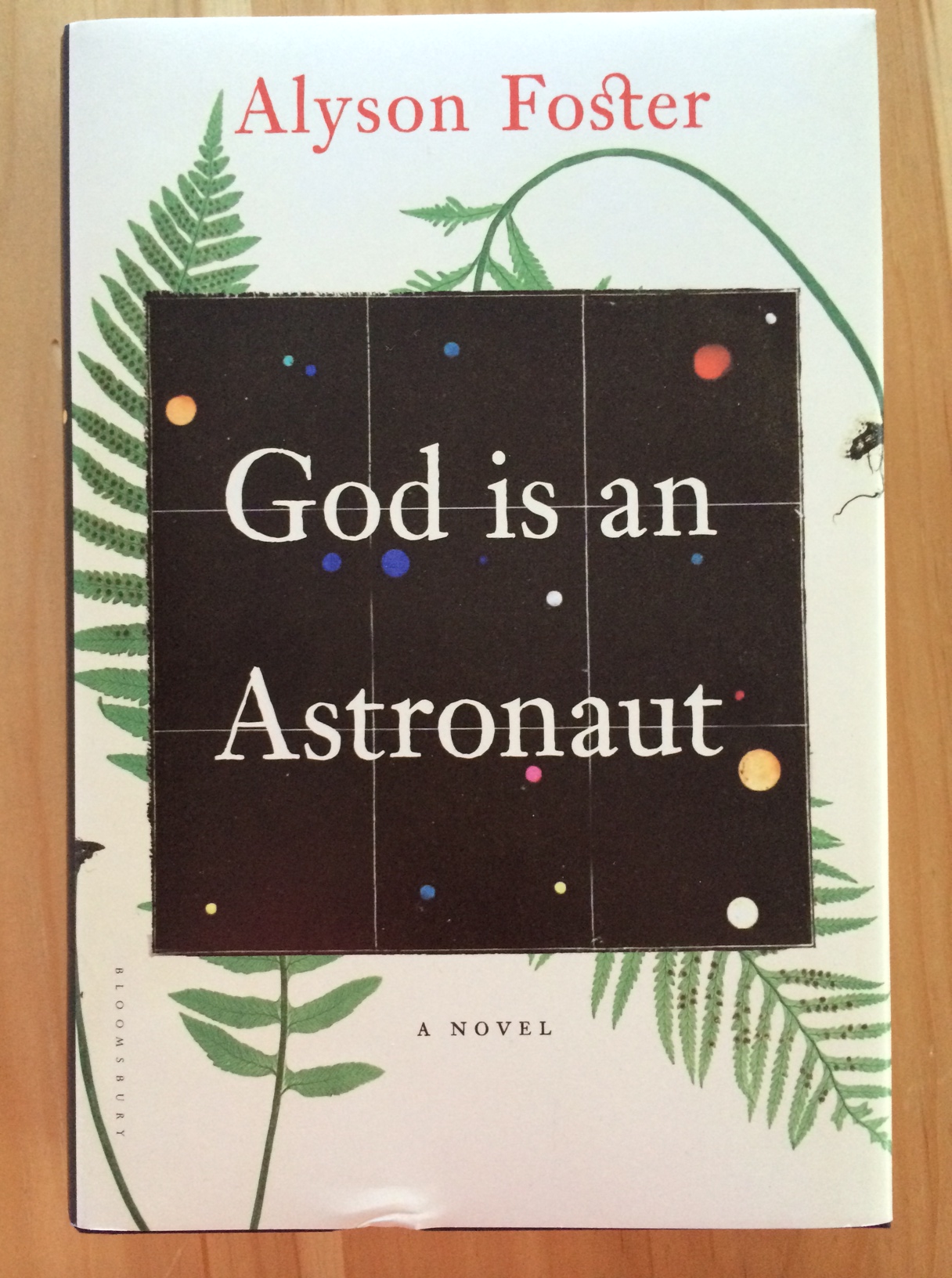
Recommended Reading: God is an Astronaut, by Alyson Foster

photo (109)Alyson Foster’s debut novel God Is an Astronaut* considers questions of personal and public ethics as its protagonist, Jess, sorts out the reverberations from several shocking events.

Jess is a professor of botany, and her husband, Liam, is an engineer and part of the leadership of a space tourism company; they live quietly with their two children in Michigan. When one of the company’s shuttles explodes just after takeoff, Liam and Jess’s lives are upended as the investigation into the cause of the crash begins.

We see events only from Jess’s perspective, because God Is an Astronaut is an epistolary novel, composed entirely of emails from Jess to her colleague and friend, Arthur (we never see Arthur’s replies — just his subject lines when Jess keeps an “re:” thread going). As Jess explains what life is like with constant media scrutiny, staged press conferences, and even a documentary crew underfoot, Ms. Foster gradually reveals the unraveling seams of Jess’s marriage, and the ways that she’s tied to Arthur.

The epistolary form creates both intimate and distancing effects. Because Jess (apparently unafraid of the NSA) shares with Arthur not only Liam’s company’s secrets, but also her own struggles and desires, and the mundane workings of ordinary life, the reader is drawn close, a feeling compounded by the voyeuristic pleasures of reading someone else’s mail.  On the other hand, Jess’s emails are both lengthy and extremely detailed, and it strains credulity that a busy working parent with a surly husband and a publicity crisis would have time to write such lyrical missives. This, combined with the effort required to imagine Arthur’s words from Jess’s replies, pushes the reader an arm’s length away from the material.

Nevertheless, the novel’s lyrical meditations on our responsibilities in the world — to our spouses, children, family, friends, colleagues, customers, the earth itself — are quite lovely. If you’re in the mood for an extended character study, or you’d like to feel better about not being able to afford a Virgin Galactic ticket, this is the novel for you.

*I received a copy of this book from the publisher for review purposes, which did not affect the content of my review.

Recommended Reading: George Prochnik’s The Impossible Exile

photo 1 (19)George Prochnik’s The Impossible Exile: Stefan Zweig at the End of the World* is an amalgam of forms, combining elements of biography, family history, intellectual and cultural history, and literary criticism.

Its subject is Stephan Zweig, an Austrian writer of prolific output who was one of the best-known cultural figures of his day. Zweig was a proponent of international humanism, a cosmopolitan in every sense of the word, a stalwart supporter of all the arts, a music aficionado, and mentor to many aspiring writers. His books — fiction and nonfiction — were the most widely translated of the 1930s and were more often than not bestsellers.

When the Nazis rose to power, however, Zweig (who was Jewish) found himself exiled from his beloved Austria, drifting from country to country, increasingly demoralized and depressed. In 1942, he and his wife killed themselves in a small Brazilian town.

On the surface, this was an inexplicable act. Zweig was only sixty. had just published two books (his memoir and a study of Brazil, a country he loved), was, by all accounts, deeply in love with his much-younger second wife, and was still one of the most popular authors in the world. The Impossible Exile seeks to understand his situation by exploring Zweig’s life, shifting cultural milieu, and his work.

photo 2 (16)

As you can tell from the photo above, I found this book utterly fascinating. I read Zweig’s biography of Marie Antoinette when I was a teenager, but at that time had no idea of the reach of his influence (or that he wrote with purple ink); The Impossible Exile was an education. Mr. Prochnik takes pains to provide a rounded portrait of Zweig that includes his many foibles and failures, as well as his brilliant successes. As Mr. Prochnik writes,

Zweig’s life illuminates abiding questions of the artist’s responsibilities in times of crisis: the debt owed one’s fellow sufferers relative to the debt owed one’s muse; the role of politics in the arts; and the place of art in education. His tale also raises questions of how we come to belong anywhere–of responsibility to family and ethnic roots relative to ideals of cosmopolitanism. (8)

For Mr. Prochnik, investigating Zweig’s life in exile has personal resonance, since his own father and grandparents fled Austria in 1938 to escape the Nazis. Too often, he writes, the successful escape is the story; we don’t read or hear about the particular experience of exile with its concomitant losses.

The Impossible Exile is a thoughtful, sensitive work, and highly recommended. I also recommend this excellent long review in the New York Review of Books, which also includes a brief discussion of Wes Anderson’s recent film The Grand Budapest Hotel, which inspired in many ways by Zweig and his ouevre.  (it’s an excellent movie; I love Wes Anderson movies, and The Grand Budapest Hotel represents real branching out for him).

If you’d like to read some of Zweig’s own work, I can recommend from personal reading experience his biography of Marie Antoinette; New York Review Books is also re-issuing some of his works in new translations.

*I received a copy of this book from the publisher for review purposes, which did not affect the content of my review.

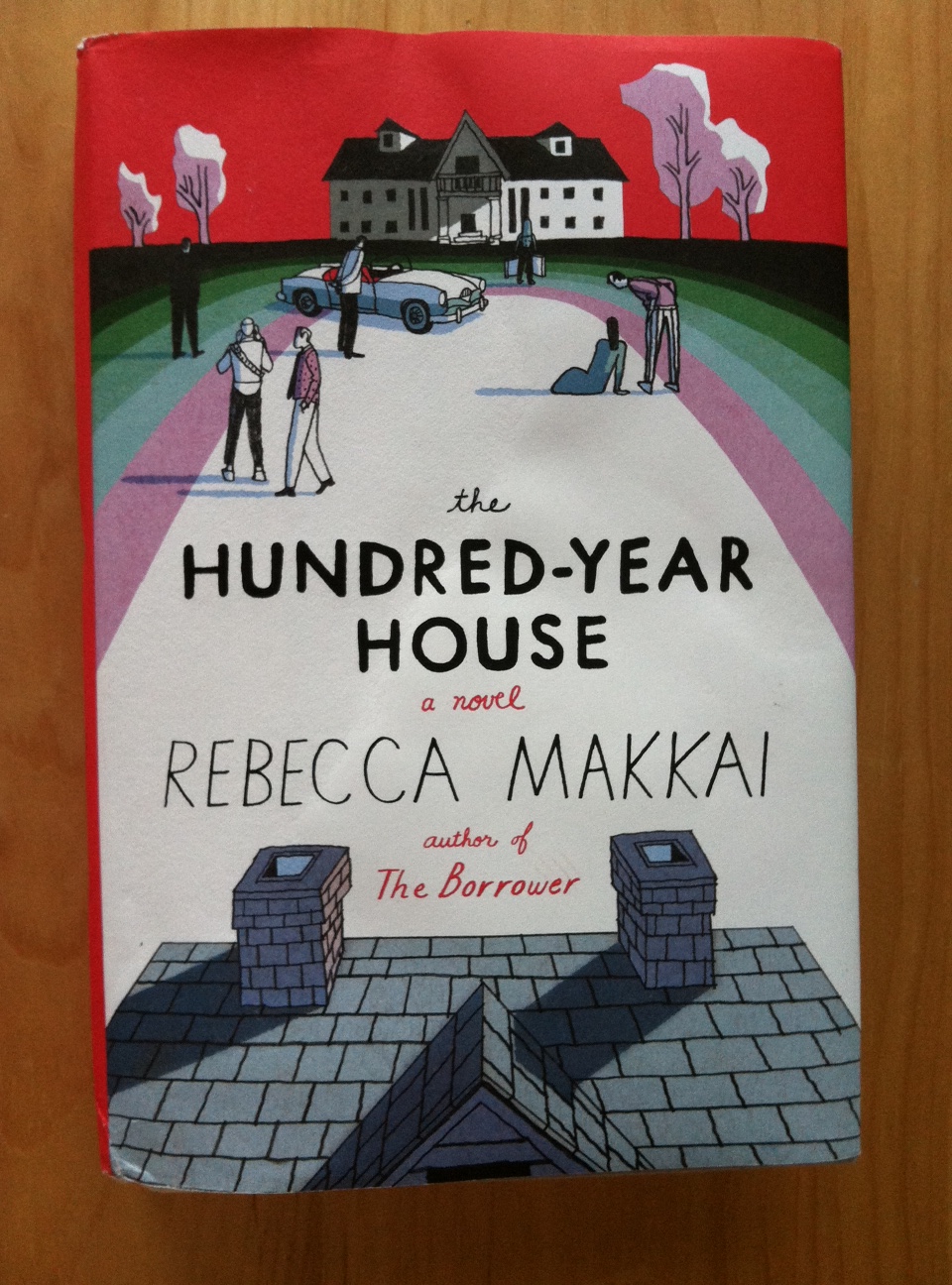
An Interview with Rebecca Makkai, Author of The Hundred-Year House

Yesterday I reviewed Rebecca Makkai’s inventive and engrossing second novel, The Hundred-Year House.  Ms. Makkai graciously agreed to be interviewed via email. 

In the Acknowledgments that follow The Hundred-Year House, you write, “This book started as a short story about male anorexia.” Given that beginning, which section of the novel, or which character, came first?

Rebecca Makkai Author photo (c) Philippe Matsas

Rebecca Makkai
Author photo (c) Philippe Matsas

RM: That short story was a small slice of what’s now the first (1999) section of the novel. There were two couples (Cameron and Z, and Steve and Miranda) living in a coach house. The fact that “Steve and Miranda” didn’t set Sex and the City alarm bells ringing should be a sign of how long ago this was… Cameron became Doug, Z became Zee (after I realized British readers would pronounce her name “Zed”), and Steve and Miranda became Case and Miriam. Steve was the anorexic, and Cameron – although he was working on ghostwriting children’s books, as he is in the novel – was primarily preoccupied with proving Steve’s anorexia to everyone else. It wasn’t a very good story.  

photo (108)How did the novel’s unusual structure fall into place?

RM: I set the short story aside for many years, and when I came back to it I realized it could be a novel – but I initially saw it all happening in that one time period. My own curiosity about what had happened in the past was what led me to open those doors and actually write about it… and so the backwards order of those sections was actually completely organic. There was a load of planning involved, it didn’t just come flying out, but the sections are ordered as they came to me.

At one point in The Hundred-Year House, there’s a distinction made between “haunted” houses and “haunting” houses. Is that a distinction readers are meant to make with regard to the characters, too?

RM: I suppose that’s true. As we go back in time and meet certain characters, it might become clear that they’ve been the ones haunting the previous sections of the book. And some characters are much more receptive than others to the haunting influence of the house (which often takes the form of ridiculous luck, whether good or bad). Case is a prime example, in the 1999 section – he’s like a lightning rod for the house’s energy.

Visual arts play an important role in The Hundred-Year House. How did you conceive of the different artworks?

RM: I wish I could be a visual artist—I have a lot of ideas for art—but my hands won’t execute what I see. So I have to settle for writing about it instead. Certain works in the book are modeled on real-life art, though; Zilla Silverman, an artist in the 1929 section, is partly based on Georgia O’Keeffe, and her works are similar to O’Keeffe’s.

Laurelfield was once an arts colony, and The Hundred-Year House is dedicated to Ragdale and Yaddo. Is the novel’s section about the arts colony drawn primarily from your own experience as a resident, or from research into early twentieth-century artists’ colonies, or both? Who are some of your favorite writers who stayed at artists’ colonies?

RM: I actually conceived of Laurelfield before I’d ever set foot at a residency. I started applying to them as I worked on this book not only because I needed the time and solitude to work (I have two small children) but because I felt like I needed to know that world better. I was not disappointed. And I was able to do a bit of research into the history of Yaddo while I was there, which informed the book enormously. In terms of who stayed at colonies… You’d be hard-pressed to find a major American artist of the last century who didn’t stay at an artists’ residency. There’s a library at Yaddo of books by past residents, and it’s basically just like a normal library. There’s practically no one missing.

What’s next on your writing horizon?

RM: My story collection, Music for Wartime, will be out next summer. And I’m working on a novel set in the Chicago art world amidst the AIDS crisis.

My thanks again to Ms. Makkai for her time and thoughtful answers. You can read more about Ms. Makkai, and The Hundred-Year House, on Ms. Makkai’s website, www.rebeccamakkai.com. Follow Rebecca Makkai on Twitter: @rebeccamakkai