“painted like a fresh prow / stained among the salt weeds”: H.D.’s “Sea Iris”

From our landlady's collection, which is also pretty great.

From our landlady’s collection, which is also pretty great.

One of the many great things about our little corner of neighborhood is the parade of gorgeous, multi-hued irises that line our neighbors’ walkway. The blooms are huge, big enough for me to see the splotches of color from my kitchen window, and they always make me happy. Here’s H.D.‘s imagist poem called “Sea Iris,” which I love.


SEA IRIS

I

Weed, moss-weed,
root tangled in sand,
sea-iris, brittle flower,
one petal like a shell
is broken,
and you print a shadow
like a thin twig.
Fortunate one,
scented and stinging,
rigid myrrh-bud,
camphor-flower,
sweet and salt—you are wind
in our nostrils.

II

Do the murex-fishers
drench you as they pass?
Do your roots drag up colour
from the sand?
Have they slipped gold under you—
rivets of gold?
Band of iris-flowers
above the waves,
you are painted blue,
painted like a fresh prow
stained among the salt weeds.


You can read more from H.D.’s collection Sea Garden at Project Gutenberg, here. 

“When lo! a sudden glory!”: Oscar Wilde’s “Vita Nuova”

Double Rainbow, Western Massachusetts (c) 2010 Carolyn OliverThis weekend I was thrilled to cheer the happy news out of Ireland, and while I was going to write about a different poem this week, I think a little Oscar Wilde is called for here, don’t you?

VITA NUOVA

I stood by the unvintageable sea
Till the wet waves drenched face and hair with spray;
The long red fires of the dying day
Burned in the west; the wind piped drearily;
And to the land the clamorous gulls did flee:
‘Alas!’ I cried, ‘my life is full of pain,
And who can garner fruit or golden grain
From these waste fields which travail ceaselessly!’
My nets gaped wide with many a break and flaw,
Nathless I threw them as my final cast
Into the sea, and waited for the end.
When lo! a sudden glory! and I saw
From the black waters of my tortured past
The argent splendour of white limbs ascend!

(from the 1881 poems)


“only by the wildflower meadow”: David Mason’s “In the Mushroom Summer”

A view from Rocky Mountain National Park

A view from Rocky Mountain National Park

Last week, we visited family and friends in Colorado, which was just delightful (I hope to write a book-themed post about the trip, but you know my track record on posts I plan to write). The scenery is gorgeous, of course, and we were treated to quite an array of weather, starting with heavy snow and including rain, mist, thunderstorms, and brilliant sunshine.

I just came across this little poem by David Mason, called “In the Mushroom Summer,” that gives a good sense of what the mountain landscape looks like in the rain. I love the way the speaker knows how high he’s climbed only by the sight of the flowers in an alpine meadow.

Do tell: Do you have a favorite poem about a place you’ve traveled?

“the whole stunning contraption of girl and rope”: Gregory Pardlo’s “Double Dutch”

photo (41)This year’s winner of the Pulitzer Prize for poetry is Gregory Pardlo, who is the author of two books of poetry (Totem and Digest) and the recipient of many awards. In its citation, the Pulitzer committee called the collection “clear-voiced poems that bring readers the news from 21st Century America, rich with thought, ideas and histories public and private.”

Now, as is often the case, I find myself not well enough acquainted with this poet, but I’m going to be on the lookout for his books, especially after reading “Double Dutch,” which is gorgeous, and I’m quite sure the best poem about jump-roping ever written. Like the ropes crossing over each other as the girls turn them, each line of the poem crosses another. What Mr. Pardlo does with light in this poem is stupendous; a painter could make a series out of the images without ever seeing the subjects of the poem in the flesh.

[Note to the Dear Readers: I’m trying an experiment this week wherein the weekly poetry post appears on Thursday and the usual book review/recommendation appears on Tuesday. I’m pretty confident that this will affect absolutely nobody’s life, but if you hate or love the new arrangement, please let me know.]

A Bookish Weekend, with Sonnets

I hope you are enjoying very fine weather, Dear Readers, as we are here in Boston. This past weekend was just gorgeous, and full of bookish delights. First, on Friday night, my friend A. came over and we had this exchange (paraphrased from memory):

Me: I’d like to see that new Thomas Hardy movie that’s coming out.

A: Aren’t there something like three Tom Hardy movies coming out this summer?

Me: ???

A: You know, the actor who was in the Batman movie?

Me: I meant the nineteenth-century novelist.

A: Oh . . .

And then I fell into a paroxysm of laughter as I imagined the kind of world in which three Thomas Hardy movies would come out in one summer. It was amazing. (A has a PhD in English literature, by the way.)

Then there was Independent Bookstore Day, which we celebrated over at Harvard Bookstore:
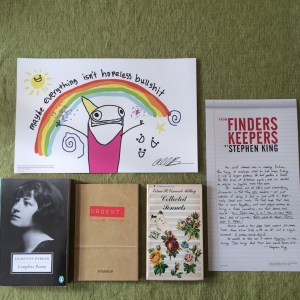
photo (37)

I was telling my grandpa about the bookstore and he pointed out that when my siblings and I were kids (lo these many years ago), he used to pick out books for us at the very same one (“It’s come full circle” were his words).

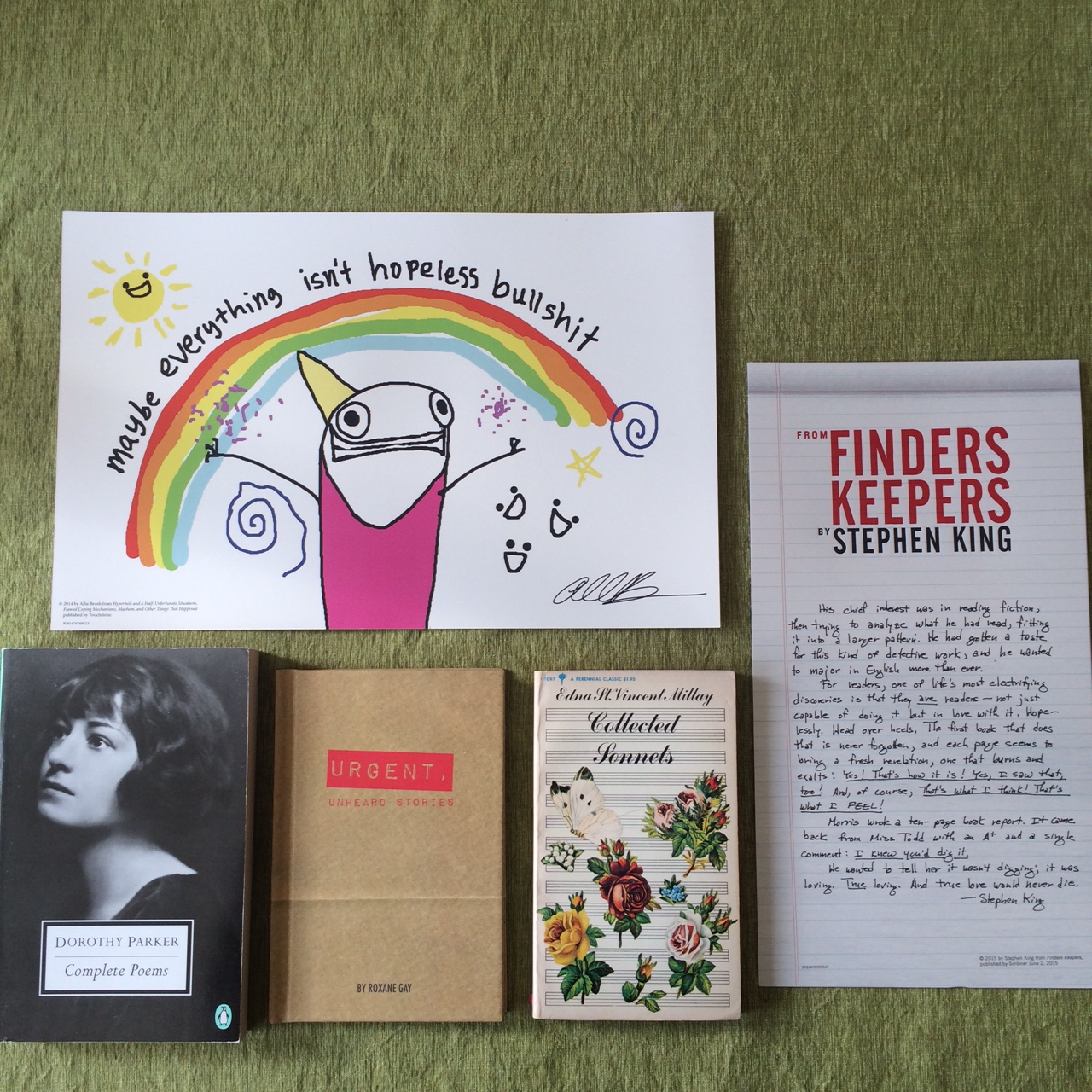
I read the Roxane Gay book Saturday night (mini review to come at some point in the next month or so) and flipped through my new poetry books on Sunday, when I also squeezed in a bit of Kate Atkinson’s latest novel, which I’m hoping to finish this week.
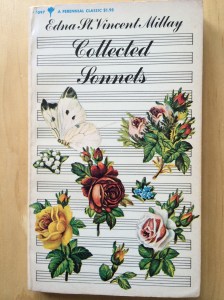
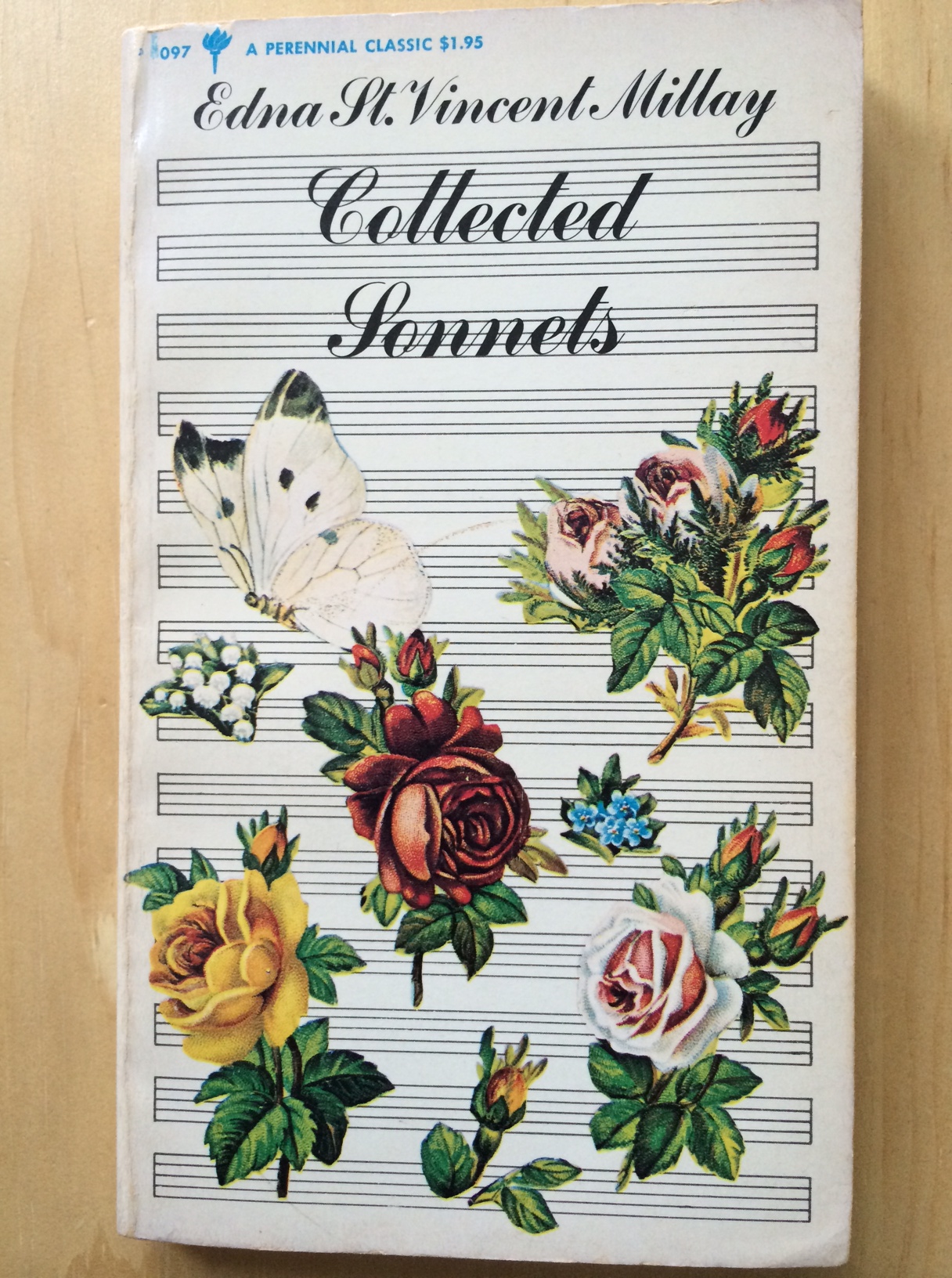
photo (38)As you can see from the picture above, one of the books I picked up at Harvard Bookstore was this vintage (that cover!) Harper Perennial pocket edition of Edna St. Vincent Millay’s Collected Sonnets (chosen by the poet herself, apparently). I love the look and the weight of the volume.

Millay was one of the first poets I discovered for myself; on a whim, I picked up a copy of her Selected Poems at Half Price Books when I was in high school, and that book has been with me ever since. She was a brilliant poet (though at times uneven), both earnest and jaunty, heartbroken and carefree. She was straightforward and often very funny, and her biography reads like a novel, which for me made her poems all the more enticing.

There’s plenty to choose from when it comes to her sonnets. The one that begins, “What lips my lips have kissed” is one of the few poems I have memorized that’s always “stuck” (I don’t need to re-memorize it from time to time), and of course it’s very famous. For a bit of a wider range, head over to The Poetry Foundation, which here gives a group of four sonnets from 1922. 
“a flower sprang, lilylike, more brilliant / than the purples of Tyre”: Louise Glück’s “Hyacinth”

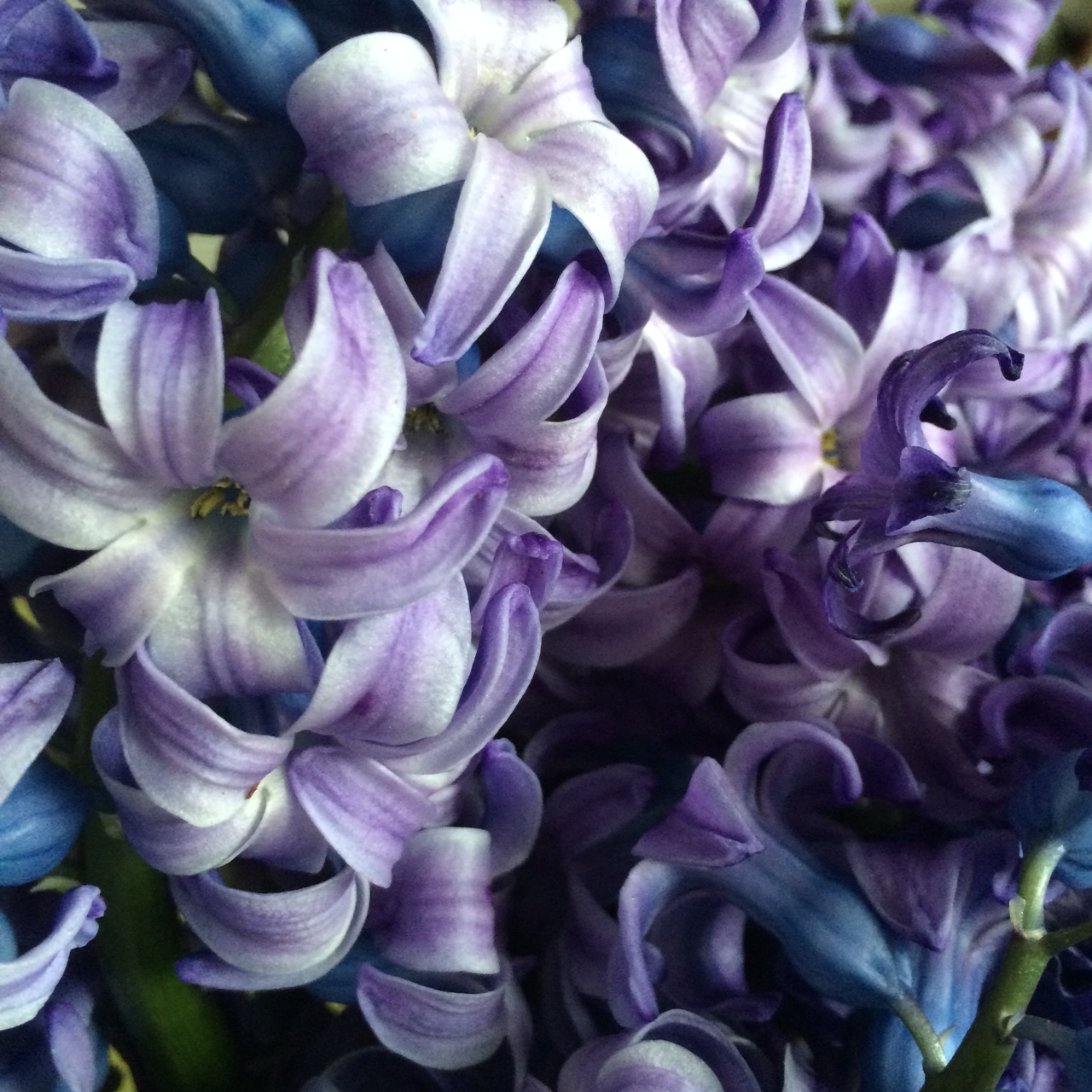
photo (35)I wish I’d been able to celebrate National Poetry Month with more fanfare, Dear Readers—next year, I hope, will be different—but I hope you’ve had the chance to read a poem or two more than usual. In fact, I’d love to hear about what you’ve been reading, so please let me know in the comments which poems you’ve liked recently (slow to respond though I am, always begging your pardon).

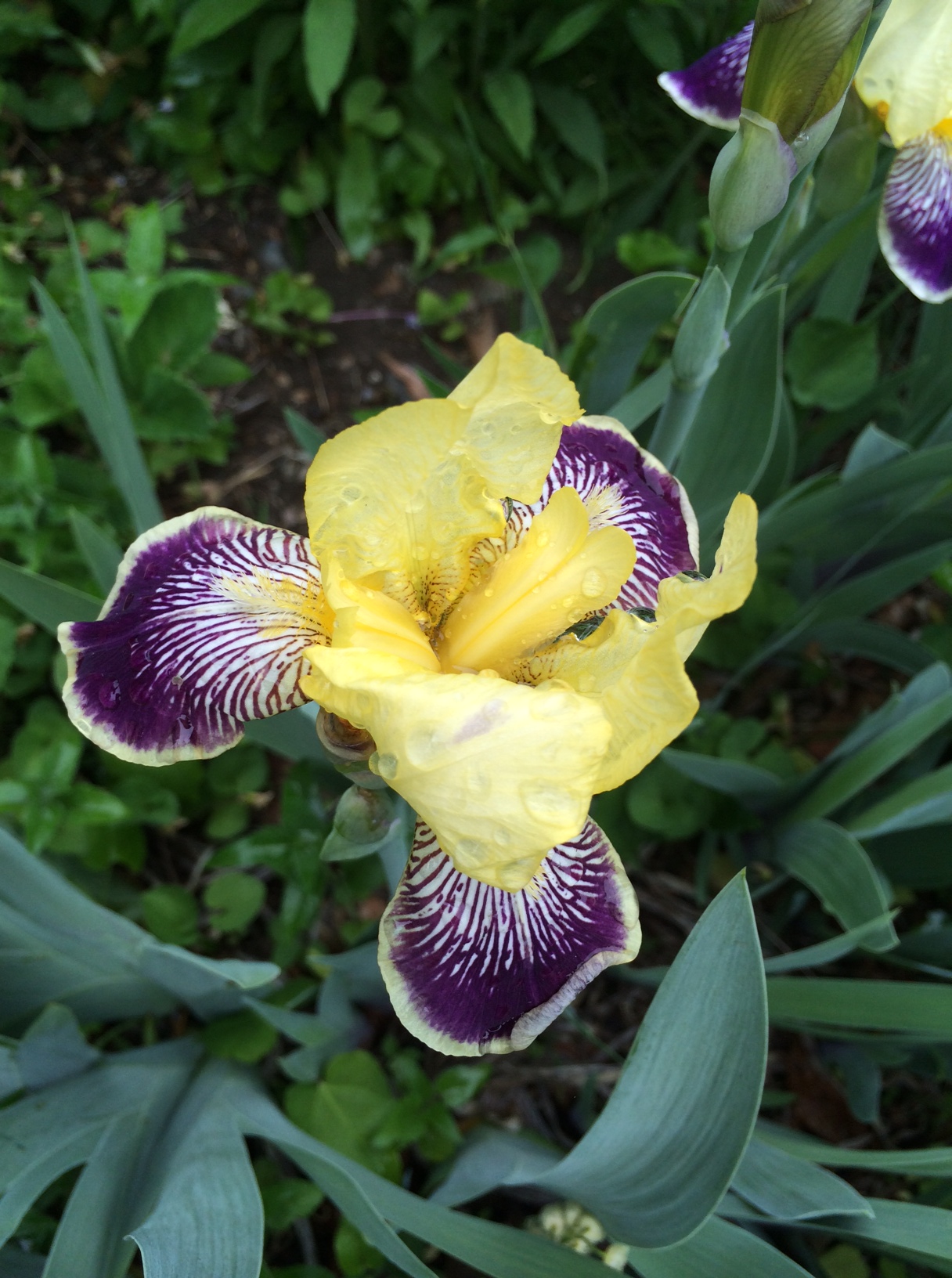
This past weekend friends visited us for dinner and conversation, and brought with them beautiful stems of hyacinth from their garden. The whole apartment smells like spring. It happens to be one of my very favorite flowers, so here is a poem by one of my very favorite poets, Louise Glück, to go with it, though I think you’ll see that her poem is much more somber than the flower.

“‘What do you hate, / and who do you love?'”: Taha Muhammad Ali’s “Meeting at an Airport”

Since it’s National Poetry Month, I’ll once again recommend The Poetry Foundation’s app (conveniently called Poetry) if you’re looking for a little more poetry in your life (and who isn’t?). It’s perfect for a little pick-me-up when you’re feeling stressed, or when you’re waiting for the bus and realize you’ve forgotten your book (horror!), or when you’re a book blogger looking for a poem to recommend.

Speaking of which . . .

I just read “Meeting at an Aiport,” by the late Palestinian poet Taha Muhammad Ali. It’s just lovely, joyous and sad all at once, and a perfect example of what a gifted poet can do with simple repetition.

So, which new poets and poems have you discovered lately?

Happy National Poetry Month! Have Some Hopkins.

photo (28)It’s National Poetry Month! Are you celebrating with sonnets or pantoums? Sestinas or epigrams? Odes or rondels? Do tell.

It came to my attention, because I was thinking about dinosaurs and dragons (tip of the hat to parenthood there), that I’ve never featured Gerard Manley Hopkins, who wrote one of my favorite alliterations of all time: “dragonish damask.”

Weep no more, Dear Readers. This shocking oversight is remedied below with “Spelt from Sibyl’s Leaves.”

Earnest, earthless, equal, attuneable, ‘ vaulty, voluminous, … stupendous
Evening strains to be tíme’s vást, ‘ womb-of-all, home-of-all, hearse-of-all night.
Her fond yellow hornlight wound to the west, ‘ her wild hollow hoarlight hung to the height
Waste; her earliest stars, earl-stars, ‘ stárs principal, overbend us,
Fíre-féaturing heaven. For earth ‘ her being has unbound, her dapple is at an end, as-
tray or aswarm, all throughther, in throngs; ‘ self ín self steedèd and páshed—qúite
Disremembering, dísmémbering ‘ áll now. Heart, you round me right
With: Óur évening is over us; óur night ‘ whélms, whélms, ánd will end us.
Only the beak-leaved boughs dragonish ‘ damask the tool-smooth bleak light; black,
Ever so black on it. Óur tale, O óur oracle! ‘ Lét life, wáned, ah lét life wind
Off hér once skéined stained véined variety ‘ upon, áll on twó spools; párt, pen, páck
Now her áll in twó flocks, twó folds—black, white; ‘ right, wrong; reckon but, reck but, mind
But thése two; wáre of a wórld where bút these ‘ twó tell, each off the óther; of a rack
Where, selfwrung, selfstrung, sheathe- and shelterless, ‘ thóughts agaínst thoughts ín groans grínd.


You can hear poet Mary Jo Bang talk about this poem and read it here. I also recommend reading it aloud yourself. It has an oddly salubrious effect.

On Julia Wendell’s Take This Spoon

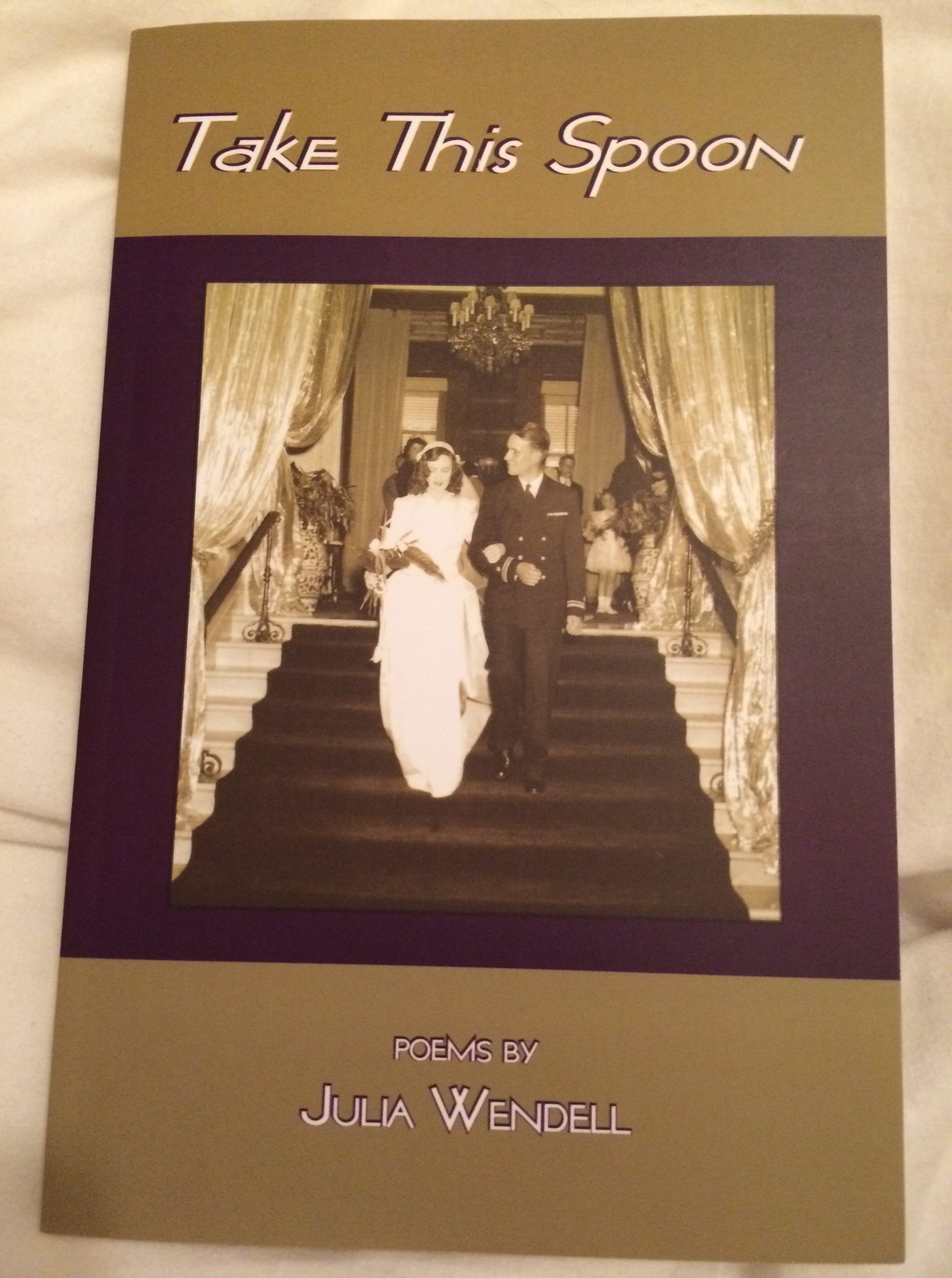
photo (27)Julia Wendell’s Take This Spoon* is a deeply personal and strikingly accessible collection of poems that brings together the poet’s memories of food and family, heartbreak and health.

Ms. Wendell opens each section of the book with a family recipe (which, I have to say, made me long for my pre-paleo days) for something delectable and luxuriously rich (cheese soufflé, peanut butter pie, an intensely garlicky salad that I want right now). The poems pick up on these recipes, investigating the place of food in domestic life and in the poet’s personal history, which includes struggles with both anorexia and addiction. These challenges are at the heart of the collection, as the poet confronts her relationship with her mother and how it affects her responses to her own children.

Ms. Wendell’s informal and comfortable style is disarming; these are poems you can imagine as conversations in the poet’s kitchen. Her descriptive language is evocative, not only of culinary exploits, but of the experiences of childhood and parenthood, and the gap between the two.

For a taste of Take This Spoon, you can visit Ms. Wendell’s website to read “Cream of Tartar.”

*I received a copy of this book from the author for review consideration, which did not affect the content of my review.