Fast Read: Dirty Chick, by Antonia Murphy

photo (3)In a late episode of The West Wing, Toby asks a senator what she’d like to do if she weren’t politicking. “I’d grow apples,” she says.

The first time I saw that scene, a lightbulb went off. That’s what I’d like to do too, if I weren’t writing and reading, and if I had a propensity related to green things that didn’t involve killing them. (Although I like to think that this year I’ve progressed to benign neglect.) Someday I fully intend to (a) buy a house and (b) turn half said house’s backyard into a garden, which will (c) necessitate the acquisition of many, many gardening books. Doesn’t that work out nicely?

Anyway, you’ve perhaps noted that my agricultural ambitions involve only flora, not fauna, and if you’re wondering why, look no further than Antonia Murphy’s Dirty Chick*, a funny, brash, and often gross memoir of her foray into farm life.

Like many of us who saw The Lord of the Rings, Antonia Murphy thought that New Zealand looked like a pretty great place to live. Unlike many of us who saw The Lord of the Rings, she actually moved there.

Rural New Zealand, in her account, certainly has its charms — beautiful countryside, interesting and friendly neighbors, an abundance of fruit with which to make homemade wine — but it’s still a whole new world for an American free spirit with a penchant for embellished headbands and animals that look cute (at first).

Dirty Chick is a zany romp through Ms. Murphy’s first year in Purua with her family, as she deals with grumpy alpacas, a renegade cow, too many maggots, goat medical emergencies, a flock of chickens, and moldy cheese (that last one is a good thing). At the same time, the family adjusts Ms. Murphy’s son’s developmental delays, hoping that life in Purua and the quality of its local school will help him thrive. Ms. Murphy’s obvious dedication to her son, her family, her friends, and her animals is endearing and wonderful to read about.

Dirty Chick is not for the squeamish, those offended by profanity, those with an oversensitive gag reflex, or those who prefer their romantic dreams of artisan farming unshattered (if you don’t believe me, just read the prologue, which involves goat placenta). But if you’re looking for a taste of farm life without the work, a book that will make you laugh every few pages, and an author whose wine recipes you’d love to ask for, and who you’d like to raise a glass with, Dirty Chick is for you. (On that last one: just don’t look in Antonia Murphy’s purse.)

*I received a review copy of this book from the publisher for review consideration, which did not affect the content of my review.

Recommended Reading: Lena Finkle’s Magic Barrel, by Anya Ulinich

photo 1 (21)I’ve read a grand total of three graphic novels (including Maus I and II and Persepolis 1 and 2), but it seems to me that there’s something about the medium that lends itself to personal histories.

Anya Ulinich’s Lena Finkle’s Magic Barrel* is no exception. A mordantly funny look at love, online dating, divorce, and growing up, this is tragicomedy at its best. The tone is set on page three: “My sexual awakening was entirely the fault of the U.S. State Department.”

On a book tour in St. Petersburg, Lena reconnects with an old flame, and wonders whether they should try to work things out. Twice divorced, with two children, Lena still isn’t as experienced as she’d like to be in matters of love and sex, and so she decides to try online dating, with hilarious results. The heartbreak comes when she falls for a man offline.

The account of Lena’s dating escapades is peppered with detours into her past, and these were the most interesting segments of the novel, though often far from funny. Lena talks about growing up in the USSR as it teetered on the brink of toppling, and then recounts what it was like to live as a recent immigrant in Arizona in the early 1990s.

Lena Finkle’s Magic Barrel is a fast read, and refreshing in both its format and its honesty about its heroine’s many foibles and struggles. If you like memoir-like fiction and are looking for a book that stands out from the crowd — and if you like a good Chekhov reference — Lena Finkle’s Magic Barrel is for you.

What’s your favorite graphic novel? Which one do you think I should try next?

*I received a copy of this book from the publisher for review purposes, which did not affect the content of my review.
Beach Reading: The Road to Burgundy, by Ray Walker

What’s your dream job?

You know, the one you think you’d love to try given time, and money, and the right location, and all those pesky considerations that responsible adults take into account when making decisions? If you could live anywhere in the world, with a respectable salary (enough to live comfortably but not ostentatiously), but you had to work, what would that job be?

Maybe you have two dream jobs. Or the job you have would be your dream job if there were just a couple of alterations (hi, teachers out there!). Maybe you find it hard to pin down because you think that new-car smell would fade pretty darn fast for any kind of job.

photo (96)Ray Walker is the guy who figured out what his dream job was and turned it into his day job — with a supportive family, an unbeatable work ethic, and an insane amount of luck.

The Road to Burgundy* is Mr. Walker’s memoir, a light, fast, straightforward read that chronicles his often-bumpy transition from finance work in San Francisco to making wine in Burgundy with grapes from some of the most storied vines in the world.

It’s the perfect beach read — engaging, but not stress-inducing — especially for anyone who likes reading about France (the food!) or wine. Mr. Walker’s emphasis on terroir — the place-character of a wine, if you will, is quite interesting. I do wish the memoir had gone into more detail about the old-fashioned winemaking techniques that he champions and that, apparently, have resulted in excellent wines, but ultimately, the book achieves its purpose, which is to show that once in a while that dream job is within reach.

*I received a copy of this book from the publisher in exchange for an honest review.

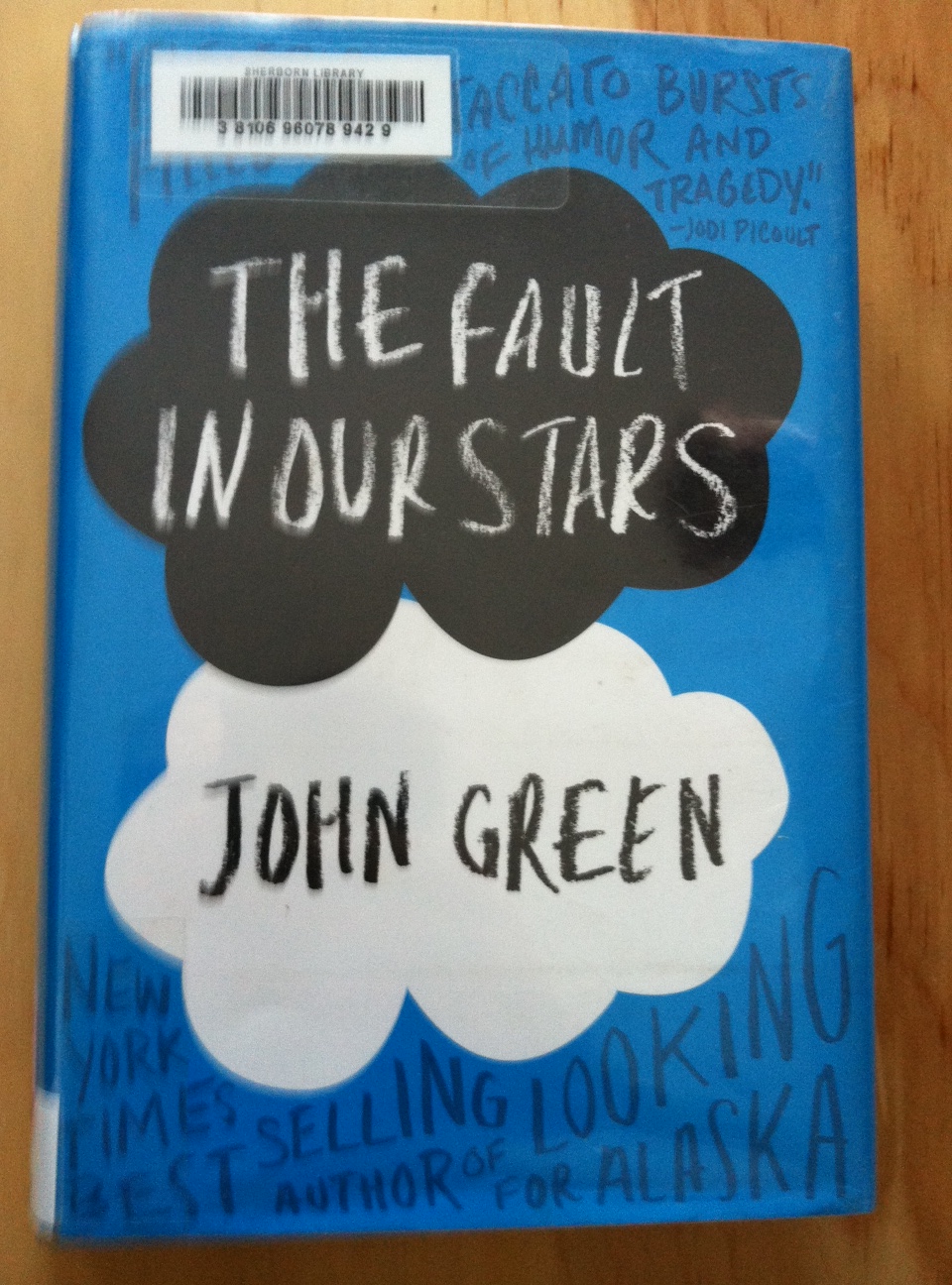
What the Kids Are Reading: The Fault in Our Stars, by John Green

The Fault in Our StarsI realize that I may be the last literate person to have read this novel since it was published two years ago this month. Generally speaking, I try to avoid anything filed under “What Teens Are Reading” at Barnes and Noble (yes, I was in there exchanging things), despite my occasional forays into YA. But The Fault in Our Stars has been so widely acclaimed that I felt safe joining the library wait list.

Sidebar: Was the term “YA” around when we were younger? I’m 29, for the record, and I don’t remember seeing “YA” as a teenager, although it’s possible that I missed it because I was pretentious enough then to turn up my nose at a wide swath of literature (What’s that you say? I’m still pretentious? I don’t want to bite my thumb at you, but . . . ) and hated being categorized as a “teen.”  I did read a bunch of Judy Blume novels in grade school (Yes, grade school. My second grade teacher couldn’t figure out what to do with me during class reading time, so she handed me Are You There God? It’s Me, Margaret. I was really confused, and a search through the bathroom cabinets didn’t help much.) I remember leafing through them in the library —  to this day, I can’t really keep a straight face around anyone named Ralph — but I don’t remember how I found them.

My point, which got lost somewhere in there, is that I don’t see Forever .  . . (don’t worry, didn’t read that one in second grade) shelved near the Boyles and Byatts these days, and maybe that’s a trend that’s been around for awhile. Then again, sometimes I can’t find Neil Gaiman books anywhere except the SF/F fantasy section, so maybe we should all band together and protest the isolation of genre fiction. Or do separate genre markers make it easier to find something along the lines of what you like?

But I digress.

Spoilers Ensue. You have been warned. I’ll let you know when it’s safe to read again. 

I loved The Fault in Our Stars, even if it meant that I started my New Year by sobbing all over my favorite sweatshirt and causing my two-year-old to worry about Elmo’s health. It’s a testament to the writing that I knew just what was coming by page 18 (“Osteosarcoma sometimes takes a limb to check you out. Then, if it likes you, it takes the rest.”), but I still wanted to keep reading. Hazel and Augustus are hilarious, winning characters, perfectly imperfect, precocious but never precious. The book treats people with illnesses as people, which is rarer than it ought to be, and I thought the medical issues were handled well.

Here’s where the book first won me over: “There is only one thing in this world shittier than biting it from cancer when you’re sixteen, and that’s having a kid who bites it from cancer” (8).  It’s the rare adolescent-centered book that fully acknowledges the burdens of parents, and this is one of them. I happen to be personally conversant with untimely death, and now, as a parent, I can tell you that, yes, being the parent would be worse.

I wonder, and I’d be pleased to know if you have the answer: Is this book as popular as boys as it is with girls? I know that it was mostly girls who read Twilight (tried some of that in an effort to get to know my students’ tastes: disaster.), but I can see how The Fault in Our Stars would appeal to boys, too.

As I read, part of my mind was engaged thinking about texts that I’d teach with The Fault in Our Stars, since it’s a commonly-read book among high school students and people entering college. It’s a dream of a book for English nerds, with tons of discussions about metaphors and books; Laura at Reading in Bed has a great post on the allusions in the book (and I agree with her critique about the sex scene too).

End of Spoilers.

Here’s a short list of books that I think would complement The Fault in Our Stars, not just from a teaching standpoint, but from a general reader’s standpoint too.

W;t, by Margaret Edson. A play about an English professor dying from ovarian cancer. Brilliant, beautiful, full of John Donne. I’ve taught it three or four times, and college students (freshmen to seniors) have loved it. There’s quite a bit here about how the medical establishment dehumanizes patients, and I think the de-emphasis on hospitals in The Fault in Our Stars would provide a good counterpoint and spur discussion about lenses in literature.

Gain, by Richard Powers. The best novel about cancer I’ve ever read (sorry, John Green). It’s dense, engaged with history and what it’s like to be human and sick. It both is and is not historical fiction, environmental fiction.

Never Let Me Go, by Kazuo Ishiguro. If you missed this book, go read it immediately. It’s stunning. I won’t give away the plot because it’s so exquisitely rendered. Like The Fault in Our Stars, it features young adults facing circumstances entirely out of their control, and navigating though first loves at the same time.

What would you add to the list? What did you think of The Fault in Our Stars?

Recommended Reading: Orkney, by Amy Sackville

This is a small book, modest in its ambitions.  Light on plot and heavy on atmospherics, you might say. Orkney

A middle-aged professor takes his young, mysterious bride to Orkney (the Seal Islands, north of Scotland) for their honeymoon. Everyday his research languishes as he watches her out the window; she stares into the sea, and her closed thoughts and wishes torment him.

I was drawn to the book by its premise and because I love the sea, and I’ve always been fascinated by the very cold shores that are barely inhabited, so old and so weathered that they seem out of legend and myth, or the very beginning of the world.

Orkney brings this kind of landscape into beautiful focus — I’ve never read so many words for the colors of the sea or the sound of the wind. It’s lovely — enchanting, even. It’s not a page-turner, but it’s food for the imagination, and so I recommend it.

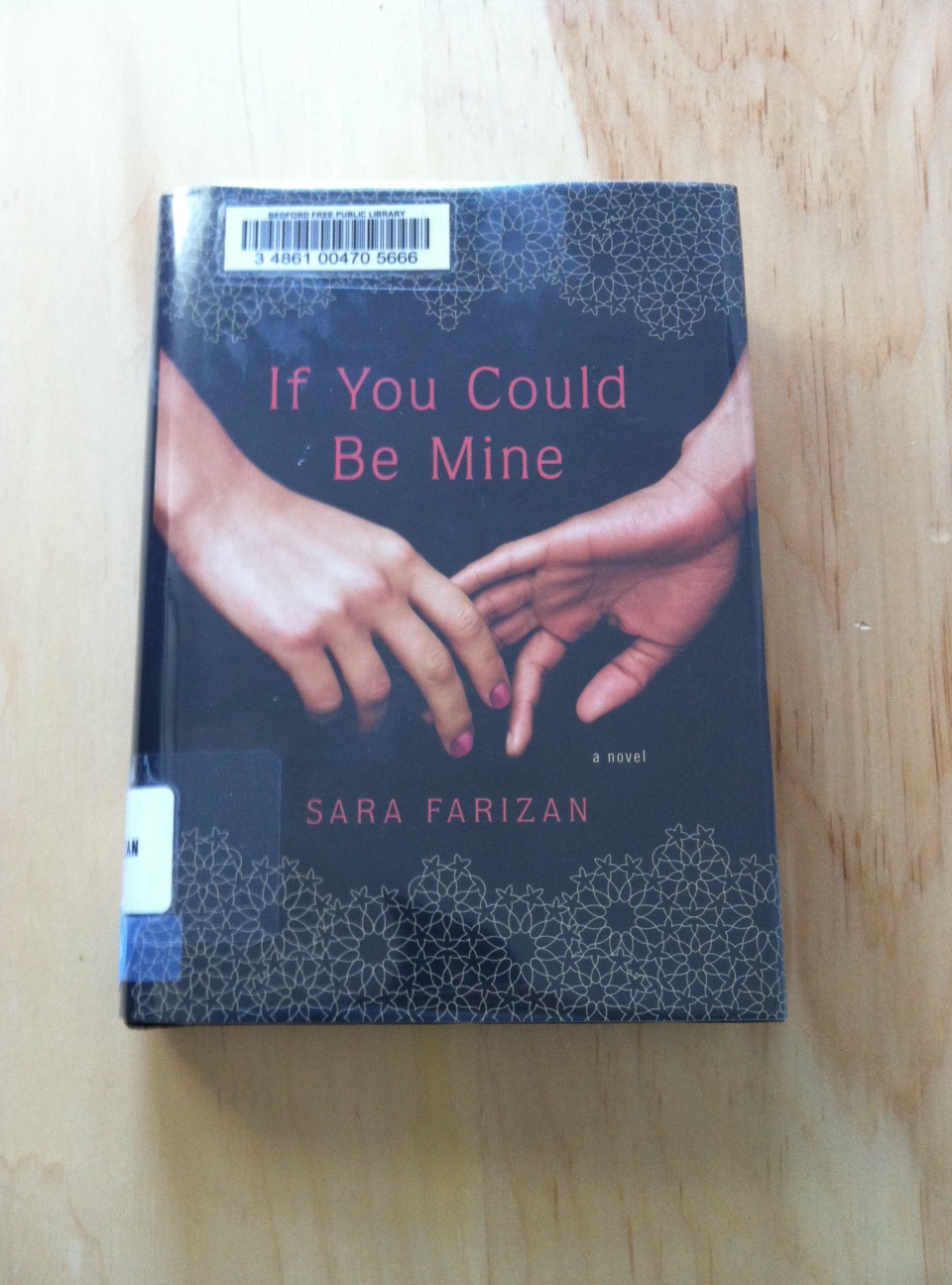
Recommended Reading: If You Could Be Mine, by Sara Farizan

Happy Thanksgiving, dear Readers! And Happy Thursday, non-American friends!

If You Could Be MineAs you may have noticed, YA fiction doesn’t make it onto my reading list very often, but in the spirit of omnivorous reading, I thought I should try out a new YA novel (a couple years ago I read The Hunger Games trilogy, which I quite liked). I chose Sara Farizan’s If You Could Be Minebecause I’m interested in reading fiction set in other countries, and because the novel focuses on LBGT* issues (near and dear to my heart).

Sahar has been in love with her best friend, Nasrin, since they were children. Nasrin loves Sahar too, but also feels the pull of a traditional life trajectory — marriage, children, a house and social position. And they live in Iran, where homosexuality is punishable by death — even for teenagers like Sahar and Nasrin.

Then Nasrin’s family arranges a marriage for her, and Sahar, desperate to save their relationship, explores drastic measures to keep them together.

Sahar’s narration makes me want to give her a big hug, and I loved the careful construction of the secondary characters, especially Sahar’s father and Nasrin’s mother.  The language is geared toward younger readers, which I was expecting, but I wasn’t expecting the frank discussions of transsexuality that’s an integral part of the novel. I appreciated Sahar’s honesty and humanity, and the unflinching portrayal of how difficult life is for the gender-nonconforming in modern Iran.

And, of course, there’s plenty about the dangers of being a woman. You know, stuff like your sleeve inching past your elbow or wearing too much makeup getting you raped or beaten. Shudder.

Nasrin is often annoying, and doesn’t seem like a worthy object for Sahar’s affection, except insofar as she listens to Sahar attentively (as Sahar points out). At first, I felt that this was a flaw in the novel, because as a reader, I wanted to be invested in both girls. About midway through, however, Nasrin grew on me. She rebels against the strictures of her society in her own way, even if it’s not the way Sahar wants (or we want, for that matter). Nasrin’s flaws make the story more real, more relatable, and all the more heartbreaking for Sahar.

If You Could Be Mine would pair well with the first volume of Marjane Satrapi’s Persepolis, especially in a teaching setting, and I think the pair together would make a great Christmas/Hannukah/Festivus/Yule/December present.

Late-November Round-Up

Been a bit busy over here in Boston these last few weeks. I gave up on NaNoWriMo, and then I gave up on writing a post about why I gave up on NaNoWriMo, and then my mom visited, which made me feel validated on the first two counts, because I’d rather sit around with my mom and drink tea than write my (let’s face it) pretentious sophomore attempt a novel.

Anyway. One of the reasons I gave up on NaNoWriMo was that I missed reading too darn much. My non-toddler time is limited as it is, and when you’re churning out more than 1600 words a day, it’s difficult to squeeze in reading of any kind. I wasn’t blogging last year, and this year I found that I missed you, dear readers, and your delightful blogs.

So, in the interests of my sanity, I’m not going to write a separate post about each of the books I’ve sneaked in over the last couple weeks. Presenting, then, a round-up:

photo 1 (11)

Inspired by Rick’s Novellas in November read-along, I picked up a book that’s been on my shelf for years: Gabriel García Márquez’s Memories of My Melancholy Whores. It’s a fast read, very Márquez, if you know what I mean. Sure, there’s the way-creepy nonagenarian crushing on the young, always naked teen virgin . . . but somehow we’re also in the realm of hope, aging, death,  personal history, and acceptance of a life lived. I loved it.

Next up:

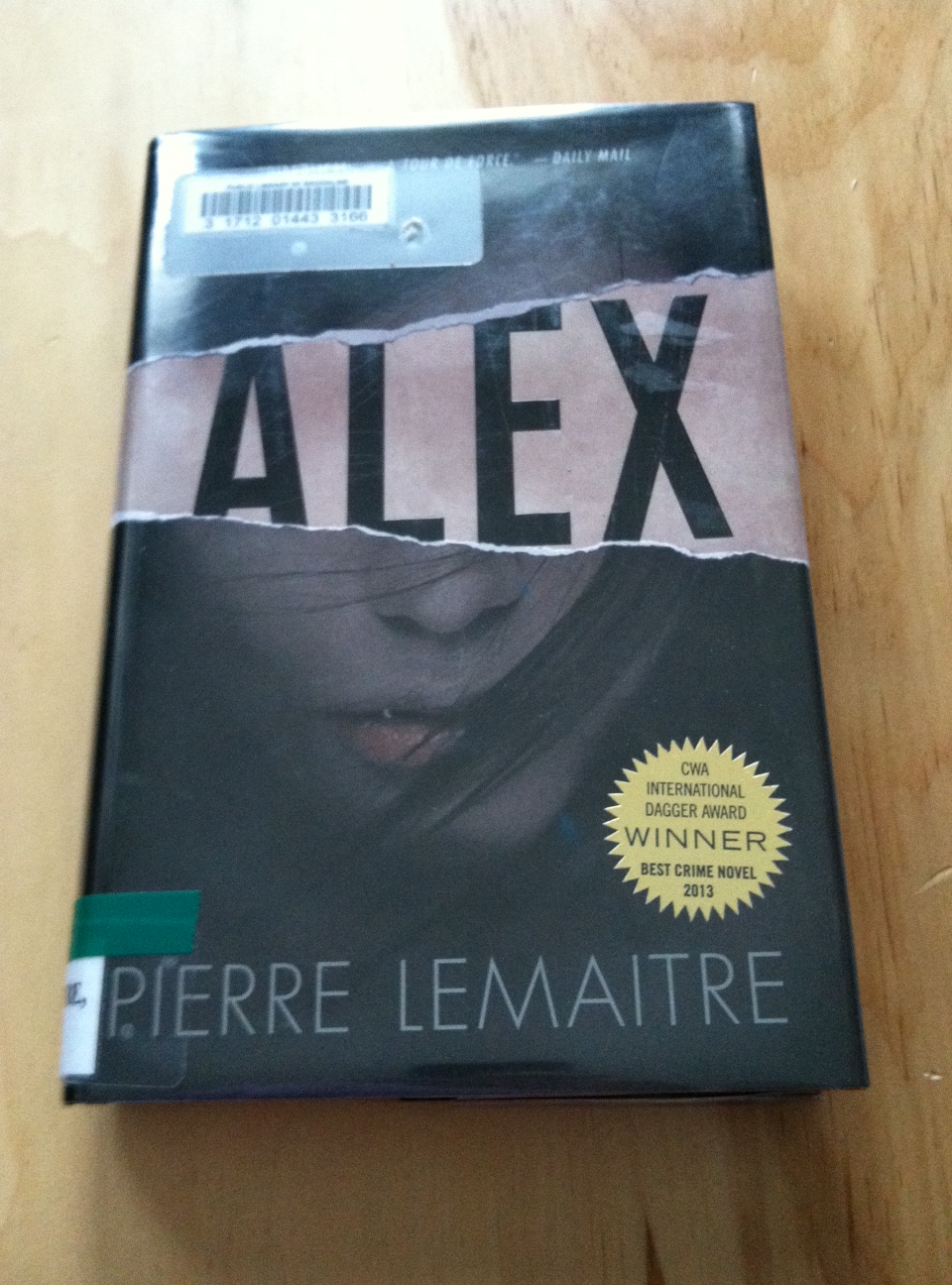
Pierre Lemaitre’s acclaimed Alex, translated from French photo 2 (8)into English by Frank Wynne. Apparently it’s part of a trilogy focused on the detective in the story, Camille Verhoeven. Short in stature but long on insight, Verhoeven is brought in to investigate the nearly clue-less case of a missing woman, which flows outward into an increasingly complicated web of characters and events. I found it wholly unexpected and engrossing. However, there’s some very graphic violent content, so avoid if you don’t have a strong stomach.

photo 3 (4)I’m not sure who to blame for the fact that I didn’t know until this month that there are sequels to Nick Bantock’s gorgeous Griffin & Sabine. Once I found out, I promptly bought Sabine’s Notebook and The Golden Mean, and read them, along with the original, in one sitting. The first book is the best of the three, but the sequels feature art just as beautiful, and the story gets even weirder. Though written for adults, the trilogy would make an excellent gift for an artistically inclined teenager, or one who’s a devotee of comic books. My Uncle Neil sent me Griffin & Sabine for my fourteenth birthday, and it was the perfect fit. I loved the story and the inventive design of the book (envelopes with letters you pull out to read, and because the book features adult themes, I felt proud because it meant my uncle, who’s one of the readers I respect most, thought of me as a serious reader too.

Here’s an odd duck of a book: Charles Palliser’s Rustication. Published this year, it reads like a photo 4 (4)salacious nineteenth-century journal. It’s a cross between period fiction and crime fiction, with one of the most unreliable narrators I’ve encountered this year. I had parts of the plot figured out a bit too early (my area of study has left me with a weird assortment of herbal knowledge, which intruded at the mention of pennyroyal), but the novel still surprised me with its readability, especially considering the plethora of entirely unlikeable characters. There’s no one to cheer for, really, but the impulse to learn what’s true and what’s fiction in this tawdry little town is irresistible. A few words of caution: some ugly, violent language and imagery peppered throughout the novel.

Recommended Reading: Fahrenheit 451, by Ray Bradbury

Yes, it’s another installment in Books Carolyn Is Utterly Embarrassed Not to Have Read by Now.

Image courtesy of Manostphoto/ Freedigitalphotos.net

Image courtesy of Manostphoto/ Freedigitalphotos.net

As a voracious reader and lover of sci-fi, it’s pretty amazing that Fahrenheit 451 has missed my to-read pile for so long. Maybe it’s because the contours of the story are so familiar; I felt going in as if I already knew the plot.

Something that startled me was the sheer number of technological advances that Bradbury saw coming in 1953 (because of his long career, I’d always assumed that Fahrenheit was a late 60s/ early 70s book — quite wrongly): wall-sized TV screens, in-ear headphones, drones. I wonder if Suzanne Collins was thinking of the Mechanical Hound when she created some of the monsters in The Hunger Games trilogy.

I’ll skip the plot summary, since you’ve probably got the gist of it, and instead highlight my favorite section: Montag’s meeting with Grayson and the other people of the book, who remind themselves, “we’re nothing more than dust jackets for books, of no significance otherwise.” Grayson goes on to tell Montag how great works of literature are preserved: “Why, there’s one town in Maryland, only twenty-seven people, no bomb’ll ever touch that town, is the complete essays of a man named Bertrand Russell” (179; the grammar’s a little off, but I can’t tell if that’s Grayson’s overexcitement or a faulty edition at work). I found the work of memory, the instinct to preserve ideas and language, deeply moving.

I wonder, though, if regarding oneself as merely a dust jacket for a book is entirely admirable. Certainly there’s a sense embedded in this idea of taking a larger, longer perspective (I’m reminded of Carl Sagan and the blue dot, or Rick’s speech at the end of Casablanca), a way of realizing our individual insignificance over the span of time. On the other hand, one person with a great deal of insight, or fortitude, or kindness, can change the world for the better. But I suppose you do need the world.

Recommended Reading: Burial Rites, by Hannah Kent

Ah, Iceland. We meet at last. Almost.

Books are modes of conveyance, right?

Books are modes of conveyance, right?

My husband has had a thing for Iceland since long before we met; he listened to Sigur Rós before it was everyone’s favorite inspiring music (Glósóli was the first song on the first mix-CD he made for me—yes, you read that right— and would have been our son’s birth song, had it not been for that pesky emergency C-section). He’s wanted to visit for ages, and when I win the lottery, I’m booking us a flight.

I can’t claim that Iceland holds the same appeal for me as it does for Mr. O, but Hannah Kent’s Burial Rites brings the stark, relentless landscape into such focus that now I’m itching to see the land, the grey sea, and the ice-blue sky. I’m not much for landscapes, as I mentioned when I wrote about Bay of Fires, but this is the second book this year to make me care deeply about its characters’ surroundings.

The jacket copy (and Goodreads summary) will tell you right off the bat that this novel is an exploration of the last months of Agnes Magnúsdóttir, the last woman publicly beheaded in Iceland, so I don’t feel too bad about telling you too. Before her execution, she’s placed as a worker-prisoner with an unwilling family for a few months while a priest tries to save her soul; instead, they hear her story. That’s what I like to call a dramatic situation.

The action of the novel moves toward the inexorable end with grace and sure footing, even if the same can’t always be said for Agnes. At first I was a little thrown by the unconventional structure (letters and documents interspersed with third-person narration and first-person narration from Agnes’s viewpoint), but by the end of the novel, I loved it. The structure regulated the pacing, and eventually the narratives meld together in perfect synchronization.

One word kept coming to me over and over as I read:

Endurance.

Not the Shackletonian type of endurance, but the kind of constant scraping by that leaves blisters that never heal. Agnes endures abandonment after abandonment until the warmest home she finds is with her keepers, her best company a nervous priest and a sharp-seeing middle-aged woman who also waits for certain death (that reliable killer of nineteenth-century female characters — tuberculosis) but no execution date.

In the world Ms. Kent recreates, even the comparatively well-off in nineteenth-century Iceland are engaged in survival tasks every day. We see Icelandic families collecting dung for fires, slaughtering sheep, knitting clothes, making blood sausage, scavenging a beached whale, gathering in the harvest, trying not to freeze. Agnes remembers feeding tallow candles to children at one farm while she ate boiled leather — because they were starving.

Furthermore, people in this story are forced to endure each other. In each household, people sleep all together — masters and servants, parents and children — in one room. Conversations are overheard, stories and gossip spread like an oil slick on the wave. There’s no way to escape, especially in the winter, when the snow closes in.

Reading this book made me think how shocking it is that we’ve managed to endure as a species, when for a long time, for many people, even the simplest pleasures were the faintest sparks in an existence spent fighting for physical survival.

A Book I’m Not Sure What to Make of: The Testament of Mary, by Colm Tóibín

Published last year to critical acclaim (and just longlisted for the 2013 Man Booker Prize), Colm Tóibín‘s The Testament of Mary is a short novel (only eighty-one pages) that upends our (or at least, my) cultural conception of Mary.

Image courtesy of Seksuwat / Freedigitalphotos.net

Image courtesy of Seksuwat / Freedigitalphotos.net

In  Mr. Tóibín’s vision, the mother of Jesus does not believe that her son is divine, tries to save him from a path that will lead to execution, thinks his followers are a mob of lost men, and flees for her life before her son’s death on the Cross. She thinks of John and Paul (not named; I’m inferring—please correct me if I’m in error) as supercilious keepers, rather than trusted supporters. In her old age, Mary judges herself harshly, and her opinion of the nascent Christian movement is hardly charitable.

This novel isn’t plot driven, and I didn’t expect to like it. I’m still not sure how I feel about it, to tell the truth. But what I did appreciate was the intimacy and immediacy of Mary’s voice. Mr. Tóibín makes her come alive (with unexpected thoughts and feelings, to be sure) dissolving the distance that I feel when reading about her or seeing a painting of her.

Oddly, this portrayal of Mary reminded me of Olivia Hussey’s performance in Zefferelli’s Jesus of Nazareth (a family tradition at Christmas and Easter when I was growing up). Unlike this older, wearier Mary, Ms. Hussey’s Mary is convinced of her son’s divinity and supportive of his ministry. Like Mr. Tóibín’s Mary, however, she is infused with quiet strength and dignity.

Have you read The Testament of Mary? What did you think? If you haven’t read it, do you plan to?