Recommended Reading: Marisa Silver’s Little Nothing

little-nothing

For quite some time after I put it down, I didn’t know what to make of Marisa Silver’s new novel Little Nothing*.  It’s a book as unusual as its heroine, Pavla.

img_1131Born in a nameless country (vaguely central or eastern European) at an unspecified time (perhaps the turn of the last century) to aged parents desperate for a child, Pavla consistently defies expectations. First, she’s born a dwarf, to her parents’ chagrin (her name means “little”).  And then, as a child, Pavla proves exceptionally nimble in body and mind, earning the respect of her classmates and a place as her father’s helper in his plumbing projects.

And then she grows beautiful (though not taller)—a wondrous transformation to the village, but an alarming one for her parents, who fear for her future once they are gone.  To the villagers, “Pavla is a sentence they cannot finish, an equation they cannot solve, and their desire to figure her out obviates any privacy she might otherwise hope for.”

Gripped by fear and love, Pavla’s parents turn to a charlatan to “cure” Pavla; his torture makes her taller, but changes her too. Now the privacy she might have hoped for is obliterated; to make her way in the world, she must travel with the charlatan and his assistant, Danilo, playing the Wolf Girl in their vaudeville act.

These are the first of Pavla’s transmutations, some of which she is not even aware of; Danilo, who loves her from afar, is the witness who traces her over the course of the novel. Their stories run in parallel, passing through prison, tunnels, an asylum, a deep dark wood. In many ways, this is a book about how we find ourselves in dark, hidden places.

As have no doubt realized, Little Nothing begins in the world of the fairy tale, but we read Pavla’s incredible story through a realist lens (there is quite a bit about plumbing, for example). The first part of the book was so spellbinding, the prose so finely crafted, that I was disappointed when it was over; like Pavla, I wasn’t ready to leave the village where she’d come to be valued.

But in life, nobody escapes trauma, and the departure from the village is necessary. Little Nothing is an often allegorical story of how one strong, determined soul can be transformed, sometimes radically, by traumatic experiences, and by love. It’s haunting, and recommended.

*I received a copy of this book from the publisher for review purposes, which did not affect the content of my review.
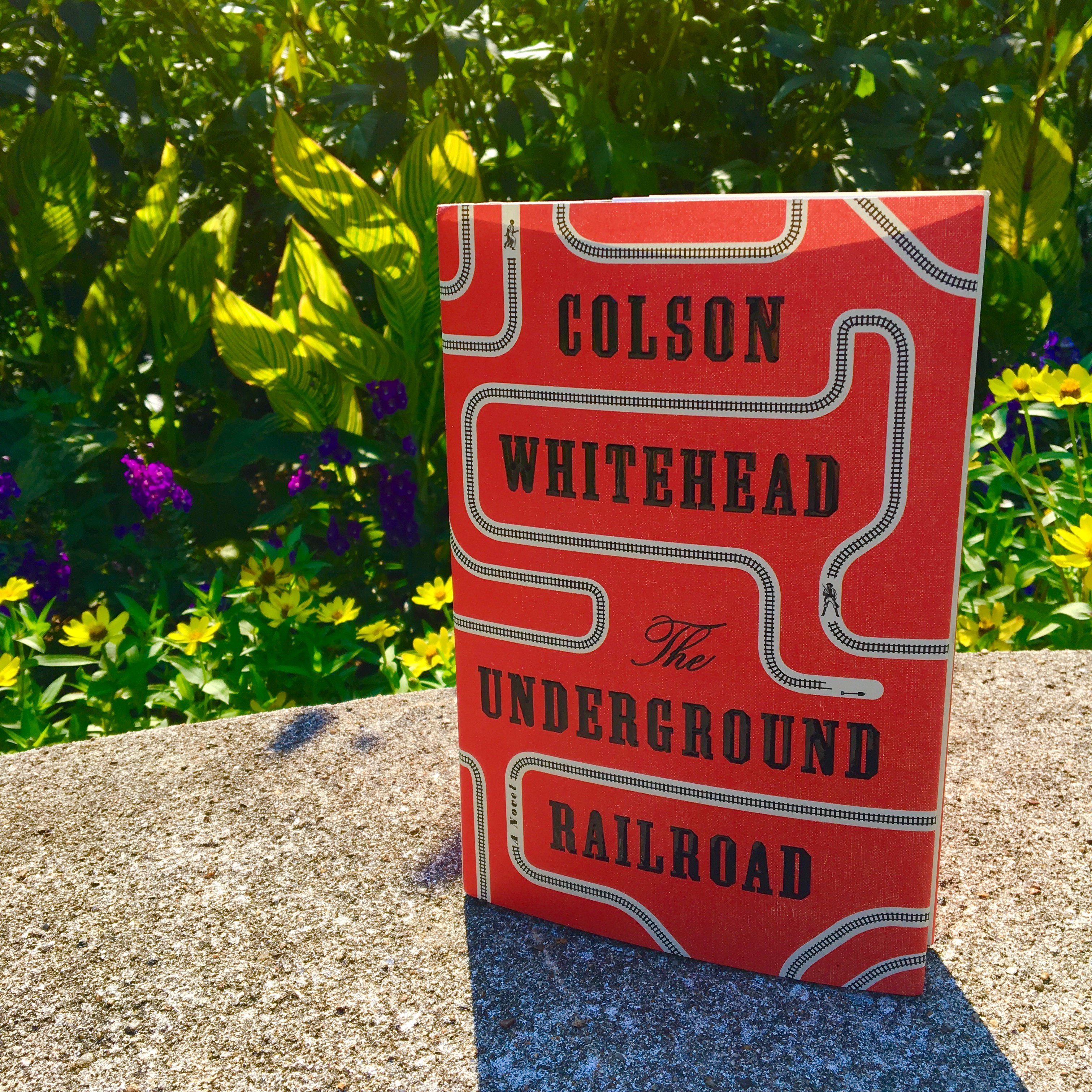
Recommended Reading: The Underground Railroad, by Colson Whitehead

the-underground-railroad

Chances are that you’ve heard of Colson Whitehead’s new novel, since it’s earned Oprah’s seal of approval (which came with a surprise early release date) and it’s already a bestseller.

Dear Readers, The Underground Railroad absolutely lives up to all of the good press.

The Underground RailroadIn a tale that echoes the Odyssey and Gulliver’s Travels, The Underground Railroad follows the journey of Cora, teenage girl who escapes the hideous cruelties of a Georgia plantation (only to find uncertain harbors) via the Underground Railroad. In the novel, it’s not only a path of safe houses, trusted helpers, and secret routes, but also an actual subterranean railway, with branches and lines—all dangerous, all necessary.

By fashioning the narrative with this kind of mythic, not-quite-fantastic element (there are others: the notorious Tuskegee experiment is transplanted to antebellum South Carolina that is supposedly “progressive”; in  gatherings that resemble our notion of the Salem witch trials, ordinary citizens in North Carolina conduct lynchings every Friday night), Mr. Whitehead reveals what he calls “states of possibility.” Each stop on Cora’s travels through this alternative Southern landscape—albeit a landscape grounded in the terrible  facts of slavery—resonates through facets of American history that we must not forget.

Handling this dense underpinning of history and metaphor with grace and subtlety, Mr. Whitehead in The Underground Railroad never loses sight of the individual human story. Cora’s journey is the novel’s main line, but at intervals other branches spin off, illuminating the lives of secondary characters. These include Ajarry (Cora’s grandmother, kidnapped in Africa and brought across the ocean), Caesar (a literate man, the slave who convinces Cora to escape), and Ethel (a white woman who, for a time, grudgingly shelters Cora).

But the book belongs to Cora, an unforgettable character, a heroine. At the beginning of the novel, she’s on the sidelines; when her friend tries to get her to dance, “Cora never joined her, tugging her arm away. She watched.” Abandoned by her mother, who escaped alone, Cora is a “stray” among her fellow slaves, living with damaged women in a cabin called Hob. When she escapes  though, she becomes the object of one man’s focus: she’s hunted by the same fanatic slave-catcher who failed to find her mother.

Cora is wary and slow to trust (absolutely understandable), strong-willed, intelligent, and very brave. She witnesses horrors that should be unspeakable, impossible; she is haunted by what she has seen and what has been done to her. The tension, even when she seems relatively safe, is always high, so that when the narrative grants her a reprieve, it feels to the reader like a long exhalation after a breath held too long:

She grabbed his hand. The almanac had a strange, soapy smell and made a cracking noise like fire as she turned the pages. She’d never been the first person to open a book before.

I hope you’ll open this one. The Underground Railroad is highly recommended.

Read more:

A great review of The Underground Railroad (much more thorough than this one)

An interview with Colson Whitehead


Recommended Reading: Commonwealth, by Ann Patchett

commonwealth

Ann Patchett’s Commonwealth* is like an unfamiliar lake on a ninety-degree day that you can’t  wait to sink into; even if you don’t know how deep it goes, you won’t want to come up for air.

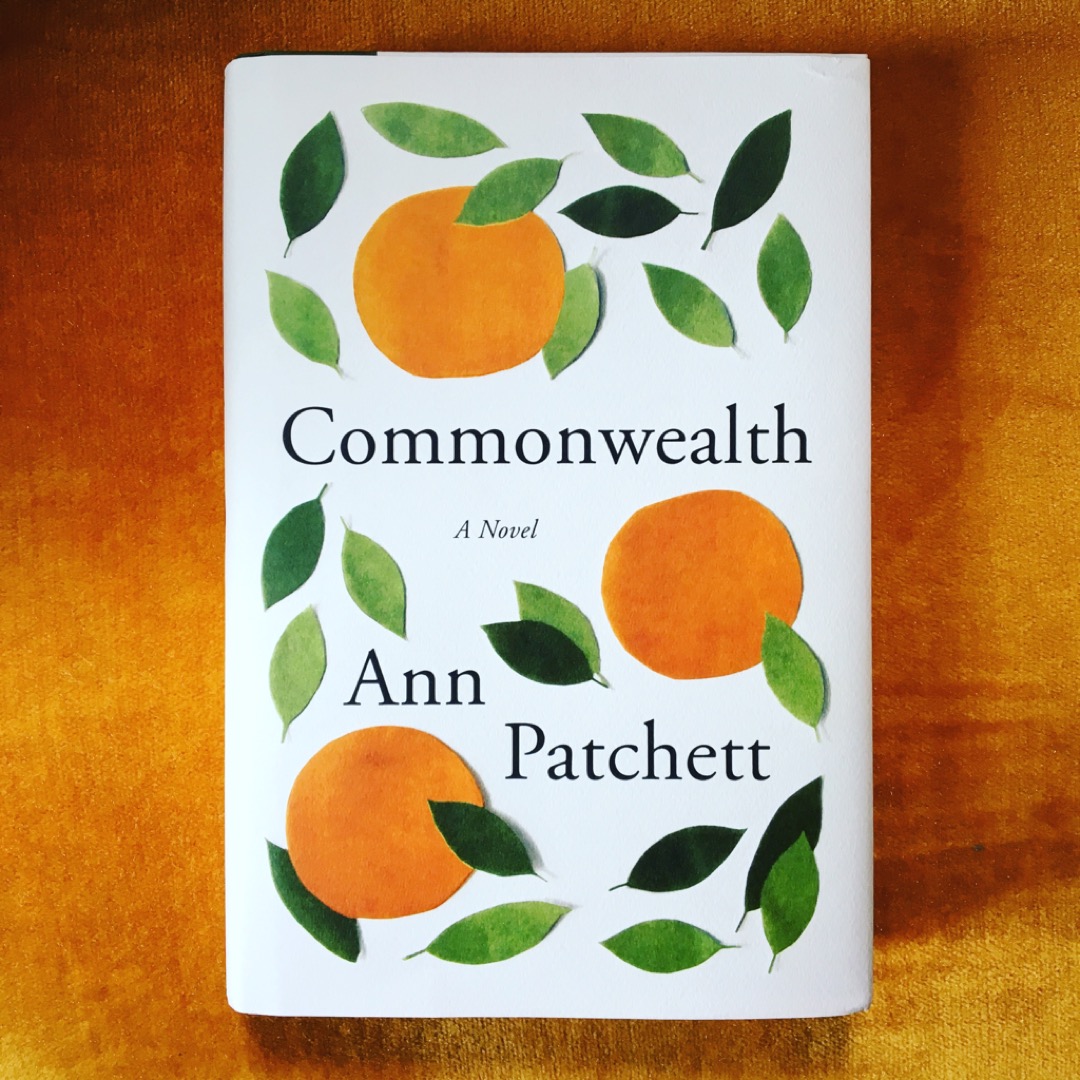
img_1022It starts in Los Angeles, with a bottle of gin and orange trees heavy with fruit. Bert Cousins walks into the christening party for Beverly and Fix Keating’s new daughter Franny with a completely inappropriate gift (the gin), which when mixed with fresh-squeezed juice from the backyard oranges leads to revelry not usually associated with christening parties.

Then Bert kisses Beverly, leading to the unraveling of two families and the imperfect attempt to knit together a new blended family. Beverly and Bert move to Virginia with Franny and her older sister Caroline; Bert’s four children—Cal, Holly, Jeanette, and Albie—visit during the summers, leaving their mother Teresa behind in L.A. Bert and Beverly are “careless people” in many respects; the children are often unsupervised, and they find their (dangerous) freedom exhilarating: “It was like that every summer the six of them were together. Not that the days were always fun, most of them weren’t, but they did things, real things, and they never got caught.”

The kiss is the first of three turning points in this excellent novel. The second involves a terrible accident; the third is when Franny, adrift in her twenties, meets the acclaimed novelist Leo Posen and tells him her family’s story.

Commonwealth follows eleven major characters over fifty years—and manages to deliver full portraits of their lives in less than 350 pages. Each chapter is as exquisitely paced and revealing as a short story (indeed, several of the chapters could stand alone as stories), and yet the whole is greater than the sum of its parts. Ms. Patchett’s storytelling makes the ordinary gripping; for instance, when Franny is treated like a cook and maid by Leo’s publishing friends in the summer house they’ve rented together, I started biting my nails, wondering if she would snap. I practically cheered when, earlier in the book, Teresa puts her four kids on the plane to their father (who had pushed for full summer custody) without suitcases but with a list of all the appointments they need (dentist, doctor, etc): “Beverly Cousins wanted her family? Have at it.”

I started off thinking that Commonwealth would be a book about divorce; and it is, of course, but it’s more about family, bad decisions and living with the consequences of those decisions, loyalty, and friendship. My copy of the book is studded with notes marking favorite passages and lines (“Franny’s skin was so translucent it acted more as a window than a shade.”); I’m willing to bet that if you pick it up (it’s out today), your copy will be too. Commonwealth is highly recommended.

Have you read Commonwealth or any of Ann Patchett’s other books?

*I received a copy of this book from the publisher for review purposes, which did not affect the content of my review.

** Confession: Though I own Bel Canto and State of Wonder (the former acquired at a delightful book swap birthday party in January 2009, the latter at Target, which maybe tells you something about my collecting habits), Commonwealth is the first of Ann Patchett’s books that I’ve read. I admire her work on behalf of independent bookstores, and you can be sure that if I ever visit Nashville, Parnassus Books would be the first stop on my itinerary.

Recommended Reading: Hidden Figures, by Margot Lee Shetterly

Hidden Figures

Serendipitously, Margot Lee Shetterly’s Hidden Figures* arrived on my doorstep on the ninety-eighth birthday of Katherine Johnson, pioneering scientist mathematician and recent recipient of the Presidential Medal of Freedom—and one of the subjects of this engrossing book about the black female mathematicians who helped the United States win World War II and the space race.

IMG_0659Margot Lee Shetterly’s writing is straightforward and lively; it is clear how passionate she is about her subject. She hails from Hampton, Virginia (“Spacetown USA”),  the setting of Hidden Figures, where, she writes, “I knew so many African Americans working in science, math, and engineering that I thought that’s just what black folks did.” Only years later did she learn about the history of the women who worked in West Area Computing, a division of black female mathematicians (called “computers,” since they did complex calculations by hand) at Langley Research Center. To keep up with war demand, these women (and their white counterparts) were recruited by NACA (the National Advisory Committee for Aeronautics, which later became NASA), the agency responsible for ensuring American air supremacy in World War II by researching and testing advancements in aeronautics.

Despite the fact their expertise was badly needed, the West Computers, including Dorothy Vaughan, Katherine Johnson, Miriam Mann, and Mary Jackson, often faced longer routes to advancement than the white women who did the same kind of work, and all women at Langley found it difficult to break into the ranks of the engineers.

Women, on the other hand, had to wield their intellects like a scythe, hacking away against the stubborn underbrush of low expectations. A woman who worked in the central computing pools was one step removed from the research, and the engineers’ assignments sometimes lacked the context to give the computer much knowledge about the afterlife of the numbers that bedeviled her days. [. . . ] Even a woman who had worked closely with an engineer on the content of a research report was rarely rewarded by seeing her name alongside his on the final publication. Why would the computers have the same desire for recognition that they did? many engineers figured. They were women, after all.

Besides the hurdles common to all the female mathematicians and engineers working at Langley, the black women of West Computing faced segregation in the workplace and in Hampton; even after segregated bathrooms and cafeteria sections at Langley disappeared, their children were sent to schools separate from those of their white colleagues. Many of the West Computers were working mothers; some were also widowed or separated geographically from their spouses. Given the difficult work and long hours of the job, this presented its own set of challenges, which Hidden Figures touches upon.

Hidden Figures places the story of the West Computers in the context of war, the fight for civil rights, and the space race without losing sight of the details (though I did want a bit more explanation of the mathematical and scientific tasks the engineers worked on). Necessarily, the book focuses on a handful of women, but also emphasizes that they were not alone; as Ms. Shetterly writes, “For too long, history has imposed a binary condition on its black citizens: either nameless or renowned, menial or exceptional, passive recipients of the forces of history or superheroes who acquire mythic status not just because of their deeds but because of their scarcity. The power of the history of NASA’s black computers is that even the Firsts weren’t the Onlies.”

The story of these mathematicians, engineers, and scientists is one of  discrimination and perseverance, dedication and curiosity, orbital trajectories and soap-box derbies. I came to admire the women of this book immensely; they are the epitome of grace under pressure, and it’s long past time their story was told.

What nonfiction have you been reading lately?

P. S.: Fellow Trekkies, there is a fantastic anecdote in Hidden Figures that you don’t want to miss.

*I received a copy of this book from the publisher for review consideration, which did not affect the content of my review.

Recommended Reading: The Granite Moth by Erica Wright

The Granite Moth

Are you looking for the right book during the transition from summer into fall? Look no further: with its page-turning plot and crisp autumn setting, Erica Wright’s The Granite Moth* is the book for you.

IMG_0592On Halloween night, private investigator Kathleen Stone—Kat, or Kate, Katya, Kathy, Keith, Kennedy,  or another alias, depending on who’s asking—is waiting on a friend and former colleague to drop off some leads that could help her build a case against her nemesis, cartel boss Salvatore Magrelli. Ever since she left undercover work for the NYPD, she’s felt much more comfortable in disguise, and this night is no exception, so she’s surprised when her friend Dolly, the star of the Pink Parrot’s famous drag show, recognizes her from his position on  the club’s float.

Minutes later, the float explodes, and Kat finds herself juggling two cases at once as she’s pulled into investigating the incident by Big Mamma, the club’s owner, who’s convinced it’s no accident. When Kat infiltrates the Skyview, a tony private club run by Magrelli’s wife, the murder of an employee makes her think that the two cases are possibly connected—as hate crimes.

What I liked best about The Granite Moth, in no particular order:

  1. The plot: It’s full of twists and turns, but it’s not convoluted, and it doesn’t rely on sexual assault as a plot point or character motivation (hallelujah!). Also, until now I’d never read a detective novel with (potential) hate crimes as a focus. Timely, unfortunately.
  2. The secondary characters: Dolly and his friends at the Pink Parrot are fully differentiated and fleshed out, as is Kat’s former colleague and friend Ellis, an NYPD detective. The only character I had a hard time understanding was Meeza, Kat’s assistant; it wasn’t clear why a smart, capable woman is interested in V.P., a small-time criminal.
  3. Kat: Kat is smart and brave, though scarred by her work undercover and reasonably worried about the dangerous people crossing her path–a far cry from the usual marks she pursues.  She doesn’t carry a gun, which makes her resourceful; scenes have more room to breathe since violence isn’t always imminent. Disguise is her weapon of choice, but she also listens carefully and carries bolt cutters. Plus, I enjoyed Kat’s sense of humor (wry, as befits a PI).
  4. The writing: Ms. Wright’s prose doesn’t call attention to itself, which (for me, anyway) is ideal in genre fiction, but it certainly has some lovely moments, like this image: “Ellis stopped abruptly and turned me to face him. He ducked down until he was peering into my eyes with his translucent one. I could see myself in his pupils, the smallest nesting doll in the set, the one with nothing inside.”

If you, like me, aren’t a connoisseur of crime fiction but like to sample the genre from time to time, I’d happily recommend The Granite Moth.

*I received a copy of this book from the author for review purposes, which did not affect the content of my review.

5 Reasons to Read: Riverine, by Angela Palm

Riverine

Angela Palm’s Riverine: A Memoir from Anywhere But Here* is the winner of the Graywolf Press Nonfiction Prize, and one of the books that book people have been talking about all year. Here are five reasons to read it for yourself.

1. The Midwest setting: As I’ve written before, I would love to see more books (fiction IMG_0088and nonfiction) set in the Midwest. In Riverine, Angela Palm makes the oft-neglected flyover country mesmerizing, drawing readers in to her flood-prone rural Indiana town. And if place as a character is your thing, you cannot miss this book—Ms. Palm is fascinated by how places shape people. In these pages you’ll find mediations on abandoned buildings, the green of Vermont, the rituals of prison visits. But Riverine is absolutely strongest when the focus is on the author’s Indiana origins.

Most folks could see the river from their porches. Everyone could smell it. When a flood was coming, an ancient stench of mud and fish and scum hung in the air—the scent of the river amplified, swollen and ready to burst. The flood itself, though, the water’s tipping point, always arrived in the middle of the night.

2. The hook: Riverine is a book about the author’s youth, adolescence, and young adulthood and her relationship with her hometown and family, but intertwined with these is her connection to Corey, the neighbor boy she adored for years. The possibility of their future together is truncated when Corey is convicted of murdering two people and sentenced to life in prison. Still, Angela Palm can’t let him go, and a significant portion of the book considers what happened to the compassionate boy she knew, and how she comes to grips with the fact that she can’t let him go.

There was light and love at his core, and I had known it as my own. It had corrupted, somehow, dividing and dividing, rooting low, far from the sun.

3. The structure: While Riverine doesn’t share the range of essay forms used in Leslie Jamison’s The Empathy Exams, there’s a little of something for everyone in Riverine. Organized into three sections, the book works as a memoir in linked essays. Two of them stood out to me. “Dispatches from Anywhere But Here” considers locales and buildings through the lens of different criminal justice theories, while “On Robert Frost’s Lawn” has a quasi-dreamlike tone. Neither of these pieces was my favorite, but they both hint at the deep well of talent Ms. Palm has to draw from. This author has a lot left in the tank.

Unbroken windows are an illusion, like small towns, meant to tell us that “nothing bad happens here.” But it’s not true. The problems of humans manifest wherever humans are, razing each landscape raw as freshly tattooed skin.

4. The publisher: I know I don’t write much about which publishers and imprints I prefer, but friends—Graywolf. It’s a nonprofit press that brings out some of the best poetry, fiction, and nonfiction out there. If you spot those three wolves on the spine, chances are you’re in for a real treat, and Riverine is no exception.

5. The writing: I’ve been giving snippets throughout this list, so hopefully the work speaks for itself. Here’s another bit I liked:

The need to look at other landscapes for clues about what already lies within us is real. It is a variation on distance, that thing you need to put between yourself and a problem in order to see it clearly.

I think that goes for reading, too.

*I received a copy of this book from the publisher for review purposes, which did not affect the content of my review.
Recommended Reading: Pond by Claire-Louise Bennett

Pond

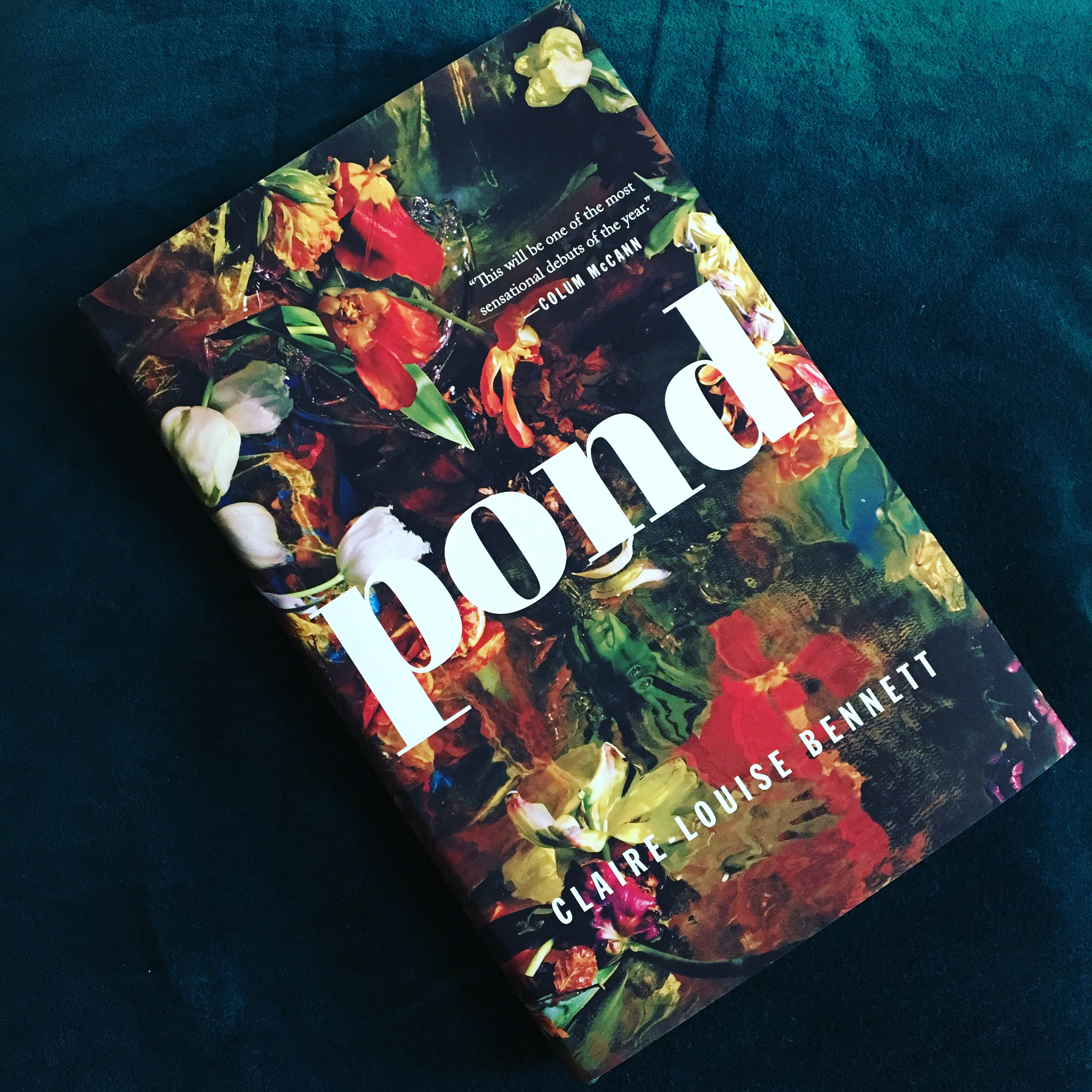
Claire-Louise Bennett’s Pond* is the most unusual book I’ve read in years.

It’s not quite a novel in the sense that we’re used to thinking about novels (with a plot or a trajectory, even), but neither is it a collection of short stories; nor is it prose poetry (though it makes the ordinary somehow unreal, a quality I associate with poetry). I suppose, given its length, that you might think of it as vignettes organized into a novella.

In these twenty pieces, some a page or two long (or less), some the length of more traditional short stories, Ms. Bennett takes us inside the mind of an unnamed narrator, a woman living alone in a cottage on the coast of Ireland.

IMG_0066In self-conscious stream of consciousness, the narrator reflects on gardening, visiting her neighbors, drinking, taking a bath during a storm, the proper way to eat porridge. As these seemingly quotidian activities suggest, nothing dramatic happens in Pond, exactly—and yet it’s still riveting.

That’s because the book is really about a mind observing itself; I never knew in which direction the mildly misanthropic narrator’s mind would go as she considers her relationships to places and objects. Sometimes she’s quite funny, offering her opinion on the proper kind of tea cup (white, chipped in the right places), rhapsodizing about tomato paste (it is indeed a terribly overlooked ingredient), fretting over the deteriorating knobs on her very old and tiny stove; sometimes she seems terribly sad, too much alone, despite how much she enjoys solitude (and despite the fact that she mentions friends and lovers with some regularity). I often felt a sense of unease as I read, since it seemed the narrator, fascinated as she is by the world, isn’t quite sure she wants to be part of it.

Here she describes chopping vegetables. While often the sound is “mellow and euphonious,” late at night, she writes,

I go on with my guillotining and methodically pare down this robust gathering of swanky solanums until they lose colour. Chopping, taking it all to pieces, in a kind of contracted stupor, morning, noon and night; trying not to pay any heed to my reflection in the mirror as I do so. I can’t stand that—above all I can’t stand to see the reflection of my waist, winding back and forth, there in the mirror just to my right—looking as if it might take flight when I know very well it can’t.

As you can tell by how this review totters along, Pond is terrifically difficult to describe, though I’m very glad I became tangled up in it. I think that if you like Virginia Woolf, James Joyce, Thoreau, or Emily Dickinson, you’re a prime candidate to give it a try. It’s a strange book, as unsettling as often as it is beautiful, and well worth the hours you’ll spend with it.

Have you read anything unusual lately?

*I received a copy of this book from the publisher for review purposes, which did not affect the content of my review.

Recommended Reading: Vinegar Girl, by Anne Tyler

Vinegar Girl

If I were a distinguished novelist offered a choice of Shakespeare’s plays to adapt into a novel, The Taming of the Shrew would not be at the top of my list. First, there’ve been enough memorable film adaptations (the Taylor/Burton version, Kiss Me Kate, 10 Things I Hate About You) that I’d be worried about finding some elbow room. Then there’s the play itself—rough around the edges with an odd framing device. And good lord, the misogyny! Could it be tamed? Should it?

IMG_7137In Vinegar Girl*, Anne Tyler transforms Shakespeare’s rollicking, occasionally revolting play into a genteel romantic comedy that would make a surprising good vehicle for, say, Sandra Bullock about fifteen years ago. Or Mila Kunis, come to think of it.

Kate Battista is twenty-nine. She lives with her father, an odd but brilliant researcher of autoimmune disorders, and her fifteen-year-old sister Bunny, an occasionally perceptive standard-issue teenage narcissist (going through a vegetarian phase, oy). Kate works at a preschool, where her total honesty makes her a favorite with the four-year-olds she minds, but not with the staff or the parents. She’s quite intelligent and talented with plants, but after an altercation with a botany professor (she said “his explanation of photosynthesis was ‘half-assed'”), she was essentially expelled from college. Since Bianca and her father needed Kate’s help at home—her mother having died, as mothers in these sorts of stories ought to do, it always seems—she moved back in, and now she drifts in place, like slightly surly kelp.

Though she generally accepts her father’s eccentricities—the nutrient-dense mash that makes up almost all their family dinners is unforgettable—Kate finds his sudden desire and pathetic attempts to bring her in close proximity to his Russian assistant, Pyotr, rather annoying. And once she realizes what the pair are after—a green card—amusement turns to alarm.

Ms. Tyler nixes the original’s subplot involving Bunny’s many suitors (there’s just one, an erstwhile Spanish tutor); instead, the focus is almost entirely on Kate. What does she expect of herself, and what does her family expect of her? The book asks us: What do we expect from women as caretakers? Why do we treat single women differently from married women? What does it take to get out of a years-long rut?

As such, I think Vinegar Girl treats the open question of The Taming of the Shrew (how ought men and women live in relation to each other, with respect to marriage?) as settled; Ms. Tyler (and I sincerely hope, the rest of us) are firmly in favor of abuse-free egalitarian relationships in which spouses support each other.

That doesn’t mean there isn’t plenty of drama before the nuptials, or that Kate and Pyotr don’t perplex each other, though. They have quite a time muddling through each other’s defenses and ingrained habits; it’s a treat to watch them spar with each other. Particularly funny are Pyotr’s adages, which never quite work in translation (“Work when it is divided into segments is shorter total period of time than work when it is all together in one unit.”) and his spot-on assessments of American speech patterns.

Vinegar Girl is the second Hogarth Shakespeare adaptation I’ve read. The first was Jeannette Winterson’s take on The Winter’s Tale, The Gap of Time, and I love how different the two novelizations are, how remarkably distinct in approach. Vinegar Girl is an enjoyable, light comedy that asks serious questions. Recommended.

Have you read any Shakespeare adaptations lately? And what’s your favorite Anne Tyler novel?

*I received a copy of this book from the publisher for review purposes, which did not affect the content of my review.


5 Reasons to Read: Leviathan Wakes, by James S.A. Corey

5 Reasons to Read Leviathan Wakes

Leviathan Wakes, the first in James S.A. Corey’s Expanse series (set to be at least nine novels now, and also the basis for a new show that’s apparently pretty good) was published in 2012. I bought it in 2013, and read it . . . last week. Such is the fate of books in my house.

IMG_7416The book follows James Holden, the executive officer on an ice hauler working the rings of Saturn, and Detective Miller of the Ceres security service, who’s handed a missing persons case that looks ugly. Both men are drawn into a web of intrigue that extends throughout the solar system. This is space opera, after all.

Leviathan Wakes is a sci-fi mystery, and it’s a great read. I’m definitely going to pick up Caliban’s War, the second book in the series, probably next summer—this kind of novel is a treat, like a yearly walk down to beachside clam shack.

If you’re  on the fence, here are five reasons to give Leviathan Wakes a try:

  1. It’s a doorstop at 561 pages, but it reads fast: I stayed up late and then woke up early to finish it, and I love sleep. Each chapter is chock-full of tension, and the action almost never lets up.
  2. The setting is way cool: Leviathan Wakes is set in a middle future—earlier than Star Trek, later than The Martian. Humanity has colonized the solar system, but hasn’t reached the stars or other species yet. Corey (the pen name of two writers) does a great job exploring what it would take to get us to that point, and what the costs would be.
  3. It’s smart but not inaccessible: This isn’t a Michael Bay summer blockbuster kind of book, but it’s not as cerebral as Ancillary Justice (which I loved). There’s a nice balance of action with consideration of how race and class—and war—might look in our future.
  4. It’ll remind you of classic sci-fi movies and TV: Are you a fan of Alien, Blade Runner, The Abyss, or Firefly? Then Leviathan Wakes is going to ring your bell. It’s got the gritty noir of Blade Runner, the misfit crew of Firefly, the atmosphere and tension of The Abyss, and some serious callbacks to Alien and Aliens.
  5. It stands alone: I like a good series as much as the next person, but I dislike cliffhangers that try to force me to pick up the next book. Leviathan Wakes has a satisfying ending that whets the appetite for the next book. Just right.

Have you read any good sci-fi lately?

What I Did on My (Impromptu) Summer Vacation

Summer Vacation

Dear Readers,

You might have noticed that things have been a bit quiet around here lately. Regular programming should resume this week, but perhaps you’d like to know what’s been going on since your erstwhile book recommender and poetry pusher disappeared. Since the last time I wrote:

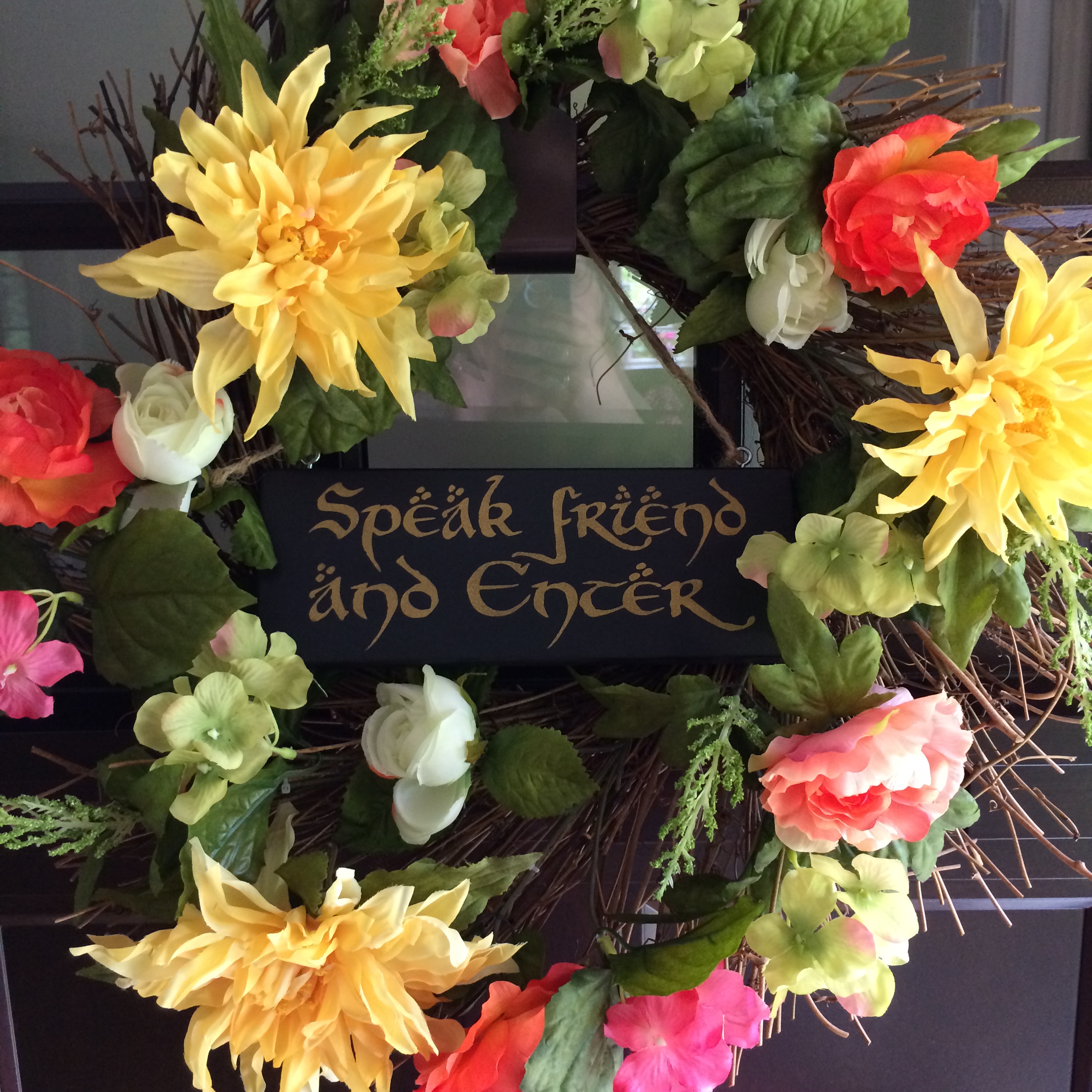
  1. We moved into our first house, which we are really, really excited about. It’s just the right size for us (and the obscene number of books I own), and for the first time in ten years my desk is not in the dining room. Also we named our house Bag End.
  2. We’ve visited with two dozen friends and family members at the house in under a month, which is awesome, and possibly explains why I’ve read a grand total of only four books and completely neglected this site since we moved.
  3. I’ve had another story and another poem (both quite short) published, which I’m also, really excited about. There are links over on carolynoliver.net if you’re interested.
  4. We took an actual vacation with my family to Rhode Island, where I read three of the four books I just mentioned and saw four movies in a movie theater. Totally recommend the new Star Trek, btw.
  5. I discovered that a month away from blogging is a bit too long for my taste. I’ve missed writing about books, and reading what other bloggers have to say about them. Onward!

IMG_7047