Recommended Reading: Orkney, by Amy Sackville

This is a small book, modest in its ambitions.  Light on plot and heavy on atmospherics, you might say. Orkney

A middle-aged professor takes his young, mysterious bride to Orkney (the Seal Islands, north of Scotland) for their honeymoon. Everyday his research languishes as he watches her out the window; she stares into the sea, and her closed thoughts and wishes torment him.

I was drawn to the book by its premise and because I love the sea, and I’ve always been fascinated by the very cold shores that are barely inhabited, so old and so weathered that they seem out of legend and myth, or the very beginning of the world.

Orkney brings this kind of landscape into beautiful focus — I’ve never read so many words for the colors of the sea or the sound of the wind. It’s lovely — enchanting, even. It’s not a page-turner, but it’s food for the imagination, and so I recommend it.

“break, blow, burn, and make me new”

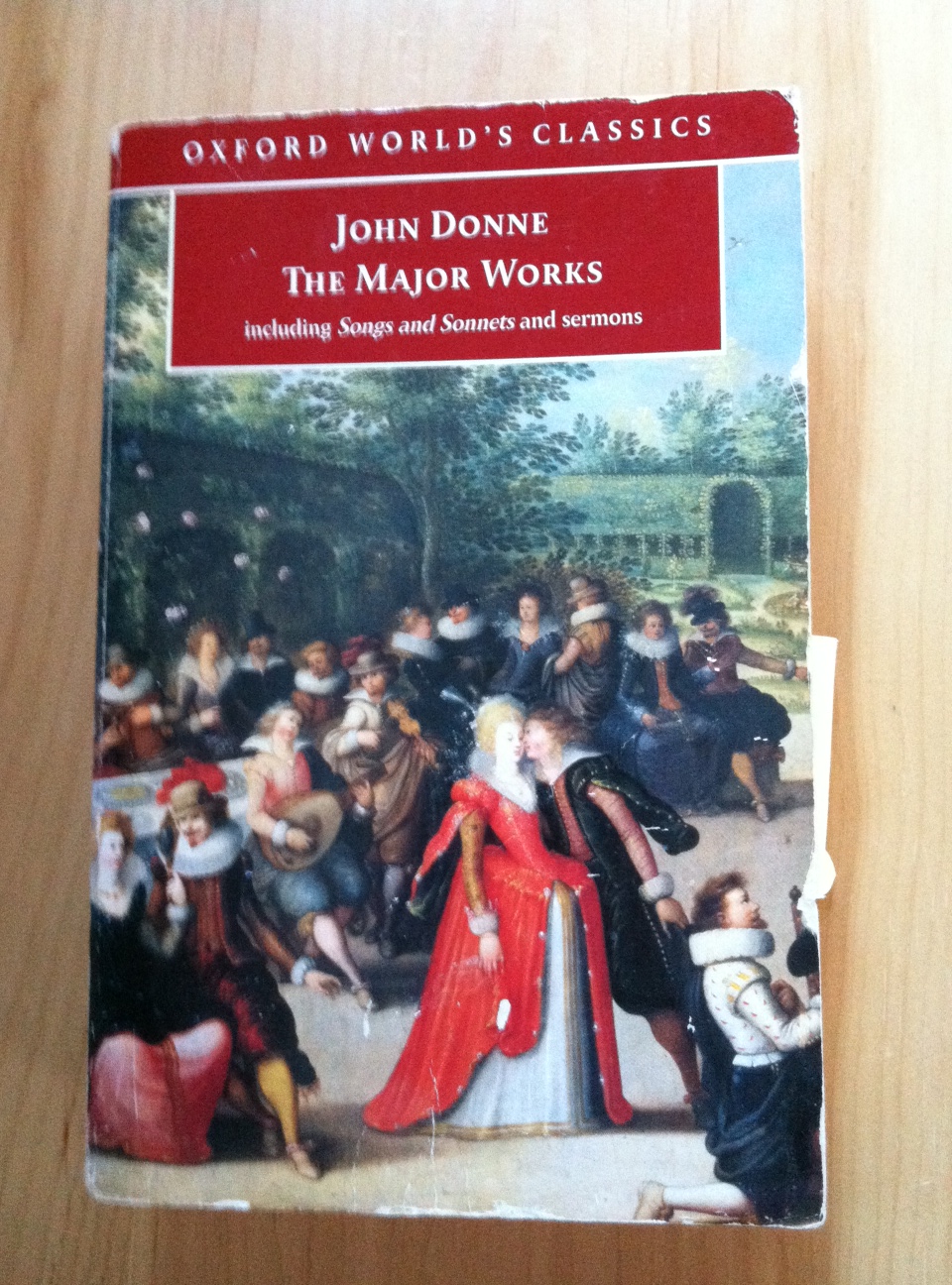
John DonneI promised John Donne this December, and I’m here to deliver.

Though now remembered for his poetry, Donne was in his own day, and in the decades following his death, renowned as a preacher — Dr. Donne. His sermons were fiery, with titles like “Death’s Duel” (which was, in fact, his last sermon, preached just days before he died, probably from stomach cancer). There’s always, in Donne, a tension between Jack Donne — rake, lady’s man, incorrigible wit– and Dr. Donne, the deeply spiritual orator wrestling with his faith and with death itself. All his writing, however, shows a mind never at rest; it’s full of paradox, and flexible, inventive language.

Worship and desire often find unusual objects in Donne’s poetry. When he writes about women, the devotion is nearly saintlike; he addresses them as he would his God. On the other hand, his devotional poetry burns with all the passion of erotic desire. It’s just one of the reasons why Donne is so compulsively readable.

Here’s Holy Sonnet X (sometimes given as XIV), known conventionally by its first line, “Batter my heart, three-person’d God’:

Batter my heart, three-person’d God; for, you
As yet but knock, breathe, shine, and seek to mend;
That I may rise, and stand, o’erthrow me, and bend
Your force, to break, blow, burn, and make me new.
I, like an usurp’d town, to another due,
Labour to admit you, but O, to no end.
Reason, your viceroy in me, me should defend,
But is captived, and proves weak or untrue.
Yet dearly I love you, and would be loved fain,
But am betroth’d unto your enemy;
Divorce me, untie, or break that knot again,
Take me to you, imprison me, for I,
Except you enthrall me, never shall be free,
Nor ever chaste, except you ravish me.

Amazing, right? Just look at the paradox in the last line! And the treatment of God as a ravishing lover — brilliant impudence.

In Which I Eviscerate the First Hobbit Movie

It’s Hobbit time again, Charlie Brown. All across the interwebs, people are writing handy “Previously on The Hobbit” recap pieces in preparation for the next movie’s opening today. Here’s my humble contribution.

As a nine-year-old, I thought the narrator of Tolkien’s The Hobbit was talking down to me, and thus disliked the book immensely — so much, in fact, that I delayed reading The Lord of the Rings until I was seventeen. It didn’t help that I hated the narrator of the audiobook version, which I was obliged to listen to during one of our family road trips (perhaps this is the source of my dislike for the medium?). The Hobbit

So, if you will, imagine my surprise when I picked up The Hobbit last year, before the movie came out, and found it charming, exciting, and full of respect for its intended audience. The narrator I once found condescending now seems conversational, inclusive, inviting. It’s a children’s book, yes, but the kind that an adult can read with enjoyment.  It’s like an amuse-bouche before the main courses — The Lord of the Rings and The Silmarillion.

Now, before I start in on the movie, let me disclose that I thoroughly enjoyed Peter Jackson’s Lord of the Rings trilogy, a view not shared by many die-hard Tolkien fans, I know. But I thought Mr. Jackson handled the necessary exigencies well. Sure, I could have done without the Elves at Helm’s Deep and the ill-contrived Aragorn-isn’t-ready-for-kingship plot line, and yes, I would have liked to see Tom Bombadil & Goldberry, and the Scouring of the Shire, but these are issues I can live with.

And before you ask, there were some positives to my Hobbit movie-going experience: I thought the casting of the major characters was spot-on, and I loved Howard Shore’s score. But alas, not enough for the movie to avoid my wrath.

Herewith I present, in no particular order, my objections to Mr. Jackson’s treatment of The Hobbit:

Three movies out of a 275-page book? That’s just turning a beloved story into a cash cow. I know I’m not the first to make this argument, but I think it needs to be out there. Yes, asking people to buy three movie tickets instead of two will increase your profits by one-third. But that’s not a good reason to expand a story so drastically. (Much as I wish I hadn’t, I saw a preview for the second installment that featured Legolas and an Elf played by Evangeline Lilly. Oh, PJ. Please. Creating characters out of whole cloth? Where do you and Fran Walsh and Philippa Boyens get the nerve? If you REALLY need a female character, turn Beorn in a woman. For serious. That would work better.) I get that filmmakers have to make tough choices about what to cut from beloved books in order to make a reasonable run-time, but adding material to a fully-realized Tolkien story is sheer hubris.

Perspective: The narrator of The Hobbit shadows Bilbo, for the most part. When Gandalf disappears, Bilbo doesn’t know what he’s up to until Gandalf shares information with him. In this way, Bilbo is placed in the position of a child, not always allowed access to the adult world, unless it’s through a gate-keeper. He’s on an important quest with the Dwarves, but it’s the grown-ups — Gandalf in particular — who will deal with The Necromancer (aka Sauron) who gains power in Mirkwood. Here’s what The Hobbit has to say on the subject:

[. . .]but every now and again he would open one eye, and listen, when a part of the story which he did not yet know came in.

It was in this way that he learned where Gandalf had been to, for he overheard the words of the wizard to Elrond. It appeared that Gandalf had been to a great council of the white wizards, masters of lore and good magic; and that they had at last driven the Necromancer from his dark hold in the South of Mirkwood. (266)

Yep, that’s pretty much it. If Tolkien thought a blow-by-blow of the Battle of Dol Guldur was necessary to elucidate the plot of The Hobbit, he could have included it. But he doesn’t. And apparently Mr. Jackson knows better: In the first Hobbit movie, we’re shown Gandalf deep in conversation with Elrond & Galadriel (and good old nefarious Saruman, nice to see you as always, Mr. Lee), and that’s just a taste of what’s to come. I understand that in some quarters, there are calls to get as much of Middle Earth on screen as possible. But guess what? There are other books for that!  Seriously, quit calling the movies The Hobbit: An Obvious Subtitle. Call them Money-Making Lord of the Rings Prequels.

Violence: The Hobbit is a children’s book that doesn’t gloss over difficult choices, the risk of death, or various fantastic dangers. However, there were a couple instances of gore (especially the beheading of Thorin’s father) that make the movie a no-go for kids 8-10. I know that they don’t belong to the coveted ticket-buying demographics, but you think Mr. Jackson could have flexed some muscle with the studios — or exercised some self-restraint — and toned it down a notch or two, so that Tolkien’s intended audience could be his audience, too. He lost a great opportunity to make a family film — and not in a schmaltzy (or cartoon) sense.

Radagast: Oh dear, where to begin. Radagast is, as anyone who’s read The Silmarillion can tell you, a Maiar, a being of divine origin though not one of, and less powerful than, the Valar. Like Gandalf, Radagast walks Middle Earth is the guise of an old man, but unlike Gandalf, his affinity is for flora and fauna, not Elves and Men and Hobbits. A little odd he may be, but the totally bizarre movements and costume Mr. Jackson gave him are a bridge too far. I was viscerally angry with this portrayal, which is in line with Mr. Jackson’s choice to turn Gimli into a buffoon to play for cheap laughs in LOTR. Mr. Jackson has departed from Tolkien’s nuanced, gentle laughter with the characters (and sometimes at their foibles) and created his own brand of cruel comedy that attacks Radagast. And the bird excrement (this is a blog for all readers, but you know what I’m saying) on his head? BAD FORM, Mr. Jackson.

An effects issue: While Gollum, played by the always-amazing Andy Serkis, was graced with the best CGI effects ever, Azog was just atrocious. Totally fake-looking.

And the cherry on top of my dislike sundae: my favorite musical section of the movie, which worked so well in the trailer, is the Dwarves’ song (not the over-long dishwashing one — the other one). And it’s cut off too soon! Gah!

Essentially, I think Mr. Jackson shows a significant lack of respect for his source material.

Here’s hoping I’ve saved you twelve — make that twenty-four — bucks.

Recommended Reading: Life After Life, by Kate Atkinson

I’d been lingering for two months on the library waitlist for Kate Atkinson’s new book, so it was with glee that I delved in to this 500+-page thumper.  Life after Life

I went in cold, and was blind-sided by the inventive structure. The novel attempts to answer that unanswerable question: what would you do if you could live your whole life over again? What would you change? How would you try to get it “right?”

You see, Ursula Todd, the novel’s lens and protagonist, can live her life over again, and not just once. This twist ensures that she also dies, over, and over, and over again, so many times that I lost count. She begins again at her birth (though sometimes, mercifully, Atkinson fast-forwards to another precipitous event), and, until she makes it past childhood, her first focus is to avoid the things that carried her off in those years: accident and illness.

Once she successfully navigates into adolescence, Ursula begins to recognize her peculiar form of reincarnation, and starts trying to prevent not only her own death, but those of her family and neighbors, and finally, even greater catastrophes. But she finds that every choice engenders unintended, often dangerous consequences.

I loved this book, not only for its unconventional, even experimental form, but also for its carefully-chosen language and attention to the details of time and place and families. If I had the chance to speak with Ms. Atkinson, I’d ask her how she kept track of the detailed strands of narrative; the continuity across times and lines of plot is striking.

And I’d ask how she decided when to stop the book, when in theory the variations could continue on and on.  And I’d ask her if she’d like the chance to live over and over again, or if once is enough. I’m asking myself that question right now.

7 Last-Minute Gifts for the Bibliophile, Recommended by Your Friendly Neighborhood Book Blogger*

Joy and lightThis is my favorite time of year. I love the lights that seem to keep the ever-encroaching darkness at bay, carols, ornaments, sending Christmas cards (one of those traditions that’s quite sadly going by the wayside), finding Christmas cards in the mail . . . I even like snow. I love that people are especially generous this time of year, with those they love and with complete strangers.

So whether you’re celebrating Christmas, Solstice, Festivus, Kwanzaa, (belated) Hanukkah, or just the end of the year, here’s a roundup of gift picks for readers, in no particular order.

1. A donation to a book- or literacy-related charity in your giftee’s name: Try First Book, Room to Read, and Reading is Fundamental, for starters.
2. Page nibs: For the inveterate dog-earer and library borrower (ahem). You know that friend whose paperbacks look a half-inch thicker on top because of the turned-down pages? Think page nibs. Levenger.com 
3. Typographic ornaments: Nothing makes a book lover’s tree look cheerier than ampersands, fleurons, and nautical stars (I would know). Absolutely Icebox! on Etsy
4. Gift card (or membership!) to a local independent bookstore: For example, the ever-wonderful Newtonville Books.
5. Litographs gift certificate: This website has amazing T-shirts and prints with designs created from whole texts. Way cool. They’re made to order, so you’re too late for the holidays if you need something specific, but a gift certificate means your bibliophile can choose the text they like best. My personal favorite: The Leaves of Grass T-shirt. Litographs.com  
6. Jane Austen paperweight: Captain Wentworth and Anne Elliot are probably the most romantic, and definitely the too-often overlooked pairing in Austen’s work.  Bixler and Johnson on Etsy
7. Writer-ly prints and cards: Prints and cards featuring writers’ houses — especially the Romantics and the Bloomsbury group. Amanda White on Etsy

*Hint, hint.

“and yet the menace of the years, / finds and shall find me unafraid”: RIP Nelson Mandela

Nelson Mandela in 2008 Source: Wikimedia Commons

Nelson Mandela in 2008
Source: Wikimedia Commons

Nelson Mandela read “Invictus,” by Victorian poet William Ernest Henley, to fellow inmates of the Robben Island Prison. It’s an oft-quoted poem, and here it is in its entirety. “Invictus” means “unconquered.”

Invictus

Out of the night that covers me,
Black as the pit from pole to pole,
I thank whatever gods may be
For my unconquerable soul.

In the fell clutch of circumstance
I have not winced nor cried aloud.
Under the bludgeonings of chance
My head is bloody, but unbowed.

Beyond this place of wrath and tears
Looms but the horror of the shade,
And yet the menace of the years
Finds and shall find me unafraid.

It matters not how strait the gate,
How charged with punishments the scroll,
I am the master of my fate:
I am the captain of my soul.

Early Read: The Antigone Poems*, by Marie Slaight; Drawings by Terrence Tasker

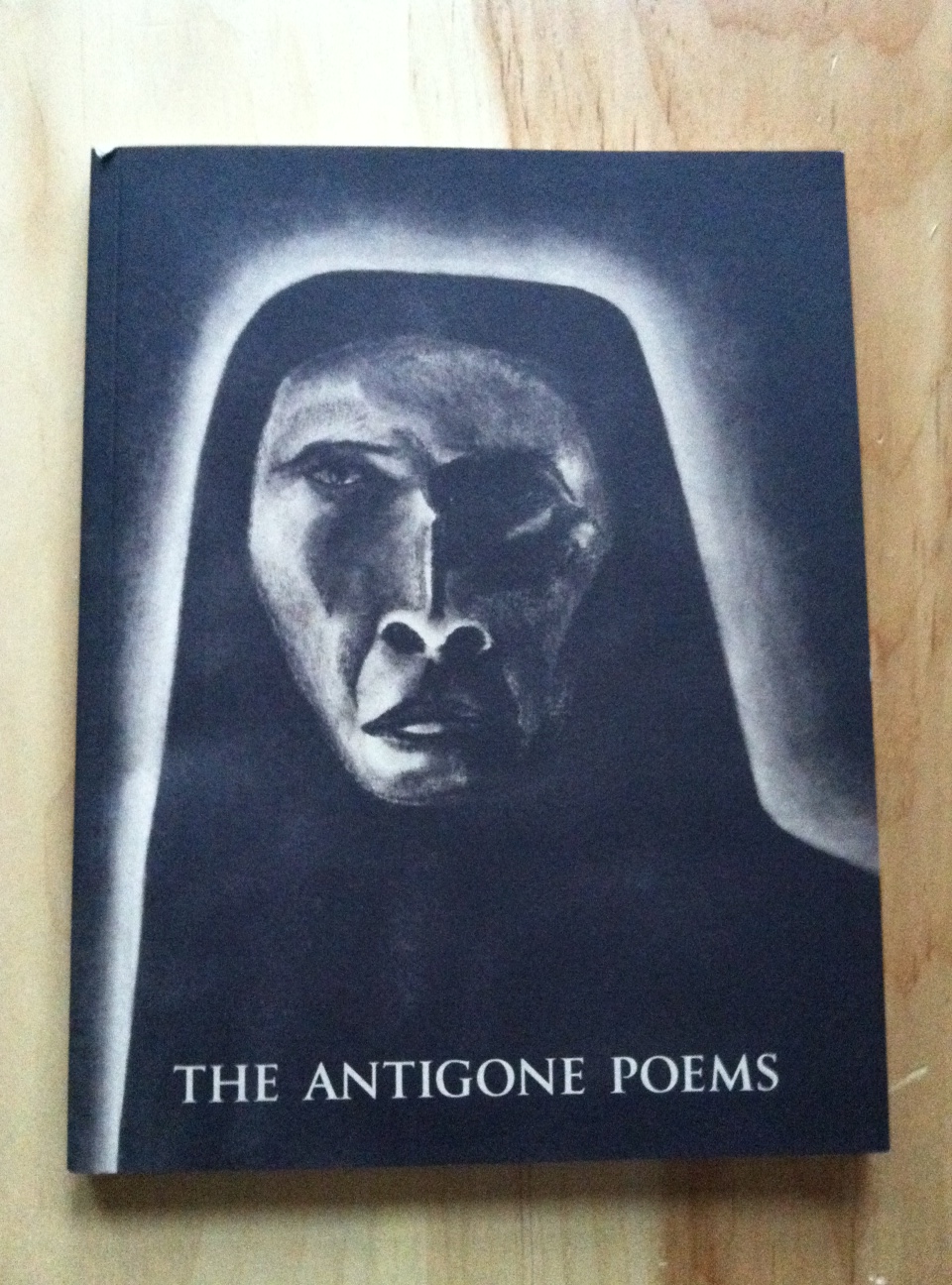
The Antigone PoemsThe Antigone Poems is a collaboration between poet Marie Slaight and artist Terrence Tasker, produced in the 1970s but forthcoming, in print-only form, in early 2014 from Altaire, a small press.

The slim volume is divided into five chapters, which are accompanied by Mr. Tasker’s charcoal drawings, which, as you can see from the cover, are strong, assured, and, at times, rather alarming. Like the poems, they’re evocative of the complexities of Sophocles’s play. I’ve taught the play several times, and I wish I’d had access to this book to share with my students.

The poems (all free verse) are surprisingly intimate, given that they often feel like screams of rage. The voice throughout appears to be Antigone’s, as she considers death, life, family, sexuality, punishment, and rebellion. The poems are simple, some fragmentary, but they’re smoldering and haunting. Some reviewers may take issue with the repetitive nature of the imagery, but I found it to be an appropriate stylistic echo of Greek tragedy.

I recommend finding a copy of The Antigone Poems when it comes out next year; try the library first.

* I received an ARC of this book through LibraryThing’s Early Reviewer program. I was in no way compensated for this review.

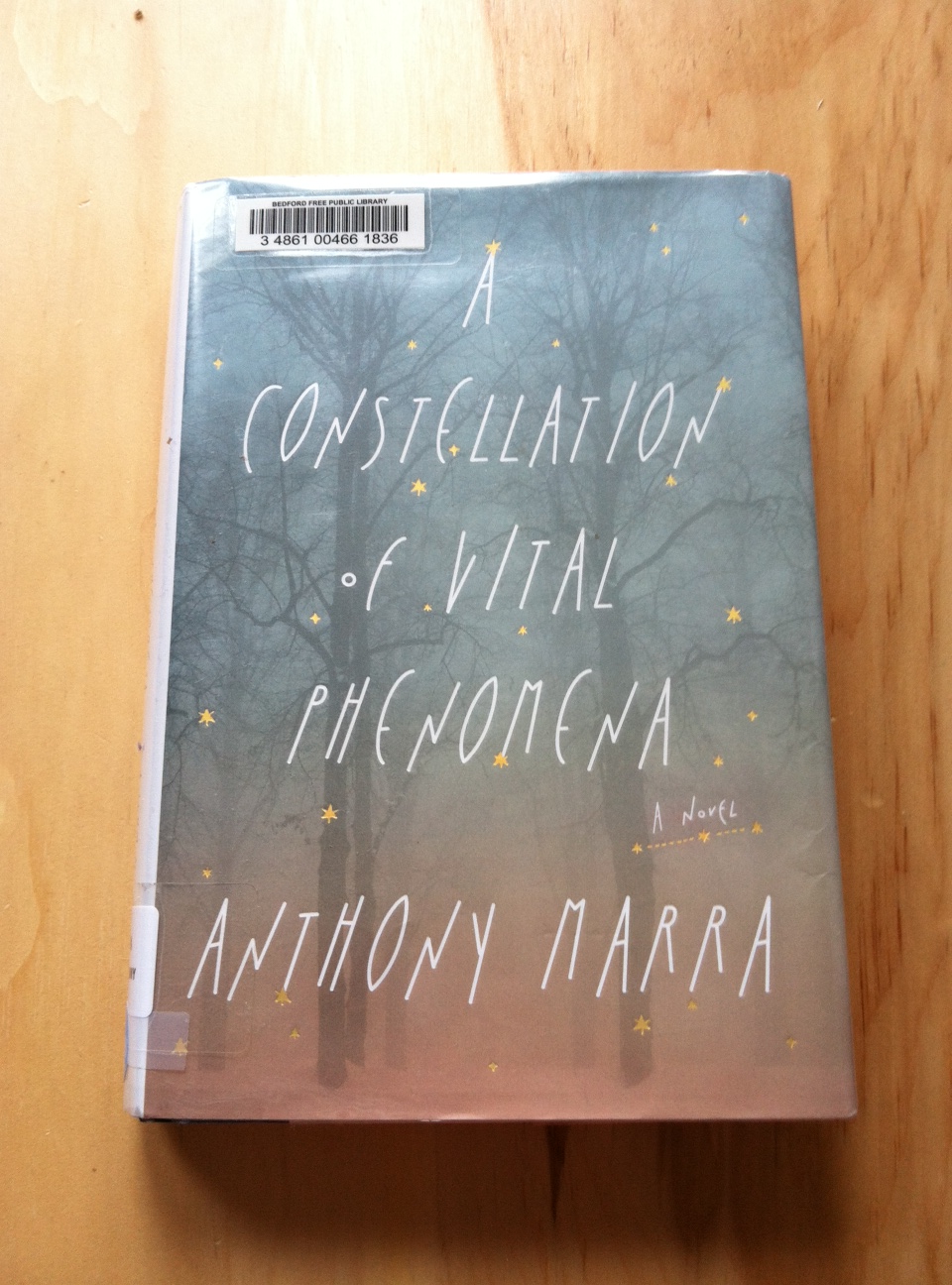
Recommended Reading: A Constellation of Vital Phenomena, by Anthony Marra

If I hadn’t read the jacket copy, I would have assumed A Constellation of Vital Phenomena is the work of an accomplished, many-times-published novelist. A Constellation of Vital Phenomena

But it’s Anthony Marra’s first novel, and when you read it, you’re going to weep, not just because there’s no way that should be possible, but because the story is so moving and so perfectly told, a gut-wrenching exploration of two Chechen wars, history, family, and the significance of place.

Eight-year-old Havaa’s father, Dokka, is disappeared by Russian forces in the middle of the night. Their neighbor Akhmed (like Dokka and Havaa, an ethnic Chechen) finds Havaa in the woods the next morning, and (rightly) fearing for her safety, takes her to the last doctor in the only hospital in the neighboring city, an ethnic Russian named Sonja. Sonja is processing her own trauma — the disappearance of her sister, Natasha. Over the course of the novel, the threads connecting all the principal characters — Dokka, Havaa, Akhmed, Sonja, Natasha, and Dokka’s betrayer and the betrayer’s father — slowly reveal themselves, forming a web more complicated and more harrowing than any of the characters understand.

The narrative jumps back and forward over a period of ten years, but the tendrils of connection reach back into Soviet Russia and forward into a future that’s not yet known. Tangential sequences that reveal information about secondary characters were masterful; the level of detail, the attentiveness to the minutiae of human survival, are impeccable.

I could write about this book for pages and pages, but I don’t want to ruin anyone else’s sense of discovery. It’s a December book, in that it will make you feel grateful for whatever and whomever you have to wrap around you.

*Be forewarned: there are torture scenes that made me physically ill, and I have a strong stomach.

“They also serve who only stand and waite.”

Milton Shorter PoemsMilton’s Sonnet 19,  “When I consider how my light is spent” is one of the best sonnets in English and a poignant meditation on the poet’s own blindness and responsibility to the world and his God.

Written more than a decade before the publication of Paradise Lost, Sonnet 19 finds the poet/speaker disconsolate at its opening, unsure how he will use his talents when he is blind, unsure how he can serve his God (and in a further implication, his country) in his affliction and at his advancing age.

The turn of the sonnet appears when “patience” counsels that God does not *need* any person’s labor, since God is omnipotent and, besides, his servants work by the thousands for his glory. To serve the lord, the speaker reflects, he must merely bear his own burden with grace: “They also serve who only stand and waite.”

And Milton waited, and in his waiting, created Paradise Lost.

Here it is, in all its exquisite glory:

Sonnet 19

When I consider how my light is spent,
E’re half my days, in this dark world and wide,
And that one Talent which is death to hide,
Lodg’d with me useless, though my Soul more bent
To serve therewith my Maker, and present [ 5 ]
My true account, least he returning chide,
Doth God exact day labour, light deny’d,
I fondly ask; But patience to prevent
That murmur, soon replies, God doth not need
Either man’s work or his own gifts, who best [ 10 ]
Bear his milde yoak, they serve him best, his State
Is Kingly. Thousands at his bidding speed
And post o’re Land and Ocean without rest:
They also serve who only stand and waite.

Literary Wives: The Wife, The Maid, and the Mistress, by Ariel Lawhon

literarywives2If you missed the Literary Wives introductory post, here’s the summary:  I’ll be joining bloggers Ariel, Audra, Emily, Cecilia, Kay, and Lynn, as we post every other month about a different book with the word “wife” in the title. This month, we’re writing about Ariel Lawhon’s novel The Wife, The Maid, and the Mistress, which will be published in early 2014.

Full disclosure: I, like the other Literary Wives bloggers, received an ARC of The Wife, The Maid, and the Mistress from the publisher, in exchange for an honest review and a link to Ms. Lawhon’s site, http://www.ariellawhon.com/.

Ms. Lawhon kindly answered our questions about the novel and her writing process; you can read the full interview, hosted on Audra’s blog, here: http://unabridged-expression.blogspot.com/2013/12/literary-wives-interview-with-ariel.html

Readers take note: Although I usually refrain from spoilers, what follows is a consideration of one aspect of the novel, and so I shall be spoiling away. Beware!

Here’s the Goodreads summary:

A tantalizing reimagining of a scandalous mystery that rocked the nation in 1930-Justice Joseph Crater’s infamous disappearance-as seen through the eyes of the three women who knew him best.

They say behind every great man, there’s a woman. In this case, there are three. Stella Crater, the judge’s wife, is the picture of propriety draped in long pearls and the latest Chanel. Ritzi, a leggy showgirl with Broadway aspirations, thinks moonlighting in the judge’s bed is the quickest way off the chorus line. Maria Simon, the dutiful maid, has the judge to thank for her husband’s recent promotion to detective in the NYPD. Meanwhile, Crater is equally indebted to Tammany Hall leaders and the city’s most notorious gangster, Owney “The Killer” Madden.

On a sultry summer night, as rumors circulate about the judge’s involvement in wide-scale political corruption, the Honorable Joseph Crater steps into a cab and disappears without a trace. Or does he?

After 39 years of necessary duplicity, Stella Crater is finally ready to reveal what she knows. Sliding into a plush leather banquette at Club Abbey, the site of many absinthe-soaked affairs and the judge’s favorite watering hole back in the day, Stella orders two whiskeys on the rocks-one for her and one in honor of her missing husband. Stirring the ice cubes in the lowball glass, Stella begins to tell a tale-of greed, lust, and deceit. As the novel unfolds and the women slyly break out of their prescribed roles, it becomes clear that each knows more than she has initially let on.

LawhonI didn’t care for this book; the pacing is off and the author relies too much on the reader’s ability to remember very specific dates when cutting back and forth in the narrative. Others have described the novel as funny, but I didn’t find it amusing at all. On the other hand, I think it’s an interesting foray into the Jazz Age that doesn’t sugarcoat just how difficult and desperate some women’s circumstances were.

And now, my responses to the Literary Wives questions:

1. What does this book say about wives or about the experience of being a wife?

In short: being a wife is the worst.

Stella’s husband, the judge, is a philandering cad with some serious honesty issues, who makes zero attempt to hide his affair(s) from his wife and who demands that she become the 1930s equivalent of Jackie Kennedy.

Ritzi (her nickname makes me gag), it turns out, is a wife too. She was so bored with her midwest farmer husband that she ran off to become a showgirl. Clearly, this did not work out well for her, what with the murder of the judge and the attempted forced abortion. In the end, however, her husband reveals himself to be the forgiving and stand-up type. We don’t get enough backstory to learn if Ritzi’s departure was motivated by any bad behavior on his part.

Maria’s husband is a pleasant-enough guy, when he’s not hiding his work troubles from her or breaking her treasured rosary.  She loves her husband, but keeps important information from him, some of which isn’t revealed until the very end of the novel. Of all the characters, she’s the most sympathetic, the most moral actor in an ethically grey landscape. Naturally, she’s diagnosed with cancer and dies a year after the events in the book.

2. In what way does this woman define “wife”—or in what way is she defined by “wife”?

I’m going to stick with Stella here, since she’s the “wife” in the title. At first, I liked Stella. She slams her husband’s hand in his car door when she finds evidence of his nonchalant cheating; she seems like the kind of person who stands up for herself. As the novel goes along, we learn that this is a recent development. After her husband decides to go into politics, some years before the main events of the novel, Stella acquiesces to his demands that she be seen and not heard, that she frequent the “right” stores, that she turn a blind eye to his bribery and illegal dealings. We enter her life at the point when she is utterly fed up with the ordeal of appearing as The Good and Dutiful Wife. The final straw is her husband’s attempt to take her personal property as part of the exchange for his judgeship. Stella gets it back. Joe gets dead.

Oddly, Stella’s yearly ritual of the drink and the toast to her husband seems to signal a devotion to Joe’s memory, the kind of devotion that she doesn’t display in life. Perhaps it’s their early affection that she remembers fondly; perhaps she only wishes to be at the center of things again. Either way, Stella never escapes being Joe’s wife.

Please visit the other Literary Wives bloggers to get their takes on the book! 

Emily at The Bookshelf of Emily J. 

Audra at Unabridged Chick

Ariel at One Little Library

Cecilia at Only You

Kay at WhatMeRead

Lynn at Smoke and Mirrors