“philocaly, philomath, sarcophilous—all this love,”: “For you, anthophilous, lover of flowers,” by Reginald Dwayne Betts

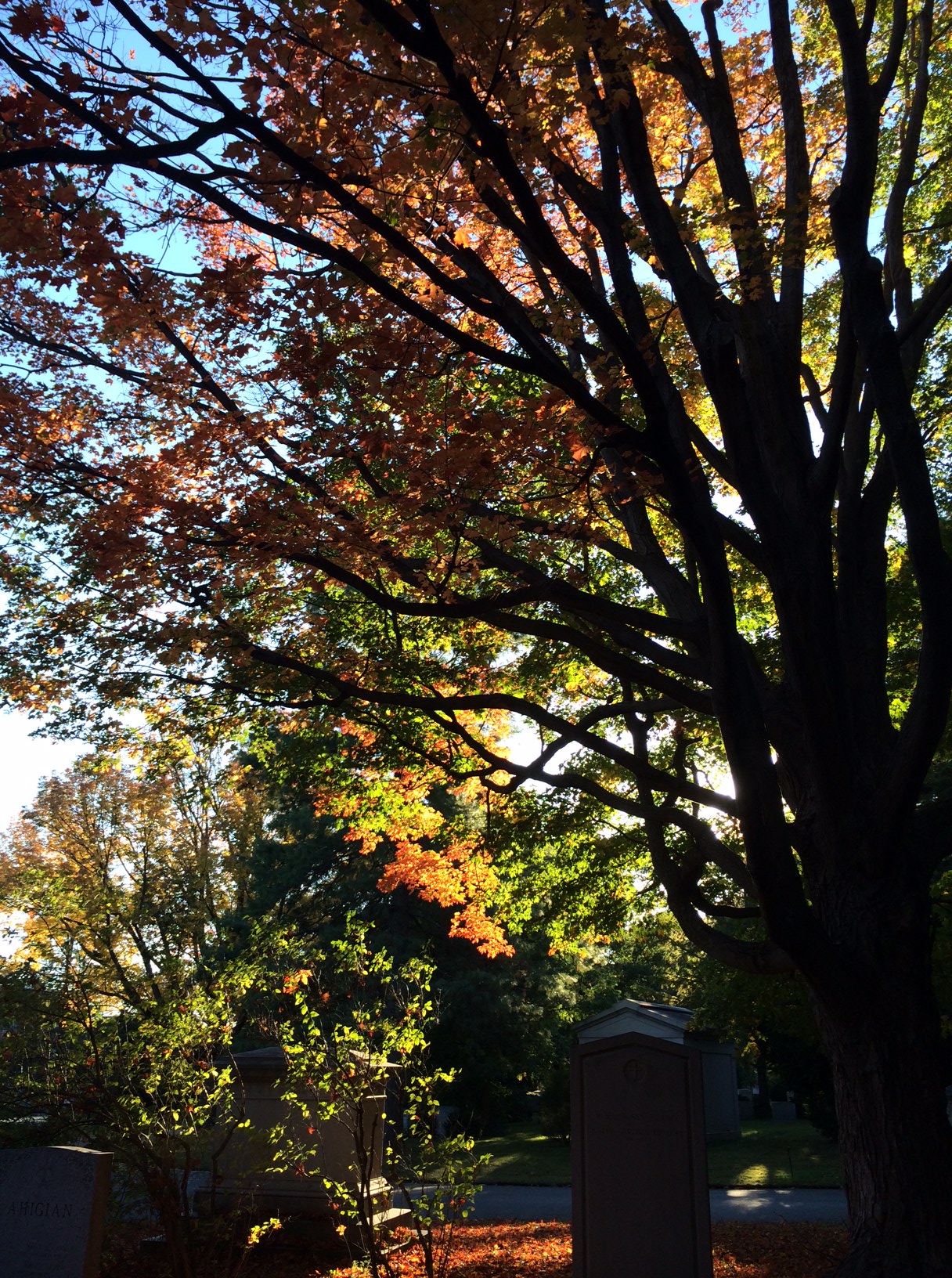
Fall trees in Mount Auburn Cemetery

Fall trees in Mount Auburn Cemetery

I love lists. So, apparently, does the rest of the world (see: Buzzfeed), and poets are no exception. Virtuoso lists are a feature of epic poetry, like Homer’s catalogue of ships, or Milton’s list of demons, or my personal favorite, the list of trees in Spenser’s Faerie Queene:

And foorth they passe, with pleasure forward led,
Ioying to heare the birdes sweete harmony,
Which therein shrouded from the tempest dred,
Seemd in their song to scorne the cruell sky.
Much can they prayse the trees so straight and hy,
The sayling Pine, the Cedar proud and tall,
The vine-prop Elme, the Poplar neuer dry,
The builder Oake, sole king of forrests all,
The Aspine good for staues, the Cypresse funerall.

The Laurell, meed of mightie Conquerours
And Poets sage, the Firre that weepeth still,
The Willow worne of forlorne Paramours,
The Eugh obedient to the benders will,
The Birch for shaftes, the Sallow for the mill,
The Mirrhe sweete bleeding in the bitter wound,
The warlike Beech, the Ash for nothing ill,
The fruitfull Oliue, and the Platane round,
The caruer Holme, the Maple seeldom inward sound.

(No, your screen isn’t playing tricks on you; Spenser wrote the Faerie Queene in a deliberately archaic style).

I’ve been thinking about lists and poetry because the Valentine’s Day poem of the day from The Poetry Foundation was Reginald Dwayne Betts’s “For you: anthophilous, lover of flowers,” which I read and immediately fell in love with (well-played, Poetry Foundation). It’s a catalogue of lovers, but not exactly in the sense you expect, and it’s gorgeous.

I wonder: which one are you?

Recommended Reading: Excellent Women, by Barbara Pym

photo (9)A few days ago, one of my very best friends and I talked a little about Philip Larkin, the dean of depressed and depressing (though wonderful) twentieth century poets. While I’ll be happy to revisit Larkin soon, the conversation reminded me of a book I’ve been meaning to review for months: Barbara Pym’s Excellent Women.

You see, Barbara Pym wrote a string of successful novels during the 1950s and early 1960s, including Excellent Women (1952), and then her career came to a standstill. Her publisher, and others, rejected all her manuscripts, declaring them too old-fashioned.

In 1977, however, Philip Larkin and David Cecil (a prominent historian) named her the most underrated writer of the century, and she catapulted back into broader recognition.

It’s recognition I didn’t share, I regret to say; I’d never heard of Barbara Pym until I was browsing through Classics Club lists in 2013 as I put together my own. She kept popping up, and then I found a copy of Excellent Women at a used bookstore in western Massachusetts, and that is the long and short story of how I came to read it.

Set in what was then contemporary post-war London, Excellent Women is the tale of Mildred Lathbury (excellent name, isn’t it?), an unmarried woman living in a flat. Like other “excellent women,” she keeps an eye on her neighbors and the local curate, and the affairs of her small social circle take up much of her time.

I suppose an unmarried woman just over thirty, who lives alone and has no apparent ties, must expect herself involved or interested in other people’s business, and if she is also a clergyman’s daughter then one might really say that there is no hope for her. (3)

If you’re hearing bells that peal “Jane Austen” now, I’m not surprised; this novel is full of subtle and barbed social commentary, its heroine an Elinor Dashwood figure with no Edward Ferrars on the horizon, and no Marianne to fuss over.

The plot, which involves the disintegrating marriage of a neighboring anthropologist and her rakish husband, a highly suspicious widow with her sights set on a vicar, jumble sales, unsuitable matches, and many cups of tea, is really not so important as the characters and Mildred’s observations, which are simply a treat to read. Here are some of my favorites:

‘Now Julian, we don’t want a sermon,’ said Winifred. ‘You know Mildred would never do anything wrong or foolish.’
I reflected a little sadly that this was only too true and hoped I did not appear too much that kind of person to others. Virtue is an excellent thing and we should all strive after it, but it can sometimes be a little depressing. (44)

On the bus I began thinking that William had been right and I was annoyed to have to admit it. Mimosa did lose its freshness too quickly to be worth buying and I must not allow myself to have feelings, but must only observe the effects of other people’s. (76)

I was so astonished that I could think of nothing to say, but wondered irrelevantly if I was to be caught with a teapot in my hand on every dramatic occasion. (205)

And finally, of excellent women themselves, Mildred says,

‘They are for being unmarried,’ I said, ‘and by that I mean a positive rather than a negative state.’
‘Poor things, aren’t they allowed to have the normal feelings, then?’
‘Oh, yes, but nothing can be done about them.’

One gets the feeling that Mildred was fond of Jane Austen.

By the way, I suspect that a book that’s coming out later this spring (I haven’t read it) would be very interesting to read alongside Excellent Women. It’s called Spinster: Making a Life of One’s Own, by Katie Bolick.

I’d certainly like to read another of Barbara Pym’s novels, and I’d be delighted if you could recommend one to me.

Bringing Sexy Back (To Valentine’s Day): 15 Steamy Poems by Esteemed Poets

Dear Readers,

This post was a big hit last year, and so it’s back (It’s 2015, there are 15 poems . . . it works, right?). I hope you’ll post in the comments so I can get a head start on 2016’s Valentine’s poetry post.

Happy Valentine’s Day in advance!

(Special mention to our friends J and D, celebrating their first anniversary this week, and our friends D and E, whose birthdays are on Valentine’s Day.)


Toss that teddy bear and give your significant person the gift of verse this Valentine’s Day.

Red Rose Petals by Victor Habbick, courtesy freedigitalphotos.net

Red Rose Petals by Victor Habbick, courtesy freedigitalphotos.net

That poet everyone reads at weddings is actually much more appropriate for the bedroom:

e. e. cummings, “i like my body when it is with your” 

An unsexy title for a very sexy poem (check out those ellipses!): 

Li-young Lee, “This Room and Everything In It”

The “Oh, snap” kind of sexy:

Edna St. Vincent Millay, “I, being born a woman and distressed”:

Wistful sexy:

C. P. Cavafy, “Body, remember”

Bitter sexy:

Thomas Wyatt. “They Flee from Me”

Literate sexy:

Robert Hass, “Etymology” (start watching at 18:42)

Damn sexy:

Audre Lorde, “Recreation

Desire, frustration, and jewelry. Also: socioeconomic tension. (And the first overtly lesbian poem I read as a teenager. Bit of a lightbulb moment, there.)

Carol Ann Duffy, “Warming her Pearls”

Difficult to choose just one Donne poem, but hey, let’s go with the salute to nakedness:

John Donne, “To His Mistress Going to Bed”

Restraint and abandonment, all at once:

Emily Dickinson, “Wild Nights – Wild Nights! (269)”

For the Dear Readers who are also parents: 

Galway Kinnel, “After Making Love We Hear Footsteps”

Maybe this is where they got the title for Blue is the Warmest Color:

May Swenson, “Blue”

I hate birds, but this poem is still amazing: 

Henri Cole, “Loons”

You’ll never look at roses the same way again, I promise:

D.H. Lawrence, “Gloire de Dijon”

And yes, a Neruda poem. But I can’t find it anywhere on the interwebs, so you’ll have to go find a copy of World’s End or Late and Posthumous Poems for yourself. 

Pablo Neruda, “Física”/”Physics”

Your turn: what’s the sexiest poem you’ve ever read?

Recent Reads

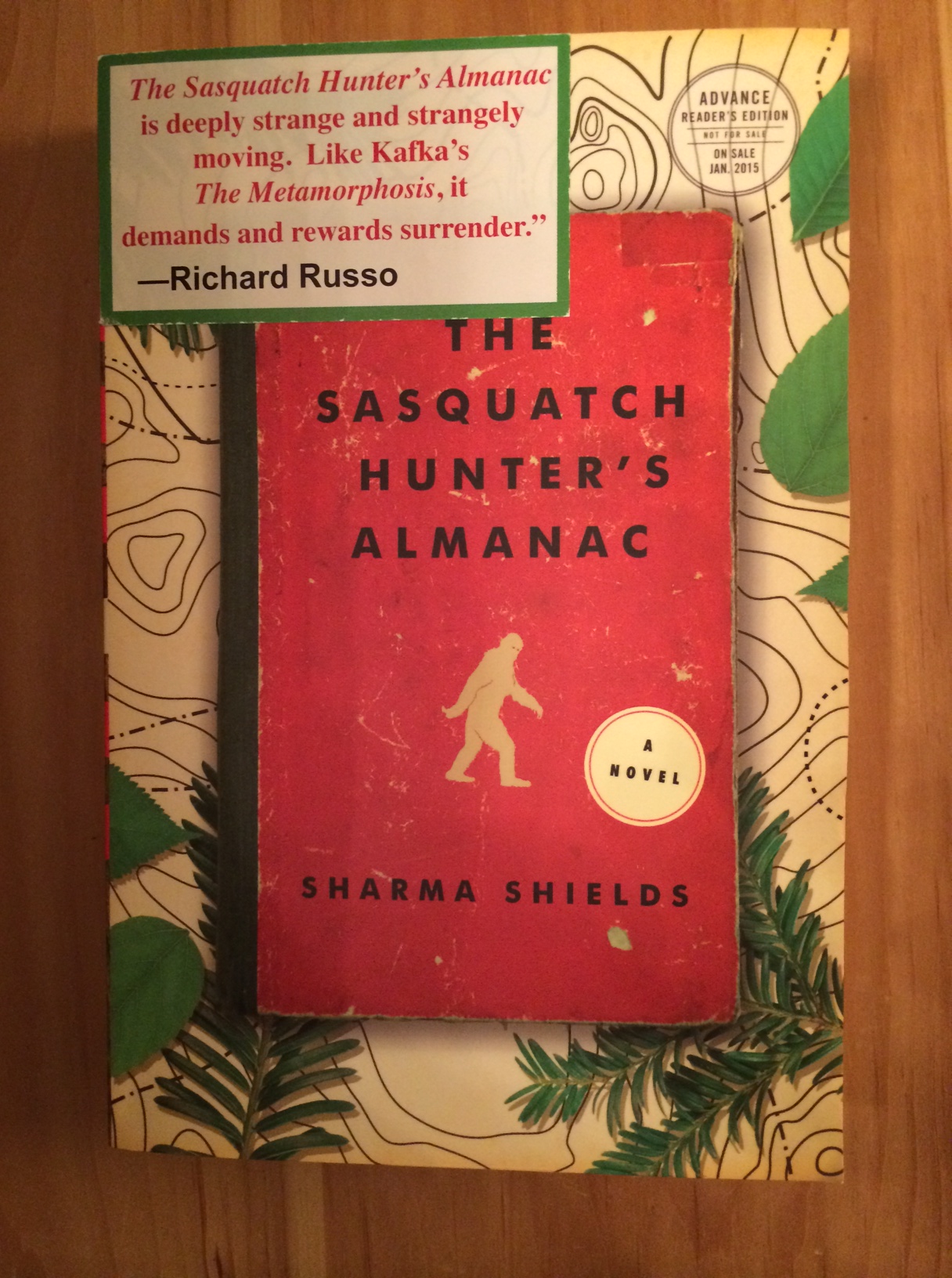
photo (7)The Sasquatch Hunter’s Almanac*, by Sharma Shields, is an eccentric book, bildungsroman meets family saga meets magical realism meets domestic divorce drama. Once I got past the first two chapters, the book was tough to put down; I loved the way Ms. Shields broke up the text, noting the year before each section; it helped this multi-generational story to move along quickly. The plot follows Eli Roebuck and his family as Eli searches for the Sasquatch his mother abandoned him for when he was a boy. As it turns out, Eli isn’t the only person in his family who sees mythical creatures. Recommended if you’re interested in a lighter, more domestic Neil Gaiman-esque book.

*I received this book through LibraryThing’s Early Reviewers program, which did not affect the content of my review.


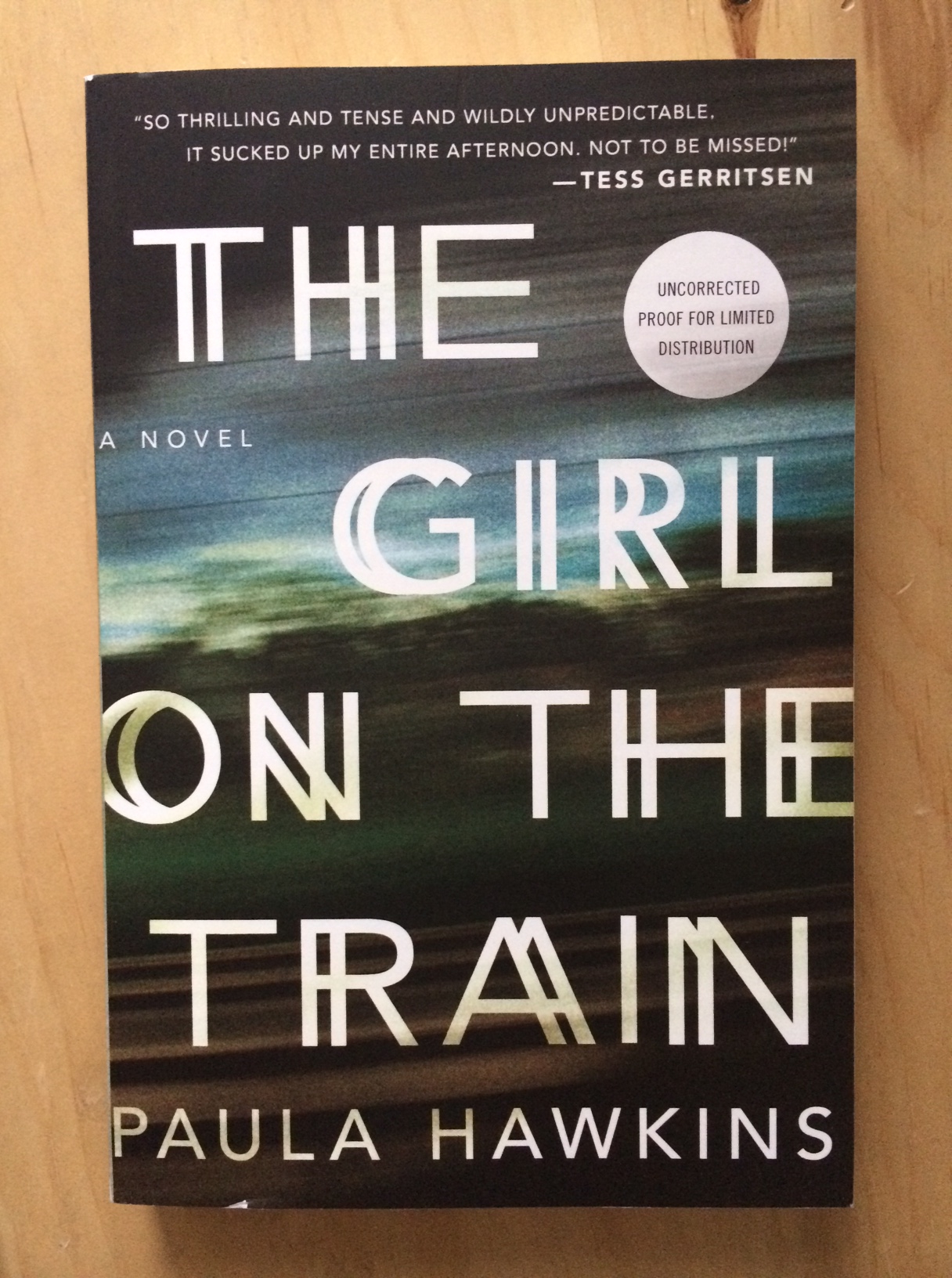
photo 2 (1)The Girl on the Train*, by Paula Hawkins, came packaged as the swankiest galley I’ve ever seen. It’s been billed as this year’s Gone Girl, and it is a psychological thriller featuring a missing woman and multiple perspectives, but that’s really as far as the comparison goes. It’s a page turner since Ms. Hawkins has mastered the art of doling out relevant information, but I had the main mystery figured out about a third of the way through the book. The plot: Rachel takes the same train every weekday, and has noticed a particular couple on the route; she goes so far as to imagine lives, names, and personalities for the pair. Then the woman disappears, and Rachel thinks she has information about the case, which leads her deeper and deeper into the lives of strangers, and her own.

photo 1 (1)Recommended for commute reading.

*I received a galley of this book from the publisher for review purposes, which did not affect the content of my review.

“Why, oh why, the doily?”: Elizabeth Bishop’s “Filling Station”

This weekend, I was reading a very interesting essay on the correspondence between Robert Lowell and Elizabeth Bishop (Austin Allen’s “Their Living Names”), when it struck me that I’ve never featured Elizabeth Bishop on the site.

My high school English classes featured shockingly little poetry; I can remember the novels we read, but the only poems that spring to mind, besides a sonnet or two, are Eliot’s “The Hollow Men,” Langston Hughes’s “Harlem,” Thomas Hardy’s “Channel Firing” (which I’m pretty sure was on a mock-AP test), Cummings’s “anyone lived in a pretty how town” and Elizabeth Bishop’s “Filling Station.”

I remember “Filling Station” in particular because nobody in our class knew that “Esso” was a brand of gasoline (it’s an older name for Exxon-Mobile, still used in countries outside the United States), and so we found that line frustrating as we worked on the poem as a class. Bishop’s “big hirsute begonia” is the first time I remember hearing the word “hirsute,” and I’ve never forgotten it.

The details of the poem serve to highlight absence and presence: the presence of the father and sons and the dog, all dirty and greasy, but seemingly content, and the absence of the figure who put out the wicker furniture, waters the plant, and who embroidered the doily.

I liked the poem in high school, for its leap from first to last line, and as an adult I think I better see the way Bishop points to the kinds of work people do: visible work, like running a filling station, and the quieter, almost invisible work of caring and beautifying. The results of that kind of work are often hiding in plain sight, even if the worker—the “somebody”—is absent.

Recommended Reading: Ancillary Justice, by Ann Leckie

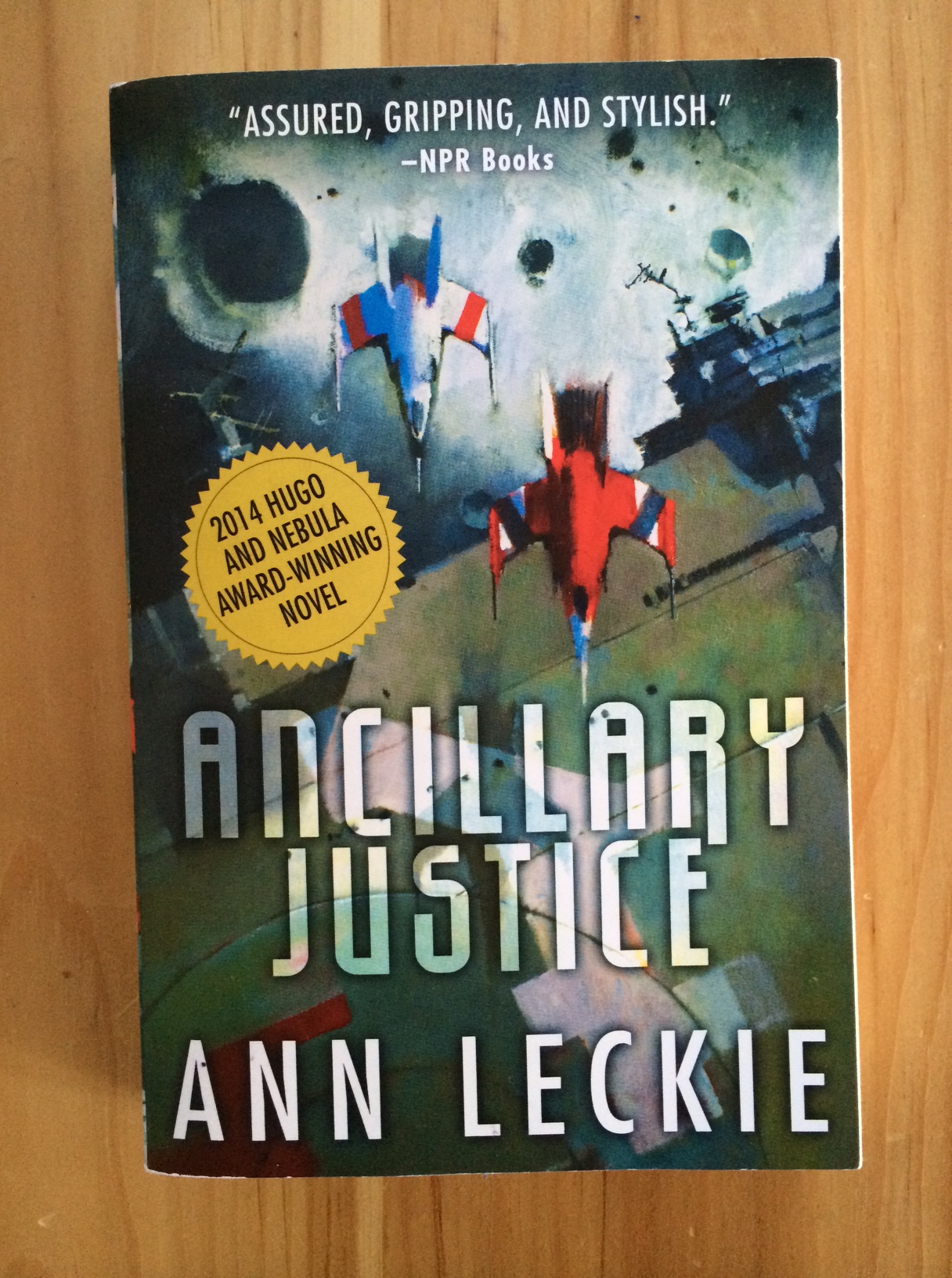
Ann Leckie’s Ancillary Justice has won essentially every sci-fi award available–and justifiably so. It’s one of the best sci-fi books I’ve ever read, an intelligent, gripping tour-de-force that demands and rewards the reader’s undivided attention.

photo (5)I’m going to say almost nothing about the plot because I’m hoping you’ll read this book and I want you to get the most out of the experience. In brief, two stories run side by side.

Breq is the sole survivor of a twenty-year-old disaster. She’s out for justice, or maybe revenge, but a figure from an even more distant past might complicate things.

The Justice of Toren is an enormous starship, its artificial intelligence nearly omniscient and able to “be” in many places at once, both on the ship and off. The ship serves the Radch, a human empire that has been conquering the galaxy, but Justice of Toren’s mission is one of the last of its kind, and something’s afoot that’s resisting its analysis.

This book is so smart, so original, so interesting. What’s been getting the most play is Ms. Leckie’s take on gender; the Radch do not recognize gender at all, so the only pronouns in use are female. Every character is “she”; it’s jarring at first, and I found myself, ardent feminist though I am, analyzing characters for hints of their “actual” gender, when of course no such “actual” gender exists in the world of the novel. I suspect Ms. Leckie knew readers would do this; it’s a subtle critique of our own gender-obsessed culture, and a commentary on the way in which for many hundreds (if not thousands) of years, humanity accepted “he” as the universal pronoun for people and for God.

[I have utterly no idea how they’re going to make TV series out of this book, let alone cast it. Well, I can imagine Ronald D. Moore doing it, but he’s otherwise occupied right now. The book has been optioned for TV, which you can read about here. Don’t read the last paragraph–spoilers, sort of.]

Gender aside, Ancillary Justice has a great deal to say about consciousness, psychology, empire, and cultural assimilation — we’re talking Battlestar Galactica-level nuance and interest (you knew I was going to bring BSG into this eventually, right?). Thematic concerns aside, it’s action packed and suspenseful, and a treat to read.

Ms. Leckie’s world-building is fascinating — it’s minimalist compared to some of the overwrought work that pops up in speculative fiction. Details are carefully placed, and often mysterious — I can’t wait to read the next book in the planned Imperial Radch trilogy to learn more (saga-phobes, never fear: Ancillary Justice works just fine as a standalone).

I’ll leave you with a few questions from the novel, ones I’m still thinking about, weeks after I finished it:

“[. . .] is anyone’s identity a matter of fragments held together by convenient or useful narrative, that in ordinary circumstances never reveals itself as a fiction? Or is it really fiction?” (207)

*Special hat tip to Mr. O, who got me this book for my birthday. Well done, sir.

Two Poems on Poetry

I love reading writers on writing — interviews with authors about how they work, where they work, why they write, and so on. The Guardian has a series on writers’ rooms that I love to pop into now and again; here’s Seamus Heaney’s.

This week I’m reading two very different poems about poetry and writing poetry. Charles Wright is the current United States Poet Laureate; his poem “Reunion” is short, and very personal. He ends the poem with,

I write poems to untie myself, to do penance and disappear
Through the upper right-hand corner of things, to say grace.

Archibald MacLeish’s “Ars Poetica” is a playful, self-contradictory riff on Horace’s famous work of the same name, a set of guidelines for the crafting of poetry. In his rather famous and formulation,

A poem should not mean
But be.

What are your favorite poems about poetry?


Two notes from the poetry world:

Apparently a treasure-trove of lost Neruda poems has been found. (The Guardian)

Charles Simic’s tribute to his friend Mark Strand is wonderful, moving, human. (NYRB)


Fast Read: Dirty Chick, by Antonia Murphy

photo (3)In a late episode of The West Wing, Toby asks a senator what she’d like to do if she weren’t politicking. “I’d grow apples,” she says.

The first time I saw that scene, a lightbulb went off. That’s what I’d like to do too, if I weren’t writing and reading, and if I had a propensity related to green things that didn’t involve killing them. (Although I like to think that this year I’ve progressed to benign neglect.) Someday I fully intend to (a) buy a house and (b) turn half said house’s backyard into a garden, which will (c) necessitate the acquisition of many, many gardening books. Doesn’t that work out nicely?

Anyway, you’ve perhaps noted that my agricultural ambitions involve only flora, not fauna, and if you’re wondering why, look no further than Antonia Murphy’s Dirty Chick*, a funny, brash, and often gross memoir of her foray into farm life.

Like many of us who saw The Lord of the Rings, Antonia Murphy thought that New Zealand looked like a pretty great place to live. Unlike many of us who saw The Lord of the Rings, she actually moved there.

Rural New Zealand, in her account, certainly has its charms — beautiful countryside, interesting and friendly neighbors, an abundance of fruit with which to make homemade wine — but it’s still a whole new world for an American free spirit with a penchant for embellished headbands and animals that look cute (at first).

Dirty Chick is a zany romp through Ms. Murphy’s first year in Purua with her family, as she deals with grumpy alpacas, a renegade cow, too many maggots, goat medical emergencies, a flock of chickens, and moldy cheese (that last one is a good thing). At the same time, the family adjusts Ms. Murphy’s son’s developmental delays, hoping that life in Purua and the quality of its local school will help him thrive. Ms. Murphy’s obvious dedication to her son, her family, her friends, and her animals is endearing and wonderful to read about.

Dirty Chick is not for the squeamish, those offended by profanity, those with an oversensitive gag reflex, or those who prefer their romantic dreams of artisan farming unshattered (if you don’t believe me, just read the prologue, which involves goat placenta). But if you’re looking for a taste of farm life without the work, a book that will make you laugh every few pages, and an author whose wine recipes you’d love to ask for, and who you’d like to raise a glass with, Dirty Chick is for you. (On that last one: just don’t look in Antonia Murphy’s purse.)

*I received a review copy of this book from the publisher for review consideration, which did not affect the content of my review.

“in a foyer of evenings”: Joanna Klink’s “Auroras”

It’s been cold—not brutally cold, but cold—in Boston lately, and as often happens in January, I’ve been thinking about summer, and all the things I like about it (I will forget all those things as soon as it is July, 95 degrees, and muggy). Recently, I also learned that there is such a thing as a dark sky park, a place low enough in light pollution to give you a great view of the stars, so now I’m daydreaming about a trip to one of them this summer.

“Auroras,” by Joanna Klink, makes me think of summer and stars. I love its opening lines: “It began in a foyer of evenings / The evenings left traces of glass in the trees.” That’s a wonderful image: the last of the daylight caught in the tree branches while the sky above them turns black.


In other poetry-related news:

Michael Klein’s review of Mark Wunderlich’s The Earth Avails in The Boston Review is excellent.

I thoroughly enjoyed this interview with Susan Howe on The Poetry Foundation’s website. I haven’t read much of her poetry, so if you can recommend the book I should start with, please leave a note!

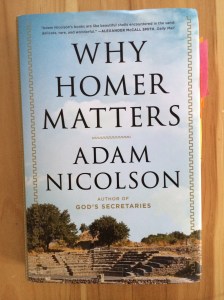
Recommended Reading: Why Homer Matters, by Adam Nicolson

photo 1I wish I’d read this intriguing book before I picked up the Iliad for a re-read last year (lucky for me, I have the Odyssey still to go on my Classics Club list). Adam Nicolson’s Why Homer Matters* (published in the UK as The Mighty Dead: Why Homer Matters) is difficult to classify, genre-wise; it is part travelogue, part literary criticism, part history, part ethnography, part memoir. It’s beautifully written, for Mr. Nicolson deeply cares about his subject and its place in civilization:

This is also a book about epic poetry, and about the value of epic in our lives. Epic is not an act of memory, not merely the account of what people are able to recall, since human memory only lasts three generations [. . .] Nor is it a kind of history, an objective laying out of what occurred in a past to which have little or no access. Epic, which was invented after memory and before history, occupies a third space in the human desire to connect the present to the past: it is an attempt to extend the qualities of memory over the reach of time embraced by history. Epic’s purpose is to make the distant past immediate to us as our own lives, to make the great stories of long ago beautiful and painful now. (3)

The foundational belief of the book is that “Homerity is humanity” (31). Its specific premise is its author’s belief that Homer arises out of a meeting of two cultures: nomadic steppe warriors from north of the Black Sea, and city-based, literate, hierarchical Mediterranean societies. In Mr. Nicolson’s formulation, this clash or melding of worlds occurred around 2000 B.C.; for him, then, Homer’s origins are about a thousand years older than those ascribed to the poems by modern scholarship.

It’s a fascinating idea, but what matters more than its veracity is the way in which Mr. Nicolson illustrates his arguments. His travel has been extensive, and his descriptions of what he sees, at home and abroad, are full of evocative detail. In a bay in Scotland, for instance, “the seawater itself is green with the reflected woods, an ink of molten leaves and boughs” (36).

While I’d say the book leans more toward discussion of the Iliad, Mr. Nicolson, a keen sailor, is just as interested in the Odyssey. Here’s how he describes the relation of the two poems:

The Iliad is soaked in retrospect. The Odyssey, the twin and pair of it, is filled with heroic adventurism and the sense of possibility, as if it were an American poem and the Iliad its European counterpart. [. . .] where the Iliad is a poem about fate and the demands that fate puts on individual lives, the inescapability of death and the past, of each of us being locked inside a set of destinies, the Odyssey, for all its need to return home, consistently toys with the offer of a new place and a new life, a chance to revise what you have been given, for the individual—or at least the great individual—to stand out against fate. (64)

Put another way, “the Homeric condition” is “the Odyssean promise of delight enclosed within the Iliadic certainty of death” (71).

This book is steeped not only in knowledge of the ancient past, but in the more recent literary canon. Take, for example, Mr. Nicolson’s exploration of how the mines in southern Spain might relate to the poem; his description of the “toxic spoil” of the landscape (132) is chilling, filled with images and sounds and tactile effects. It is a portrait of Homer’s Hades:

There is a sense of transgression at Chinflón, a feeling that the this place was once alive and that the miners hacked at its life, as if they were hunting it, digging out its goodness, a form of rough and intemperate grasping, the masculine dragging of value from a subterranean womb. (134)

Consciously or not, I think Mr. Nicolson is channeling the description of another kind of Hell: one that belongs to Mammon and the other demons in Milton’s Paradise Lost:

Mammon led them on,
Mammon, the least erected Spirit that fell
From heav’n, for ev’n in heav’n his looks and thoughts 
Were always downward bent, admiring more
The riches of Heav’ns pavement, trod’n Gold,
Then aught divine or holy else enjoy’d
In vision beatific: by him first
Men also, and by his suggestion taught, 
Ransack’d the Center, and with impious hands
Rifl’d the bowels of their mother Earth
For Treasures better hid. Soon had his crew
Op’nd into the Hill a spacious wound
And dig’d out ribs of Gold. (PL I.678-90, emphasis mine)

It’s this kind of engagement, with both landscape and literature, that makes Why Homer Matters so endlessly interesting.

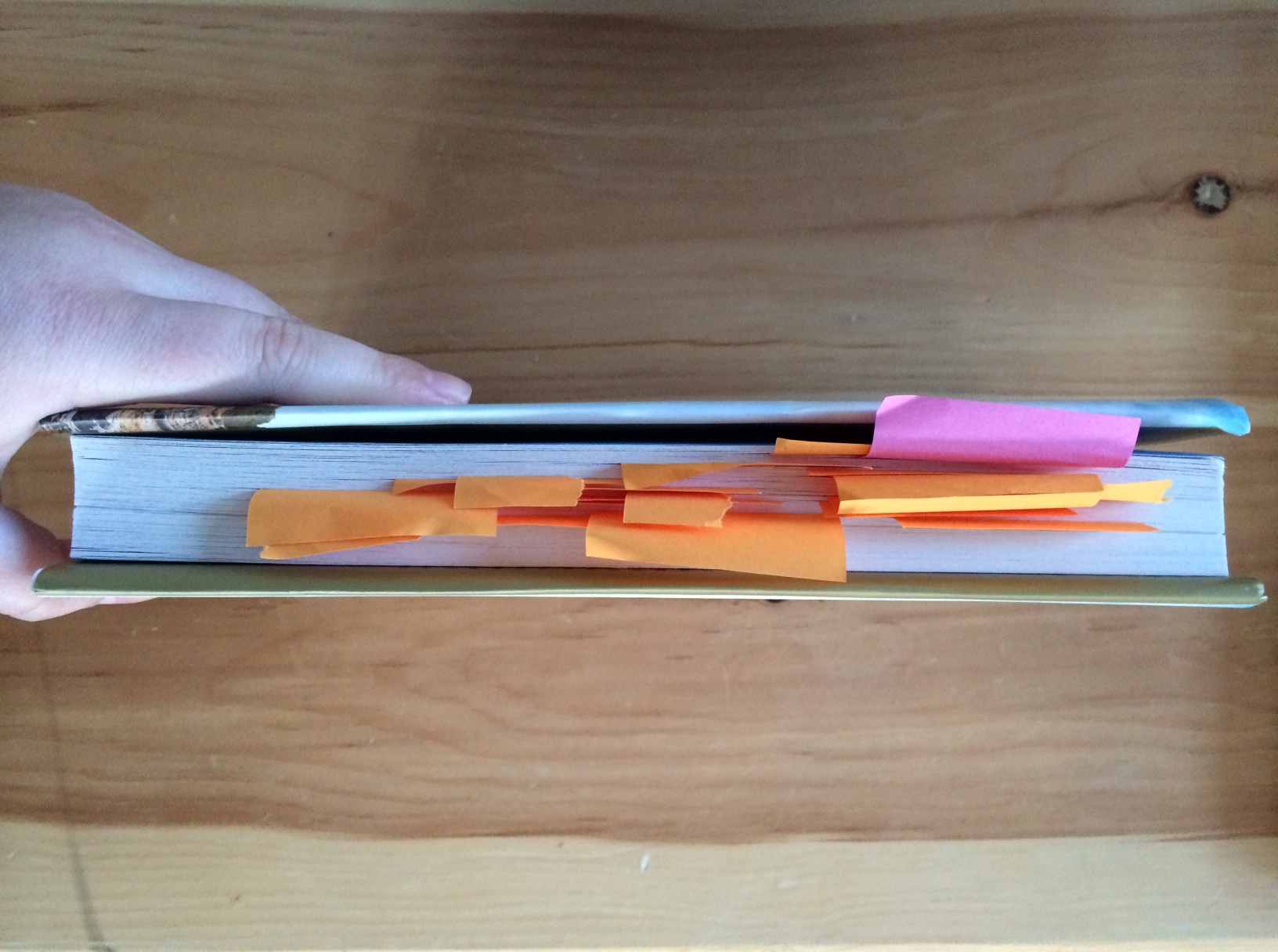
As you can see from the picture below, there were many passages that I found especially fascinating or moving, too many to reproduce here. However, for my reader who finds poetry to be a “difficult concept” (as a Vulcan might find humor), here’s an excellent way to think about poetry, especially epic poetry: “Epic is different from life. The present moment might be seen as a blade, cutting the past from the present, severing now from then, but poetry binds the wounds the that time inflicts” (102).
photo 2

This is a book that wanders, but never rambles; that contends, but refuses to be bogged down in certainty; that is erudite, but not didactic. It’s a book deeply interested in both the concreteness of place and the protean possibilities of language. To turn the pages of Why Homer Matters is to be transported. Highly recommended reading.

*I received a copy of this book from the publisher for review purposes, which did not affect the content of my review.