An Interview with Jeff Burger, Editor of Leonard Cohen on Leonard Cohen: Interviews and Encounters

On Monday I reviewed Leonard Cohen on Leonard Cohen: Interviews and Encounters, edited by Jeff Burger. Mr. Burger graciously agreed to be interviewed via email. 

Would you tell us a little about how you selected the interviews included in Leonard Cohen on Leonard Cohen

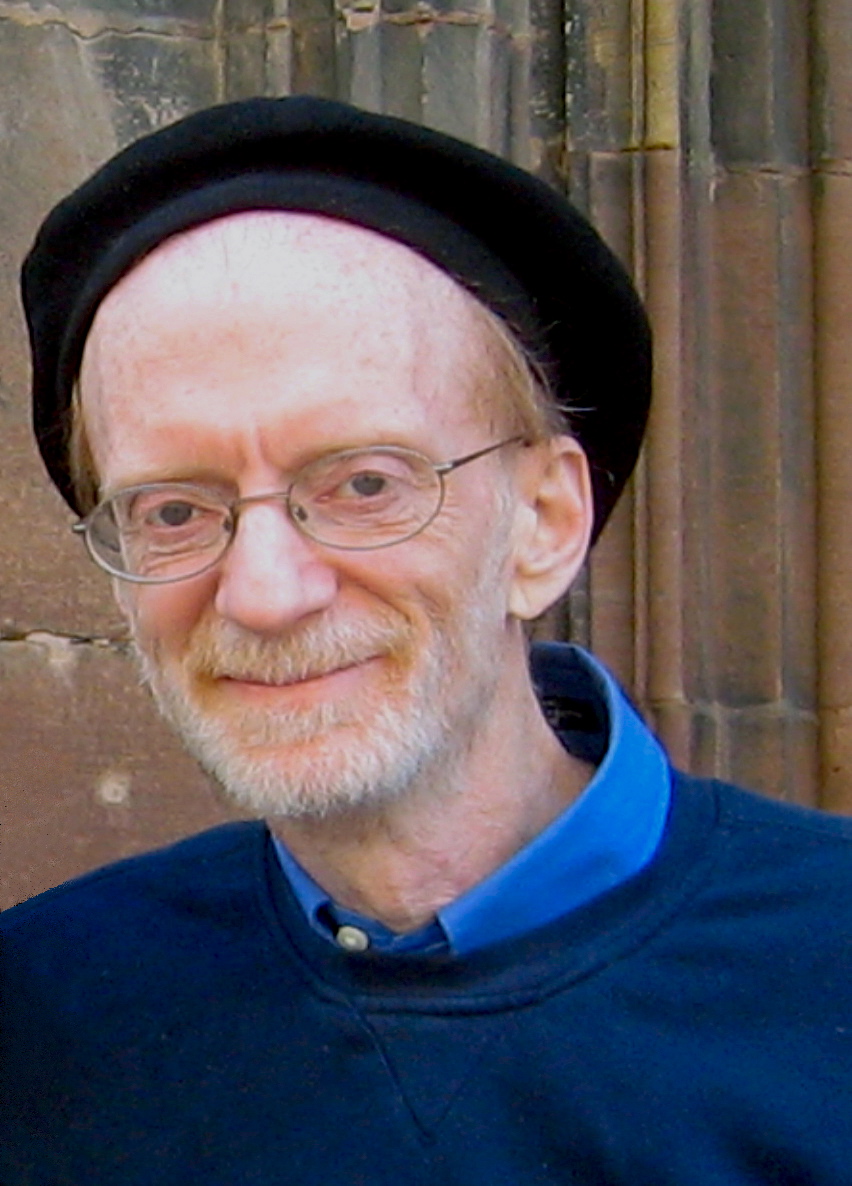
Jeff Burger Photo Credit: Andre Burger

Jeff Burger
Photo Credit: Andre Burger

JB: With difficulty. Though the Zen Buddhists called Cohen “Jikan,” meaning “the silent one,” he sure gave lots of interviews. I included about 50 and was being offered new ones even after I wrapped up this project. I tried to incorporate material that covered as many years and as much fresh turf as possible. I didn’t reject interviews that have been published before if they contained important insights—I saw value in having as many good conversations as possible all in one place, in chronological order—but I did give some priority to rare and previously unavailable material.

Readers may know that you are an often-published music journalist. How did your preparation for this project differ from your approach to review and interview projects?

JB: This was completely different. For interviews and certainly for reviews and commentaries, you rely largely on your own imagination and views; this project required a bit less creativity on my part and a lot more research. Finding the material was part one; then of course, I had to secure permission to use it, which wasn’t always easy with regard to pieces that appeared decades ago in long-defunct publications. A lot of detective work was involved but it was satisfying to wake up in the morning and find an email from a writer I’d been trying to locate for months.

photo 1 (17)How long did it take to put together this collection? Was the process similar to the one you undertook for Springsteen on Springsteen, which you also edited?

JB: It took me the better part of a year, working virtually every night and much of every weekend. (I have an understanding family.) Yes, it was quite similar to the process with Springsteen on Springsteen, which was helpful: I learned a lot from doing that book, and what I learned made this one much easier than it otherwise would have been.

Before you started work on Leonard Cohen on Leonard Cohen, did you have a favorite Leonard Cohen song, or book, for that matter? If so, did you learn anything surprising about that favorite song or work?

JB: I’ve been a fan of Cohen’s music since college and have a bunch of favorite songs, ranging from early classics like “So Long, Marianne” and “Famous Blue Raincoat” to “Hallelujah,” “In My Secret Life,” “Tower of Song” and the recent “Going Home.” I already knew a fair amount about these particular songs but I learned all sorts of surprising facts about Cohen from these interviews. For me, though, the most interesting thing was simply to observe how his thoughts, circumstances and personality evolved slowly over five decades.

After reading all these interviews, is there a question or question that you’d like to ask Leonard Cohen yourself?

I could probably formulate a few if the opportunity presented itself, but nothing immediately comes to mind. As noted above, Cohen has been interviewed extensively over many years, and the answers to just about anything I might want to ask are already in my book.

What’s next on your writing and editing horizon? 

I have a full-time job running a magazine and, on the side, I do a little writing on music and other subjects, mostly these days for TheMortonReport.com, NoDepression.com and my own website, byjeffburger.com. As for another book, I may well put together a third musician interview collection but not immediately. I need to take a break and spend some time with the family.

My thanks again to Mr. Burger for his time and thoughtful answers. You can read more about Jeff Burger on his website, byjeffburger.com.
Recommended Reading: Leonard Cohen on Leonard Cohen, Edited by Jeff Burger

I’m fairly certain that I would have spent my high school years as perpetually moody and angst-ridden as Molly Ringwald in any given John Hughes movie had it not been for Theatere (capital-T, said in your best Addison DeWitt voice).

To the Shaker Heights High School Theatre Arts Program (yes, it’s really called that) I owe a debt of gratitude: for leading me to my two best friends in high school, one of whom I met when she was tasked with teasing my nearly waist-length hair so that it would stand straight out from my head; for playwriting class; for teaching me the world “décolletage”; for the knowledge that I should never, ever wear flesh-tone spandex; for the chance to eat lunches with friends in Room 129; for the ability to recite, in perfect tandem with any other alum, “Shaker Theater events are non-smoking, non-drinking, non-drug-using, safe-driving, recycling events”; and for Leonard Cohen.

The department chair, Mr. Thornton, had a fondness for the Canadian singer-songwriter, and from the moment I heard that smoky voice singing “The Window,” I was hooked. I used my babysitting money to buy his albums, talked so much about him that my parents knew to get me Ten New Songs for my birthday, and hoped Leonard Cohen would tour someday so that I could see him live. One of the stupidest things I’ve ever done is not begging, borrowing, or stealing enough money to see him in concert in Boston in 2012.

photo 3 (5)Before he became famous, relatively late (he was in his thirties) as a singer-songwriter, Leonard Cohen was a poet and novelist whose work earned him comparisons with James Joyce, even if it didn’t pay the bills. Music did, and more than forty-five years after the release of Songs of Leonard Cohen, the dapper and impeccably polite poet is a musical legend.

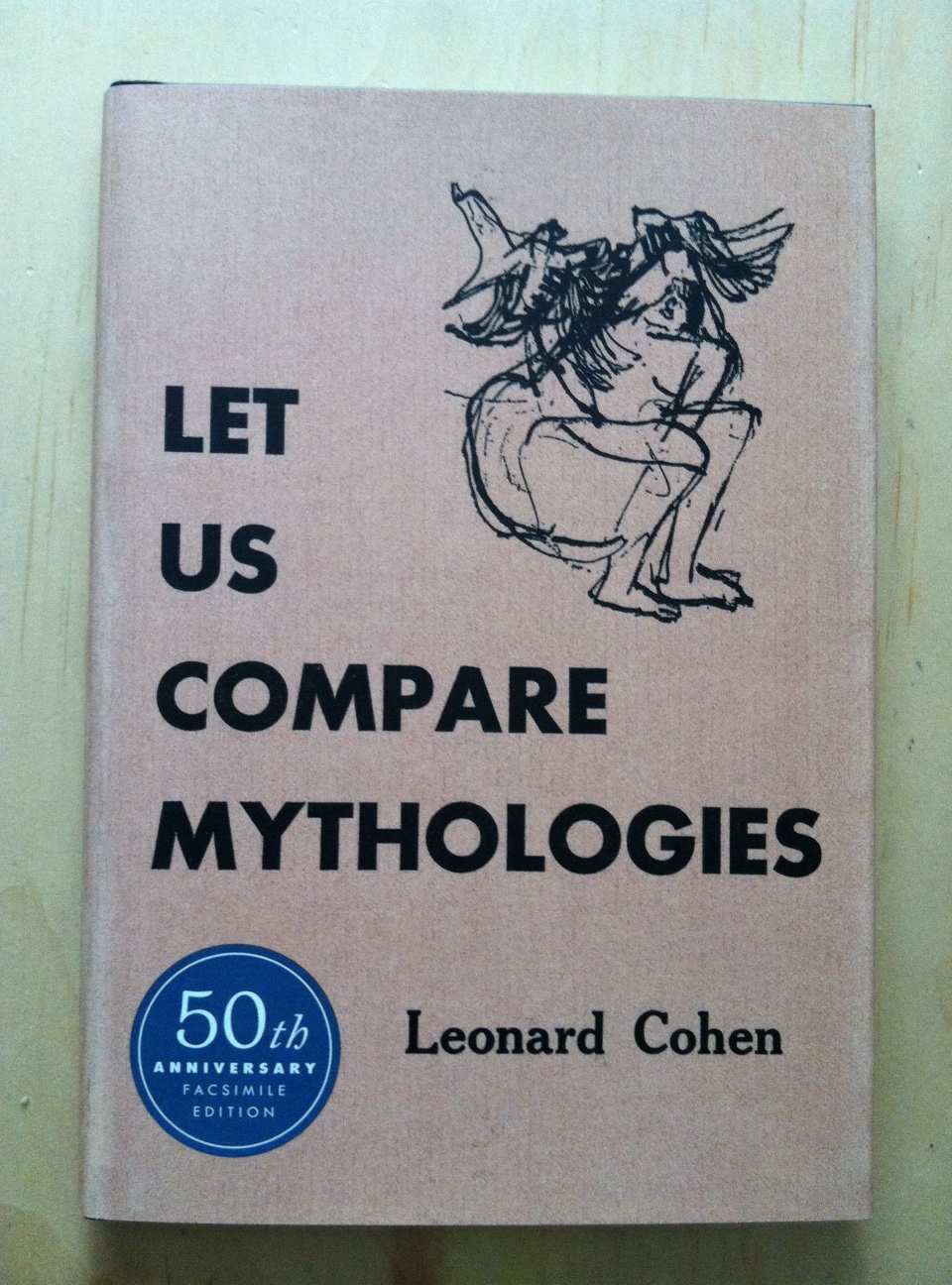
photo 2 (14)I was so entranced by his music that it wasn’t until college that I went looking for Mr. Cohen’s published poetry and fiction.  Let Us Compare Mythologies (1956) which I recently re-read, is raw and energetic, the work of a young idealist who’s afraid the world is already lost. Book of Mercy (my favorite of the collections) is often called a modern book of psalms, although in an interview Mr. Cohen characterized them as “more conversations with the absolute” (148). The prose-poems — fifty of them — are prayers of great sadness and great longing. Here’s part of my favorite (19): “O beloved speaking, O comfort whispering in the terror, unspeakable explanation of the smoke and cruelty, undo the self-conspiracy, let me dare the boldness of joy.” It’s the same voice — almost mystic, worldly, sad — from “The Window”:

Oh tangle of matter and ghost
Oh darling of angels, demons and saints
And the whole broken-hearted host
Gentle this soul

Like his poetry, Leonard Cohen’s songs are about the difficulties of love, of living, of dying; he sings about a world that’s broken and the people trying and often failing to keep the pieces together. He writes songs about betrayal, sex, faith, politics. A reviewer once famously said that it was “music to slit your wrists to,” but I’ve never found it anything but comforting, occasionally funny (see “Tower of Song”), and very, very beautiful. I’m not the only one.

photo 1 (17)Leonard Cohen on Leonard Cohen: Interviews and Encounters*, edited by Jeff Burger and recently published by Chicago Review Press, is a book meant for fans of the man who wrote not only “Suzanne” and “First We Take Manhattan” and yes, the ubiquitous “Hallelujah” (for the record, I like Leonard’s version best, followed by Jeff Buckley’s, followed by John Cale’s, then k d lang’s), but also Book of Mercy and Beautiful Losers and The Spice-Box of Earth. Judiciously selected interviews from Mr. Cohen’s four decades in the music industry trace the evolution of his public persona even as they illuminate aspects of his personal life and career that aren’t widely talked about. (Did you know he once made a signature drink for his band? I do now, and I’ll be mixing up a few batches this summer.)

What comes across in these interviews — which the interviewers themselves note in their interviews with Mr. Burger — is Leonard Cohen’s graciousness, his sense of humor, and his modesty. He unflappably fields predictable questions about his lack of commercial success in the U.S., speaks well of every woman he’s been romantically linked with, and pokes fun of himself (he riffs on his early albums’ bland (“neutral”) titles by joking that he’ll call the next one Songs in English [163].) He’s completely open about the grueling process of songwriting (he’ll write dozens and dozens of stanzas for one song, rejecting all but a few; songs often take years to complete), his difficulties with romantic relationships, and, in the later interviews, about his struggles with depression. Most longtime Leonard Cohen fans know that he spent years in relative isolation at a Zen center outside Los Angeles, but these interviews offer a fuller view of what those years were like, which I found particularly fascinating.

With more than five hundred pages of interviews (several never before translated into English, some transcribed from the raw footage of television interviews), it’s not surprising that some material is repetitive. Interviewers ask questions asked many times before, and sometimes Mr. Cohen’s answers retread ground already broken. Still, the book is a treasure trove, and worth reading just for the interviewers with specialized backgrounds who share long, knowledgable conversations with Mr. Cohen on songwriting and his Jewish background, among other subjects. Rarely did four or five pages pass without me turning down a corner to come back to an idea or a phrase; choosing favorite passages and quotes for this review proved an impossible task. But here’s a snippet from a conversation the editor had with interviewer Thom Jurek, who spoke with Leonard Cohen in 1993:

Jurek recalled asking Cohen why it had taken so long after the release of The Future for him to tour. “He explained that it was because backing vocalist Julie Christensen had borne a child; it was important to hold off on the tour to give the new family time to bond.” What about finding another singer? Cohen said he hadn’t even considered that. “The reason, he said– and I am pretty sure I remember this by heart–was: ‘She shouldn’t be punished for bringing life into the world.’

This from a man who says, “We cannot forestall the apocalypse. The bomb has already gone off. We are now living in the midst of its aftermath. The question is: how can we live with this knowledge with grace and kindness?” (507).

There is a risk in books of this kind — as in meeting a favorite author — that the subject will be demystified in some way, will appear all too human, which is not, after all, how we prefer our idols. This isn’t the case with Leonard Cohen on Leonard Cohen. For all his foibles and favored anecdotes, the man is consistently human in the best sense of the word: compassionate, invested in the welfare of others, deeply concerned with ideas. I came away admiring him, and loving his work, even more.

Wednesday: An Interview with Jeff Burger, Editor of Leonard Cohen on Leonard Cohen.

*I received a copy of this book from the publisher in exchange for an honest review.

Recommended Reading: The Temporary Gentleman, by Sebastian Barry

photo (75)Jack McNulty, the title character of Sebastian Barry’s The Temporary Gentleman* is a man pursued by regret and bewildered by his own self-deception.

In the novel’s first pages, Jack describes his dramatic first entrance into Accra during the Second World War, from his vantage point more than ten years later in the same city, now changed with time and the advent of independence from British rule. It is 1957, and Jack has decided that he must come to grips with his own life — its many unusual occurrences, its current aimless state, and its one great love, Mai Kirwan.

Jack and Mai meet in Sligo just as Ireland is acclimating to the end of British rule (just one of several parallels between Ireland and Ghana in the novel); Mai is beautiful, educated, and rather too good for Jack, as it seems to some. Their life together is tempestuous, marred by alcoholism in particular. It is not a happy tale; Jack’s story, told haltingly, is the story of how it all went wrong.

The Temporary Gentlemanis a melancholy, quiet novel; Mr. Barry is more than adept at conjuring up the atmosphere in Accra during the rainy season or Sligo, too, in the rain: “After the picture we stepped out on vulnerable leather soles into a street that was flooded by a savage temper tantrum of summer rain, a great, moving varnish of glistening black” (37).

It’s a novel to be savored for its lyrical passages — including a virtuoso sentence, nearly three pages long, which describes a German bomb hitting an RAF camp — and its keen probing of the human condition. There is blame, yes, but there’s also love, even for someone as frail, as difficult, as unseeingly observant as Jack.

This is my favorite passage, I think, one that gives you a sense of the novel’s tone:

But of course it is all long ago, and a hundred different fates and stories have swallowed up my comrades, as my own fate has swallowed me. We are in the great belly of the whale of what happens, we mistook the darkness for a pleasant night-time, and the phosphorescent plankton swimming there for stars. (59)

*I received a copy of this book from the publisher in exchange for an honest review.

An Interview with Andy Weir, Author of The Martian

Yesterday I reviewed Andy Weir’s debut novel, The Martian. Mr. Weir graciously agreed to be interviewed via email. 

Andy Weir; Photo (c) Andy Weir

Andy Weir; Photo (c) Andy Weir

When you were writing The Martian, how did writing and science go hand-in-hand? Did you stop to make calculations as the plot came along, or did you have the science planned out parallel to the plot? Or did you have another method altogether?

AW: I did a lot of stuff in advance. But as specific plot points came up I usually had to get much more detailed information. So there was pretty much constant research throughout the process. 

What kinds of books did you read while you were writing, if any? Survival stories? Sci-fi? Nonfiction about the space program?

AW: I actually didn’t read much at all during that period. I had a full time job during the day and I was sinking most of my spare time in to writing. I just didn’t have the time for other leisure activities.

What would be on your data stick if you were headed to Mars? For that matter, what’s on Watney’s?

AW: It’s funny, but I never defined what was on Watney’s data stick. Presumably not a lot of entertainment; probably botany papers and articles. As for me, I guess I’d want tons of TV shows and movies.

photo (74)You dedicated The Martian to your mom and dad; how did they support your scientific and creative inclinations when you were growing up?

AW: Dad and I would make model moon-bases and such when I was a kid. And his collection of classic sci-fi paperbacks is what got me interested in the genre. Mom always pushed me to take my shot at writing. It’s kind of backwards from the usual dynamic. I was usually the one saying I need to be cautious and have a stable career and Mom was encouraging me to take a chance.

What would wisecracking, ingenious (and sweet) Mark Watney give his mom for Mother’s Day before taking off on a mission to Mars?

AW: I hate to cop out, but if I were going to write that in to a book, I would engineer a sweet backstory for the present. Some childhood story that makes a mundane item the perfect gift for his Mom. Off the top of my head: When he was a little kid, he wanted an expensive toy. His mom got it for him and he immediately broke it and she was mad. He found it later in an old box. Knowing his mother is worried sick about him going on the mission, he repaired the toy (he’s good at that sort of thing). He gives it to her and asks her to hold on to it for him till he’s back. 

After the success of The Martian, what’s next on your writing horizon?

AW: I’m working on my next book. I’m keeping the details quiet at the moment because I haven’t pitched it to the publisher yet. I’d like them to hear about it from me first.

My thanks again to Mr. Weir for his time and his thoughtful answers.

My Mother and The Martian

Which book does one choose as a Mother’s Day gift when one’s mother (a) loves to read and (b) deserves the highest-quality reading material but (c) has very different bookish taste from oneself?

Herewith, Dear Readers, a case study.

My mom sometimes jokes that when she grows up she wants to be a fighter pilot or Ripley, the Sigourney Weaver character in Alien.  I hate to break it to her, but I think she’s grown up, because she is Ripley.

No, really. She’s a steely-eyed missile (wo)man who takes care of threats to her kids the way Ripley deals with the queen in Aliens. Sometimes there’s even salty language involved. She’s ferociously protective of people she loves, fiercely committed to helping those in need (pretty sure she’d want me to tell you here that you should give blood), she works harder than anyone you’ve ever met, and she’s accomplished in her chosen profession, brilliant, practical, and cool as a cucumber in stressful situations. Also funny. She gave me and my siblings the priceless gift of growing up with a mother who kicked ass and took names at a professional level. Metaphorically speaking, of course.

And I’m pretty sure she could drive a powered cargo loader if the opportunity presented itself.

Oh, and once she saved my life (and my brother’s) by jumping into a swimming pool (while she was pregnant) after we fell out of our inner-tubes. So, you know. That’s kind of a big deal. I think I still owe her a lanyard for that one.

In addition to her impressive personal attributes, my mom has great taste: She read us Laura Ingalls Wilder when we were kids (she’s still reading to my youngest sister, and had her three adult children and their spouses transfixed by her reading of By the Shores of Silver Lake recently), and Little Women, A Secret Garden, and Jane Eyre to me. She organized our grandparents and other relatives to record themselves reading chapters of Watership Down as a gift for my brother.

And it’s not just books: We were raised on Twister (so bad it’s good, and one of my favorite Philip Seymour Hoffman movies), All About Eve, Apollo 13, the Jane Eyre with Timothy Dalton & Zelah Clarke, and Star Trek: The Next Generation. She hates cartoons and she won’t watch kids’ movies. And yet: My mom took me — then 13 — to see Titanic three times in the theater (out of seven total times — she’s only human), and it was only the third time that she broke down and started whispering “glug glug” when it looked like Leonardo DiCaprio had had it. I laughed through my tears.

Not being terribly sentimental, Mom doesn’t have much use for Mother’s Day, but since her birthday is in the vicinity, and since I don’t live close enough to “clean something” (the only gift she ever asks for) I feel justified in sending her a present now and then on the family timeline (+ or – 18 months from the event). Naturally, this year I’m sending her a book.

As you might suspect, my mom isn’t lining up for the latest Nora Roberts novel. She’s a brilliant woman, but she doesn’t like Shakespeare, poetry in general, contemporary fiction (aka navel-gazing) or Virginia Woolf. And yet we’re genetically related . . .

She does like Jane Austen (mordant wit), Jane Eyre (independent heroine with strong convictions), and nonfiction about mountain climbing, Antarctic exploration, the history of medicine, and space. She thinks I should blog more about nonfiction, and she’s probably right.

In other words, finding a book for my mom is tricky, very tricky (just like book shopping for Ripley would be, I imagine). However, I’m going (boldly, of course) to throw caution to the winds and send my mom her very own copy of Andy Weir’s debut novel, The Martian*.photo (74)

Mark Watney is a wisecracking MacGyver-type who specializes in botany. He’s also stranded on Mars.

Alone after his crew accidentally leaves him behind during a hurried evacuation, Watney decides to try his damnedest not to be the first person to die on Mars. With grim determination, creative engineering skills, long-term strategizing and way too much 70s tv, he takes painstaking steps to save himself, recording them in detail in his mission log.

The Martian is fiction that reads like nonfiction, which is part of why I think my mom is going to dig this book. Mr. Weir conducted painstaking research for the novel; as he notes in an author Q&A, “All the facts about Mars are accurate, as well as the physics of space travel the story presents. I even calculated the various orbital paths involved in the story, which required me to write my own software to track constant-thrust trajectories.”

Yes, you read that right.

The novel is chock-full of Watney’s nitty-gritty calculations for survival, which heighten the realism and the tension of the work. The pacing is fast, but Watney notes the long stretches of days when not much happens except survival in the wilderness against daunting odds; there’s no tedious day-by-day, blow-by-blow replay, but neither are we to believe that Watney survives a new catastrophe daily. The novel also features tense Mission Control scenes; the only thing missing is Ed Harris in a white vest. (Maybe not for long — the movie rights have already been sold).

Thanks in no small part to Watney’s sense of humor, his plight evokes sympathy rather than sentimentality; The Martian is a good old man vs. the elements survival thriller. The emotional payoff is comparable to a viewing of Castaway or Apollo 13, to which The Martian is often compared, but with fewer scenes calibrated as tear-jerkers. You’ll also learn a hell of a lot about potatoes and atmospheric regulators, and have a pretty great time in the process.

In other words, it’s the perfect novel for the resourceful and resilient woman who happens to be my mom.

Book’s in the mail, Ripley.

UPDATE, Christmas 2014: Ripley loved the book. So did my grandma, my brother, three uncles, and one cousin. So far.

Tomorrow: An interview with Andy Weir, author ofThe Martian

*I received a copy of this book from the publisher for review consideration, which did not affect the content of my review.

P.S. Bonus points, Dear Readers, for those who know the literary connections in Alien and Aliens.

Coming Soon: The Bees, by Laline Paull

When I was a child, I hated Watership Down.

I think most of my dislike was bound up in the movie, which I found frightening — to this day, the only memories I have of it are images of cartoon rabbits spouting blood — because the writing itself didn’t make an impression on me. Reading synopses now, I suspect that if I tried it again I’d find it deeply aggravating for its attitude toward female characters.

imageI bring this up because Laline Paull’s The Bees* (out May 6 from Ecco) is garnering praise that compares it to Watership Down, and so I’m here to tell you that if you didn’t like Watership Down, you might still like The Bees — I did, very much.

Like Watership Down, The Bees‘s main characters are nonhumans, in this case — you guessed it — bees. Flora 717 is born ugly, deviating far enough from the norms of her hive that she’s about to be killed when an older, powerful bee steps in to save her life. Flora, she thinks, might be useful; she decides to allow Flora to live on a temporary basis.

As a member of the lowest caste of bees — a sanitation worker — Flora is surprised to find herself in the nursery feeding infants, but that’s just the first twist that’s in store for her. The hive mantra is “Accept, Obey, Serve,” which Flora, devoted to the queen (as are her sisters) tries desperately to follow as she faces dangers both within and without the hive: the vicious Fertility Police, a marauding wasp, and the unwelcome attentions of the hive’s overfed and pampered drones. Flora’s role in the story changes as she grows and learns; sometimes she seems like a Cinderella figure, or a questing knight, or Katniss Everdeen, or Offred. She’s a compelling heroine with six legs and an acute sense of smell — courageous, loyal, fierce, hardworking.

The Bees is not a book suitable for children; Ms. Paull does not shy away from the violence and cruel practicalities of life in the hive (an interviewer suggested that some scenes were reminiscent of Game of Thrones, to which Ms. Paull replied: “Game of Drones!”). The book doesn’t suggests that bees — one of the most complex and successful animal species — survive despite the violence, but that their society in some ways requires it. In fact, some of these scenes are so strange that I thought “there’s no way bees behave this way’; after a little research, I realized, yes, they do. I loved that this book prompted me to learn something outside of my general areas of interest.

While the novel’s environmental message is none too subtle, Ms. Paull does keep the focus on character development and extraordinary descriptions of hive structures and practices from the bees’-eye view. The pacing is brisk and careful, and the bees’ world feels totally new (believe me, you’ll never look at a candle or a jar of honey the same way again). The Bees is an absorbing, imaginative debut, and perfect late-spring reading.

*I received a copy of this book from the publisher in exchange for an honest review. 

Recommended Reading: Evie Wyld’s All the Birds, Singing


20140423-140244.jpgEvie Wyld’s All the Birds, Singing* is a terrifying novel, combining bump-in-the-night horror with the kind of terror inspired by the cruelty of ordinary human beings. More than once I had to put the book down because the writing was so intense I could feel my heart pounding, and that’s pretty unusual in my reading experience.

Something — or someone — is killing Jake Whyte’s sheep. She lives alone on an unidentified British island with only her sheep and her dog (named Dog) for company, resolutely refusing calls to socialize with other locals. She’s an outsider in more way than one, though isolated, it seems, by choice. But the death of her sheep forces her into contact with other people as she searches for answers: Don, a kindly neighbor; Lloyd, a stranger whose agenda is unclear; and neighborhood kids with maybe more than mischief on their minds.

While Jake wonders who’s gutting her sheep, the reader wonders how Jake ended up on island by herself, and why she’s so gruff and frightened. As Jake works on her mystery in the present day (using the past tense), alternating chapters take us back to the past, in which Jake narrates the events that led to her leaving Australia for England, and how, exactly, she started raising sheep. These past-chapters unfurl backwards, but are narrated in the present tense, lending a firghtening immediacy to Jake’s memories of violence and fear.

Ms. Wyld’s writing is fierce, clear, and perfectly detailed. Her deft touch finds the perfect balance between intimacy and mystery as she brings Jake to life. Take this paragraph, from the first chapter:

I slammed the fridge and leant my head against it. Stupid to have become so comfortable. The fridge hummed back in agreement. Stupid to think it wouldn’t all fall to shit. That feeling I’d had when I first saw the cottage, squat and white like a chalk pebble at the black foot of the downs, the safety of having no one nearby to peer in at me — that felt like an idiot’s lifetime ago. I felt at the side of the fridge for the axe handle.

It’s the kind of writing that offers new questions even as it answers others. All the Birds, Singing is brilliant and brutal, and highly recommended.

*My thanks to the publisher for sending an advance review copy of the book in exchange for an honest review.

An Interview with Mark Wunderlich, Author of The Earth Avails

Yesterday I reviewed Mark Wunderlich’s new book, The Earth Avails. Mr. Wunderlich graciously agreed to be interviewed via email. 

How did The Earth Avails come together as a collection? How did you go about putting the poems in order?

Mark Wunderlich Photo (c) Nicholas Kahn

Mark Wunderlich
Photo (c) Nicholas Kahn

MW: I knew early on which poems I wanted as the first and last poems in the collection.  I opened with a poem which I think of as perhaps one of the only unadulteratedly happy poems I’ve written as it describes walking out into the natural world and feeling fully alive.  The book ends with a sort of extended argument with God, in which the speaker gives over control to a God whose attention is elsewhere, and who is ambivalent to the suffering happening on earth.  This is not a new or original argument to have, but I felt to compelled to have it anyway.  In between these two bookends, I chose and ordered the poems to create variation, modulation of tone and subject.

About half the poems in The Earth Avails take the form of prayers or “heaven letters”; who is the “you” addressed in these poems?

MW: The second person to whom many of the poems are addressed is God.  Mind you, I’m not a believer.  There is no deity. So the God I’m addressing is an emotional and intellectual construct–the center around which I wound a long skein of rhetoric and heightened speech which are poems.  Though I don’t believe in a deity, I do believe in the mystery and glory of the natural world, and I am regularly in awe of it.  The natural world is full of such intelligence, so many patterns and complex interactions, and in my mind these are sacred.  The God in The Earth Avails is a conflation of a Christian God (whom I beg, praise, admonish, flatter and to whom I complain and sometimes eroticize), and my own notions of that which is sacred.

Readers may know that you teach writing and literature at Bennington College. How has teaching affected your writing?

photo (70)MW: I am lucky in that teaching is my vocation–my calling.  I love being in the classroom, and I love teaching my students at Bennington.  Just this week, I was introducing Leaves of Grass to a class of undergraduates at Bennington, and I could see on their faces that the work was opening up to them, and that it was becoming their own–their inheritance.  I teach a variety of writing and literature courses–literature to undergraduates, and writing courses to graduate students–and both sustain me in various ways, particularly because I have a great deal of freedom as to what I teach and how I teach it.  Teaching has allowed me to continue my education and to read more deeply, and teaching also requires that you articulate you thoughts.  As a teacher of writing, I think a great deal about the mechanics of writing, particularly syntax, and the ways in which that influences forms of poetic expression.  I have learned to break down the different components of poems in order to explain them to other people.  These activities have made me a better writer.  That said, teaching takes a great deal of energy–energy not spent on one’s own poems.  Sometimes I do feel as though I am burning my own work so someone else might write theirs, but that’s a false notion.  One can always find twenty minutes.

“Sand Shark” brought to mind Elizabeth Bishop’s “The Fish,” and The Earth Avails is a collection keenly attentive to the natural world. Were you influenced by any nature writers in particular as you were working on these poems? How do you envision poetry’s role in preserving the natural world?

MW: I spent a lot of time reading Virgil’s Georgics as I worked on this book.  I love the sweetness and melancholia of those poems, and I love the ways in which he explains various agricultural tasks and husbandry in poetic form.  He was one of my primary literary influences with this book.  I am also completely entranced by Jorie Graham’s most recent book called Place, in which she contemplates, among other things, the degradation of the environment.  As for the role poetry might play in preserving the natural world, I’m not sure it’s a significant one.  If only it were! Poems can expand our sense of the importance of a subject by creating in readers a greater sense of mystery.  Poems, by applying language to the world, can heighten our sense and also name those things we admire or are moved by, but that heretofore were unsaid or unspoken. I’m afraid, however, that the larger forces that hold sway in the material world–global capitalism and the petroleum economy–are much too powerful.  I’m afraid we are past the point of no return, as far as the level of greenhouse gasses we have put into the atmosphere. The problem is so large and there are so many contrary demands and desires in play that I’m afraid we’ve passed the point of no return.  The future–as far as climate change goes–does not look good for us.  The title of my book, however, is a tiny reminder that the earth itself is indifferent.  The earth will last, but the current patterns of the climate, the current forms of life may not.  The earth will win out.  We will be the ones to lose.

What kinds of projects are you working on now?

MW: It’s spring now, so I’m gardening.  I’m looking after my beehives.  I’m teaching and traveling to give readings.  I’m grading countless student essays.  As far as writing goes, I have a nonfiction project in the works which stems from my travels to places north of the Arctic Circle.  I’m also trying to write new poems.

My thanks again to Mr. Wunderlich for his time and his thoughtful answers.

An Interview with Michelle Huneven, Author of Off Course

Yesterday I reviewed Michelle Huneven’s beautifully-crafted new novel, Off Course. Ms. Huneven graciously agreed to be interviewed via email. 

How would you describe the inception of Off Course? What was the writing process like?

Michelle Huneven (c) Karen Tapia

Michelle Huneven
(c) Karen Tapia

MH: As often happens with me, I started out with one book in mind, but another one happened.  I had wanted to write a novel that charted a woman’s life from childhood to a version of stable adulthood with some years en route spent lost to trouble. Well, that book didn’t happen.  In Off Course, I started right where my heroine,  Cressida Hartley, at age 28, turns off the beaten path.  She’s at a perilous, vulnerable stage, when she’s done with school and about to set forth in life.  She should be settling into a career and making at least general decisions about marriage and family. But first, she has to write her dissertation. For whatever reason, she can’t get going on it. She just can’t.  She makes herself ever-available to distraction and gets lured away from her friends, family, and self. Or, to quote the epigraph, “demons arrive singly and in droves, often taking the form of men.”

In terms of process, I  tried something new with Off Course, which was to write a certain number of words a day. 1000, I think, which is a lot. Too many.  This was not an effective method for me.  To meet my daily goal, I wrote a lot of dreck, some of which stuck to the book for a long time and interfered with plot and shaping. Also, I had to go back and fix every damn sentence. Did forcing myself to produce at such a rate prove a worthwhile exercise for my imagination?  No.
The setting for much of the novel sometimes seems like another character in Off Course. How did you decide to set the novel in the Sierras?

photo (68)MH: My parents had a cabin high up in the Southern Sierras, so it was a geography and community with which I was deeply familiar. I went up to the cabin as a kid, although not with the strict regularity that Cress’s parents dragged her to their A-frame.  I also lived in our cabin briefly when I was trying to write my first novel.

I disliked going to the cabin as a child; I appreciated the landscape more when I lived there as a young adult, even though that wasn’t the happiest time of my life.  But I loved going back there in my mind all the years and months that I was writing Off Course.  The landscape, with its rocks and trees, trails and wild animals, was all there in memory, just waiting to be closely observed.

I did try to go back to the area a few years ago to do research for the book, but a freak snowstorm in May forced me to turn back at 6000 feet.
Cress’s graduate work is in economics, and her dissertation focuses on art in the marketplace. Are readers meant to think of the mountainside community as a kind of marketplace, too, with commodities beyond those merely bought and sold?

MH: The mountain community certainly had its own a singular, improvisational economy. It was tricky for anyone to make a living up there, but then again, for some of my characters, it was the only kind of place where they could make a go of it. The developer of The Meadows was a here-today, gone-tomorrow drunk, but because he was the only person selling property up there, customers had to deal with him.  The fellow who ran the lodge (who charged customers whatever he felt like) and the contractor who built vacation homes (and sometimes overran his bids by more than 100%) could not have stayed in business had there been any, more viable businesses to compete with them.

To get closer to your question— this community seems to be a place where all bets are off.  There’s a whiff of the numinous, of ether, a high altitude queasiness and an out-of-time holiday hilarity that allows certain emotional and financial transactions to occur there, antics that might be out of the question at lower elevations.  One of my readers happily described life on the mountain as “an all day sex party.” Another described it as “an erotic eden.” Both comments point to a rarefied atmosphere where there’s a certain relaxation of inhibitions and a willingness to work the margins of romantic possibility.

Readers may not know that in addition to being a novelist, you’re also a journalist and food writer. If you were choosing a meal to complement a reading of Off Course, what would be on the menu?

MH: Oh gosh—nothing very good for you! We’d start with a bowl of pozole: a clear fragrant broth made from pork, chicken, and chiles, with bits of meat and  plump multicolored kernels of hominy.  Dinner itself would be a pot roast simmered all day in beer with masses of onions.  I’d serve it with chard or kale sauteed—just this once–with bacon.  There would be buttermilk biscuits with sweet butter and a green salad dressed with local olive oil—although to be truer to the spirit of mountain life, you’d probably toss it with that weirdly-flecked Wishbone Italian dressing that’s been in the refrigerator door for at least two years.  Dessert would be peach cobbler made from Bisquick and canned peaches served with ice cream that is slightly crystallized, from melting a bit on the long drive up the mountain and then living too long in a freezer.

What’s a question you hope readers will take away from Off Course?

MH: Is a great, passionate, all-consuming, sometimes-rapturous, obsessive love—a love that could hijack years and potentially cause scarring, if not real damage to its players—something to be desired?  Is the experience worth the pain?

My husband says this question is too one-sided, but he underestimates the romantics among us.

What kinds of writing projects are you planning next?

MH: I have been writing short stories for the past year and a half.  Recently, I’ve started two books, one a historical novel about a brilliant but wrongheaded scientist who once lived on my property and the other a novel about a church and its search for a new minister.  Both take place close by to where I live, in beautiful Altadena, CA.

My thanks again to Ms. Huneven for her time and wonderfully generous answers. You can read more about Ms. Huneven, and Off Course, on Ms. Huneven’s website, www.michellehuneven.com. Follow Michelle Huneven on Twitter: @MHuneven

Recommended Reading: Michelle Huneven’s Off Course

photo (68)Cressida Hartley, a graduate student in economics and a casual artist, has retreated to her parents’ A-frame in California’s Sierras to finish her dissertation, a venture that she hopes will take a few months. Instead, it’s years before she comes down off the mountain, years in which she veers both slightly and wildly off course from the life she had planned.

Michelle Huneven’s fourth novel, Off Course* is a delicate character study, one that is deeply rooted in setting. Like her Shakespearean namesake, Cress is at times difficult to like, but always believable, always human — flawed and interesting. Her dissertation languishes while Cress is willingly seduced by the jolly (and non-monogamous) owner of the local lodge, a gathering place for the mountain’s residents and visitors. This affair, quick to to start and quick to finish, would have necessitated only a minor course correction on Cress’s part — but then she meets an intriguing — and married — carpenter.

This is the sort of affair that serves as the backstory or the amusing antics of the best friend/sidekick in romantic comedies, but Ms. Huneven spins the relationship into a masterpiece of characterization. What seems incomprehensible — why an intelligent, feminist, career-oriented woman would spend years of her life on a man who’s often emotionally unavailable and always married — is made comprehensible by the way the novel tracks Cress’s decisions and delays, the disturbances in her understanding of herself. Though she’s an economist, Cress neglects the cost-benefit analysis that could save her grief; and yet, how does one put a price on love?

What I loved most about this novel was Ms. Huneven’s attentiveness to the setting. The land, the sky, the weather, the animals of the Sierras — all seem to seduce Cressida just as much as the men who live on the mountain. If she were a professional artist, she thinks, she would have wanted to work in landscapes. The double edge of the landscape’s isolation and consolation slices through Off Course, exposing not only the tradeoffs Cress makes, but our own concessions to love.

Tomorrow: An Interview with Michelle Huneven, Author of Off Course

*My thanks to the publisher for sending me an advance copy of this novel in exchange for an honest review.