“There were ten thousand thousand fruit to touch, / Cherish in hand, lift down, and not let fall.”

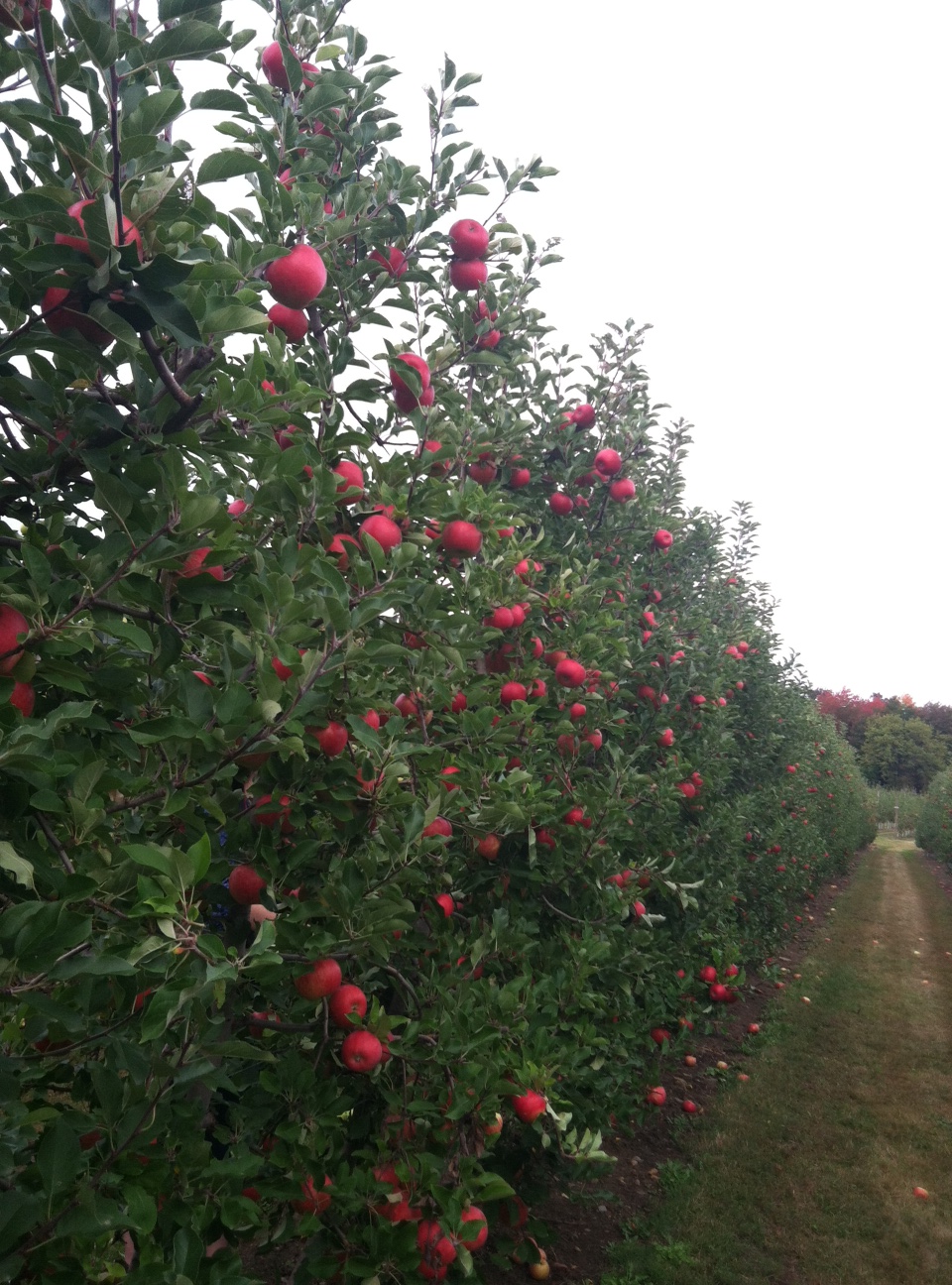
Tougas farm, apple season Photo by CR OliverI remember assigning Robert Frost’s “After Apple Picking,” along with “Birches” and “Mending Wall” to my first-ever college class. I was twenty-two, and at least one of the seniors in the class was older than I was. A clerical error had given me a class of thirty instead of twenty, and we were assigned a narrow, windowless room on the second floor of the library. The heaters clanged on in August and the noise of campus construction somehow reverberated in that room.

It was glorious.

I loved being a newly-minted teacher, choosing readings and building a course that I wanted to teach (and take). I loved practicing my students’ names so that they would feel comfortable in class (one Thai last name was a real tongue twister!), and I loved watching their ideas spill onto the chalkboard. There’s no better job than being a tour guide through literature.

I chose to teach Frost because we’re in New England, after all, and he’s THE New England poet, and I encouraged my students to get out of the city and see the beautiful blend of colors in the trees. I’ve gone apple picking each fall with Mr. O since we started dating, and there’s nothing like the blue sky and the fiery trees and the red, red rows of apples.

“After Apple-Picking” is a dreamy meditation on life and death, sleep and wakefulness. Maybe we too will look back on moments both missed and remembered, and think,

“There were ten thousand thousand fruit to touch,
Cherish in hand, lift down, and not let fall.”

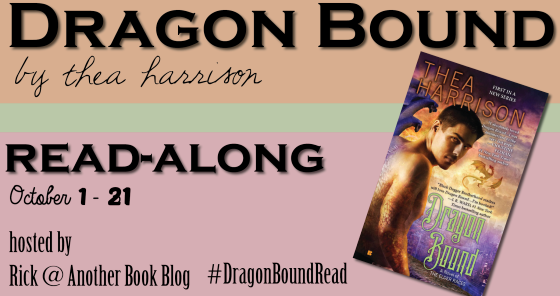
Updated: Dragon Bound, Part the Third: Pregnant Unicorns and Other Things I Wish I Never Had to Read About

dragonboundreadalongbutton-01I feel as if I’ve gone through all the stages of grief reading this book:

Denial:  I’m not really doing this, right? 

Anger: See Part 1 reaction, please.

Bargaining: “If I read one more chapter, I can have a glass of wine, and this will all go away and I can go back to reading real books . . . ”

Depression: “Oh my god. This was published and people read it. Like, for fun. For enjoyment. What’s the point any more? I can’t believe I brought a child into the kind of world where people like reading about emotionally abusive, repulsive relationships. Where’s the wine again?”

Acceptance: “It’s over, it’s really over! I still have to write about it, but I never have to read it again! I don’t care that other people read this, right? And that maybe feminism is dying?”

So here we are at last. I’ve accepted that Pia is a unicorn, that she’s carrying Dragos’s über-weird dragon-baby, and that Dragos is just going to inform her that they’re getting married after yet another bout of ultra-aggressive and strangely boring sex, and that the book will end with her slipping a giant diamond on her finger. For realsies.

I hate this book with the fiery passion of a thousand exploding suns, if you needed it spelled out.  I hate it so much that I don’t really have anything productive to say about this last third. It was predictable and infuriating at the same time.

I can tell you with assurance, dear readers, that it will be many a year before I read another romance novel. I loathed Dragon Bound and even the tiny bits that were amusing couldn’t save the gag-inducing whole.

I’m glad I read it, though, because I like to uphold my claim to be an omnivorous reader (even though omnivorous is taking on all kinds of new meanings thanks to the spectacularly awful ‘devouring’ scenes in Dragon Bound), and because now I’ll never wonder if I’m missing out by skipping the Romance Buffet.

To entertain you, I will now cast the movie version of Dragon Bound. You’ll have to click the links for pictures because I am way paranoid about posting copyrighted images. My apologies to all of you, dear actors, for associating you, even fictitiously, with this book.

PiaKate Mara

DragosJason Momoa (Khal Drogo on Game of Thrones. I don’t watch Game of Thrones, but good lord is hard to not know about it.)

Rune, Dragos’s second-in-command and best bro, despite the episode in which Dragos almost kills him for conducting self-defense training with Pia: Brad Pitt circa Legends of the Fall

Tricks, the perky, tiny, Fae PR person: Kristin Chenoweth. Honorable Mention: Kristen Bell.

Graydon, another one of Dragos’s bros, the one who actually likes Pia, despite annoying habit of calling her “Cupcake” : Tyrese Gibson (yeah, I’m ignoring the physical description. I’m bored with all the tan/tawny-haired guys.) Honorable Mention: Tahmoh Penikett.

Urien, the Dark Fae King or Lord of the Sith or whatever: Tom Hiddleston (extra apologies to you, Mr. Hiddleston, because of all your fine Shakespeare work.)

Aryal the Harpy, by far the most interesting unexplored character: Eva Green.

Pia’s dead unicorn motherConnie Neilsen

Quentin, Pia’s only friend, dreamy, mysterious, and possibly half-Elf: Lee Pace

That was pretty fun! Like I said, I’m glad I read this, even if I hated it. I liked the whole reading-with-others-separately experience, so much so that I’m going to host my own (VERY DIFFERENT) read-along in 2014. All of 2014. Guess what has twelve parts and a few characters who fly?

Stay tuned, dear readers.

In the meantime, perhaps the other readers-along have something more intelligent to say about this last third of the book:

A Novel Idea: Saving Independent Publishers, One Pre-order at a Time

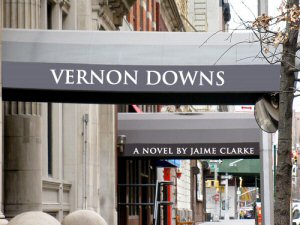
vernon downsJaime Clarke’s new novel, Vernon Downs, will be published in 2014 by Roundabout Press. But you don’t have to wait ’til then — Roundabout will ship the book directly to you in December.

The catch?

Don’t preorder the book on Amazon — order directly from the publisher. You can read Jaime’s personal message at his aptly named website, http://pleasedontbuymybookonamazon.com/.

A disclaimer here: Jaime and his wife Mary are friends, and also co-owners of Newtonville Books,  an independent bookstore here in Boston which I like to link to (you may have noticed). But even if Jaime weren’t a friend (and a great writer, and a great curator of the written word — see Baum’s Bazaar), I’d still be writing about his excellent plan. It’s a gutsy move that’s gotten some press, and I hope it reaches a wider audience.

If you order Vernon Downs directly from Roundabout before its official April release, perks abound:

1. You’ll receive your copy in the mail in December — five months early.

2. You can enter the name of your favorite independent bookstore in the Special Instructions section at checkout, and Roundabout will send 50% of the monies (excluding shipping) to that store.

3. Jaime is forgoing all royalties until April, so your entire purchase supports independent publishing and bookselling.

And, as a special treat, if you order before midnight (EST) on October 28th, Roundabout will send you an audio clip of Chris Cooper (!) reading a selection from Vernon Downs. I’ve been pretty much entirely in love with since Chris Cooper October Sky, so . . . yeah.

I’m excited. I hope you are too.

If you have any other great ideas or news items about saving independent presses, please share! 

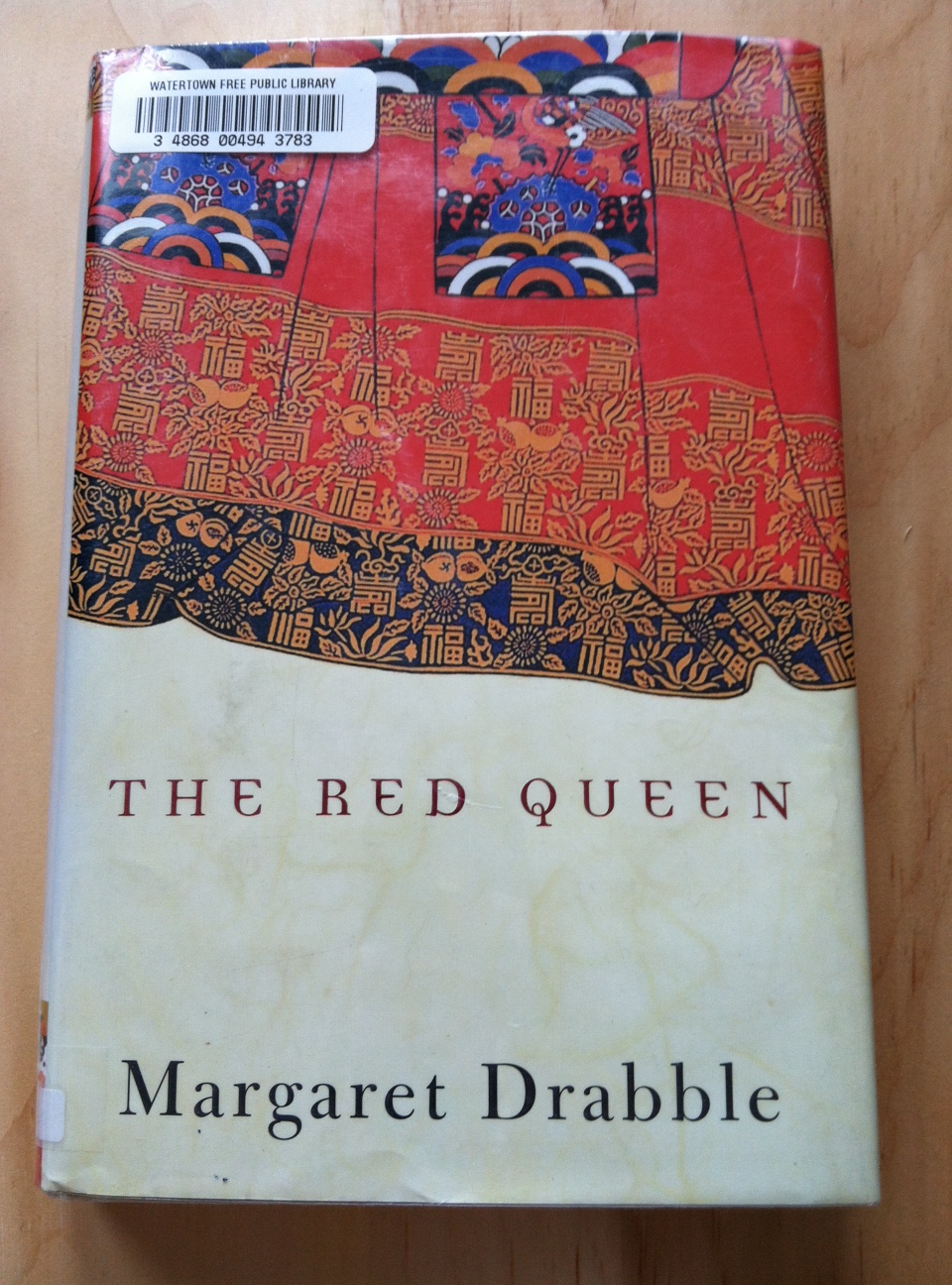
Recommended Reading: The Red Queen, by Margaret Drabble

Since I’ve read two books by A.S. Byatt so far this year, I thought it would be only fair to give one of her sister’s novels a try. Sister, you say? You haven’t heard of another novelist with the last name of Byatt?

The Red Queen

Well, that’s because A.S. Byatt’s non-pen name is Dame Antonia Duffy (she was born Antonia Susan Drabble), and her sister’s name is Margaret Drabble.

Both writers have been laureled and lauded many times over, but they do not see each other often and do not read each other’s novels, the result, apparently, of their rivalry as writers and their disagreement over the portrayal of their mother and the use of the family tea-set in a novel.  It’s a real shame, not only because their novels are so good, but because in all the interviews I’ve read, both women seem like lovely people.

Enough about that. Let’s talk about the book.

The back jacket of The Red Queen claims that it’s “a rich and playful novel about love, about personal and public history, and what it means to be remembered.” Readers may recall my feelings about unattributed jacket copy, and I do think that this is better than most, with one slight problem. “Playful” implies that the novel is funny, or piquant. It is not.

It is, however, excellent. What’s playful about the novel is its structure. In the first part, our narrator is the woman known, inaccurately, she tells us, as Lady Hong, a Korean princess of the eighteenth century. The Korean Crown Princess is known in Korea (less so in the rest of the world) for her memoirs, written for different audiences over a period of some time. The version of the princess that Ms. Drabble presents is an unreliable narrator, to be sure, sometimes blinded by her own interests or those of her family. She drifts into long digressions, circles around issues, leaves out salient details. She’s also dead, knows she’s dead, and has the advantage, with some limitations, of looking over history to fill out her own story. What she wants is to be remembered, to reach a wider audience (she won me over — I have to find those memoirs!).

In the second part of the novel, she succeeds. We switch gears entirely to follow Dr Barbara Halliwell in the present day as she attends an academic conference, makes a friend, and embarks on an affair in Seoul. Throughout her time in Korea, she’s drawn to the tale of the Crown Princess, unsure who gave her the memoirs and what she should be taking away from her visit, her affair, her very life. I’ll stop here, because you know I never offer spoilers. Let’s just say that the story keeps spiraling outward and inward, and the last few pages are a treat, so very clever. It’s a novel I’d be pleased to have on my shelf, and I hope you and A.S. Byatt will read it too.

Dragon Bound, Part the Second: I have a theory.

When we left off last week, Pia and Dragos were about to be dragged into a goblin fortress, and I was seething with feminist (personist?) rage. dragonboundreadalongbutton-01

The rage is back, folks, but luckily for you, and Thea Harrison, I’m on my way back from my brother’s wedding in Cleveland, so this will be brief.

This section of the book brings Pia into Dragos’s world/demesne (yes, they escaped from the goblins. I was shocked.). We get to meet Dragos’s lieutenants, who, the interweb tells me, will get their own books eventually, as well as a fairy named Tricks, who seems to me like a magical Kristen Chenoweth in a business suit.

Sidebar: why is it that women in these books only drink white wine?

Dragos has his own skyscraper and ruthless lawyers (oh, did I mention that the book’s epigraph is attributed to Donald Trump?), and gosh, does the poor dragon man have a lot on his mind! Here’s a credit card, Pia! Have a latte and hit the gym, but don’t forget lunch with the girls! Oh, I don’t like your clothes, so please wear this expensive robe so that none of my hulking gorgeous male friends will get a look at your (no doubt quivering) thighs.

And then there’s the sex. The always-agressive (though with consent, this time), heteronormative, vanilla sex (I mean, he’s not a dragon at the time, right?).

Yes, it seems that once you hit the 1/3 mark, your main characters get to quit holding at second and thirdish base and run for home. A lot. The sex scenes are just as awful as you would think, with Pia feeling so affected by Dragos “wrecking” her that she feels she needs to go sit in a dark room and sort out her feelings.

I have a theory about all this “wrecking.” You know how A-list actors (for the most part) will only do graphic sex scenes if the scenes are integral to the plot of the movies? I’m thinking of Diane Lane in Unfaithful, Joseph Fiennes & Gwyneth Paltrow in Shakespeare in Love, Gael García Bernal (yes, I know he wasn’t famous yet) in the last scene in Y Tu Mamá También, for starters.

[Sidebar 2: I prefer sex in movies to be implied — see the curtains stirring in the breeze in The Maltese Falcon? Yeah, that’s Humphrey Bogart having sex.]

Well, I think Ms. Harrison is trying to confer an air of legitimacy on Dragon Bound‘s sex scenes with these claims that Pia’s whole self is changed when she has sex with Dragos (“He took her so far and deep outside of herself, she came back changed in fundamental ways she didn’t understand” [176].). It’s as if she’s saying, “Look! The book needs the sex! It’s part of the characters’ arcs!”

At least Dragos willingly performs cunnilingus.

As I said in my first post, I think there are some interesting dynamics at work in the book — the interaction between human and non-human societies in particular. And I get a kick out of Elves enforcing trade embargoes. Would someone with influence suggest to Ms. Harrison that she try her hand at less sex-centered mass market paranormal fiction?

Next week: Will Dragos learn to love? Will he accidentally-on-purpose kill his second in command? Will Pia reveal her Wyr-self? Stay tuned . . .

Check out the other readers-along:

Early Review*: We Do! American Leaders Who Believe in Marriage Equality, Edited by Jennifer Baumgardner and Governor Madeleine M. Kunin

First off, let me put my cards on the table: I’m a member of the LBGTQ community, and I support equal rights for LGBTQ persons. Period.We Do!

We Do! doesn’t offer the jazziest format or a comprehensive tour through queer history, but it’s an excellent resource for speeches and essays relating to the LGBTQ-rights movement. As you might expect, Harvey Milk’s “Hope” speech is the first to appear, and you’ll also find testimony from well-known political figures, up to and including President Obama.

Glaring omissions on this front: Senator Lisa Murkowski (R-Alaska) and Senator Mark Kirk (R-Illinois).  Senator Murkowki’s press release on her change of heart (June 2013) especially merits inclusion. (Senator Rob Portman [R-Ohio] made the cut.) Marriage equality is coming, and the longer Republicans hold out, the worse they’ll look, and I’m sure Democrats will gleefully bash them for it. However, ending discrimination against LGBTQ persons should trump party hostility, and the more moderate (or even conservative; see Cheney, Dick) GOP politicians come forward to support LGBTQ rights, the better, especially since they face animus from the right flank of their own party.

But enough of politics (hasn’t it been a great two weeks here . . . UGH) Some high points of the book:

  • Transcriptions of speeches by Virgina Apuzzo and David Mixner: rousing, tragic, fundamental.
  • Andrew Sullivan’s prescience on the conservative case for gay marriage. He was way out front in 1989.
  • Personal testimony from LGBTQ legislators like Representative Bill Lippert.

I see this book as part of a growing awareness (in America) of LGBTQ history, which is *such* a positive development. Not everyone will run out to their bookstore to buy Stonewall: The Riots That Sparked a Revolution (though I wish it were so!), but a book like We Do! could be a gateway to more reading about the struggles the LGBTQ community has faced in this and past centuries.

Speaking of LGBT history, if you’re looking for another way to learn more, I suggest trying the Quist (Queer History smushed together) app for your phone. Daily tidbits of LGBTQ history, and it’s free. Full disclosure: My sister-in-law, Sarah Prager, created the app and owns it, and I (your humble blogger) edited it before its release.

We Do! American Leaders Who Believe in Marriage Equality will hit the shelves on Tuesday (October 15).

*I received this ARC through LibraryThing’s Early Reviewer program in exchange for an honest review.

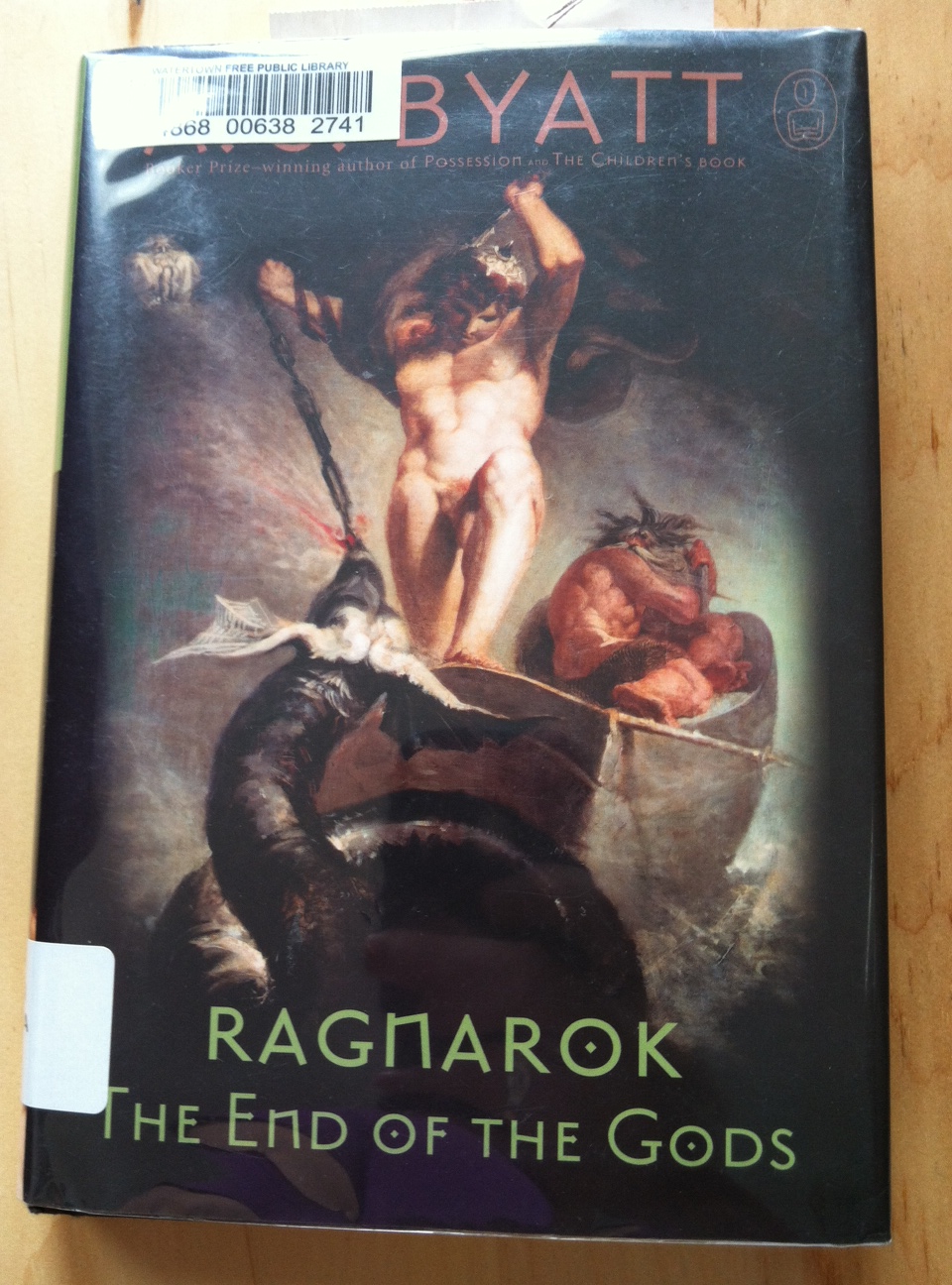
Recommended Reading: Ragnarok, by A.S. Byatt

I was raised on opera as a child; I couldn’t identify a New Kids on the Block Song (still can’t), but I could pick Wagner out of a lineup every time. So with his Ring Cycle in mind, I was excited to read A.S. Byatt’s take on Ragnarok, or The End of the Gods, especially because I found Possession to be such a wonderful book (and if you read it, you might remember that Ash wrote a poem called “Ragnarok”).

Sorry, library copy.

Sorry, library copy.

Fans of A.S. Byatt will encounter her erudition and her command of language here, with cascading descriptions and lists reminiscent of Milton’s Paradise Lost. The language is so satisfying, so meaty, that this short book (171 pages) takes quite a while to savor.

What impressed me most, in this telling, is the structure of the work. It’s not exactly a novel, but not exactly D’Aulaires’ Book of Greek Myths, either (my favorite book of mythology when I was a child). But there is a narrative flow, and the book opens with “a thin child in wartime” encountering the stories of these irascible, imperfect, impulsive gods and their creations. But these myths, as A.S. Byatt points out in an essay that closes the book, differ greatly from fairy tales; the good do not always prosper, and the bad are not always punished; indeed, Ragnarok is the end of the gods. The world with its gods dies and is not reborn.

The book is not an allegory for the woes of our world, but present in the author’s mind was, she writes, the steady bursts of destruction we inflict on the earth ourselves, without any help from the gods.

“And beyond them a stretch of open country / That strives into the sea.”

Ashley McHugh*, a poet and friend, directed my attention to this poem, “A Figure of Plain Force,” by Michael Heffernan (to be more precise, she pointed out the next poem on the page, but I was drawn to the first poem).

Grass by C.R. Oliver

In “A Figure of Plain Force,” the speaker considers “you,” a person turned into an open door in the early morning. We aren’t given anything about their relationship, or even the person’s gender, but I couldn’t help imagining the speaker as a child remembering his mother readying herself to meet the day. She might work on “nothing of consequence,” or perhaps she’ll fall into a whirl of activity to finish a task she’d left undone.

As you’ll note from the line I pulled for the title, the location is somewhere near the ocean, but when I read these lines:

In this condition you pretend to lean
Solidly into the open while you gather
The winds about you by deliberate grace
Turning you into a figure of plain force,
Careful and candid, never in a dither,
Given to nothing noisome or unclean.

I can’t help but think of a pioneer woman looking out onto a sea of prairie grass, formidable in her determination.

What’s your reaction to the poem?

*By the way, you should check out Ashley’s glorious first book, Into These Knots.

Dragon Bound, Part the First: Let’s Talk about Sex Consent

My reading of Thea Harrison’s Dragon Bound did not begin auspiciously. In the very first sentence, we have an unnecessary adverb, and I don’t mind those in blog posts, but when one has an editor? Tut, tut. I should probably tell you my least favorite line up front, too: “the sight of his bare chest had stolen every digit of her IQ” (93). GAG.
dragonboundreadalongbutton-01

N.B.: Spoilers, spoilers, spoilers.

After that start, though, the book grew on me. For a while.

Pia is a resourceful heroine with some serious baggage, which makes her more complex and interesting than the blushing rose I was expecting from a romance novel. Bonus: she swears and actually has sexual experience.. I was going to be all kinds of annoyed if the first person she sleeps with were to be a dragon-person. I mean, Wyr. Anyway, when we see her, she’s just stolen something from Dragos (more on him in a sec), and is on the run.

I think Ms. Harrison’s world-building is pretty interesting, and clearly borrows from Tolkien, and probably from other, more modern fantasy writers that I haven’t gotten around to reading. The basic idea is that in this world, humans co-exist with Elves, Fae (like fairies and trolls, I guess, both Dark and Light), and Wyrkind (think ‘were-kind’). The Wyrkind folks can turn into all sorts of animals, apparently. Pia is half-human, half-Wyrkind. I suspect that the revelation of her kind of Wyr will be a major plot point.

Pia knows who Dragos is before they meet, which saves us some conversational exposition. Combine that with what we learn in this first section and we have a list of pretty snazzy qualifications: He’s super-sexy (to Pia), incredibly rich and politically connected, all kinds of powerful (magic-wise), a telepath, and a huge dragon as old as the earth itself. Oh, and he likes to get his own way, apparently. I do think the description of his size leaves something to be desired, though: “Dragos Cuelebre exploded into the sky with long thrusts from a wingspan approaching that of an eight-seater Cessna jet” (9). Yes, that’s a “thrust” on page nine, folks. But my real problem is the Cessna thing. First of all, everyone knows what a 747 is. But a Cessna? A Cessna 8-seater? Um, no. Why can’t he just be as big as a jet? Or a helicopter or something?

So, for 42 pages, ok. No sex, some magical intrigue, reference to a harpy (!), some interesting ideas about an integrated human-magic world (including Department of Energy contracts, which seems pretty brainy for a romance novel). Also use of the word ‘demesne,’ which I enjoy. And a cool, older, possibly half-Elven friend named Quentin for Pia. Quentin is crushworthy. I would totally hang out with him and I’m pretty sad that he seems to drop from the novel completely after just a few pages.

But . . .

There’s this dream-ish thing.

Before Dragos can decide not to rip Pia into itty bitty pieces because he thinks she’s super cute, he needs to find her, and for that, he needs to know her name. So he does his magic thing and reaches out to her in a dream.  To be more accurate, he sends her a dream/beguilement, or maybe implants it into her subconscious while she’s sleeping (it’s magic, and I’m not an expert, so cut me some slack, ok?).

This undertone of incursion/violation/assault/drugging was such a turn-off that it was difficult for me to read about the hot almost-sex the dream/beguilement versions of Pia and Dragos have.

[Sidebar: Dragos is constantly referred to as “a male,” instead of “a man.” I get that this is technically accurate because he’s a dragon and all, but I find the construction distracting, like someone’s talking about a lab rat.]

So in the dream/magic incursion into Pia’s consciousness, Dragos’s Power (capital P) turns Pia on. He uses his magic voice on her, and before she knows it, she rushes toward him, and immediately “He took hold of her arms, dragged her across his body and slammed her into the mattress as he rolled on top of her. Pinning her down with his heavy body, he locked his hands around her glowing wrists and yanked them over her head. The corded strength in his fingers make [sic] the flesh and bone they shackled feel slender and fragile” (45).

Um, what now? Here are some words that are problems for me here: dragged, slammed, pinning, locked, yanked, shackled.

Call me a capital-F Feminist, but I like my sex with a heaping side of consent. The “juncture between her thighs” (OUCH) may “[grow] slick,” but is Pia really in a position to give informed consent? She certainly didn’t consent to this mind-violation. How do we know that Pia’s engagement with Dragos in the dream isn’t the result of the drugging-magic thing Dragos has going on?

I get that this is a romance novel, and that in the pages that follow Pia and Dragos will have lots of mutually-desired sex. Great. Pia wants to be dominated? Have fun, Pia. She’s an adult, and adults should be free to do whatever they like in their bedrooms (or kitchens or whatever) with other consenting adults. What I don’t like is that the novel’s first sexual encounter has very negative overtones of non-consent.

Sure, Pia seems to be into the encounter, but the important word here is seems. She didn’t want the dream/encounter to happen in the first place: “Pia dreamed of a dark, whispering voice. She tossed and turned, fighting to ignore it. Exhaustion was a concrete shackle. All she wanted to do was sleep. But the voice insinuated into her head and sank velvet claws deep” (43).

See what I mean?

At least they have a talk later (87-88) about how she was beguiled and how her choices are now her own, which makes me feel a little better. A very little. Until Dragos started spouting nonsense about how Pia “belongs” to him. GROSS. Pia does correct him before they indulge in some pretty hot over-the-clothes action, and when she tells him to stop he stops. Thank goodness.

Man, I really hoped this was going to be funny. I just don’t get it — why can’t a novel geared toward women, in which we know the characters are going to fall for each other, feature clear consent at all times?

The rest of this first-third is a pretty good time. Dragos catches Pia and tells her that her ex is dead (boo hoo), and then pulls a Mr. Rochester when she almost faints, getting her a blanket and a drink. Pia reveals that she’s got a cool trick—locks can’t hold her— and then proceeds to use some political wiles and an order of steak to get Dragos shot with some sort of elf dart (why are elves always archers?), but then finds him so irresistible that she stays by his side to nurse him. Aw. I think the message is pretty loud and clear: Pia is attracted to the huge, dangerous,  good-looking dragon.

Now I’ve written more than a thousand words about this treasure, so let’s cut to the end. Someone has been very naughty and betrayed Dragos, which means that he and Pia are captured by goblins and dragged into an “Other” land, some sort of rip in the space-time continuum where mechanical weapons don’t work (like the Terminator’s time bubble). Dragos is apparently too incapacitated to launch more than one fireball (using his eyes — like a cross between Cyclops and Gandalf). Pia’s really freaked out about bleeding (can I get a Freudian in here, please?), and when Chapter 7 ends, the goblins are about to take Pia and Dragos into their fortress. Because what would a romance novel be with a dungeon?

See? It’s my first one, and I’m learning already!

By the way, who else wants to turn the metaphors of consuming and devouring into a publishable paper?

Stay tuned for next week’s installment, and check out the other readers-along:
Recommended Reading: Asunder, by Chloe Aridjis

I think we l know how I feel about jacket copy and blurbs. To wit: not good. But for once, the blurbs are on to something, and it’s the gem that is Chloe Aridjis’s Asunder.

AsunderThe novel follows Marie, a guard at London’s National Gallery, through her perambulations at work, at home, and abroad. This is isn’t a novel with extravagant plot points; instead, it’s superb gathering of images and moments, a testament to a quiet life. To observation.

It’s about the entropy of decay and the possibility for violent change. It’s a weirdly beautiful excavation of life. And the images! New, lively, strange.  Here’s one example. Marie is examining a painting:

It was a mysterious painting, of a seaside landscape with a few human figures, and my eyes first came to rest on the wall of ancient wrinkled cliffs resembling a procession of tired elephants. (111)

Arresting, isn’t it?  I felt swallowed up the images as I read. I loved this novel, and if you’ll excuse me, I‘ll be off to find my own copy.