Recommended Reading: Simeon Berry’s Ampersand Revisited

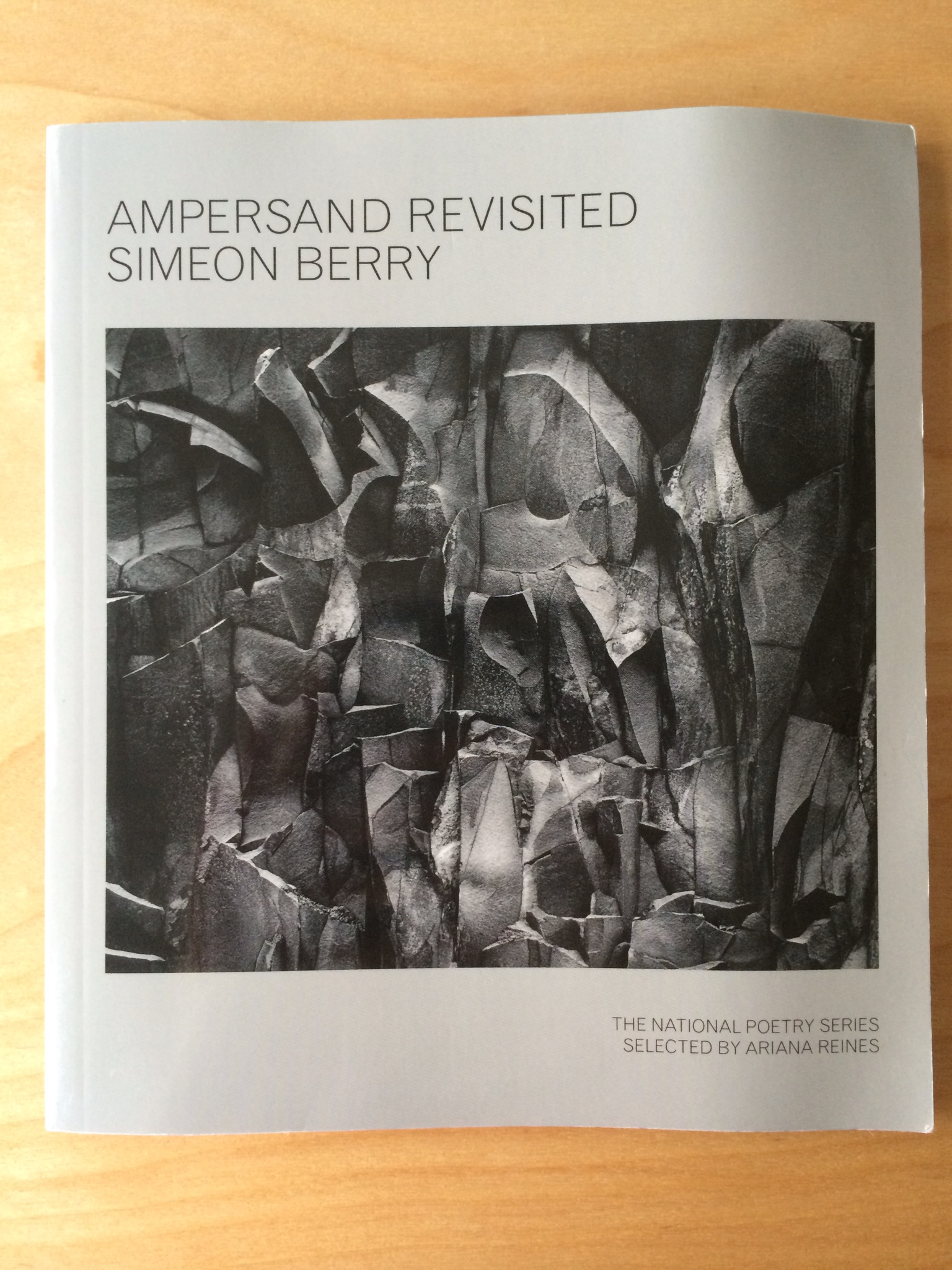
IMG_4494Simeon Berry’s Ampersand Revisited* is a curious, revelatory collection, confessional, lyric, and highly detailed.

[Full disclosure: Mr. Berry is the friend of a friend.]

The book is a bildungsroman in prose-poem form, heavily infused with philosophy, and it’s completely fascinating. Dense and carefully wrought, these three long poems explore the speaker’s questioning about almost everything, including family, sex, communication, and language.

It’s completely fascinating, and I say that as someone who is  not particularly enamored of the bildungsroman, especially the white male bildungsroman (I have, on this site, admitted to loathing The Catcher in the Rye). But in this book the speaker is focused not only on himself, but on his family, caring deeply about what they make of the world, though he’s not always sure what to do with the information at his disposal.

It’s an intense reading experience, and one that I think I’ll need to repeat to get the most out the collection. If you’re a fan of Anne Carson’s Glass, Irony, and God or Lyn Hejinian’s experimental My Life (which I haven’t read since college, but was viscerally brought to mind here), I recommend reading Ampersand Revisited.

Ampersand Revisited is the winner of the 2013 National Poetry Series.  Monograph, which is forthcoming this month, won the 2014 National Poetry Series. You can read the first few pages of Ampersand Revisited here.

* I received a copy of this book from the author for review purposes, which did not affect the content of my review.

Recommended Reading: The Beautiful Bureaucrat, by Helen Philips

IMG_4493Franz Kafka meets Charlotte Perkins Gilman meets George Orwell in Helen Phillips’s short novel The Beautiful Bureaucrat*, a psychological thriller and modern fable that I think would be tough to put down (I wouldn’t know, since I snapped it up in two hours one night).

Josephine and her husband, Joseph, have moved to the city after months of unemployment in a last-ditch effort to find jobs. Josephine is hired by a faceless person (I mean that pretty literally) to input endless numbers in a database called, descriptively, “the Database.” Her office is one of hundreds in a huge building where keyboards click constantly, colleagues are either odd, unhelpful, or invisible, and the vending machine hasn’t been used in decades. And then there are the walls in her office: pinkish, marked with the finger-smudges of previous occupants.

The unpleasantness of Josephine’s job is compounded by the dilapidated series of subterranean apartments she and Joseph find themselves subletting in their impecunious state. And then Joseph doesn’t come home one night, refusing to give an explanation the next day, and Josephine falls into a state of nearly unceasing dread, until she realizes that in order to save the man she loves, she must take matters into her own hands.

In just under 200 pages, Helen Philips crafts a tightly-woven story about love and necessity with perfect pacing, incongruously witty wordplay, and deft characterization. Recommended.


And, Dear Readers, here’s a new game I’m going to play occasionally:

Carolyn Tells People with the Film Rights to This Book What to Do :

Who should direct the film adaptation: Spike Jonze

Who should play Josephine: Michelle Williams (in the mode of Blue Valentine and Take This Waltz)

Who should do the music: David Arnold & Michael Price


*I received a copy of this book from the publisher for review consideration, which did not affect the content of my review.

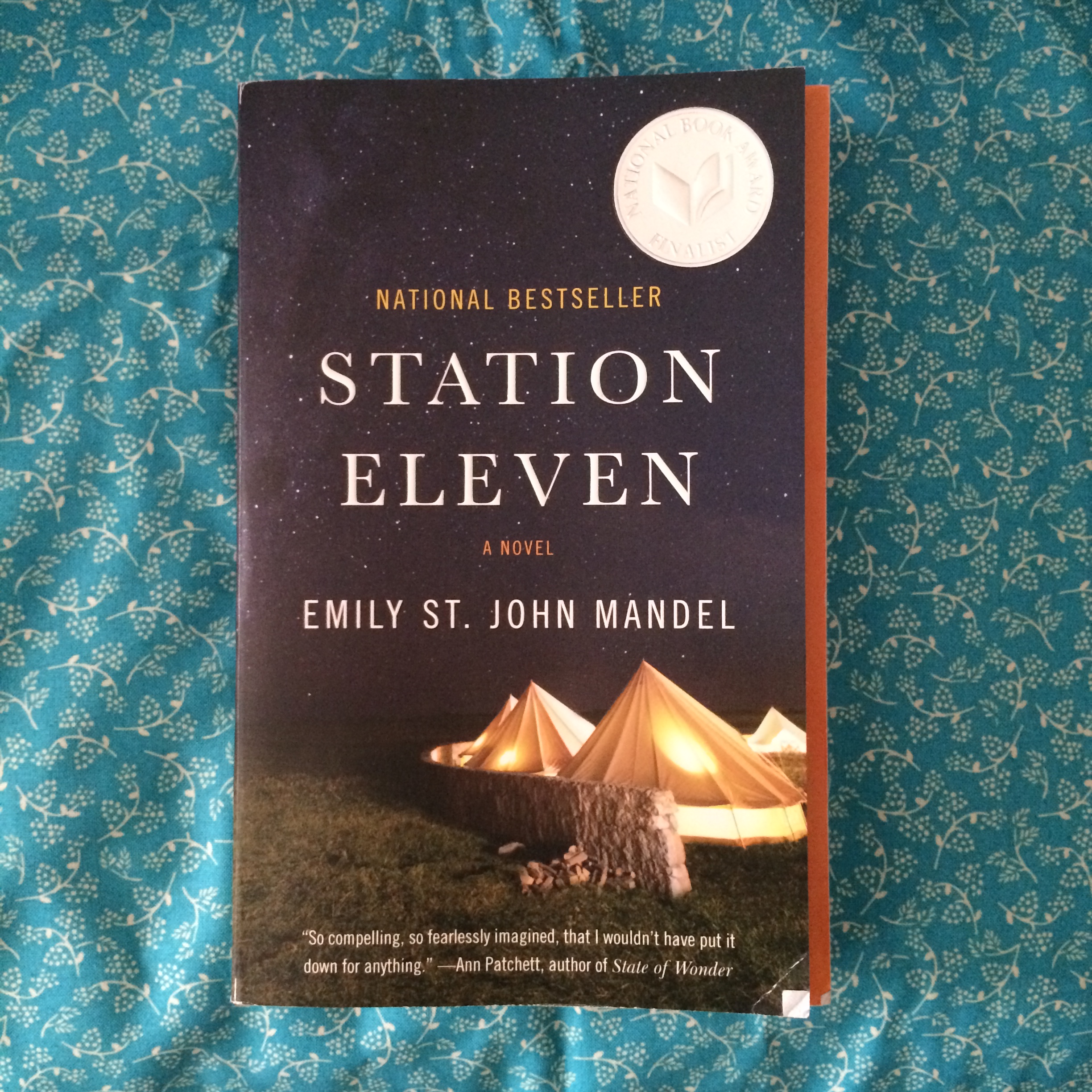
Recommended Reading: Emily St. John Mandel’s Station Eleven

Driving home from a wedding this past weekend, we noted just how green everything looked. The trees were lush with foliage, their own and that of the vines creeping around their trunks and heading for the guardrails. I was struck how quickly the land would take over if we disappeared from the planet. If those vines went unchecked  for a year or two, or a decade, how much of the highway would simply disappear?

That’s the kind of world Kirsten Raymonde inhabits in Emily St. John Mandel’s Station Eleven*, a novel that marries literary fiction, speculative fiction, and Shakespeare. It’s absolutely marvelous.

It’s been 20 years since a virulent form of flu killed more than 90% of the Earth’s population in a IMG_4318matter of weeks. At 28, Kirsten vaguely remembers the world as it once was, when you could open a cold box to retrieve food, when an infected scrape wasn’t a death sentence, when you could flick a switch and lights turned on.

Now Kirsten walks the road with the caravan of the Traveling Symphony, a group of actors and musicians moving from place to place along the shore of Lake Michigan performing Shakespeare and music to varying receptions. The motto of the Traveling Symphony is “survival is insufficient”—drawn from a Star Trek: Voyager episode (written by Ronald D. Moore, of BSG and Outlander fame)—which reflects their devotion to keeping art alive even when fidning food and shelter is very difficult. When they encounter a disturbing religious fanatic at the settlement of St. Deborah by the Water, the Symphony is forced to make difficult choices in order to survive.

As literary speculative fiction, Station Eleven is top-notch, in a category with Kazuo Ishiguro’s Never Let Me Go in terms of sheer beautiful writing, and surpassing even McCarthy’s The Road in its vision of what a post-government, post-technology world looks like for survivors. Through Kristen, readers glimpse the traumas of the immediate period of collapse that inform the customs and practices of the new world, while through another character we see what it was like to live through the first months of the plague with a group of survivors who slowly realize that the National Guard and the Red Cross aren’t coming to save anyone.

Tracking the survivors in the post-collapse world is only part of Station Eleven‘s brilliant structure. The book opens on the last day of the old world, when 8-year-old Kirsten is performing in King Lear with Arthur Leander, one of the best actors of his generation. Arthur is the fixed point of the novel; the other major characters are all somehow connected to him, and as we follow Kirsten’s adventures, we’re also learning the tale of Arthur’s life and death in parallel.

The balance among the narratives is simply exquisite. And so is the tone, in its waves of fragility and strength, darkness and hope, loss and recovery. In that, Station Eleven resembles not a tragedy, but a Shakespearean romance. Kirsten is a Miranda on an island without a shore, making the brave new world as she goes.

This is a gorgeous, splendid novel. Highly recommended.

*I received a copy of this book from the publisher for review purposes, which did not affect the content of my review.

From the R&RG Archive: “I Love All Beauteous Things”

Friends, this week has been a busy one. In addition to work and the other work of child-chasing, there’s been traveling and a tiny bit of writing and even reading. I’m *this close* to finishing two books I’m very much enjoying (one novel, one collection of poems), so this week I’m taking you back to the archive, by which I mean a post from 2013, when not too many readers were to be found hereabouts.

I’ve picked this post because of its connection to a favorite book of mine. My sister’s baby shower was this past weekend, and one of the gifts we gave her is a copy of Miss Rumphius, which you must go read for yourself if you haven’t already. And just learned that Barbara Cooney’s original artwork for Miss Rumphius is in the museum at Bowdoin College, which is serendipitous because I know a certain incoming freshman who is just dying to give a museum tour—probably early on a Saturday morning, right?—to his extremely nerdy and old cousin (hey there, FB!) . . .


Robert Bridges’s fine poem is a brief, honestly joyous celebration of the beautiful, and our urge to create something beautiful ourselves. In the second stanza, he writes: “I too will something make / and joy in the making” even if his creation proves ephemeral.

One of the pleasures of this little poem, for me, is that it reminds me of one of my favorite children’s books, Miss Rumphius, by Barbara Cooney. In the book, Miss Rumphius (as a child) is told by her grandfather that she must (among other things) over the course of her life do something to make the world more beautiful.

Isn’t that lovely?

I’ve loved this book since I was a little girl, and when I’m feeling reflective, I remember the beautiful illustrations and ask myself if I’ve done anything lately to make the world more beautiful, and, more importantly, what I can still do.

Image courtesy of Tom Curtis/FreeDigitalPhotos.net

Image courtesy of Tom Curtis / FreeDigitalPhotos.net

(I’ll let you find out for yourself what Miss Rumphius sets out to do.)

Recommended Reading: The Girl Who Slept with God, by Val Brelinski

IMG_4361Val Brelinski’s The Girl Who Slept with God* reminded me of another debut novel, Jeffrey Eugenides’s The Virgin Suicides, from the provocative title to the ’70s setting to the interest in religious girls’ isolation.

Thirteen-year-old Jory is the middle of three sisters (Grace is older, Frances significantly younger) in a deeply devout evangelical family living in Idaho. The girls attend a Christian academy; their mother is a homemaker and their father teaches astronomy at a nearby college. Jory is a bit rebellious, but Grace is a model of devotion and hard work; she wants to become a missionary, and is thrilled when she’s sent to Mexico for that purpose.

But then she returns pregnant, and the family is lost in turmoil since Grace insists the child has been given to her by God. Eventually the girls’ father decides to exile Jory and Grace to a house outside their small town. Grace will take correspondence classes and Jory will attend—horror!—the public school.

Over the next few months, the sisters contend with their isolation (which for Jory is simultaneously a social expansion), their faith, and each other as Jory tries to find her footing in the secular world and its characters—the kids at school, the mysterious driver of the ice cream truck, and their cantankerous but caring next-door neighbor, while Grace tries to convince their father to draw them back into the family orbit.

Unlike The Virgin Suicides, which was narrated in the unusual first-person plural, this novel take the third-person perspective, but it’s so closely in tune with Jory that I sometimes forgot, over the couple weeks I read it, that she wasn’t the narrator. Ms. Brelinski has a knack for capturing the confusing sensations and tumultuous thoughts of adolescent girlhood in descriptive passages like these:

Jory was appalled to see a teardrop splat onto her writing. The blue ink bled outward and obscured what had been written there. The earth was now a bleary, unknown age, although the universe’s age remained clear. Her small world had been wiped out while the rest of the cosmos went on unchanged—a tiny lesser planet washed away in a small, second flood, and barely even noticed in its passing. (277)

The Girl Who Slept with God is an absorbing, character-driven read. Recommended.

*I received a copy of this book from the publisher for review consideration, which did not affect the content of my review.

Summer Reading: Pairs Event

In which I pair three books read this summer with three books read before this summer that have similar themes but are in some way opposite. It’s a scientific process, people.


IMG_4256Summer Reading: The Gracekeepers,* by Kirsty Logan, takes place in a watery future world (I haven’t seen Waterworld, so I can’t tell you how it compares. Sorry about that). All land is inhabited by landlockers, who jealously guard their island holdings; some of them have returned to earth worship. Everyone else lives at sea. These damplings include scavengers, revivalists who live on converted cruise ships (no pun intended there), messengers, and the crew of the Excalibur, a tiny floating circus. North is the circus’s bear girl, who, like her parents before her, dances with a bear to entertain landlockers in the hope of earning dinner. One night a storm sends the circus crew into the path of Callanish, a gracekeeper—a person in charge of arranging damplings’ burials at sea. North and Callanish exchange secrets and part ways, but they can’t stop wondering about each other, and about the possibility that there’s a way to be of both the land and the sea.

The main characters aren’t as fleshed out as I would have liked, but The Gracekeepers is worth picking up for the atmosphere, the world-building, and the supporting characters.

photo (107)

Pair it with: Emmi Itäranta’s Memory of Water,* another novel set in the future after some kind of environmental disaster—though this time, one that causes a scarcity of water. Memory of Water also features a pair of young women trying to make the best of a dangerous existence while hiding secrets.

IMG_3428Summer Reading: Bill Bryson’s In a Sunburned Country is a hilarious tour through Australia. He talks to almost invariably friendly Australians, gets quite drunk and draws naughty cartoons on a napkin, lists the continent’s unrelentingly deadly wildlife, and doesn’t see too many kangaroos, among other exploits. I can’t say the book makes me want to visit Australia—though Mr. Bryson enthusiastically hopes that you will—but it definitely made me want to visit with Bill Bryson. The book’s one drawback: Mr. Bryson’s failure to write significantly or at any length about Australia’s Aboriginal population; as far as I could tell, he did not speak with a single Aboriginal person.

Still, if you’re one of the people who’s just discovering Mr. Bryson thanks to the press surrounding the upcoming movie version of A Walk in the Woods (which I highly recommend), I recommend reading this one.

photo 3Pair it with: A very different take on Australia, by an Australian. Christos Tsiolkas’s Barracuda* is a book with teeth, and a lot more anger than laughs. As I wrote in my review, “Danny is an teenage Australian swimmer who dreams of making it to the Olympics; thankfully, there’s no swelling inspirational music in this tightly-plotted, intricately structured novel.”

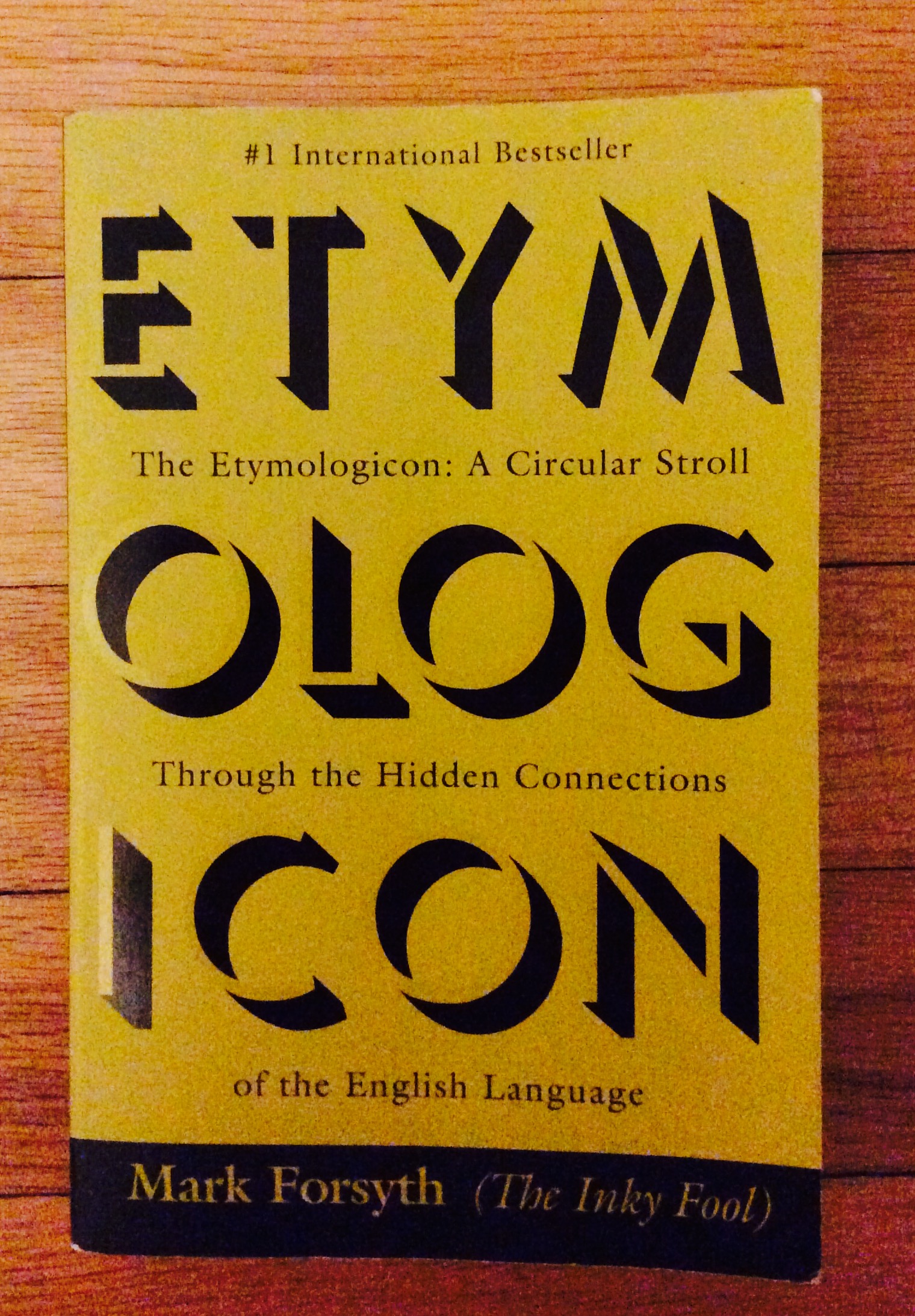
FullSizeRenderSummer Reading: Mark Forsyth’s The Etymologicon is a circular perambulation through the odd origins of English words. You could pick up the book, flip to any page, and have yourself a laugh reading any entry, but each entry connects in some way to its predecessor and successor, so I think it’d be more entertaining to read it start to (sort of) finish. Mr. Forsyth is the man behind the popular blog The Inky Fool, and The Etymologicon draws heavily from the blog’s content. Though it’s erudite and full of arcane trivia (Starbucks gets its name from the Pequod‘s first mate, whose name was drawn from a prominent whaling family, but the name itself came from a Viking word for an English stream. Really.), but also surprisingly snarky and scatological. Highly entertaining. But what else would you expect from an author whose biography begins, “Mark Forysth is a writer, journalist, proofreader, ghostwriter, and pedant”?

photo (34)Pair it with:  Erin Moore’s That’s Not English,* which I called “a beach read for nerds” in my review. Like The Etymologicon, it’s a funny read about words, but it’s less about etymology than it is about culture.

What bookish pairings have you found this summer, Dear Readers?

*I received a copy of these books from the publishers for review consideration, which did not affect the content of my reviews.

“All night it will say one name”: Tess Gallagher’s “Under Stars”

Photo by Blair Fraser via Unsplash

Photo by Blair Fraser via Unsplash

I am very fond of letters, though I am a terrible correspondent, so I loved the opening of Tess Gallagher’s poem “Under Stars,” which imagines what a letter does in a mailbox overnight:

The sleep of this night deepens
because I have walked coatless from the house
carrying the white envelope.
All night it will say one name
in its little tin house by the roadside.

Ms. Gallagher is a poet who I’m just starting to read. I learned from the biographical note on the Poetry Foundation’s site that she is also a short story writer, and I think this remark about how she approaches writing poetry and prose is illuminating:

Of the differences between writing prose and poetry, she said in an interview with Willow Springs: “I feel like prose comes much more from outside me than poetry does. Poetry is intimate and more generated in my own theater, shall we say. But in prose I have to be responsive to that story that’s coming to me and there has to be some part of me that goes out to meet it.”

I wonder how many other writers feel that way.

If you’re a Tess Gallagher fan, please let me know which poems and collections I should seek out!

What to Read While You Wait for the Magic Mike XXL Blu-ray: Dietland, by Sarai Walker

I’ll admit it: I did not believe the feminist hype about Magic Mike XXL that I kept reading on Twitter.

But then I went to see it.
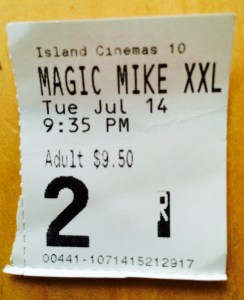
There is a magic place where you can still see a movie after 6 p.m. for under 10 bucks. That magic place is Rhode Island.

There is a magic place where you can still see a movie after 6 p.m. for under 10 bucks. That magic place is Rhode Island.

In a tiny theater on a Tuesday night, my husband (the only man present, but let me tell you, men should see this movie) and I sat with about a dozen women, and all of us laughed and clapped and practically cheered. It was the most positive, enthusiastic, demonstrative crowd I’ve seen at the movies, bar none (this from a woman who saw the Lord of the Rings movies at 12:01a.m. on opening day, mind you).

Why, you ask?

Well, it’s not just the good looking guys dancing around, though that’s fun (for the record, I don’t find Channing Tatum particularly attractive. No offense, Channing—you seem like a nice guy and I’d be happy to chat with you over a beer, but let’s keep it to just friends, m’kay?). You can see the same kind of thing in the first Magic Mike movie, which was a Steven Soderbergh take on the guy-trying-to-get-a-break-and-start-new-life-gets-pulled-into-old-life story. It was a good enough movie, but it didn’t leave me with a grin on my face like this one did.

Nor was it the jokes, which were pretty good, but not Anchorman quality, if you know what I mean.

I think what made me (and the audience) so happy was that (1) this is a movie about men who are out to make women happy. Are they interested in sleeping with women? Sure. Does that drive the plot? No. It’s unbelievably refreshing.

And (2), in this movie, women don’t have to be afraid. No woman is killed, raped, beaten, harassed, pressured for sex, humiliated, called names, or treated as a passive object. Not one. Not a single one. It’s like an alternative fantasy world in which women are safe around men, period.

And (3) I’m talking about women of all colors and all sizes. The fat (which I am not using in a pejorative sense) women in this movie are happy and beautiful and sexy—and being treated that way by extremely (conventionally) attractive men. And those men rely on women—including a woman of color—for help of all sorts.

To see depictions like these in a mainstream movie is like some kind of feminist fever dream. Naturally, I loved it.

Which brings me, at last, to the book you should read while you wait to watch the movie at home.

Magic Mike XXL is a movie fantasy that’s explicitly about men trying to make women happy. Dietland*, by Sarai Walker, is a fantasy in book form about women making themselves happy.

IMG_4255Plum Kettle is convinced that her real life will start once she has weight-loss surgery and becomes thin. Then she’ll be Alicia, her true self—the self who won’t be stared at, or mocked, or judged simply for moving through the world. In the meantime, Plum works for a teen magazine, answering the agonized emails of teenage girls in the vapid persona of the magazine’s editor.

Then one day, she realizes she’s being followed by girl in combat boots and bright tights, and eventually she’s drawn into the orbit of Calliope House, which is a quasi-radical feminist collective funded by Verena, a diet guru’s daughter who completely rejects her mother’s work. Plum gets to know the women who filter in and out of Calliope House (artists, activists, the occasional spy at a beauty magazine) and finds her eyes opened to what’s expected of all women, fat and thin, in the culture around her: that they make themselves attractive, by any means necessary, for men. Diets, waxing, shapewear, contouring, lingerie ads, high heels, porn: all part of the world that normalizes and encourages the objectification of women.

As Plum undertakes a difficult challenge (to live as she thinks Alicia would before she has the surgery) something darker is afoot. It’s a literal feminist conspiracy, if you will: A mysterious vigilante group called Jennifer starts to fight back, worldwide, against male oppression. Rapists are dropped onto freeways. A male editor is kidnapped and forced to replace topless female models on page 3 with nude male models. People who make hard-core porn that glorifies rape are killed. Athletes and film directors who got away with rape (thinly-veiled analogues for real people), along with a revenge-porn website founder, and several other despicable men, are kidnapped.

And then other women start to fight back. Women at a “prestigious Connecticut university” (ahem) destroy the fraternity house of a group of men who walked around campus shouting an abhorrent slogan—when “in previous years, this type of misbehavior would have been handled by a tweedy disciplinary committee in a conference room” (231). Men start to think twice about what they do or say.

Now, would you believe me if I told you this novel is hilarious? It is.

While these two plots aren’t always perfectly woven together, reading a book in which genre tropes are turned on their heads and in which every ridiculous thing women are asked to do to be beautiful is laid out and subjected to scrutiny is so rare, so exciting, that I turned pages with glee. Plum is a wonderful character with a rich interior life; she feels real, and she holds this cri-de-couer of a novel together.

Think of every rom-com you’ve watched in which the happy ending depends on the woman becoming pretty and getting the man. When was the last time you saw a mainstream movie in which a fat woman was happy, sexy, confident, and treated as such (see, there’s Magic Mike XXL, standing  in not very much company)? Think of every diet ad you’ve ever seen. How many were marketed to men?  How much time out of our lives do women spend thinking and talking about what will make us thinner, or what will make us look thinner? Think of all the professional women you know—how much harder do they have to work to get ready in the morning than their male counterparts, not because they want to, but because their company and coworkers silently expect them to?

There’s a difference between getting gussied up because it makes you feel fabulous, exercising because you dig the endorphins, or eating food that makes you feel good—and working to change your appearance because if you don’t you’ll be embarrassed or shamed. Dietland lays out those differences in technicolor.

Dietland makes the point that if we didn’t have to waste our time on the expectations a male-dominated (and often women-enforced) culture has for us, we could not only grant ourselves more time and space to be happy (to read a book, play with our kids, visit with friends, watch a Channing Tatum movie, whatever) but also tackle the really big problems without needing Jennifer’s approach, problems like violence against women, human trafficking, and suffering in its myriad forms.

Now that’s a feminist fantasy.

P.S. Speaking of which, I also highly recommend Feminist Ryan Gosling to while away the hours. Hilarious.

*I received a copy of this book from the publisher for review consideration, which did not affect the content of my review.
A Small Confession

Dear Readers, I hope you will not mind a post of a slightly different sort. I have a small confession to make: I’m a closet writer.

Sure, I write as part of my job, and of course I write about books here. But I also steal a little time, here and there, to write fiction and poetry. It’s slow going, so I’m pleased as punch to say that I’ve got a very short (really, as in 500 or so words) story in the latest issue of Midway Journal. You can read it here, if you’re so inclined, along with the work of writers whose company I’m very proud to be in.

Thank you for indulging this shameless self-promotion. Back to regularly scheduled programming next week.

Screen Shot 2015-07-23 at 4.47.42 PM