Maryann Corbett’s “Finding the Lego”

I promise that the Poetry Concierge feature here on Rosemary & Reading Glasses will return. Really. And if you’d like a poetry recommendation, please do write in!

With thanks to my husband,  whose Lego Ghostbusters car I photographed.

With thanks to my husband, whose Lego Ghostbusters car I photographed.

Today, however, I must point you to Maryann Corbett’s “Finding the Lego” — featured this week as part of Ted Kooser’s American Life in Poetry series, because the title alone is fabulous. Please consider this poem my shout-out to friends and fellow bloggers who are also parents (and grandparents, and aunts and uncles). And if anyone knows of a funny poem involving Legos and parenthood (Ms. Corbett’s is on the serious side), I’d love to read it.

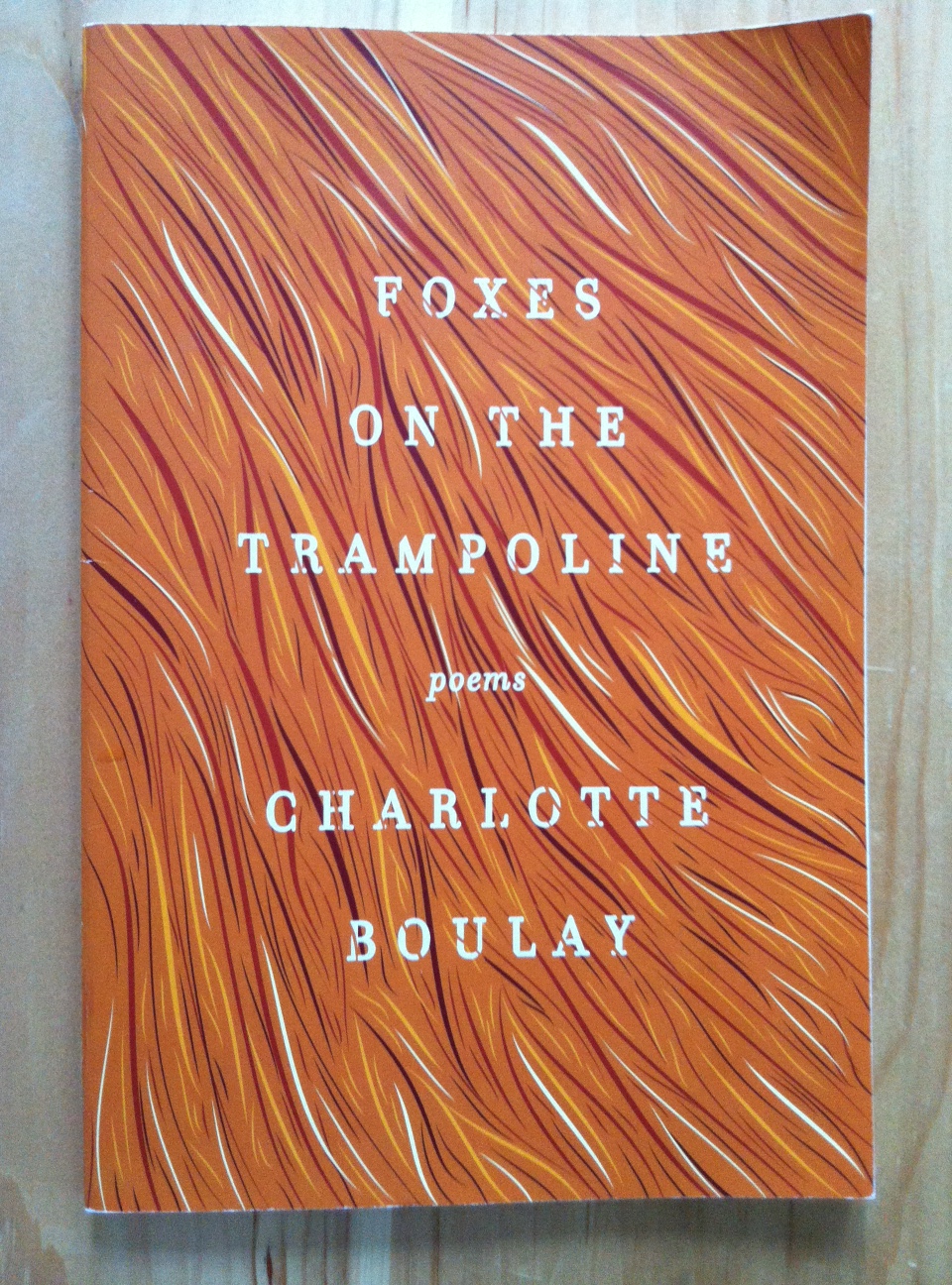
Charlotte Boulay’s “Watson and the Shark” from Foxes on the Trampoline

photo (100)Charlotte Boulay is Ecco’s first addition to its roster of poets since 2008 (a roster that includes contemporary poetry heavyweights Robert Hass and Jorie Graham, among others). Having read Ms. Boulay’s debut collection, Foxes on the Trampoline*, I see why Ecco is excited to be publishing her work.

Ms. Boulay is attentive to the power of individual words; poems like “Calenture” and “Changeling” consider the experiences these words conjure up, as well as their connotations, with startling immediacy.

The collection as a whole is grounded in its speaker’s wide range experience, reflecting Ms. Boulay’s travels in France and India. In “Pallikoodam” (which means “school”) the speaker recalls, “We lived with animals: small lizards / darting up the walls, lines of tiny / imperious ants” before going on to remember the ways she found comfort after watching (on television) the towers fall on September 11, and how she and her companion “woke in the mornings / to hear someone singing, softly / as she swept the yard clean.” This combination — of otherness and familiarity, radical change and the routines of ordinary life — resonates deeply in Foxes on the Trampoline.

You can read a selection of Charlotte Boulay’s poems on the Boston Review site, including our poem of the week, “Watson and the Shark.” In this poem, the speaker remembers a childhood encounter with the famous John Singleton Copley painting of the same name (the copy he made of his original version), which is on view at Boston’s Museum of Fine Arts (we just visited the MFA this past weekend, so this poem jumped out at me. The last stanza is amazing.

*I received a copy of this book from the publisher in exchange for an honest review.

Robert Graves’s “Recalling War”

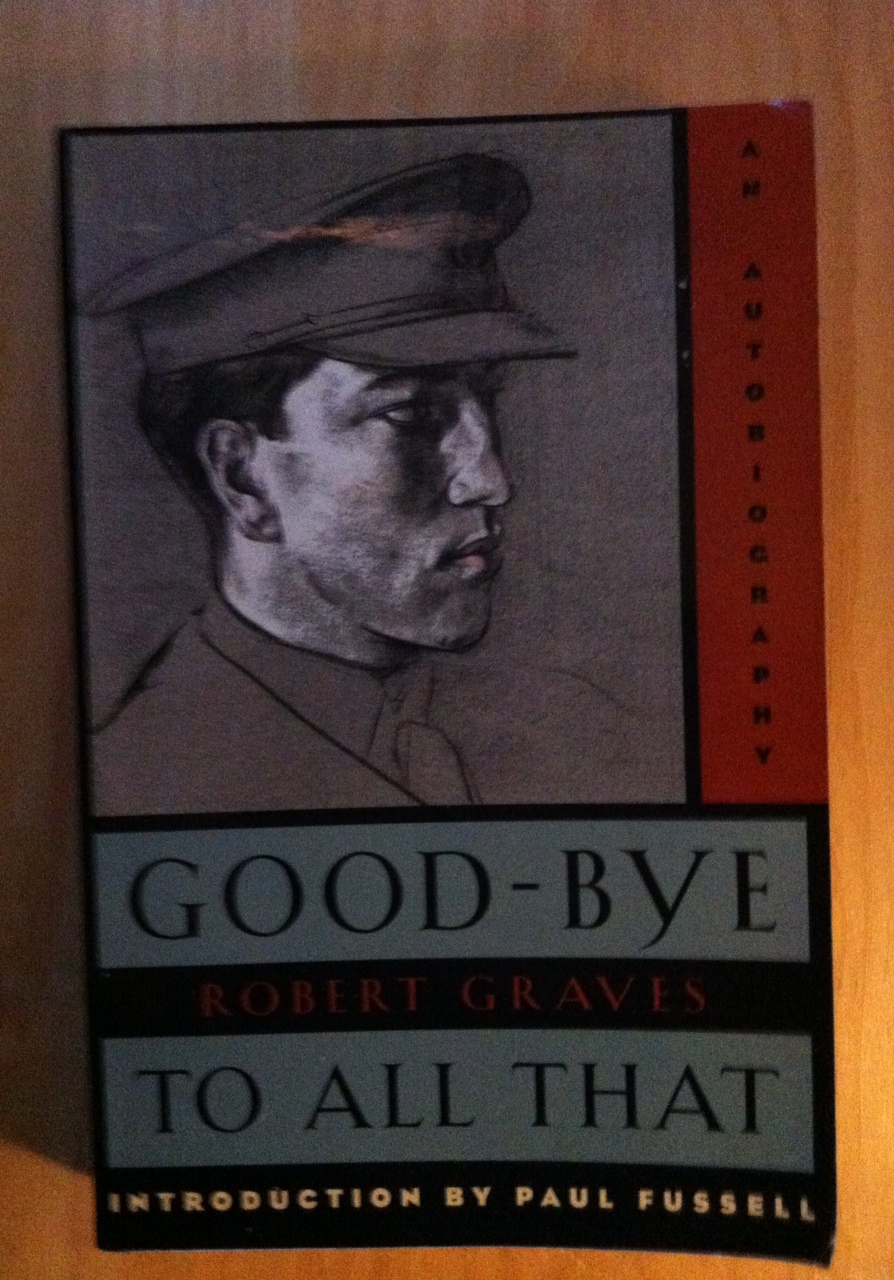
Like his friend Siegfried Sassoon, Robert Graves survived the war. He went on to become a prolific writer, penning over one hundred books and becoming especially famous for his poetry, translations of classical texts, work on poetic inspiration (The White Goddess) and his novel I, Claudius.  (Seriously, Dear Readers, if you haven’t seen the miniseries based on the novel, go get it. It’s made for binge-watching, and features a plethora of stars: Derek Jacobi, Siân Phillips, Brian Blessed, John Hurt, and — my personal favorite — Patrick Stewart. With hair.)

photo (93)Graves is also justly famous for his only autobiography, 1929’s Goodbye to All That, considered by many to be the best memoir that came out of the war. It is, by turns, wry (, dramatic, darkly funny, and elegiac. It’s absolutely worth reading, and I heartily commend it to your attention.

Graves’s poetry about the war is not as well-known as Sassoon’s or Owen’s, but it too rings with the depth of feeling only born out of horrendous experience. In “Recalling War,” Graves borrows Homer’s knack for comparing the brutal business of war to those events common to homely life; in Graves’s poem, the speaker remembers the guns “Nibbling the walls of factory and church / Like a child, piecrust; felling groves of trees / Like a child, dandelions with a switch!” In these lines, Graves reminds us that nothing — church, work, nature itself — remains untouched by war.

“Recalling War” finds the speaker looking back twenty years after the war’s end, wondering, “What, then, was war?” He answers himself,

No mere discord of flags
But an infection of the common sky
That sagged ominously upon the earth
Even when the season was the airiest May.
Down pressed the sky, and we, oppressed, thrust out
Boastful tongue, clenched fist and valiant yard.
Natural infirmities were out of mode,
For Death was young again; patron alone
Of healthy dying, premature fate-spasm.

and later in the poem,

War was return of earth to ugly earth,
War was foundering of sublimities,
Extinction of each happy art and faith
By which the world has still kept head in air,
Protesting logic or protesting love,
Until the unendurable moment struck –
The inward scream, the duty to run mad.

It is a bitter remembrance, and Graves offers us no comfort in the poem’s final lines:

Down in a row the brave tin-soldiers fall:
A sight to be recalled in elder days
When learnedly the future we devote
To yet more boastful visions of despair.

You can read the full poem at The Legacy Project.

Siegfried Sassoon’s “The General”

Siegfried Sassoon survived World War I and was one of its most famous poets; he was a mentor to Wilfred Owen and friend to Robert Graves (who I’ll be writing about in another post). Sassoon is one of the characters in Pat Barker’s Regeneration, the first in a remarkable trilogy of books about the war (and yes, I’ll be writing a Pat Barker post too).

Sassoon was an officer in the Royal Welsh Fusiliers, beloved by his men and given the nickname “Mad Jack” for his daring exploits, which often amounted to near-suicide missions.

In 1917, Sassoon sent a three-paragraph letter (which you can read in full here) to his commanding officer and several newspapers (it was read later in Parliament) protesting the war. Here’s the second paragraph:

I have seen and endured the sufferings of the troops and I can no longer be a party to prolong these sufferings for ends which I believe to be evil and unjust. I am not protesting against the conduct of the war, but against the political errors and insincerities for which the fighting men are being sacrificed.

Though he could have been court-martialed for sending the letter, Sassoon was instead declared unfit for duty — thanks to the offices of his friend Robert Graves — and sent to convalesce at Craiglockhart hospital. (This “convalescence” is the subject of Regeneration.)

In 1918, Sassoon published Counter-Attack And Other Poems, a slim volume that includes some of his best work. Like Owen and Rosenberg, Sassoon writes of the grim and grisly sights of war, in poems whose immediacy is driven home by the use of dialogue. He reserves special contempt for those who do not fight themselves — the press, women, generals, even himself, haunted by ghosts in the poem “Sick Leave”:

In bitter safety I awake, unfriended;
And while the dawn begins with slashing rain
I think of the Battalion in the mud.
“When are you going out to them again?
Are they not still your brothers through our blood?”

Sassoon decided to return to the front to fight in solidarity with his men, to do his best to protect them from the enemy — even if that enemy was the man supposedly leading them all. Here’s the bitter, nearly-funny poem “The General”:

“Good morning, good morning,” the general said,
When we met him last week on our way to the line.
Now the soldiers he smiled at are most of ’em dead,
And we’re cursing his staff for incompetent swine.
“He’s a cheery old card,” muttered Harry to Jack
As they slogged up to Arras with rifle and pack.

But he did for them both by his plan of attack.


You can read the full text of Counter-Attack and Other Poems at Project Gutenberg or Bartleby.

Isaac Rosenberg’s “Break of Day in the Trenches”

One of the undeservedly under-read poets of World War I is Isaac Rosenberg. Like Wilfred Owen, Rosenberg died in 1918, and so the promise of his poetry was cut short along with his life. The many contradictions in his work are perhaps best summarized in a paragraph from The Poetry Foundation’s brief biography:

Isaac Rosenberg may be remembered as a Jewish-English poet, or a poet of war, but his poetry stretches beyond those narrow categories. Since Rosenberg was only twenty-eight when he died, most critics have tended to treat his corpus as a promising but flawed start, and they wonder if he would have become a great poet had he lived. Rosenberg’s status as an English poet is thus still debated: he was a Jewish poet, he was an English poet; he was a war poet, he was a painter-poet; he was a young poet; he was a great poet and a minor poet. In his brief career, Rosenberg created a small selection of poems and a great many questions.

Self-portrait in a Pink Tie, 1914 Isaac Rosenberg Source: Imperial War Museum, via Wikimedia Commons

Self-portrait in a Pink Tie, 1914
Isaac Rosenberg
Source: Imperial War Museum, via Wikimedia Commons

“Break of Day in the Trenches” is, I think, a masterful poem, and the poem of Rosenberg’s featured today; his other poems aren’t to be missed, though. For example, his bleak humor breaks loose in “Louse Hunting,” and “Dead Man’s Dump” is sheer visceral horror in a poem.

Rosenberg’s speaker/soldier in “Break of Day in the Trenches” is a man who’s in the thick of war, watching the darkness “crumble” into dawn — a dangerous time favored for “going over the top” to attack enemy trenches. The only sign of life in the trenches, besides our speaker, is the “queer sardonic rat” who grazes his hand as he reaches for a poppy on the parapet. In the nightmare world of war, it’s only the rat who can afford “cosmopolitan sympathies” — moving freely (and feeding well) on both sides of no man’s land. The speaker addresses the rat bitterly:

It seems you inwardly grin as you pass
Strong eyes, fine limbs, haughty athletes,
Less chanced than you for life,
Bonds to the whims of murder,
Sprawled in the bowels of the earth,

The torn fields of France.

He wonders what the rat sees in the soldiers’ eyes as the mortars and shells fall from the sky, these soldiers who resemble the carefree youths of prewar poetry, or the boys marching in propaganda posters. As if turning from an answer he doesn’t want to hear, the speaker readjusts his focus in the poem’s final lines:

Poppies whose roots are in man’s veins
Drop, and are ever dropping;
But mine in my ear is safe—

Just a little white with the dust.

Poppies, associated with sleep and death, are the symbol of this war in particular; people in the UK, Canada, Australia, and New Zealand still wear the poppy on Armistice Day, or Remembrance Day as it’s known there, or Veterans Day, as it’s known here (the stars of Harry Potter attended at least one premiere with the red-orange flowers pinned to their clothes), and sometimes for the days in November leading up to the 11th.  You’ll notice here in the United States that around patriotic holidays the VFW hands out “Buddy” poppies in thanks for contributions to its veterans’ assistance programs.

In Europe during the Great War, the red poppy was a weed that grew over battlefields, no man’s land, and near the trenches. In Rosenberg’s poem, these poppies grow out the blood of killed men, perhaps men the speaker has watched die. Like the men, the poppies “Drop, and are ever dropping” — except for the one the speaker has tucked behind his ear, in small act of defiance toward the death that surrounds him. It’s not an uncomplicated gesture; the poppy, plucked, will die, and the dust suggests the inevitable end of humankind: “for dust thou art, and unto dust shalt thou return.”

The Poetry Concierge Recommends: Rumi

[The Poetry Concierge is an occasional feature here on Rosemary and Reading Glasses wherein I select a poem, poet, or book of poems for individual readers based on a short questionnaire. Come play along! Read the introductory post here, my first recommendation here, and then email me at: rosemaryandreadingglasses [at] gmail [dot] com. ]

This week, our pilgrim in search of poetry is Mark, a friend of some friends, who doesn’t blog.


1. When you read fiction, who’s your go-to author?

E.L. Doctorow, Philip Roth, Isaac Beshevis Singer, Doris Lessing. But I haven’t read much fiction in a long time. If I had the time I’d like to start again.

2. If you read nonfiction, which subjects are most likely to interest you?

I mostly read non-fiction. Buddhist Writings, Vedic Writings, exposes like The Shock Doctrine, Memoirs, Psychology, Myths, Physics/Spirituality

3. If you were stuck on a desert island for a week, which five books would you bring to keep you entertained?

Portnoy’s Complaint, The Sportswriter, Women Who Run With the Wolves, The Beatles, The Dharma Bums.

4. If you were on a five-year mission to Mars, which five books would you bring to keep you sane?

The Science of Yoga (Taimni), a recommended Walt Whitman book, Women Who Run With Wolves, BioCentrism by Robert Lanza, a collection of Isaac Bashevis Singer short stories.

5. What kinds of questions are most likely to keep you up at night?

The meaning of life and how to write my memoirs.

6. If you’ve read poetry before, what have you liked? What have you disliked?

Never really read much poetry. Though I’d like to figure it out someday.


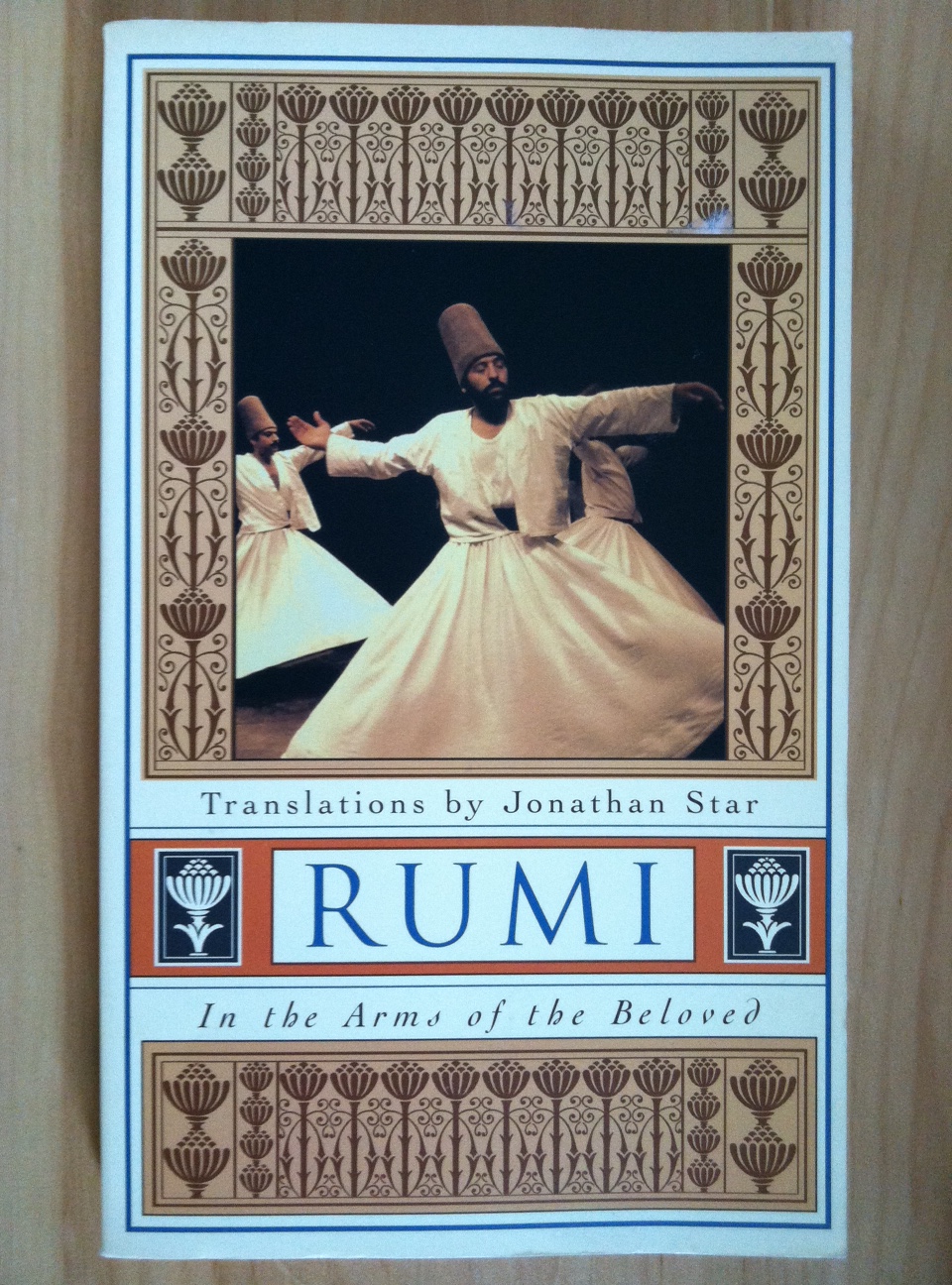
photo (79)Given Mark’s interest in spirituality, myths, and mysticism, I’m recommending the poetry of Jalāl ad-Dīn Muhammad Rūmī, or, as he’s know in the English-speaking world, Rumi.

Rumi was a poet, theologian, and Sufi mystic who lived in the thirteenth century; his work is immensely popular and there are many, many editions of his poems available. I’ve been happy with the one I bought in high school, Rumi: In the Arms of the Beloved, translated by Jonathan Star. The translations are clear, while retaining a sense of mystery, and the book includes a helpful glossary of unfamiliar terms.


Mark, I hope you’ll like reading poetry by Rumi. Thanks for writing in!


Would you like the Poetry Concierge to make a recommendation for you? Check out the introductory post, and send your answers to the questionnaire, along with the name and/or blog you’d like posted with the reply, to rosemaryandreadingglasses [at] gmail [dot] com.

The Poetry Concierge Recommends: Rose, by Li-Young Lee

[The Poetry Concierge is an occasional feature here on Rosemary and Reading Glasses wherein I select a poem, poet, or book of poems for individual readers based on a short questionnaire. Come play along! Read the introductory post here, my first recommendation here, and then email me at: rosemaryandreadingglasses [at] gmail [dot] com. ]

This week, our pilgrim in search of poetry is Cecilia, who writes about life, reading, and parenthood at Only You.


1. When you read fiction, who’s your go-to author?

I have more than one! Junot Diaz, Kazuo Ishiguro, Jhumpa Lahiri, Charlotte Bronte

2. If you read nonfiction, which subjects are most likely to interest you? (cultural history, science, biography, memoir, survival stories?)

memoir, personal essays, history, psychology

3. If you were stuck on a desert island for a week, which five books would you bring to keep you entertained?

This is How You Lose Her (Junot Diaz) and Me Talk Pretty One Day (David Sedaris), for the comfort factor (re-reads by two of my go-to authors); Never Let Me Go (Kazuo Ishiguro) because everyone’s been telling me how amazing this book is; In the Blood by Lisa Unger (I have never read her but this sounded good, as something fast and entertaining); and Teaching My Mother How to Give Birth (Warsan Shire), a book of poetry I haven’t yet read but want to.

4. If you were on a five-year mission to Mars, which five books would you bring to keep you sane?

One comfort book: Me Talk Pretty One Day (David Sedaris) and four books that have been on my to-read list: Middlemarch, either Anna Karenina or The Golden Notebook, Life After Life (Kate Atkinson), and The Mayflower & The Pilgrims’ New World (Nathaniel Philbrick)

5. What kinds of questions are most likely to keep you up at night? (death, the nature of love, politics, environmental issues, meaning of life, end of the world, justice and injustice, etc?)

Closer to home – the meaning/purpose in life, how I’m doing as a parent

The bigger picture – human rights, civil rights

6. If you’ve read poetry before, what have you liked? What have you disliked?

I’d only read an excerpt but I was completely blown away by the writing in Teaching My Mother How to Give Birth by Warsan Shire.

We studied quite a bit of poetry during high school but it was never one of my favorite subjects. I think that my early education in poetry reinforced my fears that poetry is impossible to decipher and difficult to access. A couple of exceptions were Robert Frost and Edgar Allen Poe, whom I did enjoy.


[Sidebar: Never Let Me Go is amazing, and everyone should read it.]

From Cecilia’s list of go-to authors, I got the sense that writing that deals with the immigrant experience is important to her, as well as writing that focuses on the interiority of its characters. One name leapt to mind, and stayed with me as I read the rest of Cecilia’s answers: Li-Young Lee.

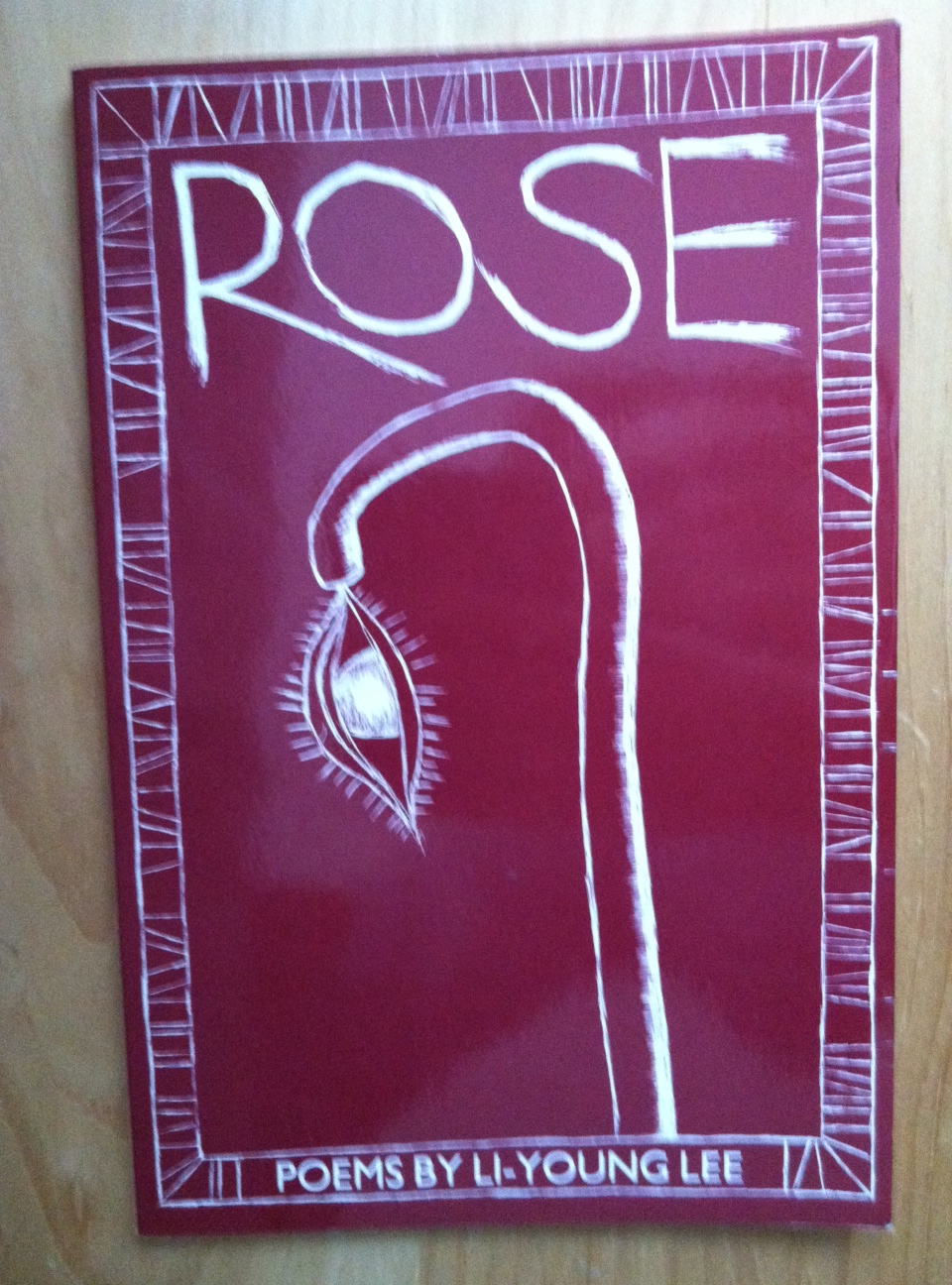
photo (77)Li-Young Lee’s poetry is intensely lyrical and personal. Born in Indonesia to Chinese parents who fled China for political reasons, Mr. Lee came with his family to the United States in 1964. His family (especially his father and his wife) plays a major role in the poetry of Rose, his first collection, which I’m recommending for Cecilia. “The Gift” and “Persimmons” (frequently anthologized) are the second and third poems in the book. In “Persimmons,” the speaker remembers:

In sixth grade Mrs. Walker
slapped the back of my head
and made me stand in the corner
for not knowing the difference
between persimmon and precision

This startling, painful memory forms the foundation of the poet’s exploration of life in two cultures, and how the senses tie us to memory. In fact, because of this poem, I remember the very first time I saw a persimmon in a market, and what it felt like to cut into it at home.

In “The Gift,” the speaker remembers his father pulling a splinter from his hand. It’s one of the most beautiful poems about parents and children that I’ve ever read.
Cecilia, I hope you’ll find poems you love in Rose. Thanks for writing in!


Would you like the Poetry Concierge to make a recommendation for you? Check out the introductory post, and send your answers to the questionnaire, along with the name and/or blog you’d like posted with the reply, to rosemaryandreadingglasses [at] gmail [dot] com.

The Poetry Concierge Recommends: Two Books, This Time Per Request

[The Poetry Concierge is an occasional feature here on Rosemary and Reading Glasses wherein I select a poem, poet, or book of poems for individual readers based on a short questionnaire. Come play along! Read the introductory post here, the first recommendation here, and then email me at: rosemaryandreadingglasses [at] gmail [dot] com.]

This week, our pilgrim in search of poetry is Rick, who blogs about books over at Another Book Blog. Rick went very public with his poetry concierge request (a minor, forgiven insurrection); he further stipulated that he’d like me to recommend two books of poetry, which will become part of his self-re-education program. No pressure or anything.

1. When you read fiction, who’s your go-to author?

I don’t know if I’ve ever had a go-to author, to be honest. I don’t have anyone specific that I turn to when I’m in a reading funk. If anything, my literary achilles heel has always been how easily I get bored with any one thing after a while. However, if there’s anyone who even comes close, it’s Tad Williams. He’s probably my single biggest inspiration, and the author from whom I’ve read the most.

2. If you read nonfiction, which subjects are most likely to interest you? (cultural history, science, biography, memoir, survival stories?)

I really love nonfiction books about people who challenge the status quo. I’m not a big backer of rebellion per se, at least not in any physical way, but intellectual rebellion really appeals to me. I’m fascinated by religion, and science, and historical shifts.

3. If you were stuck on a desert island for a week, which five books would you bring to keep you entertained?

A.J. Jacobs’ The Know-It-All, because it’s basically an encyclopedia in less than 400 pages. Bill Bryson’s A Short History of Nearly Everything, because it’s the best science text for the uninitiated I’ve ever read, and I swear to god it’s funny. Apathy and Other Small Victories, probably the funniest book I’ve ever read. Essex County, my favourite graphic novel of all time, a truly brilliant piece of literature short enough to savour in just a week of exile. And a book of Mad Libs, because ever since I discovered how funny they can be when you think of the most disgusting answers possible, they’ve been one of my favourite things on Earth.

4. If you were on a five-year mission to Mars, which five books would you bring to keep you sane?

I Know This Much is True by Wally Lamb, River of Stars by Guy Gavriel Kay, The Brothers Karamazov by Fyodor Dostoevsky, The Book of Joby by Mark J. Ferrari, and Skippy Dies by Paul Murray. Four of them because they’re four of my favourite single volume stories (and they’re all really long), The Brothers Karamazov because I’ve always wanted to read it, and five years on Mars sounds like I’d finally find the time.

5. What kinds of questions are most likely to keep you up at night? (death, the nature of love, politics, environmental issues, meaning of life, end of the world, justice and injustice, etc?)

I’ve always been a fan of righteous indignation. I’m fascinated by spirituality even though I don’t subscribe to anything in particular. I’m in awe of the universe and all it’s (likely) unanswerable questions. I couldn’t give two s**ts about conversations regarding politics and the environment because there hasn’t been a single one I’ve come across that hasn’t degenerated into smart people sounding like partisan a**holes. [Sorry for the censorship, but my Mom reads this blog, so, you know. –CO]

6. If you’ve read poetry before, what have you liked? What have you disliked?

The one work of poetry that’s actually resonated with me (that’s lasted more than a month is In Memoriam by Lord Alfred Tennyson. I’ve always been awestruck at how thousands of people have been arguing both for and against its Christian/anti-Christian message for hundreds of years. It takes a special kind of rhetorical talent to receive adamant support from both of those groups at the same time. For the record, I think it’s clearly a Christian poem by the end, but Tennyson’s willingness to question his faith has always been the measuring stick to which I hold up all religious persons. Furthermore, it’s just beautifully written and undeniably tragic and heartfelt.

As for what I don’t like: If you prescribe me something like The Red Wheelbarrow, then “Friends Off.”


Like I said, no pressure.

Rick’s into big ideas — science, religion, meaning of life, that kind of thing, so right off I dismissed light verse as a possibility, even though Rick has a wily sense of humor (no Edward Lear for you, Rick.). And while I’m tempted to round out Rick’s poetic education with other DWMs (Dead White Men, for those in the peanut gallery) — think Yeats, Eliot, Browning, Donne — I think living poets deserve to be read by a reader like Rick.

So here are my bold picks:

photo 2 (13)Anne Carson’s work defies categorization, blending poetry, Classics (capital-C), translation, drama, essays, prose, and scholarship. She’s a phenomenal intellect. I was tempted to start off with the unbelievably good Glass, Irony, and God, but given Rick’s fondness for Satan — the Miltonic Satan, that is — I think a poem about a winged red monster might be in order. Anne Carson’s Autobiography of Red is incredibly weird and wonderful, a novel in verse form (framed with some classical scholarship and jokes — just go with it, and it works) in which she transforms the myth of Geryon — said monster, killed by Herakles as one of his labors — into a most unusual bildungsroman. Geryon is a lonely, artistic soul, just a little boy when we first meet him, and Ms. Carson captures his pain and his pleasures with a lens that’s never sentimental, only scintillating. It’s heartbreaking and gorgeous. I’m surprised every time I re-read it.

Bonus: Anne Carson is Canadian, so Rick gets a little CanLit infusion for his syllabus.

Double Bonus: There’s a sequel!
photo 1 (16)Next, I’ve selected Tracy K. Smith’s Life on Mars (which won the Pulitzer in 2012). You want science and the universe, Rick? Here it is. As the New Yorker‘s review puts it, “Smith’s central conceit allows her to see us, our moment, as specks in the future’s rearview mirror. Futures and pasts are, in astronomy as in poetry, all mixed up.” Life on Mars is, in part, an elegy for Ms. Smith’s father, who worked on the Hubble space telescope. The tone varies from wonderment to fury and back again, as the poems consider matters both existential and quotidian, personal and political. Take a look at “Sci Fi,” which is the poem of the week, for an example of Ms. Smith’s original take on the future.

Rick, I (fervently) hope you’ll find poems you love in these books. Thanks for writing in!


Would you like the Poetry Concierge to make a recommendation for you? Check out the introductory post, and send your answers to the questionnaire, along with the name and/or blog you’d like posted with the reply, to rosemaryandreadingglasses [at] gmail [dot] com.

The Poetry Concierge Recommends: Sharon Olds

[The Poetry Concierge is an occasional feature here on Rosemary and Reading Glasses wherein I select a poem, poet, or book of poems for individual readers based on a short questionnaire. Come play along! Read the introductory post here, my first recommendation here, and then email me at: rosemaryandreadingglasses [at] gmail [dot] com. ]

This week, our pilgrim in search of poetry is Laura, who writes about things bookish at Reading In Bed.

1. When you read fiction, who’s your go-to author?

This is hard, there’s no one author who is perfect in my eyes. I might say Michael Ondaatje because I’m in love with him right now. Or I might say David Adams Richards, who if you haven’t read him, lists Faulkner, Dostoyevsky and Emily Bronte among his influences, which sounds about right.

2. If you read nonfiction, which subjects are most likely to interest you? (cultural history, science, biography, memoir, survival stories?)

Personal essays, feminism

3. If you were stuck on a desert island for a week, which five books would you bring to keep you entertained?

Astray by Emma Donoghue
The Many Lives and Secret Sorrows of Josephine B, Sandra Gulland
The Crimson Petal and the White, Michel Faber
High Fidelity, Nick Hornby
The Tenant of Wildfell Hall by Anne Bronte (haven’t read it yet FYI but it’s calling to me)

4. If you were on a five-year mission to Mars, which five books would you bring to keep you sane?
Love in the Time of Cholera
A Confederacy of Dunces
The Stone Angel
Mercy Among the Children
Having trouble with #5!

5. What kinds of questions are most likely to keep you up at night? (death, the nature of love, politics, environmental issues, meaning of life, end of the world, justice and injustice, etc?)
 

Nature of love 80+% of the time

6. If you’ve read poetry before, what have you liked? What have you disliked?

I like prose that reads like poetry. See comment about The English Patient above. In high school I liked John Donne. I liked The Inferno.


Like Kay last week, Laura’s given me lots to work with here: a wide range of authors (not surprising, I guess, since her one of her reading lists is 1001 books long), varied in tone, themes, and style; defined interests; and an openness to poetry in general.

Now, I was tempted to cheat a little and recommend Michael Ondaatje right off (maybe The Cinnamon Peeler?), but I suspect Laura’s thought of that one already. Given her interests in feminism and personal essays, though, I started thinking about feminist poets: Audre Lorde, Adrienne Rich, Carol Ann Duffy, Katha Pollitt, Carmen Giménez Smith (by no means is this an exhaustive list). I think Laura would like the work of any of these poets (and I was inches from choosing Audre Lorde’s “Now That I Am Forever with Child” but I can’t find an online source with copyright permission, so try your local library for her Collected Poems.).

That said, I think the work of Sharon Olds would appeal to Laura, and so I’m recommending Strike Sparks: Selected Poems 1980-2002, which I think gives a rounded view of her work up until that point (she’s published two collections since then; Stag’s Leap won the 2013 Pulitzer for poetry.

Ms. Olds draws on her personal experiences and familial relationships (and not infrequently, her sex life) to construct poems that are simultaneously deeply personal and startlingly universal. While her work is sometimes controversial because of its sexual content, I’m guessing Laura won’t bat an eye after that time we read a paranormal romance.

For now though, Dear Readers, here’s a G-rated but jarring poem to get you started with Sharon Olds:

“I Could Not Tell”

Laura, I hope you’ll find poems you love in this book (Michael Ondaatje did!).  Thanks for writing in!


Would you like the Poetry Concierge to make a recommendation for you? Check out the introductory post, and send your answers to the questionnaire, along with the name and/or blog you’d like posted with the reply, to rosemaryandreadingglasses [at] gmail [dot] com.
The Poetry Concierge Recommends: Two Books (oh my!)

[The Poetry Concierge is an occasional feature here on Rosemary and Reading Glasses wherein I select a poem, poet, or book of poems for individual readers based on a short questionnaire. Come play along! Read the introductory post here, my first recommendation here, and then email me at: rosemaryandreadingglasses [at] gmail [dot] com. ]

This week, our pilgrim in search of poetry is Abby, who blogs about invertebrate marine biology over at The Spineless Life. Weren’t expecting that, were you? Abby and I attended the same high school, walked the boards of the same stage, and now she’s an awesome scientist-ninja.

1. When you read fiction, who’s your go-to author?

My go-to authors change as I read through all of their material. Among people still writing, I am partial to John Irving and Ian McEwan, but also have a very strong liking for Steinbeck, Zola, and Edith Wharton (among recent favorites). Oh, and C.P. Snow.

2. If you read nonfiction, which subjects are most likely to interest you? (cultural history, science, biography, memoir, survival stories?)

I spend all day reading technical science writing, but I still love popular science, as well as travel memoirs. I frequently pick up histories and biographies but rarely make it through.

3. If you were stuck on a desert island for a week, which five books would you bring to keep you entertained?

5 books for a week? Oof. Let’s go with a book of nature essays by David Quammen, The Glass Bead Game (Hesse), Atonement, Slaughterhouse Five, and Wuthering Heights. (actually, that’s a nice cross-section of my strange reading habits right there.)

4. If you were on a five-year mission to Mars, which five books would you bring to keep you sane?
5 books for 5 years is actually easier, because my to-read list is full of long ones that would require that sort of time. War & Peace (no really, Anna Karenina is a favorite of mine), In Search of Lost Time (does that count as a single book?), Stephen Jay Gould’s The Structure of Evolutionary Theory, and to balance all of this heft, Paris to the Moon (Adam Gopnik, already read and loved), and A Tree Grows in Brooklyn (also a favorite).

5. What kinds of questions are most likely to keep you up at night? (death, the nature of love, politics, environmental issues, meaning of life, end of the world, justice and injustice, etc?)
 

Hm. Climate change. My love life. The meaning of family. The state of the academic job market.

6. If you’ve read poetry before, what have you liked? What have you disliked?

I love things that rhyme and have meter, and really don’t like things that don’t. I adore Poe and Longfellow, and “O Captain My Captain” and “The Charge of the Light Brigade” and “In Flanders Field” and pretty much everything else that you would find in an anthology of familiar, comforting verse. When I find something new that I really like, it has some element of familiarity — the rhyming scheme or the rhythm. French surrealism and I did not mix well.


There may have been a fist pump in my vicinity when I read the first phrase of Abby’s last answer: “I love things that rhyme and have meter.” Me too, ladyfriend, and while I’ll read pretty much any kind of poetry out there, there’s something sweet and satisfying about ye olde formalism.

Or, for that matter, the New Formalism. Yes, my Dear Readers, just like 90s fashion, formalism is back. Well, it never really went away (neither did 90s fashion, judging by the amount of flannel that’s lived in my closet for the intervening years), but let’s set that aside for the moment while I recommend post-World War II poetry for Abby.

Given Abby’s fearlessness toward long reading assignments (War and Peace, In Search of Lost Time), I’m going to be daring and recommend two books:

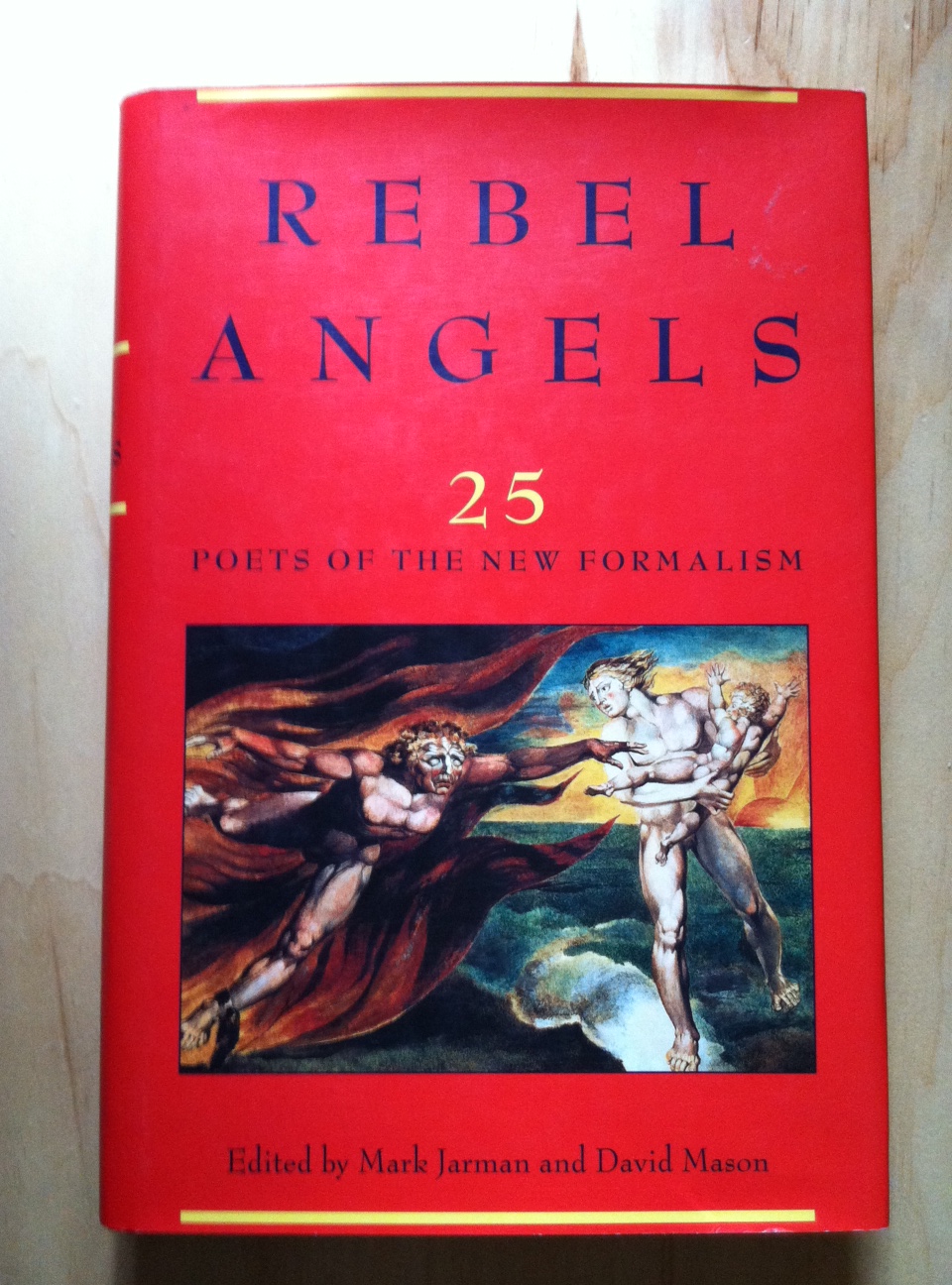
photo (73)Rebel Angels: 25 Poets of the New Formalism came out in 1996, and it’s a great sample of newer formalist work. As with all anthologies, not every poem will appeal to every reader, but I think Abby will find lots to like here. I’d especially recommend the poems by Andrew Hudgins, professor of poetry at The Ohio State University, fabulous reader, and friend of several friends.


photo (72)One of Professor Hudgins’s former students is Ashley McHugh, and it’s her luminous debut, Into These Knots, that I’m also recommending. (Full disclosure: Ashley is a friend, and I’ve met Andrew Hudgins a few times, and been regaled with tales of his workshops more times than I can count.)  Ms. McHugh is an especially accomplished sonneteer, as you’ll see when you read this poem, “The Unquarried Blue of Those Depths is All But Blinding,” which she wrote for her now-husband.

Abby, I hope you’ll find poems you love in these books. Thanks for writing in!


Would you like the Poetry Concierge to make a recommendation for you? Check out the introductory post, and send your answers to the questionnaire, along with the name and/or blog you’d like posted with the reply, to rosemaryandreadingglasses [at] gmail [dot] com.