Summer Reading, Two Ways

Long ago, when the world was still getting used to Pierce Brosnan was James Bond, I started reading Ian Fleming’s novels at my grandmother’s house, where the slim paperbacks, spines emblazoned with the title and the minimalist “/Fleming” had been left behind by my uncles. (Thankfully, I didn’t start with The Spy Who Loved Me.)

Since then, I’ve had a fondness for both short books and spy novels, which, despite their content, tend to make me think of open windows, box fans, and tomato sandwiches eaten with one hand. They’re summer books, at least for me, serving as quick palate cleansers between heavier main courses.
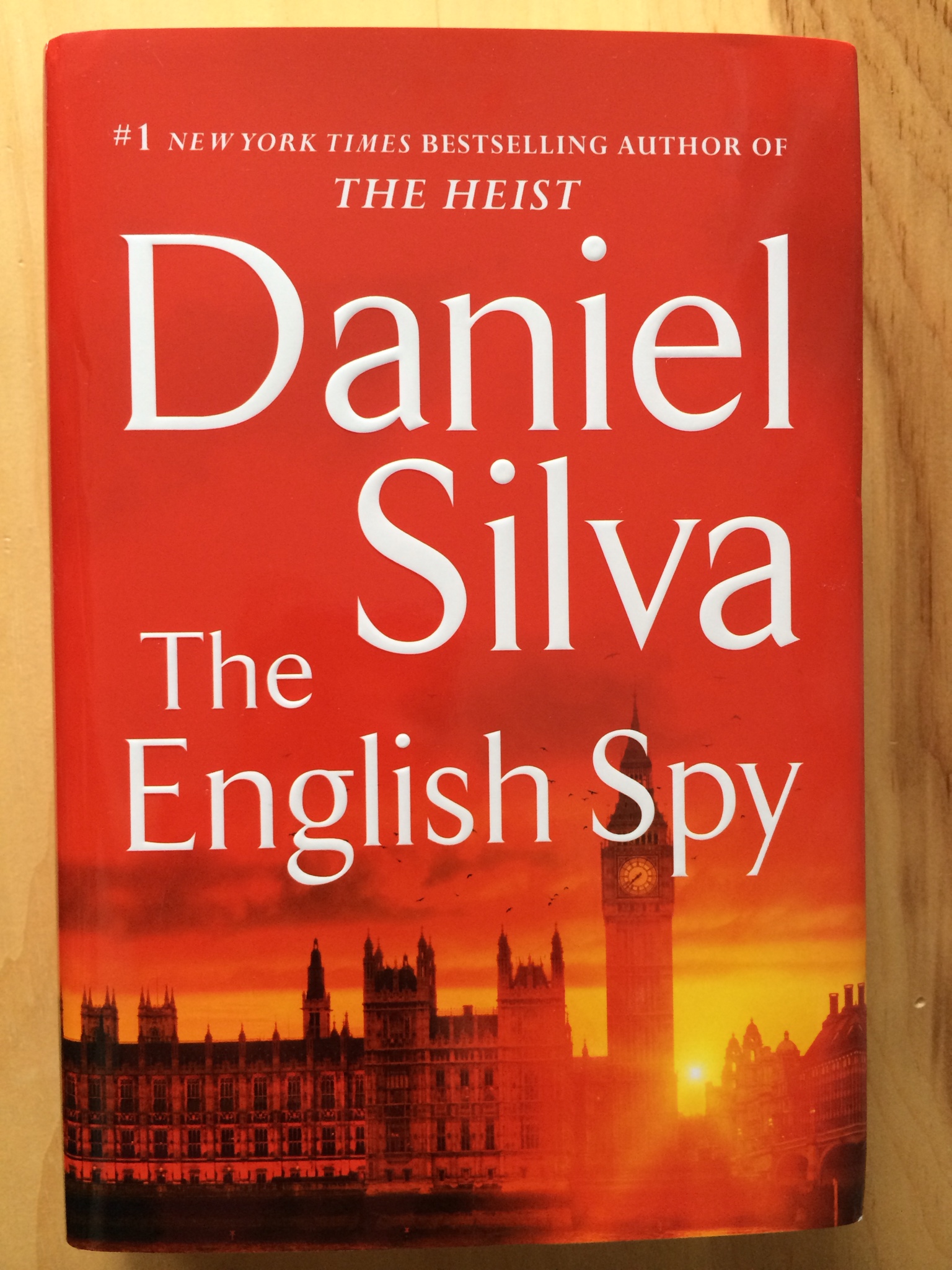
IMG_4137And so I was happy to zip through Daniel Silva’s The English Spy*, which is, I learned, the latest installment in a long series of best-selling novels (which appear most summers) featuring Gabriel Allon, an Israeli spy and art restorer. I should note here that I haven’t read any of Mr. Silva’s previous novels, but I had no trouble jumping into the story and getting a sense of the characters, so don’t let prior unfamiliarity stop you from picking up the book.

The book opens when a skilled assassin sinks the yacht carrying a certain (unnamed) English former princess; Gabriel is called in to help find the killer, and he recruits an old friend to help him. Together they track the bomber, who has ties to an ultra-violent faction of the IRA and various terrorist organizations. And of course, as in any good espionage thriller, there’s always a bigger fish.

The English Spy features plenty of action and twists, memorable minor characters, and solid writing. It’s violent, but not unusually so for a spy novel, and features far fewer adult shenanigans or gadgets and far more politics than your average James Bond book (or movie, for that matter). More Patriot Games than Goldfinger. It’s a fun, fast read.

Now, I promised summer reading two ways. There’s quick-reading genre fiction, like The English Spy, and then, at least for me, short, serious fiction.
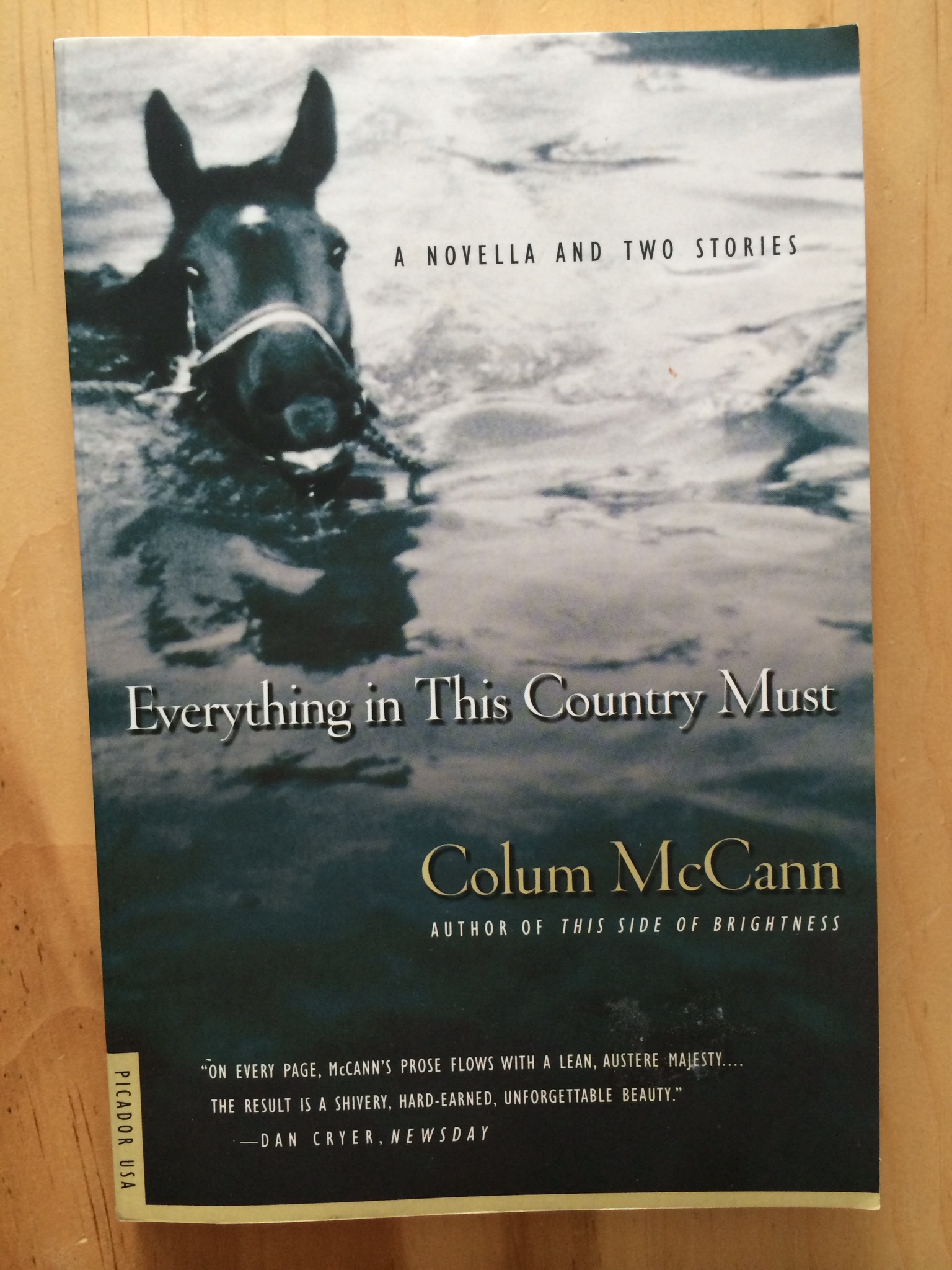
IMG_4138Colum McCann’s Everything in This Country Must (2001) is the latter, a mini-collection of two short stories and a novella. All three take place in Northern Ireland during the “troubles” (which made me pick it up after The English Spy‘s focus on the IRA), and all three feature young people and their parents trying to negotiate the uncertain world they find themselves in. In the title story, a girl and her father try to save their horse, unwillingly helped by British soldiers. In the second short story, a boy conceals his involvement in helping his mother make supplies for the Protestant marches. In the novella, Hunger Strike, a boy and his mother move to a small trailer in a new town, and the boy flounders in his anger as they live out the days of his uncle’s hunger strike.

The writing is just gorgeous, simple with impeccably-placed figurative language. These are bruising, brilliant stories; the book is a small masterpiece. Highly recommended.

*I received a copy of this book from the publisher for review consideration, which did not affect the content of my review.

Celebrated Days

10405657_10106229416396525_3529221544828816157_nDear Readers, it seems like just yesterday I was writing about We Do! American Leaders Who Believe in Marriage Equality, and now look where we are! We’ve been celebrating not only the wonderful news about marriage equality over the past week with family and friends, but also the birth of our friends’ first baby (hi K and T and baby E!). Here’s an Emily Dickinson poem that reminds us to treasure, to celebrate, the present.

Emily Dickinson
Forever – is composed of Nows –

Forever – is composed of Nows –
‘Tis not a different time –
Except for Infiniteness –
And Latitude of Home –

From this – experienced Here –
Remove the Dates – to These –
Let Months dissolve in further Months –
And Years – exhale in Years –

Without Debate – or Pause –
Or Celebrated Days –
No different Our Years would be
From Anno Dominies –

Recommended Reading: The Shepherd’s Life, by James Rebanks

Gorgeous cover; the photograph was taken by the author. And this book has some of the best endpapers I've ever seen.

Gorgeous cover; the photograph was taken by the author. And this book has some of the best endpapers I’ve ever seen.

When Helen MacDonald says a book is “bloody marvelous,” you can bet whatever you like that I will read that book, and you will come out a winner.

And so I read James Rebanks’s The Shepherd’s Life*, an account of current shepherding practices in England’s Lake District, a landscape which is perhaps familiar to you from the poetry of Wordsworth or Coleridge. If that’s the case, Mr. Rebanks, the shepherd whose Twitter account with its gorgeous photos has made his farm famous, has a bone to pick with your teachers:

My grandfather was, quite simply, one of the great forgotten silent majority of people who live, work, love, and die without leaving much written trace that they were ever here. He was, and we his descendants remain, essentially nobodies as far as anyone else is concerned. But that’s the point. Landscapes like ours were created by and survive through the efforts of nobodies. That’s why I was so shocked to be given such a dead, rich, white man’s version of its history at school. This is a landscape of modest hardworking people. The real history of our landscape should be a history of nobodies. (19)

Angered by the contempt shown his parents’ and grandparents’ occupation in school—he is fervent about his secondary education’s uselessness—Mr. Rebanks only later continued his formal education (at Oxford, no less; clearly his teachers missed an opportunity to reach a bright student). But by the time he reached his twenties he’d been educated in farm life for more than a decade. His family farm raises sheep. “We are a tiny part,” he writes, “of an ancient farming system and way of life that has somehow survived in these mountains because of their historic poverty, relative isolation, and because it was protected from change by the early conservation movement” (23).

The Shepherd’s Life is split into four parts that correspond with the seasons; each part is composed of short sections on shepherding practices, geography, Mr. Rebanks’s grandfather’s life, and Mr. Rebanks’s own life’s trajectory, all of which are sometimes intertwined. The sections that deal heavily with shepherding practices are the most successful and interesting in the book.

For example, Mr. Rebanks shows in vivid detail what it’s like to herd sheep in craggy fells, how important a good sheep dog is (they aren’t pets, though very deeply valued), and just how brutal the long days of lambing season are. In his world, “things are driven by the seasons and necessity, not by our will” (32).

In these pages, Mr. Rebanks makes the passionate and persuasive case that traditional farming is a way of life that is worthy of respect, and worth preserving. However, while there is a great deal of material in the book to help readers appreciate the very hard work that he and his family do (and that this work is not particularly remunerative; many farmers have second or third jobs to make ends meet), I didn’t feel there were enough concrete prescriptions for how to go about supporting it in practice.

The Shepherd’s Life is a book for those who want to immerse themselves in another kind of life, one that we might think has already vanished or that is so grindingly hard that people must want to escape it. To the contrary; Mr. Rebanks rails against what he perceives to be the degradations of the modern world, which doesn’t leave people much choice about how they live and work (which might sound odd coming from a shepherd whose family has worked the land for generations, but, given Mr. Rebanks’s biography, makes sense). During a summer in London, he thinks, “it’s like the gods are showing me how tough everyone else’s lives are and what I have left behind. I understand for the first time why people want to escape to places like where I live. I understand what national parks are for, so that people whose lives are always like this can escape and feel the wind in their hair and the sun on their faces” (179).

Despite this sentiment, he also chides the conservation movement, which, despite its acknowledged successes and ways of helping the Lake District, often at times seemed to value land more than people, to look down on traditional ways of raising food. He reminds us that “when local traditional farming systems disappear, communities become more and more reliant upon industrial commodity food products being transported long distances [. . .] They begin to lose the traditional skills that made those places habitable in the first place, making them vulnerable in a future that may not be the same as the present. No one who works in this landscape romanticizes wilderness” (218).

My reservations about this book are eclipsed by its positive aspects, but I would note that the style, though excellent when it comes to description, was not wholly to my taste; there is a tendency toward repetition that is at times awkward, and the inconsistent tenses were a bit maddening, making some parts of the work sound like strung-together blog posts. And it is a book very much about men (fathers and sons, and grandfathers), though women (family members and other shepherds) do make appearances. I would have liked to see a fuller picture of the no doubt grueling work the author’s mother, wife, and grandmother put into running the farm. Particularly troubling here are two or three passages in the middle of the book that seem to belittle the author’s grandmother’s concerns and experiences.

These reservations aside, The Shepherd’s Life is a fascinating book, and well worth reading. Recommended.

If you’re looking for more on sheep farming, you might look at Evie Wyld’s novel All the Birds, Singing, or, for a very different take, Sir Thomas More’s Utopia. For a perspective on modernity that I suspect Mr. Rebanks would find congenial, and because there’s no opportunity I won’t take to recommend it, you might consider picking up The Lord of the Rings.

*I received a copy of this book from the publisher for review consideration, which did not affect the content of my review.

Recommended Reading: Stir, by Jessica Fechtor

IMG_3839One of the pleasures of reading, the truism goes, is the pleasure of recognition. We see in characters or settings or allusions or experiences something  we know, which opens up into a whole host of secondary associations. And this is in addition to the delights of reading, in the first place, the text on the page, which the author has written without knowing just what kinds of associations it will call up in readers.

This brings me to Jessica Fechtor’s moving memoir, Stir: My Broken Brain and the Meals That Brought Me Home*, which is out today, and which was so peppered with moments of recognition for me that I kept nodding in appreciation (more on this in a little while).

When she was twenty-eight, Ms. Fechtor’s calm, happy life veered quite suddenly off course. On a run one morning, an aneurysm in her brain burst, and suddenly the Harvard graduate student found herself close to death. Over the next few months, she endured multiple surgeries and infections (which left her with a facial deformity), lost the sight in one eye, and found she couldn’t taste anymore. Her plans to start a family with her husband were put on hold, as was her dissertation.

This is one of the best narratives of illness (and recovery) that I’ve ever read, in part because Ms. Fechtor gives readers not just the story of her illness, but of her life before it; a bit about her childhood, more about her time in college, and most of all about the charming love story she shares with Eli, her husband. Her family and friends make this book come alive, their support for Ms. Fechtor a testament not only to their loyalty and steadfastness, but to the love she inspires in them.

As a narrator, she’s a careful, unflinching examiner of both joy and pain, and her own thinking:

I was furious with myself […] for ever thinking that health was something I could count on. I’d always had excellent luck and my genes were enviable. No broken bones, maybe one cold a year, great-grandmothers and great-great aunts who lived into their nineties. I took care of myself. I ate oatmeal and kale. I flossed. I followed the rules that were supposed to keep me safe.

Don’t get me wrong–I’d imagined illness. Critical, devastating, out-of-nowhere illness. I was right there in the imagined hospital rooms of my worst nightmares, alongside Eli or a parent or a friend. Only I was never the one in bed. I was the big-hearted helper, the devoted cheerleader. I brought the cookies. (148)

When it turns out that she’s the patient in the bed, it was eating and cooking that helped Ms. Fechtor pave a way forward from the terrifying experience. Food and illness are always linked, of course; food helps us get well, or signals that we’re well, or tells someone we wish them well (who hasn’t delivered a casserole?). In Stir, Ms. Fechtor shares more than twenty-five recipes that have been meaningful to her, from a simple tomato soup, to her mother-in-law’s cholent and kugel, to pan-roasted salmon and baked apricots with cardamom pistachios. I loved the recipe-writing here: there’s enough backstory to give a sense of connection to the recipe’s origins, and enough detail to be precise and helpful, but they’re never overwrought.

And you know the recipes are going to be good, because Ms. Fechtor is the force behind the blog Sweet Amandine, which she started during her recovery as a distraction from all the trappings of illness (as she points out, “Being sick is like walking around with a microscope strapped to your face at all times with your own body squished beneath the slide” [187].). It’s a gorgeous blog (this is coming from someone who used to be a food blogger), and I highly recommend it, unless you’re hungry and lacking the prospect of a good meal in the near future.

The recipes are part of the recognition I was talking about at the beginning of this review; there’s a cookie recipe from the Hi-Rise Bread Company in Cambridge (one town over from where I live), a recipe for a gorgeous golden-clear chicken broth that reminds me of the matzoh ball soup my best friend’s mother makes (Hi, Mrs. Klein!), and—wait for it—Corbo’s cassata cake.

Cleveland readers know what I’m talking about: an unbelievably decadent white cake with layers of custard, strawberries, and whipped cream. It’s a cake that has bittersweet associations for me, but I’d still never turn down a slice.

The cake makes an appearance in the book because Ms. Fechtor grew up in Cleveland; I did too, as you’ve probably gathered. And our graduate student years overlapped in adjacent towns, so all the Boston landmarks, culinary and otherwise, resonated with me, as did quite a few other details. And her meditations on what it’s like to be sick struck a nerve for me as well.

I loved Stir for all those pings of recognition, for the recipes, for Ms. Fechtor’s charming, serious, and thoughtful voice. And I’m grateful to have read it because she articulated something I’ve wanted and failed to say for years. Predictably, she started hearing “everything happens for a reason” from well-meaning people trying to offer solace. But, she writes,

I don’t see it that way at all. To me, only the first part is clear: Everything happens. Then other things happen, and other things, still. Out of each of these moments, we make something. Any number of somethings, in fact.

What comes of our own actions becomes the “reason.” It is no predestined thing. We may arrive where we are by way of a specific path—we can take just one at a time—but it’s never the only one that could have led to our destination. Nor does a single event, even a string of them, point decisively to a single landing spot. There are infinite possible versions of our lives. Meaning is not what happens, but what we do with what happens when it does. (106)

Stir is a wonderful book, one that I highly recommend. One day, almost certainly, we’ll all find ourselves as the patient in the bed, or the one bringing the cookies. This book will help either way.

*I received a copy of this book from the publisher for review consideration, which did not affect the content of my review.
A Tale of Two Cookbooks

Before I was a book blogger, I was a food blogger.

It’s true. Mr. O and I ran a humble blog (not modesty—the photography was mostly mine, which is to say, poor) about our cookery for a couple of years, which we both loved, but eventually fell by the wayside (baby, digestive disease, the usual).

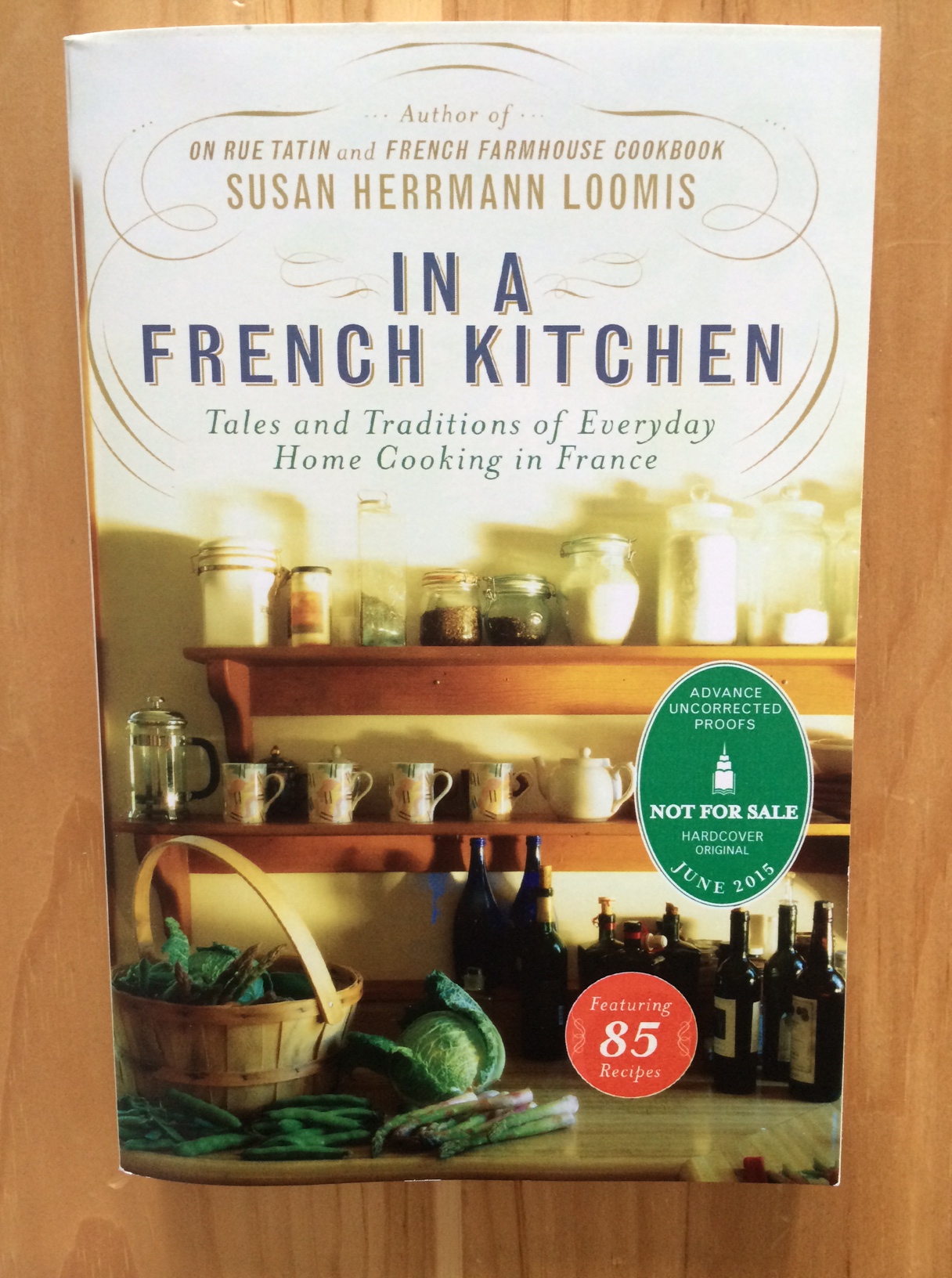
photo (47)Point is, I love food, so I hope you’ll indulge a turn from the literary and toward the culinary this week. I read cookbooks for fun, and the only thing I truly miss about having cable is the cooking shows. So when Susan Herrmann Loomis’s In a French Kitchen: Tales and Traditions of Everyday Home Cooking in France* arrived, I was ready to sink my teeth into it.

It’s a cheerful book about traditional French home cooking, accompanied by recipes that fit in with the theme of each chapter, like salad, cheese, grandmotherly cooking, pantry staples, even leftovers. The food sounds absolutely mouthwatering, but what’s even more fun to read about are the gustatory and cooking habits of Ms. Loomis’s friends and acquaintances in her adopted town. The French eat quite a lot of sugar, it turns out—which you wouldn’t think—and are very particular about cheeses, which of course you would think. And Sunday lunches last six hours, which sounds heavenly.

In a French Kitchen is not to be taken as prescriptive, I think; most of us do not have access to the kinds of gardens, markets, boulangeries, and state-funded daycare that make possible the kind of cooking Ms. Loomis describes.

In some ways, the book feels a little retro; Ms. Loomis notes approvingly how French women look great all the time, wearing high heels while they stir at the stove, while also noting, light as you please, that it’s the rare French man who cooks at home. Like I said, retro, and honestly a little grating when you factor in that Ms. Loomis never notes the social structures in France that (a) make it possible for people (read: women, mothers) to cook frequently and (b) make it seem like no problem that men aren’t expected to cook.

In the end, though, In a French Kitchen is a book that makes you dream about retiring to France, eating your way through every recipe, and making every lunch a French Sunday lunch.

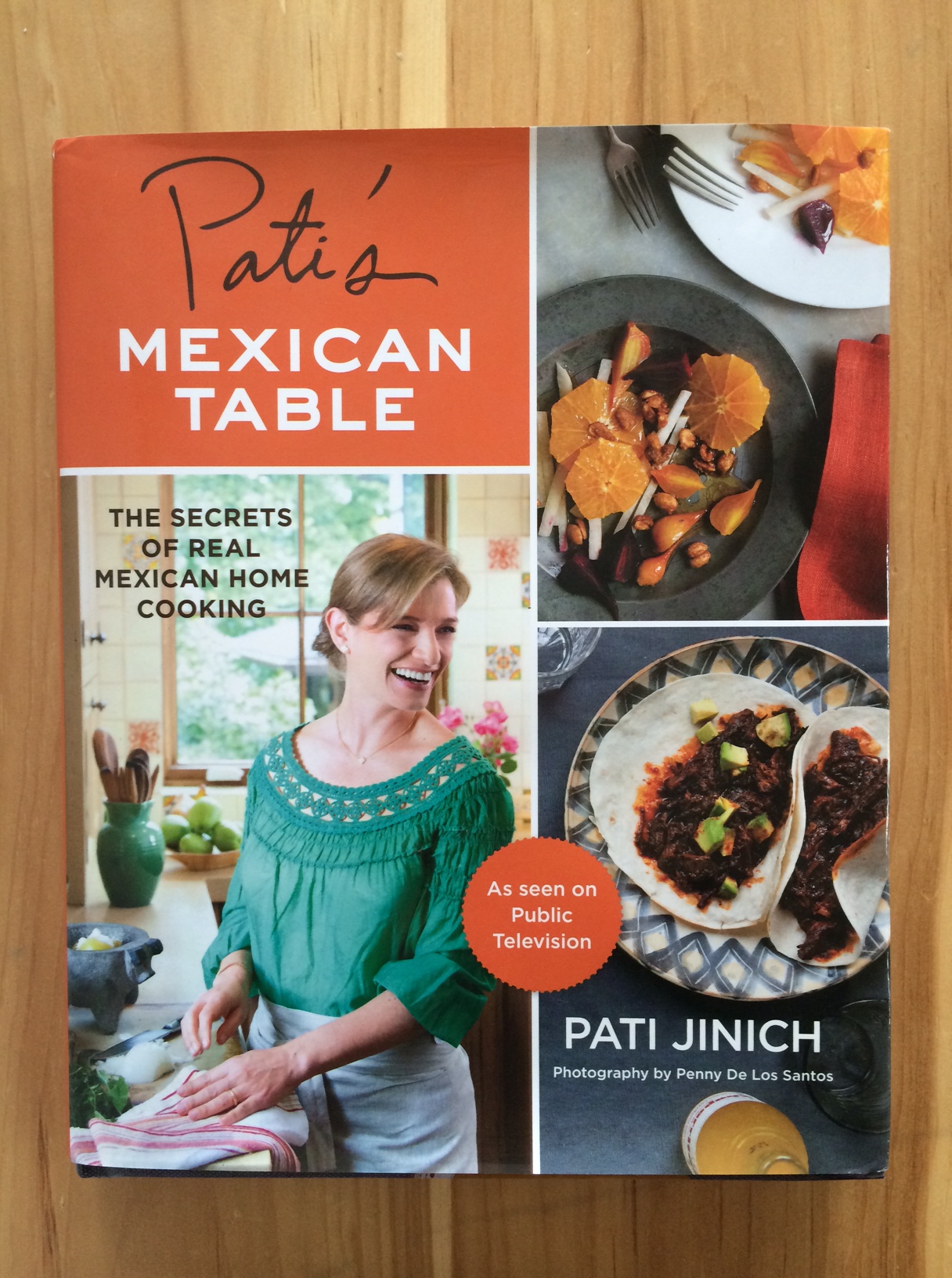
photo (48)My other cookbook reading of late has been Pati’s Mexican Table: The Secrets of Real Mexican Home Cooking, by Pati Jinich. Ms. Jinich has a cooking show on PBS of the same name, which I’ve loved watching; her recipes look intoxicatingly good and Ms. Jinich is friendly, welcoming presenter. I’ve had my eye on the cookbook for months, and I happened to find a copy of it on sale at Sherman’s Books in Portland, Maine, much to my delight.

It’s a great read, because there’s so much to learn about Mexican culture and food (Ms. Jinich’s grandmother was a survivor of the Nazi concentration camps, who combined her own food traditions with Mexico’s), and because Ms. Jinich provides plenty of tips about using ingredients that might be unfamiliar, like how to char poblanos or how to make tamarind syrup. I’ve made three recipes from the book and they’ve all been exquisite, requiring not even an extra pinch of salt. I’ve never had so much fun with a food processor. Try the salsa verde, and you’ll be looking in your local bookshop for Pati’s Mexican Table too.

*I received a copy of this book from the publisher for review consideration, which did not affect the content of my review.
Recommended Reading: A God in Ruins, by Kate Atkinson

photo (42)Kate Atkinson’s 2013 highly inventive novel Life After Life was one of my favorites of the year, and I’ve been eagerly anticipating the publication of A God in Ruins*, which is not a sequel, exactly (I doubt such a thing is possible, given the peculiar structure of Life after Life), but what the author calls a “companion piece.”

Life After Life follows Ursula Todd as she lives through the first half of the twentieth century over and over again, with particular focus on her experience during the London Blitz. A God In Ruins is the story of her brother Teddy, who doesn’t share his sister’s reincarnation quirk. Instead, we’re witness to Teddy’s one life, from its Arcadian beginnings at the family home, Fox Run, to his experience as an RAF bomber pilot during the war, and on to his marriage and relationships with his daughter and grandchildren. The story is told non-chronologically, all the pieces slowly falling into place and weaving together the stuff of one good man’s life.

For Teddy is a good man, a person who does his best under the terrible circumstances of war and the unexpectedly difficult circumstances of post-war family life. It’s a book about the loss of innocence, but it reaches deeper than the bildungsroman it certainly could have been to pull us into a the long decades of life. Teddy is sometimes mystified by what life has shown him, in particular by the behavior of his daughter Viola; she’s a delectably unlikeable character, but one who is shown compassion by her father, and ultimately, the author.

I loved this book; despite its unusual chronological structure, it had the feel of an old-fashioned novel, if that makes sense. Distinct motifs, wry humor, and affecting imagery run through the text, which made for an enjoyable, engaging reading experience, even when the subject matter is difficult.

And on another note, I loved the book for personal reasons. As I mentioned above, Teddy is the pilot of a Halifax bomber, and the descriptions of the terrifying flights to Germany (and other targets) are visceral, clearly informed by research and first-person interviews (Ms. Atkinson provides a helpful bibliography). My grandfather, who is 94, younger than Teddy would be (were he a real person) was the navigator on a B-17 during the war, and this book reinforced for me his bravery and sacrifice, and his modesty.

A God in Ruins is one of several excellent, recent books about the Second World War, books like All the Light We Cannot See, The Evening Chorus, and Ms. Atkinson’s own Life After Life. I hope to see this constellation of historical fiction grow.

If you know a veteran of World War II, you might consider helping to preserve history by participating in one of these oral history projects:

* I received a copy of this book from the publisher for review consideration, which did not affect the content of my review.

[Note to the Dear Readers: I’m trying an experiment this week wherein the weekly poetry post appears on Thursday and the usual book review/recommendation appears on Tuesday. I’m pretty confident that this will affect absolutely nobody’s life, but if you hate or love the new arrangement, please let me know.]

A Bookish Weekend, with Sonnets

I hope you are enjoying very fine weather, Dear Readers, as we are here in Boston. This past weekend was just gorgeous, and full of bookish delights. First, on Friday night, my friend A. came over and we had this exchange (paraphrased from memory):

Me: I’d like to see that new Thomas Hardy movie that’s coming out.

A: Aren’t there something like three Tom Hardy movies coming out this summer?

Me: ???

A: You know, the actor who was in the Batman movie?

Me: I meant the nineteenth-century novelist.

A: Oh . . .

And then I fell into a paroxysm of laughter as I imagined the kind of world in which three Thomas Hardy movies would come out in one summer. It was amazing. (A has a PhD in English literature, by the way.)

Then there was Independent Bookstore Day, which we celebrated over at Harvard Bookstore:

photo (37)

I was telling my grandpa about the bookstore and he pointed out that when my siblings and I were kids (lo these many years ago), he used to pick out books for us at the very same one (“It’s come full circle” were his words).

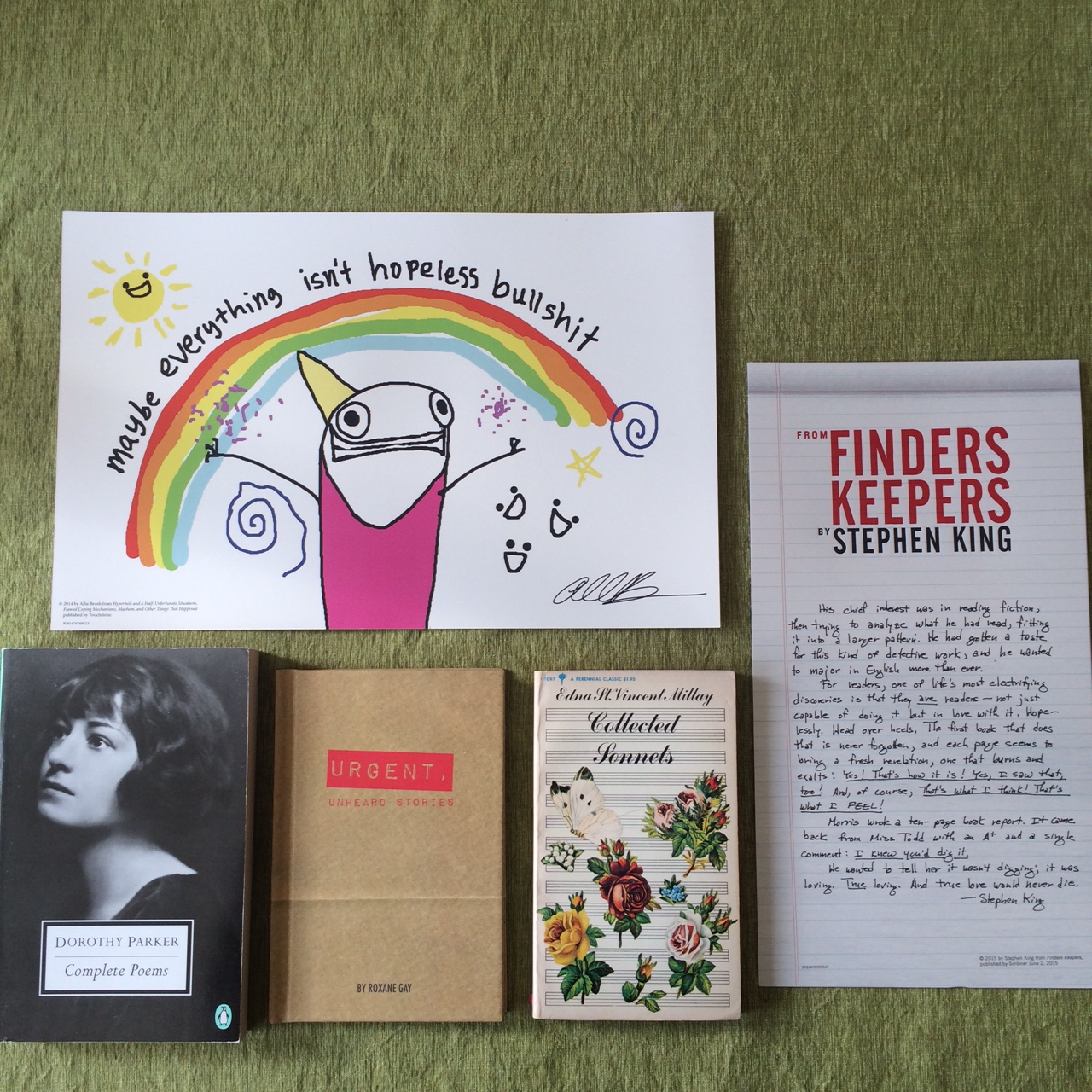
I read the Roxane Gay book Saturday night (mini review to come at some point in the next month or so) and flipped through my new poetry books on Sunday, when I also squeezed in a bit of Kate Atkinson’s latest novel, which I’m hoping to finish this week.

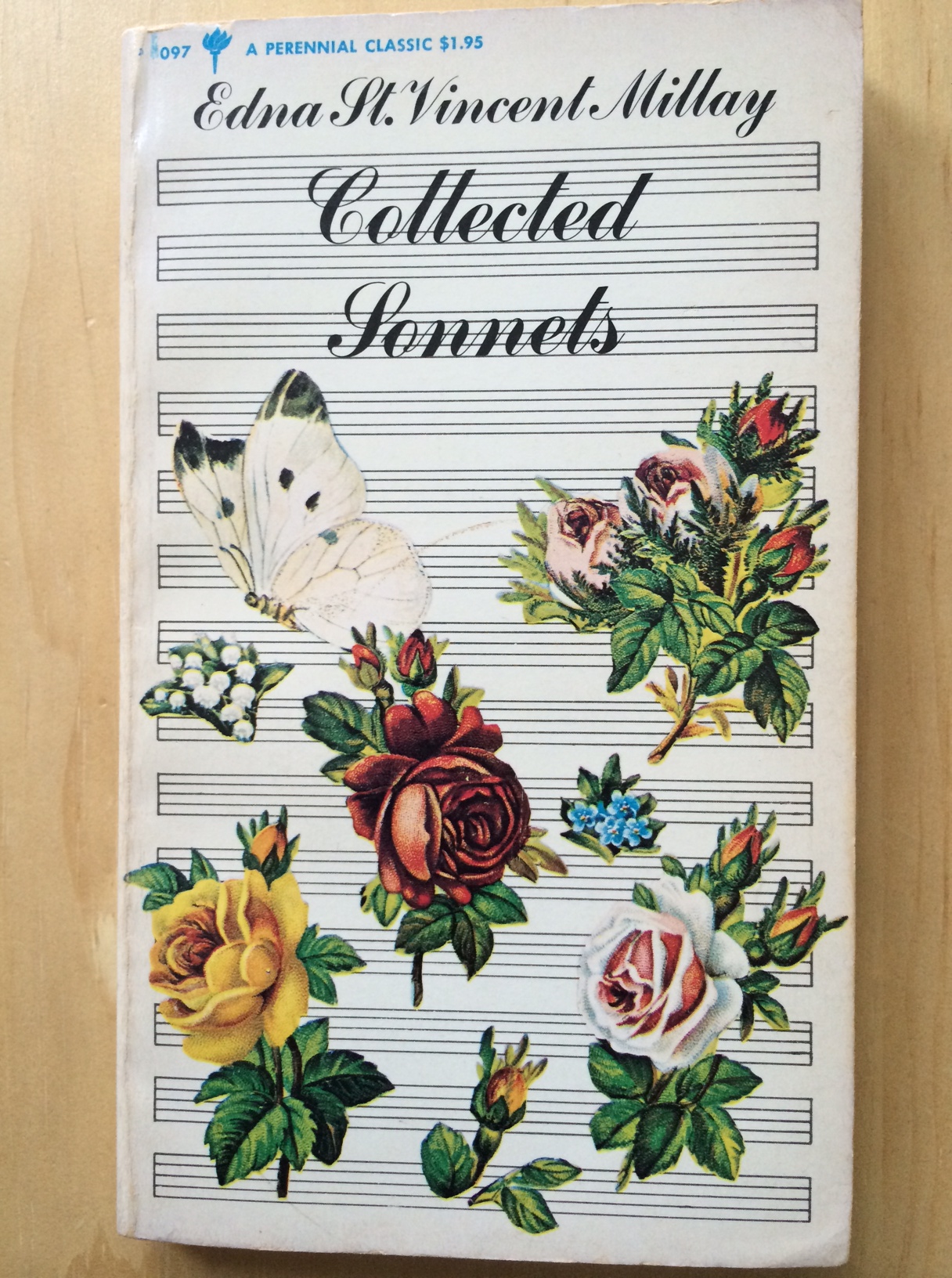
photo (38)As you can see from the picture above, one of the books I picked up at Harvard Bookstore was this vintage (that cover!) Harper Perennial pocket edition of Edna St. Vincent Millay’s Collected Sonnets (chosen by the poet herself, apparently). I love the look and the weight of the volume.

Millay was one of the first poets I discovered for myself; on a whim, I picked up a copy of her Selected Poems at Half Price Books when I was in high school, and that book has been with me ever since. She was a brilliant poet (though at times uneven), both earnest and jaunty, heartbroken and carefree. She was straightforward and often very funny, and her biography reads like a novel, which for me made her poems all the more enticing.

There’s plenty to choose from when it comes to her sonnets. The one that begins, “What lips my lips have kissed” is one of the few poems I have memorized that’s always “stuck” (I don’t need to re-memorize it from time to time), and of course it’s very famous. For a bit of a wider range, head over to The Poetry Foundation, which here gives a group of four sonnets from 1922. 

Review: The Life-changing Magic of Tidying Up, by Marie Kondo

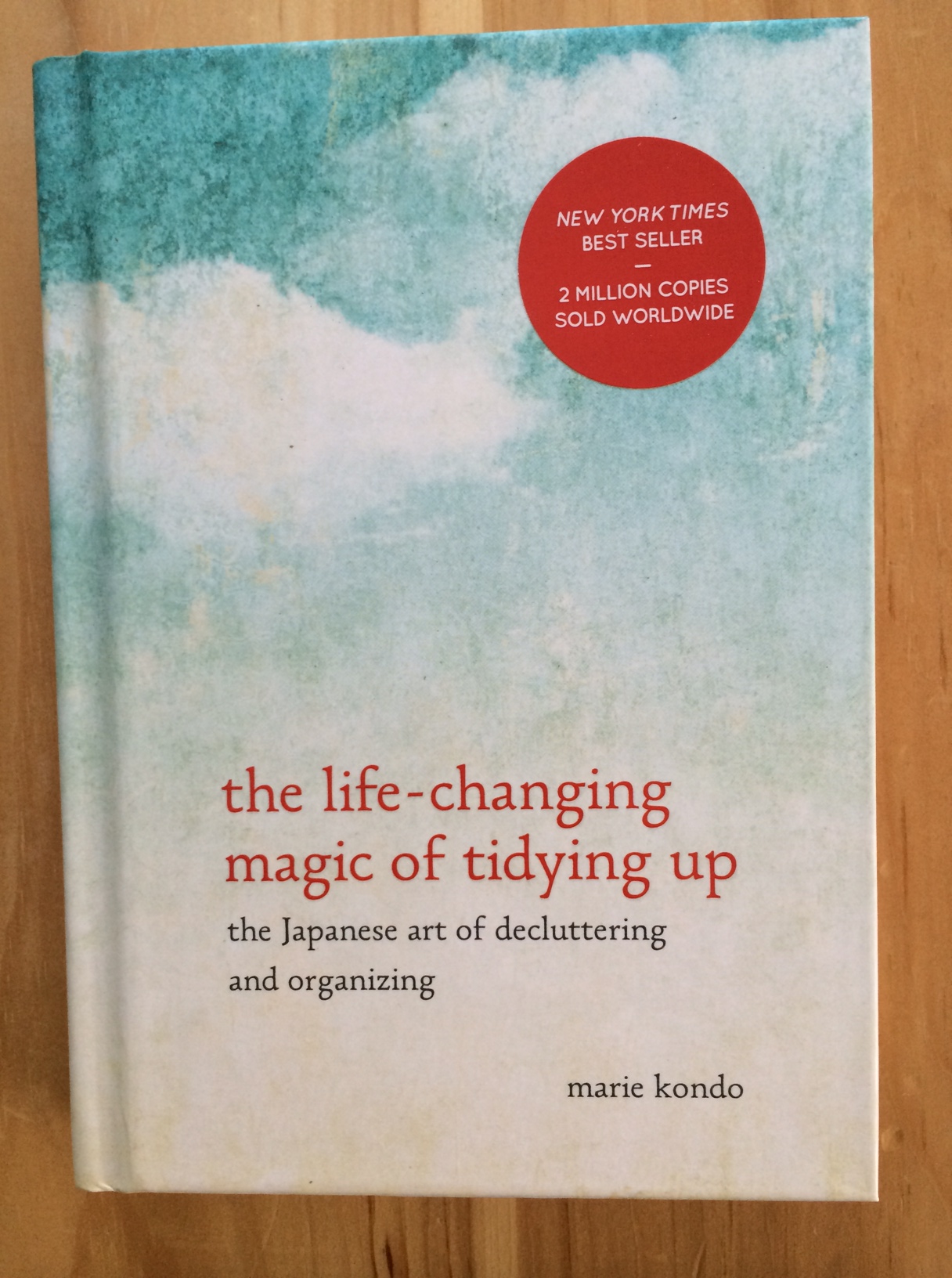
photo (24)Chances are that by now you’ve run across Marie Kondo’s The Life-changing Magic of Tidying Up; it’s a big bestseller, and I know my Instagram feed has definitely featured before and after pictures of friends’ clothing collections.

In brief: Ms. Kondo, who is a celebrity in her native Japan thanks to her wildly successful books, shares her prescription for tidy living. It is a one-time process (though it may take weeks or months to finish) that involves sorting through every item one owns, according to categories (clothes, books, papers, etc.) and relinquishing those that do not “spark joy.” In her experience, clients who try her system not only find themselves in a tidy, clean space (very important in Japan, where housing is smaller and even more expensive, than, say, Boston, ahem), but also find myriad other benefits to living a tidy life.

As Molly Young writes for The Cut,

Kondo doesn’t nag. Instead, she urges a kind of animistic tenderness toward everyday belongings. Socks “take a brutal beating in their daily work, trapped between your foot and your shoe, enduring pressure and friction to protect your precious feet,” she writes. “The time they spend in your drawer is their only chance to rest.” Purses merit similar reverence: “Being packed all the time, even when not in use, must feel something like going to bed on an empty stomach.” Kondo’s thesis—that the world is filled with worthy recipients of mercy, including lightweight-microfiber ones—is as lovely as it is alien. It’s empathy as an extreme sport.

I wanted to read this book because I love organizing. I loathe doing the dishes and try to make existential jokes whenever I’m forced to vacuum, but show me a closet in need of sorting, and I am there for you.My son (nearly 4) has seen me organizing with glee often enough that he requests it at least once or twice a month (6:30a.m.: “Mama, Daddy! Today we or-nize my dressah!”). Ms. Kondo advocates folding clothes in squares, to be lined upright in drawers, which is a method I saw on Pinterest quite a while ago, and friends, it is awesome and I had a marvelous time folding laundry during that happy week.

But this is a serial sort of organization, never truly finished, that Ms. Kondo claims will be unnecessary once her method goes into effect. I believe her, and so I’m a little afraid to try it and lose an activity that I find both calming and absorbing.

The other reasons I’m wary of the Konmari method, as she calls it, can be found in this excellent essay by Lisa Miller (also in The Cut). I don’t really believe, in my heart of hearts, that if I’m without something, that I’ll always be able to run out and replace it. First, there’s the simple convenience factor; I much prefer having a pair of stockings in the drawer for the one time a year I’ll wear them—though they decidedly do not spark joy—than finding out 30 minutes before the wedding or party that I’ll have to run to Target. Second, I’m prone to anxiety, and that anxiety extends to the possibilities of layoffs and apocalypses, and if either of those things happens, I’d like to have backups of backups of things already in our apartment.

Then there’s the chapter on books. I leave you to contemplate the possibility that I will put all 1000-odd books I own on the floor, touch each one, and discard a great many before replacing the ones I truly love on the shelves.

[Sidebar: Coming later this year is my Theory of the Personal Library.]

Anyway, I think this book could be very helpful for people who do want to engage in major cleaning and tidying projects, since it’s not a self-perpetuating system and does not involve the investment of thousands of dollars in Elfa products. I also like some of Ms. Kondo’s strategies for letting go of objects with sentimental value, though don’t ask me how I’m faring with that. It’s also fascinating in terms of its tidbits about Japanese culture (shrines and charms get their own section, for instance) and about Ms. Kondo’s own life; she’s very honest about the reasons she thinks she became so interested in organizing.

And then, of course, you could ignore the spirit of the book and pick and choose some of her organizational strategies. Not that I did that with my socks, or anything.

photo (25)

Eat, Drink, and Be Merry: Ben Jonson’s “Inviting a Friend to Supper”

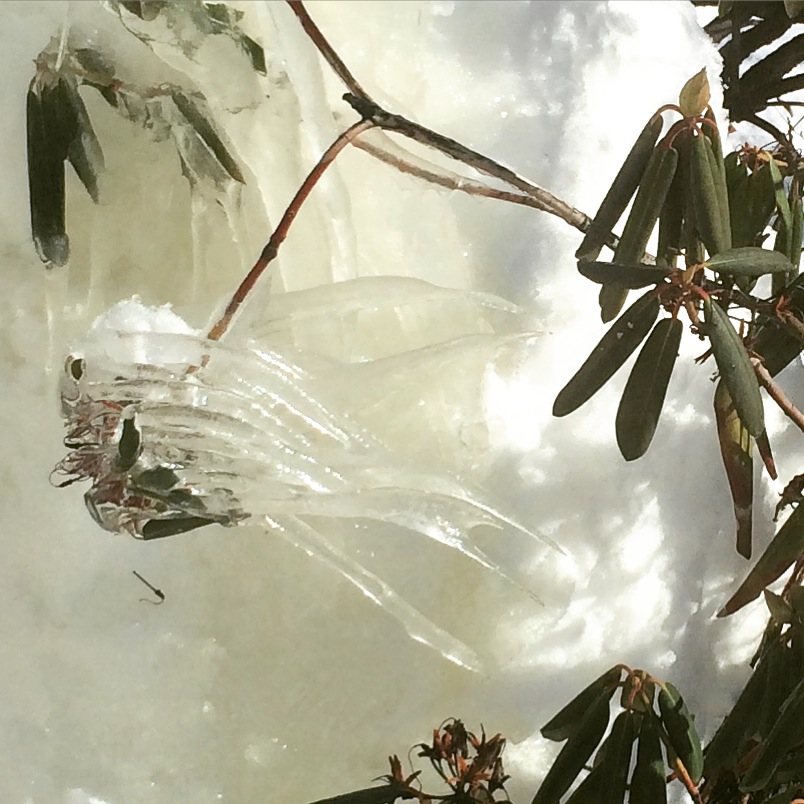
Sideways jellyfish icicle from the front window.

Sideways jellyfish icicle from the front window.

Unpleasant weather continues here in Boston (this weekend delivered the trifecta of snow, rain, and ice), and even hardened and hardy New Englanders agree that the last few weeks have been miserable. We’ve been staying put most weekends, venturing out for groceries and then settling in between bouts of shoveling.

Luckily, friends, like sunshine, have made brief but welcome appearances, and so in honor of friends who come to dinner, this week’s poem is Ben Jonson’s “Inviting a Friend to Supper.”

Jonson addresses his patron, William Herbert, with what I’d call a tone of amused deference. The feast he describes is quite something, even for a man of Jonson’s epicurean appetites: capers, olives, mutton, chicken, larks, other kinds of available fowl, a bit of salad, lemons, and, most importantly,

a pure cup of rich Canary wine,
Which is the Mermaid’s now, but shall be mine;
Of which had Horace, or Anacreon tasted,
Their lives, as so their lines, till now had lasted.
Tobacco, nectar, or the Thespian spring,
Are all but Luther’s beer to this I sing.

Hilarious (the Mermaid was a tavern, by the way). I’d like to try wine that good.

Now, our friendly dinners are never so grand or so well-appointed, and the wine has never been compared the Thespian spring, but the company, I’ll venture to say, is even better than William Herbert’s, and we are more grateful for our friends than Jonson was for Canary wine.

Ben Jonson
Inviting a Friend to Supper

Tonight, grave Sir, both my poor house, and I
Do equally desire your company;
Not that we think us worthy such a guest,
But that your worth will dignify our feast
With those that come, whose grace may make that seem
Something, which else could hope for no esteem.
It is the fair acceptance, Sir, creates
The entertainment perfect, not the cates.
Yet shall you have, to rectify your palate,
An olive, capers, or some better salad
Ushering the mutton; with a short-legged hen,
If we can get her, full of eggs, and then
Lemons, and wine for sauce; to these a cony
Is not to be despaired of, for our money;
And, though fowl, now, be scarce, yet there are clerks,
The sky not falling, think we may have larks.
I’ll tell you of more, and lie, so you will come:
Of partridge, pheasant, woodcock, of which some
May yet be there, and godwit, if we can;
Knat, rail, and ruff too. Howsoe’er, my man
Shall read a piece of Virgil, Tacitus,
Livy, or of some better book to us,
Of which we’ll speak our minds, amidst our meat;
And I’ll profess no verses to repeat.
To this, if ought appear which I not know of,
That will the pastry, not my paper, show of.
Digestive cheese and fruit there sure will be;
But that which most doth take my Muse and me,
Is a pure cup of rich Canary wine,
Which is the Mermaid’s now, but shall be mine;
Of which had Horace, or Anacreon tasted,
Their lives, as so their lines, till now had lasted.
Tobacco, nectar, or the Thespian spring,
Are all but Luther’s beer to this I sing.
Of this we will sup free, but moderately,
And we will have no Pooley, or Parrot by,
Nor shall our cups make any guilty men;
But, at our parting we will be as when
We innocently met. No simple word
That shall be uttered at our mirthful board,
Shall make us sad next morning or affright
The liberty that we’ll enjoy tonight.

Two Poems for Knitting

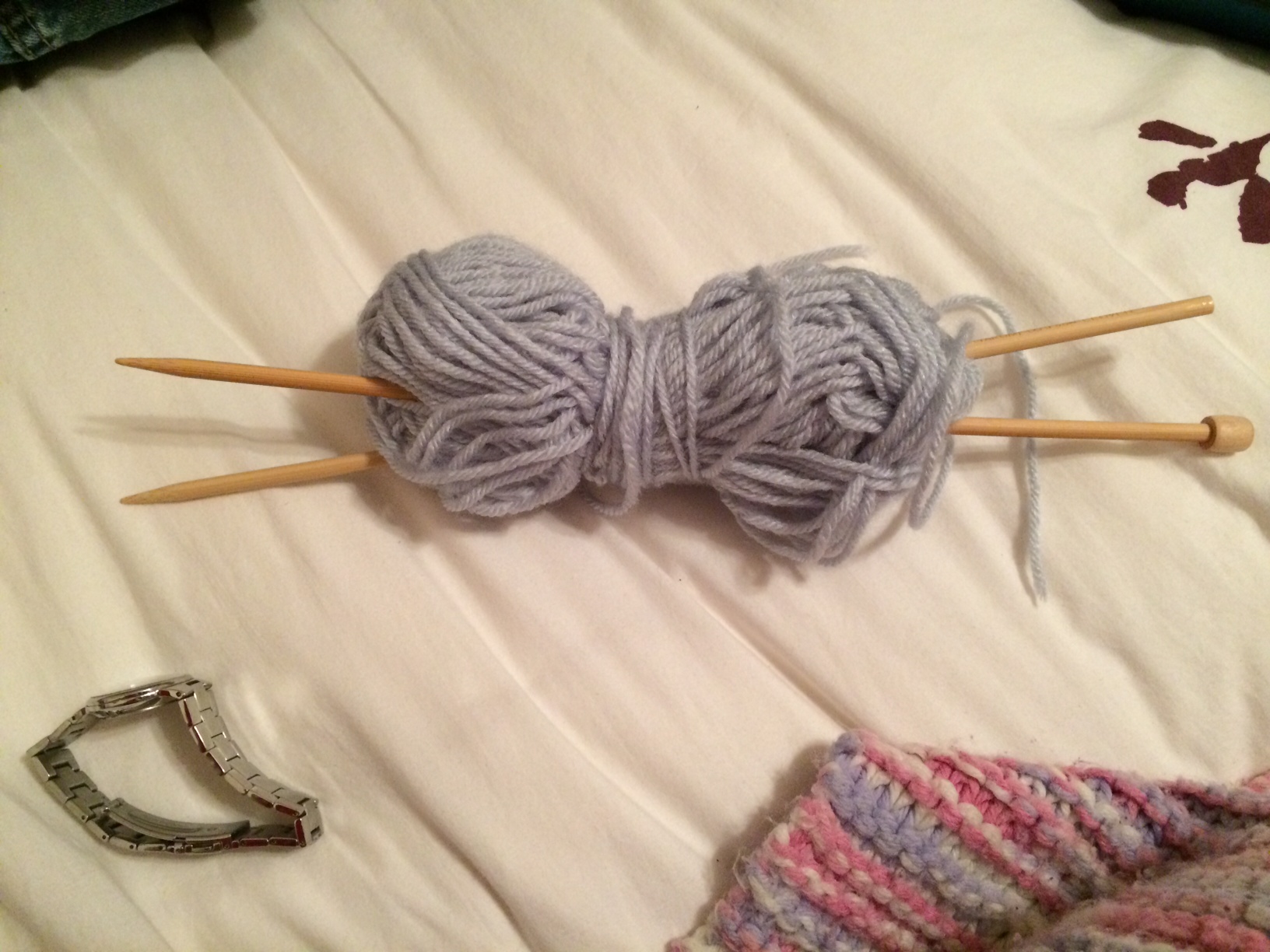
photoIn late November and into December, I often find myself knitting at night, rushing to catch up with projects destined to become Christmas presents.

I am not a very skilled knitter; I can make rectangles (scarves, small blankets) and things that can be made out of rectangles (leg warmers, arm warmers, bags, vastly oversized laptop covers . . . ). I can’t cable, use double-pointed needles, read a pattern, or reliably tell you what a slip-stitch is. Though I was taught by a talented and generous knitter, I am fairly sure that I’m holding the yarn the wrong way.

Still, I love knitting. I like seeing yarn curved and curled into something new and useful (well, mostly useful), and the sense of satisfaction that comes from weaving in the yarn ends on a scarf or a baby blanket. I’m not good enough that I can take my eyes off the work, so I usually knit while listening to a movie or TV show I’ve seen ten times before and chatting with my husband. It’s all very companionable.

Anyway, today I went looking for poems that talk about knitting, and I found a few; here are my two favorites.

The first, Ciarán Carson’s “The Fetch,” is just wickedly cool (that’s a technical term, by the way); it’s about waking, dreaming, loss, the sea, and distance, and features a nice Dickens reference, too. It’s so good I’m putting his book For All We Know on my Christmas wish list.

The second poem links knitting and waves as well. “A simple co-creator, I trust in simple decorum,” says the speaker of Cory Wade’s “Knitting Litany.” An incredibly skilled knitter, the speaker conjures a list of flora and fauna that descend from her needles, and imagines the waves she builds and builds.

Now, who’s going to teach me how to crochet?