Recommended Reading: The Last Painting of Sara de Vos, by Dominic Smith

IMG_6466I loved Dominic Smith’s The Last Painting of Sara de Vos* so much that I tamed my instinct to race through it, and instead spent just under a week immersed in this gorgeous novel.

The narrative plays out in three times. In seventeenth-century Holland, Sara de Vos is an anomaly, a woman admitted to the Guild of St. Luke–the painter’s guild, though she’s allowed to paint only still lifes, rather than the landscapes she’s drawn to. After a family tragedy, however, she begins work on a painting later called At the Edge of a Wood, an almost eerie winter landscape scene.

More than two centuries later, in 1950s Manhattan, that painting hangs over the headboard of Rachel and Marty de Groot (a descendant of the painting’s original owner). Marty is a lawyer who seems to be gently tilting toward infidelity when he comes home one night to realize that the painting over his bed isn’t the one he grew up with; it’s a skilled forgery.

Halfway around the world and forty years later, Australian curator and art historian Ellie Shipley is putting the finishing touches on an exhibit of paintings in her specialization—Dutch women painters of the Golden Age—and wondering how it is that she’s close to so few people. Then she receives a phone call: the painting At the Edge of a Wood is on its way to the museum. The trouble is, it’s not the only one. One painting is a forgery, and she should know: she was the forger.

Mr. Smith weaves these three disparate lives together into a richly detailed tapestry of human connection, an exploration of art, love, and the opportunities women make for themselves.  The novel is absolutely gripping, with revelations more startling than you might think possible given that the action revolves around one obscure painting. And the writing is exquisite; even if you, like me, haven’t touched paint since fingers were the application method of choice, you’ll be transported into the world of stretched canvases, mixed pigments, the struggle to find just the right texture for the yellow paint. Even the ordinary is transformed in this book; a freezer becomes “a diorama of snowmelt and frosted meat hilltops”; a roof is “run through with dormer windows that jut out like tiny caves in a cliffside.” One of my favorite descriptions comes when Marty dismisses his wife’s fondness for Impressionists: when he “looks at certain Cézannes he sees blueish fuzz—the powdery bloom on the skin of a Concord grape.”

The Last Painting of Sara de Vos is a beautiful example of painting with words–and highly recommended.

*I received a copy of this book from the publisher for review consideration, which did not affect the content of my review.

Shakespeare 400: In Which I Rank the Plays

IMG_6530


In honor of the 400th anniversary of Shakespeare’s death, Dear Readers, I bring you a list you’ve all been too polite to clamor for:

Shakespeare’s Plays, Ranked in Order of My Personal Preference, with Sundry Quips & Commentary

(Because yes, I’ve read them all. Thanks, graduate school.)

  1. Hamlet (Of course.)
  2. Much Ado About Nothing (Beatrice is the Shakespearean heroine I’d find easiest to play. Just saying.)
  3. A Midsummer Night’s Dream (Delightful poetry, problematic ending, fond memories of high school. If you’d like to never see the play the same way again, try reading Jan Kott’s take on it.
  4. Henry V (An anti-war play about war, in my view. And it’s brilliant, of course.)
  5. As You Like It (Recommended particularly for North Carolina legislators.)
  6. Antony and Cleopatra (Oh, for my salad days teaching this play! Also, I saw it at the Barbican when I was 15; Alan Bates played Antony, and Frances de la Tour [perhaps known to you as Madame Maxine in the Harry Potter movies] was a fantastic Cleopatra, appearing nude in her final scenes. )
  7. Richard III (No matter historians’ efforts, Richard’s reputation will never recover.)
  8. Twelfth Night (See 5, above.)
  9. King Lear (I can’t decide whether I’d rather see Patrick Stewart or Ian McKellan in the title role. The “never” line at the end is gutting. )
  10. The Tempest (How is it that I’ve never seen this play live?)
  11. The Winter’s Tale (This was my jam when I used to think about maternal mortality in early modern lit. I still think it’s a trip. Apparently so does Jeanette Winterson.)
  12. Macbeth (Few things make me wish I’d been alive a hundred plus years ago, but then there’s this painting.)
  13. King John (Weren’t expecting that, were you? I like this because I’ve read it much less often than I’ve read the major comedies and tragedies, so it sounds fresh every time, and it’s really, really good. Underrated, this one.)
  14. The Taming of the Shrew (Funny and horrifying at the same time; fun to wrestle with, as a feminist.)
  15. Richard II (Gorgeous poetry here, and such a politically charged play! The Earl of Essex had it staged before he himself staged a rebellion against Elizabeth I.)
  16. Othello (My dad once saw a production of this with James Earl Jones and Christopher Plummer. I’ve never gotten over my envy, despite quite a bit of therapy.)
  17. Romeo and Juliet (God, Romeo is such a nitwit. But that doesn’t mean I can’t quote huge chunks of this play [don’t judge me for being 13 when the Leonard DiCaprio version came out . . . and then playing the nurse in high school.].)
  18. Henry IV Part 1 (In which Prince Hal is one calculating sonofabitch, and we all fall for Falstaff.)
  19. Cymbeline (Is it a romance? A tragicomedy? A comedy? Who knows? Woolf quotes from it in Mrs. Dalloway, which has to be an endorsement of some kind, right?)
  20. Coriolanus (I have a feeling Volumnia would do well on Game of Thrones.)
  21. The Merchant of Venice (Go Portia! Also, I think best read in conversation with Marlowe’s The Jew of Malta.)
  22. Henry IV Part 2 (I love the scene between the dying Henry and Hal: “busy giddy minds / With foreign quarrels.” A sound politico, that Henry IV.)
  23. Julius Caesar (Oh hi, tenth grade memorization assignment.)
  24. All’s Well That Ends Well (There’s a bed trick, and if that’s not intriguing, I don’t know what is. Also, Bertram reminds me of the generic rom-com bad guy.)
  25. Measure for Measure (Here’s another bed trick. And I’m a fan of the pre-Dickensian name “Mistress Overdone”–the owner of a brothel.)
  26. Henry VIII (Neatly sidesteps all that nasty beheading business. The play that literally burned the house down.)
  27. Love’s Labour’s Lost (Honorificabilitudinitatibus. This is the play for word nerds.)
  28. Titus Andronicus (Gleefully gory. “Alarbus’ limbs are lopped” is quite the line.)
  29. The Merry Wives of Windsor (Quite silly.)
  30. Troilus and Cressida (So very unpleasant.)
  31. Henry VI Part 1 (If you’re going to read these–and you should at least once, just for Margaret of Anjou–you might as well read them in order.)
  32. Henry VI Part 2
  33. Henry VI Part 3
  34. The Two Noble Kinsmen (Chaucerian, and thus best enjoyed with a large glass of mead.)
  35. Two Gentlemen of Verona (There’s a dog in this one, which is a good thing for the audience.)
  36. Pericles, Prince of Tyre (This is sort of like Shakespeare leaving the office early for a three-martini lunch. Or, come to think of it, arriving at the office late after a three-martini lunch.)
  37. The Comedy of Errors (Even the greats have to start somewhere.)
  38. Timon of Athens (Ugh.)

And the poems, you say?

  1. The Sonnets (Of course.)
  2. Venus and Adonis (Shakespearean smut, and it’s delightful)
  3. The rest.

So, happy Shakespeare 400! May we all be in good health to celebrate his 500th birthday, in a mere 48 years!).

What’s your favorite play of Shakespeare’s (or sonnet)? 

The Poetry Concierge Recommends: Mary Oliver

PoetryConcierge[The Poetry Concierge is an occasional feature here on Rosemary and Reading Glasses wherein I select a poem, poet, or book of poems for individual readers based on a short questionnaire. Come play along! Read the introductory post here, my first recommendation here, the reboot here, and then email me at: rosemaryandreadingglasses [at] gmail [dot] com.]

This week, our pilgrim in search of poetry is Audra at Unabridged Chick. 

1. When you read fiction, who’s your go-to author?

Penelope Lively

2. If you read nonfiction, which subjects are most likely to interest you? (cultural history, science, biography, memoir, survival stories?)

Biographies of authors

3. If you were stuck on a desert island for a week, which five books would you bring to keep you entertained?

Rebecca, The True Confessions of Charlotte Doyle, Kristin Lavransdatter, The Doomsday Book, and Good Omens

4. If you were on a five-year mission to Mars, which five books would you bring to keep you sane?

Kristin Lavransdatter, The Sparrow, Far From the Madding Crowd, The Moon Is A Harsh Mistress, and some Norton edition that is ten thousand of those onion-paper thin pages of all Western lit or something.

5. What kinds of questions are most likely to keep you up at night? (death, the nature of love, politics, environmental issues, meaning of life, end of the world, justice and injustice, etc?)

The loss of my child, politics, women’s rights, community violence

6. If you’ve read poetry before, what have you liked? What have you disliked?

Like Dylan Thomas and Sharon Olds, H.D. and Diane Wakoski. Diane Ackerman and Anna Akhmatova. Dislike old school guys or stuff with too many allusions that I can’t figure out.


(optional) Are you looking for a poem or poet to help you through a tough time, or to help you answer a question? If so, please explain.

Yes — I’m feeling so conflicted about work and creative endeavors — stressed and unhappy. I need advice, or a pep talk, or something. Centering, maybe.


Just like last week, there’s so much to work with here! Audra is into classics, sci-fi, some truly photo (60)great poetry (shout out to Anna Akhmatova!), a novelist I can’t believe I haven’t encountered before (putting Penelope Lively on my TBR immediately)–so many directions to choose from. I had Wislawa Szymborska, Margaret Atwood, and June Jordan in mind.

But it’s Audra’s answer to that last question that struck me as the most important, and one poet immediately leapt to mind: Mary Oliver*.

Chances are you’ve heard of Mary Oliver, since she’s one of the best-selling poets in the United States (though I confess I only started reading her work a few years ago). She’s the author of many collections and the recipient of many awards.

I recommend in particular House of Light (1990). Here’s a bit I wrote about the collection a few years ago:

A native of Northeast Ohio, Ms. Oliver now resides on Cape Cod (her poems celebrate its interior marshes more than its seashore), and since I grew up in Cleveland and now live in Boston (and married a man from Cape Cod), her poems often feel homey and familiar to me. I love the intimacy of her observations, the feeling, almost, of conversation. This feeling of casual grace is remarkable, because elsewhere Ms. Oliver has written that she revises most poems forty or fifty times!

I think this collection is right for Audra because of the contemplative feel and focus and nature often feel centering, while a few poems are galvanizing, like the famous “The Summer Day”: “Tell me, what is it you plan to do / with your one wild and precious life?”

A huge question, but with this book in hand, one feels better prepared to face it.

Audra, I hope this recommendation is helpful! Thank you for writing in.

P.S. Audra, if you want some poetry with a sci-fi twist, you might also want to check out the panel “Stars in My Pocket Like Grains of Sand: Poetry and Science Fiction,” moderated by Heather Hughes, at the 2016 Massachusetts Poetry Festival later this month.


Would you like the Poetry Concierge to make a recommendation for you? Check out the introductory post, and send your answers to the questionnaire, along with the name and/or blog you’d like posted with the reply, to rosemaryandreadingglasses [at] gmail [dot] com.

*No relation to yours truly.

YA Foray: Jeff Zentner’s The Serpent King

IMG_6429About once a year*, I read a YA book to see what the youth are up to these days (or, what publishers think the youth want to read, I guess). I’m never disappointed, for while YA isn’t my go-to bookstore section, I think YA authors tend to be folks passionate about the lives of teenagers, and that passion shows in their work.

Enter Jeff Zenter’s debut novel The Serpent King. Set in rural Tennessee, the book follows three friends through their senior year of high school. Dill is a soulful and sad musician, haunted by family history and dogged by his father’s reputation (the former minister is in jail for possession of child pornography) and his mother’s refusal to acknowledge that he might want to leave Forrestville. Lydia is a savvy fashion blogger (and fan of Donna Tartt & Leonard Cohen, so I was contractually obligated to like her, despite her annoying tendency to brush off her privilege) who dreams of moving to New York, though she’ll miss her supportive, Trader Joe’s-loving, hybrid-driving parents. Travis has a rough time at home and at work in the lumberyard, but he copes by retreating into a Game of Thrones-like fandom, not caring what anybody (including Lydia) thinks of his all-black ensembles, dragon necklace, and staff.

The novel revolves mainly around Dill, who’s distressed not only at the prospect of losing Lydia (he’s got a crush), but also at his lack of prospects. His parents have made it clear that he’s responsible for helping to pay off the debts they incurred; his mother even thinks he ought to drop out of high school.

While the trajectory of the plot is somewhat predictable, I enjoyed reading this book because Mr. Zentner depicts a segment of the population that is often overlooked. Dill and his mother are flat-out poor, and Travis’s family is just scraping by. Despite her attitude towards Dill’s education, Mrs. Early is depicted as a person who’s making choices using the arithmetic she knows, one that’s bound up with job insecurity (even with multiple jobs), no health care, and mountains of debt. She’s not a sympathetic character, but she’s understandable, not a caricature, and I think that’s important. Mr. Zentner shows readers that circumstance is a powerful force in shaping character.

And so is friendship. Forrestville has its racists and bullies, but it’s also chock full of beauty and people of outstanding moral fiber if you know where to look, and the three heroes of the tale do. It’s a pleasure to hear the sounds of night insects with them, or visit a college campus through their eyes. This book is full of heart; Mr. Zentner clearly loves his subject, looking at rural Tennessee life with affection, and with eyes wide open to its flaws.

I’d recommend this book  to YA fans and to readers (like me) who dip into the genre just once in a while.

Have you read any YA books lately?

* 2013: Sara Farizan, If You Could Be Mine

2014: John Green, The Fault in Our Stars

Stephen Chbosky, The Perks of Being a Wallflower

2015: [I did say about once a year. It averages out, right?]

Three Recommendations Based on Sara Majka’s Cities I’ve Never Lived In

IMG_6462Sara Majka’s Cities I’ve Never Lived In* is a collection of stories profoundly concerned with isolation, so much so that at times I felt almost too distant from the action and the characters. Still, I was impressed by these glimpses of other lives, and impressed by Ms. Majka’s ability to seamlessly blend fiction and autobiography. The narrator of many of these stories is divorced and rather adrift; she collects stories as a way to connect. The people we read about are in many cases scraping by: a man who abandons his daughter in northern Maine when he can’t find work in their town; an artist who sells a piece he doesn’t have any right to sell; an grandfather looking after his grandkids while their mother works a ferry ride away. (It’s not a coincidence that islands feature prominently in the collection).

There are unsettling stories. People go missing; a whole island disappears; a young woman drowns. I sometimes felt as if I were reading through a mist, that Ms. Majka’s simple but subtle prose had lulled me into thinking I could easily understand these characters and these places. But that wasn’t the case.

I thought that instead of an extended review of Cities I’ve Never Lived In (you can read one here and another here), I’d try to give you a sense of it by recommending (somewhat) related works.

IMG_6534If you were to pair Cities I’ve Never Lived In with a painter, the immediate choice would be Edward Hopper. Though best known for Nighthawks, I’ve always preferred his stark New England Landscapes (like Hills, South Truro, held at the Cleveland Museum of Art) and his portraits of women in isolation, like Morning Sun, held at the Columbus Museum of Art).

IMG_6533


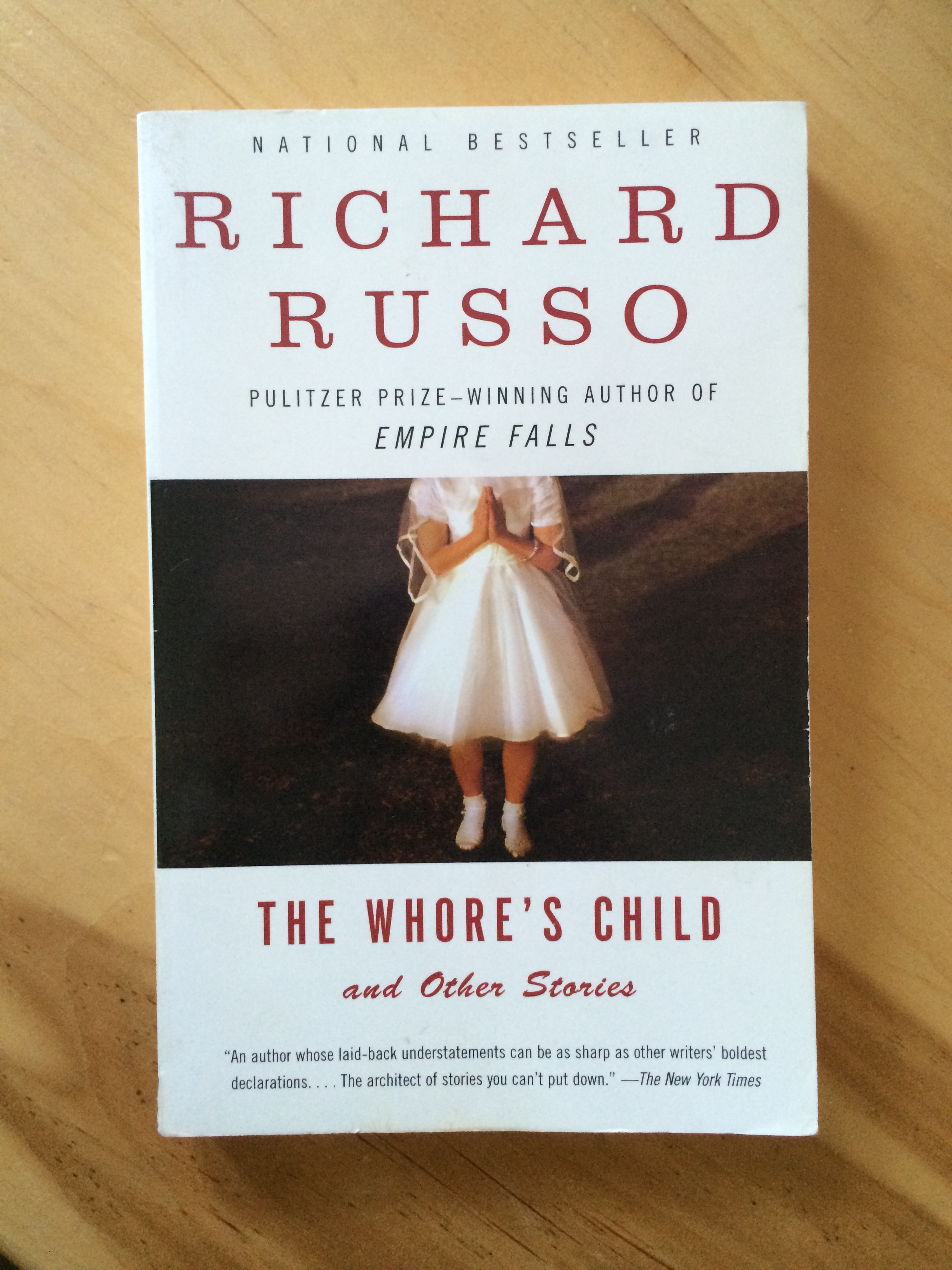
Richard Russo’s 2002 collection The Whore’s Child and Other Stories came to mind when I read Ms. Majka’s descriptions of life in economically depressed Maine. Mr. Russo is a chronicler of small-town New England and New York (state); if you liked the settings of Cities I’ve Never Lived In and are looking for stories with a different feel (more drama, varied narrators), you might give this collection a try.

And here’s the oddball of the bunch: Lost in Translation, the 2003 movie set in Tokyo that stars Bill Murray and Scarlett Johansson. Chances are you’ve seen it—I don’t know many people who haven’t—but the main narrator of Cities I’ve Never Lived In makes me think of Scarlett Johansson’s wandering and wistful Charlotte, and both works are explorations of loneliness and the impermanence of connection.

If you’ve read Cities I’ve Never Lived In, what other books or artwork did you connect it with?

*I received a copy of this book from the publisher for review purposes, which did not affect the content of my review.


The Poetry Concierge Recommends: Claudia Rankine

PoetryConcierge[The Poetry Concierge is an occasional feature here on Rosemary and Reading Glasses wherein I select a poem, poet, or book of poems for individual readers based on a short questionnaire. Come play along! Read the introductory post here, my first recommendation here, the reboot here, and then email me at: rosemaryandreadingglasses [at] gmail [dot] com.]

This week, our pilgrim in search of poetry is Jenny of Reading the End. 

1. When you read fiction, who’s your go-to author?

It’s so hard to choose just one! I’m going to say Maggie Stiefvater, because she’s the blend of creepiness and feelings and Societal Issues that I’m feeling very fond of right now.

2. If you read nonfiction, which subjects are most likely to interest you? (cultural history, science, biography, memoir, survival stories?)

Cultural studies is always good for me — anything that describes society with a keen eye, whether it’s our present society now or a time long past.

3. If you were stuck on a desert island for a week, which five books would you bring to keep you entertained?

I’d probably pick five from my TBR list relatively at random, depending on what my mood was like. Probably at least two hefty nonfiction books, to last me; a romance novel for funsies; a YA novel I’ve been anticipating for a while; and a big fat chunky novel that I’ve been putting off reading for a while, like East of Eden.

4. If you were on a five-year mission to Mars, which five books would you bring to keep you sane?

Angels in America, the Bible, Robert and Elizabeth Barrett Browning’s letters, Shakespeare, and Diana Wynne Jones’s Fire and Hemlock.

5. What kinds of questions are most likely to keep you up at night? (death, the nature of love, politics, environmental issues, meaning of life, end of the world, justice and injustice, etc?)

What will happen to the people I love (death sometimes, illness sometimes, lost jobs sometimes), and how frustrating it is that I don’t have the power to change it.

6. If you’ve read poetry before, what have you liked? What have you disliked?

I love June Jordan and CP Cavafy and Paradise Lost; I’ve never had any luck with poets who gaze at flowers like Wordsworth and Shelley (sorry, dudes).


So much to work with here! Jenny is an omnivorous reader after my own heart (and, confession, Wordsworth and Shelley have never been my favorites either).

First I focused on the creepy angle from Jenny’s answer to the first question, because that’s not something I see too often. It put me in mind of Louise Glück’s “All Hallows” or a handful of Emily Dickinson poems (nothing like a dead speaker for creepiness).

But then I circled back around to Jenny’s interest in social issues, which she not only mentions explicitly, but also shows in her literary picks (June Jordan, Shakespeare, Milton, Angels in America, the Bible, East of Eden). Audre Lorde leapt to mind (“Never to Dream of Spiders,” “Coal,” A Woman Speaks”), and I think Jenny might like those poems, and also Tracy K. Smith’s book Life on Mars (especially given what keeps Jenny up at night), but I thought choosing Life on Mars would be cheating since I’ve already recommended it. 

Then I wandered around my house full of books, and found the answer in the hallway: Claudia Rankine’s Citizen: An American Lyric, which I just read last week (two weeks ago, by the time you read this) and was about to return to the library.

IMG_6469Citizen won many, many awards (and got some unexpected media attention), and rightly so. It’s a hybrid of poetry, images and essay, a wide-ranging witnessing of how race and racism and race work in America (and it’s also fantastic sports writing, which I haven’t seen often mentioned). It combines the poet’s personal experiences (as in this excerpt, which you can hear Claudia Rankine read here), considerations of the media’s treatment of African American citizens, meditations on the injustices we’ve all seen in the news. It’s an important, formally exciting book (and so popular that my library still has a waitlist for it, even though it was published in 2014!).

I hope you have a chance to read Citizen, Jenny, and that it’s a pick that’s right for you!


Would you like the Poetry Concierge to make a recommendation for you? Check out the introductory post, and send your answers to the questionnaire, along with the name and/or blog you’d like posted with the reply, to rosemaryandreadingglasses [at] gmail [dot] com.

Recommended Reading: Jane Steele, by Lindsay Faye

Jane Steele book photo by Carolyn OliverReader, I adored Lindsay Faye’s Jane Steele*, a wickedly delicious riff on Jane Eyre (which is my favorite novel) recommended by Rory and Kay (a few possible spoilers in the latter review).

Having read and enjoyed Charlotte Brontë’s novel (though she does have suggestions for its heroine, like taking the pearl necklace with her so she can afford to feed herself), Jane Steele, self-confessed black-hearted murderess, sets out to write her own autobiography.

It is most enjoyable.

Jane Steele’s story mirrors her antecedent’s, as she’s well aware, quoting liberally from Jane Eyre and commenting on the ways in which her own tale differs (readers who know the novel well will also be amused by Ms. Faye’s deployment of relevant passages as epigraphs before each chapter). Orphaned young and possessed of an unpleasant aunt, this Jane becomes an inmate of an even more unpleasant school, Lowan Bridge (a play on Lowood, Jane Eyre’s school, and Cowan Bridge, which the Brontë sisters attended and became the inspiration for Lowood):

There is no practice more vexing than that of authors describing coach travel for the edification of people who have already traveled in coaches. As I must adhere to form, however, I will simply list a series of phrases for the unlikely reader who has never gone anywhere: think eggshell dawn-soaked curtains stained with materials unknown to science; rattling fit to grind bones to powder; the ripe stench of horse and driver and bog.

Now I have fulfilled my literary duties, I need only add that other girls traveling to school may not have dwelt quite so avidly upon the angular faces of police constables as I.

Though she arrives at school already, she thinks, a hardened murderess, Jane Steele is unprepared for the horrific conditions imposed on the pupils by the malicious headmaster Vesalius Munt.

As you can see from that last example, Ms. Faye has a talent for names, which frequently seem worthy of Dickens. She dedicates the novel to Nicholas Nickleby and Jane Eyre, and I found myself laughing at many of her Dickensian touches. The detail in the book is a pleasure to read, not only in the references to nineteenth-century peculiarities of dress and decor, but also in lines like “The December morning had been frigid, a pristine lace veil draped bridelike over the grounds” (and another nice Jane Eyre reference there).

After leaving a (short) trail of her tormentors’ bodies in her wake, Jane sets out for London with the one friend she’s acquired at school, a girl called Clarke. Together they use the skills they learned at Cowan Bridge (thievery and lying) to survive, and then Clarke’s lovely singing voice and Jane’s talents at writing macabre broadsides win them a roof over their heads and regular suppers.

I thought the London section of the novel—such a departure from Jane Eyre‘s settings—was quite good, and wished only that it had been a bit longer to flesh out more backstory.

Eventually, Jane learns that a governess is wanted at Highgate House, the manor where she grew up, and which she believes may be rightfully hers. She takes a pseudonym and presents herself to Mr. Sardar Singh, the butler, her new protege, Sahjara, and Mr. Charles Thornfield (of course), a wild-maned, glove-wearing, sardonic veteran of the Sikh Wars (a hero in the Byronic vein if ever there were one). Jane finds herself not only attempting to solve the mystery of her own origins, but also determined to learn more about the unusual household and its gruff master she comes to love more and more.

Jane Steele is wildly improbably (like Jane Eyre), ripe with black humor and occasional bouts of gore (unlike Jane Eyre), and a treat to read—“rollicking” is the word that leaps to mind. Jane may be a murderer, but the men she kills all richly deserve their untimely ends, and you may find, as I did, that you rather wish she’d pull her knife one more time before the end of the novel. She’s a plucky, brash, hilarious, and sincere; a worthy successor to Jane Eyre, a heroine for the original’s friends and foes alike. I’m delighted to recommend Jane Steele.

P.S. If you can’t get enough Jane Eyre fare, check out Patricia Park’s Re Jane, a modern retelling. 

P.P.S. If women taking just vengeance on terrible men is your thing, check out Dietland, by Sarai Walker. 

*I received a copy of this book from the publisher for review purposes, which did not affect the content of my review.

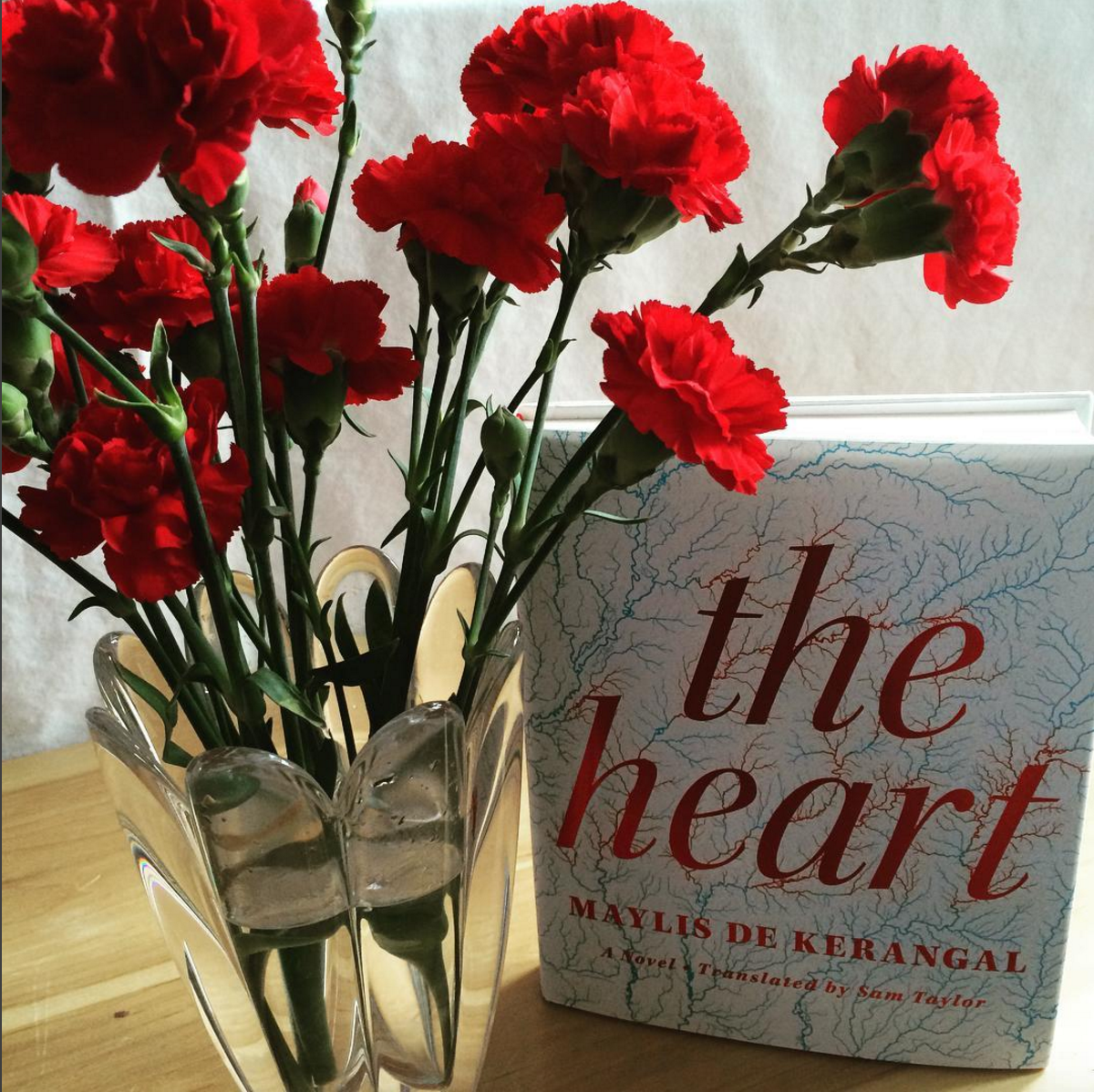
Recommend Reading: The Heart, by Maylis de Kerangal, translated by Sam Taylor

Screen Shot 2016-03-28 at 10.53.56 PMMaylis de Kerangal’s The Heart* is utterly brilliant, and deeply moving.

The novel takes place during a single day, beginning with the final hours of Simon Limbres, a teenager who is fatally injured in a car accident on the way home from an early-morning surfing excursion with friends. As the day unfolds, Ms. de Kerangal’s narrative spirals out to encompass all the people who are immediately affected by Simon’s death, from his separated parents, Marianne and Sean, his girlfriend Juliette, and the doctors, nurses, and specialists who care for Simon, and ultimately make sure that his death will give life to others. 

Ms. de Kerangal (and I should note here the excellent translation by Sam Taylor) is particularly gifted when evoking grief. When Marianne first gets the call that her son has been horribly injured, she captures perfectly that sense of fissure that tragedy generates: “Part of her life—a huge part, still warm, compact—was detaching itself from the present, toppling into the past, where it would fall away, disappear.” When Sean and Marianne sit stunned after Pierre Révol, the doctor in charge of the ICU, explains to them that while their son’s heart and lungs are working with the assistance of machines, he is fact brain dead:

How long does it take them before they accept death’s new regime? For now, there is no possible translation for what they are feeling; it strikes them down in a language that precedes language, from before words, before grammar, an unshareable language that is perhaps another name for pain. Impossible to extricate themselves from it, impossible to substitute another description for it, impossible to reconstruct it in another image. They are, at once, cut off from themselves and from the world that surrounds them.

Contrast this understanding of language with an earlier passage, in which the Pierre Révol

closes his eyes and smooths his skull, from the forehead to the occiput: suspected cerebral hemorrhage after a TBI, nonreactive coma, Glasgow 3—he uses this shared language, this language that banishes prolixity as time-wasting, forbids any notions of eloquence or seductiveness in articulation, abuses nouns, codes, and acronyms, this language where to talk is to describe or provide information about a body, to lay down the parameters of a situation in order that a diagnosis can be made, tests ordered, that the patient can be treated, saved: the power of concision. Révol absorbs each piece of information, then orders a body scan.

This is a novel about surfaces and depths, the complicated histories that underpin characters in the present moment. While Révol must deliver news every parent dreads in careful wording (the French procedure for organ donation is complicated, a delicate dance requiring perfect timing), he is not only a man of science and acronyms:

[ . . . ] and suddenly the idea crosses his mind of a constantly expanding universe, a place where cellular death will be the operator of metamorphoses, where death will shape the living like silence shapes noise, or darkness light, or the static the immobile—a fleeting intuition that persists on his retina even as his eyes refocus on the computer screen, that sixteen-inch rectangle irradiated with black light where the cessation of all mental activity in Simon Limbre’s brain is announced. Unable to connect the young man’s face with death, he feels his throat tighten. And yet he’s been working in this area for nearly thirty years. Thirty years.

All the characters are more than the role they play in Simon’s drama (parent, girlfriend, doctor, nurse, specialist). The nurse, Cordelia Owl, is waiting for a call from a lover, working on almost no sleep. We learn how Thomas Rémige, the hospital’s organ donor specialist, came to acquire a very rare songbird, and how he loves to sing. It is he who must sound out (again, in precisely couched language) Simon’s parents to see if they will allow the organ donation to proceed, and it is he Marianne and Sean charge with delivering their last message to their son, before his heart stops beating.

And then there’s Claire, the middle-aged woman in whose chest Simon’s heart will beat, a translator, in a beautiful bit of writerly playfulness, working on the Brontës’ early poems:

Sometimes she feels she is replacing the painful contractions of her sick organ with a fluid back-and-forth, between her native French and the English she has learned, and that this reciprocal movement is digging a crevice inside her, a new cavity. She’d had to learn a new language in order to understand her own, so she wondered if this new heart would allow her better understand herself: I’m clearing a space for you, my heart, I’m making you a home.

In French, the original title of this novel was Réparer les vivants (Mend the Living), which perhaps gives a better sense of the novel’s depths, its fascination not only with the meaning of death, but how life breaks and is refashioned in its wake, through love and medicine and language. Ms. Kerangal favors long sentences, in which subjects roll and reappear like the waves Simon loves so much, and which allow complex ideas and feelings room to breathe. Though very often, I felt my own breath taken away.

Highly recommended reading.

And please, please consider becoming a registered organ donor if you aren’t one already.

*I received a copy of this novel from the publisher for review purposes, which did not affect the content of my review.

Recommended Reading: Free Men, by Katy Simpson Smith

IMG_6219“Three men, none alike, asking to see each other, to be seen. Each pursuing a wild fancy that only this country, with all its contradictions, can permit”: these are the characters in Katy Simpson Smith’s Free Men*, her second novel after the acclaimed The Story of Land and Sea (my review here).

In Free Men, which is based on a 1788 historical incident, Ms. Smith returns to the American South in the eighteenth century, weaving a tale of three men—Bob, Cat, and Istillicha—who form an unlikely bond in the muggy woods of what is now Alabama. Bob has escaped from enslavement at a sugar plantation, though he’s left behind his wife and two daughters; Cat is a troubled white man from the Carolinas, an orphan whose behavior is as unpredicatable as his origins are inscrutable; Istillicha is a Muskogee (Creek) man who’s been forced out of his town’s leadership, and who now seeks revenge.

All three are pursued by Le Clerc, a Frenchman employed by the Muskogee as a tracker. Le Clerc, who is a sort of proto-anthropologist, is sent to punish them after report reaches his chief that the trio has murdered a trading party under the chief’s protection.

The unusual grouping fascinates Le Clerc, and he delays capturing them in order to better understand them, and the new country in which he finds himself, through observation:

There is a desperation about these men that suggests they do not reside on the rung of the criminal but, like all men here, are pursuing what might be called advancement, or hope. Their success or failure will, I can’t help but believe, be a reflection on the project of this country. And yet I am the only man on their trail, the only man who may behold their fates. This strikes me as peculiarly lonely.

Free Men brought to mind Joseph Boyden’s The Orenda, in that both novels hone in on a small set of diverse characters to explore major historical shifts. By telling the stories of Bob, Cat, Istillicha, Le Clerc, and Winna (Bob’s wife) in turn, Ms. Smith paints a compelling portrait of the varied experiences of people living in this small corner of North America. Each of the three pursued men narrates his personal history in the past tense, which shifts to the present when they describe their roles in the murders and their attempt to disappear westward.

This shift in tense highlights how what we may perceive as the concerns of a history long passed are still with us today: the fluidity and stubborn intractability of race (“Down here,” says Bob, “color all depends on who you know, what people you can call your kin.”), how people come together or split away to make a country, the meaning of freedom itself. And Le Clerc’s framing narration reminds us that histories we read in school are written by those who claim victory, the privileged few, even when they cannot encompass the whole of the tale.

The pacing of Free Men is slow, allowing readers to experience the detailed richness of Ms. Smith’s prose; I think the pacing also gives one the sense of accompanying Istillicha, Bob, and Cat on their long walk into the wilderness, overhearing their conversations. As Bob says early in the novel, “talking is how to cross over all the big holes in the world.” Free Men takes part in that long conversation, thoughtfully and with assured grace.

*I received a copy of this book from the publisher for review purposes, which did not affect the content of my review.

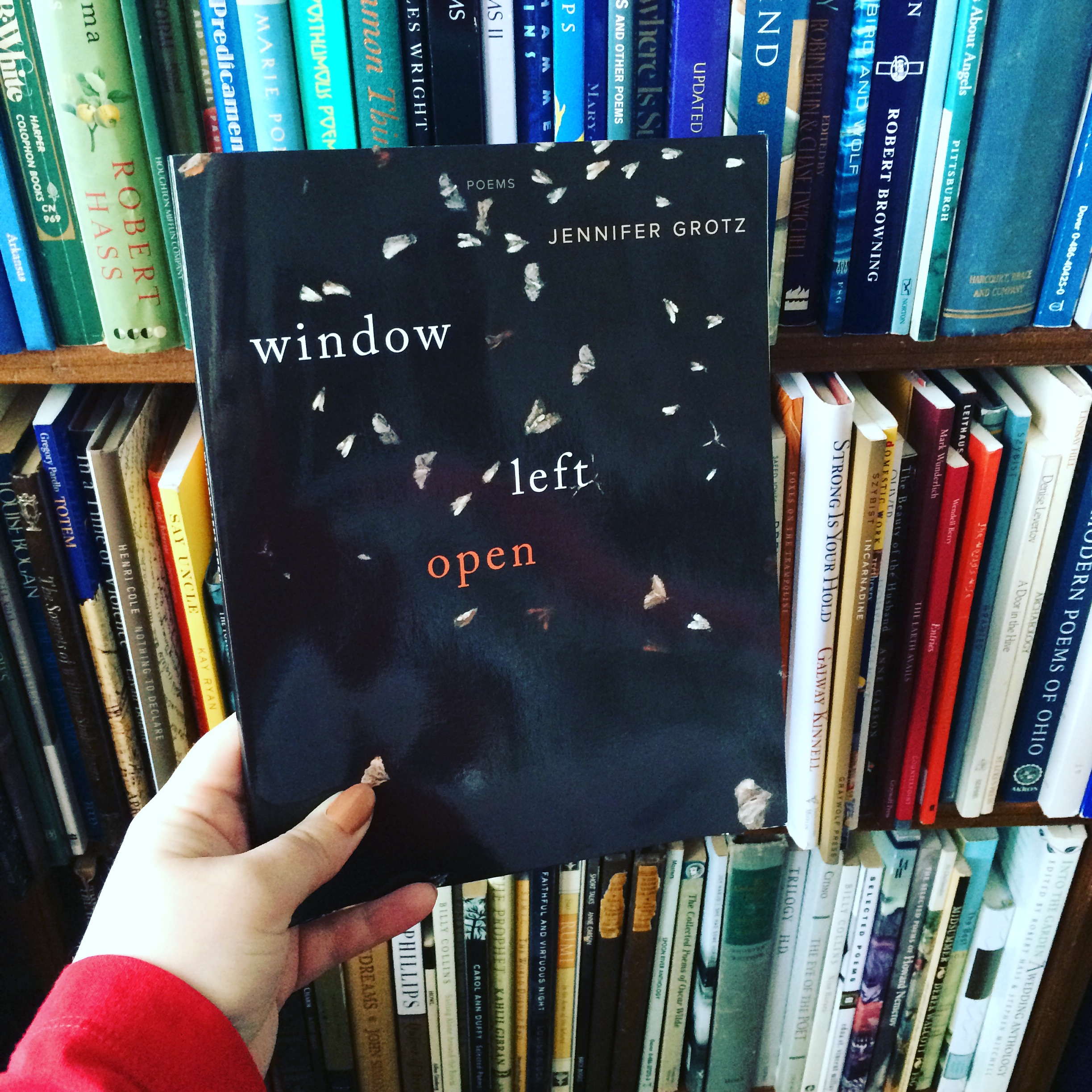
“the flesh inside them once white and wet as snow”: Jennifer Grotz’s “The Snow Apples,” from Window Left Open

IMG_6313I’ve been slowly reading Jennifer Grotz’s third poetry collection, Window Left Open*, over the last three weeks, a keenly enjoyable experience because her poems invite the very kind of attentiveness that they demonstrate.

In “The Snow Apples,” which you can read here, the speaker considers the “Dulled, shrunken, nicked by wind-flung branches, / squirrel-pawed and beak-pierced, infested / macabre baubles hanging” from the apple tree in February, grasping the branches when most apples  fell together in  “a syncopation” in autumn. These winter apples the speaker compares to “a hard knot / deep in the core, something winter / winnow me down to.” I like the clever use of “core” here, the way the line breaks so that for a a moment the reader can imagine that the “hard knot” is “something winter.” The sadness of these “indegestible” apples “piled beneath the earth’s pelt of snow” is a disquieting, vivid metaphor for the speaker’s sense of disturbance in the long gray months.

Engagement with the natural world runs through Window Left Open, in which you’ll find (in just the first section) a forest with an “unending / staircase of roots worn silver like the soldered iron / that holds stained glass together,” snowflakes “denticulate as dandelion greens,” a display of living, giant cockroaches alongside pinned butterflies, rain “stately at first as punctuation,” a foreign city with “a gray, nearsighted river / one that massages the eyes, focuses / the sweeping birds that skim the water’s surface.”

The second section of the book finds the poet meditating on her time at a French monastery. There’s a poem about a piano in the Alps, one about the impossibility of glimpsing the entirety of a mountain from a window, another about a peacock “as strange as Mount Rushmore.” One of my favorites is called “Apricots,” which will make you see the fruit in a whole new way (“And the ripe ones, which felt like biting into / my own flesh, slightly carnivorous.”).

It’s tempting to go on quoting the memorable images in these poems; it’s harder to get at the sense of the speaker observing not only her world, but herself, and finding unexpected loveliness and unexpected fear, often at the same time. In “Poppies,” Ms. Grotz writes,  “Love is letting the world be half-tamed.” If you look closely enough at anything—an animal, a window, even a word—you’ll find a distancing peculiarity, and Ms. Grotz translates that feeling in these poems. She has a gift for making the familiar strange, and making the strange familiar. I highly recommend Window Left Open.

Further reading:

Ta-Nehisi Coates on “Poppies”

“Self-Portrait on the Street of an Unnamed Foreign City”

*I received a copy of this book from the publisher for review purposes, which did not affect the content of my review.