“something brighter than pity for the wingless ones”: Derek Walcott’s “The Season of Phantasmal Peace”

Photo by Rowan Heuval via Unsplash

Photo by Rowan Heuval via Unsplash

Recently I read Derek Walcott’s 1984 collection Midsummer (which I highly recommend–it’s heavy and heady with summer and heat, like a ripe peach). This week, when it’s finally starting to feel like autumn around here (I nominate 2015 for Boston’s strangest year of weather award), I’m reading his poem “The Season of Phantasmal Peace,” which you can find here. 

This poem is an interesting contrast with last week’s featured poem, which was “Light” by C. K. Williams.  It’s a pairing that makes me miss teaching; I’d love to discuss with students how the two poets approach light and darkness, expand on a small moment, use imagery and form. Ah well.

P.S. True story/shameless name-dropping: Derek Walcott is the only Nobel Prize winner I’ve met. I had the privilege of sitting in on one of his playwriting courses, and once he held the door to the English department open for me.

On Margaret Atwood’s The Heart Goes Last and Milton

IMG_3829In Margaret Atwood’s The Heart Goes Last*, Stan and Charmaine live in the Northeast in the years after a terrible economic collapse that has affected that part of the country more than any other. They are eking out a meager living, sleeping in their car, avoiding roaming gangs, and looking desperately for work.

Increasingly despondent about their chances of raising their standard of living (they cannot afford enough gas to get them to a region with better economic prospects), Charmaine and Stan apply to and are accepted by the Positron project. Positron is a prison located in its sister town, Consilience. Every month, half the citizens of Consilience go about ordinary lives—ordering furnishing for their houses, going to work, enjoying the movies and music of the 1950s; the next month, they become inmates in Positron prison, where they attend to jobs like knitting and feeding the town’s chicken supply. There is zero unemployment in Consilience, almost no crime, and no hunger.

But of course things are not what they seem, and soon Stan and Charmaine are sucked into a vortex of secrets and plots and come much too close to learning the truth behind the Positron system (which seems like a thinly-veiled critique of the company town).

In many ways, The Heart Goes Last is your standard dystopian thriller:

  • Evil institution interested in exploiting the populace
  • Characters forced by circumstance to join evil institution
  • Social breakdown and collapse of economic systems
  • Power of human relationships fundamental to resolution of tale
  • High tension, cascading plot revelations, and an unsettling denouement

But The Heart Goes Last also offers a heaping portion of satire; this is the genre taken to its limit, complete with sexbots, brain-wiping, sinister knitting, and more Elvises than have ever appeared in a novel (to my knowledge). And it’s Margaret Atwood, so throw in plenty of sex and gender politics as well.

Until I realized it was satire, I found the novel hard to like; neither Stan nor Charmaine, nor any of the supporting characters, are particularly likable; there’s no Offred to cheer for (well, maybe one minor character). I don’t require likable characters to enjoy a book, but it’s harder to stick with a novel when you don’t much care whether such-and-such lives or dies.

And it’s not just satire; it’s a riff on Milton’s Paradise Lost. The poem is mentioned explicitly once, and the novel’s last lines are lifted from the end of Milton’s epic in an amusing fashion.

[If you want a quick refresher on Paradise Lost, I’ve got posts for you: Books 1&2, Books 3&4, Books 5&6, Books 7&8, Books 9&10, Books 11&12.]

Milton’s purpose in Paradise Lost is to “justify the ways of God to man.” A tall order, but Milton’s like that. Essentially, his epic poem is an attempt to explain why God would create humans only to watch us sin and suffer; put another way, the poem tries to solve the problem of evil. But it’s more than that; it’s about poetry itself, marriage, psychology, history, freedom, education, the environment (Milton might call it stewardship),and choice. (And more.)

The Heart Goes Last is rather like Paradise Lost set in the dystopian future, without an omnipotent God running the show.

On one level, paradise is already lost, thanks to the economic collapse that’s sent Stan and Charmaine into the arms of Positron.

Consilience, the supposed paradise of full employment, no hunger, and perfect happy homes (and, Stan notices eventually, no gay citizens) is of course a prison too, a prison of constant surveillance; Stan and Charmaine have traded their freedom for security, and that’s a bad choice. In Milton’s poem, Eve and Adam have security–all their needs are provided for, though, like Stan and Charmaine, they are expected to work. Crucially, Eve trades that security for freedom–choosing to eat the fruit of the tree of the knowledge of good and evil. And for Milton, that’s the bad choice, the wrong one that leads to humanity’s fallen history.

But in each case, it’s the woman’s choice, and her husband, for good or ill, goes along with it; the ebb and flow of partners’ satisfaction and interests in the marriage is a key theme in The Heart Goes Last, just as marriage-making is a thread that runs through Paradise Lost.

Then there’s temptation. One of Charmaine’s most interesting characteristics is her susceptibility to suggestion, a trait she shares with Eve, though Charmaine might be just a touch more self-aware. Milton’s God contends that he created humanity “sufficient to have stood, though free to fall,” and that’s one way of describing Stan and Charmaine, both in their choice to sign the Consilience contract, and in their personal sexual choices.

There are several other parallels (I think I see Ms. Atwood grappling with Milton’s views on women, for instance), but what struck me as I thought about the two texts is how Ms. Atwood’s book brought something about Paradise Lost into focus for me: Milton’s version of Eden is a surveillance state. Eve and Adam are watched constantly–by the reader and the speaker, in some sense, but also by Satan, the angels, and God (Father and Son). How free are you if every choice you make is monitored, and occasionally someone is sent by to educate you about your choices?

Putting these books in conversation is a fascinating exercise, and now I’m eager to read more of Ms. Atwood’s work with Milton in mind. Meanwhile, for those of you who aren’t terribly excited at the idea of reading a poem that’s thousands of lines long: give The Heart Goes Last a try if you like Margaret Atwood, satire, or creepy books about marriage.

*I received a copy of this book from the publisher for review consideration, which did not affect the content of my review.

Recommended Reading: Sanford Friedman’s Conversations with Beethoven

Conversations on the BeachFor someone who loves epistolary novels, as I do, Sanford Friedman’s posthumously published Conversations with Beethoven* is a treat. The novel is a record of Beethoven’s last year of life, from the time of his beloved nephew Karl’s suicide attempt to his own fatal illness. In his later years, when he was deaf, the great composer’s friends, relatives, admirers, and doctors communicated with him by writing their replies when they conversed.

Since Beethoven spoke aloud, except when he did not wish to be overheard (or when writing letters) Conversations with Beethoven is a book in which much takes place that is not written on the page; readers must, for the most part, imagine Beethoven’s responses to his interlocutors. It is to Friedman’s credit that these unwritten responses are entirely vivid, thanks to the reactions of Beethoven’s conversation partners (who are distinguished by the way they address the composer; there’s a handy guide in the front matter). Context and tone are the backbone of this book and make it utterly fascinating (and nearly impossible to quote here).

Beethoven is irascible above all, particular, ill, vehement, passionate, impetuous, stubborn, thoughtful. If you are expecting to read a great deal about his music and his inspiration, you’d best look to nonfiction about his work. But if you want to become immersed in Beethoven’s life, his everyday anxieties about money and illness, his small triumphs in overcoming his prejudices, his unexpected kindness toward servants and younger musicians—if you are looking for the man behind the music, Conversations with Beethoven will delight.

*I received a copy of this book from the publisher for review purposes, which did not affect the content of my review.

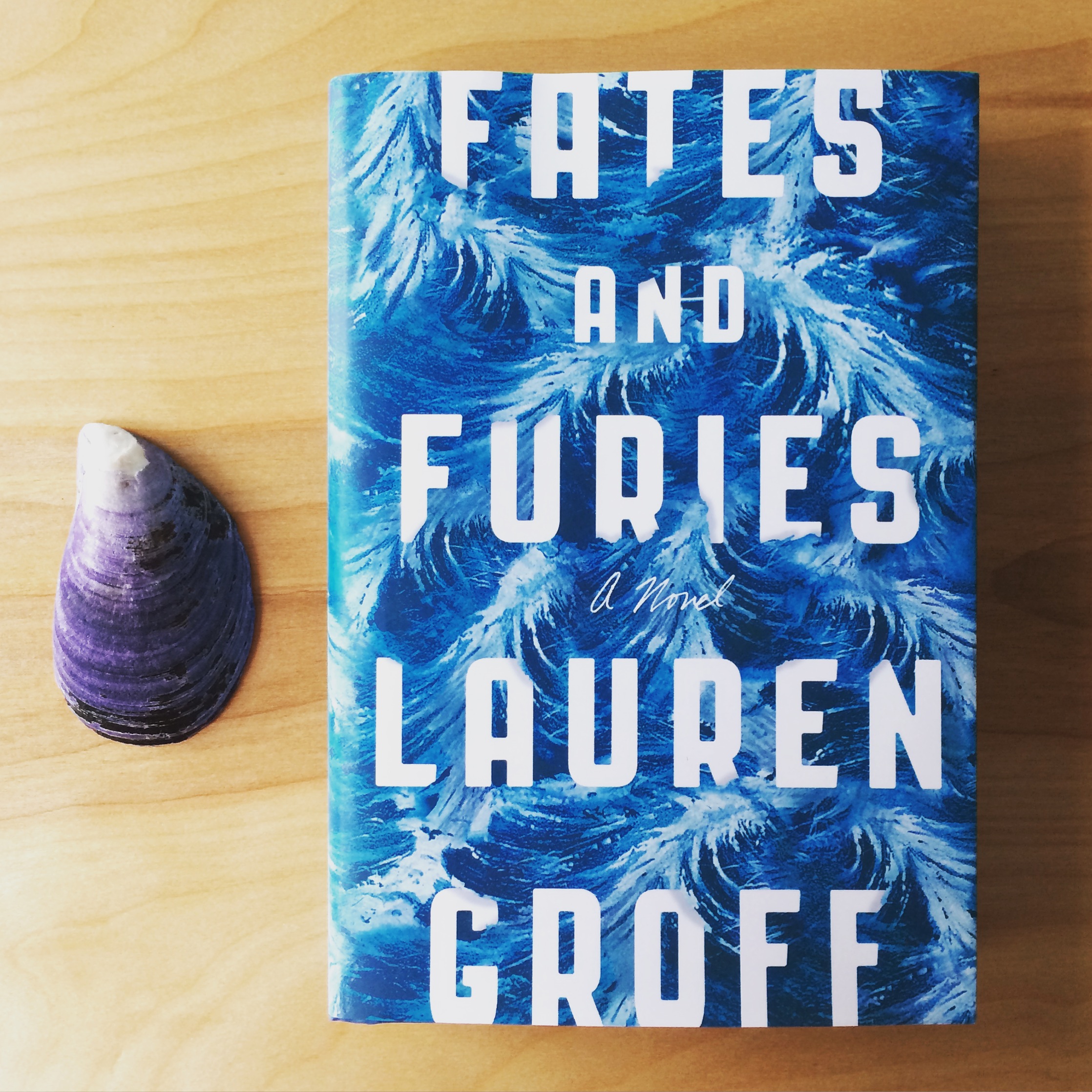
Recommended Reading: Fates and Furies, by Lauren Groff

IMG_4495During a seminar on marriage in nineteenth-century literature, I remember a friend saying that reading about awful marriages (I think we were reading McTeague at the time) made her more protective of her own (she also went to make a thoughtful observation about the text at hand, but it’s the first comment that stayed with me).

I felt the same way reading Lauren Groff’s highly anticipated novel Fates and Furies* (out today from Riverhead), though the marriage in question is not awful in the way the McTeagues’ is, I’m happy to report.

In fact, to all outward appearances, Lotto and Mathilde seem charmed. Beautiful, tall, blessed with good taste and a circle of interesting friends, the couple muddles through a decade of frugal living in Manhattan after they marry in their senior year in college. Then things start to click for them; Lotto becomes a hit playwright, and Mathilde supports him in his burgeoning career over the second decade of their marriage.

Up to this point, the narrative follows Lotto, and we see events from his perspective. His background is fascinating, lively, tragic; a lesser novelist would have been content just to write this character.

But not Lauren Groff. At the pinnacle of Lotto’s success, the perspective of the novel shifts, and suddenly everything we’ve read takes on new layers of meaning when we see it through Mathilde’s eyes. Fates and Furies is a novel not only about a marriage, but about perception: how other characters perceive Lotto and Mathilde, how they perceive each other, and how we, the readers, perceive them. Though Lotto and Mathilde’s marriage begins in 1991, the question of perception is compellingly contemporary, especially given all the think-pieces out there about how we curate our online presence. How much of our lives do we curate for perception’s sake, and how much is out of our control?

I hesitate to use the word “fierce,” because it’s overused (I’m guilty too), but that’s what Ms. Groff’s writing is. It’s evocative, unexpected, and often funny. For example:

He could die right now of happiness. In a vision, he saw the sea rising up to suck them in, tonguing off their flesh and rolling their bones over its coral molars in the deep. If she was beside him, he thought, he would float out singing.

Well, he was young, twenty-two, and they had been married that morning in secret. Extravagance, under the circumstances, could be forgiven. (3)

I admire a writer who has the guts to start a book with a sex scene, and the one that opens Fates and Furies is a brilliant set piece of characterization. It sets the tone for the rest of the novel. Fates and Furies is fearless and engrossing. Highly recommended.

If you read and love Fates and Furies, try these books next:

The Wife, by Meg Wolitzer

The World’s Wife, by Carol Ann Duffy

So, Dear Readers, what are your favorite books about marriage?

*I received a copy of this book from the publisher for review consideration, which did not affect the content of my review.

Recommended Reading: Kitchens of the Great Midwest, by J. Ryan Stradal

When I picked up J. Ryan Stradal’s debut novel, Kitchens of the Great Midwest*, I was expecting a straightforward coming-of-age novel about a girl who becomes a chef, with a few mouthwatering recipes and the strong potential for heartwarming-ness. A palate cleanser between heavier reads, if you will. IMG_4360

This book is much, much better than the one I imagined.

Near the end of the novel, one character tells us that “stressed vines often lead to wonderful wines” (259). That could be the metaphor for the life of Eva Thorvald, the novel’s main character, who we catch in glimpses from birth until her late twenties. She has a “once-in-a-generation palate” and becomes a star chef (which is perhaps not surprising since her parents are a cook and a sommelier) but not before she endures and embraces many challenges.

Her story unfolds through chapters told from different characters’ perspectives (only one from her own), almost like linked short stories. These characters include her hilariously foul-mouthed cousin Braque, a high-school boyfriend, and a disgruntled Sunday-supper participant, among others.

The novel is often very funny, but it handles with grace and careful consideration difficult topics like death, job loss, divorce, bullying, and unplanned pregnancy. The result is a harmonious melding of sweet and bitter, with a beautifully constructed ending.

If you like local food (or, conversely, critiques of the pretentiousness of foodie culture), novels with recipes, the Midwest (and please, let’s have more novels about the Midwest!), books about the underdog, books about people who aren’t rich, books that will make your mouth water, or all of the above, you’re going to want to sample this book, and then devour the whole thing.

Sincere but not sappy, generous but not naive, Kitchens of the Great Midwest will have you calling to memory the best meals you’ve ever had, and calling the people you love best to say hello.

Two questions for you, Dear Readers:

  1. If you had to define an era of your life with a recipe, which would come to mind first?
  2. If you’ve read Kitchens of the Great Midwest, which other novels did it remind you of? I have two very different candidates: Making Nice by Matt Sumell (review here) and Like Water for Chocolate by Laura Esquivel.

*I received a copy of this book from the publisher for review consideration, which did not affect the content of my review.
Recommended Reading: Simeon Berry’s Ampersand Revisited

IMG_4494Simeon Berry’s Ampersand Revisited* is a curious, revelatory collection, confessional, lyric, and highly detailed.

[Full disclosure: Mr. Berry is the friend of a friend.]

The book is a bildungsroman in prose-poem form, heavily infused with philosophy, and it’s completely fascinating. Dense and carefully wrought, these three long poems explore the speaker’s questioning about almost everything, including family, sex, communication, and language.

It’s completely fascinating, and I say that as someone who is  not particularly enamored of the bildungsroman, especially the white male bildungsroman (I have, on this site, admitted to loathing The Catcher in the Rye). But in this book the speaker is focused not only on himself, but on his family, caring deeply about what they make of the world, though he’s not always sure what to do with the information at his disposal.

It’s an intense reading experience, and one that I think I’ll need to repeat to get the most out the collection. If you’re a fan of Anne Carson’s Glass, Irony, and God or Lyn Hejinian’s experimental My Life (which I haven’t read since college, but was viscerally brought to mind here), I recommend reading Ampersand Revisited.

Ampersand Revisited is the winner of the 2013 National Poetry Series.  Monograph, which is forthcoming this month, won the 2014 National Poetry Series. You can read the first few pages of Ampersand Revisited here.

* I received a copy of this book from the author for review purposes, which did not affect the content of my review.

Recommended Reading: The Beautiful Bureaucrat, by Helen Philips

IMG_4493Franz Kafka meets Charlotte Perkins Gilman meets George Orwell in Helen Phillips’s short novel The Beautiful Bureaucrat*, a psychological thriller and modern fable that I think would be tough to put down (I wouldn’t know, since I snapped it up in two hours one night).

Josephine and her husband, Joseph, have moved to the city after months of unemployment in a last-ditch effort to find jobs. Josephine is hired by a faceless person (I mean that pretty literally) to input endless numbers in a database called, descriptively, “the Database.” Her office is one of hundreds in a huge building where keyboards click constantly, colleagues are either odd, unhelpful, or invisible, and the vending machine hasn’t been used in decades. And then there are the walls in her office: pinkish, marked with the finger-smudges of previous occupants.

The unpleasantness of Josephine’s job is compounded by the dilapidated series of subterranean apartments she and Joseph find themselves subletting in their impecunious state. And then Joseph doesn’t come home one night, refusing to give an explanation the next day, and Josephine falls into a state of nearly unceasing dread, until she realizes that in order to save the man she loves, she must take matters into her own hands.

In just under 200 pages, Helen Philips crafts a tightly-woven story about love and necessity with perfect pacing, incongruously witty wordplay, and deft characterization. Recommended.


And, Dear Readers, here’s a new game I’m going to play occasionally:

Carolyn Tells People with the Film Rights to This Book What to Do :

Who should direct the film adaptation: Spike Jonze

Who should play Josephine: Michelle Williams (in the mode of Blue Valentine and Take This Waltz)

Who should do the music: David Arnold & Michael Price


*I received a copy of this book from the publisher for review consideration, which did not affect the content of my review.

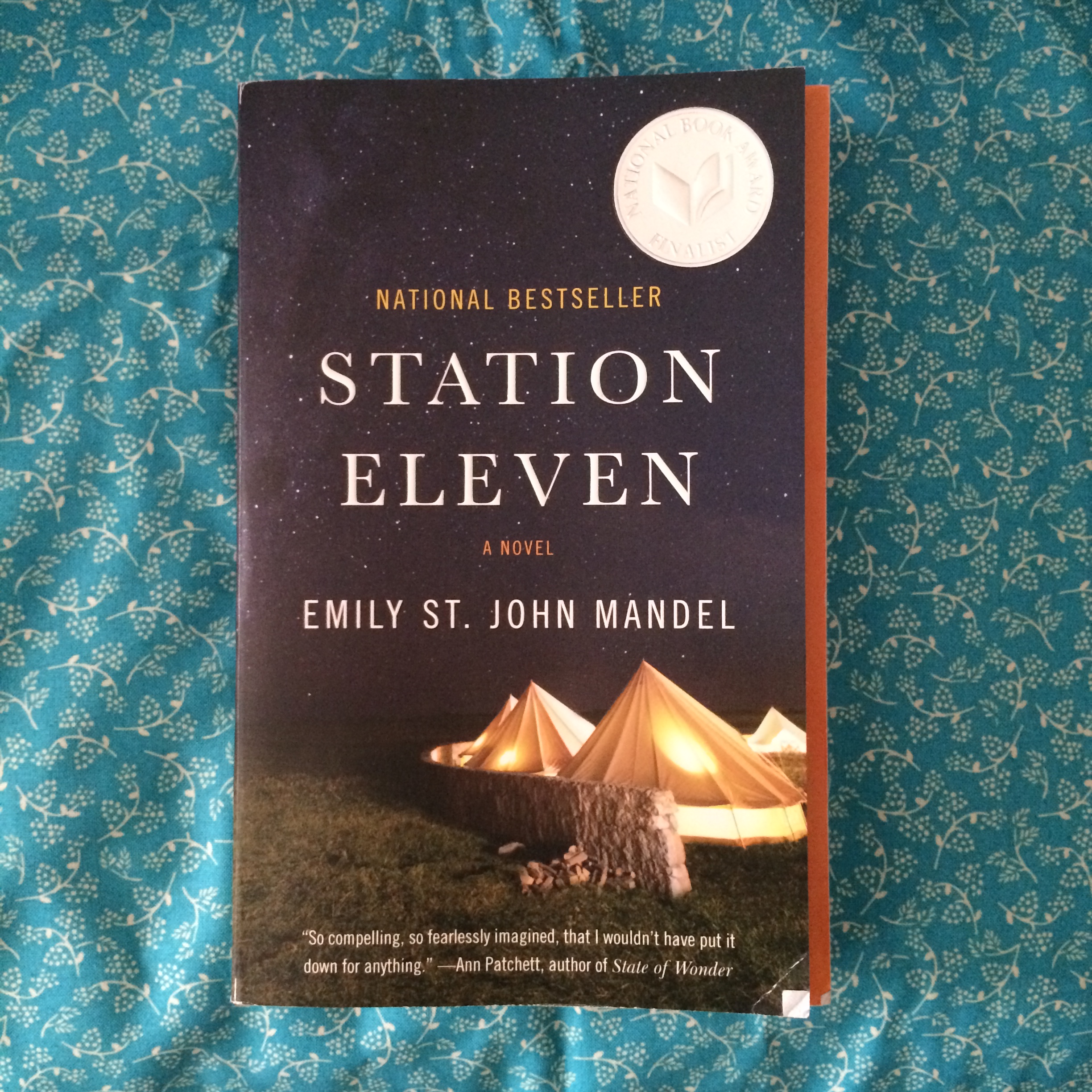
Recommended Reading: Emily St. John Mandel’s Station Eleven

Driving home from a wedding this past weekend, we noted just how green everything looked. The trees were lush with foliage, their own and that of the vines creeping around their trunks and heading for the guardrails. I was struck how quickly the land would take over if we disappeared from the planet. If those vines went unchecked  for a year or two, or a decade, how much of the highway would simply disappear?

That’s the kind of world Kirsten Raymonde inhabits in Emily St. John Mandel’s Station Eleven*, a novel that marries literary fiction, speculative fiction, and Shakespeare. It’s absolutely marvelous.

It’s been 20 years since a virulent form of flu killed more than 90% of the Earth’s population in a IMG_4318matter of weeks. At 28, Kirsten vaguely remembers the world as it once was, when you could open a cold box to retrieve food, when an infected scrape wasn’t a death sentence, when you could flick a switch and lights turned on.

Now Kirsten walks the road with the caravan of the Traveling Symphony, a group of actors and musicians moving from place to place along the shore of Lake Michigan performing Shakespeare and music to varying receptions. The motto of the Traveling Symphony is “survival is insufficient”—drawn from a Star Trek: Voyager episode (written by Ronald D. Moore, of BSG and Outlander fame)—which reflects their devotion to keeping art alive even when fidning food and shelter is very difficult. When they encounter a disturbing religious fanatic at the settlement of St. Deborah by the Water, the Symphony is forced to make difficult choices in order to survive.

As literary speculative fiction, Station Eleven is top-notch, in a category with Kazuo Ishiguro’s Never Let Me Go in terms of sheer beautiful writing, and surpassing even McCarthy’s The Road in its vision of what a post-government, post-technology world looks like for survivors. Through Kristen, readers glimpse the traumas of the immediate period of collapse that inform the customs and practices of the new world, while through another character we see what it was like to live through the first months of the plague with a group of survivors who slowly realize that the National Guard and the Red Cross aren’t coming to save anyone.

Tracking the survivors in the post-collapse world is only part of Station Eleven‘s brilliant structure. The book opens on the last day of the old world, when 8-year-old Kirsten is performing in King Lear with Arthur Leander, one of the best actors of his generation. Arthur is the fixed point of the novel; the other major characters are all somehow connected to him, and as we follow Kirsten’s adventures, we’re also learning the tale of Arthur’s life and death in parallel.

The balance among the narratives is simply exquisite. And so is the tone, in its waves of fragility and strength, darkness and hope, loss and recovery. In that, Station Eleven resembles not a tragedy, but a Shakespearean romance. Kirsten is a Miranda on an island without a shore, making the brave new world as she goes.

This is a gorgeous, splendid novel. Highly recommended.

*I received a copy of this book from the publisher for review purposes, which did not affect the content of my review.

Recommended Reading: The Girl Who Slept with God, by Val Brelinski

IMG_4361Val Brelinski’s The Girl Who Slept with God* reminded me of another debut novel, Jeffrey Eugenides’s The Virgin Suicides, from the provocative title to the ’70s setting to the interest in religious girls’ isolation.

Thirteen-year-old Jory is the middle of three sisters (Grace is older, Frances significantly younger) in a deeply devout evangelical family living in Idaho. The girls attend a Christian academy; their mother is a homemaker and their father teaches astronomy at a nearby college. Jory is a bit rebellious, but Grace is a model of devotion and hard work; she wants to become a missionary, and is thrilled when she’s sent to Mexico for that purpose.

But then she returns pregnant, and the family is lost in turmoil since Grace insists the child has been given to her by God. Eventually the girls’ father decides to exile Jory and Grace to a house outside their small town. Grace will take correspondence classes and Jory will attend—horror!—the public school.

Over the next few months, the sisters contend with their isolation (which for Jory is simultaneously a social expansion), their faith, and each other as Jory tries to find her footing in the secular world and its characters—the kids at school, the mysterious driver of the ice cream truck, and their cantankerous but caring next-door neighbor, while Grace tries to convince their father to draw them back into the family orbit.

Unlike The Virgin Suicides, which was narrated in the unusual first-person plural, this novel take the third-person perspective, but it’s so closely in tune with Jory that I sometimes forgot, over the couple weeks I read it, that she wasn’t the narrator. Ms. Brelinski has a knack for capturing the confusing sensations and tumultuous thoughts of adolescent girlhood in descriptive passages like these:

Jory was appalled to see a teardrop splat onto her writing. The blue ink bled outward and obscured what had been written there. The earth was now a bleary, unknown age, although the universe’s age remained clear. Her small world had been wiped out while the rest of the cosmos went on unchanged—a tiny lesser planet washed away in a small, second flood, and barely even noticed in its passing. (277)

The Girl Who Slept with God is an absorbing, character-driven read. Recommended.

*I received a copy of this book from the publisher for review consideration, which did not affect the content of my review.

Summer Reading: Pairs Event

In which I pair three books read this summer with three books read before this summer that have similar themes but are in some way opposite. It’s a scientific process, people.


IMG_4256Summer Reading: The Gracekeepers,* by Kirsty Logan, takes place in a watery future world (I haven’t seen Waterworld, so I can’t tell you how it compares. Sorry about that). All land is inhabited by landlockers, who jealously guard their island holdings; some of them have returned to earth worship. Everyone else lives at sea. These damplings include scavengers, revivalists who live on converted cruise ships (no pun intended there), messengers, and the crew of the Excalibur, a tiny floating circus. North is the circus’s bear girl, who, like her parents before her, dances with a bear to entertain landlockers in the hope of earning dinner. One night a storm sends the circus crew into the path of Callanish, a gracekeeper—a person in charge of arranging damplings’ burials at sea. North and Callanish exchange secrets and part ways, but they can’t stop wondering about each other, and about the possibility that there’s a way to be of both the land and the sea.

The main characters aren’t as fleshed out as I would have liked, but The Gracekeepers is worth picking up for the atmosphere, the world-building, and the supporting characters.

photo (107)

Pair it with: Emmi Itäranta’s Memory of Water,* another novel set in the future after some kind of environmental disaster—though this time, one that causes a scarcity of water. Memory of Water also features a pair of young women trying to make the best of a dangerous existence while hiding secrets.

IMG_3428Summer Reading: Bill Bryson’s In a Sunburned Country is a hilarious tour through Australia. He talks to almost invariably friendly Australians, gets quite drunk and draws naughty cartoons on a napkin, lists the continent’s unrelentingly deadly wildlife, and doesn’t see too many kangaroos, among other exploits. I can’t say the book makes me want to visit Australia—though Mr. Bryson enthusiastically hopes that you will—but it definitely made me want to visit with Bill Bryson. The book’s one drawback: Mr. Bryson’s failure to write significantly or at any length about Australia’s Aboriginal population; as far as I could tell, he did not speak with a single Aboriginal person.

Still, if you’re one of the people who’s just discovering Mr. Bryson thanks to the press surrounding the upcoming movie version of A Walk in the Woods (which I highly recommend), I recommend reading this one.

photo 3Pair it with: A very different take on Australia, by an Australian. Christos Tsiolkas’s Barracuda* is a book with teeth, and a lot more anger than laughs. As I wrote in my review, “Danny is an teenage Australian swimmer who dreams of making it to the Olympics; thankfully, there’s no swelling inspirational music in this tightly-plotted, intricately structured novel.”

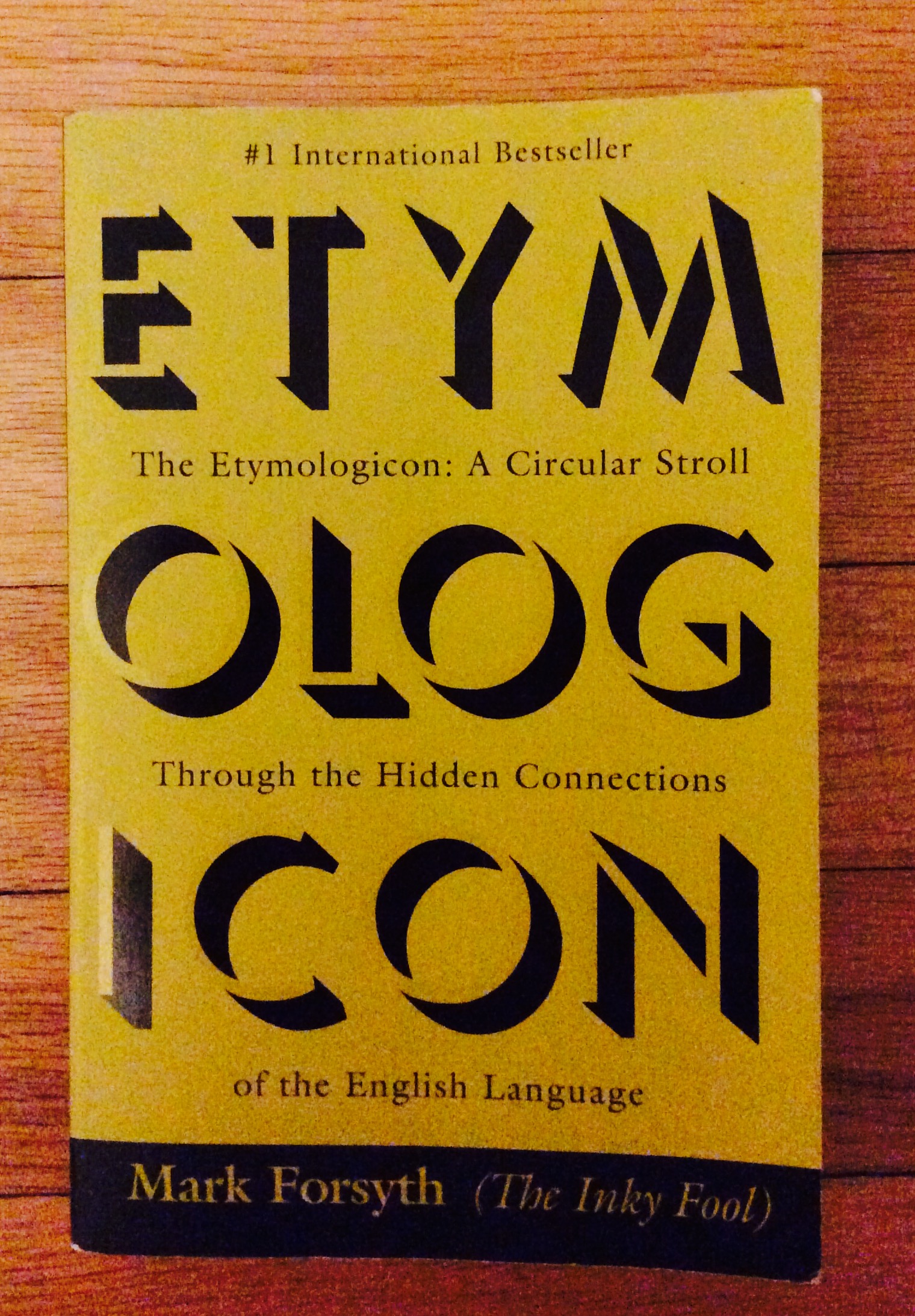
FullSizeRenderSummer Reading: Mark Forsyth’s The Etymologicon is a circular perambulation through the odd origins of English words. You could pick up the book, flip to any page, and have yourself a laugh reading any entry, but each entry connects in some way to its predecessor and successor, so I think it’d be more entertaining to read it start to (sort of) finish. Mr. Forsyth is the man behind the popular blog The Inky Fool, and The Etymologicon draws heavily from the blog’s content. Though it’s erudite and full of arcane trivia (Starbucks gets its name from the Pequod‘s first mate, whose name was drawn from a prominent whaling family, but the name itself came from a Viking word for an English stream. Really.), but also surprisingly snarky and scatological. Highly entertaining. But what else would you expect from an author whose biography begins, “Mark Forysth is a writer, journalist, proofreader, ghostwriter, and pedant”?

photo (34)Pair it with:  Erin Moore’s That’s Not English,* which I called “a beach read for nerds” in my review. Like The Etymologicon, it’s a funny read about words, but it’s less about etymology than it is about culture.

What bookish pairings have you found this summer, Dear Readers?

*I received a copy of these books from the publishers for review consideration, which did not affect the content of my reviews.