An Interview with Lindsay Hill, Author of Sea of Hooks

Yesterday I reviewed Sea of Hooks, Lindsay Hill’s first novel, which was published in 2013 by McPherson & Company. Mr. Hill graciously agreed to be interviewed via email.

Lindsay Hill Photo by Adrian L. Smith

Lindsay Hill
Photo by Adrian L. Smith

How and why did you begin to write Sea of Hooks?

LH: The book was begun on a trip to Bhutan in 1994.  I was traveling with the poet and anthropologist, Nathaniel Tarn, and carrying a notebook.  My intention had been to make a limited written record of the trip and to record any thoughts or lines (for possible poems) that came to mind.  During the course of our travels, we learned of the Terma Tradition within the Nyingma school of Buddhism.  This tradition concerns the scattering of Terma (spiritual treasures) in earth, water, air and mind, for future discovery, in proper sequence, by treasure–finders called Terton.  I was spellbound by the beauty of this tradition and by the idea that such treasures lay hidden among us, waiting to be discovered.  As we traveled through the stunning Himalayan landscape, I started to write the outlines of a story. From the beginning, the themes were going to include the emergence of compassion and the spiritual transformation of a traveler.  Even so, having written only poetry, I had little idea of how to proceed.

Did you approach writing Sea of Hooks, your first novel, differently from the way you approach writing poetry?

LH: The trip to Bhutan, completely inadvertently, began a new phase in my life as a writer.  I began to carry, and fill, small notebooks with thoughts as they occurred to me.  This was very different from sitting down to write, or intending to compose, a finished poem.  I found that I had embarked on the composition of a continuous open text.   Very soon, I began titling the individual entries and letting the threads find their way.  Perhaps because I am severely dyslexic, I subvocalize everything I read.  Also, I am only able to read very slowly.  This combination of conditions led me, very early on, to a passion for reading poetry.  Every concussive syllable, every shifting rhythm, every lyric leap, enthralled me.  At Bard, where I was lucky enough to go to school, I started with Middle English (The Pearl Poet and Chaucer), and finally arrived at the 20th century in my senior year.  In essence, I apprenticed my ear to the arc of great poets in English, and a bit of that rich tradition couldn’t help but rub off!  So, in writing anything, I find myself attentive to sound and rhythm.  Also, I like the difficulty and the challenging associative leaps that often occupy the best poems.  Combine these preferences with my short attention span, and you end up with a novel of titled fragments that carry, at least to some degree, the stylistic characteristics of poems.  The difference lay in the particular demands that the novel, as an artistic form, places on any writer.  The necessities of finding and sustaining “voice” over an extended text; the demands of constructing a compelling plot; the challenges of developing plausible characters; all of these were extremely daunting to me, and any success that I had took hundreds upon hundreds of pages of missteps.  Ultimately, what I hope I was able to accomplish with Sea of Hooks, is a genre–spanning work that employs poetic methods, and architectures, to strengthen narrative structures.  Certainly, this is nothing new or unique, but for me, it was an entirely marvelous adventure of learning how a story could become the wetting stone of lyric language.

I understand that you composed Sea of Hooks over a period of more than twenty years. When you began the work, did you think or know that so much time would pass before it would be finished?

LH: I had no idea.  Originally, I intended to write a simple story.  Eventually, I had to be willing to be completely, even relentlessly, patient as complexity intervened.  Especially in the last eight years of its composition, I was working every day on the novel.  It was a completely joyful enterprise, and I was honestly unconcerned with when it would wrap itself up.  Many times, I truly doubted that it would ever “come together.”  By the time I started editing, I had over 5,000 titled sections from which to select and with which to assemble a coherent book.  The editing took three years and, in the final year, I did no other work.  Basically, four out of every five “sections” were thrown out.  Clearly, I’m not a very efficient novelist!

One thread in the narrative finds Christopher exploring Bhutan and Buddhism. How did you come to this choice?

As mentioned above, this thread originated with my trip to The Himalayas and with my learning about the Terma Tradition.  Christopher, the book’s protagonist, is following an inquiry into how a shattered world can be reassembled.  Everything is at stake for him in this.  Philosophically, Buddhism has much to say about the topics that preoccupy his thinking: the nature of the construction of the self, the puzzle of desire and suffering, the meaning of emptiness and liberation.  One of the book’s central images, that of a mother running armless beside a river where her child is drowning, came from Patrul Rinpoche’s The Words of My Perfect Teacher, and is among the most powerful I’ve ever encountered.  In Rinpoche’s teachings, this image represents a paradigm of compassion: not simply as empathy, but as the practice of staying steadily with suffering that cannot be fixed.  Through the lens of Christopher’s experience, this understanding is key.  So, Buddhism had an extremely generative affect on my thinking and writing and, above all, on my ability to perceive, from the heart, the possibilities that suffering offered for transformation in Christopher’s life.  Of course, Sea of Hooks is a story, and in no way presumes to be a scholarly explication of Buddhism or to reveal the depths of its great traditions.

Which writers do you read while writing? Do your reading choices change depending on the writing project at hand?

LH: I still, primarily, read poetry.  While writing Sea of Hooks,  I spent time with a wide range of work, from Donne’s Satires (...as streams are, power is...) to Gerard Manley Hopkins (…like shining from shook foil…), to the works of contemporaries like Tarn (The Beautiful Contradictions, Ins and Outs of the Forest Rivers), and Palmer (Six Hermetic Songs, Thread), and many younger poets as well.  Also, I read a good deal of philosophy, from the Pre–Socratics to Wittgenstein.  Mostly, I like to read work that poses interesting questions and that approaches them in innovative ways.  I like to read work that takes risks.  This doesn’t really change depending on what I’m writing but I do try to avoid work that may offer “solutions,” to questions I’m wrestling with in my own writing.  I like to stay with difficulties until they reveal their own underpinnings; their own “ways out.

What kinds of writing projects are you planning next?

LH: I strongly believe that a writing project deserves to have authentic urgency behind it: something at risk for the writer in writing it, and for the reader in reading it.  At least for me, that urgency, that necessity, isn’t something that can be “put” into a work.  It’s not an “ingredient.”  It’s the ground from which the work grows, and around which it organizes itself, as it takes shape, and strives to inhabit a living space.  Sometimes you just have to wait for that urgency to arrive.  In the meantime, my intention, and practice, is to maintain a constant relationship with writing.  This means that I continue to keep a small notebook in my back pocket and write as often as something of potential interest occurs to me.  I do this without any expectation that my jottings will be “good,” or used later in any way.  It’s just a practice to keep the dialogue open with my work.  The result has been that I have a joyful and relaxed approach to writing.  All that aside, I have, with some trepidation, started a new novel.  I envision a simple story…

My thanks again to Mr. Hill for sharing his time and generous answers. 

An Interview with Melissa Pritchard, author of Palmerino

Yesterday, I reviewed Palmerino, Ms. Pritchard’s latest novel, out now from Bellevue Press. Ms. Pritchard graciously consented to be interviewed via email. 

How did you first learn about Violet Paget/Vernon Lee, and what led you to write a novel about V.’s life?

Melissa Pritchard photo (c) John Beckett

Melissa Pritchard
photo (c) John Beckett

MP: In July 2008, while visiting Florence, I was introduced by an Italian friend, Giuditta Viceconte, to Federica Paretti, a member of the Angeli family, current owners of Villa il Palmerino, Vernon Lee’s former home.  At the time, I had been thinking of starting a writer’s residency, and Giuditta immediately decided I should meet Federica to discuss possibilities. On the afternoon I met Federica, I felt an immediate kinship with her and strangely, with the Villa itself. I had a deeply comforting sense of having “come home.” As I learned of Vernon Lee from Federica, I began to sense and to “see” things around the villa and the property that caused Federica to regard me strangely, until she finally said, “You may be meant to write a book about Vernon Lee. Perhaps that is the real reason you have come here.” For example, as I was looking out of a upstairs window onto the terrace, I  “saw,” as in a film, a puppet show for children being performed there. I turned to Federica, saying “this would make a wonderful space for a children’s puppet show!”  She then told me that was the exact place where Vernon Lee performed puppet shows for the children of the peasants or contadini. But it was after I learned about Vernon Lee’s supernatural tales, about her fascination with genius loci or spirit of place, and about her being one of the first writers to explore the notion of empathy in art, that I began to connect with her on a deeper level, and feel “called” to write about her. It’s also true that I fell in love with Villa il Palmerino itself before I fully committed to researching and writing about Vernon Lee. After our first meeting, Federica invited me to return, and one year later I did, renting out one of the spacious rooms. I would return three more times, each time for a longer period, to do research on Vernon Lee and to write the first and subsequent drafts of the novel. I completed Palmerino in Switzerland, at Chateau Lavigny, a writer’s residence, in the autumn of 2012.

What was the writing process for Palmerino like? Do you share writing traits with Sylvia?

MP: I embarked upon over a year of research, visiting the Vernon Lee archives at Colby College, Maine, and returning to Florence several more times. Once I felt prepared, I then had to begin to shape the novel’s perimeters, determine its structure. Once I decided to largely focus on Vernon Lee’s emotional life, specifically her two great love affairs, I began the actual writing. I designed the novel in three alternating threads, Vernon Lee’s ghostly voice, Sylvia’s voice, and the story that Sylvia was telling. Writing is a risk, a gamble, a running through the darkness, so I could only hope this unconventional design would work. One of my literary inspirations was Henry James’s The Turn of the Screw, the other Vernon Lee’s own highly regarded supernatural tales, particularly “Amor Dure.”

If I share any writing traits with Sylvia, it may be that I always write in longhand first, and that I love to have food around me when I write. I also tend to isolate myself when I’m writing, particularly when working on a first draft – it’s the only way I can “hear” the book. It is a lonely phase, but also a thrilling kind of pilgrimage into the life of the imagination, into other lives and worlds.

V. dismisses modern scholarship about her life and, particularly, her sexuality (pages 127-28). Do you share her assessment of current scholarly efforts to understand, or analyze, Vernon Lee’s/Violet Paget’s life?

MP: In the last ten or so years, there has been a tremendous resurgence of scholarly interest in Vernon Lee. There is a wonderful online journal, The Sibyl, that is richly and entirely devoted to current studies on Vernon Lee. In September, 2012, I was fortunate to be a part of the first international seminar on Vernon Lee, held in Florence. I went to many talks by scholars dedicating their academic lives to aspects of Vernon Lee’s extraordinary and prolific life. I was honored to close the seminar with a reading from Palmerino, a reading held at twilight, in one of the many hidden gardens on the grounds of Villa il Palmerino. It was a magical way to close a scholarly seminar, and while reading,I seemed to feel Vernon Lee’s presence nearby. My sense is that she would both be critical of all the research being done on her, the published books, papers and articles, the seminars, but that she would also be deeply pleased.

How did you go about conducting research for Palmerino?

PalmerinoI started with Vernon Lee biographies, relying mainly on two, then read many of the books Vernon herself had read and admired. I visited Colby College, Maine and in the archives room, sat for hours poring through correspondence between Henry James, John Singer Sargent, Edith Wharton, Clementina “Kit” Anstruther Thompson and Vernon Lee. I cannot describe the feeling of holding a letter written by Henry James, addressed to Vernon, in my hands. And while reading Kit’s immensely charming letters, illustrated with whimsical figures, I understood exactly how and why Vernon fell in love with her, needed her, and was devastated when she left Vernon. In Florence, I found the two places Vernon and her family had lived before moving to Villa il Palmerino. I visited the British Institute where there is a room filled entirely with a large portion of Vernon Lee’s extensive library, and was able to look through her books, see her pencilled annotations and marginalia, written with a bold, energetic hand. And at the famous Gabinetto Vieusseux, I was able to read more of her letters, many in Italian or German, and see the progression of her emotional state through her handwriting from the firm, bold hand of her middle years to the weak scrawl of later years, the intelligence still evident but the infirmity of a failing body sadly taking hold. And of course, I found much to read online, scholarly papers, other references.

Which writers do you read while you’re writing, if any? Do they change from book to book?

As part of my research for Palmerino, I read a great many of the books Vernon had been strongly influenced by. I also read books and articles relating to that time period in Florence, to the Anglo-American cultural community of 19th century Florence. On my author website, on the Palmerino page, I have put a partial list of these books. I also listened to classical music, particularly music Vernon Lee had liked. She was, among other things, a respected authority on eighteenth century Italian music.

When I write a book, it becomes an immersion experience. If it is an historically based novel or short story, I intentionally surround myself with the books, art and music of that time period, as a way of spelling myself back into that time and place. In writing contemporary fiction, I mainly read poetry and contemporary fiction I find compelling and hugely exciting. Steeping myself in the best literature is, I have found, a pleasant way to keep standards for my own writing as high as possible.

What kinds of projects are you planning next?

I’d like to finish editing a book-length collection of essays I’ve written, all of which have been individually published. After writing historically inspired fiction and a few humanitarian journalism pieces for the last three or so years, I’m starved to return to writing contemporary fiction – as a way of balancing, I think. But my next big project will be another historically based novel about a nineteenth century British Shakespearean actress who was also an abolitionist. The big, ambitious plan is to write a series of historically inspired novels, beginning with Vernon Lee, on three nineteenth century British women, a writer, an actress, a medical reformer. All three of these women defied the constraints and conventions of their time and forged, not without sacrifice, accomplished and brave lives.

My thanks again to Ms. Pritchard for her time and generous, thoughtful answers. You can read more about Palmerino, and Melissa Pritchard’s other published works, on her website, and you can follow Ms. Pritchard on Twitter: @PritchardMeliss. 

An Interview with Rachel Pastan, Author of Alena

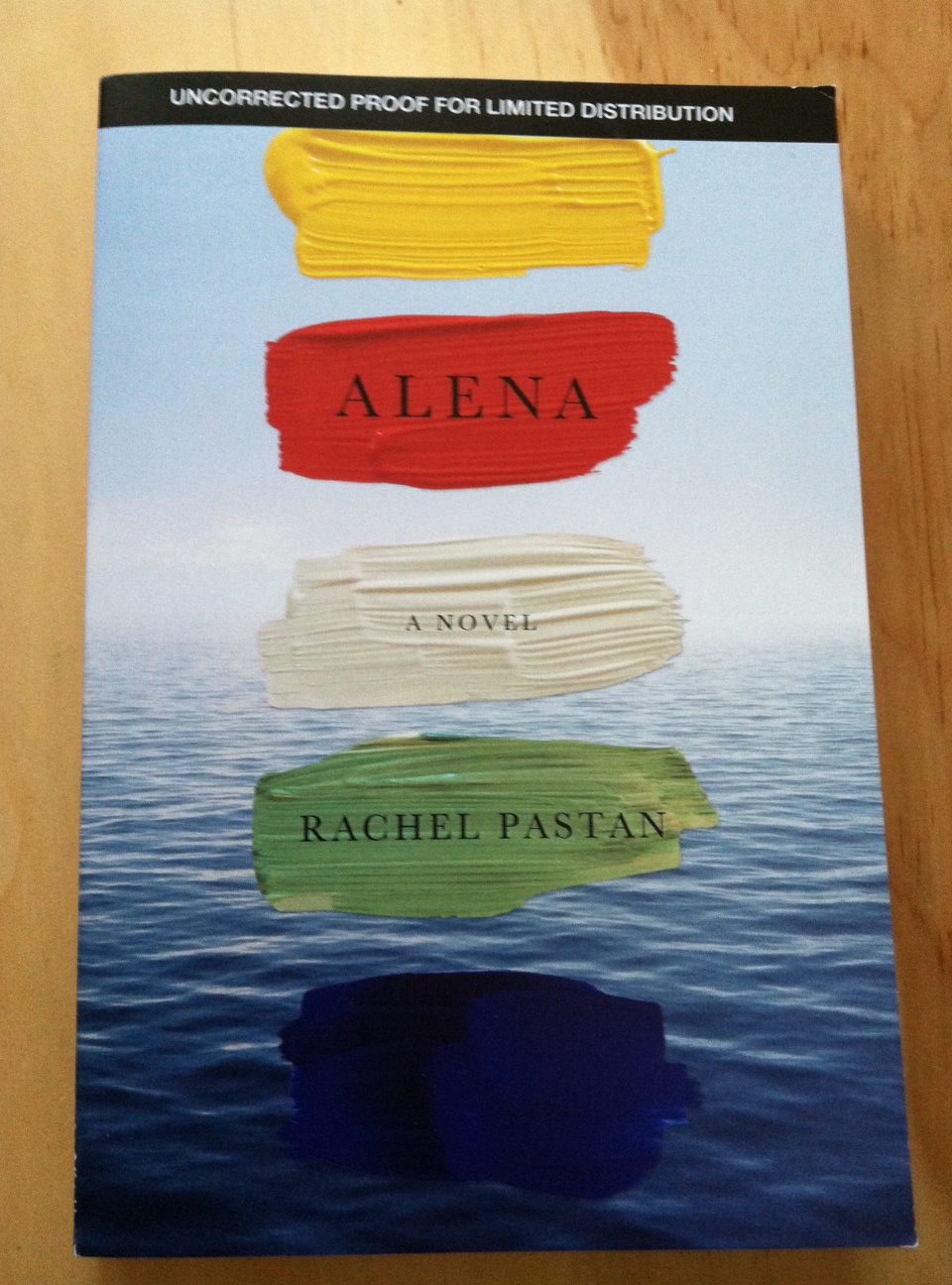
Yesterday I reviewed Alena, Rachel Pastan’s latest novel. Ms. Pastan graciously agreed to be interviewed via email about the novel and her writing. 

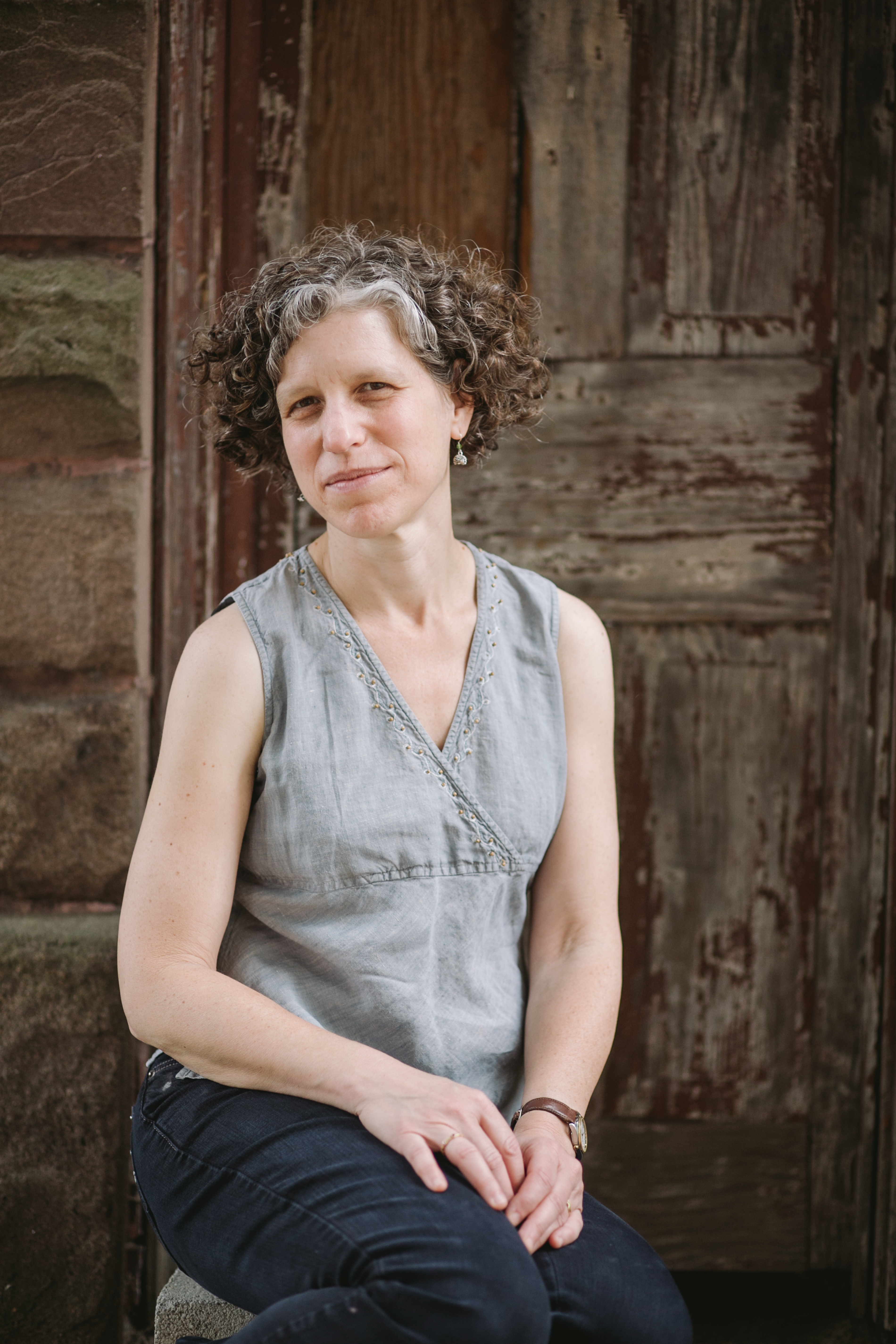
Rachel Pastan  (c) Carina Romano

Rachel Pastan
(c) Carina Romano

When and how did you conceive of writing a book that responds to Rebecca? Was the writing process long?

RP: I had taken a nine-to-five office job—a different kind of job than I’d ever had before. The woman who’d worked there before me, Elysa, had left months before, so I didn’t have anyone to train to me, and I kept making mistakes. People would say, “Elysa used to do it this way.” I felt inadequate, and a little in awe of this unknown Elysa. And then I thought: It’s just like Rebecca, only in the workplace! And then I thought: That’s a good idea for a novel. I wasn’t able to start writing it for a while, but once I did, it went quickly. It took me only about eighteen months to finish a draft.

Much of Alena‘s action takes place on Cape Cod. Was there a particular reason (or reasons) for this choice? 

RP: My family used to spend a month in Cape Cod every summer when I was little, and the landscape has always stayed with me. For years I used to have dreams about the ocean there. Rebecca takes place on a coast—probably of Cornwall. The atmosphere of Cape Cod seemed like a good parallel to me, and I was happy to revisit its beaches in my imagination.

Was it challenging to avoid giving the narrator a name?

RP: Actually I gave her a name while I was writing—I figured I just wouldn’t be faithful to that part of Rebecca. But afterwards I saw I could take the name out. Du Maurier had a few advantages; people could call her narrator “Mrs. de Winter.” After I took out the name, I did go back and make one of the characters call my narrator Cara—Italian for “darling.” That helped.

AlenaHow did you go about learning about contemporary art, which is so critical to Alena? Did you discover a favorite contemporary artist along the way?

RP: For last few years I have worked at the ICA—the Institute of Contemporary Art—in Philadelphia, writing and editing. This has been a fabulous immersion course in contemporary art. I don’t have a favorite contemporary artist—any more than I have a favorite contemporary writer—but the discovery of Anne Truitt was a wonderful and memorable moment. She made very simple, tall sculptures that are somehow incredibly moving and evocative. She wrote a terrific memoir, too, called Daybook, The Journal of an Artist, which talks about her struggles in her work, and with trying to combine work and family life.

Which writers do you read while you’re writing, if any? Do they change from book to book?

RP: I often read a little every morning before I start working, a few pages by someone whose sentences I love. Alice Munro is a favorite, as is Margaret Drabble. Other than that, I might read books that address a subject I’m writing about to see how other people handle it. When I was writing Alena I read a bunch of novels that deal with contemporary art in one way or another: By Nightfall by Michael Cunningham and “A Thing of Beauty” by Steve Martin were a couple.

What kinds of projects are you planning next?

RP: I have a very different project in mind: a novel based on the life of a real person, which is something I’ve never done before. It’s exciting—and daunting—to think about how to shape a real life into a compelling narrative.

Many thanks to Ms. Pastan for her time and thoughtful answers!