Recommended Reading: If You Could Be Mine, by Sara Farizan

Happy Thanksgiving, dear Readers! And Happy Thursday, non-American friends!
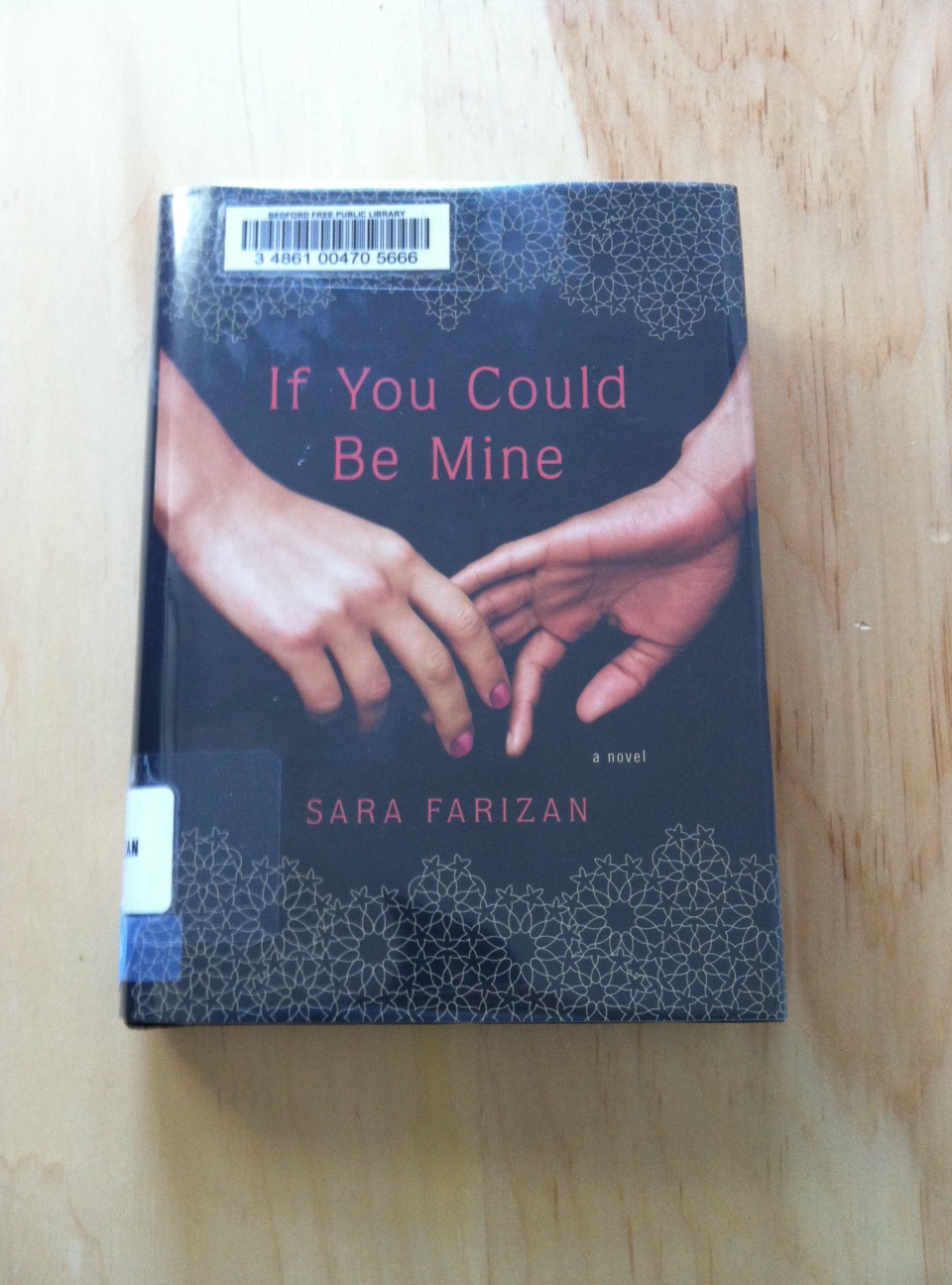
If You Could Be MineAs you may have noticed, YA fiction doesn’t make it onto my reading list very often, but in the spirit of omnivorous reading, I thought I should try out a new YA novel (a couple years ago I read The Hunger Games trilogy, which I quite liked). I chose Sara Farizan’s If You Could Be Minebecause I’m interested in reading fiction set in other countries, and because the novel focuses on LBGT* issues (near and dear to my heart).

Sahar has been in love with her best friend, Nasrin, since they were children. Nasrin loves Sahar too, but also feels the pull of a traditional life trajectory — marriage, children, a house and social position. And they live in Iran, where homosexuality is punishable by death — even for teenagers like Sahar and Nasrin.

Then Nasrin’s family arranges a marriage for her, and Sahar, desperate to save their relationship, explores drastic measures to keep them together.

Sahar’s narration makes me want to give her a big hug, and I loved the careful construction of the secondary characters, especially Sahar’s father and Nasrin’s mother.  The language is geared toward younger readers, which I was expecting, but I wasn’t expecting the frank discussions of transsexuality that’s an integral part of the novel. I appreciated Sahar’s honesty and humanity, and the unflinching portrayal of how difficult life is for the gender-nonconforming in modern Iran.

And, of course, there’s plenty about the dangers of being a woman. You know, stuff like your sleeve inching past your elbow or wearing too much makeup getting you raped or beaten. Shudder.

Nasrin is often annoying, and doesn’t seem like a worthy object for Sahar’s affection, except insofar as she listens to Sahar attentively (as Sahar points out). At first, I felt that this was a flaw in the novel, because as a reader, I wanted to be invested in both girls. About midway through, however, Nasrin grew on me. She rebels against the strictures of her society in her own way, even if it’s not the way Sahar wants (or we want, for that matter). Nasrin’s flaws make the story more real, more relatable, and all the more heartbreaking for Sahar.

If You Could Be Mine would pair well with the first volume of Marjane Satrapi’s Persepolis, especially in a teaching setting, and I think the pair together would make a great Christmas/Hannukah/Festivus/Yule/December present.

“We see you, see ourselves and know / That we must take the utmost care / And kindness in all things.”

I’m not a religious person, but many people I treasure are very religious, and I’m always

"Eagle silhouette" Image courtesy of Gualberto107 at FreeDigitalPhotos.net

“Eagle silhouette” Image courtesy of Gualberto107 at FreeDigitalPhotos.net

grateful for their prayers and their generosity of spirit. Joy Harjo’s “Eagle Poem” gives me a way to think about prayer that is comforting and uplifting without listing toward the dogmatic.

For that reason, I think “Eagle Poem” is the perfect poem for Thanksgiving week, when we give thanks in our own ways, both secular and spiritual, for what we have and what we have not.

Late-November Round-Up

Been a bit busy over here in Boston these last few weeks. I gave up on NaNoWriMo, and then I gave up on writing a post about why I gave up on NaNoWriMo, and then my mom visited, which made me feel validated on the first two counts, because I’d rather sit around with my mom and drink tea than write my (let’s face it) pretentious sophomore attempt a novel.

Anyway. One of the reasons I gave up on NaNoWriMo was that I missed reading too darn much. My non-toddler time is limited as it is, and when you’re churning out more than 1600 words a day, it’s difficult to squeeze in reading of any kind. I wasn’t blogging last year, and this year I found that I missed you, dear readers, and your delightful blogs.

So, in the interests of my sanity, I’m not going to write a separate post about each of the books I’ve sneaked in over the last couple weeks. Presenting, then, a round-up:

photo 1 (11)

Inspired by Rick’s Novellas in November read-along, I picked up a book that’s been on my shelf for years: Gabriel García Márquez’s Memories of My Melancholy Whores. It’s a fast read, very Márquez, if you know what I mean. Sure, there’s the way-creepy nonagenarian crushing on the young, always naked teen virgin . . . but somehow we’re also in the realm of hope, aging, death,  personal history, and acceptance of a life lived. I loved it.

Next up:

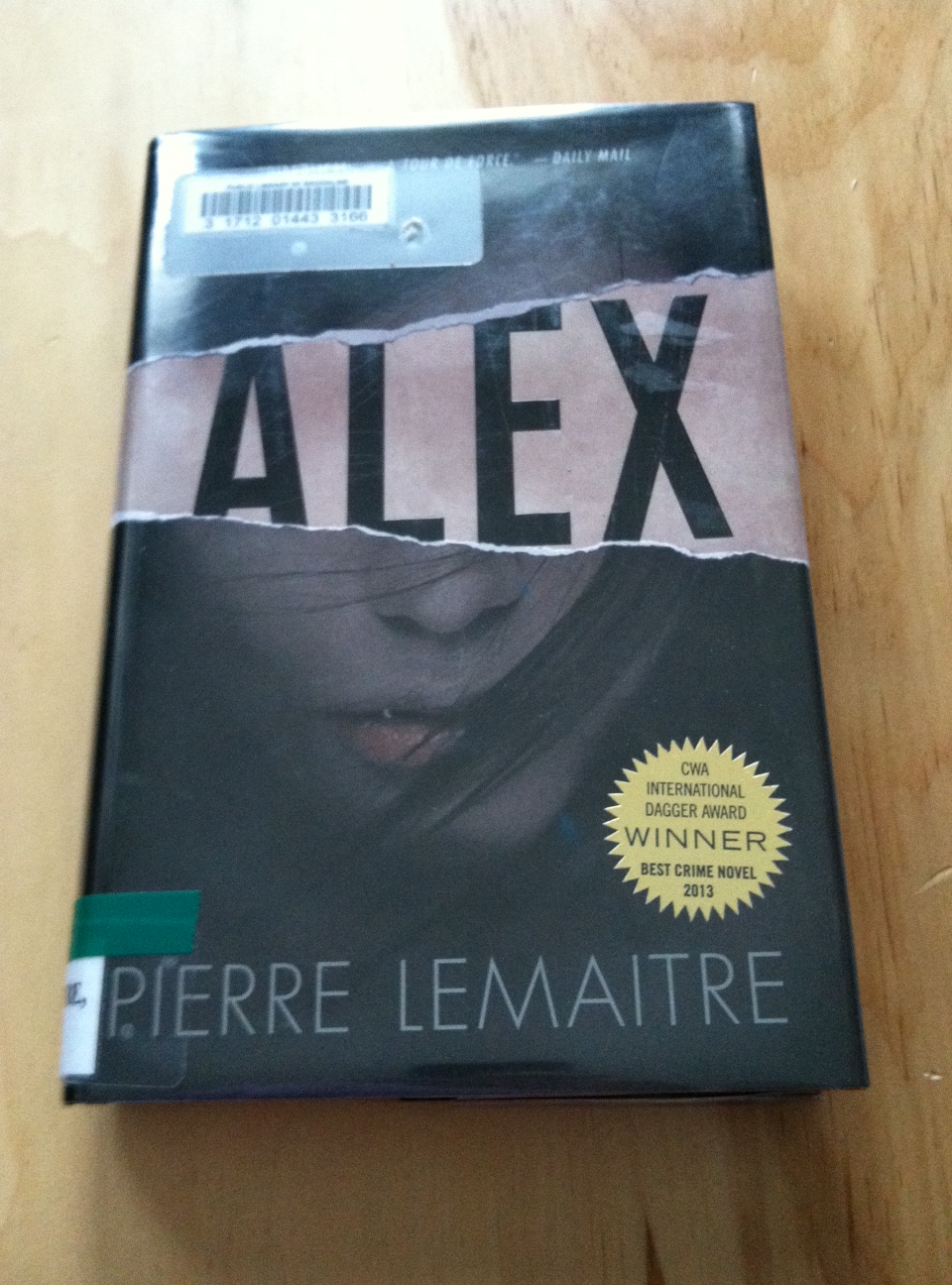
Pierre Lemaitre’s acclaimed Alex, translated from French photo 2 (8)into English by Frank Wynne. Apparently it’s part of a trilogy focused on the detective in the story, Camille Verhoeven. Short in stature but long on insight, Verhoeven is brought in to investigate the nearly clue-less case of a missing woman, which flows outward into an increasingly complicated web of characters and events. I found it wholly unexpected and engrossing. However, there’s some very graphic violent content, so avoid if you don’t have a strong stomach.

photo 3 (4)I’m not sure who to blame for the fact that I didn’t know until this month that there are sequels to Nick Bantock’s gorgeous Griffin & Sabine. Once I found out, I promptly bought Sabine’s Notebook and The Golden Mean, and read them, along with the original, in one sitting. The first book is the best of the three, but the sequels feature art just as beautiful, and the story gets even weirder. Though written for adults, the trilogy would make an excellent gift for an artistically inclined teenager, or one who’s a devotee of comic books. My Uncle Neil sent me Griffin & Sabine for my fourteenth birthday, and it was the perfect fit. I loved the story and the inventive design of the book (envelopes with letters you pull out to read, and because the book features adult themes, I felt proud because it meant my uncle, who’s one of the readers I respect most, thought of me as a serious reader too.

Here’s an odd duck of a book: Charles Palliser’s Rustication. Published this year, it reads like a photo 4 (4)salacious nineteenth-century journal. It’s a cross between period fiction and crime fiction, with one of the most unreliable narrators I’ve encountered this year. I had parts of the plot figured out a bit too early (my area of study has left me with a weird assortment of herbal knowledge, which intruded at the mention of pennyroyal), but the novel still surprised me with its readability, especially considering the plethora of entirely unlikeable characters. There’s no one to cheer for, really, but the impulse to learn what’s true and what’s fiction in this tawdry little town is irresistible. A few words of caution: some ugly, violent language and imagery peppered throughout the novel.

Coming Up in December:

I will eviscerate Peter Jackson’s first Hobbit movie, so you can be fully equipped with rage for the second movie.

Reviews of A Constellation of Vital Phenomena, Life after Life, Orkney, and Snow Hunters

Poetry by John Donne and John Milton

Announcement of my super-rad 2014 read-along

My list of suggested prezzies for the book lovers in your life

A year-in-review type of deal, possibly with best-of lists

Yuletide cheer.

Recommended Reading: The Ocean at the End of the Lane, by Neil Gaiman

Unless you’ve been insensate for the last ten years or so, you know that Mr. Gaiman is a book world superstar with novels, short stories, and children’s books to his credit. I loved American Gods and Smoke and Mirrors, so I knew I was in for a treat when I picked up The Ocean at the End of the Lane. It’s received amazing press and Mr. Gaiman commands round-the-block lines whenever he reads at a local bookstore. photo (26)

Now, I found American Gods suspenseful, and Smoke and Mirrors occasionally chilling, but The Ocean At the End of the Lane is downright terrifying. It’s a tribute to Mr. Gaiman’s storytelling that I kept reading, because the whole novel turns around big time child endangerment, which is almost always a book-closer for me. I went into this one not knowing anything about the plot, though, so I wasn’t really prepared for how frightening the book would become.

To say much about the plot would make me feel like a thief in the night, so I’ll refrain.

But you should read this. You’re going to fall in love with the Hempstock family.


Checking Off My Classics Club List: The Big Sleep

Forget Brangelina. Forget Liz Taylor and Richard Burton. The best on-screen/off-screen chemistry of all time goes to Humphrey Bogart and Lauren Bacall. The Big Sleep

Seriously. Watch the first half-hour of To Have and Have Not (1944) and you’ll be floored when you hear Bacall deliver her first line (it was her first movie, at 19). Wow-za.  Plus, you can feel that you’re doing something literary, since the film is based (very loosely, I admit) on Hemingway’s novel of the same name, and the screenplay was co-written by William Faulkner. Yeah, THE Faulkner.

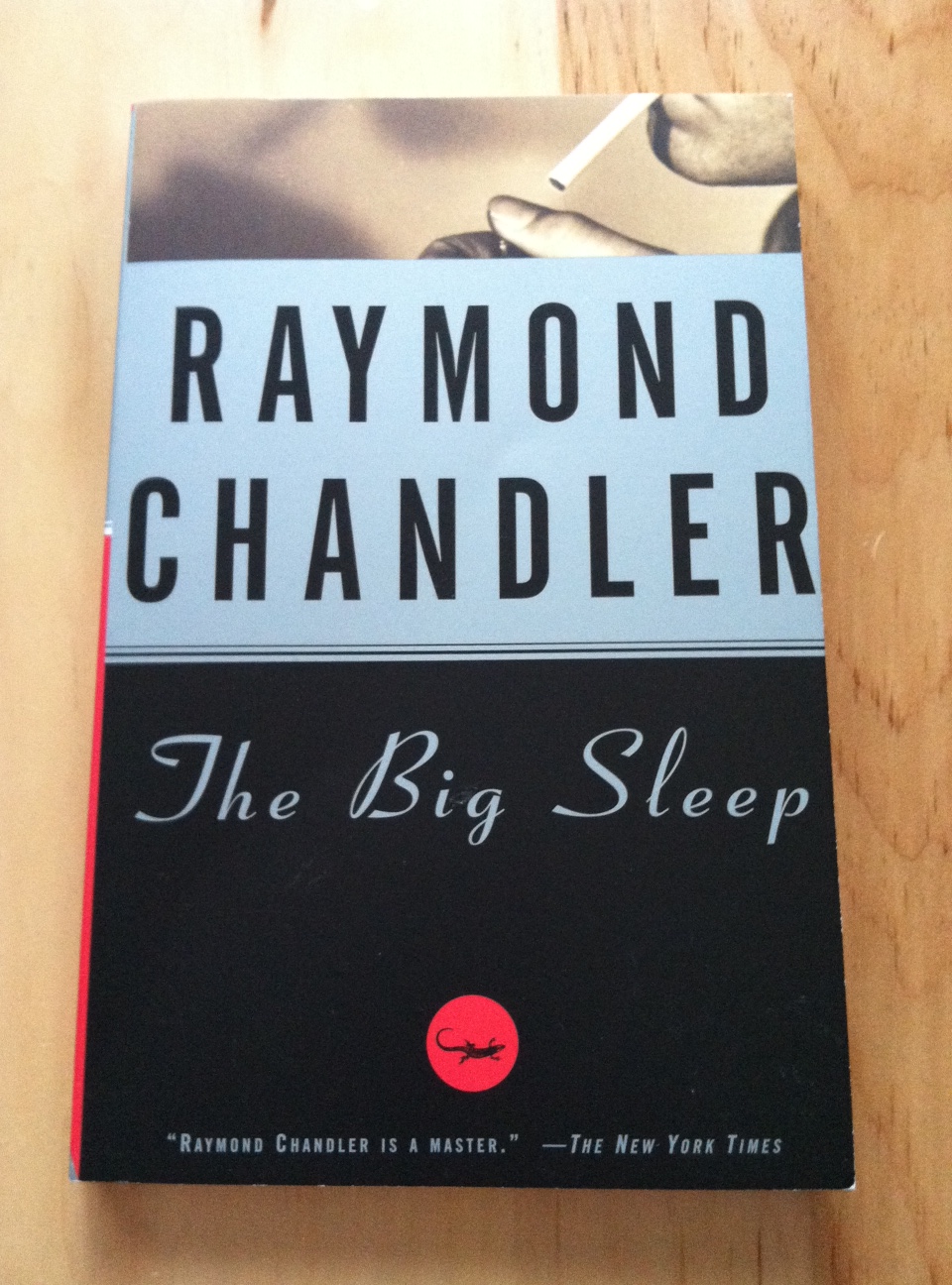
Anyway. I love all the Bogie & Bacall movies, but The Big Sleep (1946) is far and away my favorite. It’s dark, it’s scary, it’s engrossing. So naturally I put Raymond Chandler’s The Big Sleep (1939), his first novel, on my Classics Club list.

I knew the contours of the plot from the movie, but I was surprised just how much darker in tone the novel is.

Here’s the set-up:  A dying millionaire calls in private detective Philip Marlowe to investigate some “gambling” debts accrued by the younger of his two wild daughters, Carmen. Marlowe’s investigation spins outward to include men and women caught up in blackmail, pornography (the movie elides this one — thanks, Hollywood censors!), murder, gambling, and disappearances. Nobody’s innocent.

Marlowe’s a great character: a cynic trying to do the right thing, curious to a fault, more interested in solving a puzzle than preserving his personal safety. A perfect fit for Bogart. Marlowe narrates, and the prose matches his style — keenly observant, hard-boiled, thorough. Never, ever florid or sentimental.

There’s some squirm-inducing material from this vantage point, nearly seventy-five years later. Marlowe isn’t overly fond of women, for one thing. Carmen may be a psychotic, drug-addled brat, but slapping her around just seems wrong. And the novel brings up homosexuality (very well hidden in the movie), but only in the context of scorn (“queen” and “fairy” is standard language in the novel). Unpleasant, very unpleasant. Here’s a telling line: about a character who’s committed murder and who was another man’s lover: “He was afraid of the police, of course, being what he is” (110).  Homosexuality is clearly coded as deviance, as “other,” as part of the criminal underground that Marlowe finds himself caught up in.

These issues aside, it’s a great crime novel, great writing, and highly recommended.

Recommended Reading: The Obituary Writer and Comfort, by Ann Hood

Ann Hood, Comfort, photo by CR OliverAbout five years ago, when I was going through a Very Bad Time, my wonderful friend Mary gave me Ann Hood’s memoir Comfort (in which Ms. Hood very graciously penned a note for me). Comfort‘s chapters deal with the experience of grief; Ms. Hood’s five-year-old daughter died from a virulent form of strep in 2002. The book is gut-wrenching, and the first chapter is the best, truest writing on grief that I’ve ever read.

That grief clearly informs The Obituary Writer, Ms. Hood’s novel that’s out this year. The novel gives us two stories in parallel. We follow Vivien in 1919 San Francisco (and environs) as she comes to grips with the disappearance of her lover in the earthquake of 1906, and Claire in 1960 Virginia, feeling trapped in a loveless marriage and catapulted suddenly into an affair. Their lives intersect, of course, but the contrast between the two women is fascinating.  How did women shape their lives when their roles were so constricted, so defined?

Ann Hood, The Obituary Writer, photo by CR OliverI found as I read that I wanted to know more about Vivien’s relationship with her lover, and how they negotiated social situations and taboos, and I was disappointed to be left in the dark about that aspect of Vivien’s life. However, that disappointment was overmatched by my interest in Claire’s fascination with Jackie Kennedy. I’m a New Englander, but I’ve never felt the affection for the Kennedy family that the rest of Boston perpetually evinces. It wasn’t until I read this book that I came up with a possible explanation for why women loved Jackie: her life, on the outside, at least, was the best, materially speaking, a housewife in 1960 could wish for. Jackie was beautiful, cultured, spoke French, married a handsome man, had two adorable children, and was never in danger of running out of money. The reality of her situation was different, of course, but I suspect that her presence in the White House gave women who felt stifled at home something to aspire to as they engaged with the parameters of their lives. But that’s just a theory.

Have you read Comfort or The Obituary Writer? What did you think?

Unusual Words, A.S. Byatt Edition

This week I was cleaning off my desk, and I came across the notes I took while reading A.S. Byatt’s Possession back in April (yes, it took me more than six months to clean my desk). About halfway through the novel, I started writing down all the rare and delightful words that pop up in the text—and ended up with four pages’ worth. I wonder if A.S. Byatt’s everyday speech is peppered with this kind of unusual vocabulary.

Here are some of my favorites:

  • carapace
  • silex
  • besprent
  • celandine
  • exiguous
  • vulpine
  • recension
  • odylic
  • moquette
  • aperçu
  • hypostatisation

What are your favorite bookish sources for unusual words?

“I want you and you are not here. I pause”

Tomorrow, someone I love would have turned 31.Carol Ann Duffy, Selected Poems

I bought my first Carol Ann Duffy book when he was twenty-three and I was twenty-one and we were friends. He was out in California, studying poetry, and I was visiting Paris, and bought a beautiful paperback version of Ms. Duffy’s Selected Poems at Shakespeare and Co., perhaps the most storied independent bookstore ever, a feast for the imagination of literary types (I also bought Roald Dahl’s Fantastic Mr. Fox, if you were wondering). I bought her Selected Poems because I already loved (and sill do) the sexy, glowing “Warming Her Pearls,” but I didn’t know then that the book will always fall open on another page.

“I want you and you are not here.” That’s the first, plaintive sentence of Carol Ann Duffy’s wonderful poem “Miles Away,” which is about conjuring up the presence of the absent beloved in thought and language. It’s such a perfect rendering of what I felt so keenly for so many months, and still sometimes, that I can only point toward the poem itself:

                        I have got your mouth wrong,
but still it smiles. I hold you closer, miles away,
inventing love, until the calls of nightjars
interrupt and turn what was to come, was certain,
into memory.

This one’s for you, EVC.