An Interview with Michael Blanding, Author of The Map Thief

Yesterday, I reviewed Mr. Blanding’s newest book, The Map Thief. Mr. Blanding graciously agreed to be interviewed via email. 

How would you describe the inception of The Map Thief? What was the writing process like?

Michael Blanding Author Photograph (c) Kevin Day Photography

Michael Blanding
Author Photograph (c) Kevin Day Photography

MB: I have always been interested in maps, and was struck by Smiley’s story when I first read it in the New Yorker back in 2006. I was fascinated by how much people were willing to pay for antiquarian maps and how Smiley was able to exploit that desire for these rare objects in perpetrating his thefts. When I heard he was out of prison in 2011, I approached him for an interview and found him very willing to talk and tell his story. As I started working on the book, however, he suddenly stopped cooperating, and I had to work hard to report around him through other dealers and libraries in order to piece together the story. It added a lot more work to the writing and reporting — so that it eventually took me three years in all.

Writing the book clearly involved a great deal of research into the world of maps; is there a particular cartographic time period or geographical region that was a favorite with you?

photo (82)MB: As a lifelong resident of New England, I was fascinated to learn about the early settlement of this region by the English in the1600s. Smiley was also a New England native and specialized in this period, and so I was able to learn a lot from the maps he traded and eventually stole… At the time, the Dutch “golden age” of mapmaking was waning and the English were the upstarts in colonizing the area — so their first maps are very crude. But very quickly over the course of the century you can see them filling in details and creating more accurate depictions of the area as their knowledge and power increased. It’s very cool to see that happen right on the pages of these maps and atlases.

Many of the events of The Map Thief take place in the Northeast, and the Leventhal Map Center at the Boston Public Library figures prominently in the book. Since you are a Boston-area-based writer, can you recommend any other locations in Boston where new cartophiles might find interesting maps to peruse?

MB: Interestingly, before Smiley started stealing maps, he was a successful map dealer for many years — and his first and most important client was Boston real estate developer Norman Leventhal. Over the years, Smiley helped him acquire the largest collection of maps of Boston and New England ever assembled. While Leventhal eventually donated money to endow the map center at the Boston Public Library, he kept the rarest and most valuable maps in his possession — and they can now be viewed in a permanent exhibit at the Boston Harbor Hotel. The exhibit offers a fascinating glimpse at the history of Boston on multiple walls of its lobby and conference rooms, and I really recommend it to visitors of the city.

Given the inaccuracies and inconsistencies in his self-portrayal, would you be interested in interviewing E. Forbes Smiley III again if he decided to grant interviews once more? Do you think there’s anything left to be gleaned there?

MB: Though Smiley gave me a lot of information about himself and his thefts in the six hours he spoke with me, there were still pieces of the story he promised to tell me before he cut off contact — including exactly how he stole the maps and which maps he stole when. I was able to piece much of this information together from other sources, but still had to speculate on some ofthe chronology of the thefts. I would have liked to go through this chronology in more detail and cross-reference it with information he provided to the FBI to try and pin down these details.

What kinds of projects are you working on now?

MB: I don’t have another book project as of yet, but I am working on some interesting magazine stories, including an article for WIRED magazine about issues surrounding electronics manufacturing overseas. I’m also putting together a proposal for a new book that combines investigative reporting and memoir — we’ll see if that comes together! At the moment, though, I’m very excited to work on publicizing The Map Thief through media and speaking events — and finally sharing my baby with the world after three years of work.

My thanks again to Mr. Blanding for his time and thoughtful answers. You can read more about The Map Thief and Michael Blanding’s work at www.michaelblanding.com

If you’re in the Boston area, head over to the Brookline Booksmith on June 3 from 7-9pm for a reading, reception, and signing with Michael Blanding. 
Out Today and Recommended: The Map Thief, by Michael Blanding

photo (82)For years, E. Forbes Smiley III seemed to be the kind of man who matched his name’s connotations: moneyed, educated, successful. An antiquarian map dealer, Smiley shuttled between both sides of the Atlantic, becoming an expert in valuable and rare maps, particularly early maps of New England.

He was also stealing them.

In The Map Thief*, Michael Blanding investigates the paradox that Smiley represents. How could a man who treasured maps, who taught himself about them by poring over them in some of the world’s finest libraries, desecrate the very documents he valued and betray the people who shared his interests?

Mr. Blanding delves into Smiley’s life and work, bringing to life Smiley’s quixotic attempt to shape the world to fit his vision. (For instance, Smiley tried to reinvigorate a Maine town on his own, without much consideration of residents’ input, which turned into a spectacular failure.) His friends came up with the term “Forbes dollars”: “a personal accounting system in which Smiley always spent less than he had and was always owed more than he was” (83). As his career progressed, Smiley sank deeper into debt, impulsively buying maps even if he didn’t have the funds ready to pay for them.

In one instance, Smiley bought a rare atlas from another dealer for $50,000. When his check bounced, the other dealer demanded the atlas back, but it was too late: “he had taken the atlas apart right on the train up to Boston, selling several charts of Boston Harbor to Leventhal and keeping the rest, hoping to sell them to other clients to recoup the cost. [. . . ] he [the other dealer] couldn’t help but be appalled that Smiley had so cavalierly taken apart a book with less than ten known copies in the world” (73).

If the thought of Smiley tearing apart an atlas he (ostensibly) bought makes you shudder, the actual thefts will repel you. The gravity of the thefts — the number, the institutions affected, the rarity of the works taken, the fact that many are still unrecovered — is simply outrageous; Smiley’s prison sentence seems ridiculously light. I’ve had the privilege of handling two or three rare books, and the thought of someone opening one too swiftly sets my heart racing — the thought of someone ripping out a page is painful.

Though Smiley is the subject of The Map Thief, and Mr. Blanding places him in the context of the lively and sometimes strange world of rare map aficionados (dealers, collectors, and librarians), the book shines brightest when Mr. Blanding recounts the history of the rare maps themselves and the people who created them. The research is meticulous, and the historical characters fascinating. The book includes several full-color plates of some of the maps discussed in the text, and they’re just glorious (this comes, by the way, from a person whose only displayed map is one of Middle Earth). If you aren’t a map person before you read this book, you very well may be one afterward.

Tomorrow: An Interview with Michael Blanding, author of The Map Thief

*I received a review copy of this book from the publisher in exchange for an honest review.


The Poetry Concierge Recommends: Rumi

[The Poetry Concierge is an occasional feature here on Rosemary and Reading Glasses wherein I select a poem, poet, or book of poems for individual readers based on a short questionnaire. Come play along! Read the introductory post here, my first recommendation here, and then email me at: rosemaryandreadingglasses [at] gmail [dot] com. ]

This week, our pilgrim in search of poetry is Mark, a friend of some friends, who doesn’t blog.


1. When you read fiction, who’s your go-to author?

E.L. Doctorow, Philip Roth, Isaac Beshevis Singer, Doris Lessing. But I haven’t read much fiction in a long time. If I had the time I’d like to start again.

2. If you read nonfiction, which subjects are most likely to interest you?

I mostly read non-fiction. Buddhist Writings, Vedic Writings, exposes like The Shock Doctrine, Memoirs, Psychology, Myths, Physics/Spirituality

3. If you were stuck on a desert island for a week, which five books would you bring to keep you entertained?

Portnoy’s Complaint, The Sportswriter, Women Who Run With the Wolves, The Beatles, The Dharma Bums.

4. If you were on a five-year mission to Mars, which five books would you bring to keep you sane?

The Science of Yoga (Taimni), a recommended Walt Whitman book, Women Who Run With Wolves, BioCentrism by Robert Lanza, a collection of Isaac Bashevis Singer short stories.

5. What kinds of questions are most likely to keep you up at night?

The meaning of life and how to write my memoirs.

6. If you’ve read poetry before, what have you liked? What have you disliked?

Never really read much poetry. Though I’d like to figure it out someday.


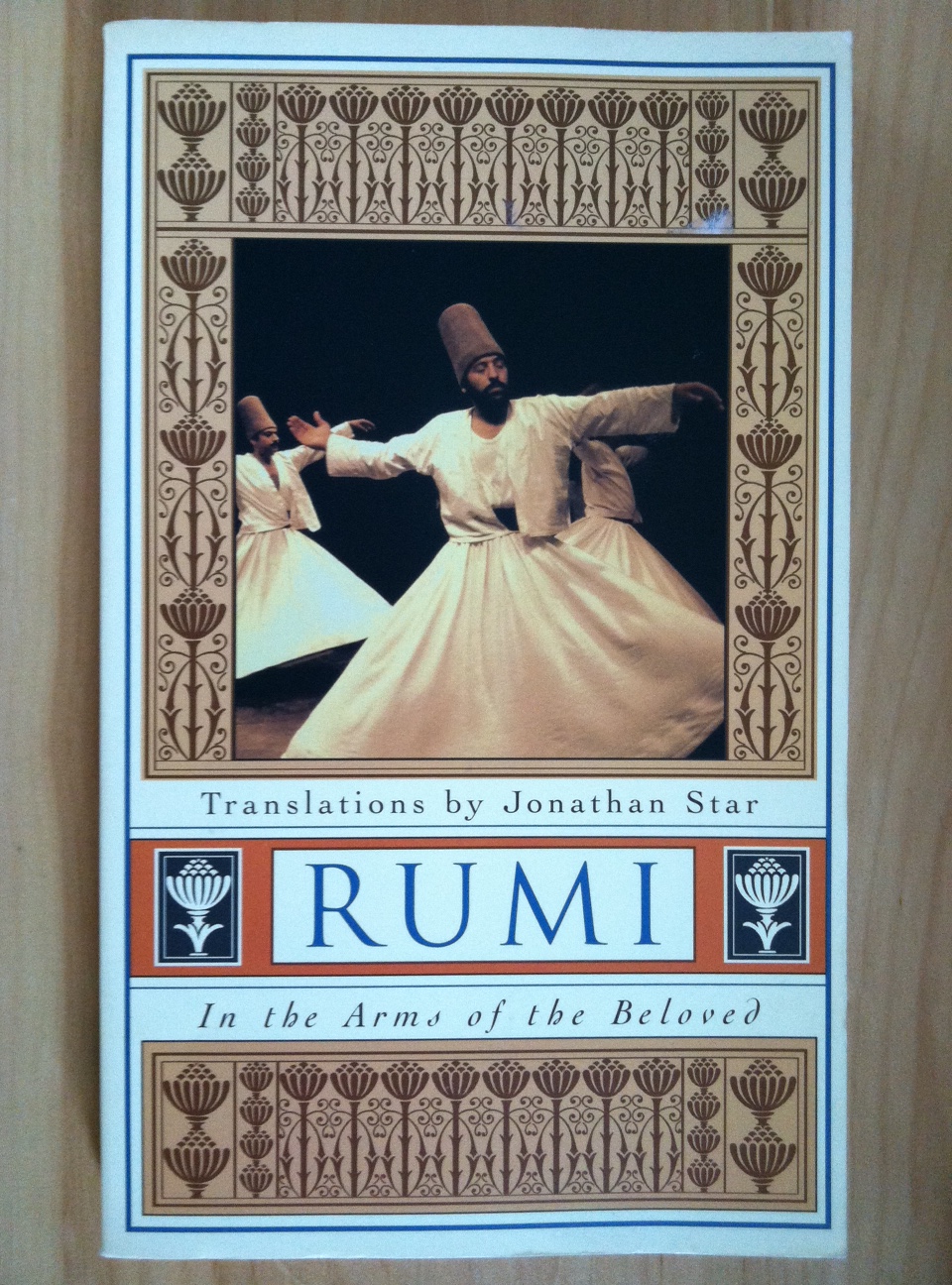
photo (79)Given Mark’s interest in spirituality, myths, and mysticism, I’m recommending the poetry of Jalāl ad-Dīn Muhammad Rūmī, or, as he’s know in the English-speaking world, Rumi.

Rumi was a poet, theologian, and Sufi mystic who lived in the thirteenth century; his work is immensely popular and there are many, many editions of his poems available. I’ve been happy with the one I bought in high school, Rumi: In the Arms of the Beloved, translated by Jonathan Star. The translations are clear, while retaining a sense of mystery, and the book includes a helpful glossary of unfamiliar terms.


Mark, I hope you’ll like reading poetry by Rumi. Thanks for writing in!


Would you like the Poetry Concierge to make a recommendation for you? Check out the introductory post, and send your answers to the questionnaire, along with the name and/or blog you’d like posted with the reply, to rosemaryandreadingglasses [at] gmail [dot] com.

Recommended Reading: Next Life Might Be Kinder and I Hate to Leave This Beautiful Place, by Howard Norman

Howard Norman is the kind of writer who gives you the bad news up front. Take the opening paragraph of his best-known novel, The Bird Artist (1994):

My name is Fabian Vas. I live in Witless Bay, Newfoundland. You would not have heard of me. Obscurity is not necessarily failure, though; I am a a bird artist, and have more or less made a living at it. Yet I murdered the lighthouse keeper, Botho August, and that is an equal part of how I think of myself.

(If you haven’t read The Bird Artist, you should rectify the situation immediately.)

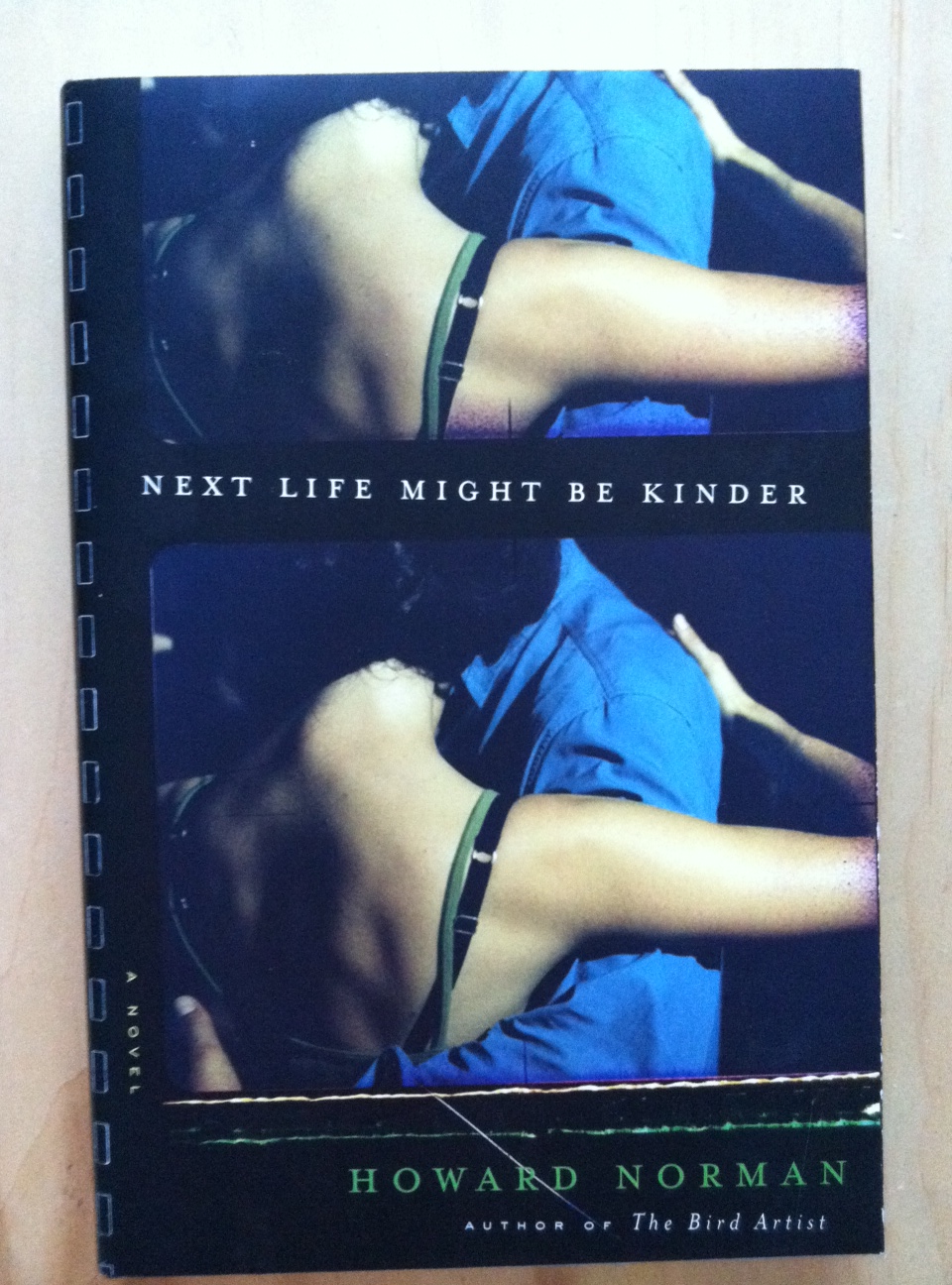
photo 1 (18)Mr. Norman’s new novel (out last week), Next Life Might Be Kinder*, begins: “After my wife, Elizabeth Church, was murdered by the bellman Alfonse Padgett in the Essex hotel, she did not leave me.” It’s a bold strategy, to declare in one’s opening sentence the plot points other writers might build toward — but for Mr. Norman, the strategy always works.

Writer Sam Lattimore, Next Life Might Be Kinder‘s narrator, finds himself living in a small cottage hours away from the Essex Hotel, where he and his wife spent the early months — the only months — of their marriage. He’s meeting with a therapist, evading the film director who bought the rights to his tragic story — and the director’s assistant, and seeing his wife on the beach at night. He’s angry, and he’s desperately in love with Elizabeth. As the novel unfolds, Sam recalls how he and Elizabeth fell in love, what their life was like before she died, and the lurking menace of Alphonse Padgett.

Mr. Norman’s writing is, as ever, beautiful. The characters — Sam, Elizabeth, Sam’s new neighbors Cynthia and Philip, Dr. Nissensen the therapist, the unhinged Norwegian film director, even Marghanita Laski, whose work is the subject of Elizabeth’s dissertation — are finely delineated. Objects and places are imbued with significance; the two-page chapter called “Still Life with Underwood Typewriter,” which describes Elizabeth’s desk, is the best characterization-by-catalogue I’ve ever read.

Elizabeth’s appearances to Sam are mysterious, but never campy or sentimental. Sam loves his wife immensely but doesn’t sanctify her: “And I don’t need metaphor to try and elevate her to a deity. She is just Elizabeth. She made good soups and stews. She was writing a book. She used pencils” (80). Next Life Might Be Kinder is, quite simply, a perfect exploration of the particularities of grief.

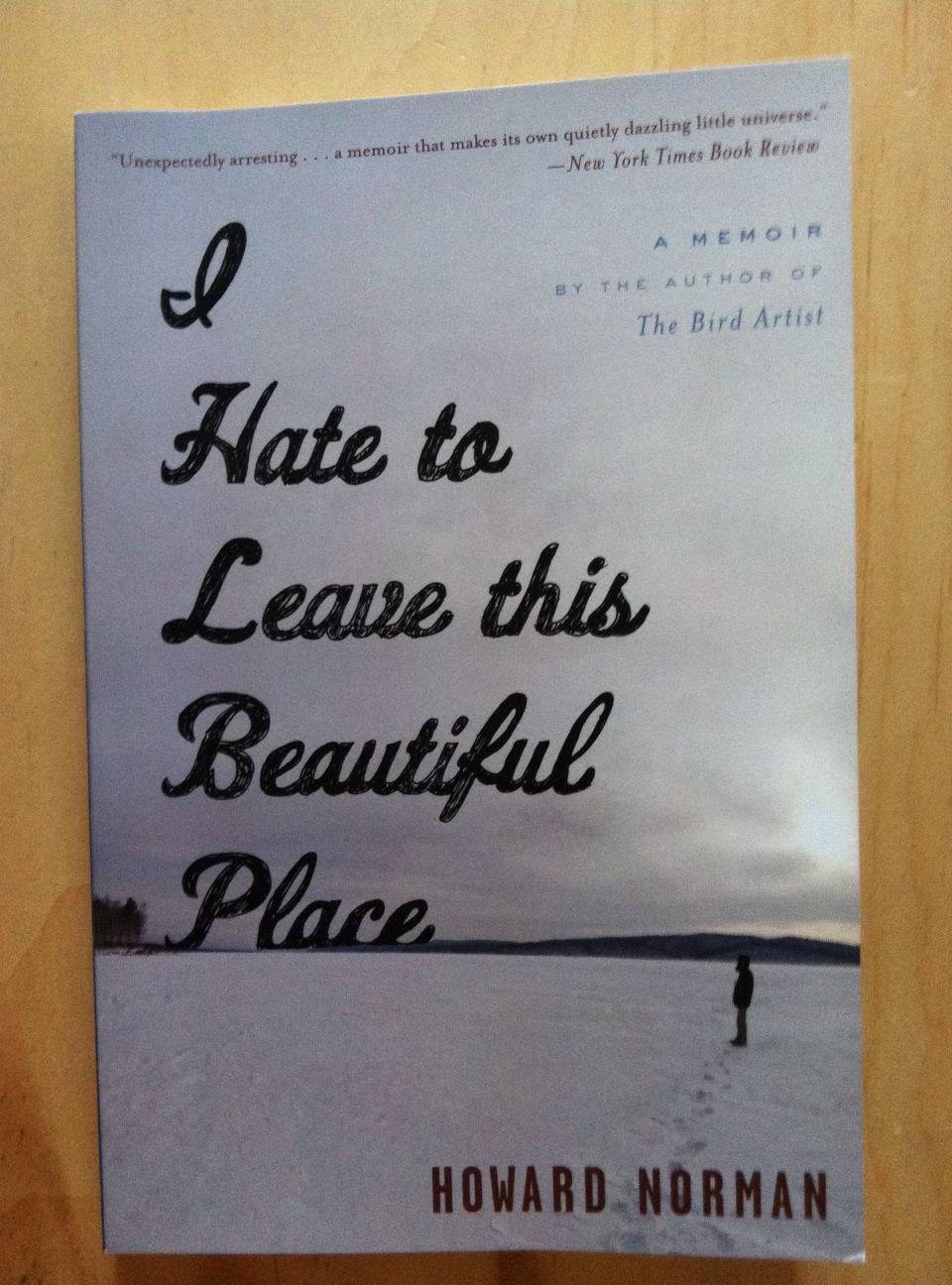
photo 2 (15)After I finished the novel — in two sittings — I happened upon a review that mentioned its relationship to some of the writing in I Hate to Leave This Beautiful Place, a memoir by Mr. Norman published last year. I went to the library and read it immediately, then bought my own copy, because it’s a wonderful memoir, and I’ve never much liked the genre. In five sections, Mr. Norman explores pivotal periods in his life; several of the events echo in Next Life Might Be Kinder.

I’ll let the writer himself summarize I Hate to Leave This Beautiful Place:

What is remembered here? A bookmobile and an elusive father in the Midwest. A landscape painter whose plane crashed in Saskatchewan. A murder-suicide in my family’s house. A Quagmiriut Inuit rock band specializing in the songs of John Lennon. And in Vermont, a missing cat, a well drilling, and my older brother’s requests to be smuggled into Canada. If there is one thing that connects these disparate experiences, it is the hopeful idea of locating myself in beloved landscapes — Northern California, Nova Scotia, Vermont, the Arctic — and of describing how they offered a home for honest introspection, a place to think things through. Often I just wanted to look at birds for days on end, shore birds in particular. (xi-xii)

These are beautiful books, and highly recommended.

*I received a copy of Next Life Might Be Kinder from the publisher in exchange for an honest review.

An Interview with Jeff Burger, Editor of Leonard Cohen on Leonard Cohen: Interviews and Encounters

On Monday I reviewed Leonard Cohen on Leonard Cohen: Interviews and Encounters, edited by Jeff Burger. Mr. Burger graciously agreed to be interviewed via email. 

Would you tell us a little about how you selected the interviews included in Leonard Cohen on Leonard Cohen

Jeff Burger Photo Credit: Andre Burger

Jeff Burger
Photo Credit: Andre Burger

JB: With difficulty. Though the Zen Buddhists called Cohen “Jikan,” meaning “the silent one,” he sure gave lots of interviews. I included about 50 and was being offered new ones even after I wrapped up this project. I tried to incorporate material that covered as many years and as much fresh turf as possible. I didn’t reject interviews that have been published before if they contained important insights—I saw value in having as many good conversations as possible all in one place, in chronological order—but I did give some priority to rare and previously unavailable material.

Readers may know that you are an often-published music journalist. How did your preparation for this project differ from your approach to review and interview projects?

JB: This was completely different. For interviews and certainly for reviews and commentaries, you rely largely on your own imagination and views; this project required a bit less creativity on my part and a lot more research. Finding the material was part one; then of course, I had to secure permission to use it, which wasn’t always easy with regard to pieces that appeared decades ago in long-defunct publications. A lot of detective work was involved but it was satisfying to wake up in the morning and find an email from a writer I’d been trying to locate for months.

photo 1 (17)How long did it take to put together this collection? Was the process similar to the one you undertook for Springsteen on Springsteen, which you also edited?

JB: It took me the better part of a year, working virtually every night and much of every weekend. (I have an understanding family.) Yes, it was quite similar to the process with Springsteen on Springsteen, which was helpful: I learned a lot from doing that book, and what I learned made this one much easier than it otherwise would have been.

Before you started work on Leonard Cohen on Leonard Cohen, did you have a favorite Leonard Cohen song, or book, for that matter? If so, did you learn anything surprising about that favorite song or work?

JB: I’ve been a fan of Cohen’s music since college and have a bunch of favorite songs, ranging from early classics like “So Long, Marianne” and “Famous Blue Raincoat” to “Hallelujah,” “In My Secret Life,” “Tower of Song” and the recent “Going Home.” I already knew a fair amount about these particular songs but I learned all sorts of surprising facts about Cohen from these interviews. For me, though, the most interesting thing was simply to observe how his thoughts, circumstances and personality evolved slowly over five decades.

After reading all these interviews, is there a question or question that you’d like to ask Leonard Cohen yourself?

I could probably formulate a few if the opportunity presented itself, but nothing immediately comes to mind. As noted above, Cohen has been interviewed extensively over many years, and the answers to just about anything I might want to ask are already in my book.

What’s next on your writing and editing horizon? 

I have a full-time job running a magazine and, on the side, I do a little writing on music and other subjects, mostly these days for TheMortonReport.com, NoDepression.com and my own website, byjeffburger.com. As for another book, I may well put together a third musician interview collection but not immediately. I need to take a break and spend some time with the family.

My thanks again to Mr. Burger for his time and thoughtful answers. You can read more about Jeff Burger on his website, byjeffburger.com.

The Poetry Concierge Recommends: Rose, by Li-Young Lee

[The Poetry Concierge is an occasional feature here on Rosemary and Reading Glasses wherein I select a poem, poet, or book of poems for individual readers based on a short questionnaire. Come play along! Read the introductory post here, my first recommendation here, and then email me at: rosemaryandreadingglasses [at] gmail [dot] com. ]

This week, our pilgrim in search of poetry is Cecilia, who writes about life, reading, and parenthood at Only You.


1. When you read fiction, who’s your go-to author?

I have more than one! Junot Diaz, Kazuo Ishiguro, Jhumpa Lahiri, Charlotte Bronte

2. If you read nonfiction, which subjects are most likely to interest you? (cultural history, science, biography, memoir, survival stories?)

memoir, personal essays, history, psychology

3. If you were stuck on a desert island for a week, which five books would you bring to keep you entertained?

This is How You Lose Her (Junot Diaz) and Me Talk Pretty One Day (David Sedaris), for the comfort factor (re-reads by two of my go-to authors); Never Let Me Go (Kazuo Ishiguro) because everyone’s been telling me how amazing this book is; In the Blood by Lisa Unger (I have never read her but this sounded good, as something fast and entertaining); and Teaching My Mother How to Give Birth (Warsan Shire), a book of poetry I haven’t yet read but want to.

4. If you were on a five-year mission to Mars, which five books would you bring to keep you sane?

One comfort book: Me Talk Pretty One Day (David Sedaris) and four books that have been on my to-read list: Middlemarch, either Anna Karenina or The Golden Notebook, Life After Life (Kate Atkinson), and The Mayflower & The Pilgrims’ New World (Nathaniel Philbrick)

5. What kinds of questions are most likely to keep you up at night? (death, the nature of love, politics, environmental issues, meaning of life, end of the world, justice and injustice, etc?)

Closer to home – the meaning/purpose in life, how I’m doing as a parent

The bigger picture – human rights, civil rights

6. If you’ve read poetry before, what have you liked? What have you disliked?

I’d only read an excerpt but I was completely blown away by the writing in Teaching My Mother How to Give Birth by Warsan Shire.

We studied quite a bit of poetry during high school but it was never one of my favorite subjects. I think that my early education in poetry reinforced my fears that poetry is impossible to decipher and difficult to access. A couple of exceptions were Robert Frost and Edgar Allen Poe, whom I did enjoy.


[Sidebar: Never Let Me Go is amazing, and everyone should read it.]

From Cecilia’s list of go-to authors, I got the sense that writing that deals with the immigrant experience is important to her, as well as writing that focuses on the interiority of its characters. One name leapt to mind, and stayed with me as I read the rest of Cecilia’s answers: Li-Young Lee.

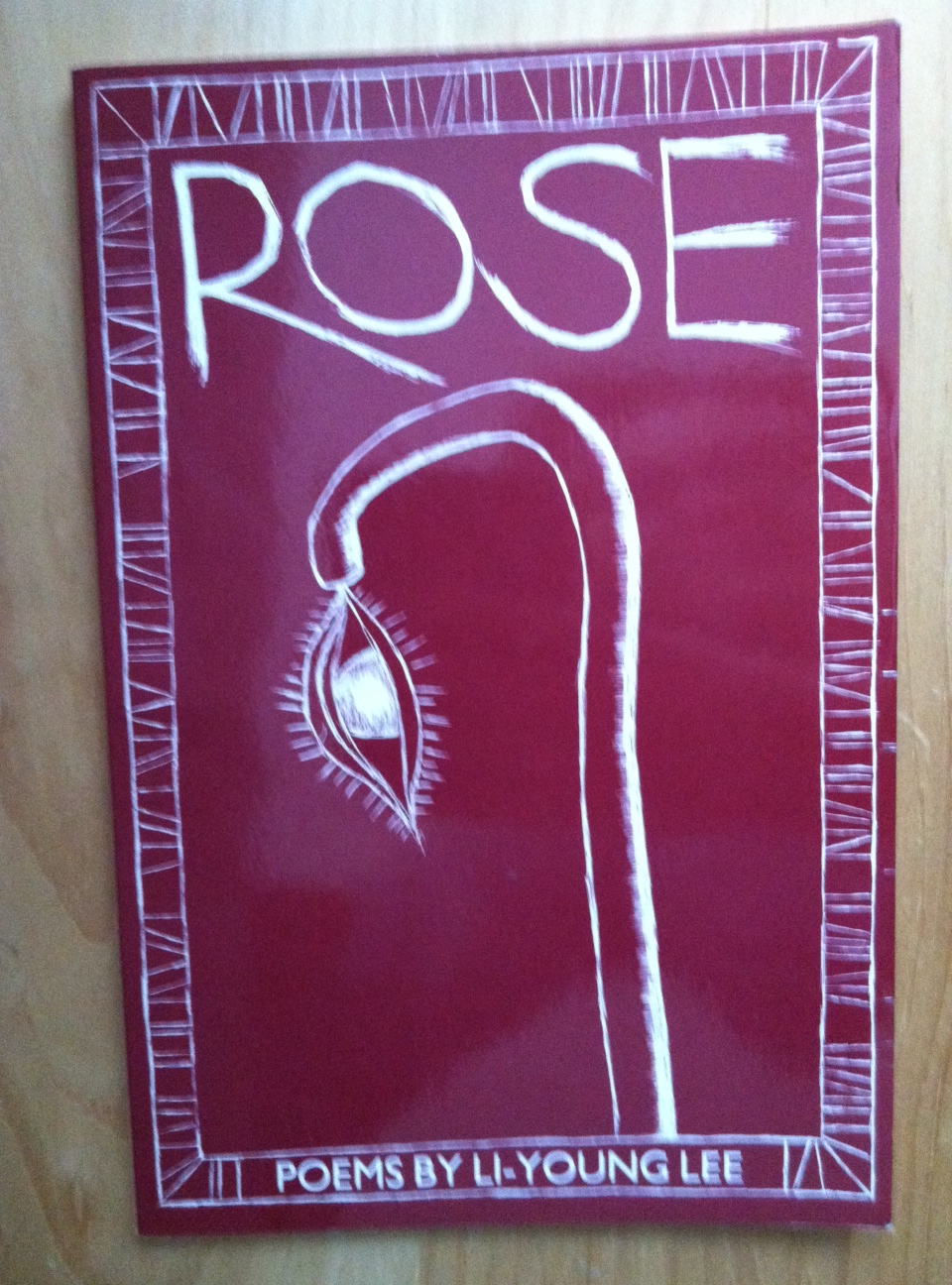
photo (77)Li-Young Lee’s poetry is intensely lyrical and personal. Born in Indonesia to Chinese parents who fled China for political reasons, Mr. Lee came with his family to the United States in 1964. His family (especially his father and his wife) plays a major role in the poetry of Rose, his first collection, which I’m recommending for Cecilia. “The Gift” and “Persimmons” (frequently anthologized) are the second and third poems in the book. In “Persimmons,” the speaker remembers:

In sixth grade Mrs. Walker
slapped the back of my head
and made me stand in the corner
for not knowing the difference
between persimmon and precision

This startling, painful memory forms the foundation of the poet’s exploration of life in two cultures, and how the senses tie us to memory. In fact, because of this poem, I remember the very first time I saw a persimmon in a market, and what it felt like to cut into it at home.

In “The Gift,” the speaker remembers his father pulling a splinter from his hand. It’s one of the most beautiful poems about parents and children that I’ve ever read.
Cecilia, I hope you’ll find poems you love in Rose. Thanks for writing in!


Would you like the Poetry Concierge to make a recommendation for you? Check out the introductory post, and send your answers to the questionnaire, along with the name and/or blog you’d like posted with the reply, to rosemaryandreadingglasses [at] gmail [dot] com.

Recommended Reading: Leonard Cohen on Leonard Cohen, Edited by Jeff Burger

I’m fairly certain that I would have spent my high school years as perpetually moody and angst-ridden as Molly Ringwald in any given John Hughes movie had it not been for Theatere (capital-T, said in your best Addison DeWitt voice).

To the Shaker Heights High School Theatre Arts Program (yes, it’s really called that) I owe a debt of gratitude: for leading me to my two best friends in high school, one of whom I met when she was tasked with teasing my nearly waist-length hair so that it would stand straight out from my head; for playwriting class; for teaching me the world “décolletage”; for the knowledge that I should never, ever wear flesh-tone spandex; for the chance to eat lunches with friends in Room 129; for the ability to recite, in perfect tandem with any other alum, “Shaker Theater events are non-smoking, non-drinking, non-drug-using, safe-driving, recycling events”; and for Leonard Cohen.

The department chair, Mr. Thornton, had a fondness for the Canadian singer-songwriter, and from the moment I heard that smoky voice singing “The Window,” I was hooked. I used my babysitting money to buy his albums, talked so much about him that my parents knew to get me Ten New Songs for my birthday, and hoped Leonard Cohen would tour someday so that I could see him live. One of the stupidest things I’ve ever done is not begging, borrowing, or stealing enough money to see him in concert in Boston in 2012.

photo 3 (5)Before he became famous, relatively late (he was in his thirties) as a singer-songwriter, Leonard Cohen was a poet and novelist whose work earned him comparisons with James Joyce, even if it didn’t pay the bills. Music did, and more than forty-five years after the release of Songs of Leonard Cohen, the dapper and impeccably polite poet is a musical legend.

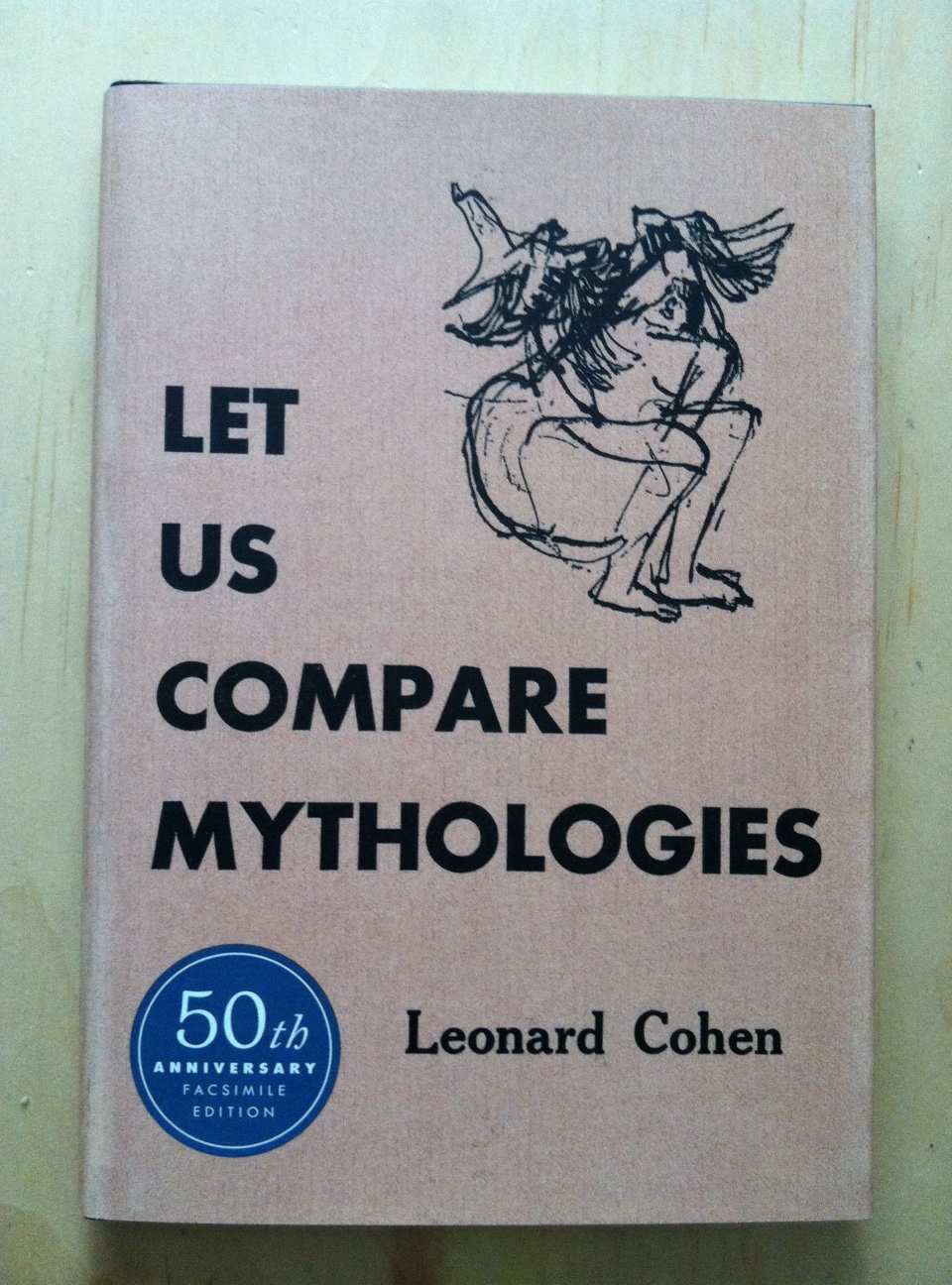
photo 2 (14)I was so entranced by his music that it wasn’t until college that I went looking for Mr. Cohen’s published poetry and fiction.  Let Us Compare Mythologies (1956) which I recently re-read, is raw and energetic, the work of a young idealist who’s afraid the world is already lost. Book of Mercy (my favorite of the collections) is often called a modern book of psalms, although in an interview Mr. Cohen characterized them as “more conversations with the absolute” (148). The prose-poems — fifty of them — are prayers of great sadness and great longing. Here’s part of my favorite (19): “O beloved speaking, O comfort whispering in the terror, unspeakable explanation of the smoke and cruelty, undo the self-conspiracy, let me dare the boldness of joy.” It’s the same voice — almost mystic, worldly, sad — from “The Window”:

Oh tangle of matter and ghost
Oh darling of angels, demons and saints
And the whole broken-hearted host
Gentle this soul

Like his poetry, Leonard Cohen’s songs are about the difficulties of love, of living, of dying; he sings about a world that’s broken and the people trying and often failing to keep the pieces together. He writes songs about betrayal, sex, faith, politics. A reviewer once famously said that it was “music to slit your wrists to,” but I’ve never found it anything but comforting, occasionally funny (see “Tower of Song”), and very, very beautiful. I’m not the only one.

photo 1 (17)Leonard Cohen on Leonard Cohen: Interviews and Encounters*, edited by Jeff Burger and recently published by Chicago Review Press, is a book meant for fans of the man who wrote not only “Suzanne” and “First We Take Manhattan” and yes, the ubiquitous “Hallelujah” (for the record, I like Leonard’s version best, followed by Jeff Buckley’s, followed by John Cale’s, then k d lang’s), but also Book of Mercy and Beautiful Losers and The Spice-Box of Earth. Judiciously selected interviews from Mr. Cohen’s four decades in the music industry trace the evolution of his public persona even as they illuminate aspects of his personal life and career that aren’t widely talked about. (Did you know he once made a signature drink for his band? I do now, and I’ll be mixing up a few batches this summer.)

What comes across in these interviews — which the interviewers themselves note in their interviews with Mr. Burger — is Leonard Cohen’s graciousness, his sense of humor, and his modesty. He unflappably fields predictable questions about his lack of commercial success in the U.S., speaks well of every woman he’s been romantically linked with, and pokes fun of himself (he riffs on his early albums’ bland (“neutral”) titles by joking that he’ll call the next one Songs in English [163].) He’s completely open about the grueling process of songwriting (he’ll write dozens and dozens of stanzas for one song, rejecting all but a few; songs often take years to complete), his difficulties with romantic relationships, and, in the later interviews, about his struggles with depression. Most longtime Leonard Cohen fans know that he spent years in relative isolation at a Zen center outside Los Angeles, but these interviews offer a fuller view of what those years were like, which I found particularly fascinating.

With more than five hundred pages of interviews (several never before translated into English, some transcribed from the raw footage of television interviews), it’s not surprising that some material is repetitive. Interviewers ask questions asked many times before, and sometimes Mr. Cohen’s answers retread ground already broken. Still, the book is a treasure trove, and worth reading just for the interviewers with specialized backgrounds who share long, knowledgable conversations with Mr. Cohen on songwriting and his Jewish background, among other subjects. Rarely did four or five pages pass without me turning down a corner to come back to an idea or a phrase; choosing favorite passages and quotes for this review proved an impossible task. But here’s a snippet from a conversation the editor had with interviewer Thom Jurek, who spoke with Leonard Cohen in 1993:

Jurek recalled asking Cohen why it had taken so long after the release of The Future for him to tour. “He explained that it was because backing vocalist Julie Christensen had borne a child; it was important to hold off on the tour to give the new family time to bond.” What about finding another singer? Cohen said he hadn’t even considered that. “The reason, he said– and I am pretty sure I remember this by heart–was: ‘She shouldn’t be punished for bringing life into the world.’

This from a man who says, “We cannot forestall the apocalypse. The bomb has already gone off. We are now living in the midst of its aftermath. The question is: how can we live with this knowledge with grace and kindness?” (507).

There is a risk in books of this kind — as in meeting a favorite author — that the subject will be demystified in some way, will appear all too human, which is not, after all, how we prefer our idols. This isn’t the case with Leonard Cohen on Leonard Cohen. For all his foibles and favored anecdotes, the man is consistently human in the best sense of the word: compassionate, invested in the welfare of others, deeply concerned with ideas. I came away admiring him, and loving his work, even more.

Wednesday: An Interview with Jeff Burger, Editor of Leonard Cohen on Leonard Cohen.

*I received a copy of this book from the publisher in exchange for an honest review.

Recommended Reading: The Orenda, by Joseph Boyden

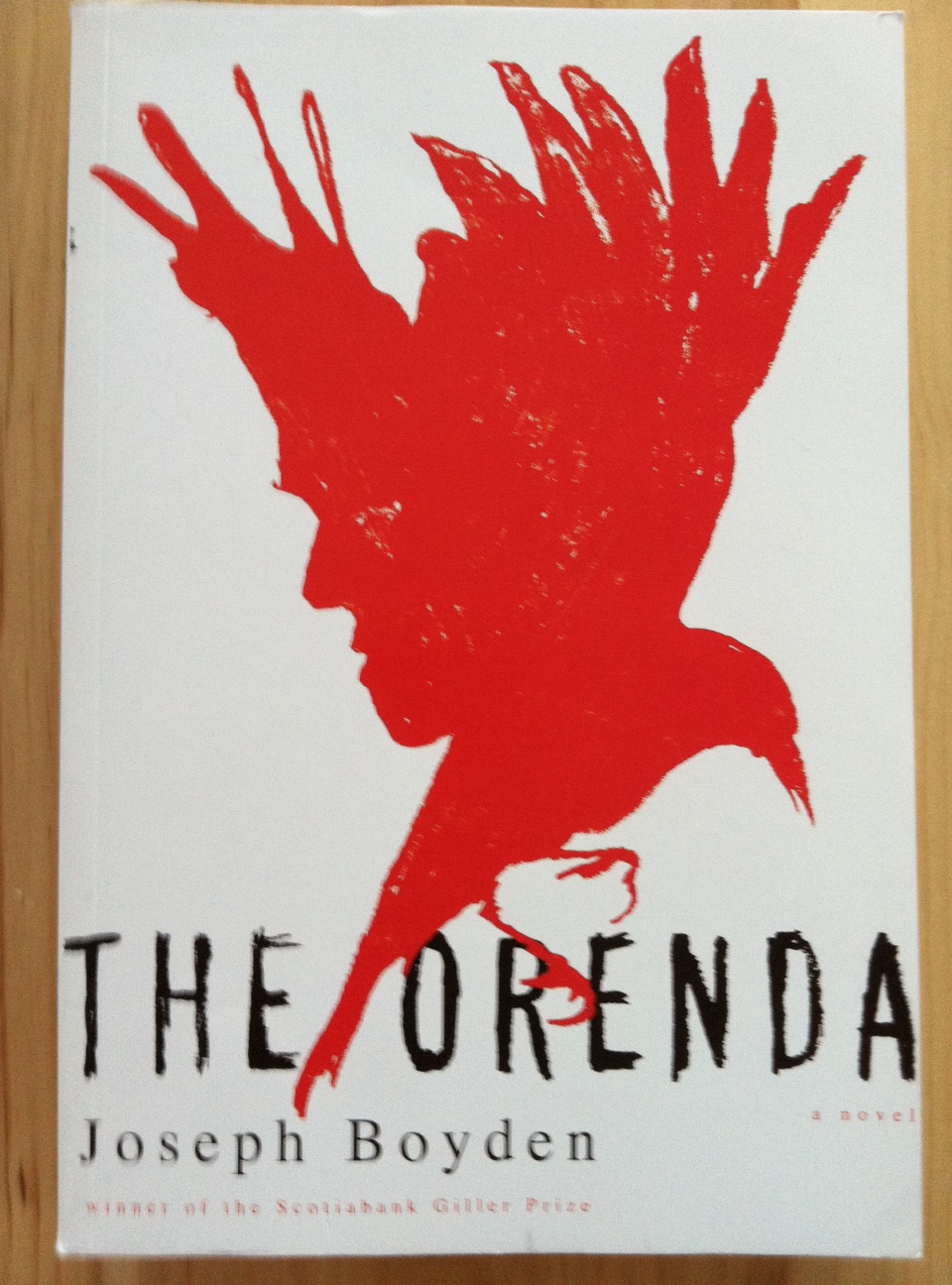
photo (76)Joseph Boyden’s The Orenda* has elicited torrents of praise and some critiques since it was published in Canada last year. You may file this post in the “torrents of praise” category.

Set in what is now Ontario in the mid-seventeenth century, The Orenda‘s present-tense narration and gorgeous detail lend it a stunning sense of immediacy. We watch events unfold from three characters’ perspectives: Bird, a Wendat (Huron) warrior and elder, still grieving over the murder of his wife and daughter years before The Orenda’s events take place; Snow Falls, a Haudenosaunee (Iroquois) girl captured and adopted by Bird after he kills her family; and Christophe, a French Jesuit priest, who, thanks to his facility with language, has been sent to Canada to convert the Wendat to Christianity. Bird, Snow Falls, and Christophe (called The Crow by the Wendat because of his dark robes) witness and play parts in the events that eventually lead to the decimation of the Wendat.

Mr. Boyden’s prose is wonderful; his characters are fully rounded and realized, with distinctive voices. In addition to Snow Falls, Bird, and Christophe, we meet the healer Gosling, an Ashinaabe woman who lives with the Wendat and is Bird’s lover; she has premonitions of the disaster that Christophe’s coming will bring, but is unable to forestall disaster. Snow Falls finds herself drawn to Carries an Axe, a boy who so longs to be a man that his behavior verges on cruelty at times. Gabriel and Isaac, two missionaries who join Christophe in the second part of the novel, share Christophe’s missionary zeal, if not his hard-won patience. Gentle Isaac appears sometimes child-like after the trauma of torture by the Haudenosaunee, and Gabriel often seems arrogant in his impatience and condescension toward the Wendat.

The missionaries, soldiers, and colonists have inserted themselves into an already brutal ongoing war between Native peoples, with shattering consequences. Indeed, The Orenda features several scenes of gruesome torture (comparable or more violent than those in A Constellation of Vital Phenomena, say), which scholar Hayden King takes issue with in his critique of the novel:

[. . .]The Orenda, where violence and torture is both the exclusive domain of the Indians and endemic in their societies since time immemorial. The inevitable conclusion is that Indians were really just very violent. It’s not a surprising conclusion considering that Boyden seems to rely heavily on travelogues (journals of Jesuits) for his historical information.

This despite the obvious bias stemming from the interest Jesuits had in perpetuating tales of savagery among the Indians – it justified their own existence, after all.

So problematic are these accounts of sadism, they’ve long been excused by critical thinkers, many academics, and Indigenous peoples themselves. The Haudenosaunee have insisted that some of the practices depicted in the book ended hundreds of years earlier.

While I accept Professor King’s assertion that the novel’s depictions of torture may be based on Jesuit travelogues, with all their inherent prejudices, The Orenda is a novel, and no matter how historically accurate the author means it to be, it is still fiction. Furthermore, Christophe himself compares the tortures that the Wendat and the Haudenosaunee inflict on each other with the tortures perpetrated by the Inquisition (p. 227-228 in ARC); violence in the novel is not the sole province of indigenous peoples. I would also argue that the novel clearly depicts Christophe’s and his fellow missionaries’ activities — however well-intentioned — as violent (separating families, frightening people with stories of Hell, etc.), attempting to replace one sophisticated and spiritual worldview with their own. Take this passage, in which Gosling replies to Christophe’s assertion that he does not have enough power to divide a nation:

“Your wampum speaks quite the opposite of our beliefs,” Gosling says, as if she hasn’t heard me.
“What do you mean?”
“Your wampum declares that everything in the world was put here for man’s benefit. Your wampum says that man is the master and that all the animals are born to serve him.”
“Is this not true?” I ask.
She smiles, shaking her head. “Our world is different from yours. The animals of the forest will give themselves to us only if they deem it worthy to do so.”
“So you claim that animals have reason, then? A consciousness?”
“I say that humans are the only ones in this world that need everything within it.” She stops stroking Isaac’s braid. “But there is nothing in this world that needs us for its survival. We aren’t the masters of the earth. We’re the servants.” (p. 146 in ARC)

While Mr. Boyden attempts to avoid creating obvious villains (even the Haudenosaunee, implacable enemies of the Wendat, dangerous and feared, are represented by Snow Falls), and presents Christophe as a man guided by a faith he truly espouses (he truly believes he is saving souls, and acts with great bravery on many occasions in the book), The Orenda is not a novel that excuses colonialism. The menace is obvious from the very beginning, but French intentions toward the Wendat are laid bare — as is Christophe’s complicity — early in the novel, at a dinner given by Champlain that both Bird and Christophe attend. In French, so that Bird and his war-bearers will not understand, Champlain says,

“For the French to crack this great continent and all of its wealth–and I mean the wealth of souls, Fathers–we must crack the Huron Confederacy. They are the ones,  clearly, who control the trade in this savage land. And so we must control them.” His eyes burn into me. “That’s where you come in, dear Fathers. It is your job to bring them to Christ. We will then leave it to Christ to bring them to us.” (ARC p.113)

Despite all its tragedy, The Orenda is also a celebration and an examination of love in all its forms. One of its most beautiful and moving sections is a depiction of the Wendat Feast of the Dead, the mass reburial of loved ones’ remains when the community decided to move to a new village. Even the dead are cherished beyond all reckoning.

“Orenda” means life-force, something like “soul,”  and as an unnamed narrator says, “Orenda can’t be lost, just misplaced. The past and the future are present.” 

The Orenda is a beautiful, tragic novel. I hope you’ll read it.

*I received an ARC of this book from the publisher in exchange for an honest review.

Recommended Reading: The Temporary Gentleman, by Sebastian Barry

photo (75)Jack McNulty, the title character of Sebastian Barry’s The Temporary Gentleman* is a man pursued by regret and bewildered by his own self-deception.

In the novel’s first pages, Jack describes his dramatic first entrance into Accra during the Second World War, from his vantage point more than ten years later in the same city, now changed with time and the advent of independence from British rule. It is 1957, and Jack has decided that he must come to grips with his own life — its many unusual occurrences, its current aimless state, and its one great love, Mai Kirwan.

Jack and Mai meet in Sligo just as Ireland is acclimating to the end of British rule (just one of several parallels between Ireland and Ghana in the novel); Mai is beautiful, educated, and rather too good for Jack, as it seems to some. Their life together is tempestuous, marred by alcoholism in particular. It is not a happy tale; Jack’s story, told haltingly, is the story of how it all went wrong.

The Temporary Gentlemanis a melancholy, quiet novel; Mr. Barry is more than adept at conjuring up the atmosphere in Accra during the rainy season or Sligo, too, in the rain: “After the picture we stepped out on vulnerable leather soles into a street that was flooded by a savage temper tantrum of summer rain, a great, moving varnish of glistening black” (37).

It’s a novel to be savored for its lyrical passages — including a virtuoso sentence, nearly three pages long, which describes a German bomb hitting an RAF camp — and its keen probing of the human condition. There is blame, yes, but there’s also love, even for someone as frail, as difficult, as unseeingly observant as Jack.

This is my favorite passage, I think, one that gives you a sense of the novel’s tone:

But of course it is all long ago, and a hundred different fates and stories have swallowed up my comrades, as my own fate has swallowed me. We are in the great belly of the whale of what happens, we mistook the darkness for a pleasant night-time, and the phosphorescent plankton swimming there for stars. (59)

*I received a copy of this book from the publisher in exchange for an honest review.

The Poetry Concierge Recommends: Two Books, This Time Per Request

[The Poetry Concierge is an occasional feature here on Rosemary and Reading Glasses wherein I select a poem, poet, or book of poems for individual readers based on a short questionnaire. Come play along! Read the introductory post here, the first recommendation here, and then email me at: rosemaryandreadingglasses [at] gmail [dot] com.]

This week, our pilgrim in search of poetry is Rick, who blogs about books over at Another Book Blog. Rick went very public with his poetry concierge request (a minor, forgiven insurrection); he further stipulated that he’d like me to recommend two books of poetry, which will become part of his self-re-education program. No pressure or anything.

1. When you read fiction, who’s your go-to author?

I don’t know if I’ve ever had a go-to author, to be honest. I don’t have anyone specific that I turn to when I’m in a reading funk. If anything, my literary achilles heel has always been how easily I get bored with any one thing after a while. However, if there’s anyone who even comes close, it’s Tad Williams. He’s probably my single biggest inspiration, and the author from whom I’ve read the most.

2. If you read nonfiction, which subjects are most likely to interest you? (cultural history, science, biography, memoir, survival stories?)

I really love nonfiction books about people who challenge the status quo. I’m not a big backer of rebellion per se, at least not in any physical way, but intellectual rebellion really appeals to me. I’m fascinated by religion, and science, and historical shifts.

3. If you were stuck on a desert island for a week, which five books would you bring to keep you entertained?

A.J. Jacobs’ The Know-It-All, because it’s basically an encyclopedia in less than 400 pages. Bill Bryson’s A Short History of Nearly Everything, because it’s the best science text for the uninitiated I’ve ever read, and I swear to god it’s funny. Apathy and Other Small Victories, probably the funniest book I’ve ever read. Essex County, my favourite graphic novel of all time, a truly brilliant piece of literature short enough to savour in just a week of exile. And a book of Mad Libs, because ever since I discovered how funny they can be when you think of the most disgusting answers possible, they’ve been one of my favourite things on Earth.

4. If you were on a five-year mission to Mars, which five books would you bring to keep you sane?

I Know This Much is True by Wally Lamb, River of Stars by Guy Gavriel Kay, The Brothers Karamazov by Fyodor Dostoevsky, The Book of Joby by Mark J. Ferrari, and Skippy Dies by Paul Murray. Four of them because they’re four of my favourite single volume stories (and they’re all really long), The Brothers Karamazov because I’ve always wanted to read it, and five years on Mars sounds like I’d finally find the time.

5. What kinds of questions are most likely to keep you up at night? (death, the nature of love, politics, environmental issues, meaning of life, end of the world, justice and injustice, etc?)

I’ve always been a fan of righteous indignation. I’m fascinated by spirituality even though I don’t subscribe to anything in particular. I’m in awe of the universe and all it’s (likely) unanswerable questions. I couldn’t give two s**ts about conversations regarding politics and the environment because there hasn’t been a single one I’ve come across that hasn’t degenerated into smart people sounding like partisan a**holes. [Sorry for the censorship, but my Mom reads this blog, so, you know. –CO]

6. If you’ve read poetry before, what have you liked? What have you disliked?

The one work of poetry that’s actually resonated with me (that’s lasted more than a month is In Memoriam by Lord Alfred Tennyson. I’ve always been awestruck at how thousands of people have been arguing both for and against its Christian/anti-Christian message for hundreds of years. It takes a special kind of rhetorical talent to receive adamant support from both of those groups at the same time. For the record, I think it’s clearly a Christian poem by the end, but Tennyson’s willingness to question his faith has always been the measuring stick to which I hold up all religious persons. Furthermore, it’s just beautifully written and undeniably tragic and heartfelt.

As for what I don’t like: If you prescribe me something like The Red Wheelbarrow, then “Friends Off.”


Like I said, no pressure.

Rick’s into big ideas — science, religion, meaning of life, that kind of thing, so right off I dismissed light verse as a possibility, even though Rick has a wily sense of humor (no Edward Lear for you, Rick.). And while I’m tempted to round out Rick’s poetic education with other DWMs (Dead White Men, for those in the peanut gallery) — think Yeats, Eliot, Browning, Donne — I think living poets deserve to be read by a reader like Rick.

So here are my bold picks:

photo 2 (13)Anne Carson’s work defies categorization, blending poetry, Classics (capital-C), translation, drama, essays, prose, and scholarship. She’s a phenomenal intellect. I was tempted to start off with the unbelievably good Glass, Irony, and God, but given Rick’s fondness for Satan — the Miltonic Satan, that is — I think a poem about a winged red monster might be in order. Anne Carson’s Autobiography of Red is incredibly weird and wonderful, a novel in verse form (framed with some classical scholarship and jokes — just go with it, and it works) in which she transforms the myth of Geryon — said monster, killed by Herakles as one of his labors — into a most unusual bildungsroman. Geryon is a lonely, artistic soul, just a little boy when we first meet him, and Ms. Carson captures his pain and his pleasures with a lens that’s never sentimental, only scintillating. It’s heartbreaking and gorgeous. I’m surprised every time I re-read it.

Bonus: Anne Carson is Canadian, so Rick gets a little CanLit infusion for his syllabus.

Double Bonus: There’s a sequel!

photo 1 (16)Next, I’ve selected Tracy K. Smith’s Life on Mars (which won the Pulitzer in 2012). You want science and the universe, Rick? Here it is. As the New Yorker‘s review puts it, “Smith’s central conceit allows her to see us, our moment, as specks in the future’s rearview mirror. Futures and pasts are, in astronomy as in poetry, all mixed up.” Life on Mars is, in part, an elegy for Ms. Smith’s father, who worked on the Hubble space telescope. The tone varies from wonderment to fury and back again, as the poems consider matters both existential and quotidian, personal and political. Take a look at “Sci Fi,” which is the poem of the week, for an example of Ms. Smith’s original take on the future.

Rick, I (fervently) hope you’ll find poems you love in these books. Thanks for writing in!


Would you like the Poetry Concierge to make a recommendation for you? Check out the introductory post, and send your answers to the questionnaire, along with the name and/or blog you’d like posted with the reply, to rosemaryandreadingglasses [at] gmail [dot] com.