“‘What do you hate, / and who do you love?'”: Taha Muhammad Ali’s “Meeting at an Airport”

Since it’s National Poetry Month, I’ll once again recommend The Poetry Foundation’s app (conveniently called Poetry) if you’re looking for a little more poetry in your life (and who isn’t?). It’s perfect for a little pick-me-up when you’re feeling stressed, or when you’re waiting for the bus and realize you’ve forgotten your book (horror!), or when you’re a book blogger looking for a poem to recommend.

Speaking of which . . .

I just read “Meeting at an Aiport,” by the late Palestinian poet Taha Muhammad Ali. It’s just lovely, joyous and sad all at once, and a perfect example of what a gifted poet can do with simple repetition.

So, which new poets and poems have you discovered lately?

“And early though the laurel grows / It withers quicker than the rose.”

To an Athlete Dying Young

A. E. Housman

The time you won your town the race
We chaired you through the market-place;
Man and boy stood cheering by,
And home we brought you shoulder-high.

Today, the road all runners come,
Shoulder-high we bring you home,
And set you at your threshold down,
Townsman of a stiller town.

Smart lad, to slip betimes away
From fields where glory does not stay,
And early though the laurel grows
It withers quicker than the rose.

Eyes the shady night has shut
Cannot see the record cut,
And silence sounds no worse than cheers
After earth has stopped the ears.

Now you will not swell the rout
Of lads that wore their honours out,
Runners whom renown outran
And the name died before the man.

So set, before its echoes fade,
The fleet foot on the sill of shade,
And hold to the low lintel up
The still-defended challenge-cup.

And round that early-laurelled head
Will flock to gaze the strengthless dead,
And find unwithered on its curls
The garland briefer than a girl’s.


(Rest in peace, EVC.)

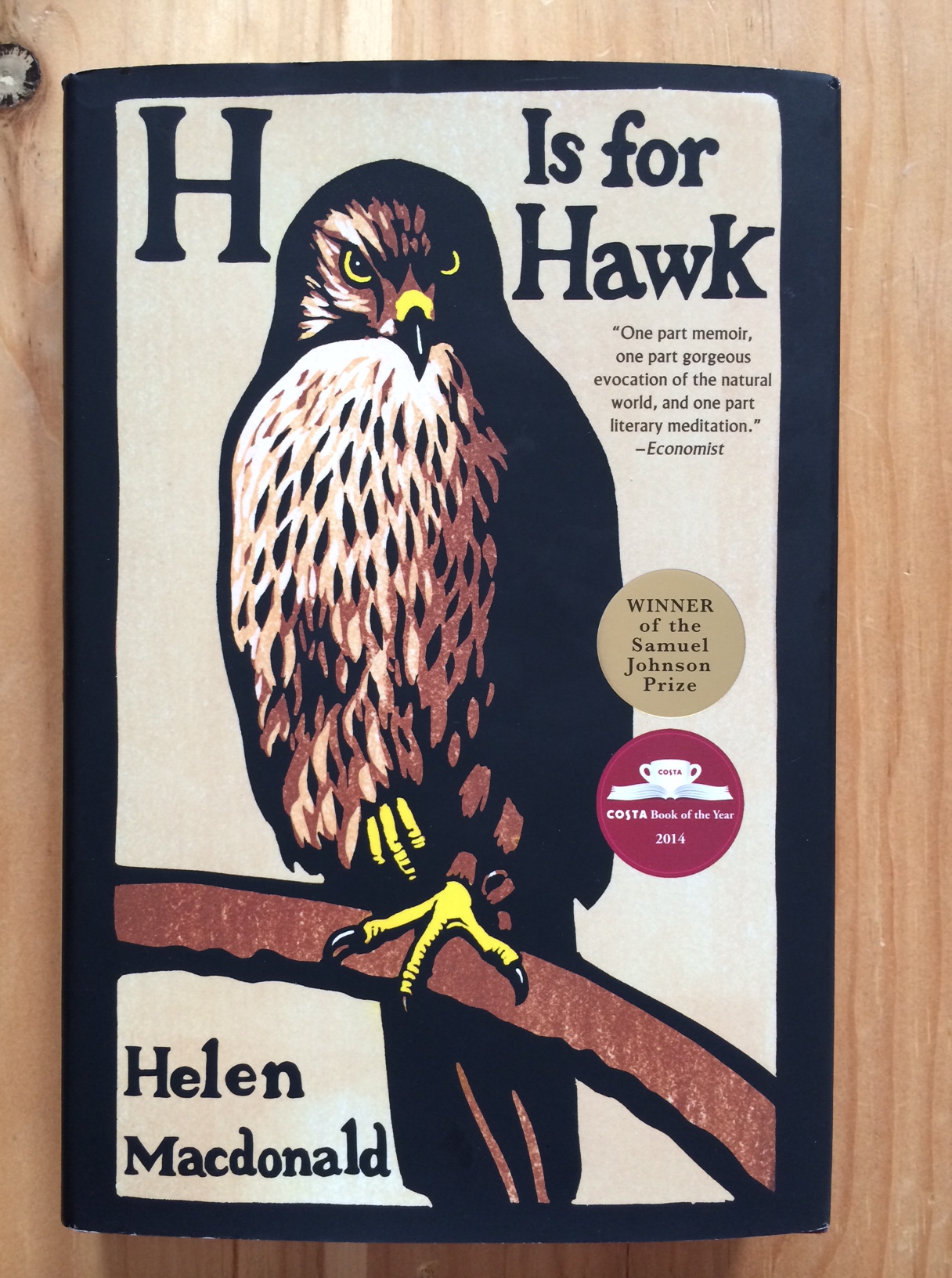
Recommended Reading: H is for Hawk, by Helen Macdonald

photo (29)Helen Macdonald’s H is for Hawk* is the best book I’ve read this year. It is simply stunning, and I suggest you go out and get a copy right now.

Winner of the Samuel Johnson Prize and a bestseller in the United Kingdom, H is for Hawk is described as part memoir, part natural history, and part literary history (I’d also add that it’s a study of the English landscape). In it, Ms. Macdonald takes readers through the harrowing months after her father’s sudden death in 2007, when stunned by the loss, she decided to distract herself from grief by training a goshawk, a notoriously difficult (and deadly) bird that she had never worked with before.

As Helen finds herself submerging into the hawk’s world, she also becomes immersed in T.H. White’s book The Goshawk, and with White himself. Best known now for The Once and Future King, White was a deeply troubled man who failed spectacularly when it came to training his goshawk, and as Helen explores his life we see the way his relationship with his hawk diverges from her relationship with her own goshawk, Mabel. While White, furious with his own life, seemed determined to make the hawk into his mirror, Helen runs from death and grief by nearly becoming the hawk—a futile pursuit, since the hawk is a death on wings. Surfacing proves immensely difficult.

photo (30)

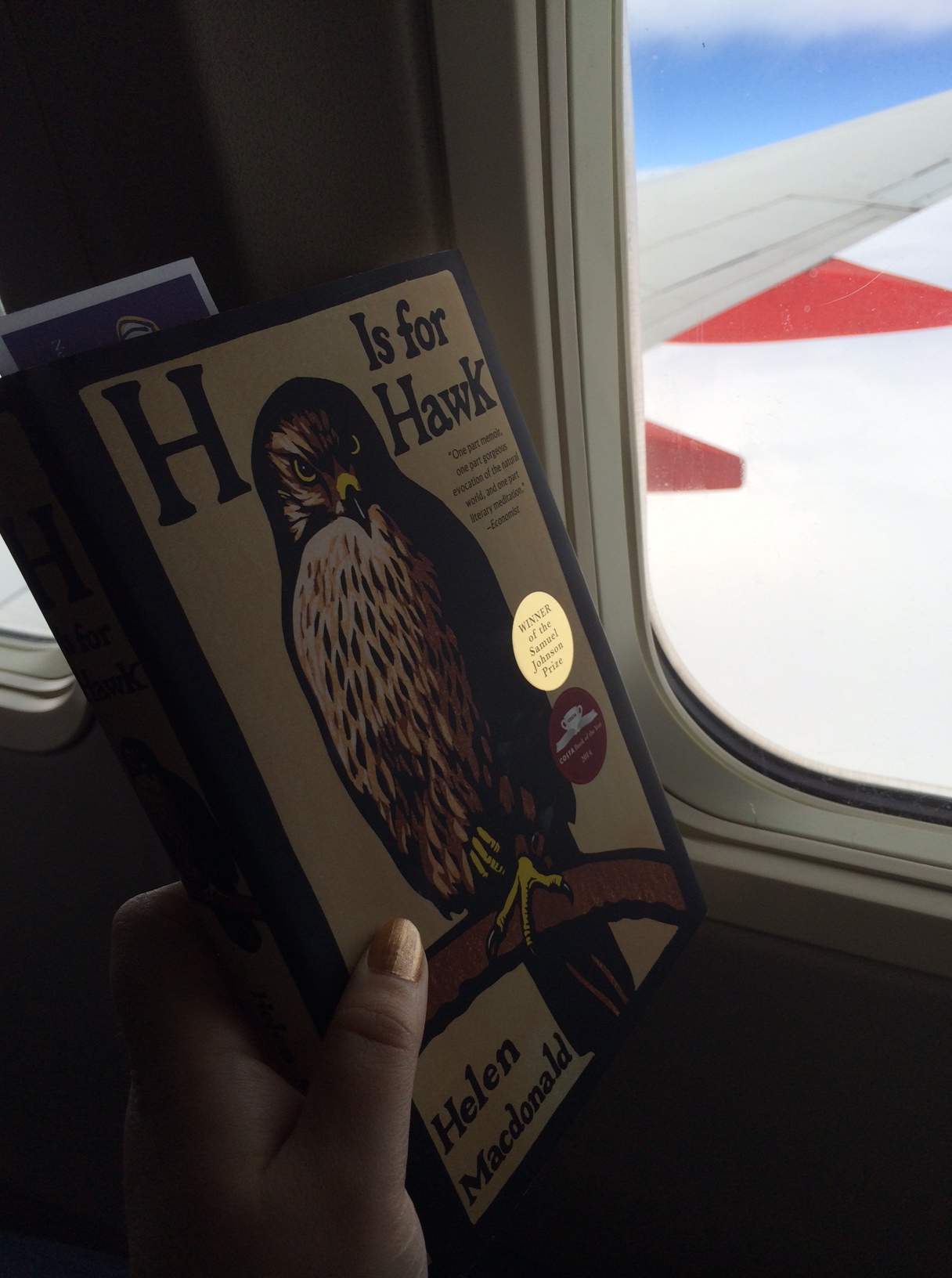
Reading in the air, which seemed particularly appropriate in this instance.

I feel that I’m not explaining this book very well. Perhaps it would help if I told you that I dislike birds–they are, as Ms. Macdonald points out, essentially flying dinosaurs. I find their reptilian feet and eyes unnerving and their silence creepy (I like the twittering and what-not, romantic that I am). But I could not tear myself away from the descriptions of Mabel’s grace and prowess, and the complicated workings of her body and behavior. Reading H is for Hawk made me think for a full minute about trying falconry one day (more on that below).

That I found the book difficult to read at times is another testament to just how good it is. Having experienced sudden bereavement myself, I deeply admired Ms. Macdonald’s courage in telling it–blinding grief, that is–like it is, in all its ugliness, while at the same time I found myself drawing back at the painful thought of losing my own father, with whom I am very close. H is for Hawk is a moving testament to the love and life of Ms. Macdonald’s parents, especially her father, who encouraged and shared his daughter’s passion for observing the world, wild and otherwise, and noting all its detail.

Those years of watching and noticing are beautifully rendered in Ms. Macdonald’s clear, vivid prose, which ranges from fierce to tremulous and back again. That she is also a poet is no surprise. Here’s her description of her first sight of Mabel, as the box holding the hawk opens:

Concentration. Infinite caution. Daylight irrigating the box. Scratching talons, another thump. And another. Thump. The air turned syrupy, slow, flecked with dust. The last few seconds before a battle. And with the last bow pulled free, he reached inside, and amidst a whirring, chaotic clatter of wings and feet and talons and a high-pitched twittering and it’s all happening at once, the man pulls an enormous, enormous hawk out of the box an in a strange coincidence of world and deed a great flood of sunlight drenches us and everything is brilliance and fury. The hawk’s wings, barred and beating, the sharp fingers of her dark-tipped primaries cutting the air, her feathers raised like the scattered quills of a fretful porpentine. Two enormous eyes. My heart jumps sideways. She is a conjuring trick. A reptile. A fallen angel. A griffon from the pages of an illuminated bestiary. Something bright and distant, like gold falling through water. (53)

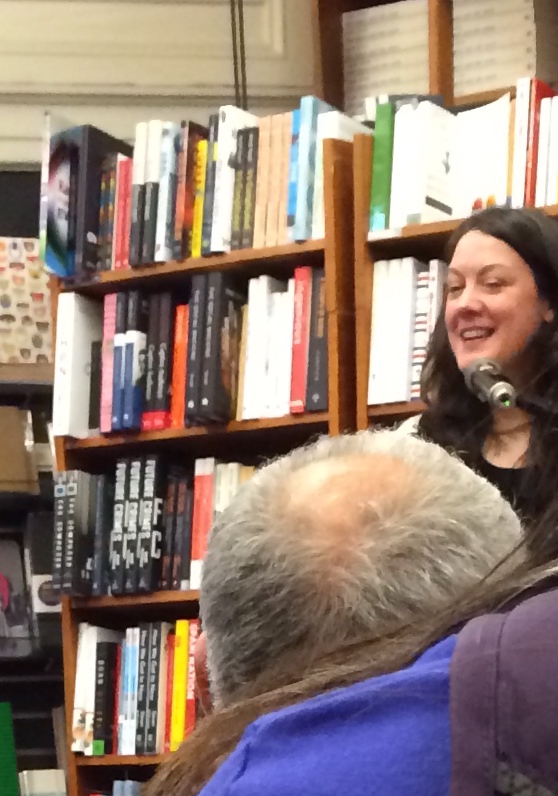
photo (32)At her well-attended first U.S. reading on Tuesday night at Harvard Bookstore, Ms. Macdonald read this passage and tipped her hat to Shakespeare (Referring to “fretful porpentine”: “That just dropped in there. I just wanted to say thank you, Mr. Shakespeare.”), which, combined with her self-deprecating humor (After an anecdote about showing birds of prey to schoolchildren: “Hawks are about 3000 percent more cool than I am, but they don’t talk very well.”) pretty much made me want to take her out to dinner to talk Hamlet and libraries. For those of you who read audiobooks, I can highly recommend this one, since Ms. Macdonald’s voice is perfectly suited to her material. In person she is funny, charming, and full of insight about books and birds and conservation. Falconers, it turns out, are great conservationists, and Ms. Macdonald makes a strong case both for how we tend to “give animals our meanings” (at the reading) and how “the wild can be human work” (H is for Hawk, 12).

I’m pleased as punch to have met her, though I do regret my shyness prevented me from asking about her favorite recipes for rabbit and pheasant.

photo (31)(By the way, longtime readers of the blog will note that I hardly ever get out to readings; they tend to fall in the middle of bedtime for Mr. H the toddler, and I always miss the ticketed ones at Harvard Bookstore. It’s a measure of how great this book is that I made it my business to get to the reading, with an assist from the intrepid Mr. O and the bookstore, which thankfully didn’t require tickets this time.)

I highly, highly recommend H is for Hawk.

If you’re looking for more on the book, check out:

This review (with cool pictures of Mabel) by someone who actually knows something about birds

This interview (with excerpt) on NPR

The Grove Atlantic author book tour schedule

*I received a copy of this book from the publisher for review consideration, which did not affect the content of my review.

Happy National Poetry Month! Have Some Hopkins.

photo (28)It’s National Poetry Month! Are you celebrating with sonnets or pantoums? Sestinas or epigrams? Odes or rondels? Do tell.

It came to my attention, because I was thinking about dinosaurs and dragons (tip of the hat to parenthood there), that I’ve never featured Gerard Manley Hopkins, who wrote one of my favorite alliterations of all time: “dragonish damask.”

Weep no more, Dear Readers. This shocking oversight is remedied below with “Spelt from Sibyl’s Leaves.”

Earnest, earthless, equal, attuneable, ‘ vaulty, voluminous, … stupendous
Evening strains to be tíme’s vást, ‘ womb-of-all, home-of-all, hearse-of-all night.
Her fond yellow hornlight wound to the west, ‘ her wild hollow hoarlight hung to the height
Waste; her earliest stars, earl-stars, ‘ stárs principal, overbend us,
Fíre-féaturing heaven. For earth ‘ her being has unbound, her dapple is at an end, as-
tray or aswarm, all throughther, in throngs; ‘ self ín self steedèd and páshed—qúite
Disremembering, dísmémbering ‘ áll now. Heart, you round me right
With: Óur évening is over us; óur night ‘ whélms, whélms, ánd will end us.
Only the beak-leaved boughs dragonish ‘ damask the tool-smooth bleak light; black,
Ever so black on it. Óur tale, O óur oracle! ‘ Lét life, wáned, ah lét life wind
Off hér once skéined stained véined variety ‘ upon, áll on twó spools; párt, pen, páck
Now her áll in twó flocks, twó folds—black, white; ‘ right, wrong; reckon but, reck but, mind
But thése two; wáre of a wórld where bút these ‘ twó tell, each off the óther; of a rack
Where, selfwrung, selfstrung, sheathe- and shelterless, ‘ thóughts agaínst thoughts ín groans grínd.


You can hear poet Mary Jo Bang talk about this poem and read it here. I also recommend reading it aloud yourself. It has an oddly salubrious effect.

Recommended Reading: Trigger Warning, by Neil Gaiman

photo (26)The first book of Neil Gaiman’s that I read was Smoke and Mirrors, a long, long time ago, and so I’m used to to thinking of him as a short-story writer; Trigger Warning was a bit like getting reacquainted with an old friend (don’t get me wrong: I love American Gods as much as the next Gaiman fan).

Trigger Warning (the subtitle is Short Fictions and Disturbances) is a wildly varied collection. In it you’ll find poems, a fairy tale or two, a story set in the world of Dr. Who (comprehensible even to me, who’s never seen the show), a novelette, small horror stories, a Sherlock Holmes mystery, a story that brings back Shadow, the protagonist of American Gods, and more.

Not all readers will love every piece; I found some stronger than others, but no piece left me cold (chilled, in some cases, by creepiness). The standouts for me were varied, and included “Jerusalem,” “The Man Who Forgot Ray Bradbury” (among other things, it’s a meditation on language and memory and literature), “A Calendar of Tales” (itself widely varied), “My Last Landlady” (a poem that’s a fabulous twist on Browning’s “My Last Duchess”), and “The Sleeper and the Spindle” (best. fairytale. ever.).

Essentially, if you like Neil Gaiman’s writing, you’ll find something to like in this collection.

And I have to say, as someone who always reads introductions, forewords, acknowledgments, and rights listings (yes, really), that this is one of my favorite introductions of the last five years. Mr. Gaiman talks about why he called the book Trigger Warning (a tricky concept that he approaches with attentiveness), his own feelings about and history with disturbing fiction, and, delightfully, the background of each of the book’s pieces. I love having that kind of information, and Mr. Gaiman’s generosity of spirit shows in the way he tips his hat to friends and fellow writers.

On Julia Wendell’s Take This Spoon

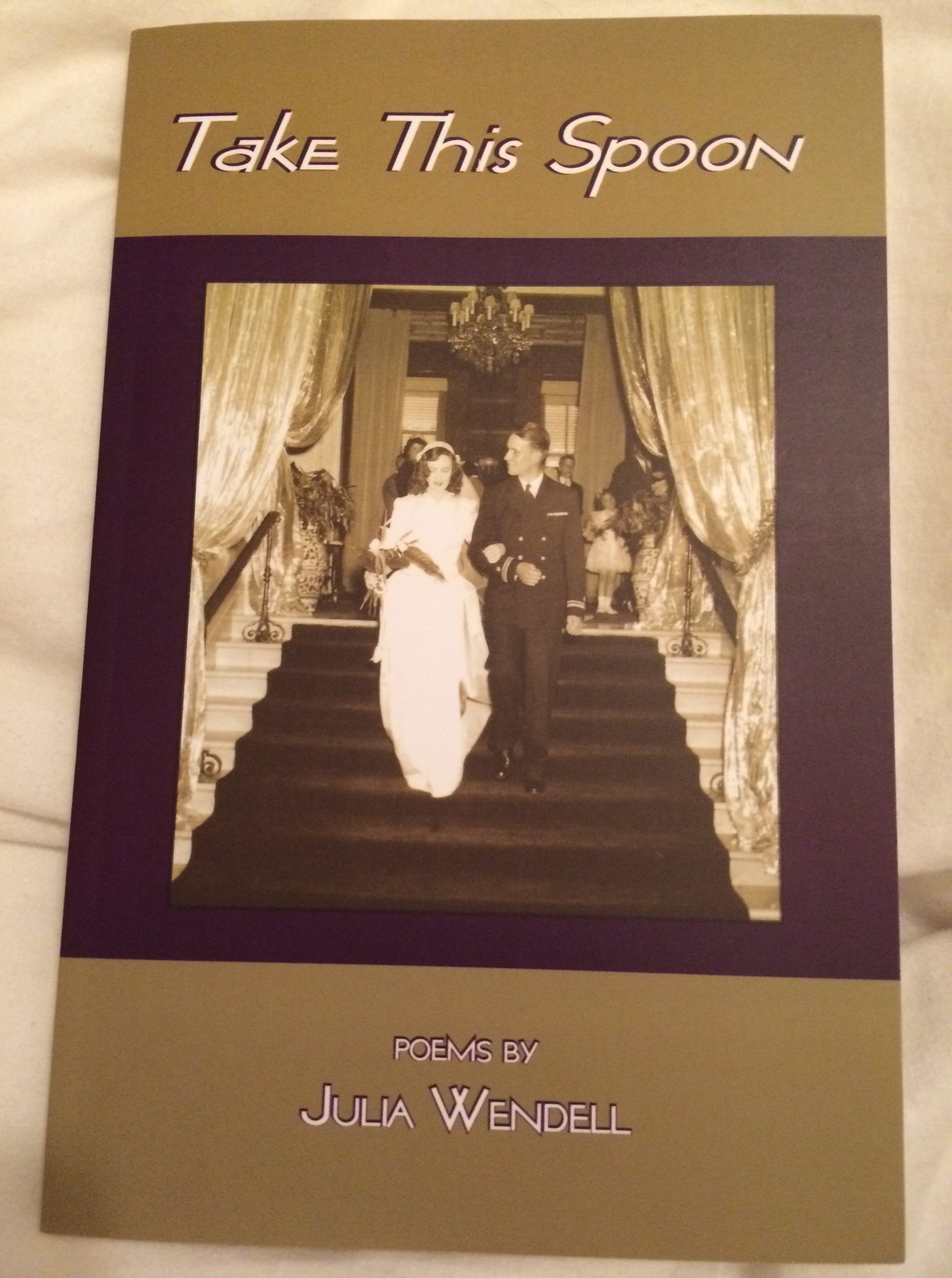
photo (27)Julia Wendell’s Take This Spoon* is a deeply personal and strikingly accessible collection of poems that brings together the poet’s memories of food and family, heartbreak and health.

Ms. Wendell opens each section of the book with a family recipe (which, I have to say, made me long for my pre-paleo days) for something delectable and luxuriously rich (cheese soufflé, peanut butter pie, an intensely garlicky salad that I want right now). The poems pick up on these recipes, investigating the place of food in domestic life and in the poet’s personal history, which includes struggles with both anorexia and addiction. These challenges are at the heart of the collection, as the poet confronts her relationship with her mother and how it affects her responses to her own children.

Ms. Wendell’s informal and comfortable style is disarming; these are poems you can imagine as conversations in the poet’s kitchen. Her descriptive language is evocative, not only of culinary exploits, but of the experiences of childhood and parenthood, and the gap between the two.

For a taste of Take This Spoon, you can visit Ms. Wendell’s website to read “Cream of Tartar.”

*I received a copy of this book from the author for review consideration, which did not affect the content of my review.

How to Tell If You’re In a Renaissance Revenge Tragedy

In the spirit of The Toast’s “How to Tell If You’re in a _____________ Novel” series, I present:

How to Tell If You’re in a Renaissance Revenge Tragedy

Your name, when translated, actually means “revenge.”

A ghost wants you to do him a favor.

You have had sex with someone totally wrong for you—like your husband or your stepmother.

You have a personal relationship with a skull.

No one around you has decent night vision or the ability to see through disguises.

You have caused a string of accidental casualties this week.

You haven’t realized that there is always someone behind the tapestry.

You are a woman who is either a mother, or old enough to be somebody’s mother. Therefore you are an unprincipled wanton.

You are in an Italian city-state. Or Denmark. Or Spain. But definitely not England. Nope. Nothing English about this place.

You are eating or drinking something. It is poisoned.

You find yourself at a court where incest is pretty much de rigueur.

Your wildest fantasies involve an orgy of violence. And possibly cannibalism.

Your brother believes he is a wolf.

You are busy setting up a play or masque that will prove your nemesis is evil. You already know he is evil, and no one will understand the implications of your play, except your stoic best friend and/or brother.

Your hobbies include reading and feigning madness.

You are a woman. One of your male relatives is spying on you, obsessed with the condition of your hymen and/or womb. You will end up mad or dead or both.

Whenever someone writes a letter, someone else dies.

You are a woman. You marry the man you love. You find that this is a mistake.

If you are likeable, you prefer to kill people by stabbing them or poisoning them, in that order. If you are unlikeable, reverse the order.

You are in a room with everyone you hate (who isn’t already dead) and everyone you love (who isn’t already dead). You are all going to die, with one exception.

You are not the exception.

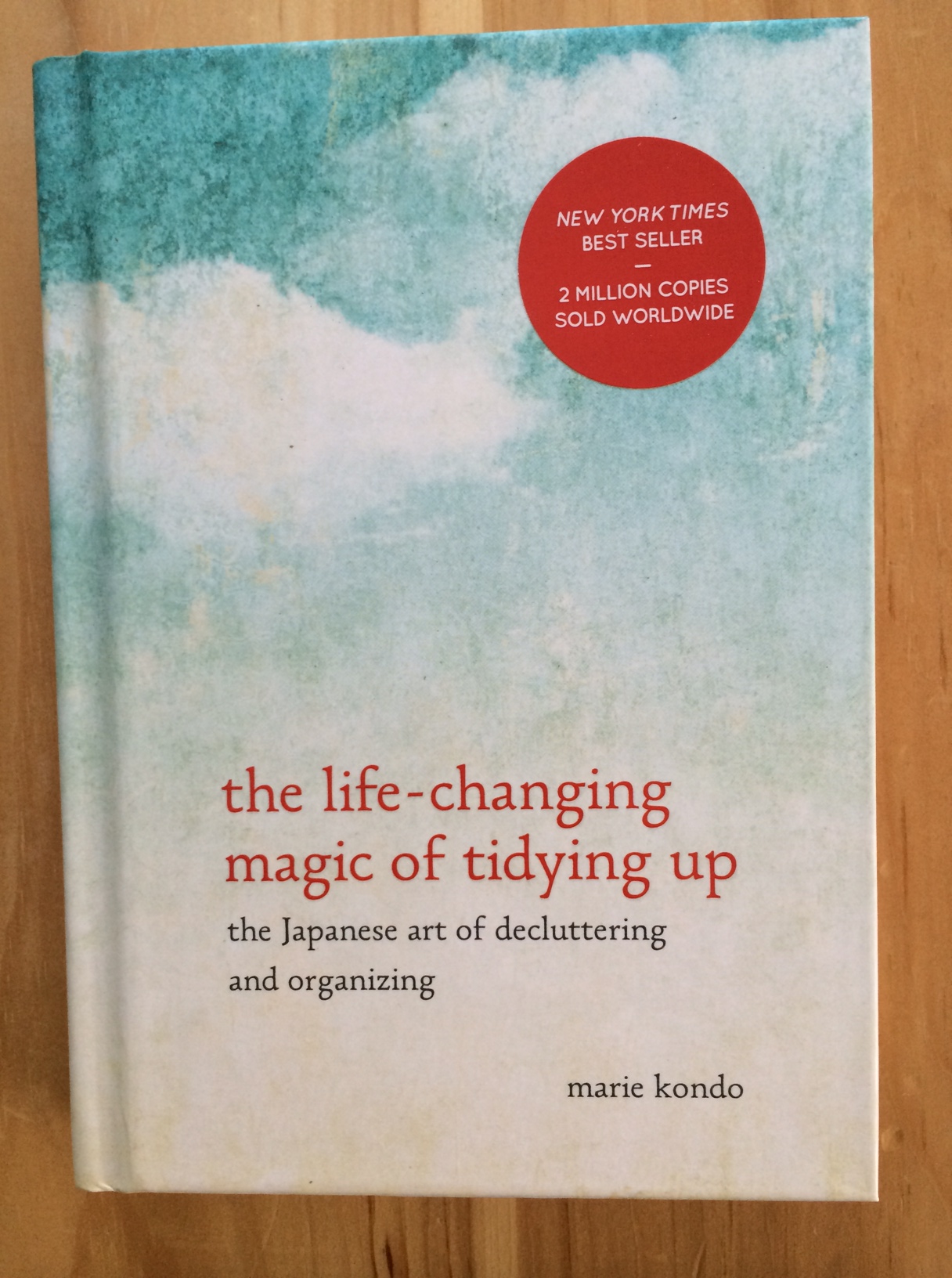
Review: The Life-changing Magic of Tidying Up, by Marie Kondo

photo (24)Chances are that by now you’ve run across Marie Kondo’s The Life-changing Magic of Tidying Up; it’s a big bestseller, and I know my Instagram feed has definitely featured before and after pictures of friends’ clothing collections.

In brief: Ms. Kondo, who is a celebrity in her native Japan thanks to her wildly successful books, shares her prescription for tidy living. It is a one-time process (though it may take weeks or months to finish) that involves sorting through every item one owns, according to categories (clothes, books, papers, etc.) and relinquishing those that do not “spark joy.” In her experience, clients who try her system not only find themselves in a tidy, clean space (very important in Japan, where housing is smaller and even more expensive, than, say, Boston, ahem), but also find myriad other benefits to living a tidy life.

As Molly Young writes for The Cut,

Kondo doesn’t nag. Instead, she urges a kind of animistic tenderness toward everyday belongings. Socks “take a brutal beating in their daily work, trapped between your foot and your shoe, enduring pressure and friction to protect your precious feet,” she writes. “The time they spend in your drawer is their only chance to rest.” Purses merit similar reverence: “Being packed all the time, even when not in use, must feel something like going to bed on an empty stomach.” Kondo’s thesis—that the world is filled with worthy recipients of mercy, including lightweight-microfiber ones—is as lovely as it is alien. It’s empathy as an extreme sport.

I wanted to read this book because I love organizing. I loathe doing the dishes and try to make existential jokes whenever I’m forced to vacuum, but show me a closet in need of sorting, and I am there for you.My son (nearly 4) has seen me organizing with glee often enough that he requests it at least once or twice a month (6:30a.m.: “Mama, Daddy! Today we or-nize my dressah!”). Ms. Kondo advocates folding clothes in squares, to be lined upright in drawers, which is a method I saw on Pinterest quite a while ago, and friends, it is awesome and I had a marvelous time folding laundry during that happy week.

But this is a serial sort of organization, never truly finished, that Ms. Kondo claims will be unnecessary once her method goes into effect. I believe her, and so I’m a little afraid to try it and lose an activity that I find both calming and absorbing.

The other reasons I’m wary of the Konmari method, as she calls it, can be found in this excellent essay by Lisa Miller (also in The Cut). I don’t really believe, in my heart of hearts, that if I’m without something, that I’ll always be able to run out and replace it. First, there’s the simple convenience factor; I much prefer having a pair of stockings in the drawer for the one time a year I’ll wear them—though they decidedly do not spark joy—than finding out 30 minutes before the wedding or party that I’ll have to run to Target. Second, I’m prone to anxiety, and that anxiety extends to the possibilities of layoffs and apocalypses, and if either of those things happens, I’d like to have backups of backups of things already in our apartment.

Then there’s the chapter on books. I leave you to contemplate the possibility that I will put all 1000-odd books I own on the floor, touch each one, and discard a great many before replacing the ones I truly love on the shelves.

[Sidebar: Coming later this year is my Theory of the Personal Library.]

Anyway, I think this book could be very helpful for people who do want to engage in major cleaning and tidying projects, since it’s not a self-perpetuating system and does not involve the investment of thousands of dollars in Elfa products. I also like some of Ms. Kondo’s strategies for letting go of objects with sentimental value, though don’t ask me how I’m faring with that. It’s also fascinating in terms of its tidbits about Japanese culture (shrines and charms get their own section, for instance) and about Ms. Kondo’s own life; she’s very honest about the reasons she thinks she became so interested in organizing.

And then, of course, you could ignore the spirit of the book and pick and choose some of her organizational strategies. Not that I did that with my socks, or anything.

photo (25)

“a narrow plot of sand”: Natasha Trethewey’s “History Lesson” from Domestic Work

photo (23)Domestic Work is the first collection of poems by Natasha Trethewey, Poet Laureate of the United Sates from 2012 to 2014 and winner of the Pulitzer Prize. The collection won the inaugural Cave Canem Prize (an annual prize for the best first collection of poems by an African American poet), selected by Rita Dove. In both free verse and gorgeous formal poetry, these poems tell the stories of working-class African American people, focusing on men and women in the South in the twentieth century.

In her introduction to the book, Rita Dove writes, “With a steely grace reminiscent of those eight washerwomen [in the poem “Three Photographs”], she tells the hard facts of lives pursued on the margins, lived out under oppression and in scripted oblivion, with fear and a tremulous hope” (xi-xii).

It’s the tremulous hope that shines brightest in Domestic Work, but it’s a hope that flutters on the edges of a terrible past and an uncertain present. Take, for instance, “History Lesson.” At first, Trethewey describes a picture of herself as a small girl in a flowered bikini, toes curling in the sand “on a wide strip of Mississippi beach,” painting in vivid words the sense of the photo, and the bright sun of the day.

Then, at precisely the poem’s midpoint, the turn: “I am alone / except for my grandmother, other side.”

Now the focus shifts to the “history lesson” of the poem’s title, as Trethewey takes us back in time in two jumps. We learn that the poet’s grandmother is taking the picture in 1970—just “two years after they opened / the rest of this beach to us,” a chilling reminder of the cruelties of Jim Crow South; who could deny the pleasures of this beach, with its sun and its minnows, to a child?

And then the end of the poem completes the structure Trethewey has set up: it’s forty years since her grandmother (to whom the second half of the poem belongs)

stood on a narrow plot
of sand marked colored, smiling,

her hands on the flowered hips
of a cotton meal-sack dress.

The “meal-sack dress”  on is the visual counterpoint to the bikini Trethewey’s child-self wears, which seems like symbol of progress (out of poverty, and with only the beach behind it, not the dreadful sign). But then we remember that the picture of the poet is only two years past the end of the beach’s segregation, and progress—from “narrow plot” to “wide strip”—seems a fragile, fragile thing.

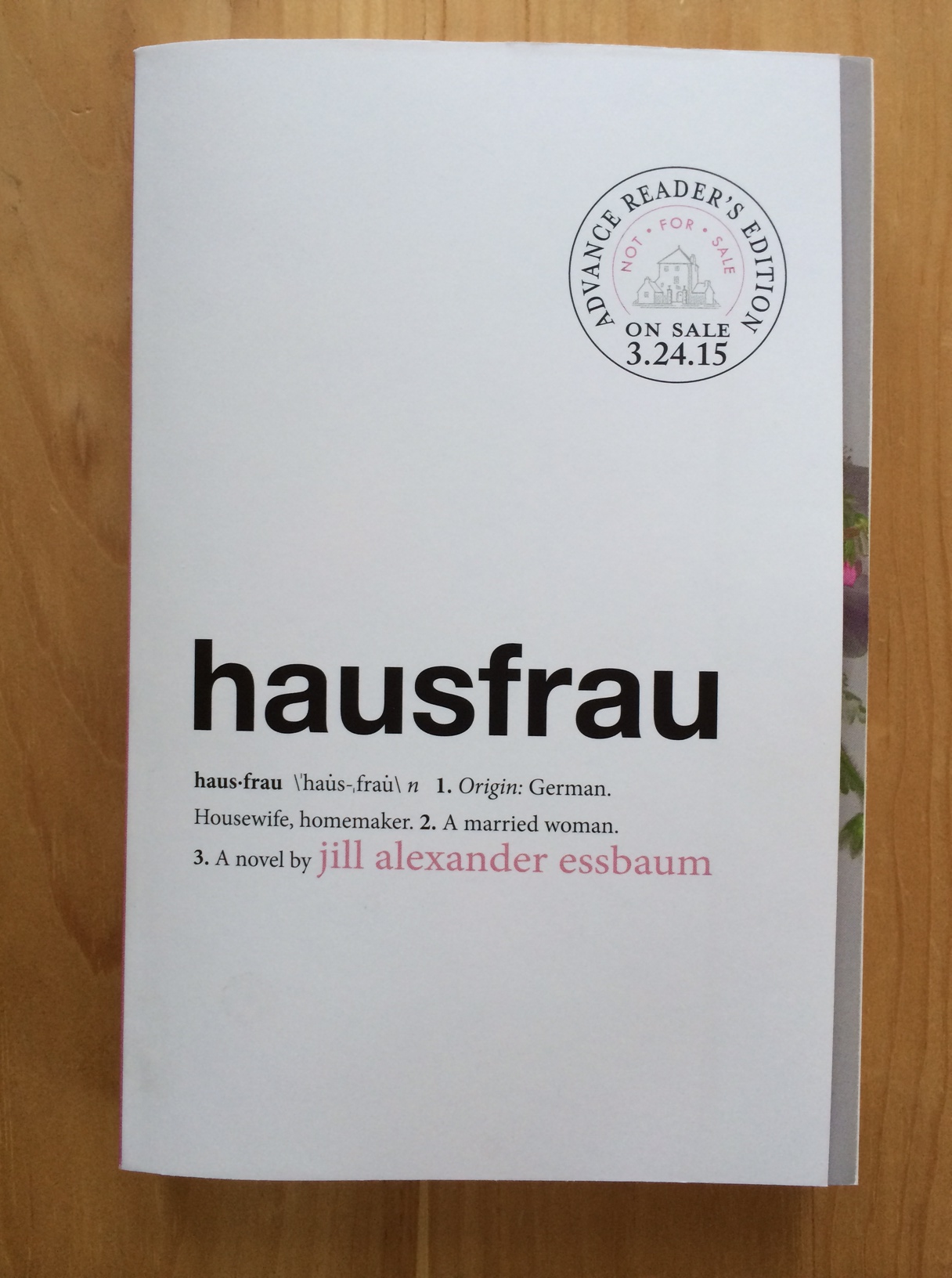
A Book in Need of a Book Club: Jill Alexander Essbaum’s Hausfrau

photo 2 (4)I found Jill Alexander Essbaum’s Hausfrau* to be well-written, intriguingly structured, and deeply frustrating.

This last characteristic is a measure of the skill Ms. Essbaum, who is a very well-regarded poet, brings to her characterization of Anna, the eponymous hausfrau.

Anna is an American who’s lived in Switzerland for many years, but who’s never felt at home in her adopted country. Outwardly, her life seems orderly and comfortable. She is married to a handsome and successful banker, has three beautiful children, and lives in a charming suburb of one of the world’s best cities.

Inwardly, Anna is a mess. She has trouble making friends, her husband is emotionally distant, and she doesn’t speak the Swiss variant of German, so she feels constantly isolated, even from herself. It’s difficult for her to understand her own feelings and impulses. To combat her isolation, Anna starts Jungian analysis (one of the best parts of the book, I thought), German classes, and ill-fated affairs.

As I said, Hausfrau is very well written—calibrated to elicit the reader’s undivided attention and inability to look away from Anna’s increasingly disastrous life. The narrative arc covers only a few months in time, but each chapter reaches back to past events and is molded by Anna’s conversations with her analyst, an interesting strategy that I came to admire as I adjusted to it.

Anna is very much alive, but reading about her was exhausting; I often felt overwhelmed by the details of her thoughts and experiences. And this is why I think this book screams for a book club: some readers are going to hate her, others are going to be entranced by the full psychological portrait, and some are going to feel both ways at once (yes, that’s me).

Spoilers ensue. 


If I were part of a real-life book club, here are some things I’d want to talk about.

photo 1 (3)1. The heroine’s name is Anna, she’s adulterous, and the first chapter involves trains. Anna Karenina much? We all knew what was coming, right?

2. If Anna is so unhappy because Bruno is so emotionally distant (and prone to violence, though it’s not clear how far that goes before the last episode), why doesn’t Anna get a divorce? Why not even talk about it or think about it? I thought this was unrealistic. Marriage certainly didn’t define Anna to such an extent that she’d be adrift without it. She’d be adrift no matter what.

3. Anna’s failure to recognize her privilege annoyed the hell out of me. She does not need to worry about money at all (this is a complaint I have about a great many novels, as I discuss in this review), but doesn’t seem to appreciate this gift.

And while being the at-home parent is challenging (believe me, I know), she is not juggling working from home at the same time, her children are healthy, and she has so much help! Her mother-in-law is available to her almost at-will (and at no cost), freeing Anna up to take German classes and have sex with various accented men. She sends a text and Ursula magically picks up her sons from school. She calls Ursula and suddenly she has a night free to spend with her husband. Ta-da!

I’m all for at-home parents taking all the help they can get, but as someone who doesn’t have in-home help, or daycare, or my child in school, I cannot believe that Anna doesn’t take better advantage of her free time—which she’s had for years. I can imagine a person in the heady rush of child-free time taking a few weeks to adjust and figure out what to do with themselves, but years? No. Honestly, it drove me crazy that Anna devoted so much time to navel-gazing and destructive behavior instead of learning the local language, reading a book, writing a novel, volunteering, getting another degree, going to a museum, or for heaven’s sake, just taking a nap. 

On the other hand: Am I being too harsh? Is Anna in the grip of profound mental illness–depression seems the most likely–that somehow accounts for her myriad irresponsible choices and inability to appreciate the good parts of her life (particularly her children)?

4. I found it weird that I’m reading a novel in 2015 that punishes a woman for having sex, even adulterous sex. Very nineteenth-century novel.


End of spoilers.

Anyway, I recommend this book for its writing and because people are going to be talking about it, and if you read it, you will definitely have something to say.

I’m off to find a collection of Ms. Essbaum’s poetry, because I’m guessing it’s amazing.

*I received a copy of this book from the publisher for review purposes, which did not affect the content of my review.