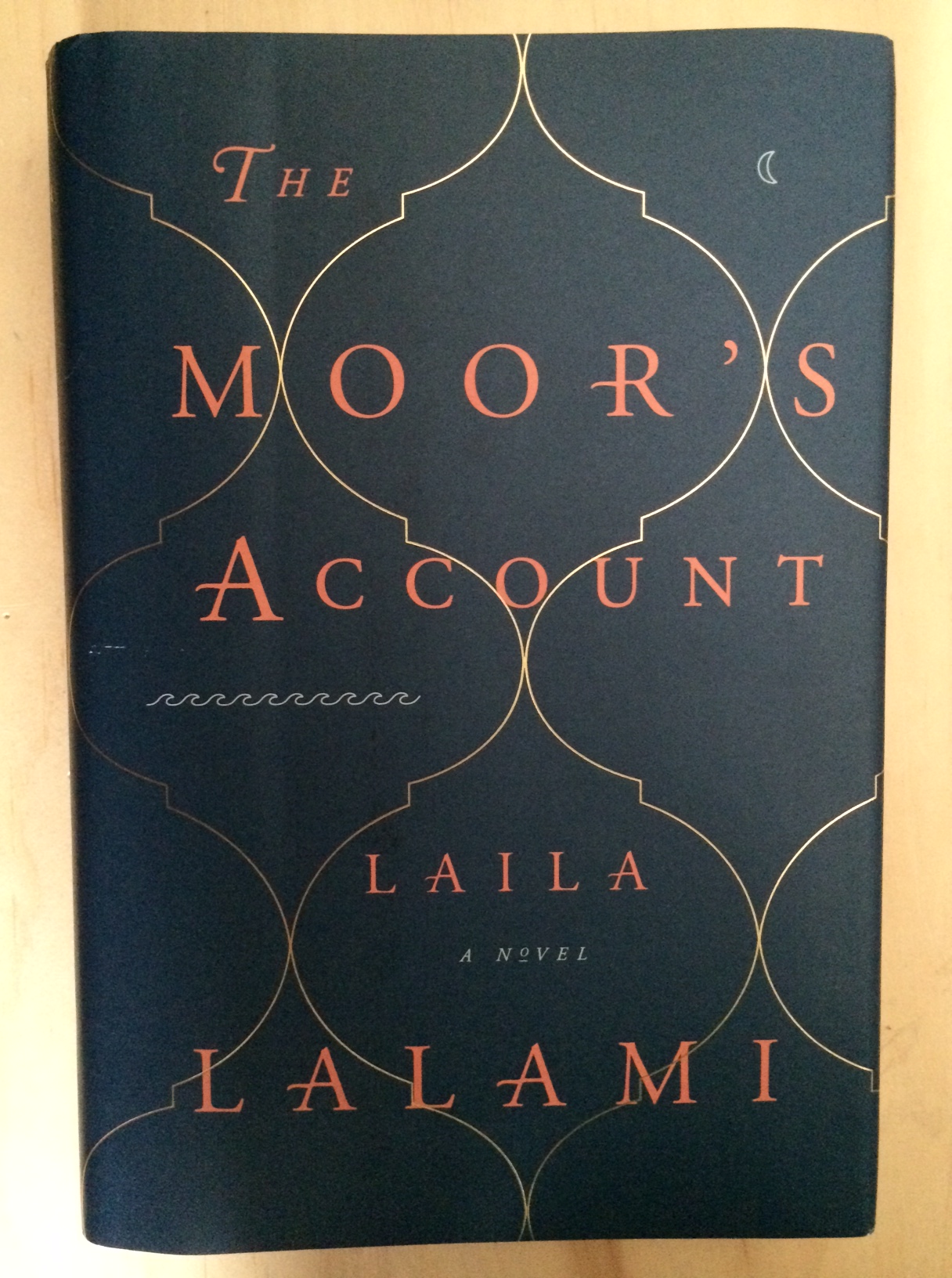
Yesterday I reviewed Laila Lalami’s engrossing novel The Moor’s Account. Ms. Lalami graciously agreed to be interviewed via email.
How did you light upon the Narváez expedition, which is the starting point for The Moor’s Account?

Laila Lalami
Author photo (c) Alexander Yera
LL: Five years ago, I was reading Anouar Majid’s We Are All Moors, a scholarly work on the connection between European attitudes towards immigrants today and the perception of Moors in the sixteenth century. About halfway through the book, I came across a mention of Estebanico, a Moroccan slave who was said to be the first black explorer of America. He had been part of the Narváez expedition of 1528, whose goal was to claim Florida for the Spanish Crown. But the expedition ended in failure and within a year there were only four men left. The survivors, among whom was the famed Cabeza de Vaca, trekked across the continent, looking for a Spanish port and living with indigenous tribes. I was vaguely familiar with Cabeza de Vaca, but I had never heard of Estebanico. I thought I would find out more about this man in Cabeza de Vaca’s account of the Narváez expedition, but that travelogue only inspired more questions. My novel grew out of those questions.
How did you balance necessary historical research (which seems extensive) and creativity as you wrote the novel? What was the writing process like?
 LL: During my first year of working on the book, I did a lot of research on the expedition itself. I had index cards on all the known participants, I built as precise a timeline as the records allowed, and I had a map of the route that the survivors likely followed. I also read up on Spanish conquest of the Americas, life in sixteenth-century Azemmur, where Estebanico/Mustafa was born, and social conditions in Seville, where he was transported. Once I started writing, however, I had to free myself of any expectations about the main characters. Knowing that they had survived where others had perished still didn’t tell me anything about who they were, what they wanted, or what they feared. And that’s when the novel’s work really begins, in having imaginative empathy with these characters.
The Moor’s Account is concerned with extremely difficult emotions and experiences, including slavery and myriad kinds of loss; how do you approach writing about these subjects?
LL: I approach it as I approach writing about anything else—I have a lot of fear and hesitation at first, but in the end I take a leap.
Which books (fiction or nonfiction) would you recommend to readers of The Moor’s Accountwho’d like to learn more about Mustafa’s culture, or the culture of indigenous American peoples?
LL: If you’re interested in sixteenth century North Africa, then I would recommend The Description of Africa by Hassan al-Wazzan (also known as Leo Africanus.) There are many essays and books on indigenous tribes, but the ones most frequently mentioned in the book are nomadic tribes in what is now Texas. I would recommend Robert Ricklis’s The Karankawa Indians of Texas.
What is one question you hope readers will take away with them after reading The Moor’s Account?
LL: Is history any truer than fiction?
What’s next on your writing horizon?
LL: I just started working on a new novel, though my writing time is now interrupted by travel. All I will say about it is that it’s very, very different from anything I’ve written before.
My thanks again to Ms. Lalami for her time and thoughtful answers. You can read more about Laila Lalami, and The Moor’s Account, on Ms. Lalami’s website, www.lailalami.com.
 Rosemary and Reading Glasses