In Memoriam: C. K. Williams

Photo courtesy Elijah Hail via Unsplash

Photo courtesy Elijah Hail via Unsplash

Poet C. K. Williams died this week; you can read a brief obituary here. He himself wrote a moving tribute at the death of his friend Galway Kinnell late last year in the New Yorker; I commend it to your reading, since a eulogy often says as much about the eulogizer as the eulogized.

I’ve read his poems from time to time, and certainly come across them in anthologies and classes on poetry, but I don’t know his work well. But here is “Light,” a poem of his I’m fond of, a poem with Dante and bats and these gorgeous lines:

[. . .] having to know for us both that everything ends,
world, after-world, even their memory, steamed away
like the film of uncertain vapor of the last of the luscious rain.


I hope you’ll enjoy it too.


“My heart and the gray world grow young”: Sophie Jewett’s “To a Child”

IMG_4651This past weekend, Dear Readers, my sister gave birth to the most beautiful little girl. She’s our first niece and H’s first cousin, and we’re so excited that she’s here (and we can’t wait to meet her!).

Naturally, I’ve had poems about babies and birth on the brain, and let me tell you: there are a lot of cotton-candy sweet poems about babies out there if you care to look, but also quite a few that are nuanced and lovely (Don Paterson’s “Walking with Russell,” for example,  is a fantastic father-son/parent-child poem).

Sophie Jewett’s “To a Child” is old fashioned, a quiet and simple poem. Its speaker looks back on early parenthood from the position of age, using a metaphor of a tree and a bird to show the parent-child relationship:

I was a dreaming forest tree,
You were a wild, sweet bird
Who sheltered at the heart of me
Because the north wind stirred;

It reminds me of Margaret Wise Brown’s The Runaway Bunny (one of the all-time great children’s books, and beautifully deconstructed in Margaret Edson’s beautiful play Wit). In the story (and aren’t children’s stories often very much like poems, with their rhythmic cadences and repetitions?) , the baby bunny says that he will run away, and the mother replies that she will find him, “for you are my little bunny.” In one scene, he says that he will become a little bird and fly away, but “If you become a little bird and fly away from me,” said his mother, “I will be a tree that you come home to.”

Welcome home, Cora!

“the furious infinite”: “Music” by Juhan Liiv

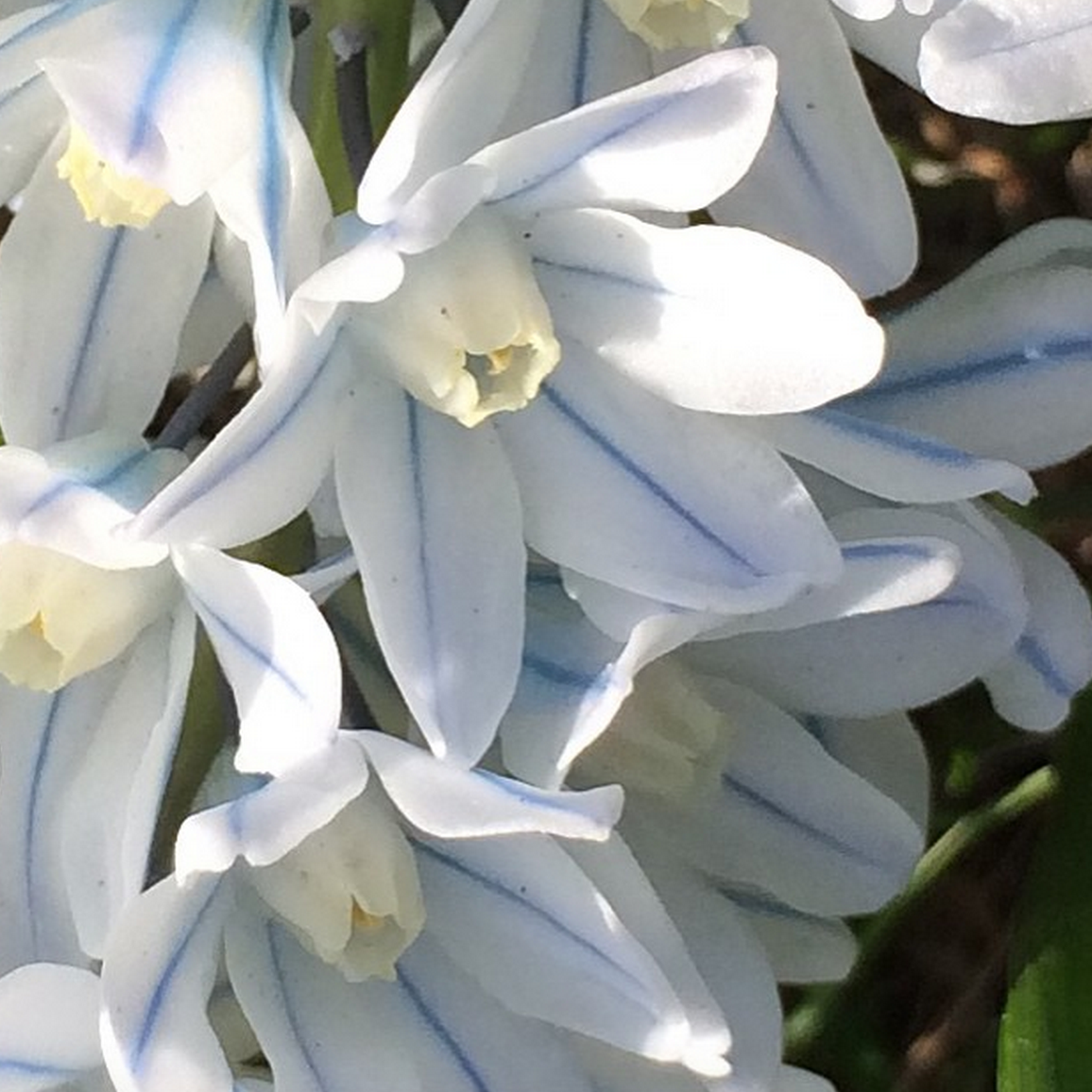
Pale flowers at Mt Auburn CemeteryThis week I’ve been reading Sanford Friedman’s Conversations with Beethoven, and so it seems only appropriate to feature a poem about music this week.

“Music” is a poem by the Estonian poet Juhan Liiv, who I’ve just learned about thanks to The Poetry Foundation; an English translation of his poems was published in 2007. Though he was relatively unknown in life, he is now considered one of Estonia’s greatest poets.

I highly recommend reading the translator’s note on the poem, which gives some background about Liiv and the Estonian poetic tradition. Fascinating stuff.

Recommended Reading: Simeon Berry’s Ampersand Revisited

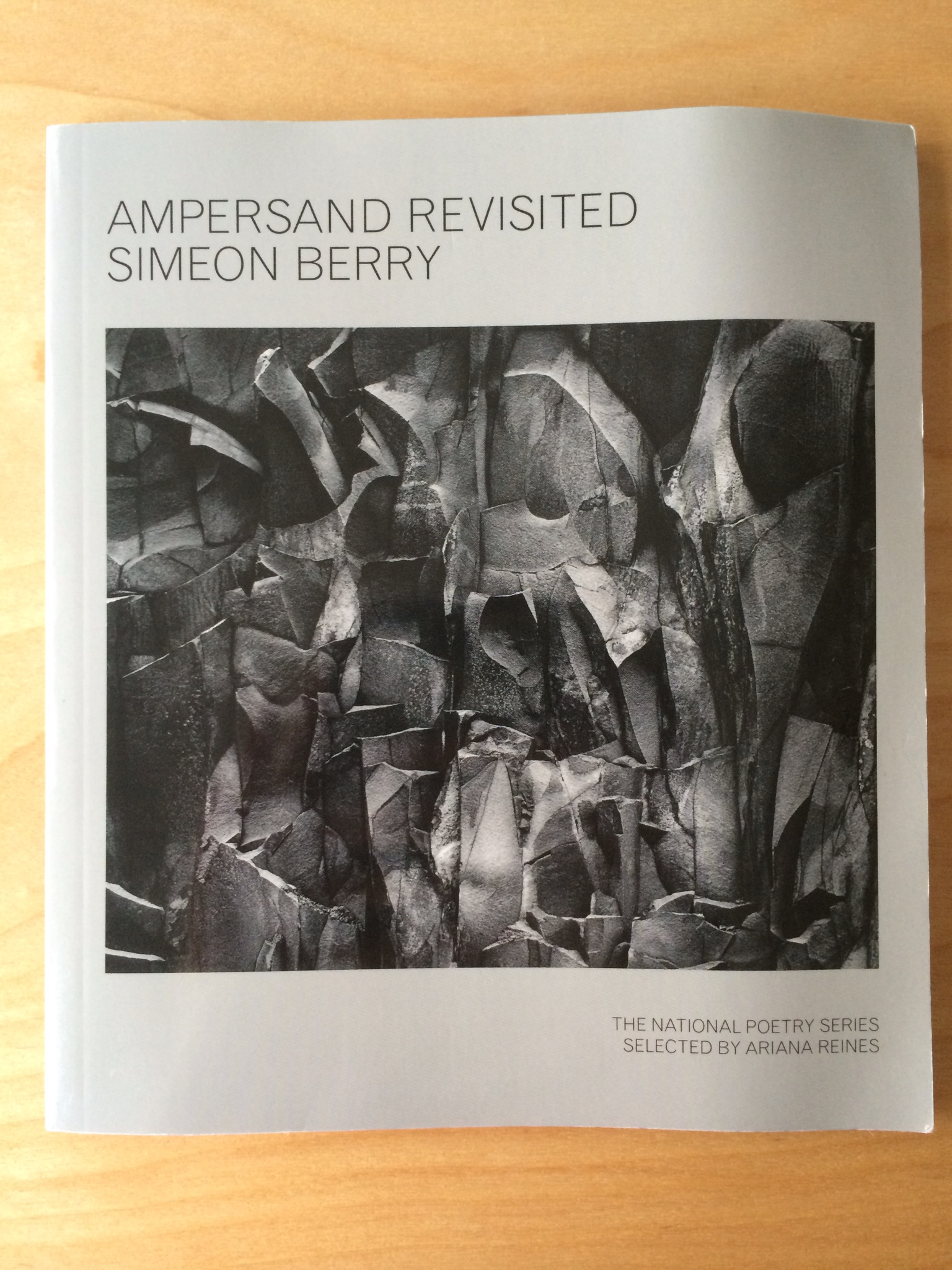
IMG_4494Simeon Berry’s Ampersand Revisited* is a curious, revelatory collection, confessional, lyric, and highly detailed.

[Full disclosure: Mr. Berry is the friend of a friend.]

The book is a bildungsroman in prose-poem form, heavily infused with philosophy, and it’s completely fascinating. Dense and carefully wrought, these three long poems explore the speaker’s questioning about almost everything, including family, sex, communication, and language.

It’s completely fascinating, and I say that as someone who is  not particularly enamored of the bildungsroman, especially the white male bildungsroman (I have, on this site, admitted to loathing The Catcher in the Rye). But in this book the speaker is focused not only on himself, but on his family, caring deeply about what they make of the world, though he’s not always sure what to do with the information at his disposal.

It’s an intense reading experience, and one that I think I’ll need to repeat to get the most out the collection. If you’re a fan of Anne Carson’s Glass, Irony, and God or Lyn Hejinian’s experimental My Life (which I haven’t read since college, but was viscerally brought to mind here), I recommend reading Ampersand Revisited.

Ampersand Revisited is the winner of the 2013 National Poetry Series.  Monograph, which is forthcoming this month, won the 2014 National Poetry Series. You can read the first few pages of Ampersand Revisited here.

* I received a copy of this book from the author for review purposes, which did not affect the content of my review.

“All night it will say one name”: Tess Gallagher’s “Under Stars”

Photo by Blair Fraser via Unsplash

Photo by Blair Fraser via Unsplash

I am very fond of letters, though I am a terrible correspondent, so I loved the opening of Tess Gallagher’s poem “Under Stars,” which imagines what a letter does in a mailbox overnight:

The sleep of this night deepens
because I have walked coatless from the house
carrying the white envelope.
All night it will say one name
in its little tin house by the roadside.

Ms. Gallagher is a poet who I’m just starting to read. I learned from the biographical note on the Poetry Foundation’s site that she is also a short story writer, and I think this remark about how she approaches writing poetry and prose is illuminating:

Of the differences between writing prose and poetry, she said in an interview with Willow Springs: “I feel like prose comes much more from outside me than poetry does. Poetry is intimate and more generated in my own theater, shall we say. But in prose I have to be responsive to that story that’s coming to me and there has to be some part of me that goes out to meet it.”

I wonder how many other writers feel that way.

If you’re a Tess Gallagher fan, please let me know which poems and collections I should seek out!

“larklike over the wheat”: Ted Kooser’s “So This Is Nebraska”

Photo courtesy of Jordan McQueen via Unsplash.

Photo courtesy of Jordan McQueen via Unsplash.

It’s been hot in Boston this week, certainly more hot than I like (which, to be fair, is not very hot at all), but not as hot as it could be. One of the hottest days I remember involved driving through Nebraska in summertime, years ago, when the temperature outside was 106 degrees. I don’t think I’ve seen a thermometer hit that temperature in all the years since.

“So This is Nebraska,” by former poet laureate Ted Kooser, describes that kind of hot day, though with far more attention to detail than I can conjure from memory. And oddly enough, it made me feel a little cooler.

By the way, there’s a bar before the poem that has a recording of Ted Kooser reading the poem. It’s great.

“the world it becomes”: Louise Erdrich’s “Turtle Mountain Reservation”

IMG_3990Ever since I read The Round House (brief review here), I’ve been on the lookout for Louise Erdrich’s books. In Vermont a few weeks ago, at Brattleboro Books, I found a copy of Jacklight (1984), her first collection of poetry, which, though it’s now thirty years old, still feels fresh, full of sharp observations and unexpected turns of phrase. I’ve been reading it slowly, finishing up last week. The poems tell stories that reflect Ms. Erdrich’s Native American and German American background; several are accompanied by short, explanatory notes or epigraphs, which is a poetic practice I happen to love.

I recommend the whole collection, but this week I’ll point you toward “Turtle Mountain Reservation,” the last poem in the book. Dedicated to the poet’s grandfather, it’s a powerful meditation on heritage, aging, and change.

On Poetry for Children

Photo courtesy Daniela Cuevas via Unsplash.

Photo courtesy Daniela Cuevas via Unsplash.

A long time ago—so long ago that I can’t find the post (although, to be fair, I only had the patience to look for three minutes or so)—I wrote about looking for poems for children. Nursery rhymes and jokey sorts are all very well, but I am a woman of distinctly unsaint-like patience (see parenthetical above), and when possible, I prefer children’s entertainment that is also meant to be palatable to adults (such as Pixar movies and a remarkable number of children’s books, which I would be happy to list in a later post if anyone is interested). Not for me are Saturday morning cartoons, Berenstain Bears, or The Wiggles, and I’m afraid to say that our son is deprived of these things thanks to his mother’s intransigence.

So some time ago, I thought to myself, “well, I should make a list of poems that aren’t meant for children but that they might like anyway,” since they seem to go over pretty well in our house (the principle applies to music, too, by the way). Edward Lear’s nonsense poems are great fun, and H likes Robert Frost quite a bit; I think the rhythms of formal poetry, particularly iambic pentameter, are soothing.

Of course, I was quite sure to file the idea in my Cabinet of Good Intentions I’ll Forget I Ever Had ™, where it remained until just a few days ago when I found that Lemony Snicket has done all the work for me.

So in lieu of a poem of the week, Dear Readers, I invite you to head over to the Poetry Foundation’s website and enjoy the hilarious introduction he’s written and the portfolio of poems he’s collected. 

Celebrated Days

10405657_10106229416396525_3529221544828816157_nDear Readers, it seems like just yesterday I was writing about We Do! American Leaders Who Believe in Marriage Equality, and now look where we are! We’ve been celebrating not only the wonderful news about marriage equality over the past week with family and friends, but also the birth of our friends’ first baby (hi K and T and baby E!). Here’s an Emily Dickinson poem that reminds us to treasure, to celebrate, the present.

Emily Dickinson
Forever – is composed of Nows –

Forever – is composed of Nows –
‘Tis not a different time –
Except for Infiniteness –
And Latitude of Home –

From this – experienced Here –
Remove the Dates – to These –
Let Months dissolve in further Months –
And Years – exhale in Years –

Without Debate – or Pause –
Or Celebrated Days –
No different Our Years would be
From Anno Dominies –