“He wants to write a love song”: Leonard Cohen’s “Going Home”

Dear Readers,

photo (125)As you know, I adore Leonard Cohen. Today happens to be the release date for his latest studio album, Popular Problems (which I have pre-ordered, of course), and Sunday was his eightieth birthday (which he shares with one of my dearest friends).

So the poem of the week is “Going Home,” and it also happens to be the lyrics to the song of the same name from Leonard Cohen’s last studio album, Old Ideas. [By the way, Leonard Cohen once remarked, regarding the simplicity of his album titles, that he’d like to call an album “Songs in English.” I did mention that I love him, right?]

It’s my favorite song on Old Ideas; it’s both personal and universal, self-deprecating and serious, and above all, thoughtful. That second verse? Gets me every time.

You can read “Going Home” here. 

Recommended Reading: Entries, by Wendell Berry

EntriesI find myself rushed this week, Dear Readers, so this post will not be as long as it ought to be given its subject: Wendell Berry.

Mr. Berry is a noted essayist, novelist, poet, and environmentalist; he is particularly concerned with the loss of small farms in America. He practices what he preaches, living and working on his own farm in Kentucky.

Entries is the first book of his that I’ve ever picked up; I wish I’d come across it sooner, because the poems in it are wonderful. They are human and humble, agile and grounded. Though I admired all the poems, and the poet’s fine sense of our relationship to nature, I particularly loved a poem called “The Wild Rose,” which is a tribute to his wife, and In Extremis, a series of poems about his father’s illness and death. If you’d like to get a sense of Mr. Berry’s style, the Poetry Foundation has links to quite a few poems on this page.

I highly recommend Entries; I’ll be on the lookout for more books by Wendell Berry. If you have a favorite book or poem, please let me know what it is!

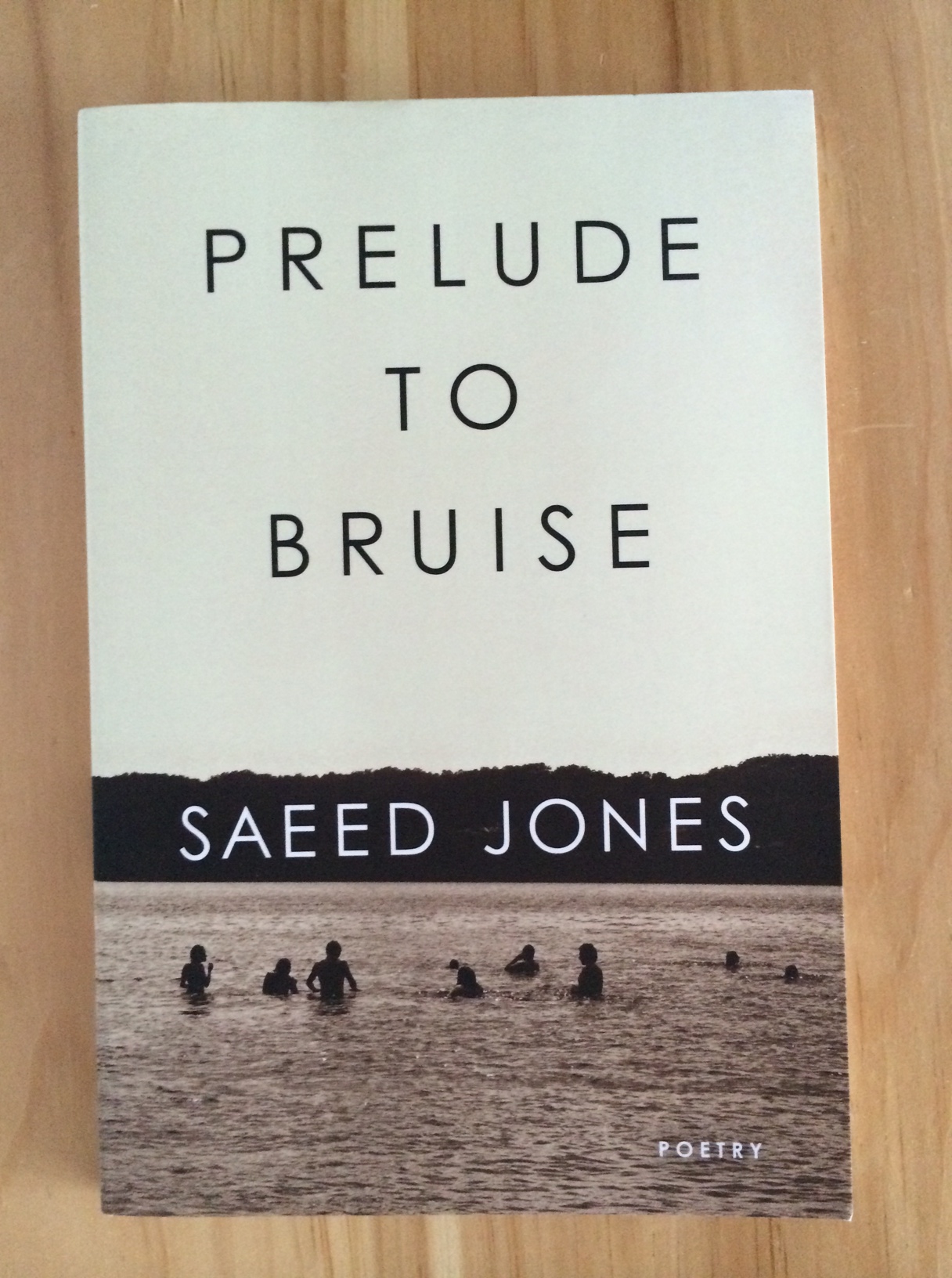
Recommended Reading: Prelude to Bruise, by Saeed Jones

Prelude to BruisePrelude to Bruise*, the first full-length collection by Saeed Jones, is unflinching and intimate, fierce and achingly vulnerable. It’s a remarkable collection, perhaps the most highly anticipated book of poems to appear this year, and it is not to be missed.

These poems in Prelude to Bruise are firmly grounded in the body, and in one body in particular. The collection traces, with some digressions, the life of “Boy,” who is young, black, queer, and growing up in the South. These poems are often autobiographical, both political and personal in their evocation of the lived experience they shape and are shaped by. They are mesmerizing and dramatic.

Mr. Jones’s skill and versatility are impressive. Here you’ll find poems of varying forms, meters, and lengths. In some poems, like “Prelude to Bruise,” which lends its title to the collection, Mr. Jones explores the emotive possibilities of just a few key words (black, back, body, burning, broken); in others, metaphors and imagery take center stage (one of my favorites lines is “The dress is an oil slick”).

Prelude to Bruise is divided into six sections, and while the autobiographically inclined poems make up a large portion of the collection, poems in which Mr. Jones enters other lives (and deaths) appear throughout. Here, in poems like “Daedalus, after Icarus,” “Jasper 1998,” and “Lower Ninth,” we find a poetic voice attuned to detail and perspective, alive with empathy.

Take, for example, “Isaac, after Mount Moriah,” which you can read here thanks to the fine people at Linebreak. The calm image of a boy so deeply asleep that rain pools “in the dips of his collarbone” is shattered when we realize, in the the next line, that the speaker is his father, Abraham, who was ready to kill Isaac on Mount Moriah. Seeing his son’s fear, even in sleep, Abraham wonders, “What kind of father does he make me this boy / I find tangled in the hair of willows, curled fetal / in the grove?” It both is and is not the right question to ask; we’re ask to hold in our minds both the image of the father giving his son a blanket without disturbing him and the image of the vulnerable boy (“curled fetal”) that father raised his hand against. It’s a complicated, engaging poem, gracefully rendered.

Mr. Jones writes beautifully and powerfully about specific experiences tied to universal concerns –life, death, danger, desire, family. Prelude to Bruise is highly recommended.

*I received a copy of this book from the publisher for review purposes, which did not affect the content of this review. 

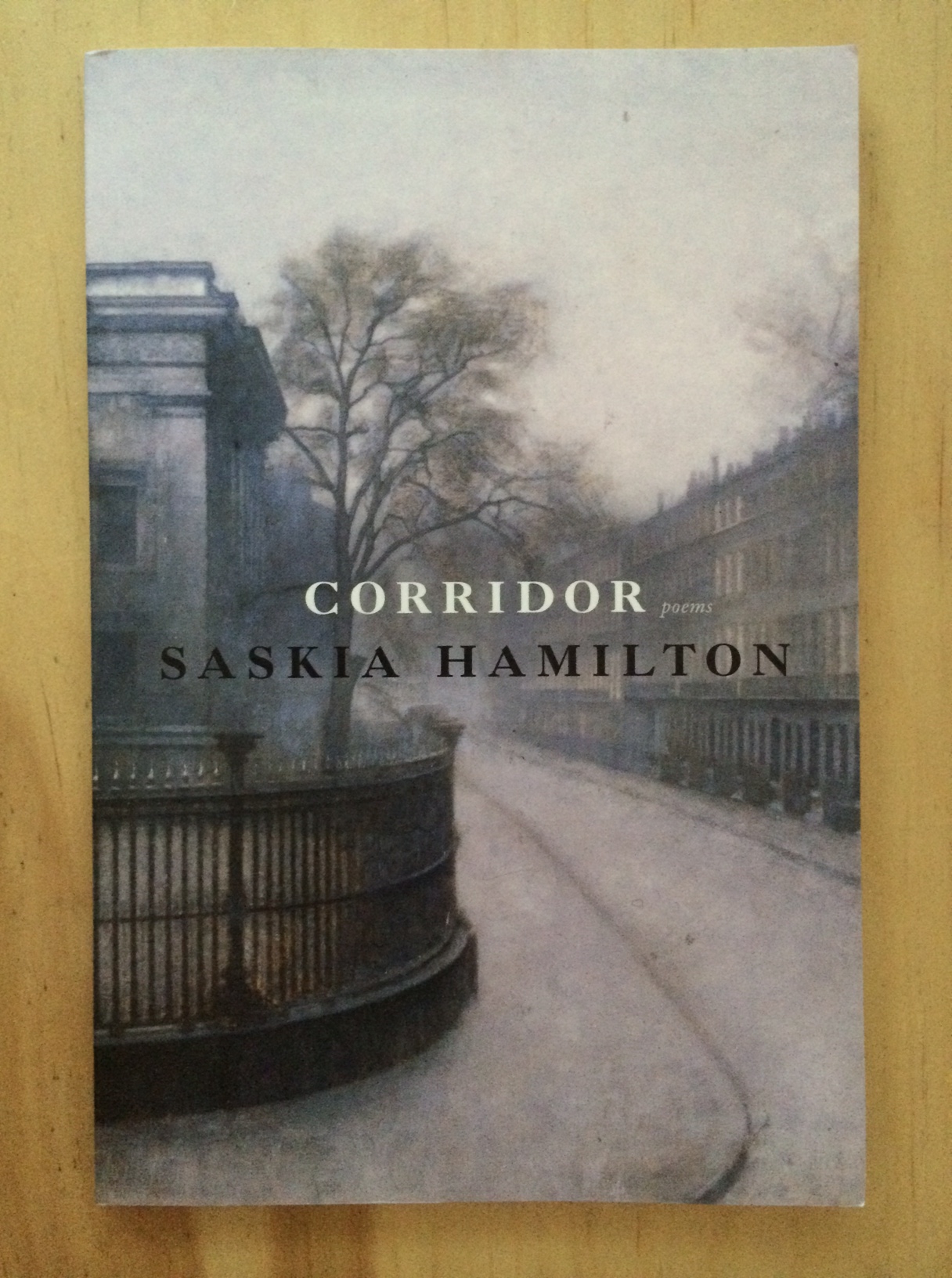
“I passed through, I should have paused”: “In the Corridor” from Saksia Hamilton’s Corridor

CorridorSaskia Hamilton’s Corridor* was one of this year’s more challenging reads for me. Ms. Hamilton’s poems carefully shaped and almost spare in style, but their content is so dense that I’d often read a poem three or four times before I felt I was beginning to understand it. This isn’t a criticism, necessarily; I read poetry in part because I like to be asked to use the mental flexibility and creativity at my disposal. Ms. Hamilton’s poems require quite a bit of both.

Corridor‘s poems are observant, almost painterly. Ms. Hamilton offers us carefully-described scenes in nature and in rooms, but the effect of her lines is to make us feel as if we’re definitely in a place, but not of it; we are passing through. This emphasis on transience applies not only to places, but also to objects and books (there’s a wonderful poem that refers to Milton’s Satan in Paradise Lost). Throughout the collection, I found the interplay of intimacy and dispassionate interest fascinating.

If you’d like to sample one of Ms. Hamilton’s poems, you can read “In the Corridor” here. Corridor is a collection that rewards the effort required to read it, and I’m pleased to recommend it.

*I received a copy of this book from the publisher for review purposes, which did not affect the content of my review.

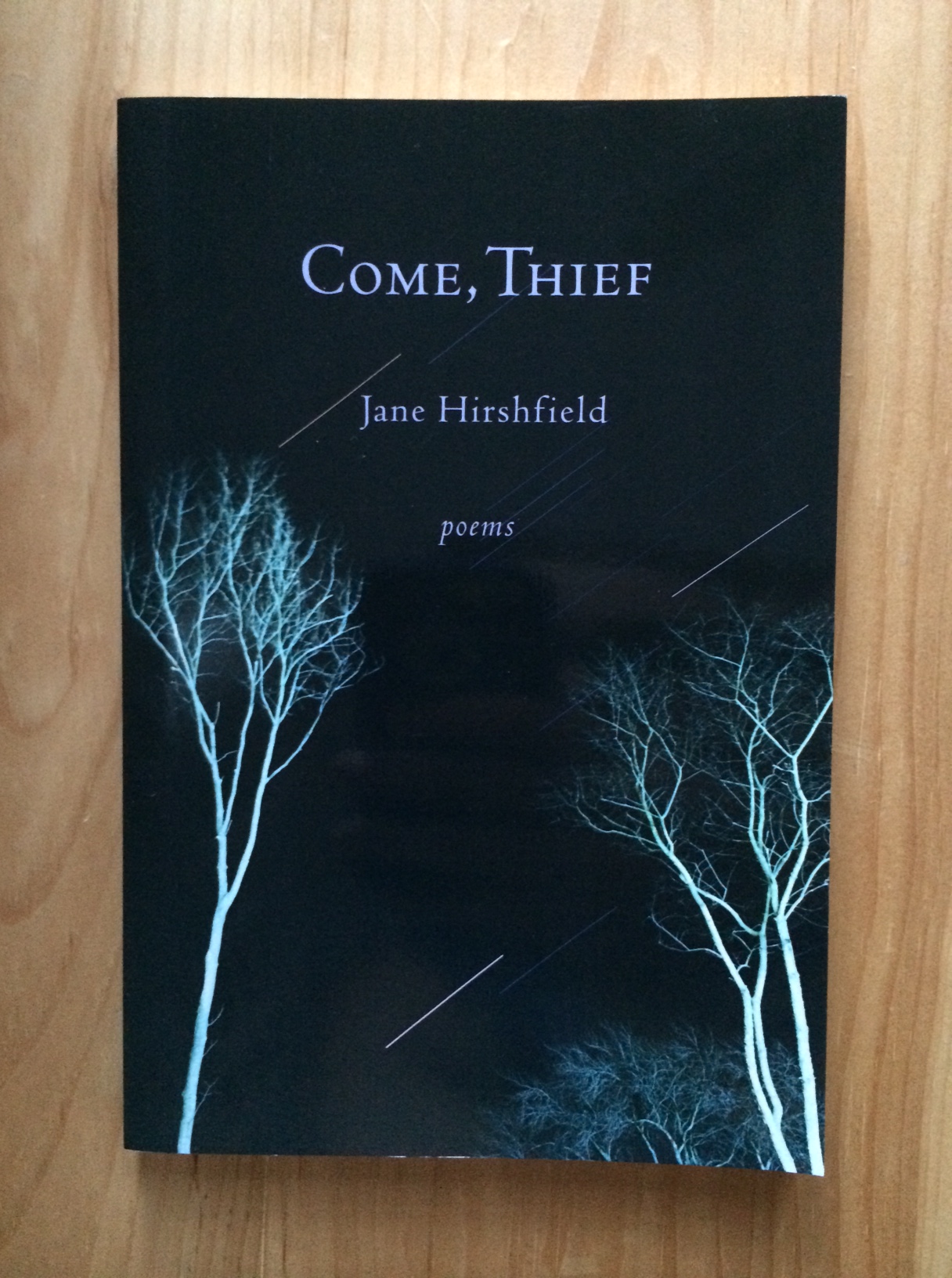
“Stay, I said / to the cut flowers”: Jane Hirshfield’s “The Promise” from Come, Thief

Come, ThiefOn vacation earlier this month, Mr. O and I visited the well-appointed Island Books in Middletown, Rhode Island. One of the things I liked best about this little shop was its poetry selection, which included recommended titles handpicked by the bookstore’s staff. Thanks to their recommendation, I picked up Jane Hirshfield’s 2011 book Come, Thief, which I highly recommend.

In this collection, Ms. Hirshfield focuses on small scenes, both natural and domestic, as she reflects on attentiveness, change, and beauty; of special note are several exquisite poems about aging and the inevitable failures of body and mind.

In “The Promise,” which you can read here, the speaker wishes that things both small and beautiful (a cut flower, a spider, a leaf) and large and wondrous (the body, the earth itself) would not change or fade or leave, while acknowledging the inevitability of those kinds of losses. It’s a wistful but lovely poem. drooping flower

“His leaden act was done”: C. Day Lewis’s “Epitaph for an Enemy”

A week or two ago, Emily wrote a post about the movie adaptation of Ender’s Game (haven’t seen, never will, thanks for asking), and how, on the whole, books are generally better than their film adaptations. Then asked her readers if they could think of any movies that are better than the books they’re based on.

The one that immediately leaps to mind for me is The Last of the Mohicans (1992), Michael Mann’s loose adaptation of James Fenimore Cooper’s 1826 novel. I did not care for the novel, to say the least, though many people love it.

The movie features a gorgeous soundtrack, excellent acting (some awesome Daniel Day-Lewis strong-but-silent action), inaccurate portrayals of historic events, and scenery that’s beautiful but that doesn’t pass for upstate New York, even 250 years ago upstate New York.

It is, despite its flaws, magnificent.

This is supposed to be a poetry post, so: Emily’s question made me think of The Last of the Mohicans, which made me think of Daniel Day-Lewis, which made me think of C. Day-Lewis (the ‘C’ is for Cecil), who was Daniel’s father. And C. Day Lewis was a poet.

He was also a successful writer of detective fiction (under the pseudonym Nicholas Blake), a friend to many other notable poets of his day (including W.H. Auden and Stephen Spender), and the poet laureate of Great Britain. You can read a brief biography and highlights of his major works here. 

Day-Lewis’s short but powerful “Epitaph for an Enemy” is this week’s poem of the week; let me know what you think!

“Fair she braved War’s gaunt disease”: Edmund Blunden’s “The Festubert Shrine”

As you probably know, World War I began 100 years ago yesterday.

Today, here’s Edmund Blunden’s “The Festubert Shrine,” and old-fashioned sort of poem that features a few arresting images. It’s a glimpse of the war’s destruction of significant local sites, in this case a shrine to Mary in the French village of Festubert. In Festubert, as in many places, buildings that had stood for hundred of years were damaged or destroyed by shelling and shrapnel.

Most of Festubert was rebuilt after the war.

Edmund Blunden survived the war. A prolific poet and critic who became Professor of Poetry at Oxford, he died in 1974. Flanders poppies were laid on his grave.

“the light blue sea / Of your acquaintance”: Kenneth Koch’s “In Love with You”

I confess that I am not particularly well versed (poetry joke!) in the New York School poets. I’ve read a bit of Ashberry and a bit more Frank O’Hara, but never much Kenneth Koch. It hasn’t been a conscious omission; I simply found other poets first who claimed my attention.

Last week Kenneth Koch’s “In Love with You” popped up in my inbox as the Poetry Foundation’s poem of the day, and I was hooked by its exuberance, its vitality; it features non-ironic exclamation points!

While I admire many love poems, most of them are so intimate, so particular to a person or time or place that I find myself distanced from them. Like Whitman’s poems (at least for me), however, “In Love with You”‘s specificity crescendoes into a feeling of overwhelming universality. And I love a love poem that makes me grin.

Now, if you’ll excuse me, I’m off to find a book of Kenneth Koch’s poetry.

Do you have a favorite grin-worthy love poem?

The Poetry Concierge Recommends: Samuel Taylor Coleridge

[The Poetry Concierge is an occasional feature here on Rosemary and Reading Glasses wherein I select a poem, poet, or book of poems for individual readers based on a short questionnaire. Come play along! Read the introductory post here, my first recommendation here, and then email me at: rosemaryandreadingglasses [at] gmail [dot] com. ]

This week, our pilgrim in search of poetry is the blogger who goes by Stressing Out Student (SOS).

1. When you read fiction, who’s your go-to author?

I don’t read much of any particular author. I usually look for the content to interest me before expecting the style to interest me. But the author I’ve read the most of would likely be John Steinbeck.

2. If you read nonfiction, which subjects are most likely to interest you? (cultural history, science, biography, memoir, survival stories?)

Psychology, behaviorial/social sciences, how the mind/people work

3. If you were stuck on a desert island for a week, which five books would you bring to keep you entertained?

Good Omens by Terry Pratchett and Neil Gaiman, The Etymologicon by Mark Forsyth, horror short story anthology, The Stranger by Albert Camus, When You Are Engulfed in Flames by David Sedaris

4. If you were on a five-year mission to Mars, which five books would you bring to keep you sane?

The Stranger, Cannery Row by John Steinbeck, Crime and Punishment by Fyodor Dostoevsky, Broom of the System by David Foster Wallace, 1984 by George Orwell

5. What kinds of questions are most likely to keep you up at night? (death, the nature of love, politics, environmental issues, meaning of life, end of the world, justice and injustice, etc?)

Am I doing the right thing? How can I know to do the right things at the right times? What does the future hold?

6. If you’ve read poetry before, what have you liked? What have you disliked?

I’ve liked:
“The Grasshopper” by E.E. Cummings
“I Wandered Lonely as a Cloud” by William Wordsworth
“Dream within a Dream” Edgar Allan Poe
All of Shel Silverstein

Dislike…
“Ode on a Grecian Urn” John Keats


Well, when I saw Terry Pratchett and Neil Gaiman on SOS’s list of favorite authors, I thought, ha! Edgar Allan Poe! — only to have my first thought dashed in question 6 (yes, if you tell me you like a poet, I do feel obliged to find a new one for you to like).

Enter Samuel Taylor Coleridge, poet and critic, rehabilitator of Shakespeare and Milton, and perhaps the most productive opium addict the world has ever seen. His writing influenced Wordsworth and the rest of the Romantics (and he was one himself, of course), some of his most famous poems tell strange and fantastic stories (a la Pratchett & Gaiman), and the workings of the human mind are certainly at the forefront of his poetic concerns.

(And if SOS is interested in what the future holds, perhaps she’ll have fun imagining the endings to “Kubla Kahn and “Christabel.”)

This week’s poem of the week, and the poem I especially commend to SOS, is “The Rime of the Ancient Mariner,” first published in Lyrical Ballads (though this links to a later version). Why? Check out the listing of its subjects given by the Poetry Foundation: “Religion, Crime & Punishment, Living, Social Commentaries, Seas, Rivers, & Streams, Horror, Faith & Doubt, Nature, Christianity, Weather, Death, Mythology & Folklore, Animals, God & the Divine.”

This poem’s got it all. Except romance, and hey, we can all use a break from that once in a while, right?

SOS, I hope you find something to love in these poems. Thanks for writing in!


Would you like the Poetry Concierge to make a recommendation for you? Check out the introductory post, and send your answers to the questionnaire, along with the name and/or blog you’d like posted with the reply, to rosemaryandreadingglasses [at] gmail [dot] com.