“the little Mars rover”: Matthew Rohrer’s “There Is Absolutely Nothing Lonelier”

photo (74)A couple weeks ago, Mr. O and I were able to go see The Martian in the theatre (a rare treat); I absolutely loved the book and heartily endorse the movie. There was a catch, however: now I want to re-read the book, and since this is the season when my desire to read all the books smashes up my need to knit all the things—Houston, we have a problem.

To satisfy my sci-fi craving, first I tried to convince our four-year-old to watch WALL-E, but no dice; he’s preemptively scared of most movies. You’re thinking that maybe I should just look forward to the next Star Wars, but I say unto you: thrice bitten, still shy (and still going, but that’s beside the point).

So then I started thinking about poetry, and while I continue to commend Tracy K. Smith’s Life on Mars to you, I have a new poem for your perusal. I owe a tip of the hat to poet Simeon Berry on this one, who posted a link to Matthew Rohr’s poem “There Is Absolutely Nothing Lonelier” a few days ago.

You will never read a JPL press release quite the same way again.

“We see you, see ourselves and know / That we must take the utmost care / And kindness in all things”: Joy Harjo’s “Eagle Poem”

Happy Thanksgiving, Dear (American) Readers! Here’s a poetry post from a couple of years back that I think I might like to make a yearly tradition. I’d be happy to know what your favorite Thanksgiving poems are if you’d care to note them in the comments. Safe travels and hearty toasts to all.


I’m not a religious person, but many people I treasure are very religious, and I’m always

"Eagle silhouette" Image courtesy of Gualberto107 at FreeDigitalPhotos.net

“Eagle silhouette” Image courtesy of Gualberto107 at FreeDigitalPhotos.net

grateful for their prayers and their generosity of spirit. Joy Harjo’s “Eagle Poem” gives me a way to think about prayer that is comforting and uplifting without listing toward the dogmatic.

For that reason, I think “Eagle Poem” is the perfect poem for Thanksgiving week, when we give thanks in our own ways, both secular and spiritual, for what we have and what we have not.

“My vegetable love should grow / Vaster than empires, and more slow”: Andrew Marvell’s “To His Coy Mistress”

Photo courtesy Colton Brown via Unsplash

Photo courtesy Colton Brown via Unsplash

As you might have noticed, Dear Readers, I am very fond of sixteenth- and seventeenth-century poets, like Thomas Wyatt, John Donne, and of course, one William Shakespeare. One of my favorite courses in college was on Renaissance (English) literature, in which Professor Richard Dutton introduced us (well, me at least, I shouldn’t speak for everyone else) to Milton, Marlowe, and Andrew Marvell (and other poets whose last names did not begin with ‘m.’).

You probably know Marvell from other writers’ allusions to  his poem “To His Coy Mistress,” or from the poem itself:

To His Coy Mistress

Had we but world enough and time,
This coyness, lady, were no crime.
We would sit down, and think which way
To walk, and pass our long love’s day.
Thou by the Indian Ganges’ side
Shouldst rubies find; I by the tide
Of Humber would complain. I would
Love you ten years before the flood,
And you should, if you please, refuse
Till the conversion of the Jews.
My vegetable love should grow
Vaster than empires and more slow;
An hundred years should go to praise
Thine eyes, and on thy forehead gaze;
Two hundred to adore each breast,
But thirty thousand to the rest;
An age at least to every part,
And the last age should show your heart.
For, lady, you deserve this state,
Nor would I love at lower rate.
       But at my back I always hear
Time’s wingèd chariot hurrying near;
And yonder all before us lie
Deserts of vast eternity.
Thy beauty shall no more be found;
Nor, in thy marble vault, shall sound
My echoing song; then worms shall try
That long-preserved virginity,
And your quaint honour turn to dust,
And into ashes all my lust;
The grave’s a fine and private place,
But none, I think, do there embrace.
       Now therefore, while the youthful hue
Sits on thy skin like morning dew,
And while thy willing soul transpires
At every pore with instant fires,
Now let us sport us while we may,
And now, like amorous birds of prey,
Rather at once our time devour
Than languish in his slow-chapped power.
Let us roll all our strength and all
Our sweetness up into one ball,
And tear our pleasures with rough strife
Through the iron gates of life:
Thus, though we cannot make our sun
Stand still, yet we will make him run.


It’s an excellent poem to read aloud—one of the best “carpe diem” poems in English, its irony and occasionally grotesque imagery undercutting its initial urgent tone. For an amusing riposte to Marvell, have a look at Annie Finch’s “Coy Mistress” at the Poetry Foundation.

“Come, then, domestic Muse”: Anna Laetitia Barbauld’s “Washing Day”

Image courtesy of winnond at freedigitalphotos.net

Image courtesy of winnond at freedigitalphotos.net

Recently, a certain small acquaintance of mine left a tissue in a pair of pants that went into the wash, with predictable results. As I was grumpily separating flecks of tissue from every other item of clothing, it occurred to me that I should really be feeling gratitude for doing this in the comfort of our apartment kitchen, rather than in a laundromat I walked to, child in tow, and then sent a mental thank-you note to the parents and grandparents who have done and still do laundry in much less convenient situations.

I imagine that a laundromat would have looked pretty great to Anna Laetitia Barbauld (1743-1825). I just came across her often-hilarious poem “Washing Day,” about the household disruption occasioned by the day when all the washing was done (and heavens forbid that it rained). For this domestic subject Barbauld uses the blank verse of Milton’s Paradise Lost (no, I’m never going to stop talking about Paradise Lost), and even gives readers a parodic invocation of the Muse.

Washing Day

Anna Laetitia Barbauld

The Muses are turned gossips; they have lost
The buskined step, and clear high-sounding phrase,
Language of gods. Come, then, domestic Muse,
In slip-shod measure loosely prattling on,
Of farm or orchard, pleasant curds and cream,
Or droning flies, or shoes lost in the mire
By little whimpering boy, with rueful face —
Come, Muse, and sing the dreaded washing day.
Ye who beneath the yoke of wedlock bend,
With bowed soul, full well ye ken the day
Which week, smooth sliding after week, brings on
Too soon; for to that day nor peace belongs,
Nor comfort; ere the first grey streak of dawn,
The red-armed washers come and chase repose.
Nor pleasant smile, nor quaint device of mirth,
Ere visited that day; the very cat,
From the wet kitchen scared, and reeking hearth,
Visits the parlour, an unwonted guest.
The silent breakfast meal is soon despatched,
Uninterrupted, save by anxious looks
Cast at the louring, if sky should lour.
From that last evil, oh preserve us, heavens!
For should the skies pour down, adieu to all
Remains of quiet; then expect to hear
Of sad disasters — dirt and gravel stains
Hard to efface, and loaded lines at once
Snapped short, and linen-horse by dog thrown down,
And all the petty miseries of life.
Saints have been calm while stretched upon the rack,
And Montezuma smiled on burning coals;
But never yet did housewife notable
Greet with a smile a rainy washing day.
But grant the welkin fair, require not thou
Who callest thyself, perchance, the master there,
Or study swept, or nicely dusted coat,
Or usual ’tendence; ask not, indiscreet,
Thy stockings mended, though the yawning rents
Gape wide as Erebus; nor hope to find
Some snug recess impervious. Shouldst thou try
The ’customed garden walks, thine eye shall rue
The budding fragrance of thy tender shrubs,
Myrtle or rose, all crushed beneath the weight
Of coarse-checked apron, with impatient hand
Twitched off when showers impend; or crossing lines
Shall mar thy musings, as the wet cold sheet
Flaps in thy face abrupt. Woe to the friend
Whose evil stars have urged him forth to claim
On such a dav the hospitable rites;
Looks blank at best, and stinted courtesy
Shall he receive; vainly he feeds his hopes
With dinner of roast chicken, savoury pie,
Or tart or pudding; pudding he nor tart
That day shall eat; nor, though the husband try —
Mending what can’t be helped — to kindle mirth
From cheer deficient, shall his consort’s brow
Clear up propitious; the unlucky guest
In silence dines, and early slinks away.
I well remember, when a child, the awe
This day struck into me; for then the maids,
I scarce knew why, looked cross, and drove me from them;
Nor soft caress could I obtain, nor hope
Usual indulgencies; jelly or creams,
Relic of costly suppers, and set by
For me their petted one; or buttered toast,
When butter was forbid; or thrilling tale
Of ghost, or witch, or murder. So I went
And sheltered me beside the parlour fire;
There my dear grandmother, eldest of forms,
Tended the little ones, and watched from harm;
Anxiously fond, though oft her spectacles
With elfin cunning hid, and oft the pins
Drawn from her ravelled stocking, might have soured
One less indulgent.
At intervals my mother’s voice was heard,
Urging dispatch; briskly the work went on,
All hands employed to wash, to rinse, to wring,
Or fold, and starch, and clap, and iron, and plait.
Then would I sit me down, and ponder much
Why washings were; sometimes through hollow hole
Of pipe amused we blew, and sent aloft
The floating bubbles; little dreaming then
To see, Montgolfier, thy silken ball
Ride buoyant through the clouds, so near approach
The sports of children and the toils of men.
Earth, air, and sky, and ocean hath its bubbles,
And verse is one of them — this most of all.

As you can see, there’s a very clever mind at work in these lines, and it turns out that Anna Barbauld was extremely influential in her day, as a poet, abolitionist,  editor, essayist, and children’s book writer, but like too many women has been rather under-appreciated. I’m glad I’ve heard of her now, and will keep an eye out for more of her writing in the future.

Which domestic task would you like to read a poem about?

“It was many and many a year ago”: Edgar Allan Poe’s “Annabel Lee”

Edgar Allan Poe, circa 1849. Photo via Wikimedia Commons

Edgar Allan Poe, circa 1849. Photo via Wikimedia Commons

Perhaps you, like me, associate Edgar Allan Poe with the city of Baltimore (maybe it’s their professional football team, which I believe I’m contractually obligated to loathe since I grew up in Cleveland even though I am a lifelong Bills fan and no longer watch football).

However, Dear Readers, EAP was a native of fair Boston, much as he hated the city (and now there’s a statue to commemorate him), and thus your Boston-based book blogger is amused to bring you his creepy “Annabel Lee,” just in time for Halloween.

Annabel Lee

by Edgar Allan Poe

It was many and many a year ago,
   In a kingdom by the sea,
That a maiden there lived whom you may know
   By the name of Annabel Lee;
And this maiden she lived with no other thought
   Than to love and be loved by me.


I was a child and she was a child,
   In this kingdom by the sea,
But we loved with a love that was more than love—
   I and my Annabel Lee—
With a love that the wingèd seraphs of Heaven
   Coveted her and me.


And this was the reason that, long ago,
   In this kingdom by the sea,
A wind blew out of a cloud, chilling
   My beautiful Annabel Lee;
So that her highborn kinsmen came
   And bore her away from me,
To shut her up in a sepulchre
   In this kingdom by the sea.


The angels, not half so happy in Heaven,
   Went envying her and me—
Yes!—that was the reason (as all men know,
   In this kingdom by the sea)
That the wind came out of the cloud by night,
   Chilling and killing my Annabel Lee.


But our love it was stronger by far than the love
   Of those who were older than we—
   Of many far wiser than we—
And neither the angels in Heaven above
   Nor the demons down under the sea
Can ever dissever my soul from the soul
   Of the beautiful Annabel Lee;


For the moon never beams, without bringing me dreams
   Of the beautiful Annabel Lee;
And the stars never rise, but I feel the bright eyes
   Of the beautiful Annabel Lee;
And so, all the night-tide, I lie down by the side
   Of my darling—my darling—my life and my bride,
   In her sepulchre there by the sea—
   In her tomb by the sounding sea.

“answering through the vastnesses”: Kathleen Jamie’s “The Whales”

Photo by Christopher Campbell via Unsplash

Photo by Christopher Campbell via Unsplash

Lately I’ve been reading Kathleen Jamie’s superb book The Overhaul, which landed on my radar months ago thanks to Graywolf Press‘s delightful habit of posting a poem of the week on its website.

I read “The Whales” and just couldn’t get it out of my head for weeks. It’s a bit funny, very beautiful, and then unsettling (with that Dickinson dash in the last line), all in just sixteen short lines. It’s one of my new favorite sea poems.

I hope you’ll take a few minutes to read it and tell me what you think!

“something brighter than pity for the wingless ones”: Derek Walcott’s “The Season of Phantasmal Peace”

Photo by Rowan Heuval via Unsplash

Photo by Rowan Heuval via Unsplash

Recently I read Derek Walcott’s 1984 collection Midsummer (which I highly recommend–it’s heavy and heady with summer and heat, like a ripe peach). This week, when it’s finally starting to feel like autumn around here (I nominate 2015 for Boston’s strangest year of weather award), I’m reading his poem “The Season of Phantasmal Peace,” which you can find here. 

This poem is an interesting contrast with last week’s featured poem, which was “Light” by C. K. Williams.  It’s a pairing that makes me miss teaching; I’d love to discuss with students how the two poets approach light and darkness, expand on a small moment, use imagery and form. Ah well.

P.S. True story/shameless name-dropping: Derek Walcott is the only Nobel Prize winner I’ve met. I had the privilege of sitting in on one of his playwriting courses, and once he held the door to the English department open for me.

In Memoriam: C. K. Williams

Photo courtesy Elijah Hail via Unsplash

Photo courtesy Elijah Hail via Unsplash

Poet C. K. Williams died this week; you can read a brief obituary here. He himself wrote a moving tribute at the death of his friend Galway Kinnell late last year in the New Yorker; I commend it to your reading, since a eulogy often says as much about the eulogizer as the eulogized.

I’ve read his poems from time to time, and certainly come across them in anthologies and classes on poetry, but I don’t know his work well. But here is “Light,” a poem of his I’m fond of, a poem with Dante and bats and these gorgeous lines:

[. . .] having to know for us both that everything ends,
world, after-world, even their memory, steamed away
like the film of uncertain vapor of the last of the luscious rain.


I hope you’ll enjoy it too.


“My heart and the gray world grow young”: Sophie Jewett’s “To a Child”

IMG_4651This past weekend, Dear Readers, my sister gave birth to the most beautiful little girl. She’s our first niece and H’s first cousin, and we’re so excited that she’s here (and we can’t wait to meet her!).

Naturally, I’ve had poems about babies and birth on the brain, and let me tell you: there are a lot of cotton-candy sweet poems about babies out there if you care to look, but also quite a few that are nuanced and lovely (Don Paterson’s “Walking with Russell,” for example,  is a fantastic father-son/parent-child poem).

Sophie Jewett’s “To a Child” is old fashioned, a quiet and simple poem. Its speaker looks back on early parenthood from the position of age, using a metaphor of a tree and a bird to show the parent-child relationship:

I was a dreaming forest tree,
You were a wild, sweet bird
Who sheltered at the heart of me
Because the north wind stirred;

It reminds me of Margaret Wise Brown’s The Runaway Bunny (one of the all-time great children’s books, and beautifully deconstructed in Margaret Edson’s beautiful play Wit). In the story (and aren’t children’s stories often very much like poems, with their rhythmic cadences and repetitions?) , the baby bunny says that he will run away, and the mother replies that she will find him, “for you are my little bunny.” In one scene, he says that he will become a little bird and fly away, but “If you become a little bird and fly away from me,” said his mother, “I will be a tree that you come home to.”

Welcome home, Cora!

“the furious infinite”: “Music” by Juhan Liiv

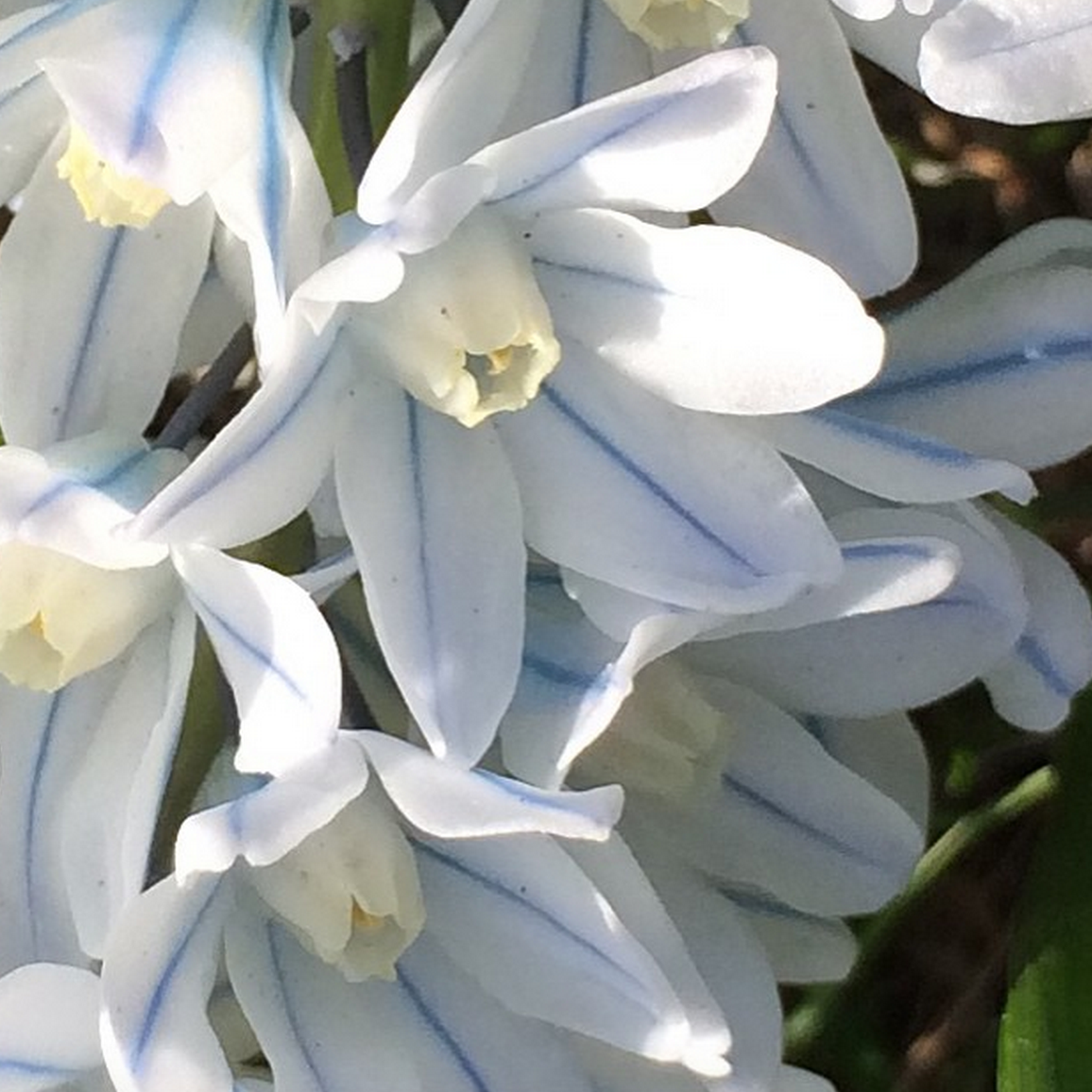
Pale flowers at Mt Auburn CemeteryThis week I’ve been reading Sanford Friedman’s Conversations with Beethoven, and so it seems only appropriate to feature a poem about music this week.

“Music” is a poem by the Estonian poet Juhan Liiv, who I’ve just learned about thanks to The Poetry Foundation; an English translation of his poems was published in 2007. Though he was relatively unknown in life, he is now considered one of Estonia’s greatest poets.

I highly recommend reading the translator’s note on the poem, which gives some background about Liiv and the Estonian poetic tradition. Fascinating stuff.