Reading While Pregnant: Or, “enough to love / to break your heart / forever”

I was nearly halfway through pregnancy at this time three years ago, and I remember feeling the baby kick for the first time around New Year’s Eve, which was also the same time I was reading one of the three books I strongly associate with being pregnant.

Reading while pregnant isn’t really different from reading while not-pregnant, I found, except I felt I should be more discriminating since I wouldn’t read as much right after the baby was born (true, in my experience), and also because I had to get up a lot more often. And while I generally remember my reading lists pretty well, most of the books I read during those many weeks went by in a haze, though I know there were quite a few. I was teaching intro-level Shakespeare and Readings in Drama at the time, so that’s a dozen right there, and of course I read novels and poetry on the side. Looking back, though, these are the three books that epitomized the whole experience of pregnancy for me.

One is the ubiquitous What to Expect When You’re Expecting, which was so awful and made me cry so often that my husband hid it from me around the end of the first trimester (for which I am profoundly thankful). Seriously, it’s the worst: fat-shaming and fear-inducing for starters. If you’re a pregnant person, there are far better options out there (try the Mayo Clinic Guide to a Healthy Pregnancy for the nitty-gritty health stuff, and the Girlfriends’ Guide to Pregnancy for the “we’re-all-in-it-together” vibe, although if you read my edition from the late ’90s you’ll have to squeeze someone’s hand through the parts that hurt [ahem, assumption of shared privilege, ahem]). 

The second is Wuthering Heights, which is the first book I read on an e-reader. My husband got me a Nook for my birthday about a month after I found out I was pregnant. Though I’ll always be a lady of the printed word (mostly because I like books as objects, and my eyes hurt when I look at screens for too long, but we can have that tussle another day, if we must), it did make reading one-handed while standing quite easy (also: great for reading while nursing).  On the train and the bus to and from the university, I read about the unkindnesses that Cathy and Heathcliff inflict upon each other, and the harsh beauty of the moors. It wasn’t particularly uplifting, but it was distracting enough that for those forty-five minutes each way, I didn’t notice the sciatica or general discomfort associated with growing another human in one’s abdomen. And that’s all you  want from your pregnancy reading sometimes: distraction.

[It should be noted, here, that I am of the variety of plumpness that made it difficult for people to tell whether I was fat or fat and pregnant for the first twenty-seven or so weeks out of my forty-two (yes, it was awful) weeks of pregnancy. People in Boston aren’t jerks who don’t offer seats to pregnant women. For the most part.]

The third book I associate with pregnancy, the one I was reading when the baby started kicking, is Harry Potter and the Sorcerer’s Stone.

Now, I came very late to the Harry Potter fan club; the books started to appear when I, as a young teenager, thought that Ayn Rand was the height of reading sophistication. (As you can tell, my salad days have come and gone.) When the Harry Potter movies came out, my dad and I would go see them on a Monday at the Shaker Square Cinema for five bucks a ticket, with free popcorn (we’re yankees to the core); we liked them quite a bit. As it turned out, I saw all the movies with my dad, eventually. But for many years we eschewed the books as “kid stuff.”

It wasn’t til I was pregnant that I decided I should read the series to preview it for the baby, figuring, perhaps wrongly, that kids in the 2020s will be reading the same stuff as kids in the late ’90s and early ’00s. It tells you something about my reasoning ability that I thought I should preview books meant for kids 8 and up while I was still pregnant. It’s not just me, though: Pregnancy does weird stuff to your brain.

My nesting instinct pretty much came down to books: The shower was book-themed (thanks, bookish friends!), and I bought (or borrowed/stole from my siblings) every children’s book I remember loving, from Miss Rumphius and The Story of Ferdinand all the way up to the Chronicles of Narnia and Charlotte’s Web and Anne of Green Gables — without reflecting that it would be years before the baby would be big enough to understand them.

I read that first Harry Potter book and immediately ordered the set. I read them so fast that winter (three years ago now) that the plots spun together, thrilled that these were books my baby would someday, barring catastrophe, grow up to read. They might be built of the fantastic, but they made all the promise of childhood after the misery of pregnancy seem real and attainable, and I loved them unabashedly and in earnest.  While I’m not exactly sure I’m ready for our son to grow up, I can’t wait to read the books to him for myself (Mr. O read the first three to him to get him to sleep as an infant). Privet Drive is going to make his chores look easy, and even I would take gym class over Potions with Snape. Wait. No I wouldn’t. Scratch that. Sorry, kiddo. Gym class is the worst.

Harry Potter & a picture of our Baby O  (now Mr. Baby, or H) on the day he was born.

Harry Potter & a picture of our Baby O (now Mr. Baby, or H) on the day he was born.

Turns out that I’m impatient, so I read the whole series again over the Thanksgiving holidays, and whoa, nelly. They’re still wonderful, inventive while nodding to and borrowing from the best in other fantasy novels, and heartbreaking.

I didn’t know, the first time I read them, that our Baby O would be a son, but this time I couldn’t help but picture our little dude as a kid away from home, navigating the tricky staircases at Hogwarts, maybe making friends like Ron and Harry, and especially Hermione.

This is a your weekly poetry post, I promise, even though it’s taken me awhile to get here. This week we’re saying hello to a new year, and so please head on over to The Poetry Foundation to read Diane Di Prima’s “Song for Baby-O, Unborn.

It’s the kind of poem that I imagine would have crossed Lily Potter’s mind sometime. It reaches for the future with eyes wide open to the deficiencies of the present, and the tangled power that is love.
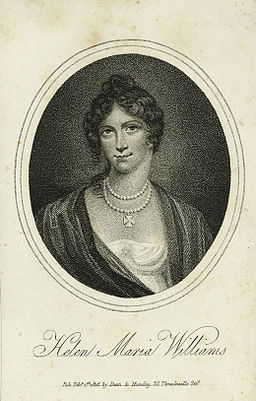
“What marvels in a Christmas-cake!”

Image via Wikimedia Commons

Image via Wikimedia Commons

Here’s a funny little English poem by the assuredly serious Helen Maria Williams about the pleasures of home and friendship — condensed in a traditional Christmas cake. I like it because it reminds me that objects’ significance resides in their relations to people and ideas important to us, and because I’ll be missing my Cleveland family this year at Christmas. And because my best friend always sends out Christmas cookies as an expression of her love.

To Mrs. K—-, On Her Sending Me an English Christmas Plum-Cake at Paris

What crowding thoughts around me wake,
What marvels in a Christmas-cake!
Ah say, what strange enchantment dwells
Enclosed within its odorous cells?
Is there no small magician bound
Encrusted in its snowy round?
For magic surely lurks in this,
A cake that tells of vanished bliss;
A cake that conjures up to view
The early scenes, when life was new;
When memory knew no sorrows past,
And hope believed in joys that last! —
Mysterious cake, whose folds contain
Life’s calendar of bliss and pain;
That speaks of friends for ever fled,
And wakes the tears I love to shed.
Oft shall I breathe her cherished name
From whose fair hand the offering came:
For she recalls the artless smile
Of nymphs that deck my native isle;
Of beauty that we love to trace,
Allied with tender, modest grace;
Of those who, while abroad they roam,
Retain each charm that gladdens home,
And whose dear friendships can impart
A Christmas banquet for the heart!

“break, blow, burn, and make me new”

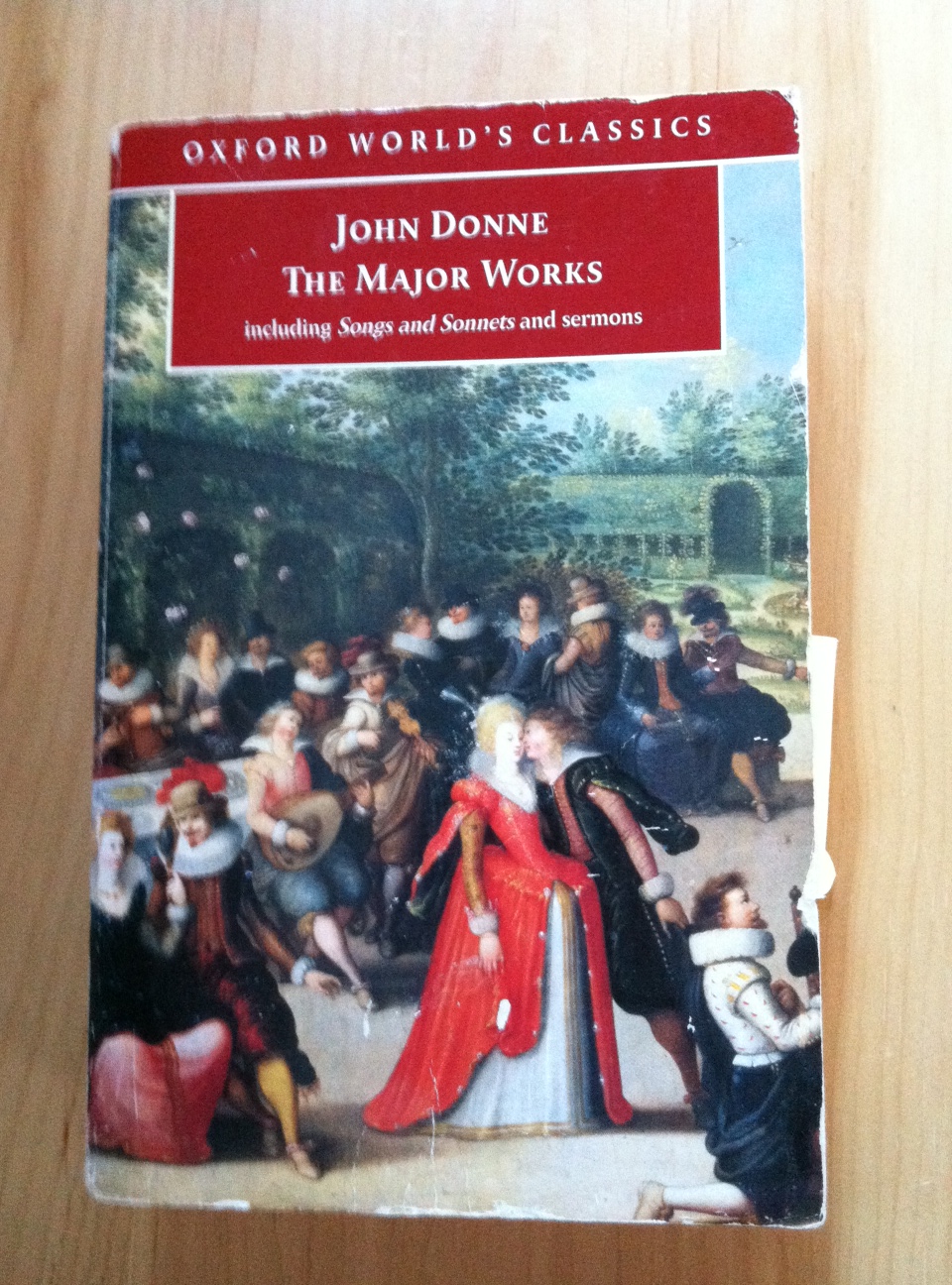
John DonneI promised John Donne this December, and I’m here to deliver.

Though now remembered for his poetry, Donne was in his own day, and in the decades following his death, renowned as a preacher — Dr. Donne. His sermons were fiery, with titles like “Death’s Duel” (which was, in fact, his last sermon, preached just days before he died, probably from stomach cancer). There’s always, in Donne, a tension between Jack Donne — rake, lady’s man, incorrigible wit– and Dr. Donne, the deeply spiritual orator wrestling with his faith and with death itself. All his writing, however, shows a mind never at rest; it’s full of paradox, and flexible, inventive language.

Worship and desire often find unusual objects in Donne’s poetry. When he writes about women, the devotion is nearly saintlike; he addresses them as he would his God. On the other hand, his devotional poetry burns with all the passion of erotic desire. It’s just one of the reasons why Donne is so compulsively readable.

Here’s Holy Sonnet X (sometimes given as XIV), known conventionally by its first line, “Batter my heart, three-person’d God’:

Batter my heart, three-person’d God; for, you
As yet but knock, breathe, shine, and seek to mend;
That I may rise, and stand, o’erthrow me, and bend
Your force, to break, blow, burn, and make me new.
I, like an usurp’d town, to another due,
Labour to admit you, but O, to no end.
Reason, your viceroy in me, me should defend,
But is captived, and proves weak or untrue.
Yet dearly I love you, and would be loved fain,
But am betroth’d unto your enemy;
Divorce me, untie, or break that knot again,
Take me to you, imprison me, for I,
Except you enthrall me, never shall be free,
Nor ever chaste, except you ravish me.

Amazing, right? Just look at the paradox in the last line! And the treatment of God as a ravishing lover — brilliant impudence.

“and yet the menace of the years, / finds and shall find me unafraid”: RIP Nelson Mandela

Nelson Mandela in 2008 Source: Wikimedia Commons

Nelson Mandela in 2008
Source: Wikimedia Commons

Nelson Mandela read “Invictus,” by Victorian poet William Ernest Henley, to fellow inmates of the Robben Island Prison. It’s an oft-quoted poem, and here it is in its entirety. “Invictus” means “unconquered.”

Invictus

Out of the night that covers me,
Black as the pit from pole to pole,
I thank whatever gods may be
For my unconquerable soul.

In the fell clutch of circumstance
I have not winced nor cried aloud.
Under the bludgeonings of chance
My head is bloody, but unbowed.

Beyond this place of wrath and tears
Looms but the horror of the shade,
And yet the menace of the years
Finds and shall find me unafraid.

It matters not how strait the gate,
How charged with punishments the scroll,
I am the master of my fate:
I am the captain of my soul.

“They also serve who only stand and waite.”

Milton Shorter PoemsMilton’s Sonnet 19,  “When I consider how my light is spent” is one of the best sonnets in English and a poignant meditation on the poet’s own blindness and responsibility to the world and his God.

Written more than a decade before the publication of Paradise Lost, Sonnet 19 finds the poet/speaker disconsolate at its opening, unsure how he will use his talents when he is blind, unsure how he can serve his God (and in a further implication, his country) in his affliction and at his advancing age.

The turn of the sonnet appears when “patience” counsels that God does not *need* any person’s labor, since God is omnipotent and, besides, his servants work by the thousands for his glory. To serve the lord, the speaker reflects, he must merely bear his own burden with grace: “They also serve who only stand and waite.”

And Milton waited, and in his waiting, created Paradise Lost.

Here it is, in all its exquisite glory:

Sonnet 19

When I consider how my light is spent,
E’re half my days, in this dark world and wide,
And that one Talent which is death to hide,
Lodg’d with me useless, though my Soul more bent
To serve therewith my Maker, and present [ 5 ]
My true account, least he returning chide,
Doth God exact day labour, light deny’d,
I fondly ask; But patience to prevent
That murmur, soon replies, God doth not need
Either man’s work or his own gifts, who best [ 10 ]
Bear his milde yoak, they serve him best, his State
Is Kingly. Thousands at his bidding speed
And post o’re Land and Ocean without rest:
They also serve who only stand and waite.

“We see you, see ourselves and know / That we must take the utmost care / And kindness in all things.”

I’m not a religious person, but many people I treasure are very religious, and I’m always

"Eagle silhouette" Image courtesy of Gualberto107 at FreeDigitalPhotos.net

“Eagle silhouette” Image courtesy of Gualberto107 at FreeDigitalPhotos.net

grateful for their prayers and their generosity of spirit. Joy Harjo’s “Eagle Poem” gives me a way to think about prayer that is comforting and uplifting without listing toward the dogmatic.

For that reason, I think “Eagle Poem” is the perfect poem for Thanksgiving week, when we give thanks in our own ways, both secular and spiritual, for what we have and what we have not.

“I want you and you are not here. I pause”

Tomorrow, someone I love would have turned 31.Carol Ann Duffy, Selected Poems

I bought my first Carol Ann Duffy book when he was twenty-three and I was twenty-one and we were friends. He was out in California, studying poetry, and I was visiting Paris, and bought a beautiful paperback version of Ms. Duffy’s Selected Poems at Shakespeare and Co., perhaps the most storied independent bookstore ever, a feast for the imagination of literary types (I also bought Roald Dahl’s Fantastic Mr. Fox, if you were wondering). I bought her Selected Poems because I already loved (and sill do) the sexy, glowing “Warming Her Pearls,” but I didn’t know then that the book will always fall open on another page.

“I want you and you are not here.” That’s the first, plaintive sentence of Carol Ann Duffy’s wonderful poem “Miles Away,” which is about conjuring up the presence of the absent beloved in thought and language. It’s such a perfect rendering of what I felt so keenly for so many months, and still sometimes, that I can only point toward the poem itself:

                        I have got your mouth wrong,
but still it smiles. I hold you closer, miles away,
inventing love, until the calls of nightjars
interrupt and turn what was to come, was certain,
into memory.

This one’s for you, EVC.

“This is the barrenness / of harvest or pestilence.”

Better late than never, right? It’s been three days since All Souls Day, but I’m still mulling over Louise Glück’s creepy and just-right poem, “All Hallows.

Image Hay Bales On Freshly Harvested Fields" Courtesy of Franky242/ freedigitalphotos.net

Image Hay Bales On Freshly Harvested Fields” Courtesy of Franky242/ freedigitalphotos.net

I like that the particular line I’ve quoted in the post’s title captures the dichotomy of the end of fall (well, at least here it feels like the end of fall, even if there are technically six more weeks until winter) — it’s difficult to discern, sometimes, whether it feels like the ground underfoot is dying or bursting with life.

Just now the first stanza of the poem, which begins, “Even now this landscape is assembling.” suggests to me a painting, I think a Monet, of the gathered hay covered in lavender snow. Come to think of it, I can bring to mind several summer and spring paintings, and not a few decked with snow, but I’m having a difficult time coming up with a fall painting (if you have one you like, let me know!). Maybe that’s because, as the first line suggests, autumn “is assembling” itself for winter; it’s a flux-state, not even, really, itself.

“And what rough beast, its hour come round at last, / Slouches towards Bethlehem to be born?”

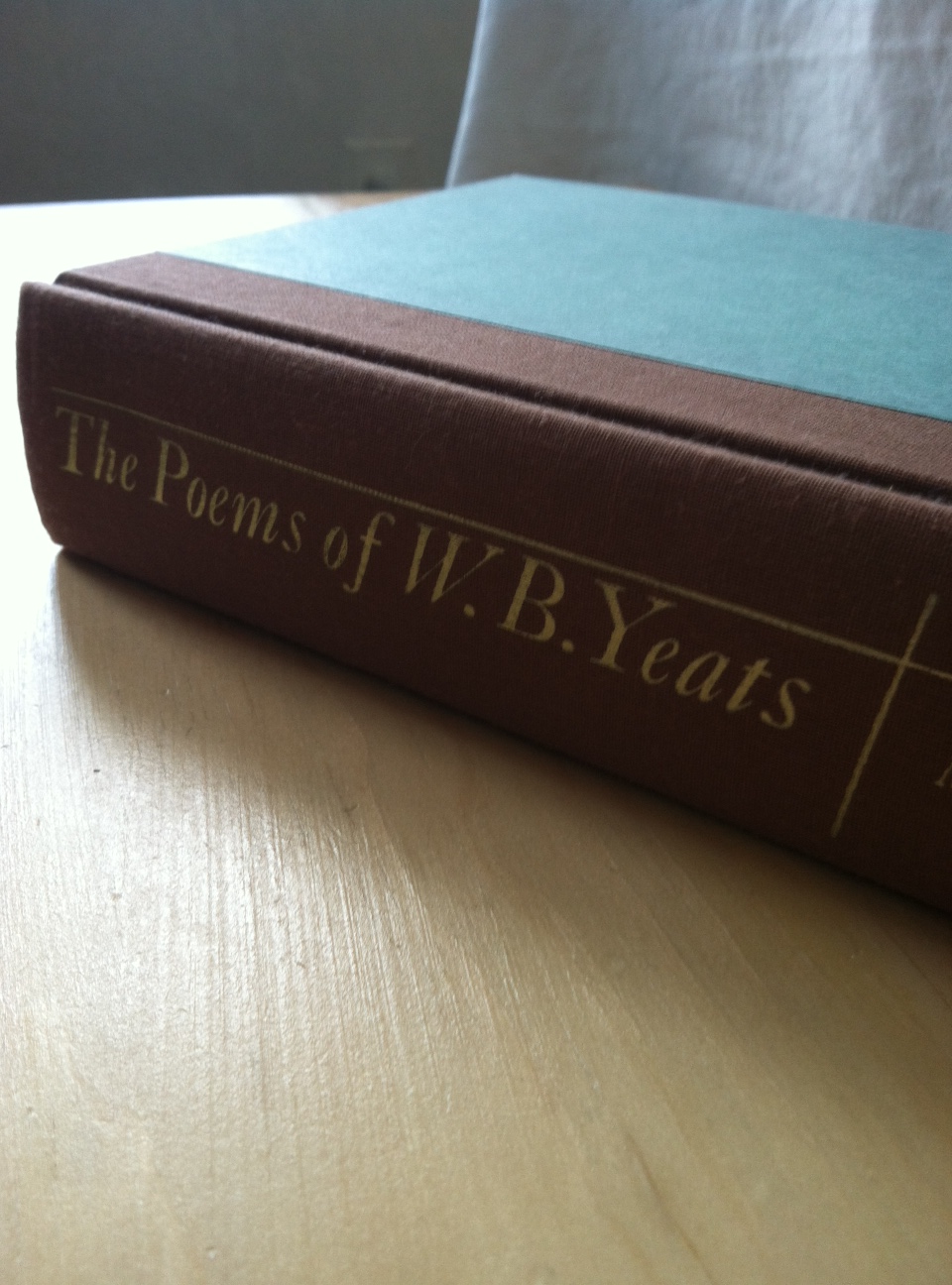
Halloween approaches, friends, and what better way to ring it in than with the scariest freakin’ poem in the English language? That’s right: we’re bringing out W.B. Yeats’s “The Second Coming.”

Collected Yeats

You know it’s bad when “Mere anarchy is loosed upon the world” (l.4). I mean, anarchy is bad, not just “mere,” right? Really bad, à la The Dark Knight Rises? Turns out that’s just the start:

The blood-dimmed tide is loosed, and everywhere
The ceremony of innocence is drowned;
The best lack all conviction, while the worst
Are full of passionate intensity. (ll.5-8)


And then there’s the Big Bad, as fellow Joss Whedon fans* might say: a thing, its gaze “blank and pitiless as the sun,” “A shape with lion body and the head of a man.” It’s the formlessness that’s frightening; there’s no sign of intelligence in the blank eyes. It’s inexorable, this shape. It’s not a lion with a man’s head, but a shape. And get this: it’s “moving its slow thighs.” It’s in no great rush to destroy the world, because the destruction is inevitable.  If that doesn’t give you the creeps, I don’t know what will.

Wait a second. Yes I do. This will:

The darkness drops again; but now I know
That twenty centuries of stony sleep
Were vexed to nightmare by a rocking cradle,
And what rough beast, its hour come round at last,
Slouches towards Bethlehem to be born?

*First Evil, anyone?

[Honorable Mention, Children’s Category: “Seein’ Things,” Eugene Fields]

What’s your pick for scariest poem?